
Why Traditional Healthcare Fails and AI Offers the Only Way Out
By Frank Dumon
Introduction: A Personal Crisis as a Mirror of Systemic Collapse
Human vulnerability is laid bare nowhere more painfully than in a doctor's consultation room. It is a space supposed to stand for science, empathy, and recovery, but which in practice often degenerates into a theater of arrogance, systemic inertia, and dangerous complacency. Exactly one year ago, I – a 79-year-old man with a life full of international experience and a deep respect for knowledge – landed in a medical nightmare that nearly cost me my left foot. What began as intense back pain, through a succession of medical errors, drug side effects and professional hubris, degenerated into a life-threatening infection. This personal odyssey, however, is not unique. It is a microcosm of a much larger, Western problem. Our healthcare system, particularly in Belgium, has ossified into a monopoly position protected by the RIZIV, the mutualities, the pharmaceutical industry, and a medical establishment that dismisses any form of external control or criticism as nonsense.
The salvation in my story did not come from the established system, but from two sources: the unfiltered, objective analysis of artificial intelligence (AI), and a surgeon at AZ Damiaan in Ostend who still possessed professional integrity and decisiveness. Recently, I saw a documentary that placed this reality in a global perspective: "China's New Tech Could Replace Doctors Forever?", an analysis of the so-called "Agent Hospital" of Tsinghua University.
These images confirmed what I had experienced firsthand: the traditional medical machine is not only outdated, it is on the verge of total collapse. This article is a fusion of my personal testimony, an analysis of these groundbreaking AI developments, and a sharp prognosis of how healthcare will be fundamentally rewritten in the coming decades. It is a call for vigilance, but above all, an argument for hope.
Part 1: My Personal Odyssey through the Medical Labyrinth
The Faulty Start: Arcoxia and the Silent Edema
It began, like so much misery, with an apparently simple complaint: intense back pain. My general practitioner, a representative of that supposedly caring system, prescribed Arcoxia without much hesitation. The active ingredient in this drug is etoricoxib, a selective COX-2 inhibitor used for the symptomatic relief of pain and inflammation. At first it seemed to work, but soon I noticed a worrying change in my body.
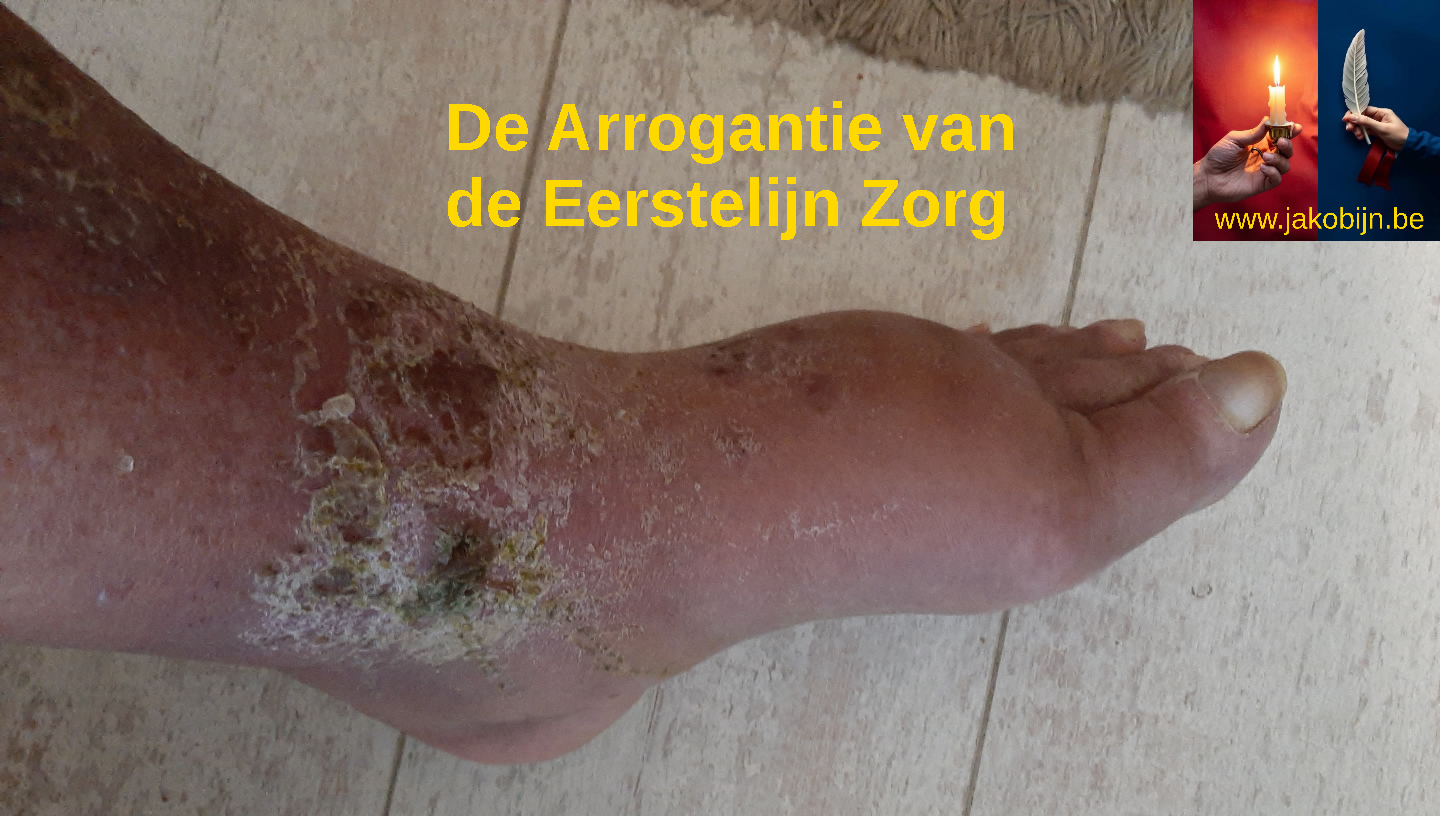
My legs and feet began to swell. It was not a mild fluid retention; it was a clear, visible edema that further limited my mobility and caused discomfort. I returned to the doctor. Instead of investigating the cause of the edema or questioning the medication, I was simply prescribed another anti-inflammatory, again based on etoricoxib.
The logic was completely lacking: if one drug causes fluid retention, prescribing a virtually identical molecule is not only illogical, it is reckless. My legs and feet continued to swell. The skin, stretched tight and made fragile by the edema, tore open. What followed was a serious inflammation of the foot, a direct gateway for bacteria into a body already under pressure from age and medication.
The Escalation: Useless Antibiotics and a Devastated Stomach
The GP's response to this worsening infection was a textbook example of protocol-driven but substantively hollow medicine. A course of antibiotics was prescribed. The infection did not respond; on the contrary, it worsened. Instead of taking a culture or swab to identify the specific bacterium, a second course of a different type of antibiotic was blindly deployed. The result was disastrous. My gastrointestinal system, already fragile at 79, was completely upset. The aggressive, broad-spectrum antibiotics destroyed my gut flora. I had to go to the toilet constantly, lost strength, and felt trapped in a body that was deteriorating faster from the "care" it was receiving than from the original ailment. This is the hidden cost of modern medicine: iatrogenic harm, the damage caused by the treatment itself, which is rarely acknowledged.
The AI Breakthrough and the Arrogance of the GP
Desperate and physically exhausted, I turned to a source that had no interest in selling pills or defending a faulty diagnosis: artificial intelligence. I asked the AI whether there was a link between Arcoxia, etoricoxib, and edema, specifically in the elderly. The answer was crystal clear and backed by medical literature: yes, fluid retention and edema are known side effects of etoricoxib, and the incidence of these side effects is significantly higher in older patients.
Some studies and package inserts indicate that a significant percentage of patients (in some cases up to 12% or more, depending on dosage and comorbidities) experience this, and that use in the elderly requires extra vigilance. Armed with this objective information, I went back to my GP. I explained the link and asked for a reconsideration of the treatment. The reaction was not one of gratitude or professional reflection, but of pure, unfiltered arrogance. The doctor became angry, dismissed my research with the excuse "AI is not a doctor", and refused to acknowledge responsibility for the earlier prescriptions. It was a classic display of power: the doctor as the untouchable priest, the patient as the ignorant layman who must know his place.
When the complaints persisted, it got worse. In an attempt to defend the own faulty diagnosis, it was suggested that a life of tobacco and alcohol was the cause of my decline. This was a low point of medical gaslighting: I had not smoked for 15 years and am a teetotaler. To debunk this unfounded accusation, I underwent extensive medical analyses. The results were devastating for the doctor's hypothesis, but extremely reassuring for me: they confirmed my excellent health. All parameters were well above average. Kidney function was optimal (Creatinine 0.87 mg/dL, eGFR >83 mL/min/1.73m²), protein metabolism was perfectly normal (Albumin 42.4 g/L), and cardiac function was very reassuring with an NT-proBNP of <50 ng/L.
This last value virtually ruled out heart failure as a cause of the edema. Instead of acknowledging these hard, objective facts and questioning their own faulty prescriptions of etoricoxib, the prescribing doctors chose to ignore the truth and place the blame on the patient.
The Rescue in the ER: AZ Damiaan Ostend
The situation escalated to a critical point. My entire foot turned black. The infection had penetrated deeply, and the risk of tissue necrosis and amputation was real. I had myself admitted immediately to the emergency department of AZ Damiaan in Ostend after an alert from a vigilant nurse. Here I encountered the reality of competent care, in stark contrast to the general practice. I was examined by the department of general surgery, under the leadership of medical director Dr. Stijn Schepers on the Damiaan campus. Instead of guessing, the surgeon immediately took a swab of the wound for laboratory analysis. Based on that hard, scientific data, I was prescribed the correct antibiotics, because the previous courses, as I had feared, were worthless against the specific bacterium causing the infection. Subsequently, I underwent surgery under general anesthesia to thoroughly clean and flush the wound. This procedure saved my foot. It was a painful but enlightening realization: the technology and expertise were there, but they were only available when I had bypassed the gatekeepers of primary care and landed in an acute crisis.
The Hidden Cost: Three Months of Home Nursing and Family Help
The impact of these medical errors extended far beyond the emergency admission alone. For three months, both before and after my urgent admission to AZ Damiaan, I had a nurse at home daily to care for the wound. Additionally, I was dependent on Family Help for my daily groceries for three months, as I could not stand on my foot due to the infection and subsequent treatment.
These are the hidden costs of medical failure in primary care. Three months of intensive home care, three months of dependence on others for basic needs, three months of an active, independent 79-year-old man reduced to a care-dependent patient. Who pays this price? The patient, of course. Both financially and in terms of quality of life, dignity, and independence. These facts are not my subjective interpretation; they are documented in the files of home nursing and Family Help. It is the objective, measurable impact of a faulty diagnosis and ignoring known side effects of etoricoxib in an elderly patient.
Part 2: The Systemic Rot: Arrogance, Monopoly, and the "Old Boys' Network" Culture
The Illusion of Care: 4 to 6 Patients per Hour – up to 40 per Day
My experience is no coincidence, but a symptom of a deeper illness in healthcare. The arrogance of certain, and in my observation especially young, doctors is astonishing. They operate in a system that allows them, for example, to "treat" up to 6 patients per hour in a luxurious setting, while being richly rewarded by the community for it. Let's be honest: it is impossible to treat up to 6 patients per hour in a professional, responsible, and in-depth manner. What they are really doing is maintaining a façade of care. They prescribe a pill, refer on, and shift responsibility. They don't have the time, or don't take the time, to actually read the package insert of a medication, to check interactions, or to listen to a 79-year-old patient who has done their own research. It is a system that masks quantity and billing as quality, while in fact it revolves around minimizing effort and maximizing income within a protected ecosystem.
The Medical Monopoly: RIZIV, Mutualities, and the Pharmacy
The heart of the problem is the legally entrenched monopoly. The medical establishment finds itself in a position of absolute market control, protected by a web of intertwined interests between the RIZIV, the mutualities, the pharmaceutical industry, and the clinics. It is a classic "old boys' network" system. As a consumer, you are completely at the mercy of these gatekeepers. It is impossible to buy an effective medication or undergo a specialized test without a doctor's blessing. This artificial scarcity of access to medical knowledge and resources creates a power imbalance that encourages abuse. When doctors make mistakes, such as ignoring known side effects of etoricoxib, there are rarely consequences. The mutuality pays, the RIZIV covers it, and the patient bears the physical and emotional burden. This is not healthcare; this is a protected cartel that stifles innovation and silences the patient.
Part 3: The AI Revolution: The "Agent Hospital" and the End of the Medical Monopoly
China's Agent Hospital: A Glimpse into the Future
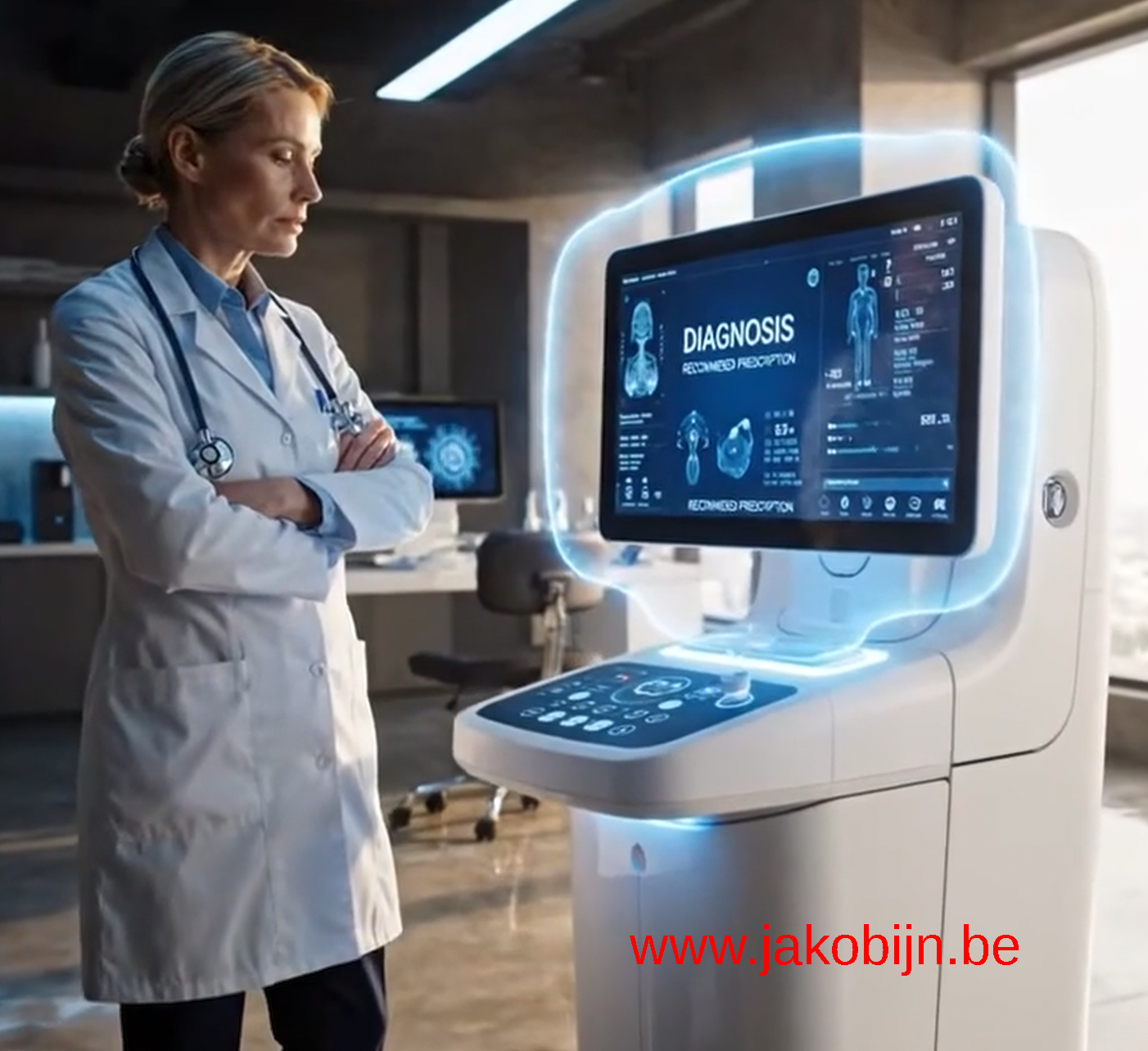
Against this background of Western failure, the recent documentary "China's New Tech Could Replace Doctors Forever?" is not merely science fiction, but an urgent warning and a promise. The documentary highlights the "Agent Hospital", a groundbreaking project developed by researchers at Tsinghua University in Beijing. This is the world's first fully automated, virtual hospital. In this simulation environment, AI "doctor agents" treat virtual patients, learning and evolving at superhuman speed.
The statistics are staggering. In controlled simulations, these AI agents achieved a score of 93.06% on the United States Medical Licensing Examination (USMLE), the toughest medical exam series in the world. By comparison, the pass rate for human doctors is often around 60-70%, and that after years of expensive, grueling study. The AI makes no errors from fatigue, has no ego that gets bruised when a patient asks a question, and can analyze thousands of cases per second instead of rushing through four patients an hour.
The Economic Threat to the Western System
The documentary rightly states that this is not a cool scientific experiment, but a direct economic threat to the trillion-dollar Western, and especially the American, healthcare system. American doctors graduate with enormous debt, Belgian doctors study at the community's expense, and hospitals charge exorbitant rates for basic care. An AI doctor, on the other hand, once developed, can be consulted for pennies and deployed millions of times. What happens to the medical machine when a foreign, or open-source, application can diagnose you faster, cheaper, and more accurately than a human doctor who gives you fifteen minutes and then leaves a bill for hundreds of euros? The AI asks the question: "If you wake up sick tomorrow, would you trust a free, highly accurate AI algorithm, or pay for an expensive, arrogant human doctor?" For me, after my experiences, the answer is clear. The AI saved my life by giving me the information my doctor refused or simply could not or would not see.
Part 4: Prognosis – How Healthcare Will Evolve
Based on my personal experiences and the exponential development of AI technology, my prognosis for the future of healthcare is clear. The evolution will not be linear, but will involve fierce resistance, followed by an inevitable, revolutionary shift.
Short Term: Resistance and Sabotage by the Established Order
In the next five to ten years, we will see a fierce struggle. The medical establishment, the pharmaceutical lobby, and the insurance companies will try to suffocate or co-opt AI diagnostics. They will do this under the guise of "patient safety", "ethics", and "regulation". They will claim that AI lacks the "human touch", while at the same time they have long since traded that human touch for efficiency and profit. They will try to integrate AI as an expensive, closed tool to which only they have access, rather than democratizing it. The goal will be to preserve the monopoly, not to serve the patient.
Just as I wrote in an earlier article: "How the Elite Destroyed Our Industry and Left the Bill for the Working Man" Why does this pillar-controlled education system not innovate? Because Belgian education is a pacified battlefield. The Catholic network and the official network are each other's competitors in a zero-sum game for student numbers and associated subsidies. Innovation is expensive, disturbs the peace with the education unions, and yields no extra market share. The status quo is sacred. It is an over-subsidized system that runs on intellectual laziness and complacency. The focus has shifted from 'knowledge transfer, mathematics and discipline' to 'well-being, identity and learning to learn'.
Medium Term: The Rise of the Empowered Patient
Despite this resistance, the cat is out of the bag. In the medium term (10-15 years), the patient, driven by desperation and access to information, will take over power. Just as I used AI to find the link between etoricoxib and edema, millions of people will consult AI systems for second and third opinions, even before they set foot in a consultation room.
Wearable technology (smartwatches, continuous glucose monitors, advanced sensors) in combination with AI models will provide a real-time, preventive health picture. The AI will detect abnormalities long before they become symptomatic. The traditional "15-minute consultation" will become obsolete. Patients will go to the doctor with a detailed, AI-generated report, and the role of the human doctor will shift from "diagnostician" to "executor of complex interventions" and "emotional supporter". The doctor who refuses to evaluate the patient's AI data together will soon seem outdated.
Long Term: A Democratized, Preventive, and Personalized Model
In the long term (20+ years), healthcare will be fundamentally democratized. The "Agent Hospital" of Tsinghua is just the beginning. We will see specialized AI diagnostics become available for free or at negligible cost to everyone with a smartphone, anywhere in the world. This will drastically reduce the health gap between rich and poor, and between West and East. The medical monopoly on this knowledge will break. Pharmacies will change into distribution points for personalized, AI-prescribed therapies, without the need for an intervening human gatekeeper for routine conditions. The human doctor will limit themselves to complex surgery (like the procedure Dr. Schepers performed on me), palliative care, and cases where human empathy and moral considerations are central. But the arrogance, the faulty prescriptions, and the systemic inertia I experienced firsthand will largely become things of the past, because the system can no longer rely on the patient's ignorance.
Conclusion: A Call for Vigilance and Hope
My journey from a charred foot in Ostend to the realization of the global AI revolution is a lesson in humility and a wake-up call. I am 79 years old. I have seen the world, I have worked all over the world, such as in Vietnam in the 1980s, and I will soon return there in the context of my book "The Price of Illusion: American Veterans and Vietnamese Survivors." I have witnessed the rise and fall of great ideologies. I no longer have any illusions about the inherent goodness or infallibility of institutions, friends, and family. The traditional medical system has failed me, protected by a wall of arrogance and bureaucratic self-preservation. But I am not afraid of the future. On the contrary, I embrace the arrival of artificial intelligence in healthcare with open arms. Not because AI is perfect, but because it is more objective, faster, and fairer than the human alternative I have experienced. The "Agent Hospital" and similar innovations are not a threat to humanity. They are the only salvation for a system that long ago lost its humanity to greed and hubris.
Do not blindly trust the white coat. Ask questions. Use the technology available to you. The future of healthcare does not lie in defending the privileges of an outdated profession, but in embracing a future in which knowledge is free, diagnostics are accurate, and the patient is finally central again. The price of the illusion that the traditional doctor always has your best interests at heart has been paid too high. It is time for a new reality.
Part 5: The Establishment's Response – A Confirmation of Bankruptcy
Response from the doctors via the coordinator of Het Voorland
Dear Mr. Dumon,
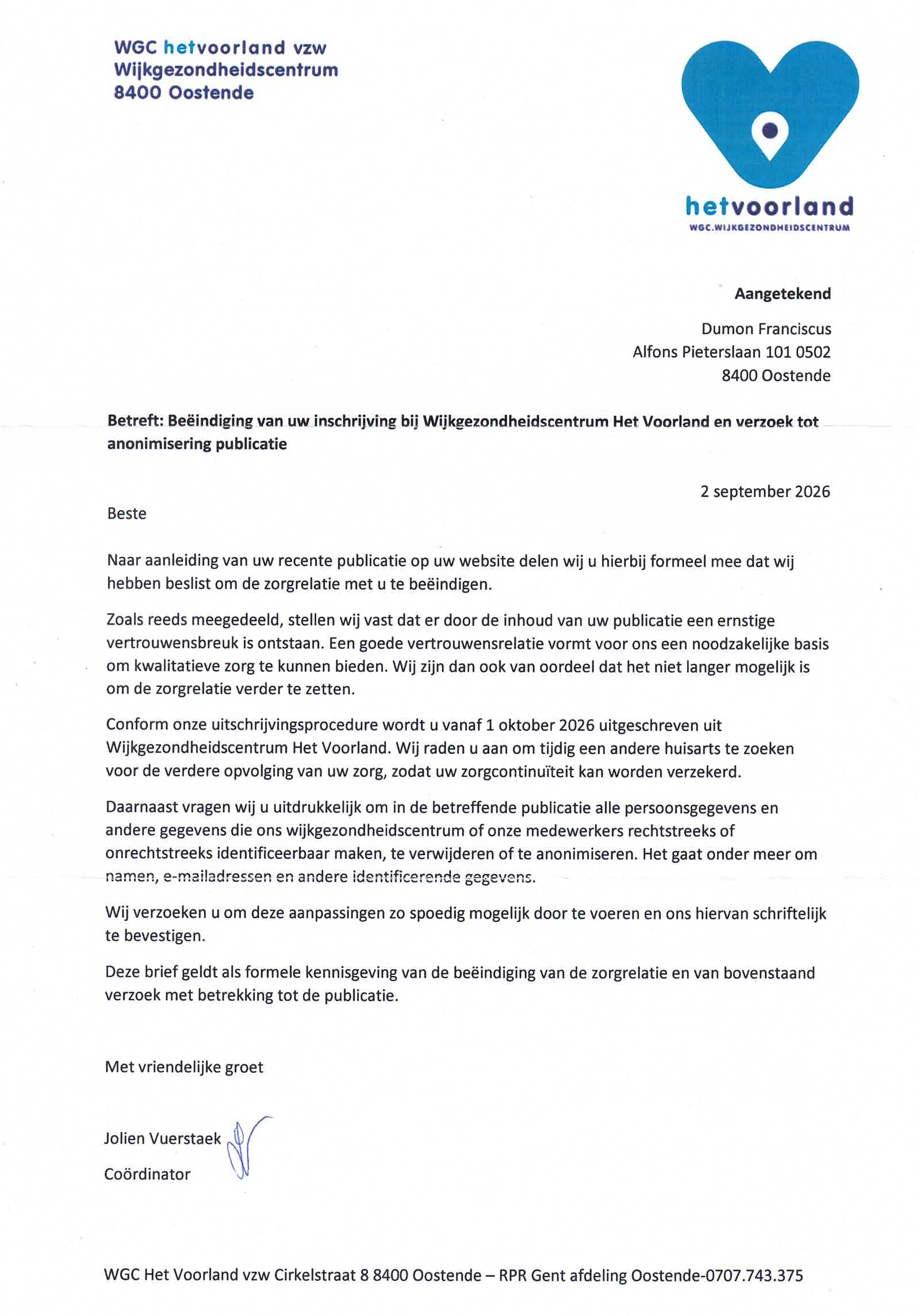
We have read your publication with attention. We understand that you are not satisfied with the care you have received within our community health center. Your publication moreover shows that there is no longer any trust in our care provision.
At the same time, we note that this publication has also created a serious breach of trust on our side. A good relationship of trust is, for us, a necessary basis for providing quality care. We are therefore of the opinion that this relationship of trust no longer exists and that it is consequently not possible to continue our care relationship.
You will therefore be deregistered from our community health center as of October 1, 2026. By that date, you must find a new general practitioner and, if applicable, other care providers.
In accordance with our deregistration procedure, you will receive a registered letter about this.
Kind regards,
xxxx xxxxxxx
Coordinator
- Social worker
- Socially engaged
- Responsible for personnel affairs, financial policy, and daily organization
- Contact point for suggestions and/or complaints
The Bureaucratic Counterattack
After the publication of this article, in which I documented the actual course of events – including the medical errors and the excellent laboratory results that confirmed my health – I received no substantive reflection or apology. Instead, I received a standardized, legally styled email from the coordinator of the community health center. The core of their response was as follows:
"We have read your publication with attention. We understand that you are not satisfied with the care you have received within our community health center. Your publication moreover shows that there is no longer any trust in our care provision. At the same time, we note that this publication has also created a serious breach of trust on our side... You will therefore be deregistered from our community health center as of October 1, 2026."
The Absurdity of "Breach of Trust"
The reasoning is as transparent as it is disturbing. The logic of the institution is as follows: when a patient points out a life-threatening medical error (ignoring edema as a side effect of etoricoxib, which led to a near-amputation), and substantiates this with objective medical data and the package leaflet of the medication itself, then the patient is the cause of the "breach of trust." The system tolerates no contradiction. It expects silent submission. As soon as the patient asserts his rights and lays the facts on the table, he is not seen as a warned citizen, but as a "difficult case" that must be removed to protect the illusion of infallibility. It is the ultimate confirmation of my thesis: this is not healthcare, it is a protected bureaucracy that masks its own failure by showing the critical patient the door.
Patients' Rights and the Role of Public Debate
I will not avoid this legal and administrative battle. On the contrary, I see it as a necessary service to the public interest. Patients have the right to:
1. Speak freely about their experiences with healthcare, without fear of intimidation or retaliation.
2. Have full access to their own medical record, without this being delayed or refused by a defensive management.
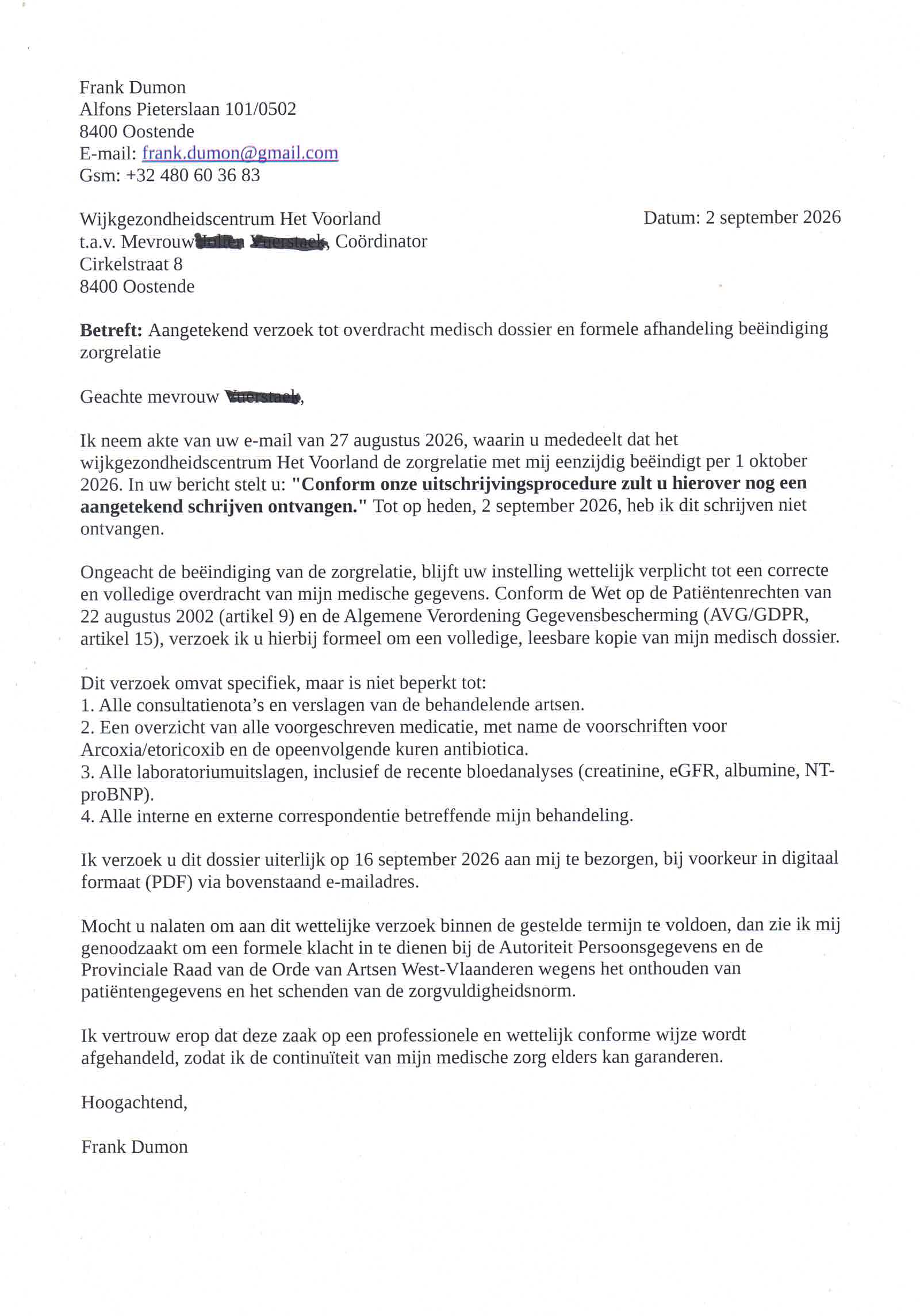
3. Expect doctors to listen to objective data (such as laboratory results) instead of resorting to unfounded accusations about lifestyle. De Jakobijn will continue to document this process. Not out of resentment, but out of principle. This is not only my story; it is a blueprint of how the system functions when it is confronted with the truth. The registered letter with my formal request for transfer of the medical record has now been sent. I will report any further delay or refusal to the Data Protection Authority and the Order of Physicians. For if we, as citizens, do not stand up for our rights, the medical monopoly will only become more arrogant. The price of illusion is too high. It is time for transparency.
Het Voorland - Registered Letter - September 2, 2026
Het Voorland Reply - Registered Letter - September 2, 2026

Dear Ms. Vuerstaek,
In response to your request, I hereby confirm that I have not only removed the hyperlink on the website in Dutch, English, French, and Vietnamese, but have also redacted your name in the published letter addressed to you.
The content of the letter and the factual mention of your institution remain in place within the framework of my right to freedom of expression and the public interest of transparency in healthcare.
Yours sincerely,
Frank Dumon
Telephone Response from Het Voorland on September 8:
Mr. Dumon, Your complete medical record is ready for collection at the reception. I have since done so.
My message to them was: your defensive reaction was unnecessary. I wish you every success in further developing your practice in harmony with Artificial Intelligence. Previously I could NOT consult my data on www.mijngezondheid.be but now I can.
If this is disputed by Het Voorland, I will publish the other so-called "confidential" screenshot.
Recent Jakobijn articles:
https://jakobijn.be/nl/waar-het-fiere-belgie-van-weleer
https://jakobijn.be/nl/belgie-heeft-nood-aan-een-economische-strategie-en-niet-aan-china-theater
https://jakobijn.be/nl/hoe-de-elite-onze-industrie-vernielde-en-de-rekening-bij-de-werkmens-legde