
Europe on the South American Tour: The Illusion of Prosperity and the Reality of Decline

By Frank Dumon
According to former ECB President Mario Draghi, in the past fifty years not a single European company has been built from scratch with a market value exceeding 100 billion euros. This is precisely the recipe that hollowed out large parts of South America, and specifically Argentina, in the last century. And Europe seems to have been following this path with impunity for almost two decades.
But is this gloomy comparison accurate? In this article, we analyze the facts behind European de-industrialization, rising government debt, the innovation gap, and geopolitical vulnerability. We test the hard reality and conclude with concrete recommendations for the way forward.
De-industrialization of the Heart of Europe
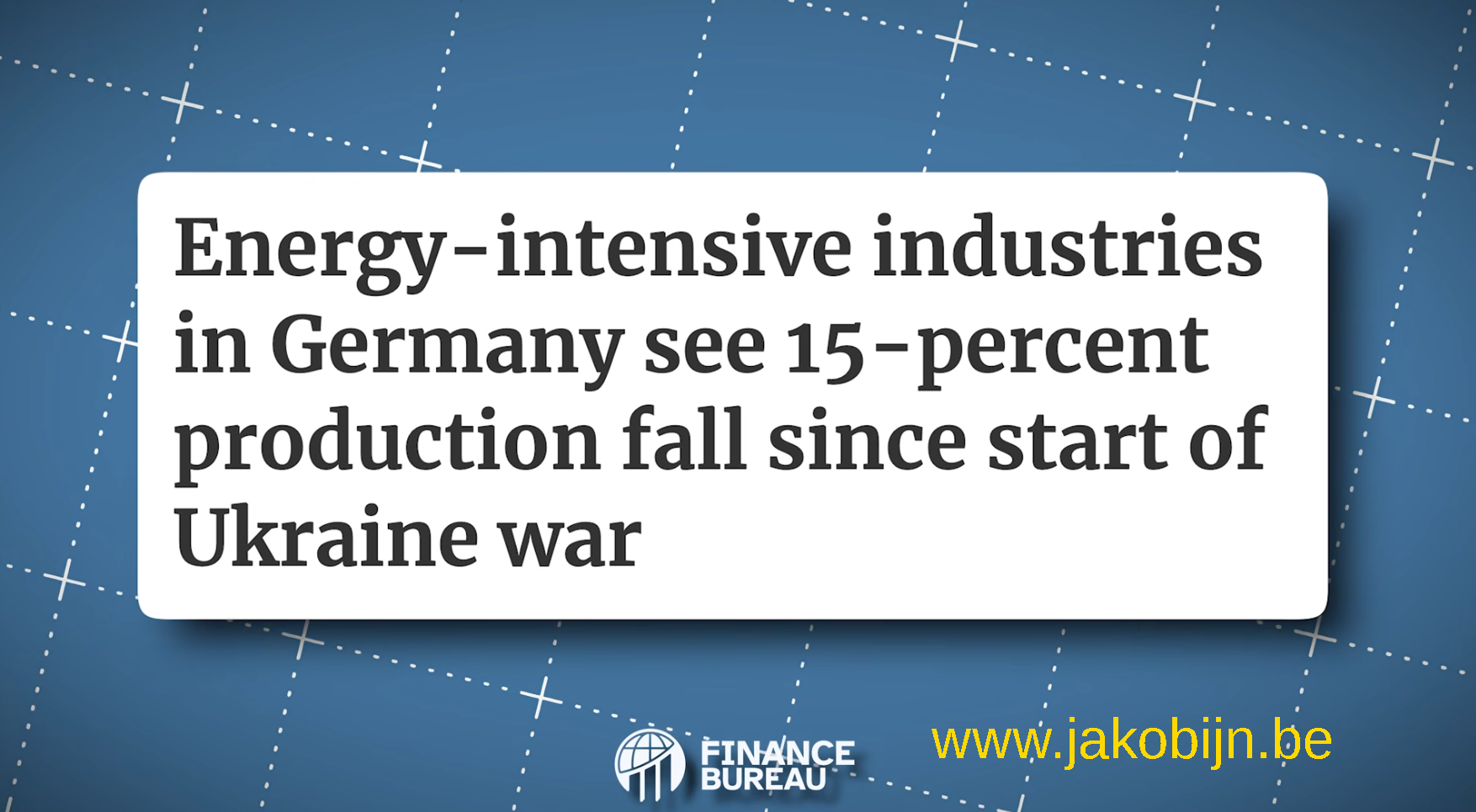
The biggest problem of the European economy today is the erosion of its industrial backbone. German industry is losing tens of thousands of jobs in the manufacturing sector every month. Industrial production is structurally lower than the 2018 level, and energy-intensive production has shrunk by double digits in recent years.
There is no better symbol of this crisis than Volkswagen. The group announced far-reaching restructuring, with large-scale job losses and the closure or repurposing of historic production sites in Germany. Where the company previously expanded, it is now shrinking its global production network. One does not plan for millions of fewer cars if one expects the factories to be needed; one closes them because operations in Germany have become unsustainable.
The Relocation Wave: Cost as a Driver
In addition to the internal German malaise, there is the relentless relocation of production capacity. Chemical giant BASF cut jobs at the world's largest chemical site in Ludwigshafen, while simultaneously investing billions in a brand-new mega-complex in Zhanjiang, China. BASF's CEO stated bluntly that a BASF that does not invest in China will by definition be weaker.
BASF is not an isolated case. Steel groups and suppliers such as ZF Friedrichshafen are announcing massive job reductions in Germany. The driving force is crystal clear: costs. The industrial electricity price in Germany structurally fluctuates between 18 and 20 cents per kilowatt-hour, compared to 8 to 14 cents in the United States and 7 to 12 cents in China. This gap is simply no longer bridgeable for energy-intensive industries.
The Rise of China
At the same time, cheaper Chinese brands are rapidly gaining ground in the EU. The market share of Chinese car brands in European passenger car registrations has doubled in rapid succession. Brands such as BYD, Xpeng and Leapmotor are not only building cars for the European market, but are now also producing them locally.
Note: Europe is rapidly transforming into the assembly floor for China's industrial base. But this is a one-way street. High energy costs and stifling regulations make European production uncompetitive. And once a chemical cracker or a blast furnace goes cold, it will not be restarted.
The French Debt Trap and Political Paralysis
De-industrialization means a shrinking tax base, and that brings us to the second major problem: government debt. There is one large European country that is seriously struggling to keep its head above water: France.
French government debt is approaching 112% of GDP, while economic growth is stagnating. The budget deficit stubbornly remains above 5%, keeping France in the European excessive deficit procedure. But it is the interest costs that tell the truth about the compounding crisis. The cost of debt servicing has exploded in recent years. France now spends more on interest payments than on many public services that citizens actually use. And that money yields nothing; it goes straight to creditors.
The major rating agencies — Fitch, S&P, Moody's — have all downgraded France's creditworthiness or placed it on a negative outlook. The political impasse in Paris is exacerbating the situation. Successive governments have foundered on the impossibility of forging a structural budget agreement. Parliament repeatedly failed to pass a budget on time, necessitating emergency legislation.
"I sound the alarm with gravity. We must adopt a budget to avoid precipitating the country into the ravine." — Sébastien Lecornu, Prime Minister of France, July 2025
This is the South American pattern in its purest form: a country where economic figures demand austerity, but politics makes austerity impossible, causing debt to continue growing exponentially.
The Innovation Gap and the Draghi Report
As if the problems in manufacturing and public finances were not bad enough, there is the complete absence of new technological giants.
In 2000, the EU accounted for more than 21% of global GDP. Today, that is only about 14%. China grew from 7% to 20% in the same period, and the US remained stable at around 25%. Since 2008, the real GDP of the US has more than doubled, while that of the EU grew by only a fraction.
Where has the value gone? There is currently no EU company to be found in the global top 25 of market capitalization. The largest European champions — ASML, SAP, LVMH, Siemens — have a combined value that does not even come close to a single American 'Big Seven' tech giant like Apple, Microsoft or Nvidia.
Here, Mario Draghi's 2024 report hits the nail on the head:
"It is a matter of concern that in the last 50 years not a single company in the EU with a market capitalization of more than 100 billion euros has been set up from scratch." — Mario Draghi, The Future of European Competitiveness, 2024
Every major European company is essentially inherited from the past. Nothing new is being built, because nothing new is being financed. Venture capital in the US exceeds that of the EU by a factor of five. Moreover, Draghi's analysis showed that 30% of European 'unicorns' between 2008 and 2021 moved their headquarters, almost all of them to the United States.
Draghi called for 750 to 800 billion euros in additional annual investments. Nearly two years later, the implementation of his recommendations has stalled at around 30%. The Capital Markets Union (CMU) is still stuck, and the promised '28th regimes' for startups remain on paper. Europe produced a perfect diagnosis of its own disease, everyone acknowledged the severity, and then no one did anything structurally about it.
The Energy Paradox and Geopolitical Vulnerability
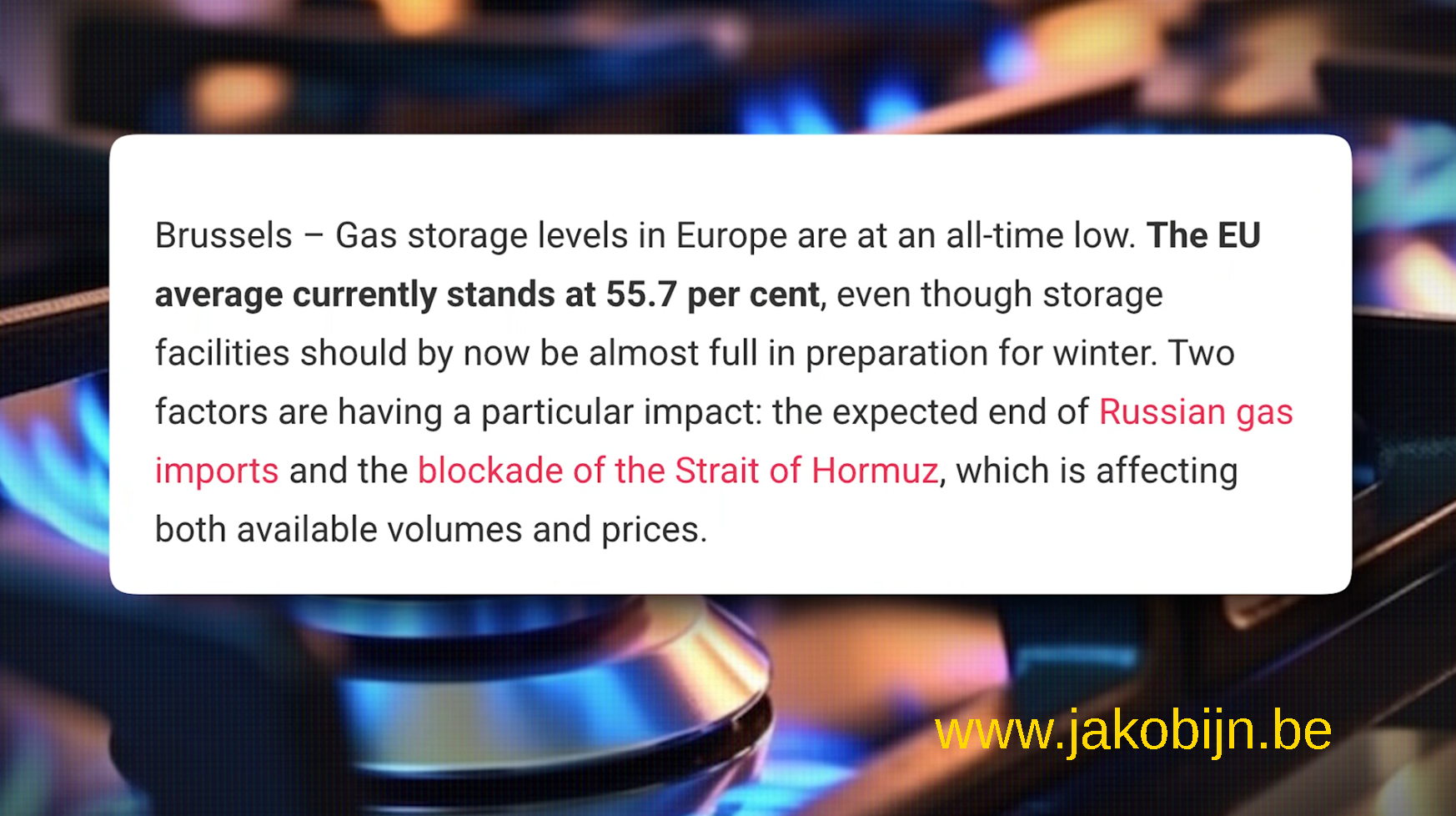
There is an additional threat lurking that mercilessly exposes European vulnerability: energy. At the start of winter, European gas storage is consistently below the desired fill level, particularly in core countries like Germany.
Prices on the Dutch TTF gas hub are extremely volatile. This volatility is driven by the market feverishly trying to price in geopolitical risks in the Middle East and the Russian threat. Should the situation in the Strait of Hormuz escalate, or should LNG facilities in Qatar (such as Ras Laffan) become targets of conflict, Europe would be facing an abyss. In winter, Europe competes monthly with Asia for the same flexible spot LNG cargoes.
Moreover, the European Union managed to trap itself in a bizarre energy paradox. Short-distance transport of Russian pipeline gas is banned in response to the war in Ukraine. At the same time, the EU imported record amounts of Russian liquefied natural gas (LNG) by tanker. Europe banned cheaper Russian pipeline gas, only to pay more for Russian LNG delivered by ship. This is not strategic energy policy; this is quicksand.
Capital Flight and the Political Earthquake
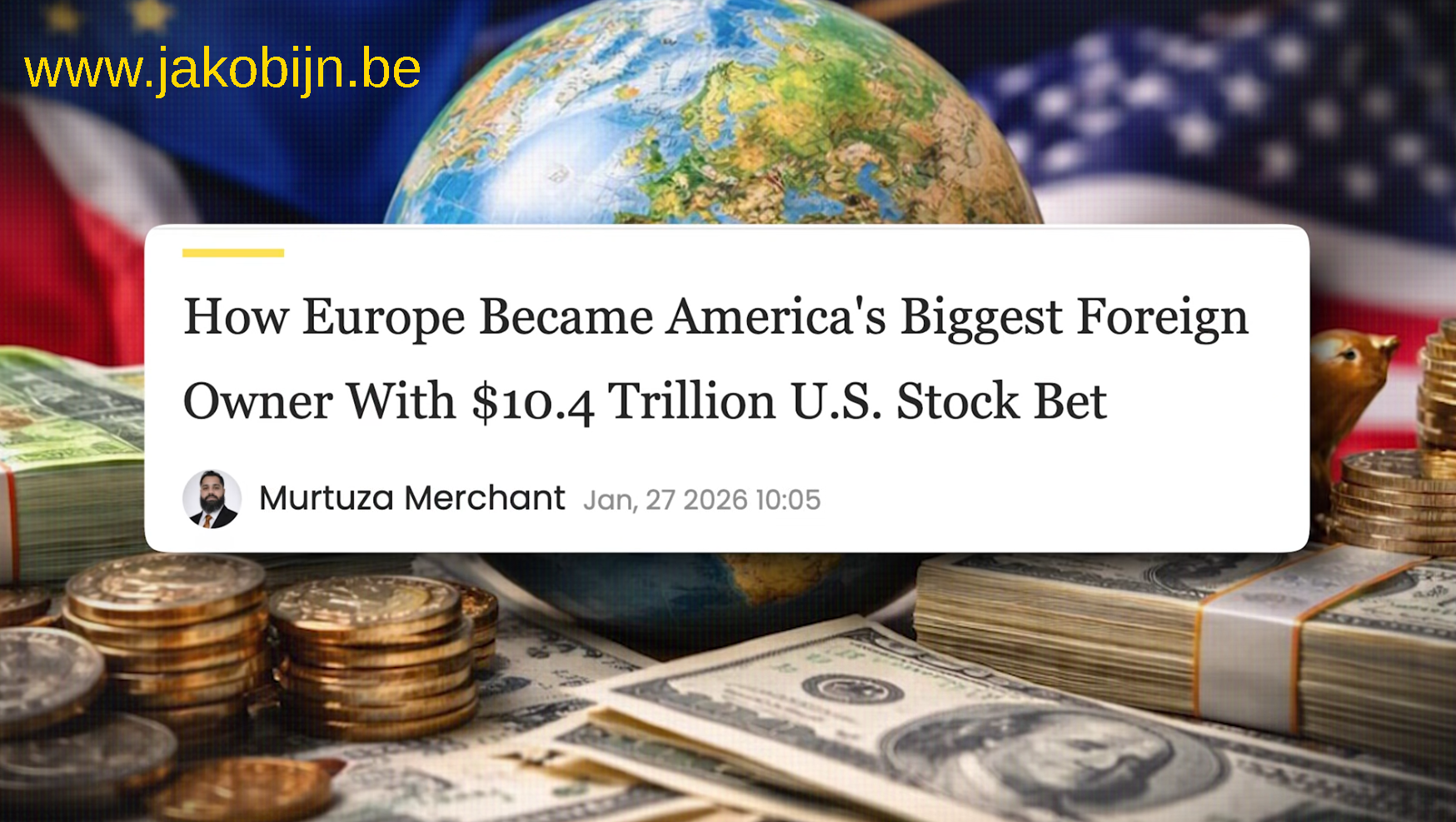 Those who can, are moving their assets or themselves. Households in the eurozone are estimated to now hold as large a share of their equity portfolios in the US as in their own continent. According to reports from Henley & Partners, France recently lost hundreds of millionaires through emigration, and Germany also saw a net outflow of wealthy individuals.
Ironically, Italy saw an inflow, mainly driven by its flat tax regime for foreign income. Capital does not flee just for the economy; it flees for the tax code. In countries like France and the Netherlands, taxing the possession of wealth rather than the return on it is becoming increasingly popular in political debate.
The South American Pitfall: The productive base shrinks, the deficit persists, and the state no longer taxes what you earn, but what you have. This accelerates the exit, shrinks the tax base further, and widens the deficit, until the next tax hike becomes inevitable.
The Political Consequences
Twenty years of stagnating wages, unaffordable housing, disappearing industry, and sky-high energy bills produce exactly one political outcome: a sharp reckoning with the political center.
- The AfD is polling at record highs in Germany.
- The Rassemblement National is around 30-35% in France.
- The FPÖ won the elections in Austria.
- In the European Parliament, national conservative and radical right blocs are occupying an increasing share of seats.
This leads to inevitable political battles: the EU's multiannual budget, the financing of Ukraine, the freezing of Russian assets, and the rearmament of Europe. Each of these dossiers requires unanimous support from governments that cannot even balance their own domestic budgets.
The destabilizing effect in South America was the permanent pendulum swing between extremes. Europe could become so fragmented that every new government undoes the policies of the previous one, making long-term planning impossible.
Recommendations: How to Break the Deadlock?
The comparison with South America is sharp, but Europe is not Argentina. Europe has strong institutions, the rule of law, and a huge internal market. But prosperity is a continuous flow, not a historical museum piece. To break the downward spiral, the following structural interventions are necessary:
- Completion of the Capital Markets Union (CMU): Europe must stop subsidizing solar energy and start integrating its capital markets. Pension funds must flow to European innovation and infrastructure, not to US government bonds. The '28th regime' for startups must become law immediately.
- A Realistic Energy Union: Stop the hypocrisy around Russian LNG. Invest massively in nuclear energy (as France and Sweden do) and joint gas infrastructure. Industry needs a guaranteed, competitive baseload price, otherwise the manufacturing sector will leave for good.
- Simplify Regulation (Deregulation): The European Green Deal and AI Act are noble in intent, but they stifle the speed of implementation. Europe must move from 'preventive prohibitions' to 'adaptive regulation'.
- Joint Defence Industrialization: The 226 billion euros that Europe still needs to spend to meet NATO standards must not lead to 27 different national weapons programs. There must be one European defence industrial base with joint procurement, generating economies of scale and technological innovation.
- Fiscal Competitiveness: Stop the hunt on wealth. Tax systems must shift from taxing capital and labour to taxing raw materials, pollution, and closing tax avoidance. Capital flight must be stopped by an attractive business climate, not by coercion.
Conclusion: The Price of Complacency
No one in Buenos Aires woke up one morning and consciously chose decline. Each time, they chose a reasonably sounding decision to protect the established order, to tax the productive sector, to borrow against the future, and to see every crisis as merely a temporary dip.
The standard counterargument for Europe is that it has strong institutions, the rule of law, and the assumption that it is simply a rich continent. But Argentina in 1930 also had all three of those things. At that time, it was considered by economic historians to be one of the richest nations in the world, richer per capita than France.
Europe has been living off its historical legacy for decades and has become complacency itself. The price of that complacency now threatens to lead to the status of an economic hinterland. It is a harsh but necessary reminder:
"Past performance is no guarantee of future returns."
Sources and Further Reading
- Draghi, M. (2024). The Future of European Competitiveness: In-depth analysis. European Commission.
- Eurostat & ECB (2024-2025). Quarterly reports on Industrial Production, Government Deficit/Debt, and Energy Storage levels.
- Henley & Partners (2024/2025). Global Private Wealth Migration Report.
- Bruegel (2025). European Natural Gas Storage and LNG Import Tracking.
- VDA (Verband der Automobilindustrie) & BASF Annual Reports (2024/2025).
- NATO (2025). Annual Report on Defense Expenditure.