
PART III – QUẢNG TRỊ: The War from a Vietnamese Perspecive
The military and civilian experiences of a divided province
By Frank Dumon and Kiều Bích Hậu
Quảng Trị occupies a distinctive place in the history of the Vietnamese struggle for independence, the division of the country and the long process of reunification. It was a borderland in more than one sense: a province of villages, river crossings and cultivated fields, but also a landscape transformed into a military frontier. During the war, roads and bridges became strategic objectives; hills and valleys became fortified positions; and the lives of civilians were repeatedly interrupted by decisions made in distant political and military centres.
This part of The Price of Illusion approaches that history through Vietnamese memory, official records, military history and the testimony of people who lived through it. At its centre stands our interview with Senior Lieutenant General Nguyễn Huy Hiệu, conducted in Hanoi on 21 October 2026. His recollections are not offered as an impersonal summary of the war. They are the account of a participant who entered military service as a young man, fought in Quảng Trị and continued to reflect on the fate of his comrades, the civilian population and the unfinished responsibilities of peace.
Historical understanding requires more than one kind of evidence. A soldier's memory can convey the intensity and moral weight of an experience that an operational report barely captures; an official chronology can place that memory within a larger sequence of events; and a civilian testimony can reveal consequences that neither account fully describes. The narrative that follows therefore distinguishes recollection from independently documented facts and preserves differences between Vietnamese and American historical accounts where they matter.
III.1 – Quảng Trị: A Province Divided by War
The provisional line that shaped a generation
The 1954 Geneva settlement ended the war between France and the Democratic Republic of Vietnam and introduced a provisional military demarcation line. In the Quảng Trị region the Bến Hải River and the Hiền Lương Bridge became enduring symbols of national division. Crucially, the Geneva Conference's Final Declaration stated that the military line was provisional and should not be understood as a political or territorial boundary. It was an arrangement intended to separate military forces pending a political settlement, not a permanent definition of two Vietnamese nations. The distinction was clear in the diplomatic text, but daily life on either side of the line would be marked by separation, suspicion and the militarisation of the surrounding countryside. [1] [2]
The geography made the province extraordinarily vulnerable. The coastal plain, north-south transport links and the routes leading west toward Laos intersected within a comparatively narrow territory. Route 9 connected the coast and Đông Hà with the western highlands and the Khe Sanh area. To military planners the road was a supply route and a line of movement; to the people living alongside it, it was also the road to markets, schools, relatives and places of worship. The same terrain could therefore have radically different meanings depending on whether it was viewed from a headquarters map or a family home.
War gradually changed the vocabulary of the landscape. Places such as Cồn Tiên, Gio Linh, Cam Lộ, Đông Hà and Khe Sanh became known internationally through reports of military operations. Yet these were never empty coordinates. A village named in a battlefield dispatch represented homes and fields; a river crossing represented both an operational problem and an ordinary route of human movement. Recovering the human significance of these places is essential to a Vietnamese account of Quảng Trị.
Military history and the limits of the map
American military histories describe the struggle for the northern provinces in terms of allied positions, infiltration routes, major engagements and the defence of populated areas. Vietnamese historical accounts emphasise resistance, the relationship between military action and national liberation, and the sacrifices made by soldiers and communities. Both bodies of evidence are relevant, but neither should be mistaken for a complete account of the people who lived there. For example, the United States Army's study of the northern provinces in 1966–1968 concentrates on military operations in Quảng Trị and Thừa Thiên, while Vietnamese commemorative accounts situate those operations within a longer history of independence and reunification. [3]
The purpose of this chapter is not to erase these differences by inventing a neutral voice that no participant possessed. Rather, it is to ask what each source can establish, what it leaves unanswered and how Vietnamese firsthand testimony changes our understanding of events. A battle can have an operational outcome, a political interpretation and a human cost. All three belong to the historical record.
III.2 – From Route 9 and Khe Sanh to the Battles of 1972
1968: A province at the centre of the war
The year 1968 brought Quảng Trị into the centre of the world's attention. The fighting around Khe Sanh, the battles along Route 9 and the wider Tết Offensive became subjects of intense military and political argument. American accounts analysed the defence of bases, the movement of forces and the impact of the campaign on allied operations. Vietnamese accounts placed those battles within a wider offensive intended to change the balance of the war and demonstrate the endurance of the Vietnamese revolutionary forces. [3] [4]
In our interview, Nguyễn Huy Hiệu recalls his participation in the 1968 campaign and the prolonged fighting around Cồn Tiên. He speaks of the 52 days and nights in which his unit encircled and pressured the base, identifying his position at the time as a platoon commander in Regiment 27. This is a valuable firsthand statement, especially because it connects a military episode to an individual's changing responsibilities. The precise unit designations, dates and operational details should nevertheless be checked against contemporary records and the general's own book before they are treated as independently established.
His account also refers to the surprise attack on an American mechanised infantry group at Sáp Đá Mài in Cam Lộ in April 1970. He remembers the event in terms of initiative, tactical ingenuity and the risks assumed by his soldiers. The value of such a recollection lies partly in its specificity: it offers names, places and a participant's sense of the decisions involved. That specificity also imposes a duty of careful verification. The editorial responsibility is to retain his voice while checking the associated facts rather than silently turning every remembered detail into an unattributed historical assertion.
1972: Liberation, counteroffensive and the struggle for the citadel
The spring of 1972 marked another decisive phase. Beginning on 30 March, North Vietnamese forces launched a large conventional offensive on several fronts. Quảng Trị was one of its principal theatres. American military histories record rapid North Vietnamese advances, the fall of Quảng Trị City in the spring and the subsequent South Vietnamese counteroffensive. Vietnamese histories emphasise the liberation campaign, the defence of Quảng Trị and the extraordinary tenacity of the soldiers holding the citadel area under intense bombardment. [4] [5] [6]
The struggle that began with the South Vietnamese counterattack of 28 June is remembered in Vietnam as the 81 days and nights of the defence of Quảng Trị Citadel and town. Vietnamese military commemorations generally mark the period from 28 June to 16 September 1972. A United States Army historical account places the recapture of the citadel on 15 September and the recapture of the city on 16 September. These descriptions reflect different reporting conventions as well as different institutional perspectives. For our purposes the honest approach is to identify the source and event being dated rather than conceal the distinction. [5] [6]
No short narrative can fully convey what continuous bombardment, close combat, interrupted supply lines and severe losses meant to those on the ground. The citadel became at once a military position and a site of national remembrance. The Thạch Hãn River, associated with movement and supply during the campaign, also became part of the memorial landscape in which later generations honoured those who died. The official cultural and historical institutions of Quảng Trị continue to present these places as sites of remembrance and appeals for peace. [7]
General Nguyễn Huy Hiệu's testimony makes the connection between these events and their long aftermath. When he speaks of Quảng Trị's cemeteries and the continuing search for missing comrades, the battlefield is no longer confined to 1972. It extends into the present through unidentified remains, commemorative practices and the memories of families. A military campaign may have a formal end date; grief and responsibility do not.
What historical comparison contributes
Comparing the two military traditions is not an exercise in giving every claim equal evidentiary weight. Official histories represent organisations that had strategic interests, operational vocabularies and political commitments of their own. Their documents remain indispensable, especially when checked against one another and against first-person evidence. The contrast is particularly important in Quảng Trị, where phrases such as “liberation,” “recapture,” “defence” and “withdrawal” can describe parts of the same sequence while conveying sharply different judgments about its meaning.
In this book, Vietnamese accounts have a deliberate central place. That choice responds to an imbalance in much English-language remembrance, which has often privileged the experience of American combatants and policymakers. It does not require suppressing evidence from other sources. On the contrary, the Vietnamese story is strongest when the chronology is precise, the testimony is preserved and the reader can see how conclusions have been reached.
III.3 – A Firsthand Voice: Interview with Senior Lieutenant General Nguyễn Huy Hiệu
The following interview is presented as a continuous primary-source testimony. It was recorded in Hanoi on 21 October 2026 and subsequently edited for readability, with corrections communicated through Kiều Bích Hậu following consultation with the general. The eight chapters are retained together because his reflections on Quảng Trị are inseparable from his family background, his service in the final campaign of 1975, his encounters with American veterans and his thinking about reconciliation.
The interview is not a verbatim, independently audited transcript. Its first-person passages should be understood as Nguyễn Huy Hiệu's recollections and interpretations. His factual claims remain attributed to him where separate verification has not been completed. Its photographs and embedded videos are retained from the original Drupal manuscript.
Interview with Senior Lieutenant General Nguyễn Huy Hiệu
Hanoi, 21 October 2026
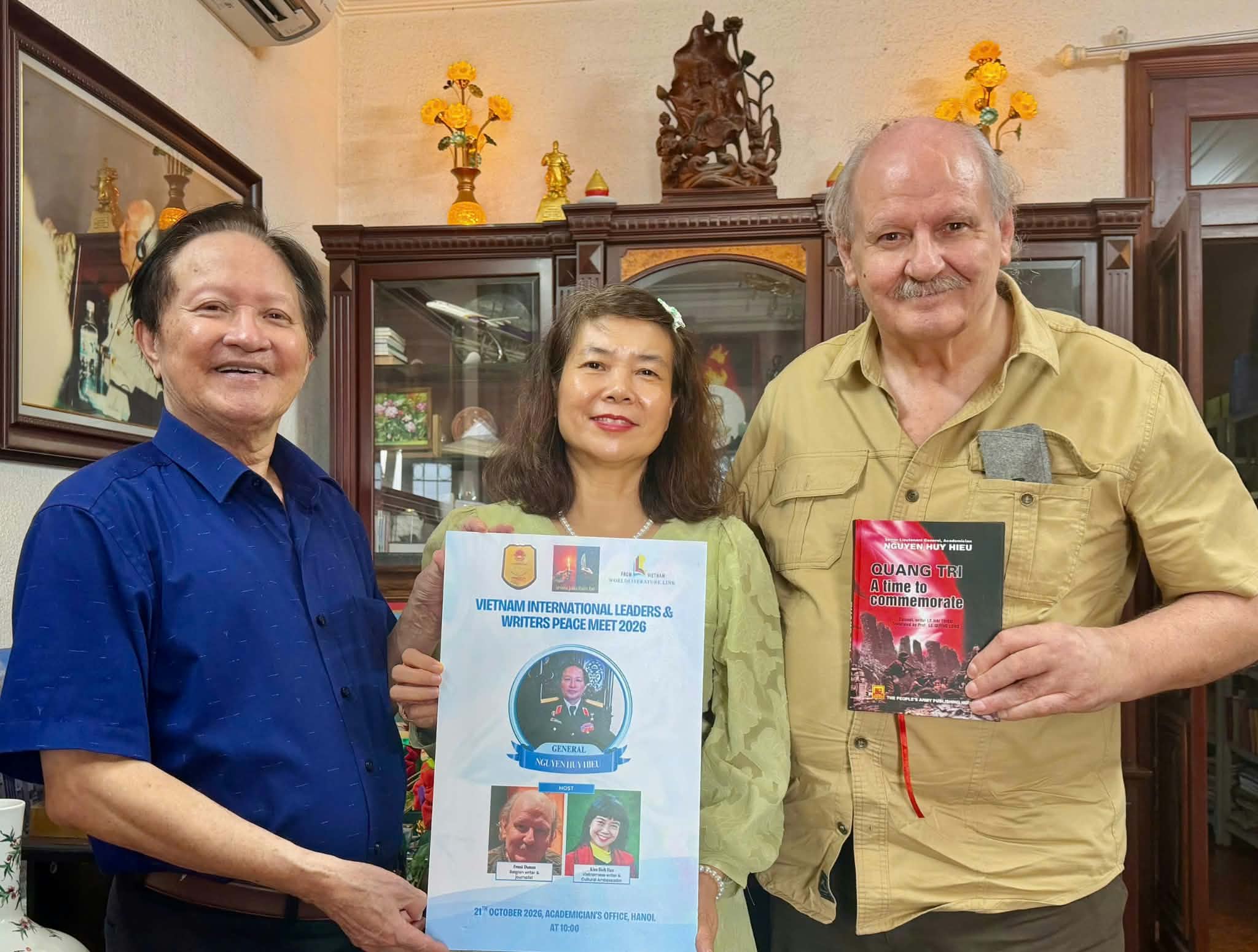
This interview has been edited for readability from the audio recording made in Hanoi on 21 October 2026. Journalist, writer and translator Kiều Bích Hậu consulted Senior Lieutenant General Nguyễn Huy Hiệu and communicated specific corrections, which are incorporated here. The account reflects his memories and views; editorial clarification should not be mistaken for independent verification of every historical detail or figure.
Chapter 1. From the Call for Independence to the Years of War
Interviewer: Let us begin now. Through your own account, we hope to understand and preserve the parts of history that must be passed on to future generations.
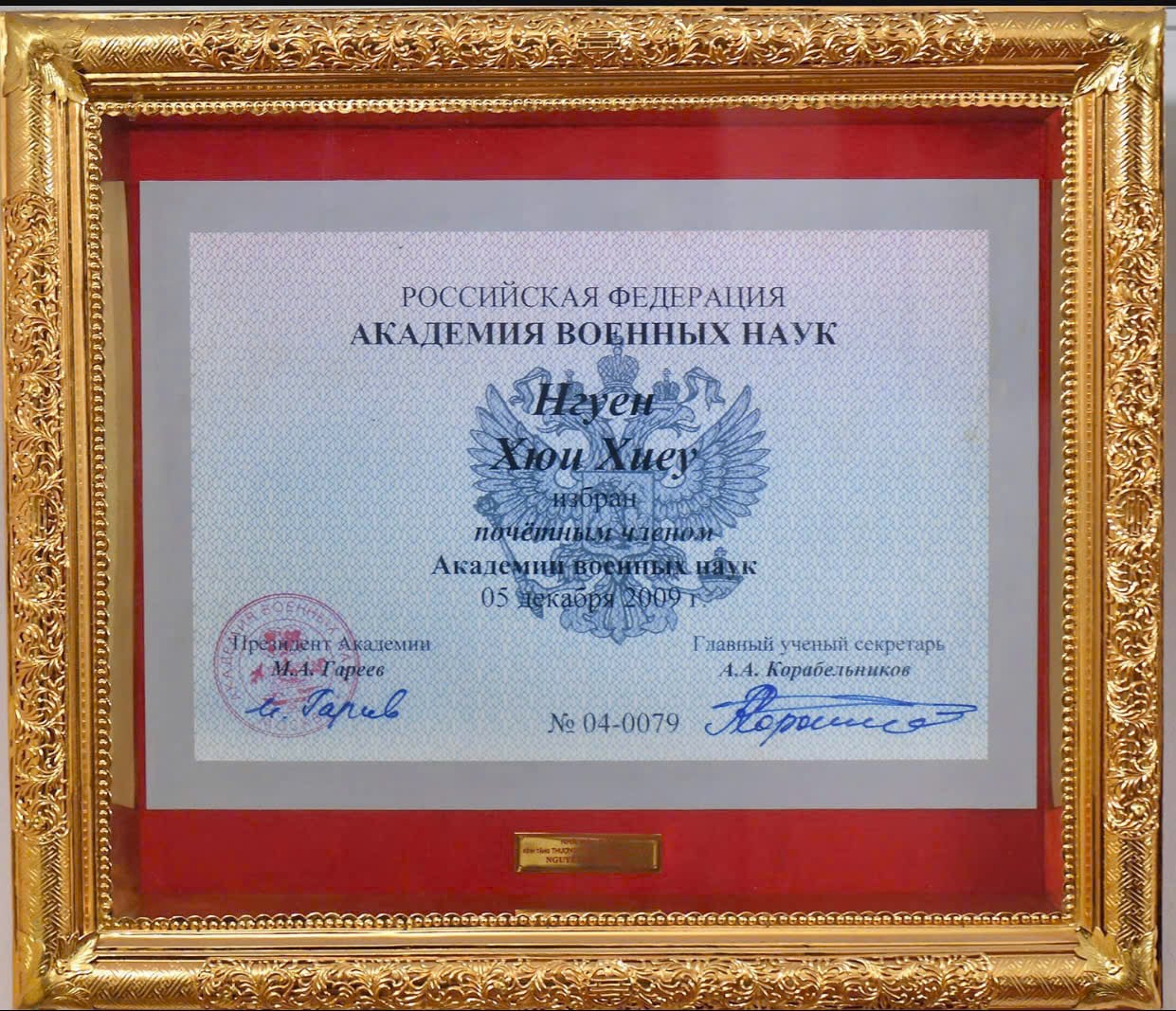
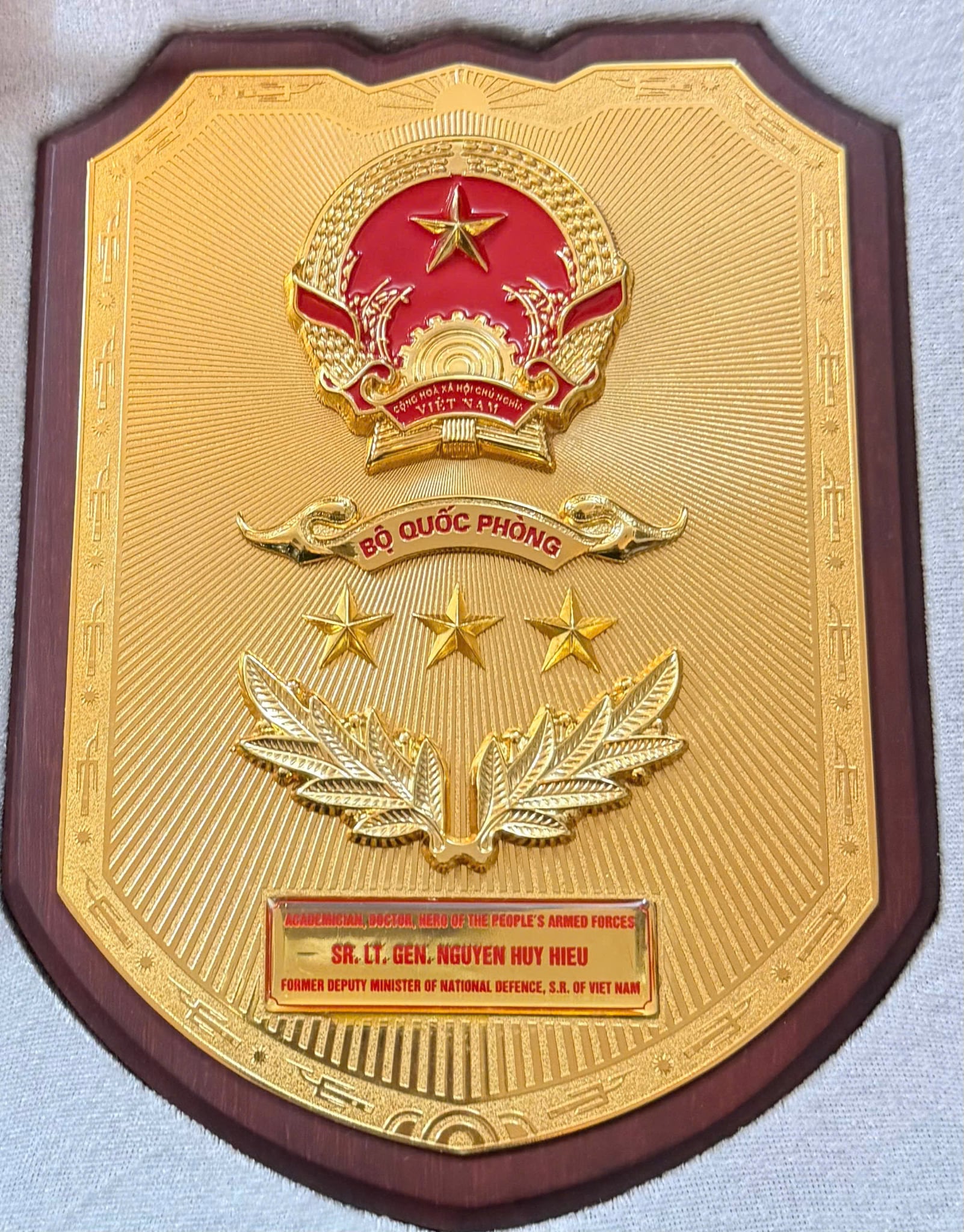
Senior Lieutenant General Nguyễn Huy Hiệu: I am Senior Lieutenant General, Academician and Doctor Nguyễn Huy Hiệu, former Deputy Minister of National Defence and Hero of the People's Armed Forces. I am now in my eightieth year. I was born on 27 July 1947.
In 1964, when the United States provoked the Gulf of Tonkin incident, particularly on 5 August 1964, we were still schoolchildren. Answering Uncle Hồ's call, we put aside our books and pens and resolved to join the army. I officially enlisted on 20 February 1965. We carried with us the conviction: “Nothing is more precious than independence and freedom”; “We would rather sacrifice everything than lose our country; we are determined never to be enslaved.”
That was 62 years ago. We left Hanoi, crossed the Trường Sơn Mountains along the Hồ Chí Minh Trail and went south to fight alongside our compatriots and fellow soldiers for the liberation of the South and the reunification of the country. We always remembered Uncle Hồ's words: “Vietnam is one country, the Vietnamese people are one nation. Rivers may run dry and mountains may wear away, but that truth will never change.”
It was a great honour for me to take part in the resistance war against the United States, for national salvation. I participated in four major campaigns: the Tết Mậu Thân General Offensive and Uprising in 1968; the Route 9–Southern Laos Campaign in 1971; the Quảng Trị Campaign in 1972; and the Hồ Chí Minh Campaign in 1975.
During my years in combat, I successively held command positions from squad leader, platoon leader, company commander and battalion commander to regimental commander. I directly participated in, commanded and fought in 67 battles.
The Vietnamese nation endured long and arduous wars of resistance: nine years against French colonialism, followed by nearly twenty years of war against the United States. The victory at Điện Biên Phủ in 1954 was a major historical milestone. When we recall that period, we remember the lines: “Nine years forged a Điện Biên / A red wreath of flowers, a golden page of history.”
In my view, France and the United States did not fully understand the culture, traditions and strength of unity of the Vietnamese people. I believe those wars were linked to ambitions to control Vietnam, to obstruct the national liberation movement and to prevent the development of socialism. That is how I explain the objectives of the great powers at the time.
What they failed to understand was the unity of the Vietnamese people, of the 54 fraternal ethnic groups, and their aspiration for independence and freedom. For the young people of my generation, our greatest goal was to liberate the South and reunify the country.
I want you to imagine the military power that the United States brought into South Vietnam. Bombs, shells and other instruments of war caused extremely grave consequences. Even the majestic Trường Sơn Mountains were severely affected by chemical agents, including the dioxin associated with Agent Orange. Those consequences have persisted across generations.
According to the postwar statistics known to me, more than 300,000 people were missing on the battlefields of Vietnam, Cambodia and Laos. So far, the remains of 100,000 have been recovered, leaving approximately 200,000 people still missing; more than three million people were affected by chemical agents. In some families, fathers, children and grandchildren alike have had to bear the consequences. This is an immense source of suffering.
We continue to discuss humanitarian responsibility and efforts to address the consequences of war with the American side. The Americans have a programme to search for missing service personnel, generally referred to as MIA. Vietnam, too, has a great many missing people who need to be found. In my opinion, both sides have a responsibility to cooperate in this humanitarian work.
In places such as Đà Nẵng Airport, Phù Cát and especially Biên Hòa, dealing with chemical contamination remains a very important issue. Alongside that is the problem of landmines and unexploded ordnance left behind by the war. People working in rice fields and on farmland still face the danger of encountering explosives. There have been tragic accidents when people collected bombs or shells and took them home to modify them for other purposes. These consequences cannot be resolved overnight.
In 2004, I travelled to Belgium on an official visit and attended a press meeting with Ms Tôn Nữ Thị Ninh, former Ambassador Extraordinary and Plenipotentiary of Vietnam to the European Union. Then, in 2005, during a visit to the United States, I spoke before American writers, journalists and members of Congress about the severe consequences of the war in Vietnam — from the loss of human life and property to the destruction of the natural environment. I earnestly called for international humanitarian cooperation and assistance to gradually alleviate the suffering that remained.
One task of particular importance to us is to continue searching for comrades who gave their lives. Recently, at Lê Thị Riêng Park (Saigon), a search lasting more than 100 days and nights (as part of the 500-Day-and-Night Campaign) discovered the remains of 731 fallen soldiers who had fought during Tết Mậu Thân in 1968. This is only a beginning; many more have yet to be found.
Sources cited in the Vietnamese text: Lao Động, “The remains of 800 fallen soldiers recovered at Lê Thị Riêng Park”; Dân Trí, “Remains of 800 fallen soldiers recovered at Lê Thị Riêng Park”; Báo Xây Dựng / Báo Mới, “Remains of more than 700 fallen soldiers recovered at Lê Thị Riêng Park”; and the Government Electronic Information Portal (BaoChinhPhu.vn), reports on the progress of the “500-Day-and-Night Campaign to Accelerate the Search, Recovery and Identification of the Remains of Fallen Soldiers.”
Many of our comrades still lie on former battlefields, in forests, beneath rivers, at river mouths and in streams and ravines. We must continue this journey of searching for them.
I want to speak particularly about Quảng Trị, where I spent nine years. As far as I know, the province has 72 cemeteries for fallen soldiers, including two national cemeteries: the Route 9 National Martyrs' Cemetery and the Trường Sơn National Martyrs' Cemetery. In addition, there are many other resting places and many comrades whose remains have still not been found.
Imagine the losses suffered in Quảng Trị. During the 81 days and nights of fighting to defend the Quảng Trị Citadel, bombs and shells caused terrible devastation. The war inflicted losses on the Vietnamese people and on the American side as well. It was a great tragedy.
That is why the message I want to send you is this: we must close the chapter on the past and look towards the future, but we must not forget the consequences of war. Today's generations and those to come must strive to protect peace and prevent such wars from ever happening again.
I continue to honour my comrades, fellow soldiers and compatriots. I have written ten books, and writers and journalists have written 17 books about me. I am particularly concerned with clearing mines and unexploded ordnance and restoring the environment after the war, so that people can live in safety.
I also hope you will learn more about the battles in which I took part, including the 52 days and nights of encircling and pressuring the Cồn Tiên base in Quảng Trị in 1968, when I was commander of Platoon 3, Company 2, Battalion 3, Regiment 27 (B5 Front); and the surprise attack that completely destroyed an American mechanised infantry group consisting of 16 armoured vehicles at Sáp Đá Mài (Tân Kim, Cam Lộ, Quảng Trị) on the night of 4 April and the early morning of 5 April 1970, when I was commander of the lead assault unit, Company 2.
During the war, the American side employed many modern military strategies and means, from “airmobile” and “armoured mobility” tactics to General Creighton Abrams's “wild buffalo” tactic, as well as the McNamara electronic barrier system stretching through Cồn Tiên. Together with the armed forces and people throughout the country, we fought those strategies with ingenuity and courage...
I tell you these things so that you can imagine something of the years my generation lived through, and understand why preserving memories, searching for comrades and protecting peace remain so profoundly meaningful to me today.
Chapter 2. The Lightning-Fast March and the Final Days of April 1975
1. The Principle of “Fighting While Negotiating”
In the final years of the resistance war against the United States, we followed the principle of fighting while negotiating. The struggle on the battlefield went hand in hand with the diplomatic struggle, including the years of negotiations at the Paris Conference. Our ultimate objective was to fulfill Uncle Hồ's teaching and resolve: “Fight until the Americans leave and the puppet regime collapses,” advancing towards the liberation of the South and national reunification. When the American strategy of “Vietnamisation of the war” failed, the war entered its decisive stage.
2. The 1,700-Kilometre March
In 1975, I was commander of Regiment 27 (320B Division, 1st Army Corps — the Quyết Thắng, or “Determined to Win,” Corps). The division commander at that time was comrade Lưu Bá Xảo and the political commissar was comrade Đỗ Mạnh Đạo; the commander of the 1st Army Corps was comrade Nguyễn Hòa, and its political commissar was comrade Hoàng Minh Thi.
On 18 March 1975, at Tam Điệp (Ninh Bình), I received orders to lead approximately 2,000 officers and soldiers of Regiment 27, together with 1,000 attached reinforcement troops (almost 3,000 personnel in total), on a mechanised march to Đông Hà to serve as a reserve force for the campaign to liberate Huế and Đà Nẵng. A 15-watt communications set from the General Staff accompanied me directly to allow orders to be issued across the usual levels of command.
By 26 March 1975, when we reached Huế, the city had already been liberated. We received further orders to cross Hải Vân Pass and proceed to the Sơn Trà Peninsula (Đà Nẵng). On 29 March, Đà Nẵng, too, was liberated.
After that, the General Staff instructed the regiment, via the 15-watt radio, to return to Đông Hà for a new mission. Under the orders given by comrades Lê Quang Hòa and Hoàng Minh Thi, the whole unit boarded vehicles and followed Route 559, marching from Đông Hà through Ăm Boun Pass (west of Thừa Thiên Huế) to assemble at Đồng Xoài in preparation for the Hồ Chí Minh Campaign.
It was the dry season, and clouds of red basalt dust enveloped the soldiers. When we reached Ăm Boun Pass, the road was badly blocked by mud. We had to send in the engineer company and Battalion 5 to build a detour around the bog so that the convoy could continue.
After many exhausting days and nights of travel, we received an urgent message over the 15-watt radio from General Võ Nguyên Giáp, signed “Anh Văn”: “Speed, still greater speed; boldness, still greater boldness; seize every hour, every minute, press forward to liberate the South. Fight decisively and win complete victory.”
When the message was read out, all the officers and soldiers seemed suddenly to come alive and forgot their exhaustion. Throughout the 12 days and nights of marching, our supplies and food were very basic: mainly compressed rations, roasted rice and canned meat. We stopped to cook rice only when we found a source of water. The unit arrived at its assembly point in Đồng Xoài on schedule.
3. Advancing towards the Approaches to Saigon
During the march south, while one of our engineer platoons was repairing the road at Đồng Xoài, enemy aircraft/rocket fire killed several comrades. The unit had to send in reserve personnel to replace them and keep the road open for the vehicles.
- Night of 25 April 1975: All of Regiment 27 assembled at Bàu Cá Trê (north of Tân Uyên), along Route 16.
- Morning of 26 April 1975: At the opening of the Hồ Chí Minh Campaign, the unit attacked the Tân Uyên outpost. Enemy fire destroyed three of our vehicles, killed five comrades and wounded several others. After an hour of fighting, in cooperation with another unit, we took control of Tân Uyên, captured prisoners to guide us, and advanced along a red-earth road through Bình Chuẩn.
- Evening of 29 April 1975 (around 7:00 p.m.): The entire regiment, almost 3,000 men, reached its assembly area north of Lái Thiêu District (about 10 kilometres away).
Under our coordinated plan, the recognition signal for our underground supporters was to call “Hồ Chí Minh” and receive the reply “Long live!” In the darkness around Lái Thiêu, I noticed a house with its lights switched off, but a faint light that appeared and disappeared inside. Together with comrade Trịnh Văn Thư (the regimental political commissar) and a reconnaissance team, I approached the house. After I called the signal “Hồ Chí Minh” three times, an elderly woman opened the door and softly answered, “Long live!”
4. The Mother and the Map
Inside the modest house, I met the woman we later came to know as Mother Sáu Ngẫu, whose real name was Huỳnh Thị Sáu. Her two children were there: Phước, her 16-year-old daughter, and Đức, her 14-year-old son.
I spread out my military command map and said: “Mother, I am a commander of the Liberation Army. Tomorrow morning my unit has the mission of taking Lái Thiêu, capturing Vĩnh Bình Bridge and advancing against the puppet regime's Armoured Command in Gò Vấp. If you know the terrain, please show us the way.”
Mother Sáu Ngẫu put on her spectacles, looked at the military map and said she was not accustomed to reading that type of map. She went into another room, brought out a map of metropolitan Saigon (her handwriting was very beautiful) and carefully gave us directions:
- About five kilometres away was Huỳnh Văn Lương Camp, with roughly 2,000 enemy non-commissioned officers under Colonel Hinh. When we advanced the next morning, we should call on them to surrender rather than attack — an appeal to enemy troops.
- We had to seize Lái Thiêu quickly and, without fail, capture Vĩnh Bình Bridge. If we could not take that bridge, our tanks could not enter the city (only the iron Lái Thiêu Bridge would remain, which infantry could cross but tanks could not).
- She even offered to board a vehicle with her two children and guide the Liberation Army herself. I asked her to stay at home, however, because underground urban fighters, including Ms Hai Mỹ and Mr Sáu Châu, were already guiding us.
5. The Battle at Vĩnh Bình Bridge and the Advance into Gò Vấp
 We acted in accordance with the principle “Speed, boldness, decisive victory”: bypass the outer positions, penetrate deep into the interior and minimize casualties among civilians and soldiers.
- 4:30 a.m. on 30 April: The mechanised formation began its attack along Route 13. At the Lái Thiêu junction, we destroyed three enemy vehicles and successfully called on almost 2,000 enemy soldiers at Huỳnh Văn Lương Camp to surrender without firing a shot.
- Around 9:00 a.m. on 30 April: The unit attacked and captured Vĩnh Bình Bridge. The tank of comrade Hoàng Thọ Mạc (tank company commander) broke down. Comrade Mạc bravely left his vehicle and personally commanded a B41 anti-tank team, which destroyed three enemy vehicles. He was then seriously wounded and died. I decided to place comrade Mạc's body in the command vehicle so that we could continue the advance. After the battle, he was posthumously awarded the title Hero of the People's Armed Forces.
- Around 10:00 a.m. on 30 April: Regiment 27 captured the puppet regime's Armoured Command in Gò Vấp, took over 13 army bases and workshops in Gò Vấp, and assumed control of the Republic Hospital (now Military Hospital 175).
- At the Republic General Hospital, our forces captured Brigadier General Phạm Hà Thanh (director of the puppet regime's Military Medical Department) alive. General Thanh requested clemency. I required him to announce an unconditional surrender and hand over the entire hospital, together with around 400 doctors and other medical staff and nearly 200 wounded enemy soldiers. On humanitarian grounds, I allowed the wounded enemy soldiers to return to their families for care and retained the doctors under the command of the commander of Medical Company 4 (comrade Chánh) to treat our wounded.
6. Returning to Thank the People of Lái Thiêu
- On 1 May, after taking part in a mechanised parade past the Independence Palace, I commanded three vehicles back to Lái Thiêu that afternoon, 1 May 1975, to thank the local people.
- The people of Lái Thiêu lined the roads with flags and flowers and welcomed the Liberation Army with southern fruits: mangosteens, mangoes, durians and rambutans.
- Mother Sáu Ngẫu was later posthumously awarded the Resistance Order, First Class, by the State, and the formalities for a proposal to posthumously award her the title Hero of the People's Armed Forces were completed. Her family and the unit built a grave and a monument for her in Lái Thiêu.
- The article “The Regiment's Mother Adviser” in People's Army Newspaper (Quân đội nhân dân) and the song “The Map Mother Handed Us” (Tấm bản đồ má trao), composed by Văn Thành Nho, became cherished memories, and the song was often played on Voice of Vietnam radio around 30 April.
7. Preserving Memories for Future Generations
These specific stories of people, battles and the quiet assistance of ordinary citizens form a heritage that must be recorded for future generations.
Readers wishing to learn more about the years of fighting on the Quảng Trị battlefield and the journey to liberate the South can consult Senior Lieutenant General Nguyễn Huy Hiệu's book Một thời Quảng Trị (A Time in Quảng Trị). It has been published, widely introduced to readers and translated into English.
Chapter 3. Childhood, Family Traditions and the Path into the Army
Question: During your early years, particularly when you were around 16 or 17, which experience had the most profound influence on your decision to join the army?
Answer: by Senior Lieutenant General Nguyễn Huy Hiệu: I was born in the countryside of Hải Hậu, into a farming family. From an early age, I was brought up in the traditions of my family, my ancestral lineage and my home region. When I was just nine years old, my father took me on foot from Hải Hậu (Nam Định) all the way to Gia Viễn District (Ninh Bình), to the temple where commemorative rites were held for our ancestor Nguyễn Bặc, Duke of Định Quốc. Stories about our ancestors and our origins made me think deeply about each person's responsibility towards the country.
My father had studied classical Chinese characters for many years. Thanks to him, I too learned the traditional characters, chữ Nho, for about three years when I was young. Those studies, together with the disciplined way of life in our family, helped to develop my determination, perseverance, compassion and deeply held beliefs about how a person should live.
I was especially interested in figures from our national history, such as Ngô Quyền, Trần Hưng Đạo, Nguyễn Trãi and Quang Trung — Nguyễn Huệ. The stories of how our ancestors defended the country gave me much to think about.
I recall the idea of using righteousness and wisdom to overcome violence in Nguyễn Trãi's Bình Ngô đại cáo (Great Proclamation upon the Pacification of the Ngô):
With great righteousness, overcome cruelty - With utmost humanity, replace brute force.
 I was also deeply impressed by the heroic spirit and solidarity between soldiers and people in Hịch tướng sĩ (Proclamation to the Officers) by Grand Prince Hưng Đạo, Trần Hưng Đạo, where commanders and soldiers are united like fathers and sons (“tướng sĩ đồng lòng phụ tử”) and comrades share life's sweetness and hardship (“hòa nước sông chén rượu ngọt ngào”). Those lessons nurtured in me an aspiration for peace and a sense of national pride.
Even as schoolchildren, my friends and I played games and practised exercises that imitated battles. They were simply the very basic activities of children, but looking back I see that they reflected my interest in, and fascination with, military history and the defence of the homeland.
After joining the army, I continued reading and studying literary works as well as books on history and military affairs. Some helped strengthen my will and determination to overcome difficulties, notably Nikolai Ostrovsky's novel How the Steel Was Tempered and memoirs and reflections by famous generals.
In particular, throughout my time in combat I always carried Tổ tiên ta đánh giặc (Our Ancestors Fought the Enemy) by Professor and Senior Lieutenant General Hoàng Minh Thảo. The book summarises profound lessons from the history of our ancestors' defence of the country. We took books with us on arduous marches, reading and reflecting on how to apply the lessons of history in actual combat conditions.
These influences had been with me since childhood. I believe what matters is that people have passion, determination and perseverance to overcome challenges. Each person has different talents: some are gifted in literature, others in martial skills, science or other fields. The abilities and interests formed in youth can help shape each person's path in life.
When the Gulf of Tonkin incident occurred in 1964, the wartime situation had a powerful effect on young people of my generation. I felt very strongly our national self-respect and the desire to stand up in defence of the country. The appeals for independence and freedom, and the determination never to accept enslavement, moved us deeply.
All these factors helped shape my decision: family tradition, my childhood education, historical role models, books and the country's circumstances at the time. From those early interests, I gradually developed the determination to enter the armed forces and take part in the struggle that my generation believed was necessary to achieve independence and national reunification.
Chapter 4. The Quiet Sacrifices of Women and Civilians during the War
Question: In your view, which sacrifices made by women and civilian support forces during the war have still not been adequately recognised?
Answer: by Senior Lieutenant General Nguyễn Huy Hiệu: I want to say that in the two resistance wars against France and the United States, the whole nation made sacrifices. But women's sacrifices had some very particular characteristics, especially those of the frontline civilian labour forces (dân công hỏa tuyến) and the Youth Volunteers (thanh niên xung phong), who directly supported the battlefront.
These women willingly supplied food, transported ammunition, dug communication trenches, filled bomb craters and carried out first aid and the evacuation of the wounded. On the home front, women worked tirelessly to develop their communities and sustain family life, continuing production while remaining ready to fight, thereby providing immense strength in support of the front lines. Their contributions were extraordinarily great.
The Party and the State have introduced many policies to recognise the contributions of generations of Vietnamese people, including women. Nevertheless, in my opinion, those measures have not yet been able to repay all the sacrifices they endured in a commensurate way.
I also want to emphasise the sacrifices made by the people as a whole. During the war, bombs and shells devastated both the North and the South. Many families lost loved ones and homes; many people gave everything they had to support the front. Some families sent one child after another to war and accepted losses that could never be made good.
After the war, the State introduced policies of gratitude and support for Heroic Vietnamese Mothers, the families of fallen soldiers, wounded and sick veterans, and those who rendered service to the revolution. But I believe there are still people who have suffered serious disadvantages, particularly women.
For example, there were female Youth Volunteers and members of the frontline civilian labour forces whose youth had passed by the time the country was liberated. Their health had been seriously affected by illness and the lasting effects of war; many never married and have lived alone. Even today, they continue to face many hardships in life. These are things that trouble me deeply and give me much to think about.
Women's sacrifices did not take place only on the home front. Many were directly present at dangerous transport bottlenecks and were wounded or killed in the battle zones themselves. I mention the story of the ten young female volunteers at the Đồng Lộc Junction (Hà Tĩnh Province) as an emblematic example. But there were many other places along the Trường Sơn routes and strategic roads, and many other heroic stories of sacrifice that have not yet been fully told.
I also want to speak of women who worked clandestinely in cities — as couriers, members of underground urban networks and urban guerrillas — and in border areas. They operated in two roles: by day they were ordinary civilians; by night they were fighters. They sheltered cadres, transported weapons and documents, gathered intelligence or directly guided liberation forces.
These women accepted danger that could strike at any hour. Some were killed or captured and brutally tortured by the enemy, leaving behind no documentation. Today there may be no witnesses left to verify and tell their stories in full. For that reason, their contributions and losses have still not received the recognition they deserve.
In my view, this is an issue that deserves special attention. Whatever can still be done to recognise, support and repay those who sacrificed and contributed, we must try to do now. I know that the Party and the Vietnamese State continue to improve policies to address these unresolved problems, but in comparison with the immeasurable losses these people endured, much greater attention to support is still needed.
That is what I want to emphasise when speaking about the quiet sacrifices of women and the people during the war.
Chapter 5. An Unforgettable Moment: The Hero's Honour and Memories of Fallen Comrades
Question: Which moment from the war remains most deeply etched in your memory? Why has that moment stayed with you?
Senior Lieutenant General Nguyễn Huy Hiệu:
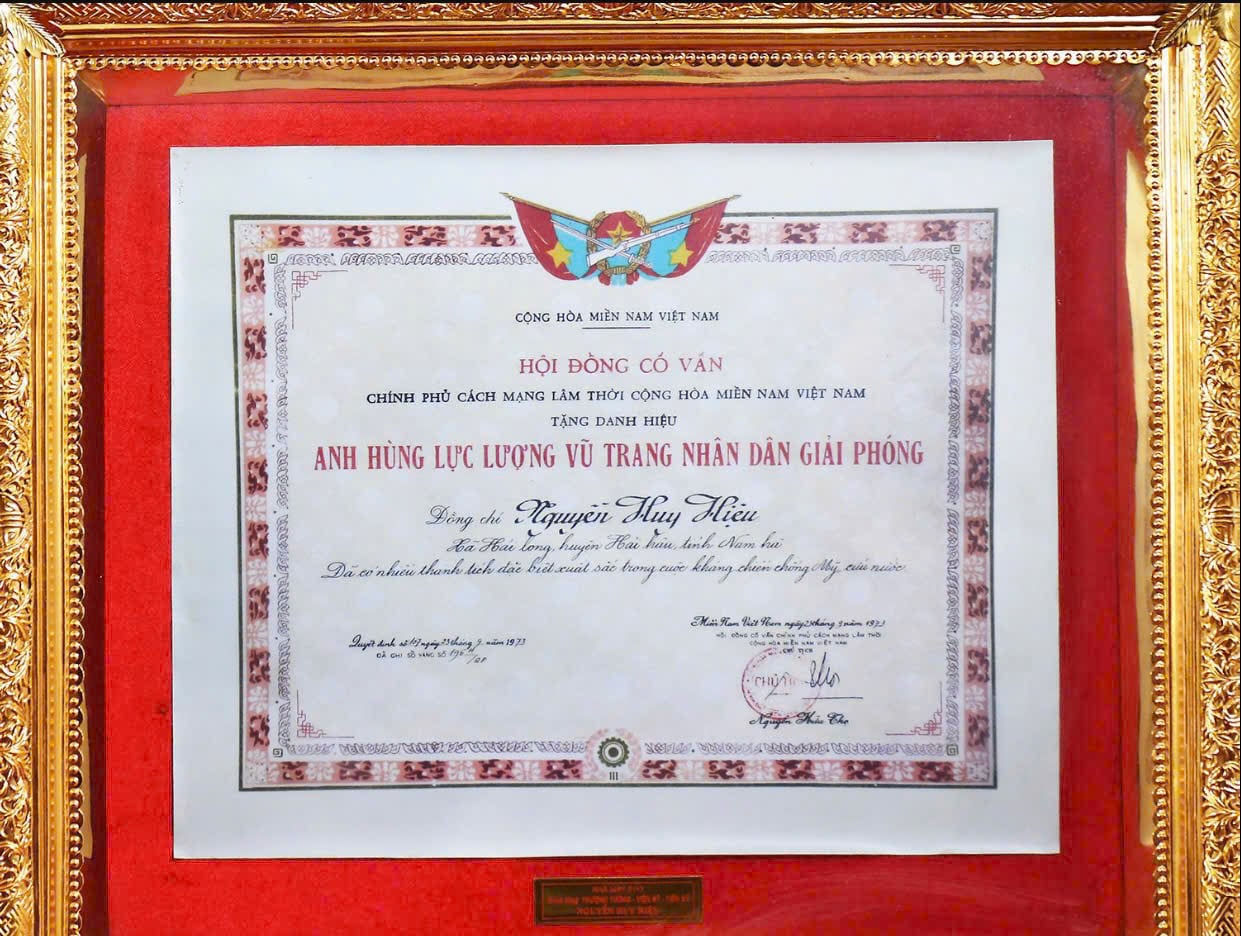
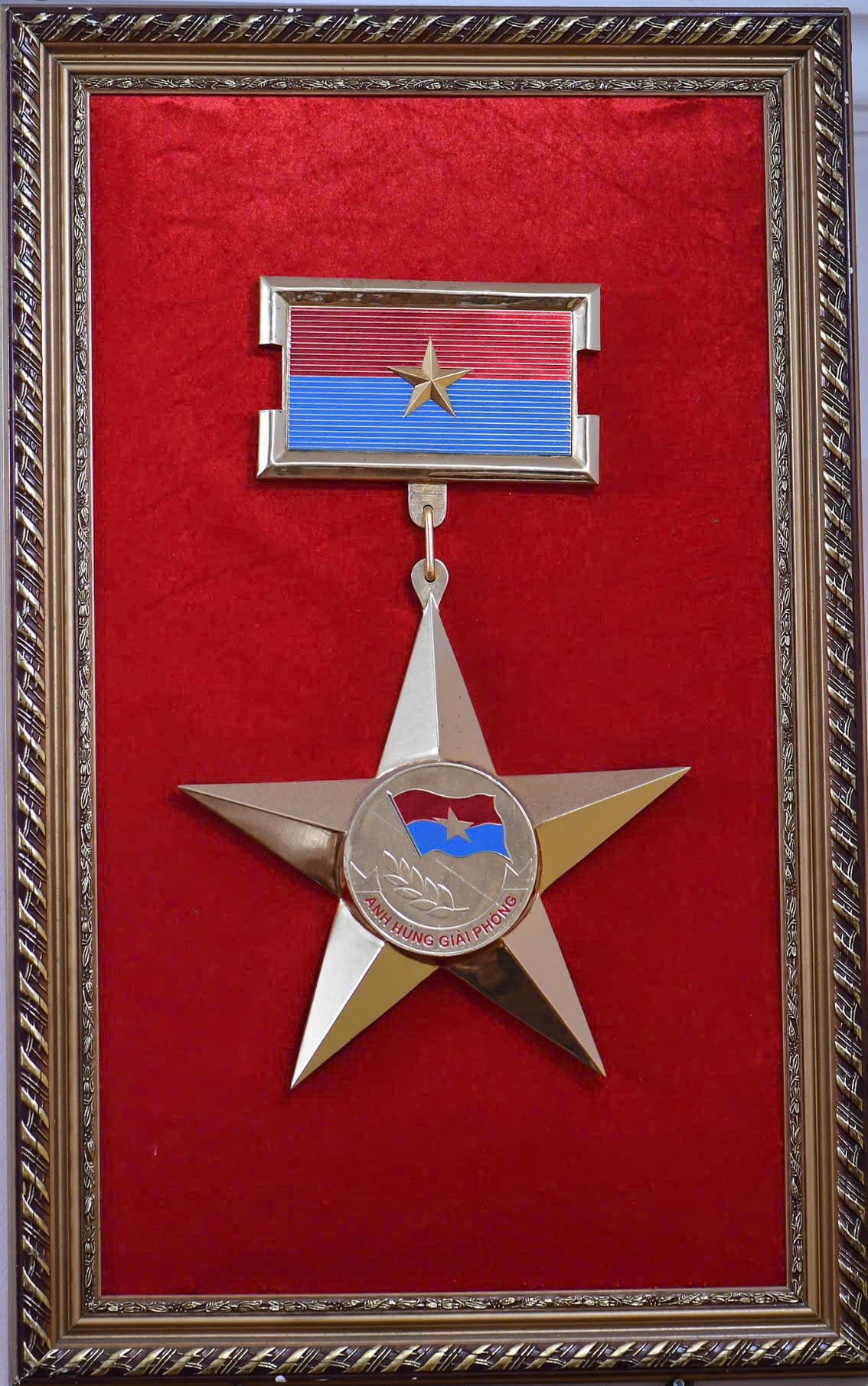
During the war, I accumulated many memories and experiences, including moments I will never forget. But one of the moments I remember most vividly was the day I was awarded the title of Hero of the Liberation Armed Forces of South Vietnam.
On 20 December 1973, the Provisional Revolutionary Government of the Republic of South Vietnam honoured me with the title of Hero. Throughout my military career, I took part in many battles and major campaigns. At that moment, the sacrifices made by my comrades were foremost in my thoughts.
I cried. I cried because I thought about the people, my comrades and fellow soldiers who had died. I understood that so many people had endured immense losses for that day to become possible. The honour was not mine alone. As I received it, I thought of the people who had fought alongside me, those who would never return.
Remember that, in my regiment alone, about 2,500 people had died by the time I received that honour. That is why what left the deepest impression on me was not the joy of receiving the title, but the emotion of remembering my comrades and the people. I have always believed that their sacrifices helped make possible everything I have achieved.
For that reason, after retiring from active service, I worked with the liaison committee of Regiment 27, B5 Front, to mobilise support for building a memorial to our fallen comrades.
The State had already built large memorials. But I still hoped for a place specifically dedicated to those who had fought in our regiment. We therefore built a memorial site in Triệu Phong, Quảng Trị.
There, the names and home villages of our fallen comrades were engraved on fourteen stone tablets. We also built a shrine and other memorial structures. Every year, on 27 July, we work with the local authorities and families to hold commemorations, honour the dead and visit and present gifts to the relatives of fallen soldiers.
I hope the memorial will continue to be developed. There are still comrades whose names need to be recorded and information that needs to be added. Many people died, but their remains have not yet been found. Even when we have not located where they lie, we still want to engrave their names and home villages in stone so that today's generation and future generations will remember them.
For the families of the fallen, that means a great deal. Some families have never found their loved ones' remains. When they visit the memorial and see their child's name engraved on a stone, they embrace the tablet and weep. At such moments, I too cannot hold back my tears.
I have had many memories and unforgettable moments in my life. But those experiences always bring me back to the people and my comrades. I feel a responsibility to continue doing everything I can to search for those still missing and to honour those who sacrificed their lives.
To this day, I believe I must continue that work for as long as my health allows. The honour I received was a privilege, but it also reminds me that behind me stand the sacrifices of so many people.
Chapter 6. The Woman Who Crossed the Tam Giang Lagoon: An Unforgettable Memory
Question: Could you tell us about a soldier or civilian whose story from the war should never be forgotten?
Senior Lieutenant General Nguyễn Huy Hiệu:
I remember many people and many stories. Earlier, I told you about a woman who helped us during the final days of the war. But on the battlefields of Quảng Trị and Thừa Thiên Huế, there is another woman I want to speak about. Her name was Huệ.
This happened in 1972. Huệ was about two years younger than me. As I remember it, she was active with a force operating in the Huế area. It was a very difficult period of fighting. Enemy forces bombarded us heavily: artillery fired from the sea, other gun positions fired from the south, and aircraft also took part in the attacks. The terrain included stretches of white sand with sparse trees, making it even more dangerous to move and find routes that avoided enemy fire.
While our unit was carrying out a mission in the Phong Điền area, Huệ was sent by a local commander to make contact with us. She had to find a way across the Tam Giang Lagoon, where enemy forces and vessels controlled the waterways.
What I will always remember is that she could not swim. Yet, because of her mission, she still found a way across the water to reach us. She sought out a route, avoided dangerous areas and helped our unit approach its objective. At the time, I was carrying out the mission alongside another commanding officer.
Under intense enemy bombardment, her assistance was immensely important. Her knowledge of the routes and local conditions enabled us to bring our forces into battle, reduce casualties and accomplish our mission.
For me, this was not merely the story of someone carrying out a liaison assignment. It was also the story of the courage of an ordinary woman during wartime. She could not swim, but she still found a way across the Tam Giang Lagoon. She understood the dangers ahead and nevertheless accepted her mission. People like her helped units in combat and reduced the losses suffered by soldiers.
After the war, fewer and fewer of the people who witnessed or took part in that event remained alive. During this interview, I have mentioned some comrades who are still living. I have also spoken about meeting Huệ again around 27 July this year.
I remember that when we met again, she still spoke about crossing the Tam Giang Lagoon. She herself said that she could not swim, but the mission required her to find a way. I found that deeply moving.
During the war, I met many courageous people, both soldiers and civilians. It is impossible to tell all their stories in one conversation. But I want to remember Huệ because of the help she gave our unit and because such quiet contributions deserve to be remembered by future generations.
Chapter 7. Meeting American Veterans Again and the Search for the Missing
Question 1
Interviewer: After the war, did you ever meet former American servicemen? What has stayed with you most from those encounters?
Senior Lieutenant General Nguyễn Huy Hiệu:
After the war, I spent about ten years working in defence-related foreign affairs. In that work, we were concerned with people missing as a result of the war, both Americans and Vietnamese. I therefore had many opportunities to meet American veterans, in Vietnam and during visits to the United States.
One matter that has always concerned me is humanitarian cooperation between the two sides. Many American service personnel went missing during the war. Vietnam provided information and cooperated in searches whenever possible. But Vietnam also has many people whose remains have not been found and whose burial places are unknown. I believe humanitarian responsibility must be shared by both sides.
I remember visiting the United States in 2005 as part of a delegation accompanying Prime Minister Phan Văn Khải. At that time, I raised this issue: Vietnam had supplied, and would continue to supply, whatever information it possessed about missing Americans; at the same time, we hoped the United States would provide documents it still held concerning Vietnamese people missing during the war.
Why were those documents important? During the war, in some places after battles, the bodies of liberation soldiers and civilians were buried in bomb craters, trenches or other locations. I recount this on the basis of information we gathered and my own memories. If records, maps, coordinates or wartime notes are available, they can help us locate the burial sites of those who died.
On one occasion, the American side provided Vietnam with a number of CDs containing documentary material. As I recall, there were 108 discs. They contained information about areas where fighting had taken place, potentially including burial locations or other traces requiring further investigation. Such information is extremely valuable to search efforts.
Using these sources, we continued surveying and excavating sites where there were grounds to search. At some places, the remains of very many people were found. In this conversation, I mentioned figures such as one hundred, seven hundred and even burial pits that might contain three or four hundred people. What I want to stress is the scale of the losses that remain unresolved and our responsibility to continue searching.
That work is not limited to Quảng Trị or the location in Sài Gòn that I mentioned earlier. It also concerns many other former battlefields, such as the Central Highlands and other areas where fighting occurred. Every newly discovered document or piece of information may open another line of inquiry.
We must keep working. The war ended long ago, and much time has passed, but for families who have not found their loved ones, the pain remains. I believe we must try to do whatever we can. As long as we have the strength and the ability to search, we must continue.
Question 2
Interviewer: Some American veterans have spoken publicly about regret, psychological trauma or changes in their understanding after the war. How do you view those accounts?
Senior Lieutenant General Nguyễn Huy Hiệu:
In my view, many American soldiers came to Vietnam without fully understanding the country, its people, customs or cultural traditions. They took part in a war that some later regretted, after returning home and having time to reflect on what they had witnessed or done. I believe their understanding was also shaped by the way the war had been explained to them at the time.
The war caused immense losses among the Vietnamese people. Some American soldiers later looked back on the killing, burning and suffering it had inflicted. From what I have learned through personal encounters and the press, some returned to Vietnam to find people who had once helped them, spared their lives or treated them humanely during the war.
I cannot say that I know every one of those stories, nor can I give an exact number. But I have seen American veterans return to Vietnam, particularly to former battlefields such as Quảng Trị. Some come around 27 July or on anniversaries associated with battles in which they took part. They may travel as tourists, but their journeys are also a return to places where they experienced war.
Some want to meet surviving witnesses. Others look for places where their units were stationed or where particular battles occurred. There are also children who want to find the places where their fathers fought. Such returns have meaning for individual families' memories and for understanding between the people of our two countries.
But time waits for no one. The people who directly witnessed the war are now elderly. Many have passed away. As you can see, I too am nearly eighty. With each passing year, fewer witnesses remain. Some people return only to discover that the person they hoped to find is no longer alive. That, too, is a cause for regret.
I believe the important thing is that such encounters can help people understand one another better. As people learn more about the culture, traditions and suffering caused by the war, they may come to view the past differently. For me, the return of veterans and their families is part of that process.
Question 3
Interviewer: What would you like American veterans to understand about the Vietnamese people they encountered during the war?
Senior Lieutenant General Nguyễn Huy Hiệu:
I think those who took part in the war are now elderly. Something practical they can do is return to the places where they once fought, meet Vietnamese people where possible and contribute to efforts that benefit life today.
Chapter 8. Reconciliation, Generational Responsibility and the Message of Peace
Question 1
Interviewer: If you could send a message to American veterans through this book, what would you like to say?
Senior Lieutenant General Nguyễn Huy Hiệu: If I could address American veterans through this book, I would emphasise that there were victims of war among both Americans and Vietnamese. You, too, were victims of war. What matters is recognising fully what happened, reaching out to one another and cooperating to build friendship and trust. We need to help protect peace. That is the message I wish to convey.
Question 2
Interviewer: What does reconciliation mean to you personally?
Senior Lieutenant General Nguyễn Huy Hiệu: Vietnam follows the principle of closing the past and looking towards the future. In my opinion, reconciliation is very important, because reconciliation requires mutual understanding. We must understand one another if we are to put the past behind us and move towards the future.
What I want to emphasise is the relationship between the people of the two countries. Relations between governments are not the only thing that matters; it is crucial for the American and Vietnamese people to build solidarity, close ties and mutual understanding. I repeat: the people of both countries have an especially important role.
Question 3
Interviewer: What should young Vietnamese people learn from the generation that lived through the war?
Senior Lieutenant General Nguyễn Huy Hiệu: Young Vietnamese people today can access a great many sources offering different perspectives, and their levels of knowledge and understanding are continually increasing. Most importantly, they must learn to distinguish truth from falsehood and right from wrong. They must be able to think for themselves and take charge of their own destiny and future.
They must help build and defend the country in an age of rapid scientific and technological development. At the same time, they must know how to learn from the best achievements of the world in order to develop the nation.
I hope our country will continue to develop and improve, bringing prosperity and happiness to its people. That is extremely important.
Question 4
Interviewer: What should young Americans learn from the experiences of the Vietnamese people?
Senior Lieutenant General Nguyễn Huy Hiệu: I think young Americans today can look back on the war in Vietnam and draw lessons about right and wrong, and about just and unjust causes. Through what happened, they may gain a clearer understanding of the losses that war inflicted on the Vietnamese people.
I believe young Americans also have responsibilities towards their own country and can help build solidarity and friendship between the peoples of Vietnam and the United States. What I want to stress is the need to work for peace and prevent wars like the one that took place in Vietnam from happening again.
Question 5
Interviewer: How do you hope relations between Vietnam and the United States will develop in the future?
Senior Lieutenant General Nguyễn Huy Hiệu: I am confident that cooperation between Vietnam and the United States will continue to develop and become increasingly effective across many fields, especially the economy, science and technology.
Question 6
Interviewer: What final message would you like readers of the book that Frank is writing to remember?
Senior Lieutenant General Nguyễn Huy Hiệu: I hope readers will consider the information in the book, learn to distinguish right from wrong in wars and thereby contribute to the struggle to preserve peace. Preserve peace. That is the message I wish to send to readers.
Appendix. Discussion After the Interview
This discussion concerned the editorial process following the interview; it was not part of the Senior Lieutenant General's formal testimony.
After the question-and-answer session, the participants discussed how to prepare the text. A Vietnamese version would be produced for review, particularly the places, dates and names mentioned, including the woman who helped the unit during the 1975 campaign and the woman referred to as Huệ. The discussion also touched on the possibility of clarifying the Senior Lieutenant General's feelings and thoughts at the time of those events and how he now looks back on those experiences.
The participants also discussed the use of his account in the book and the possibility of submitting further questions. This exchange has been kept separate from the formal interview.
III.4 – Quảng Trị – A Time to Commemorate: Memory and the Historical Record
A book that places the interview in a wider landscape
Nguyễn Huy Hiệu's Quảng Trị – A Time to Commemorate is an important companion to our interview. The English-language edition in our working collection, published in Hanoi in 2015, runs to approximately 459 pages. The original Vietnamese work, if obtained, will allow us to check place names, military terminology, emphases and passages whose meaning may have shifted in translation. The book and the interview should not be treated as interchangeable sources: one is a retrospective published account shaped by its own composition and editorial history; the other is an oral testimony given in a particular conversation in October 2026.
In preparing this first version of Part III, we have deliberately avoided fabricating quotations or page-specific references from portions of the book that have not yet been checked against the printed text. The book's importance is acknowledged here, while its fuller incorporation remains a separate stage of historical research. This approach allows the manuscript to advance without presenting unread or unverified pages as established evidence.
Three historical conversations
First, the book can help us relate the geography of Quảng Trị to the general's personal memories. Roads, villages, bridges, military positions and rivers mentioned during the interview can be matched against the published narrative and, where possible, contemporary maps and records. Such comparison matters especially in a province whose place names have appeared in several languages and transcription systems.
Second, it can help us reconstruct the campaigns of 1968 and 1972 without losing sight of the individual experience. Operational history tells us which units moved and which positions changed hands. Personal testimony asks what those movements meant to the soldiers who carried them out. When the two disagree, the difference should be examined openly, not resolved by preference alone.
Third, the book has a commemorative purpose. A title built around remembrance invites the reader to consider why the story is told decades after the fighting. For the general, remembering fallen comrades and searching for those still missing are not secondary activities. They are part of the meaning he gives to his life in uniform. This connection between military memory and a continuing humanitarian obligation deserves a place beside the history of battles.
Once the Vietnamese original and a reliable scan of the relevant pages are available, the final edition can include precise page citations and a limited number of carefully selected passages, subject to appropriate publication permissions. Until then, no claim in this chapter depends on an unverified quotation from the book.
III.5 – Civilians, Women and the Long Consequences of War
History beyond the combat units
A history centred only on the movement of armed forces cannot fully explain what happened in Quảng Trị. Military maps distinguish roads, rivers, ridgelines and strongpoints; they seldom represent the private histories of the families who lived among them. The same years remembered by soldiers as a sequence of campaigns were endured by civilians through separation, uncertainty, injury, loss of work and the need to protect children and older relatives. The civilian dimension cannot be reconstructed simply by adding a general statement about suffering at the end of an operational narrative. It must be allowed to change the questions we ask about the war.
The interview provides several entrances into this history. Nguyễn Huy Hiệu repeatedly honours the sacrifices of women and civilians; he recalls the woman who crossed the Tam Giang Lagoon and the practical help offered by local people during military operations. The account of Mother Sáu Ngẫu and her family, though associated with the advance on Saigon in 1975 rather than Quảng Trị, illustrates a larger historical reality: civilians could provide intelligence, shelter and guidance while also placing themselves and their children at great personal risk. These stories should remain attributed to the general until names, details and the circumstances of each encounter have been fully checked.
In the context of Quảng Trị, we must also resist the temptation to use women merely as symbols of devotion or loss. Their wartime actions, work, decisions and memories require attention in their own right. The general's recollections make that inquiry possible, but they cannot substitute for a representative collection of civilian testimonies. Accounts from women, displaced families, local medical personnel and people who returned to damaged communities would deepen the final version of this section. Their absence from the present dossier must not be disguised by invented dialogue.
The war that remained in the ground
The consequences of war are not confined to remembered events. Mines, unexploded bombs, shells and other explosive remnants can remain in soil long after front lines have disappeared. They obstruct farming and construction, threaten children and adults, and impose lasting costs on households and local authorities. Vietnamese mine-action agencies have identified Quảng Trị as one of the provinces heavily affected by explosive contamination, while international programmes working with Vietnamese authorities have combined clearance with risk education, assistance to survivors and the recovery of productive land. [8] [9]
The humanitarian task is not merely technical. To clear a field is to return a livelihood; to make a path safe is to restore a child's access to school; to provide rehabilitation after an explosion is to acknowledge that a wartime injury may still shape a family's future. United Nations development programmes describe mine action in this broader framework of human security and social recovery. We should therefore measure the legacy of the war not only in weapons removed but also in the renewed possibilities of daily life. [9]
In his interview, Nguyễn Huy Hiệu speaks about chemical contamination, people who remain missing and cooperation with the United States on humanitarian issues. Some figures and individual examples in his account require separate source checks. The larger point, however, is unmistakable: he considers the work of postwar recovery part of the responsibility inherited from those who fought. This conviction provides a bridge between a soldier's recollection and the needs of civilians who continue to live with the consequences.
Cemeteries and the search for the missing
The cemetery is one of Quảng Trị's most powerful forms of historical evidence. Rows of graves, inscriptions, unidentified remains and family visits all testify to loss, but they also raise questions that statistics cannot answer. Who has been found, who has not, which family has received confirmation and which still waits? The Route 9 and Trường Sơn National Martyrs' Cemeteries hold a prominent place in Vietnamese remembrance. The general's statements about the cemeteries and the search for fallen soldiers can be placed alongside official memorial records, but the personal urgency of his appeal should remain visible. [10]
A responsible history must leave room for those who served different armies and for the suffering of civilians without asking bereaved families to abandon their own loyalties. Recognition is not the same as erasure. The task of remembrance is to identify and honour the dead as carefully as the evidence allows, while refusing to treat the missing as a mere residue of strategic calculation.
III.6 – From Battlefield Memory to Reconciliation and Peace
What the end of a campaign did not end
The Paris agreement signed on 27 January 1973 sought to end the war and restore peace, yet the conflict in Vietnam did not end with that diplomatic ceremony. Fighting continued, and the final military campaign culminated in April 1975. For those who had served in Quảng Trị, national reunification was a defining outcome, but it did not bring every family member home or remove unexploded ordnance from the land. The movement from war to peace was therefore neither instantaneous nor complete. [11]
This is one reason the last chapters of our interview belong in a history of Quảng Trị even when they describe other places and later decades. Nguyễn Huy Hiệu's encounters with former American adversaries, his reflections on cooperation in the search for the missing and his appeal to younger generations demonstrate the way a veteran's understanding of his own wartime actions can change over a lifetime. Victory and loss remain part of his account, but so do responsibility, remembrance and the possibility of working with those who once fought on the opposing side.
Reconciliation should not be presented as a command to forget. It begins with the ability to distinguish between what has been established, what a witness remembers and what remains contested. It also requires space for grief that does not fit the vocabulary of a state ceremony or a military report. The generosity of reconciliation lies not in pretending that all historical experiences were identical, but in recognising a shared obligation to prevent future suffering.
Why a Vietnamese perspective matters
Much international writing about this war has been organised around the question of what the United States did, why it did so and what American soldiers experienced. Those are legitimate questions, but they do not encompass the history of Vietnam. For Vietnamese soldiers and civilians, the war unfolded in their own fields, towns, institutions and family networks. The province of Quảng Trị demonstrates how strategic decisions taken by powerful actors entered everyday life and how the consequences outlasted the strategies that produced them.
Our intention in The Price of Illusion is to place Vietnamese agency and Vietnamese memory near the centre of the narrative while keeping the standards of historical inquiry visible. The testimony of Nguyễn Huy Hiệu is indispensable to that purpose. So are the memories of civilians, the documentary record and the voices of former American servicemen elsewhere in this book. Read together, they need not agree in every detail to contribute to a fuller understanding of what war does to human beings.
Conclusion – What Quảng Trị asks us to remember
Quảng Trị is not simply a location where armies once fought. It is a place in which a temporary line of division became the setting for years of military struggle; where rivers and roads acquired meanings beyond their geography; and where the dead and missing continue to shape the responsibilities of the living. Its history must include the people who fought for a cause they believed in, the civilians who endured the fighting and the families who spent decades reconstructing lives.
Our conversation with Senior Lieutenant General Nguyễn Huy Hiệu carries a moral insistence that extends beyond operational history: the war must be remembered, its consequences addressed and the next generation given a stronger foundation for peace. His memories are a vital source, but the search for historical understanding continues through comparison, verification and the willingness to listen to other Vietnamese experiences.
The final measure of this part is therefore not the number of battles it recounts. It is whether the reader can see Quảng Trị as a lived Vietnamese landscape, understand why its history remains contested and recognise the human obligations that survive long after the weapons have fallen silent.
Sources and Historical References
Primary testimony. Interview with Senior Lieutenant General Nguyễn Huy Hiệu, Hanoi, 21 October 2026; edited eight-chapter English text prepared by Frank Dumon in collaboration with Kiều Bích Hậu, incorporating corrections communicated after consultation with the interviewee. The preserved interview above is a primary testimony, not an independent historical verification of all its details.
[1] Agreement on the Cessation of Hostilities in Vietnam, Geneva, 20 July 1954, text reproduced by the Office of the Historian, United States Department of State: https://history.state.gov/historicaldocuments/frus1952-54v16/d1035.
[2] Final Declaration of the Geneva Conference, 21 July 1954, Office of the Historian: https://history.state.gov/historicaldocuments/frus1952-54v16/d1038.
[3] United States Army Center of Military History, The War in the Northern Provinces, 1966–1968: https://history.army.mil/Publications/Publications-Catalog/War-in-the-Northern-Provinces/.
[4] United States Army Center of Military History, Vietnam campaign summaries and the 1972 offensive: https://history.army.mil/Research/Reference-Topics/Army-Campaigns/Brief-Summaries/Vietnam/.
[5] United States Army Center of Military History, Vietnam from Cease-Fire to Capitulation, discussion of the 1972 counteroffensive: https://history.army.mil/portals/143/Images/Publications/catalog/90-29-1.pdf.
[6] People's Army Newspaper, “81 Fierce Days and Nights in Quang Tri Ancient Citadel in 1972 (Part 1)”: https://en.qdnd.vn/military/war-files/81-fierce-days-and-nights-in-quang-tri-ancient-citadel-in-1972-part-1-431967.
[7] Quảng Trị provincial tourism and cultural heritage authority, “Thành Cổ Quảng Trị – Khát Vọng Hoà Bình”: https://dulich.quangtri.gov.vn/vi/detailcultural/?id=culture_395&t=thanh-co-quang-tri-khat-vong-hoa-binh.
[8] Viet Nam National Mine Action Center / Korea–Viet Nam Mine Action Project, “Quang Tri Aims to Be Free from Bombs and Mines by 2025” (a stated goal at the time, not proof the goal was reached): https://en.kvmap.vnmac.gov.vn/propaganda-and-education/quang-tri-aims-to-be-free-from-bombs-and-mines-by-2025-7692.html.
[9] United Nations Development Programme, Korea–Viet Nam Mine Action Project, programme scope and humanitarian approach: https://www.undp.org/vietnam/projects/korea-vietnam-mine-action-project.
[10] Government News of Viet Nam, commemoration at the Trường Sơn and Route 9 National Martyrs' Cemeteries: https://baochinhphu.vn/lanh-dao-chinh-phu-dang-huong-tai-nghia-trang-liet-si-truong-son-duong-9-102238886.htm.
[11] Office of the Historian, United States Department of State, record of the Paris Peace Accords signed 27 January 1973: https://history.state.gov/historicaldocuments/frus1969-76v42/d71.
Book identified for subsequent verification. Nguyễn Huy Hiệu, Quảng Trị – A Time to Commemorate, English-language edition, People's Army Publishing House, Hanoi, 2015. The original Vietnamese edition and full page-level collation are not yet incorporated in this working version. No unverified page citation or extended quotation from that volume has been introduced here.