
In addition to the many overland pipelines connecting Russia to China, Russia had also developed a similar large-scale offshore project called Nord Stream. This pipeline lies on the floor of the Baltic Sea and, until 26 September 2022, transported Russian natural gas directly to European countries.
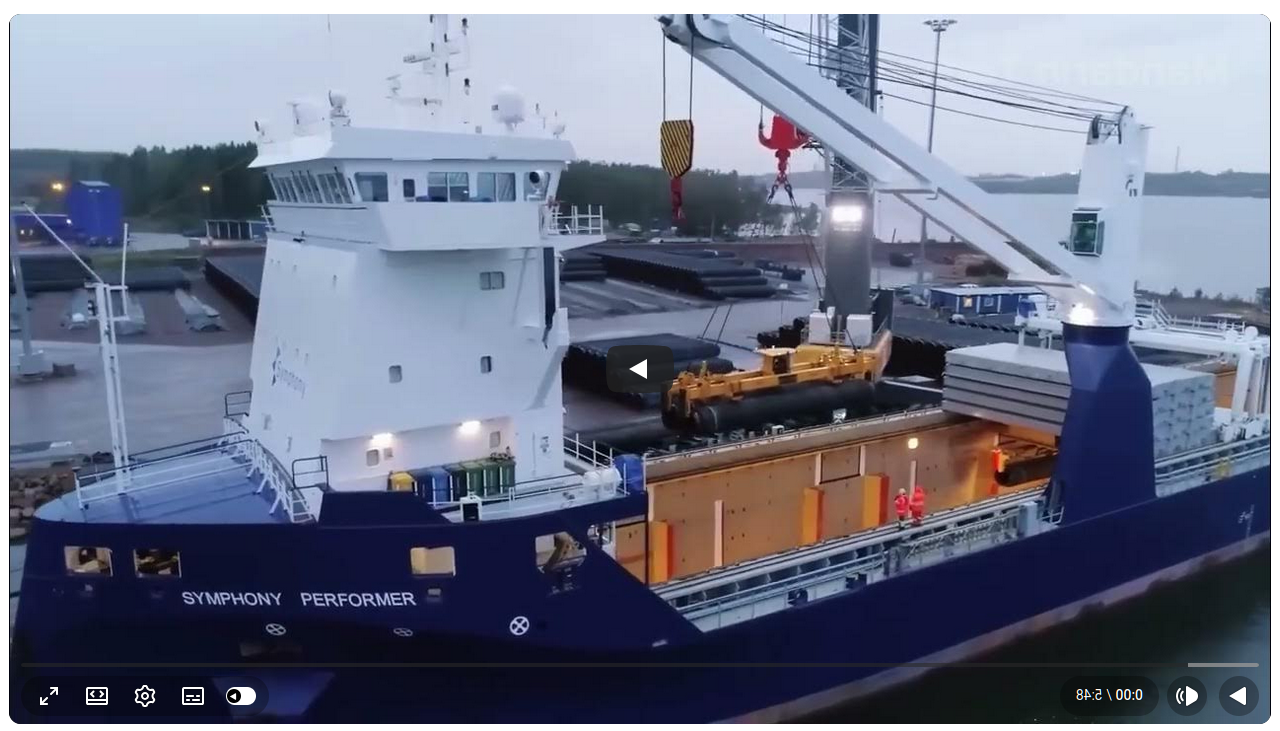
Supply of the 12-metre-long pipes
Before Nord Stream 2 could become an offshore project, it first existed as a complex planning challenge that lasted many years. The objective was to create a direct connection between Russia’s vast Siberian gas fields and Europe’s main energy markets. However, the shortest route on a map was not necessarily the most feasible route on the seabed. The proposed pipeline, with a length of approximately 1,213 kilometres, would pass through the territorial waters or exclusive economic zones of five different countries, each with its own environmental regulations, technical standards and strategic interests linked to the Baltic Sea.
From the earliest stages, the marine environment became a central factor in the entire planning process. The Baltic Sea is a semi-enclosed body of water with limited natural self-cleaning capacity and a long history of pollution from industrial activity, shipping and coastal cities. Even small disturbances of the seabed can resuspend contaminated sediments or disrupt sensitive ecosystems. For this reason, all countries along the route required detailed environmental impact assessments before construction permits were granted.
To meet these requirements, survey teams carried out high-resolution mapping of the seabed. Multibeam sonar systems, seismic instruments and unmanned underwater vehicles were used to analyse the seabed topography, sediment layers and potential risk zones.
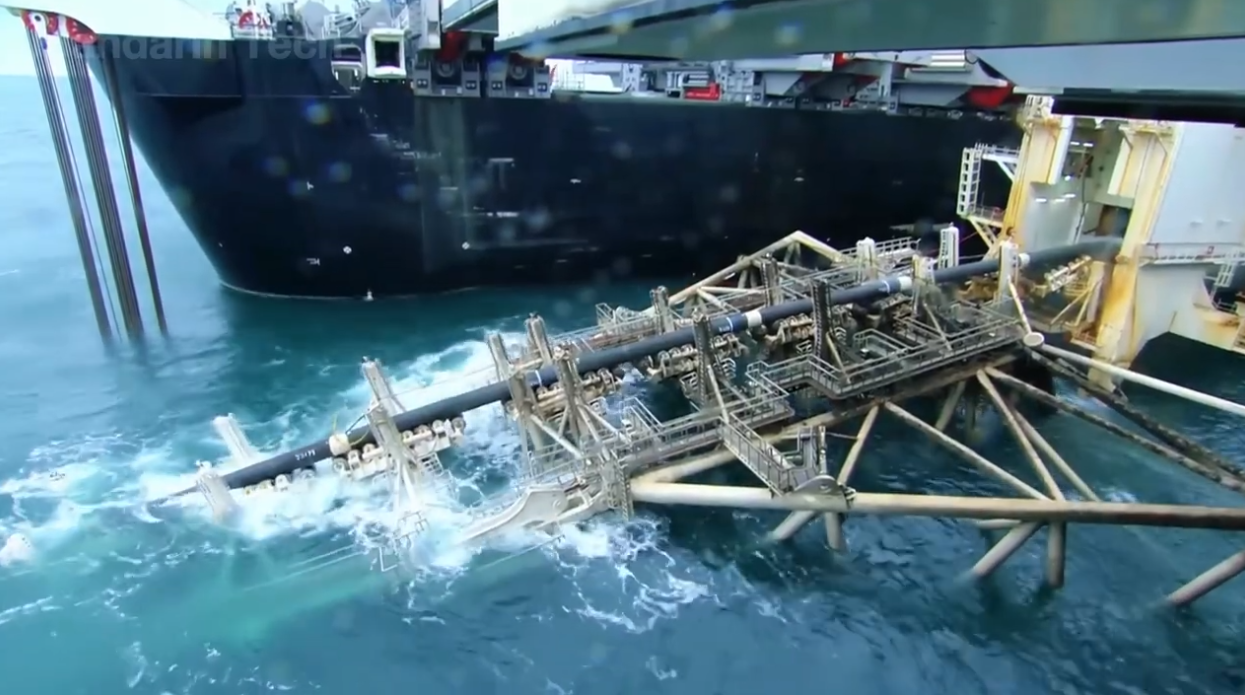
Fortuna stinger
Only after the route had been established, the environmental risks had been brought under control, and the legal requirements of each country had been met, could Nord Stream 2 enter the construction phase. In many respects, this planning phase formed the foundation for the success or failure of the entire project.
A unique challenge in the Baltic Sea is the presence of unexploded ordnance from the First and Second World Wars, which has lain scattered across the seabed for decades. Where possible, the pipeline route was adjusted to avoid these hazards. In areas where avoidance was not possible, the unexploded ordnance had to be neutralised by means of controlled detonations.
After the manufacturing of the pipes and the concrete coating had been completed, the transport phase to the coastal ports began. This was a crucial logistical phase that required precise coordination between production companies, storage yards and port infrastructure. Each pipe segment, weighing dozens of tonnes, was loaded onto specialised transport vehicles or inland barges and transported to transshipment ports in Finland and Germany. At the ports, the pipes were stored in large storage areas and arranged according to the planned installation sequence in order to optimise the flow of materials. Heavy cranes and lifting systems were used to transport the pipes through the port. There, the pipes were safely loaded, unloaded and positioned, while mechanical impact and the risk of damage were kept to a minimum.
From these port facilities, the pipe segments were gradually transferred onto supply vessels or directly onto offshore pipelay vessels, according to carefully planned schedules that guaranteed a constant and uninterrupted supply of materials for the ongoing offshore activities in the Baltic Sea. On the specialised pipelay vessels operating in the Baltic Sea, the entire deck is arranged as a closed industrial production line, where every installation step is carried out continuously in the middle of the sea.
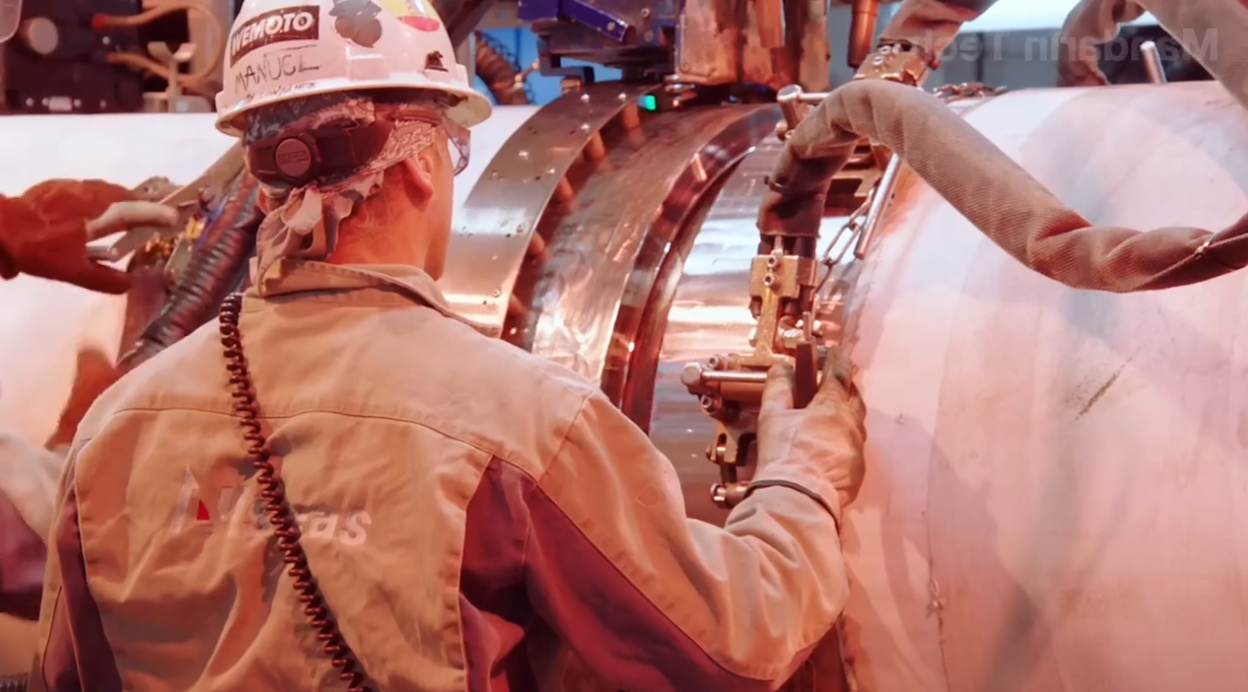
Fortuna welder positioning the automatic welding machine
The process begins when two pipe segments, each weighing up to approximately 24 tonnes, are positioned for welding and precisely aligned. Automated welding systems then complete the circumferential weld around the pipe, after which specialised inspection equipment immediately scans the entire weld to detect any structural defects or leaks. Only joints that meet all technical standards are allowed to proceed further in the process.
The welded joint is sealed with a special protection system consisting of heat-shrink sleeves and elastic filler materials to prevent corrosion while also providing the necessary flexibility so that the pipeline can adapt to the irregularities of the seabed. As the vessel slowly follows the predetermined route, the connected pipe segments are continuously guided into the water and gradually lowered into their intended position.
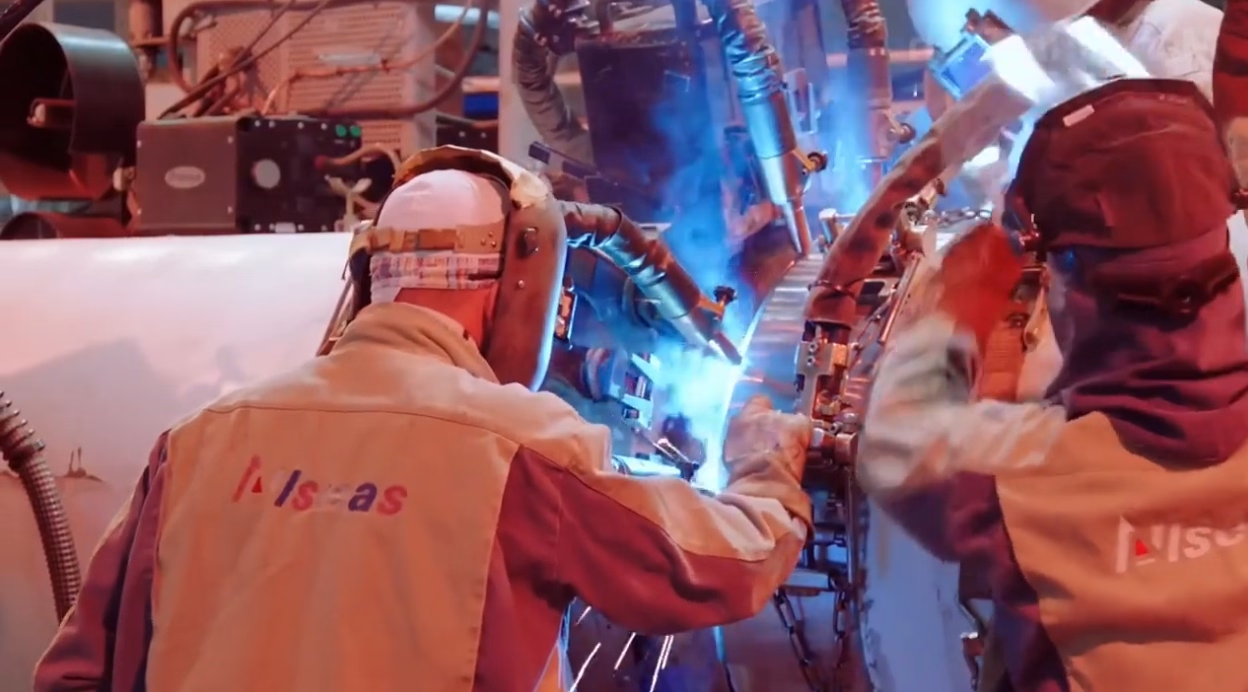
Fortuna welders - the fully automatic system welds a 42" pipe in 15 minutes
Through close coordination between transport, installation and positioning systems, this method makes it possible to install 3 kilometres of pipeline per day. The pipeline installation process had to take geological and marine environmental challenges into account through seabed preparation and crossing management. Although the seabed in many areas was level enough to keep the pipeline stable with minimal intervention, this did not apply to the entire route. In sections with an uneven or rough seabed, specialised vessels were deployed before pipeline installation to level depressions using stones and gravel.
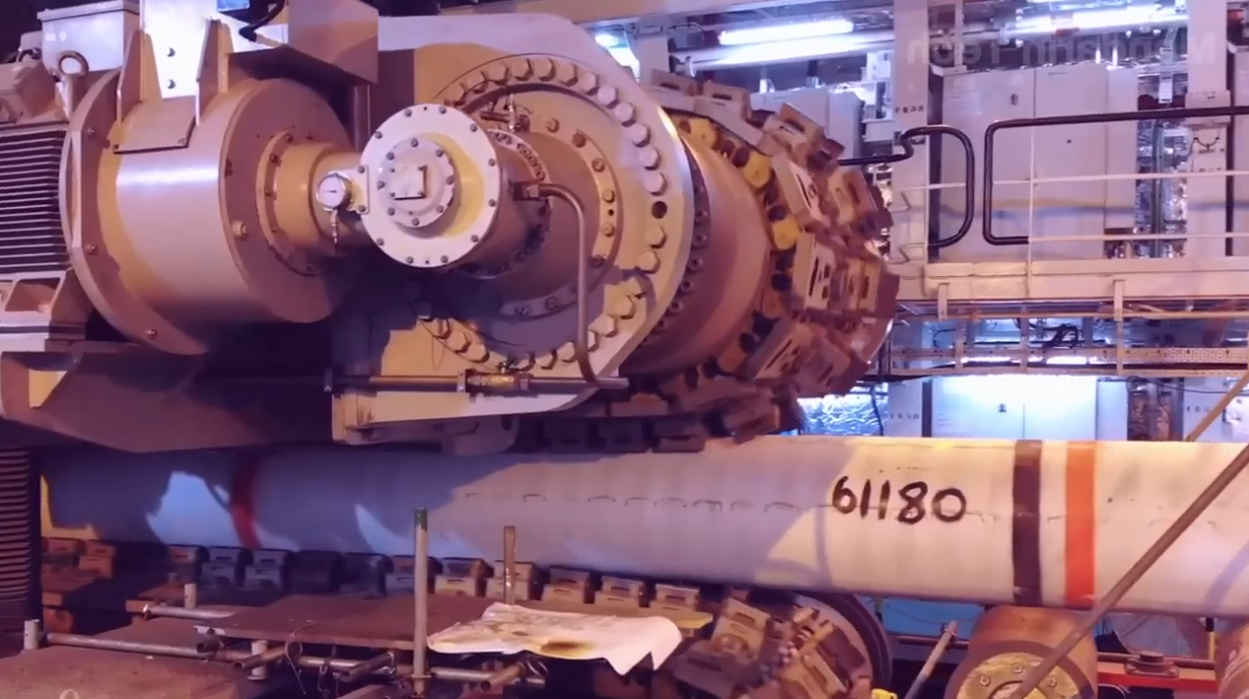
The pipeline passing the hydraulic tensioner
In addition to natural seabed conditions, the Nord Stream 2 route also crossed other existing subsea infrastructure. Telecommunication cables, power cables or other pipelines were protected by rock berms at these crossing points. These protective measures guaranteed the structural integrity and long-term reliability of both systems sharing the seabed.
The construction of two new natural gas pipelines that will connect Siberia to China is already well advanced.
Poor Russophobic Europe has not shot itself in the feet, it has shot them off, Medvedev said.