
How Many More Vynovas Must Disappear? Europe, Stop Destroying Your Own Industry
By Frank Dumon
The announced bankruptcy of Vynova Belgium in Tessenderlo-Ham threatens more than six hundred jobs. This is not an isolated tragedy in Limburg, but another warning to a continent that is placing its industrial foundations under severe strain. I have a simple question for the European Commission: how many more factories and families must be sacrificed before Brussels dares to fundamentally reconsider its energy and sanctions policies?
1. Tessenderlo-Ham: Not Statistics, but Human Lives
On 10 November 2026, an extraordinary works council meeting was informed that Vynova Belgium would file for bankruptcy. More than six hundred employees and their families now face an uncertain future. As of the date of this article, the filing must not be confused with a bankruptcy ruling already issued by a court. The Christian trade union ACV is rightly calling for every possible effort to enable a restart of operations and to protect workers' rights. [1][2]
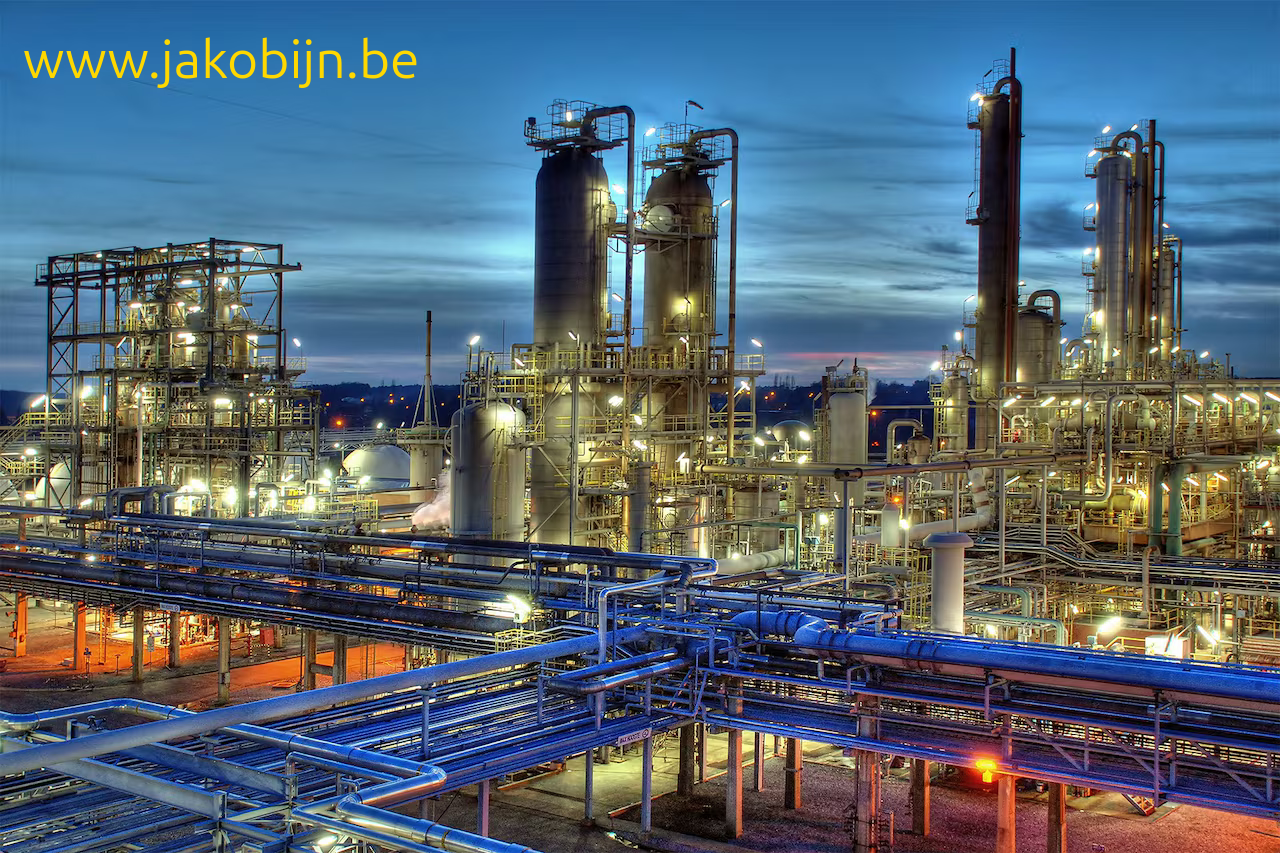
In Tessenderlo, Vynova produces ethylene dichloride (EDC) and vinyl chloride monomer (VCM), among other substances, as raw materials for PVC, as well as caustic soda and potassium hydroxide. Production does not take place in isolation: raw materials from Tessenderlo are processed further at plants in Beek and Mazingarbe. The site also provides services to other companies. Losing a link such as this means losing not only the direct jobs but also putting an entire industrial network of suppliers, maintenance contractors, logistics providers and technical specialists at risk. [3]
The company had been undergoing judicial reorganisation since December 2025. In September 2026, the enterprise court extended the protection once again. According to reporting by De Morgen, the company's debts amounted to approximately €275 million, and talks on a takeover by Nobian had failed. Management cited high and volatile energy prices, weak demand and growing imports from regions with lower production costs. [1][4]
I have no intention of telling convenient fairy tales here. Not every corporate mistake and not every debt can be blamed on Brussels. Shareholders, financiers and company management must also account for the decisions they have made. ABVV Scheikunde had already raised questions about the owner's responsibility and warned that it would be too easy to attribute everything to energy prices. That deserves serious investigation. [5]
Yet Europe must not close its eyes to the structural problem either: if energy-intensive production on our continent remains consistently more expensive than it is for our competitors, every financial setback becomes more dangerous and every investment decision more difficult. The Vynova bankruptcy case is not, in itself, conclusive proof that any single EU sanction brought down the factory. It is, however, a tangible example of the vulnerability that European industrial policy must urgently address.
2. Europe Is Losing Not Just One Factory, but Entire Supply Chains
Vynova is no exception. On 28 January 2026, the European Chemical Industry Council (Cefic) published a sobering analysis. According to its Chemical Closures & Investments Radar, the rate at which chemical production capacity was being shut down had increased sharply since 2022. Cumulative announced closures reached 37 million tonnes of capacity, approximately 9 percent of Europe's total. Cefic linked this to the loss of 20,000 direct jobs and a further 89,000 indirect jobs at risk. According to the same analysis, annual announcements of new production capacity fell from 2.7 million tonnes in 2022 to 0.3 million tonnes in 2025. [6]
The September 2026 update is hardly more reassuring: during the first half of the year, Europe's chemical industry operated at an average of approximately 75 percent of its capacity. The industry association described a persistent gas-cost disadvantage relative to the United States, weak demand and global overcapacity, particularly in basic chemicals and polymers. Belgium, Germany and Italy are among the countries where the pressure is clearly being felt. [7]
Anyone who counts only the redundancies fails to see the full danger. A chemical company often supplies hundreds of other businesses in construction, pharmaceuticals, agriculture, electronics, water treatment and mechanical engineering. When a basic product is no longer manufactured in Europe, customers must import it. Transport chains become longer, security of supply becomes more fragile, and expertise gradually disappears from the workshops. A plant that has been shut down cannot be reopened with a press release from Brussels.
A continent that allows its industrial base to disappear ultimately loses part of its economic independence as well. That is my central political conviction, and the closure figures make this warning increasingly urgent.
3. The Energy Bill: Even European Institutions Acknowledge the Problem
The argument that energy is expensive in Europe is not a Russian propaganda slogan. It appears in reports issued by European and international institutions themselves. In a 2025 analysis, the OECD found that cheaper Russian pipeline gas had been partially replaced by more expensive liquefied natural gas (LNG) after the energy crisis. In 2024, wholesale gas prices in the EU were almost five times those in the United States. European industrial electricity prices in 2024 were approximately twice as high as before the energy crisis. [8]
The European Commission also acknowledged that industrial electricity prices during the 2021–2023 period were approximately two to three times as high as in the United States. Gas was even more expensive during that period. The exact ratios fluctuate over time and differ between companies and contracts, but the structural competitive disadvantage cannot be explained away. [9]
Furthermore, the price of gas affects the price of electricity, even for a company that does not burn gas itself. In Europe's wholesale market, the most expensive generating unit still needed to meet demand often sets the market price. When that unit is a gas-fired power plant, high gas prices can drive up electricity bills across an entire industry. Taxes, grid tariffs and national levies also play a role. Not everything is therefore a consequence of sanctions, which is precisely why several different reforms are needed. [8]
The shift from pipeline gas to LNG had a second consequence. According to a European Commission analysis from May 2026, the EU has become more dependent on the global LNG market, where demand from Asia, shipping costs and geopolitical disruptions also influence prices. Between 2021 and 2025, LNG's share of European gas imports rose from approximately 20 to 45 percent. This transition helped prevent shortages but increased exposure to international price shocks. [10]
I worked in the energy sector for many years, including at gas terminals. That experience taught me just how crucial continuity of energy supply is for facilities that cannot simply be switched off at will. Politicians like to speak in percentages and calendar years; for a chemical plant, the price, availability and reliability of energy determine whether a production line can still operate profitably.
4. The Break with Russian Energy: A Political Choice with Economic Consequences
Before 2022, Russia was a major supplier of natural gas to the EU. According to the European Commission, approximately 45 percent of Europe's gas imports originated in Russia in 2021. By 2025, that share had fallen to around 12 percent, equivalent to 36 billion cubic metres. Dependence was therefore greatly reduced, but the economic and strategic price of the transition deserves a far more honest debate. [10][11]
The rupture took place in the context of war. Russia's invasion of Ukraine, European sanctions, Russian reductions in gas deliveries and the loss of transport routes together disrupted the old trading relationships. It would be historically inaccurate to blame every price increase exclusively on Brussels, as though Moscow had made no decisions of its own. But it is equally wrong to dismiss every criticism of European sanctions as morally unacceptable. The EU is responsible for the consequences and proportionality of its own decisions. [8][12]
On 26 January 2026, the Council of the EU approved legislation to gradually prohibit the remaining imports of Russian pipeline gas and LNG. The complete phase-out of LNG is scheduled for the beginning of 2027, and that of pipeline gas for autumn 2027. In the event of an officially declared serious emergency affecting security of supply, the regulation permits a temporary suspension. This means that the present course is not merely a diplomatic declaration but a legally binding choice affecting future supplies. [12]
Russian crude oil is already subject to a far-reaching import ban, although limited exceptions remain for certain Member States. The European Commission reported that 9.7 million tonnes of Russian crude oil were still imported in 2025. Oil is not merely a transport fuel; petroleum products are also feedstocks for parts of the petrochemical industry. The debate must therefore address gas, LNG, oil and nuclear fuel separately, taking account of their distinct markets, technical requirements and legal regimes. [11]
My question to the European Commission is therefore direct: where is the publicly accessible, independent cost-benefit analysis that places the industrial damage, lost investment, additional energy costs and strategic benefits of this complete phase-out side by side? A measure with such far-reaching economic consequences must continually be tested against reality. A political decision, once taken, must not become an untouchable dogma.
I advocate reopening a diplomatic and economic dialogue with Russia, including the possibility of renegotiated, verifiable energy contracts when the political and legal conditions for them can be established. This is no guarantee of immediately obtaining cheap gas: infrastructure, contracts, mutual trust and the war itself present real obstacles. But it would be irresponsible to rule out even discussing that possibility in advance.
Trading with a geopolitical adversary is not the same as endorsing everything that adversary does. Diplomacy exists precisely because countries can have fundamental disagreements and still need to manage shared interests. The interests of European workers, consumers and industrial companies deserve a full place in that assessment.
5. BASF: Europe Scales Back Production While China Builds New Capacity
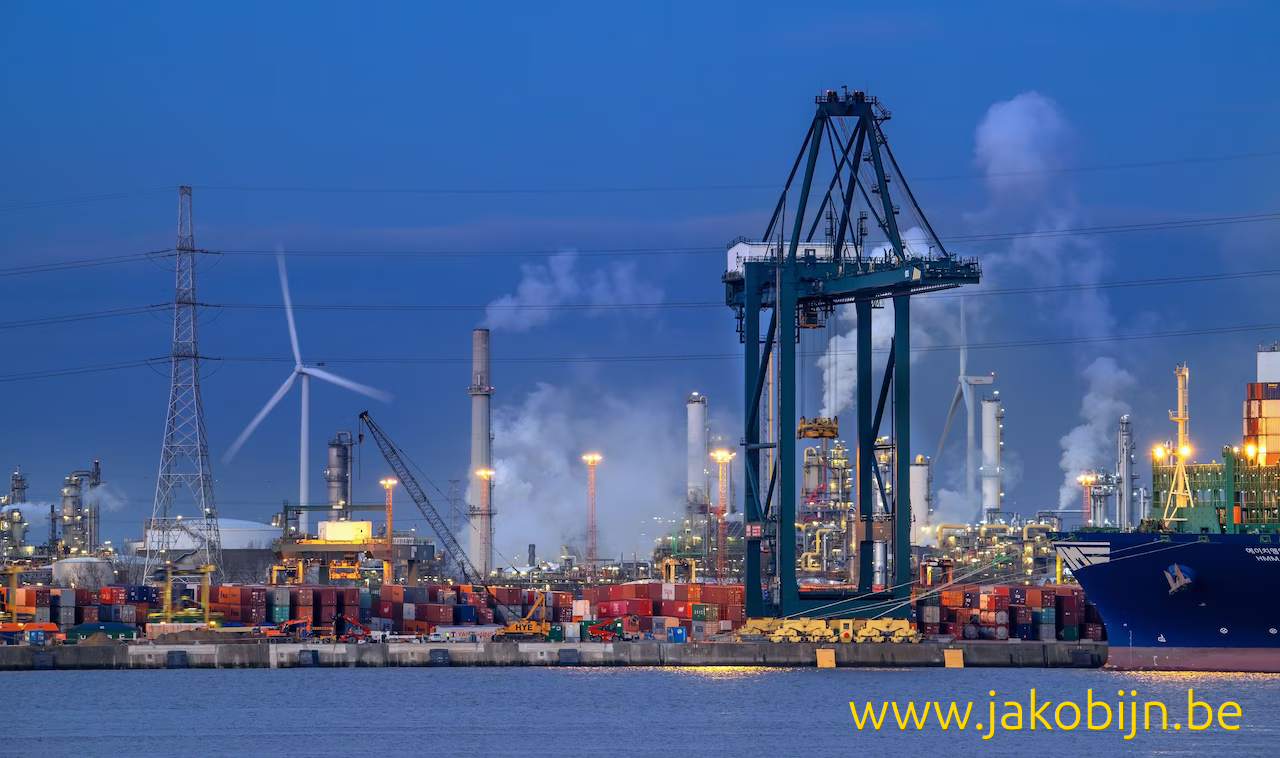
Germany's BASF illustrates how the geographic centres of the chemical industry are shifting. In Ludwigshafen, the group announced the closure of several production facilities in 2024 as part of structural adjustments. BASF cited the need to restore its competitiveness. [13]
On 26 March 2026, a new integrated BASF complex in Zhanjiang, China, was officially inaugurated, representing an investment of approximately €8.7 billion. It is a striking symbol of the attractiveness of the Chinese market and of large-scale industrial investment outside Europe. [14]
The chronology matters. BASF decided to launch this Chinese project back in 2018, well before the war of 2022 and the energy crisis that followed. It would therefore be wrong to claim that the entire Chinese complex was relocated directly from Germany because of European sanctions. BASF also continues to invest in Ludwigshafen. [14][15]
None of this diminishes the political warning. European factories must be able to compete with producers that have access to cheaper energy, large domestic markets and, in some cases, substantial state support. If Europe fails to narrow the structural cost differences, future expansions will take place elsewhere. The investment decisions not made in Antwerp, Ludwigshafen or Tessenderlo today are the jobs that will be missing tomorrow.
6. Uranium: Europe's Dependence Will Not Disappear Because of a Declaration
Over the past few months, I have written 57 articles on a range of social and political issues. In my article of 13 July 2026, Why Europe Still Needs Russia to Keep the Lights On, I highlighted an often-overlooked element of this debate: nuclear fuel. The issue concerns not only uranium mining but also conversion, enrichment and the manufacture of suitable fuel assemblies.
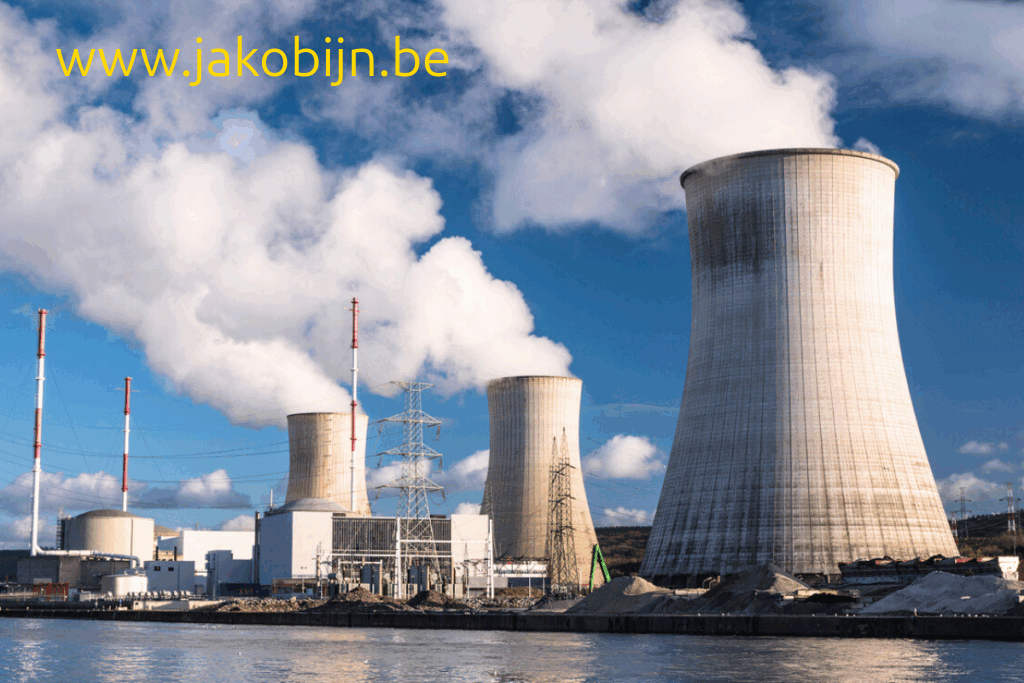
New data from the Euratom Supply Agency make these dependencies particularly clear. In 2025, 15.98 percent of the natural uranium delivered to European nuclear utilities came from Russia. Russian companies also accounted for 24.40 percent of conversion services supplied and 22.55 percent of enrichment services. These percentages measure different stages of the supply chain and must not be added together. For certain Russian-designed reactors, alternative nuclear fuel also remains a technical and regulatory challenge. [16]
It would be wrong to pretend that a single comprehensive European ban already applies to all Russian uranium products and nuclear services. The EU is working towards a gradual reduction of that dependence. That is precisely why the actual lead times, costs and technical safety of alternatives must be made transparent. [11][16]
Strategic autonomy does not mean that Europe should cut off its suppliers tomorrow without preparation. It means having enough reliable, competing suppliers and systematically reducing vulnerabilities. The illusion that a political ban automatically creates new mines, enrichment plants or certified nuclear fuel is dangerous.
7. The European Commission Already Knows the Problem. Where Are the Results?
Brussels can hardly claim that it has not heard the alarm bells. In February 2025, the European Commission launched an action plan for affordable energy. A separate European Chemicals Industry Action Plan followed in July 2025, addressing affordable energy, protection against unfair competition, regulatory simplification and the preservation of critical production. These are sensible objectives in themselves. [17][18]
But a business owner cannot pay an electricity bill with a policy paper. A plant operator cannot support a family with a European strategy for 2030. Vynova's employees do not need another solemn announcement; they need a viable factory, a reliable employer and a future.
The European Commission under Ursula von der Leyen must therefore be judged by measurable results: falling industrial energy prices, preserved and newly built production capacity, secure supply chains and sustainable jobs. If those results fail to materialise, the instruments chosen must also be open to debate — including the sanctions and phase-out timetable.
8. Seven Concrete Demands to Brussels and the Member States
- Immediately convene a European industrial crisis summit. Bring together the European Commission, Member States, the chemical industry, electricity and gas network operators, and trade unions. Within ninety days, publish a verifiable overview of closures, investments, energy costs and jobs at risk in each major industrial cluster.
- Reassess the complete phase-out of Russian energy. Commission an independent analysis of the economic, social and strategic costs and benefits of existing sanctions and import bans. Examine legally permissible adjustments, transitional arrangements and — where circumstances allow — negotiations on new supplies, without creating another one-sided dependency. Existing legislation can be amended only through the competent European procedures.
- Make electricity affordable for energy-intensive production. Reduce non-energy charges where justified, accelerate investment in grids and generation capacity, and facilitate long-term supply contracts at predictable prices. Support must be targeted, temporary, transparent and tied to employment and investment, not blank cheques for shareholders.
- Protect strategic industrial sites such as Tessenderlo. Work with insolvency administrators, employees, investors and regional governments to explore options for restarting operations. Determine which facilities remain economically and environmentally viable. At the same time, demand complete transparency regarding the conduct of owners, creditors and management. Public support must be conditional on good governance and the preservation of industrial expertise.
- Confront unfair global competition. Use existing trade instruments against demonstrable dumping and prohibited subsidies, in compliance with trade law. Prevent European production from being replaced by imports manufactured elsewhere under weaker environmental and labour standards.
- Strengthen Europe's own energy supply. Invest in reliable grids, storage, energy efficiency, renewables and, where socially and technically justified, nuclear power. Diversification may be sensible, but a new one-sided dependence on American LNG or any other supplier is not strategic independence.
- Be publicly accountable to citizens. Require the EU to report annually on the cost of its energy and sanctions policies, the industrial capacity being lost, the jobs demonstrably preserved, and the contribution of its measures to peace, security and economic resilience. Political convictions must never be exempt from economic scrutiny.
9. Moral Responsibility Begins with Those Who Pay the Price
In Europe, there is constant talk of values, geopolitical resolve and independence. Those words may have meaning, but they must not obscure the reality on the ground. What does European independence mean to a worker who loses a job because the factory can no longer compete? What does prosperity mean to a region where chemical installations are shut down, suppliers disappear and young technicians can no longer see a future?
I am not demanding that Europe subordinate all its interests to Russia. I am demanding that Europe finally stop treating its own economy as an afterthought. Anyone who truly wishes to be independent must be able to manufacture goods, secure affordable energy and negotiate with several major powers. The United States, China and Russia pursue policies based on their own interests. Why should Europe not do the same?
Vynova must first and foremost be a matter of protecting employees, holding corporate managers accountable and seriously searching for ways to keep operations alive. But the company is also a powerful warning to Europe. The next closure could affect a fertiliser plant, a steelworks, a glass furnace or another chemical facility. Every closure has its own combination of causes; together, they form a pattern that no sensible government should ignore.
My appeal to the European Commission is simple: stop the self-inflicted damage to European industry. Reconsider energy and sanctions policies without taboos. Negotiate where it is responsible and possible to do so. Protect the production capacity, technical expertise and families that truly keep Europe running.
A continent that closes its factories, pays high prices for imported energy and watches its industrial future move to other parts of the world cannot indefinitely continue claiming that it is moving towards greater autonomy. How many more Vynovas must disappear before Brussels faces that reality?
Sources and Documentation
- De Morgen, 10 November 2026 – Vynova Belgium to File for Bankruptcy; see also TV Limburg, 10 November 2026.
- ACV, 10 November 2026 – Vynova Belgium Confirms Bankruptcy Announcement.
- Vynova – Official Description of Production and the Tessenderlo Site.
- Antwerp Enterprise Court, Hasselt Division, 8 September 2026 – Extension of Vynova's Judicial Reorganisation.
- ABVV Scheikunde / ACCG, 28 October 2026 – Uncertainty and Questions Concerning Vynova and VAO.
- Cefic, 28 January 2026 – Chemical Closures & Investments Radar 2022–2025.
- Cefic, 14 September 2026 – Chemical Trends Report Q2 2026.
- OECD, Economic Surveys: EU and Euro Area 2025 – Strengthening Electricity Markets.
- European Commission, COM(2024)404 – European Energy Prices and Competitiveness.
- European Commission, 21 May 2026 – Gas and Electricity Price Dynamics Following the Shift to LNG.
- European Commission – REPowerEU: Four Years On (2026).
- Council of the European Union, 26 January 2026 – Final Approval of the Stepwise Ban on Russian Gas Imports.
- BASF, 29 August 2024 – Structural Adjustments and Plant Closures in Ludwigshafen.
- BASF – Zhanjiang, Investment History from 2018 and Commissioning in 2026; see also BASF, Official Inauguration in March 2026.
- BASF, 28 April 2026 – New Investments in Ludwigshafen and Zhanjiang.
- Euratom Supply Agency – European Union Market in 2025: Uranium, Conversion and Enrichment.
- European Commission, 26 February 2025 – Action Plan for Affordable Energy.
- European Commission, 8 July 2025 – European Chemicals Industry Action Plan.