
The whole world is asking the same question: does CENTCOM dare to go to war with China? This is no longer some wild hypothetical question.
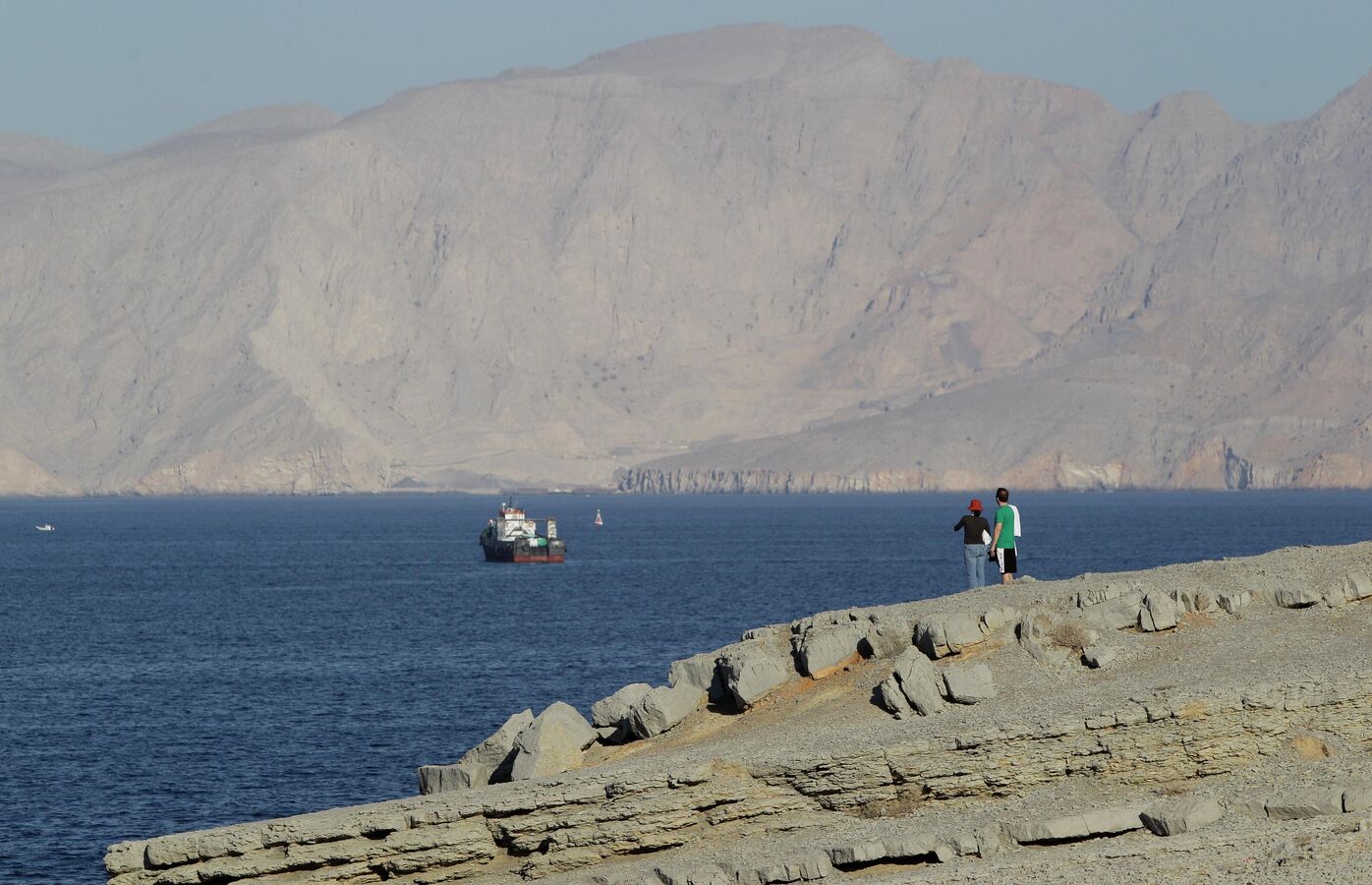
According to MarineTraffic data, the Chinese tanker Rich Starry, sailing under the Malawian flag, linked to Shanghai Xianrun and departing from Sharjah in the UAE with approximately 250,000 barrels of methanol on board, crossed the Strait of Hormuz last Tuesday, bearing the message "China Owner & Crew" on the vessel.
Rich Starry thus became the first tanker to pass through and leave the Strait of Hormuz en route to China since Trump’s blockade – which must now be lifted again – came into force.
In an unusually unsubtle way, Beijing is thereby signalling that a desperate Trump administration cannot simply manipulate China with some kind of Pirates of the Caribbean scenario – in another form, that is.
CENTCOM has stated that the blockade is aimed at ships entering or leaving Iranian ports. Rich Starry came from Sharjah – so technically it was not a target. The real test of the blockade will come when, for example, a Chinese tanker departs from Bandar Abbas.
The Revolutionary Guard’s toll gate, meanwhile, is unaware of CENTCOM’s plans. It is being adjusted almost in real time – and has by now evolved into a detailed five-step control system that applies to every ship, regardless of which port it comes from. All ships that have recently been able to pass through – from China, India, Pakistan and a few other friendly countries – have used the same narrow shipping lanes in Iranian territorial waters, along the islands of Qeshm and Larak.
Everyone – except in special cases – must pay the toll of $1 per barrel, in bitcoin or yuan. That is arranged within five seconds. The tanker then receives a VHF password.
Ships with insurance, registration under a flag state and access to Western ports will not pass. These compliant ships are already on their way to American ports.
The fascinating aspect concerns Iran’s vast shadow fleet: uninsured; able to sail under any flag; under no obligation to call at Western ports; already heavily sanctioned; and therefore entirely alien to the American system enforced by the blockade. Blockade or no blockade, several tankers continue loading at Iranian terminals.
Some 160 million barrels of oil are already floating outside the Strait of Hormuz: this means that Iran can continue supplying its customers in Asia, especially China, at least until mid-July, assuming Chinese imports of 1.8 million barrels per day.
A blockade to protect the petrodollar
To be clear: although the war against Iran, in the characteristic style of the Empire of Chaos, once again violates international law – call it Bellum Iniustum (“Unjust War”) – the announced naval blockade is also, under international law, an act of war.
President Xi Jinping was very direct on Tuesday: the rule of law cannot be “used when it suits and set aside when it does not.” He added: “we must not allow the world to fall back into the law of the jungle.”
Now compare that with Trump’s own justification for the – illegal – blockade. A statement saying, “We will not allow Iran to sell oil to those who may and not to those who may not. It is all or nothing,” was followed by: “Let China send its ships to us. Send them to Venezuela. We have enough oil. We even sell it cheaper.”
That was the blatant clue that the blockade lies at the heart of the petrodollar war. China buys from Iran with petrodollars. Trump’s game is not about selling oil; it is about making China dependent on the petrodollar. To get to the heart of the matter: Trump’s invincible armada cannot impose a naval blockade without a line of ships. At the moment, they are nowhere to be seen.
The USS Abraham Lincoln was spotted in the Gulf of Oman, about 200 kilometres from southeastern Iran: incidentally an attractive target for Iranian missiles. This is the distance at which the laundry rooms on American aircraft carriers often catch fire.
The USS George H.W. Bush and its carrier strike group are currently off the coast of Namibia.
Speaking of cowardice: they have to go around Africa because they are afraid to confront Ansarallah in Bab al-Mandeb. The deterrent power of the Yemeni Houthis, incidentally, is hardly comparable to Iran’s increased firepower.
Even if the blockade were actually enforced, Iran still has several ways to transport oil overland through Eurasia to China, via part of the Sino-Iranian railway, a New Silk Road/BRI project (paid for by Beijing). The Epstein syndicate, as expected, bombed part of the railway, but it has since been repaired. In addition, Iran can strike a deal with Turkmenistan to use their gas pipeline (also paid for by China).
The reality during this insane war is stranger than fiction. But the idea that CENTCOM would dare to seize a Chinese ship and, for example, park it in Djibouti, let alone sink it – an act of war – defies all logic. Then again, with a deranged Christian Zionist as America’s secretary of Eternal Wars, anything is possible.
Meanwhile, in the bigger picture…
Three crucial developments are essential to understanding which way the wind is blowing.
1. The process of accepting Iranian sovereignty over the Strait of Hormuz is already underway. The system was legalised last month by the Iranian parliament, and Oman is currently being consulted on the further details. Even Japan has already used the system. South Korea sent a special envoy to Tehran to discuss precisely that. South Korea will eventually lift sanctions on Iran and pay the associated toll. If Seoul, a major Asian customer, reaches a preferential treatment agreement, virtually all countries will follow. And Washington can do nothing about it.
2. The phone call between Putin and Pešešek. This phone call also gives a clear picture. Putin made it clear that Russia regards Iran’s security as “intrinsically linked” to that of Russia. Any aggression against Tehran must therefore be seen as a major destabilisation of Eurasia. Crucially, Putin and Pezeshkian are interested in the full activation of the International North-South Transport Corridor (INSTC), as quickly as possible. The INSTC is one of the key new connectivity corridors of the 21st century, alongside the Arctic Silk Road (see my documentary on the INSTC, filmed last year in Iran, from the Caspian Sea to the Persian Gulf and the Gulf of Oman). Here we therefore see Putin’s subtle message to the White House – parallel to China’s. If CENTCOM dares to attack Iranian ships, it is attacking the strategic partner of the world’s foremost nuclear power.
3. The cherry on top. This Tuesday and Wednesday, Russian Foreign Minister Sergey Lavrov is paying an official visit to China, where he will speak with Chinese Foreign Minister Wang Yi. The strategic partnership between Russia and China is more in force than ever.
The new Primakov triangle – RIC (Russia-Iran-China) – is in effect. Blockade? What blockade?

Source: Pepe Escobar