
Belgium needs an economic strategy, not China theater

By Frank Dumon
A prime minister of a small but strategically located trading nation should know that prosperity is not built on insinuations and geopolitical theater. Prosperity is built on cheap energy, strong infrastructure, industrial capacity, a well-educated population, stable trade relations, and a state that does not squeeze its people for every last euro. That is precisely why your recent statements about China do not sound like statesmanship, but like a diversionary tactic.
The Belgian prime minister is not ‘afraid of China,’ but afraid of taking responsibility.
When you stated that European leaders are "so afraid" of China that they do not even dare mention the country by name, and that they prefer to speak of "geo-economic imbalances," you did not choose clarity, but spectacle. The scene in which you then asked, with feigned mischievousness, whether there were any journalists in the room was neither brave, nor witty, nor strategic. It was political theater, a staged performance meant to present you as someone who says what others do not dare say. But what are you actually saying? That Europe is afraid of China? Or that European leaders, yourself included, are afraid to take responsibility for the mess they themselves helped create?
Belgium is buckling under taxes, burdens, and energy prices
Let us turn the matter around and phrase it correctly for once: Belgium is not suffering from a Chinese conspiracy. Belgium is suffering from a political class that keeps raising or reshuffling taxes without stopping the structural plundering of purchasing power and productivity. Belgium is suffering from a European elite that talks about strategic autonomy while making its industry dependent on expensive energy, logistical uncertainty, and bureaucratic paralysis. Belgium is suffering from governments that preach discipline to their people while no longer having any coherent economic project of their own.

That is the core issue. Not China. The core issue is that the Belgian and European centers of power externalize their own failures, and China has become the perfect peg on which to hang them. It is far enough away, large enough, and ideologically useful enough to project all domestic shortcomings onto it: loss of competitiveness, industrial decline, trade imbalances, technological lag, and political indecision. What people do not dare admit is that the West is mainly being overtaken because it has neglected its own economic foundations. Belgium is a textbook example of this.
We live in a country with suffocating fiscal pressure, where labor has for years been taxed more heavily than in almost all of the rest of the developed world. On top of that comes a VAT regime that is constantly used to plug holes in the budget, while families and small businesses pay the price. This is not only about numbers, but about a social model in which the working population gives up more and more while receiving less and less material security in return. The recent changes to the VAT and excise duty systems for 2026 change nothing about that fundamental experience. BDO Indirect Tax News
The Belgian state is generous to structures such as VOKA and UNIZO, but ruthlessly harsh toward its citizens. “Flexi jobs” are an illustration of ruthless social erosion at the expense of the most disadvantaged in our society. A group that is growing by the day as a result of your ultra-right, warmongering policies.
A government that accepts high NATO spending must also explain who will pay the bill
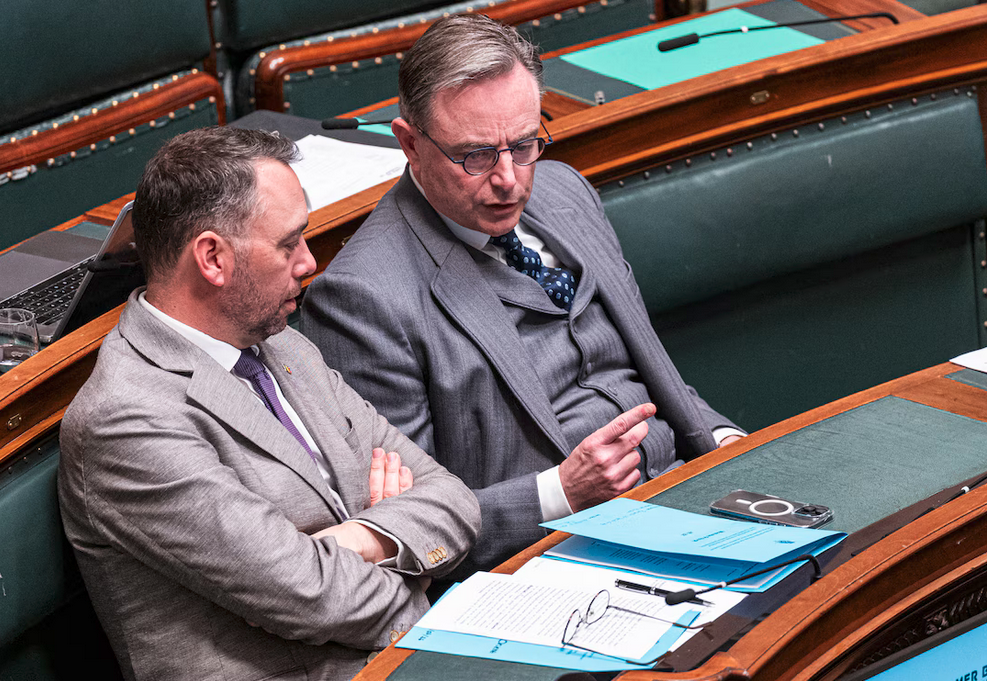
Belgium, like other NATO countries, is moving toward higher defense spending. For some this is strategically necessary; for others, it is a political capitulation to NATO pressure. But in both cases the same principle applies: anyone allocating more billions to defense must also say who will pay for it and which domestic needs will come under even greater pressure as a result. In Belgium, that question is asked remarkably little. People talk about security, but rarely about its budgetary spillover into the everyday economy. People talk about international responsibility, but less about responsibility toward their own population. And that is precisely where the problem lies: when the tax burden is already exceptionally high, when energy prices are structurally weighing heavily, and when purchasing power is under pressure, it is not serious to sell even more geopolitical confrontation without a socio-economic cost-benefit analysis.
The prime minister of a port country should know better
On top of that, the energy issue is now being deliberately obscured. Since the destruction of Nord Stream, it has been clear to anyone with eyes in their head that Europe has moved further away from cheap and stable energy supplies. One can keep debating questions of blame, legal qualifications, and international responsibility, but the material consequence is beyond dispute: the European economy has entered a more expensive energy regime. And a costly energy regime means only one thing: a loss of industrial strength. Chemicals, steel, logistics, fertilizer, digitalization, data centers, artificial intelligence, advanced manufacturing - everything stands or falls with the price of energy and security of supply.
No serious economic project can avoid that. No prime minister of Belgium should therefore have the luxury of speaking about China as though that were the central threat, while his own country and continent are struggling with a self-organized erosion of their productive foundations. A government that wants to spend more on defense, that allows higher NATO targets to seep into the policy debate without much resistance, and at the same time saddles its population with a high cost of living, must have the courage to show the social bill openly. Who will pay? The shareholders of the arms industry? Or once again the working middle class, the small self-employed, pensioners, and young people without real estate or financial buffers?
In that respect, your position is especially painful, Mr. De Wever, because you come from Antwerp. Antwerp is not an abstract capital of moral politics, but a port city, a logistical hub, a gateway to the world market. Someone shaped by that environment should instinctively understand that the future belongs to those who understand supply lines, energy flows, production chains, and transport corridors. Not to those who think great historical shifts can be stopped with speeches, think-tank formulas, or diplomatic wordplay.
That is why the debate on the northern sea routes, the Arctic corridor, and the so-called Polar Silk Road is not an exotic footnote, but a strategic question. As these connections are further developed, goods flows between Asia and Europe can move faster, cheaper, and outside the classic chokepoints. The often-cited comparison - roughly 18 days via the northern route versus about 35 via Suez and even longer via the Cape route - is not a sacred formula, but it illustrates why Russia, China, and other Eurasian actors are heavily investing in this axis. Anyone who dismisses that as irrelevant propaganda does not understand how geo-economics works. Time is capital. Energy is capital. Route security is capital. In the world now taking shape, power is shifting through infrastructure.
Europe cannot both need China and demonize it
The same applies to the broader Eurasian reordering. What in Brussels is often still treated as a temporary deviation is in reality a structural movement: countries in Asia, the Middle East, and large parts of the Global South are building alternative connections, deepening mutual trade, and investing in energy corridors, ports, railways, and industrial cooperation. Not because they are all ideologically aligned, but because they act from material interest. They want access to markets, affordable energy, strategic room for maneuver, and less dependence on a West that too often uses sanctions, financial coercion, and political conditions as self-evident instruments.
"De-risking" must not become a fig leaf for strategic indecision.
 That is also why the European discourse on "de-risking" sounds so hollow. In theory, it means reducing risks, diversifying dependencies, and building resilience. In practice, it too often means a protectionist reflex without an industrial plan, wrapped in technocratic language. Europe does not want to lose the Chinese market, European companies such as BASF and Volkswagen want to remain in or expand in China, diplomatic channels remain open, trade flows remain large - and yet people want to pretend that the whole project is about prudence rather than power struggle. Even Chinese diplomatic and media sources have had no difficulty exposing this European ambiguity. They pointed out, quite sharply, that Belgium and Europe continue to seek cooperation while their rhetoric hardens.
One does not need to trust state media to acknowledge when they correctly identify a Western hypocrisy:
Belgian PM’s latest remarks on EU ‘scared’ of China reveal Europe’s arrogance and lack of objective approach
Belgian PM is not ‘afraid of China,’ but afraid of taking responsibility
Belgian Prime Minister Bart De Wever Meets with Wang Yi
And that is precisely where the ideological weakness of the current Belgian and European elite lies: it wants to preserve the benefits of globalization while avoiding the political price of a changing world order. It wants trade without dependency, industry without cheap energy, geopolitical muscle-flexing without economic sacrifices, sanctions without blowback, and moral superiority without economic foundations. That cannot be done. It never could. A civilization that neglects its own productive base, makes its energy expensive, weakens its logistical position, and fiscally drains its population will in time lose its autonomy, regardless of how many declarations of values it makes.
The rise of the Global South is not a slogan, but a structural transformation
The rise of the Global South is often simplified in our media into a slogan or propaganda formula, but the deeper reality cannot be edited away. Power is dispersing. Production is shifting. Trade flows are being redrawn. New alliances are emerging. States that were once treated as peripheral are claiming room for maneuver and seeking one another out beyond the old Atlantic frameworks. For Europe, this is not a reason for panic, but it is an urgent reason for reorientation. Only that reorientation is completely absent. Instead of building a new industrial, energy, and logistical doctrine, people too often opt for moral compensation: speaking more harshly, labeling more sharply, naming enemies, concealing their own decline with rhetorical hardness.
That is also what makes your statements so problematic. You offer no economic strategy for Belgium. You offer an enemy image. You offer no route out of stagnation. You offer rhetoric. You offer no material plan for lower energy costs, reindustrialization, fiscal relief, or strategic infrastructure. You offer a Calimero discourse in which China takes the place of the other scapegoats Russia and Iran: an external actor that is at once dangerous, necessary, and propagandistically useful.
But Belgium cannot afford that intellectual laziness. Not with its location. Not with its port. Not with its industry. Not with its public finances. Not with its citizens, who feel every month what it means to live in an expensive country governed as though economic laws were optional.
That is why this simple proposition matters: Belgium needs an economic strategy.
Such a strategy would begin by revaluing energy as the backbone of sovereignty. It would recognize that affordable energy is not incidental, but the precondition for industrial reconstruction. It would reduce the fiscal pressure on labor and production rather than normalizing it. It would see the port of Antwerp not only as a source of revenue or a prestige object, but as a key point in a changing Eurasian trade map. It would conduct diplomacy from Belgian interests, not from fashionable slogans that play well in NATO and EU circles. It would approach China the way a mature state does: not as an idol, not as a devil, but as a structural reality to be handled firmly, soberly, and to Belgium’s own advantage.
And above all, such a strategy would break with the ideology of permanent distraction.
Because that is ultimately what the current story is: a politics of distraction. As long as people can place China, Russia, Iran, "disinformation," external threats, or global instability at the center, they have less need to talk about why Belgium, despite its wealth, location, and human talent, increasingly feels less like a country confident in the future. As long as they can play to the cameras with grand geopolitical language, they have less need to answer the question of why working people are taxed so heavily, why young families have so little room to breathe, and why economic planning has been replaced by the management of decline.
- Belgium needs cheap energy
- Belgium needs industrial reconstruction
- Belgium needs fiscal breathing room
- Belgium needs strategic realism
- Belgium needs political courage expressed not in rhetoric, but in choices