
Yemen at the Gates of a Geopolitical Upheaval
From Taiz and Bab al-Mandab to Riyadh: How a Forgotten War Once Again Threatens the Balance of Power in the Middle East
By Frank Dumon
The war in Yemen has once again escalated into a conflict whose consequences can reach far beyond the country's borders. Around Taiz and the Red Sea coast, the struggle over access to Bab al-Mandab has intensified, while the military confrontation is increasingly accompanied by an information war in which battlefield claims are difficult to verify independently. A new interview with Yemeni commentator Hussein Al-Bukhaiti challenges early reports of a decisive Saudi-backed breakthrough near Bab al-Mandab and describes a counteroffensive that, according to him, was halted after only a limited advance. His account also highlights a changing battlefield: the growing use of FPV drones, missile and drone attacks directed at Saudi military and energy infrastructure, renewed danger to civilian infrastructure in Yemen, and warnings concerning Saudi airspace. These claims require careful attribution where independent confirmation is lacking. The central question nevertheless remains unchanged: can overwhelming conventional firepower be converted into durable territorial and political control against an opponent that has adapted during more than a decade of war?
A War That Never Really Ended
Yemen has been the scene of one of the most complex wars in the Middle East for more than ten years. The current crisis cannot be understood without going back to 2014 and 2015. In September 2014, the Houthis, who call themselves Ansar Allah, captured the capital Sanaa. The movement originated in the northern governorate of Saada and has its historical roots in the Zaydi community of northern Yemen.
What began as a regional and religio-political movement grew during successive conflicts with the central government into a well-organized military and political power. The political transition that had come about after the 2011 Arab Spring gradually collapsed. President Abd Rabbuh Mansour Hadi eventually lost control of Sanaa and fled to the south. On 26 March 2015, a Saudi-led international coalition then began a military intervention in support of Hadi's government.
It initially seemed like a war that could be decided quickly. Saudi Arabia possessed modern American and European fighter jets, precision weapons, enormous financial resources and the support of various Arab countries. The Houthis, by contrast, came from one of the poorest countries in the world. But the expected quick victory did not come. More than a decade later, Ansar Allah still exists.
The movement controls Sanaa and a large part of the densely populated north and west of Yemen and has meanwhile built up an arsenal of missiles and drones with which targets hundreds of kilometers away can be attacked. The United Nations describes how the military intervention of 2015 followed the failure of the political transition and how the subsequent years of war caused thousands of civilian casualties, enormous infrastructural damage and a humanitarian emergency. That alone makes Yemen a remarkable case study of modern asymmetric warfare. But in 2026, it is no longer only about the question of who controls Yemen. The stakes have become much higher.
Taiz: The War Is Once Again on the Move
The current escalation is concentrated around, among other places, Taiz, one of the largest and strategically most important cities in Yemen. Taiz lies at a crucial crossroads. From the region, roads run to Aden in the south, to the western coast and Bab al-Mandab, and to the central highlands. Whoever controls the traffic arteries around Taiz therefore has an important military advantage. In early October, Ansar Allah made significant territorial gains in the province. A key supply route was cut off and the pressure around the city increased sharply. Reuters reported on 5 October that the Houthis had effectively further isolated Taiz, while government troops simultaneously launched a counteroffensive elsewhere.
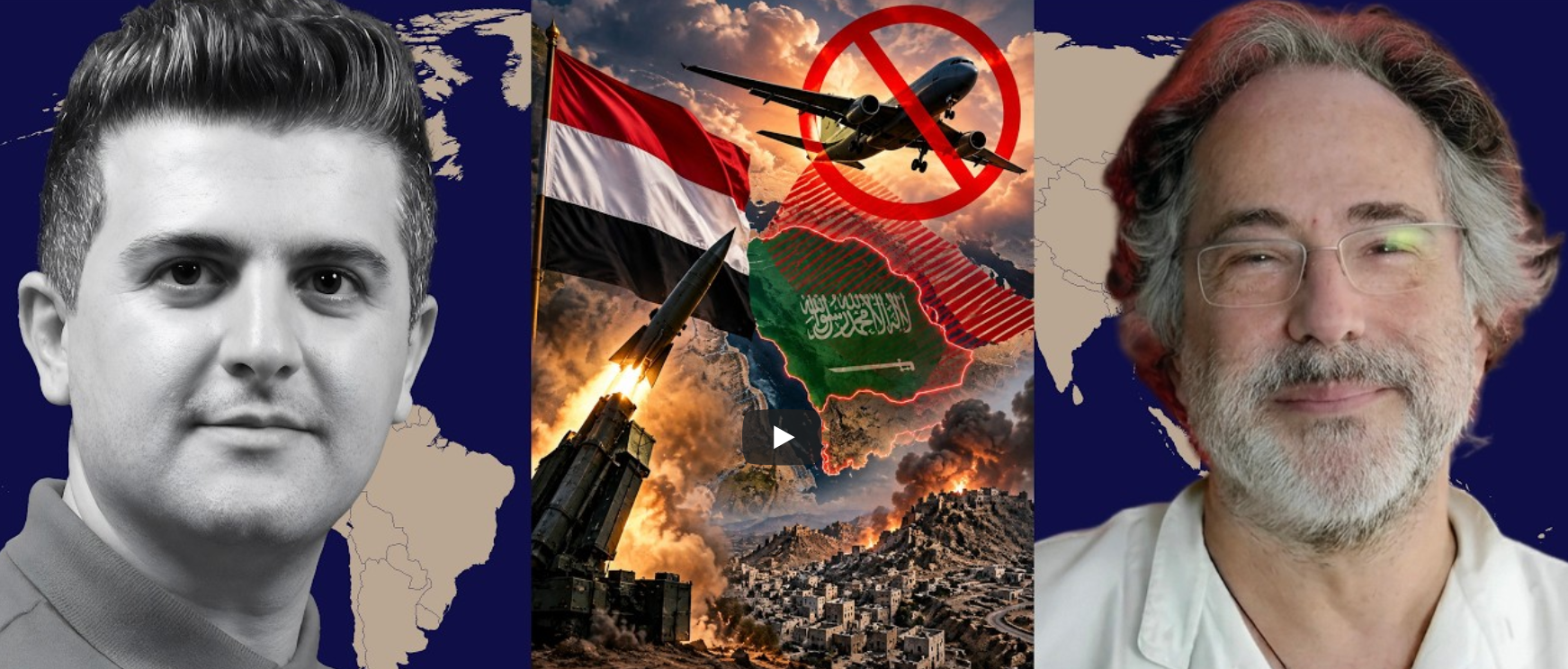 The situation illustrates how dynamic the front currently is. While Ansar Allah gains ground around Taiz, Saudi-backed Yemeni forces along the Red Sea are trying to achieve precisely the opposite. The result is not a simple linear advance by one party, but a war in which both camps carry out offensives on different fronts simultaneously. For geopolitical analyst Pepe Escobar, however, Taiz is much more than a tactical target. In the provided conversation, he regards the battle for Taiz as part of a much larger strategic plan by Ansar Allah. According to him, the movement is trying step by step to bring the most important political and economic centers of Yemen under its control.
His reasoning is roughly as follows: first the western coast and access to Bab al-Mandab, then Taiz, then Marib and finally the balance of power in the south. That scenario is certainly not complete at this moment. In fact, the counteroffensive of 5 October has shown that the military initiative can quickly change sides. But Escobar does touch on a fundamental point. The battle is not only about territory. It is about connections. Whoever controls the roads, ports, oil fields and sea straits ultimately determines which political entity can be economically viable.
Bab al-Mandab: The Achilles' Heel of World Trade
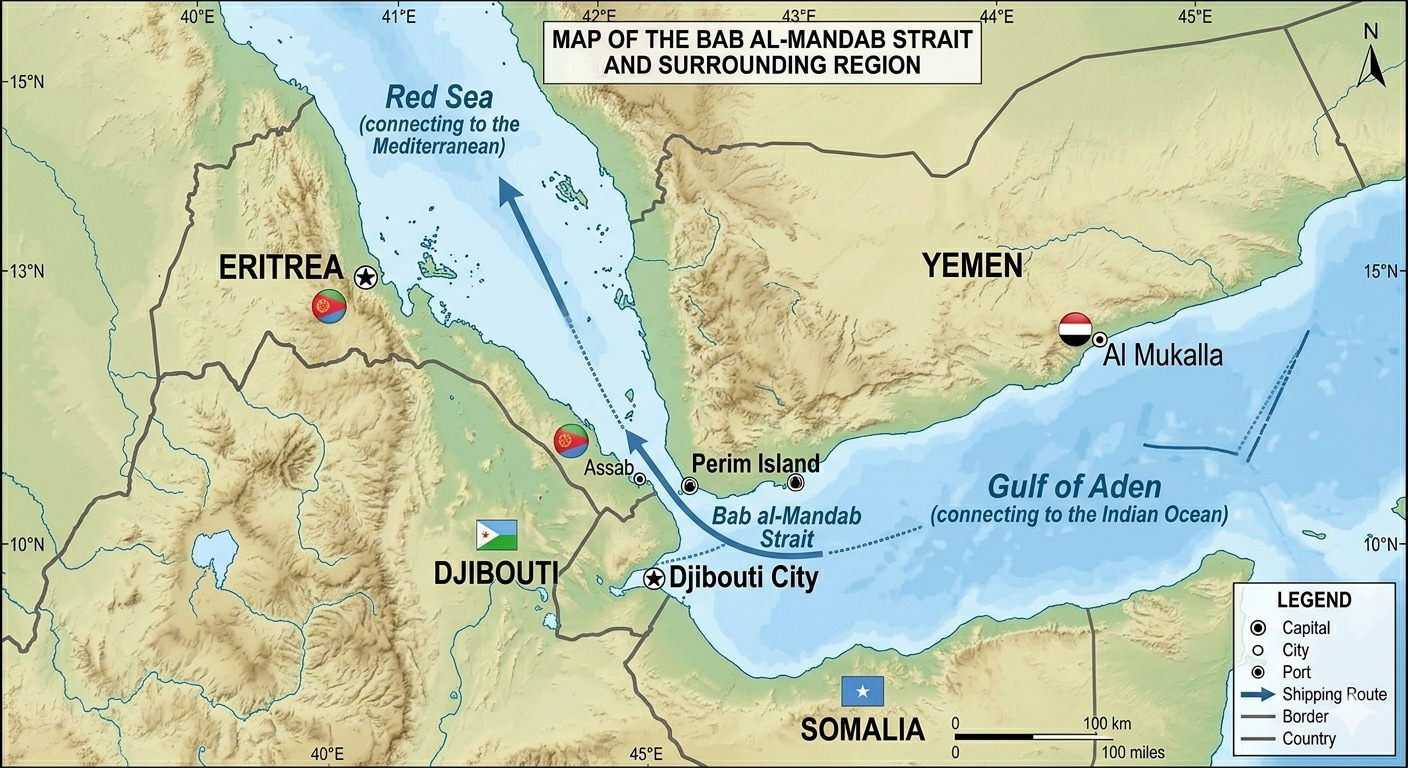 That is why the battle for Bab al-Mandab is perhaps even more important than the one for Taiz. The name literally means "Gate of Tears." The strait lies between Yemen on one side and Djibouti and Eritrea on the other. It connects the Red Sea and the Gulf of Aden, and therefore the Suez Canal with the Indian Ocean. Ships travelling between Asia and Europe normally pass through this corridor, including container traffic and important energy shipments.
When Bab al-Mandab becomes unsafe, ships can be forced to sail around the Cape of Good Hope. That means thousands of extra kilometres, higher fuel costs, longer delivery times, higher insurance premiums and ultimately higher prices. Yemen therefore possesses something that is not measured in traditional economic statistics: geographic power.
The latest fighting also illustrates how difficult it is to establish a reliable battlefield picture. Saudi-backed reporting and sources aligned with Yemen's internationally recognized authorities initially described the offensive along the Red Sea coast as a significant advance toward Mocha and Bab al-Mandab. In the new interview, however, Hussein Al-Bukhaiti disputes the portrayal of a decisive breakthrough. According to his account, Saudi-backed forces advanced only a limited distance toward the Dhubab area under heavy air cover before Yemeni reinforcements, drones and missiles forced them back. His claims concerning the exact territorial situation, losses and scale of the fighting cannot all be independently verified and should therefore be treated as one account from a participant-aligned perspective.
The distinction matters. Capturing a road, hill or coastal position during an offensive is not the same as establishing durable control over Bab al-Mandab or permanently cutting an opponent's supply lines. The contradictory accounts themselves have become part of the war: each side seeks to present tactical movements as proof of strategic momentum.
Nor would the loss of a particular coastal strip necessarily remove the threat to shipping. Missiles and drones do not have to be launched literally from the shoreline. Even from positions further inland, Ansar Allah can retain the ability to threaten maritime targets. Bab al-Mandab is therefore not only a territorial problem. It is also a technological, logistical and strategic problem.
One Hundred Fighter Jets Against a Guerrilla Army
The scale of the Saudi response says much about the seriousness with which Riyadh assesses the situation. Earlier reports described a very large air campaign involving extensive sorties and attacks on numerous targets. In the more recent interview, Al-Bukhaiti describes an exceptionally intense phase of bombing and claims that roughly 400 air strikes were carried out within a short period. That precise figure has not been independently established and should be understood as his account rather than as a confirmed total.
The broader military problem is nevertheless clear. Air superiority can disrupt troop movements, destroy fixed positions and help open a corridor for advancing ground forces, but it does not by itself guarantee that territory can be held. Al-Bukhaiti also claims that Yemeni missile and drone attacks placed Saudi air bases and other military infrastructure under pressure, thereby complicating sustained air operations. The specific effects of those attacks require independent confirmation.
That returns the conflict to its central paradox. The question is not whether Saudi Arabia possesses more conventional firepower. It clearly does. The question is: can that firepower be converted into durable political and territorial control? The history of the war since 2015 has repeatedly shown how difficult that conversion can be.
The Lesson of Asymmetric Warfare
Yemen once again demonstrates that military superiority and political victory are two different things. A technologically superior armed force can inflict enormous losses on an opponent and still fail to impose the desired political outcome. For Ansar Allah, moreover, time and cost operate differently than for a wealthy conventional military that must sustain aircraft, maintenance, logistics, air defence and expensive precision weapons.
A particularly visible tactical change is the growing use of FPV drones. These relatively inexpensive, low-flying systems can be guided onto vehicles, positions and small groups of soldiers with considerable precision. In the interview, Al-Bukhaiti argues that years of blockade and war forced Yemeni forces to adapt, reverse-engineer technology and develop more of their own production capacity. He also explicitly acknowledges the importance of Iranian technical knowledge. That suggests a more nuanced model than either complete self-sufficiency or simple foreign control: external know-how can be combined with local adaptation, production and battlefield experience.
The economic asymmetry remains crucial. Even when many inexpensive drones or missiles are intercepted, the defender may have to employ much more costly systems. The attacker does not need every weapon to penetrate. A small number of successful strikes against a refinery, airport, radar installation or energy facility can impose costs far beyond the price of the attacking weapon.
The War Is Being Brought to Saudi Arabia
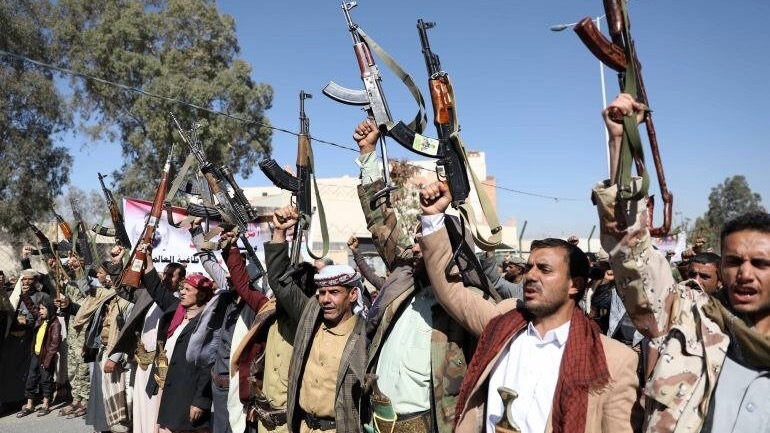 That brings us to a second fundamental change. The war is no longer confined to Yemen. Ansar Allah has repeatedly demonstrated the capacity to threaten targets deep inside Saudi Arabia with missiles and drones. In the new interview, Al-Bukhaiti claims that Yemeni forces struck Saudi air bases and facilities associated with Aramco during the latest escalation. The precise targets, damage and operational effects described in the interview have not all been independently confirmed, but the broader long-range strike capability is well established by the history of the conflict.
Al-Bukhaiti also reiterates a warning that Saudi airspace could be treated as an operational area, while describing exceptions for the areas around Mecca and Medina. Such a declaration should not be confused with actual control of Saudi airspace. Its significance lies instead in the risk signal it sends to airlines, insurers, investors and logistics companies.
A modern economy depends on predictability. Even a limited probability of missile or drone attacks can influence commercial decisions. The strategy therefore does not require destroying the Saudi economy. It can aim at continually increasing the cost of uncertainty, especially if military escalation begins to affect airports, energy infrastructure or perceptions of aviation safety.
The Civilian Population Back in the Firing Line
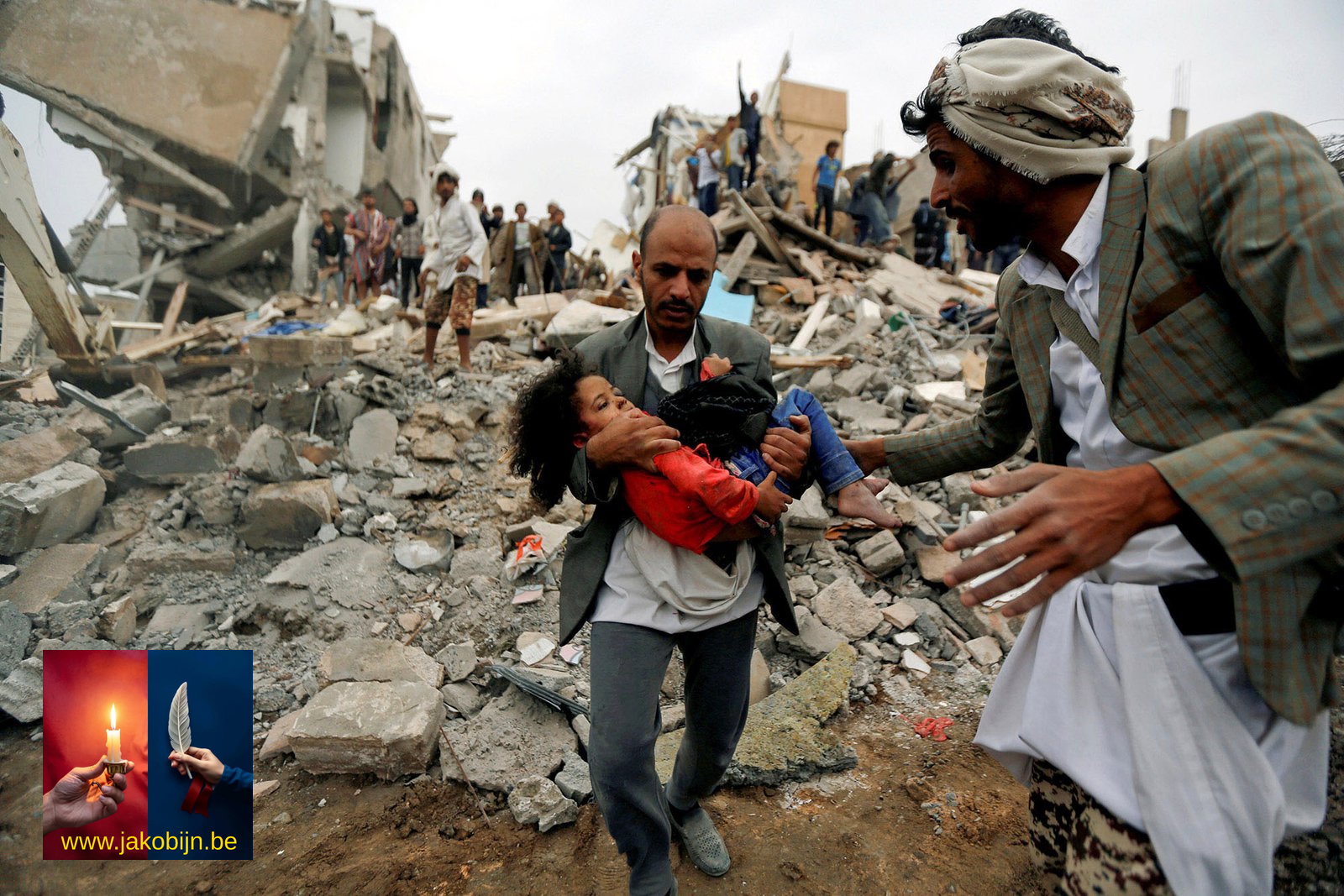
The new interview also brings the civilian dimension of the escalation back to the foreground. Al-Bukhaiti describes Saudi strikes on or near civilian infrastructure in Sanaa, including a maternity and children's hospital, as well as attacks on a market, bridges and residential buildings. He also recounts an incident in which, according to his account, members of one family were killed while an injured child survived. These are serious allegations, but the interview presents them from a clearly pro-Ansar Allah perspective and the individual incidents require independent verification before they can be stated as established facts.
The broader concern is not new. Since the Saudi-led intervention began in 2015, civilian protection has been one of the central issues in the Yemeni war. Damage to homes, hospitals, roads and other infrastructure, combined with economic disruption and restrictions on essential supplies, has repeatedly amplified hunger, disease and displacement. Renewed attacks on densely populated areas therefore risk returning Yemen to one of the most destructive patterns of the earlier phases of the war.
Marib: Where Oil and Political Power Converge
After Taiz, a second crucial name appears in Escobar's analysis: Marib. The province has a special economic significance due to its oil and gas reserves and energy infrastructure. That is why control over Marib is not only militarily important. A future Yemeni power structure needs revenue. A movement can control cities and mountains, but without access to energy, taxes, ports and trade routes, it remains difficult to organize a durable state. Escobar therefore reasons that a possible combination of control over Sanaa, Taiz and Marib would fundamentally change the balance of power.
Ansar Allah could then no longer simply be described as a rebel movement. The movement would increasingly acquire the characteristics of a de facto state. In parts of northern Yemen, that process has in fact long been visible. Ansar Allah manages government institutions, tax collection, security services and military structures. At the same time, one should not romanticize the movement's internal problems. Its governance is also accused of repression, authoritarian actions and ideological control. A recent analysis by Le Monde points both to the movement's remarkable military development and to its authoritarian governance practices and internal vulnerabilities. That distinction is important. Military success does not automatically mean political legitimacy.
Aden and the Old Fault Line Between North and South
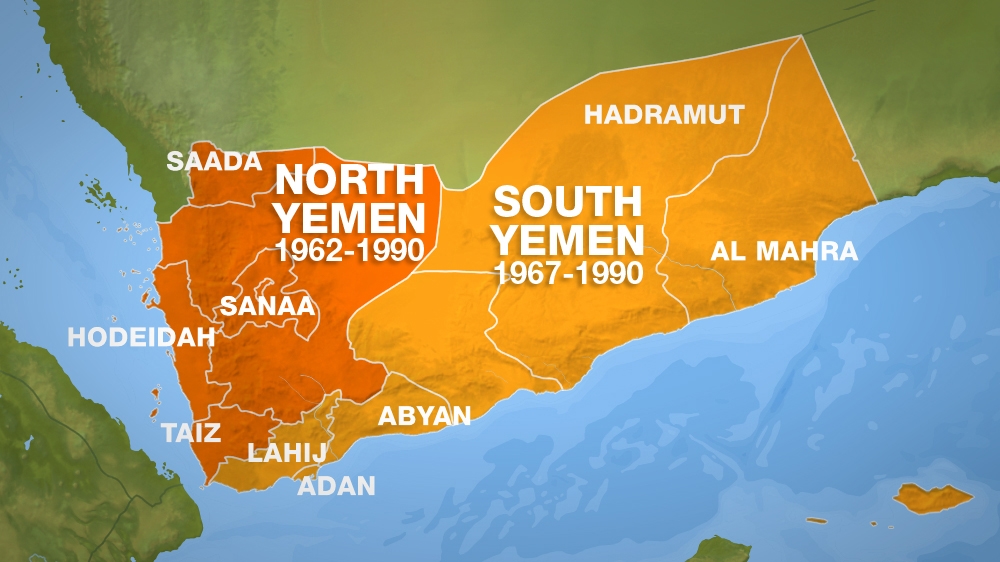 Even if Ansar Allah were to fully conquer Taiz and Marib, a fundamental problem would remain: South Yemen. After all, Yemen was not always one state. Until 1990, North Yemen and South Yemen existed as separate political entities. Reunification did not end the regional contradictions. A civil war followed in 1994, and strong separatist currents still exist in the south today. Aden forms their symbolic center. The internationally recognized government uses the city as a temporary capital, but its power is far from absolute.
Local forces, southern separatists, tribes, militias and foreign sponsors all have their own interests. The United Arab Emirates, for example, supported important southern formations for years. That makes any prediction about the "reunification of Yemen" extremely problematic. A victory over one military opponent does not resolve the historical North-South contradiction. Escobar, however, sees a different mechanism. According to him, an overwhelming military shift could lead tribes and local power groups to pragmatically conclude agreements with Ansar Allah. Not out of ideological conviction, but because survival in a tribal political environment often means adapting to the new balance of power. That is possible. But it is certainly not inevitable.
Iran: Ally, Sponsor or Principal?
In virtually every Western description of Ansar Allah, the adjective "Iran-backed" appears. There are good reasons for that. Iran has supported the movement politically and militarily, and the technological development of Houthi missile and drone capabilities is not unrelated to the broader Iranian military infrastructure. But that does not tell the full story. Ansar Allah is not an organization that was simply created by Iran. The movement has deep local roots. It emerged from the political and religious circumstances of northern Yemen and was already waging war against the Yemeni government before its relationship with Tehran acquired its current strategic significance.
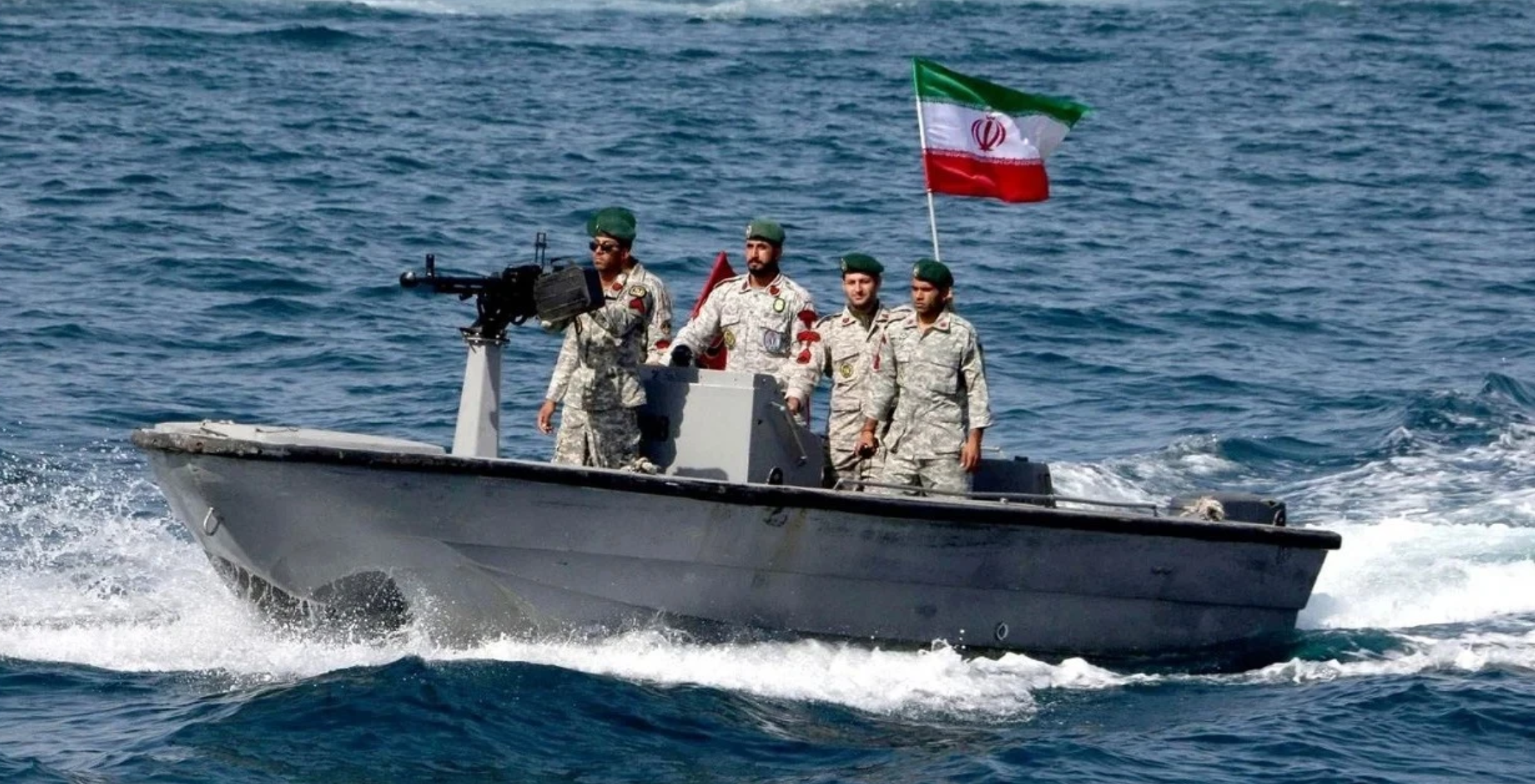
The difference is important. When every action of Ansar Allah is interpreted as a direct order from Tehran, the movement's own Yemeni agenda is underestimated. Iran undoubtedly benefits from a strong Houthi movement. Viewed from Tehran, Yemen constitutes an exceptionally valuable strategic position. On the one hand, pressure can be exerted on Saudi Arabia. On the other hand, Bab al-Mandab lies within reach. And further to the north are Israel and the American military infrastructure in the region. But an ally does not have to be a puppet. That distinction is too often lost in geopolitical reporting.
From Yemen to Israel and the United States
Escobar therefore places the Yemeni war in a much larger strategic framework. For him, Yemen is only one front in an increasingly interconnected confrontation between Iran, Israel and the United States. That is also where the greatest risk of escalation lies. A large-scale new American or Israeli attack on Iran could hardly remain limited to Iranian territory. Iran has capabilities to attack American bases and infrastructure in the region. Regional allies can also become active. The Strait of Hormuz can come under pressure. And on the other side of the Arabian Peninsula lies Bab al-Mandab. Thus an exceptionally vulnerable geographic situation arises. Two of the most important maritime energy corridors in the world lie on either side of the same peninsula. Hormuz in the east. Bab al-Mandab in the west. Whoever can simultaneously pressure both corridors does not need to be a world power to cause enormous consequences for the world economy. That explains why Washington cannot possibly treat the events in Yemen as an isolated civil conflict.
Pakistan and Turkey Change the Equation
The possibility of broader outside involvement adds another layer of uncertainty. Both the earlier analysis and the new interview point to closer military coordination involving Saudi Arabia, Pakistan and Turkey. Al-Bukhaiti speaks of a joint defence framework and possible military support for Riyadh. The exact scope of any deployments, missions or operational commitments, however, must be established separately and should not be inferred solely from the interview.
Military support does not automatically mean that Turkish or Pakistani infantry will enter Yemen. Assistance can take many forms: air defence, intelligence, logistics, electronic warfare, training, maintenance, supply or protection of Saudi installations. For Pakistan, direct participation in an offensive war would be politically sensitive because Islamabad maintains important relations with both Saudi Arabia and Iran. Turkey likewise balances several regional interests simultaneously. The decisive question is therefore not simply whether they support Riyadh, but what form that support takes and how far they are prepared to go.
Al-Bukhaiti warns that any foreign ground forces entering the Yemeni theatre would face the same asymmetric dangers that have complicated previous campaigns: difficult terrain, dispersed forces, drones, missiles and a locally embedded opponent. That is his assessment, not a prediction that such a deployment will necessarily occur.
Can Saudi Arabia Really Be Destabilized?
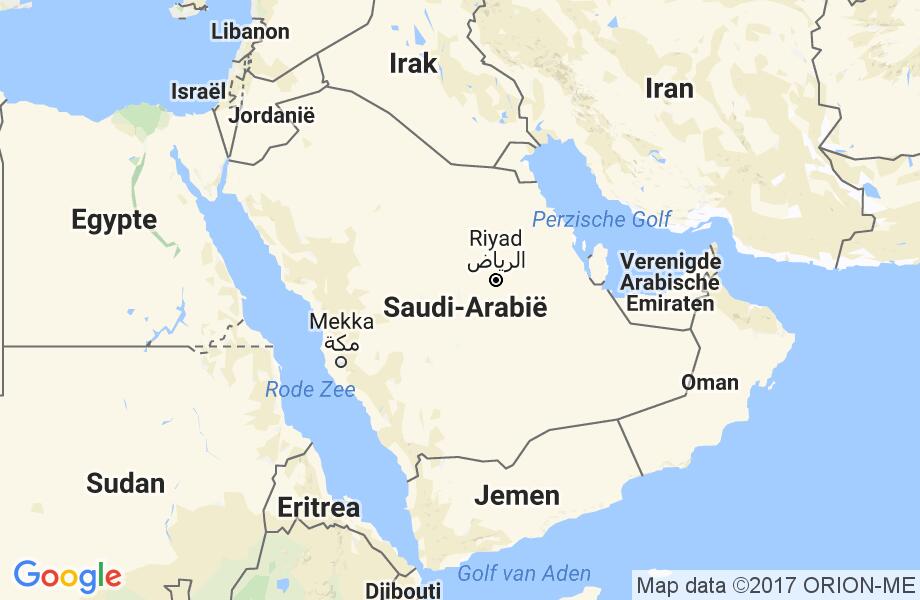 Here we come to the most radical part of Escobar's analysis. He suggests that a major Yemeni victory could ultimately even lead to the internal disintegration of Saudi Arabia. That is a far-reaching prediction. There is currently no convincing evidence that the Saudi state is on the verge of falling apart. Riyadh possesses enormous financial reserves, extensive security services, modern armed forces and a central state apparatus that has far greater resources than the governments that collapsed during the Arab Spring.
The Saudi monarchy also has decades of experience in managing regional, tribal and political contradictions. Yet Escobar's underlying question is more interesting than his prediction. Saudi Arabia is not a historically self-evident nation-state like France or China. The current kingdom emerged from the military and political expansion of the House of Saud over various regions and tribal areas. The unification of the kingdom was only formally completed in 1932. Regional identities did not disappear as a result. Escobar reasons that a severe military defeat, combined with economic damage and internal power struggles, could make old fault lines visible again. That is theoretically possible. But between "possible" and "likely" lies a great distance.
Mohammed bin Salman and the Vulnerability of Centralized Power
 Yet another dimension exists. Under Crown Prince Mohammed bin Salman, political power in Saudi Arabia has become strongly centralized. That has advantages. Decisions can be made quickly and major economic projects can be pushed through from the center. But centralization also has a downside. When successes are strongly identified with one leader, the same applies to failures. A prolonged war that increasingly threatens Saudi infrastructure could therefore ultimately have political consequences within the elite as well. Escobar even predicts possible palace conflicts. The broader principle is valid: wars do not only influence front lines. They also change the internal power relations of the states that wage them.
The Economic Paradox of the War
Moreover, a special paradox exists for Saudi Arabia. Thanks to its energy exports, the country has the resources to finance a highly modern armed force. But precisely that energy infrastructure simultaneously constitutes one of its most important vulnerabilities.
- Oil fields.
- Pipelines.
- Compressor stations.
- Refineries.
- Export terminals.
- Ports.
- Power plants.
- Desalination plants.
These are large, fixed infrastructures that are difficult to fully protect. Ansar Allah does not need to defeat the Saudi army to cause economic damage. It only needs to break through the air defense occasionally. The world has previously seen how attacks on Saudi oil installations can have immediate international consequences. In the current escalation, that vulnerability is even greater because the broader war in West Asia is also putting pressure on other energy routes. Reuters reported on 5 October that geopolitical tensions around Iran, Saudi Arabia, Yemen, Hormuz and Bab al-Mandab once again constitute an important risk factor for the oil markets. The war thereby immediately becomes a global economic problem.
A War of Cheap Weapons Against Expensive Systems
There is something else at play. The Yemeni war shows how quickly modern military technology is changing. A generation ago, a long-range weapon was almost automatically a very expensive instrument that only advanced states could possess.
- Drones have fundamentally changed that model.
- Relatively cheap unmanned aircraft can cover hundreds of kilometers.
- Missile technology is spreading as well.
- Commercial electronics can be adapted for military applications.
- Satellite imagery is becoming increasingly easy to obtain.
- Navigation technology has become cheaper.
- This creates a fundamental economic problem for traditional armed forces.
- A defensive missile costing hundreds of thousands or even millions of dollars can be deployed against an attacking drone that costs only a fraction of that.
- Moreover, the attacker does not need to succeed every time.
- The defender does.
- One interception failure can be enough.
- Yemen is therefore also a laboratory for 21st-century warfare.
The United States: Powerful but Challenged Everywhere at Once
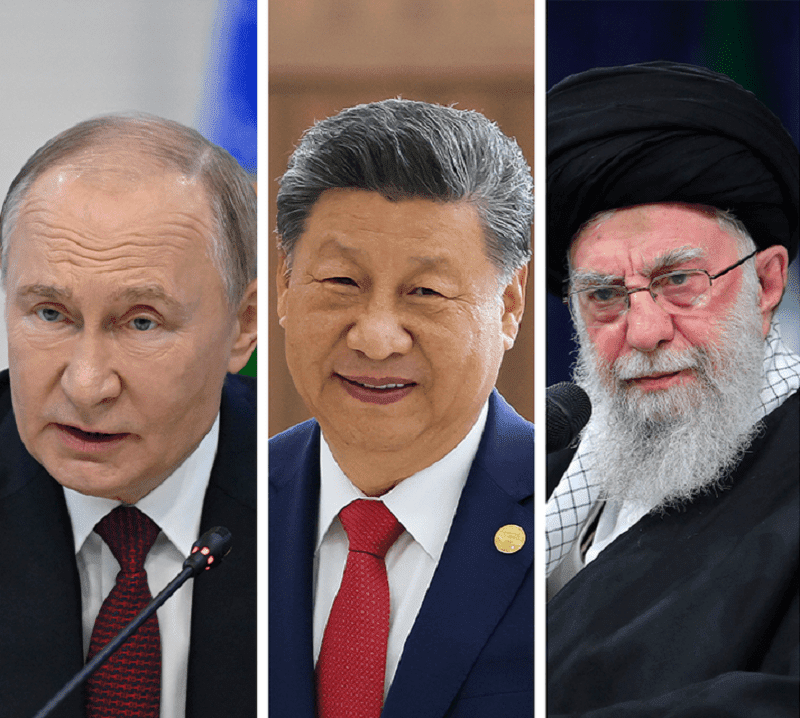
Escobar ultimately connects this development to a much larger theme: the position of the United States. According to him, Washington is simultaneously confronted with three major strategic challenges: Russia, China and Iran. His conclusion is that even the United States does not have sufficient resources to conduct prolonged large-scale confrontations on all fronts simultaneously. That is debatable. The United States continues to possess unmatched global military infrastructure, hundreds of foreign facilities, enormous technological capacity, financial power and an extensive network of allies. But resources are never unlimited.
- A Patriot missile used in the Middle East cannot simultaneously be deployed elsewhere.
- An aircraft carrier cannot be in two places at once.
- Ammunition stocks must be replenished.
- Pilots, technicians and ships require maintenance.
- And ultimately wars must be politically financed.
- That makes even relatively small regional conflicts strategically relevant when they accumulate.
Yemen as a Symptom of a Changing World Order
That brings us to the deeper meaning of the conflict.
- Yemen is not a great power militarily.
- Nor economically.
- But the country demonstrates how international power relations are changing.
- The classic hierarchy in which rich states could almost automatically dominate poor states militarily is becoming less and less self-evident.
- Technology is spreading.
- Cheap precision weapons are changing the battlefield.
- Drones are narrowing the technological gap.
- And geography remains as important as ever.
- A movement that can threaten Bab al-Mandab therefore possesses much more geopolitical influence than its economic size would suggest.
- That is perhaps the most important reason why the war in Yemen is once again acquiring global significance.
But the Yemenis Pay the Price
In all geopolitical analyses, one reality threatens to disappear from view: the population of Yemen.
- For millions of Yemenis, Bab al-Mandab is not an abstract strategic corridor.
- Taiz is not a pawn on a geopolitical chessboard.
- Marib is not an oil field on a map.
- These are places where people live.
- The war since 2014 has claimed hundreds of thousands of lives, directly through violence or indirectly through hunger, disease and the collapse of basic services.
- The current escalation is once again causing large refugee flows. Reuters reported on 5 October that at least 184,000 people had been displaced by the renewed fighting.
- That figure threatens to rise further when the battle for major cities intensifies.
- A battle for Taiz or Sanaa would not be comparable to a fight for a remote military position.
- It would take place among large civilian populations.
- That is why it is important not to romanticize military predictions.
- Even a "victory" can mean a humanitarian catastrophe.
Escobar's Grand Scenario
When we finally return to Pepe Escobar's analysis, two things must be kept separate. His factual observations and his prognoses. That Ansar Allah has grown into an exceptionally important regional military actor is difficult to deny. That the movement can threaten Saudi infrastructure has also been demonstrated. That Bab al-Mandab is of enormous strategic significance is beyond dispute. That Saudi Arabia, after more than ten years of war, has not been able to eliminate Ansar Allah is also clear. But from that it does not automatically follow that Escobar's much more radical conclusion is correct—that Saudi Arabia will ultimately disintegrate or that Yemen could politically dominate the Arabian Peninsula. That remains speculation. Yet his scenario is intellectually interesting because it reverses the usual analysis. Usually the question is asked: can Saudi Arabia defeat Yemen? Escobar poses a completely different question: what happens when Yemen eventually begins to change Saudi Arabia? That is perhaps the most provocative but at the same time most interesting question from the entire conversation.
New Source: Hussein Al-Bukhaiti
This update also draws on the interview Hussein Al-Bukhaiti: Nothing Is Quiet on the Yemeni Front — Saudi Push, Turkey & Pakistan Enter. Al-Bukhaiti offers a perspective sympathetic to Ansar Allah and directly challenges several early accounts of the latest Saudi-backed offensive. His testimony is valuable for understanding how the conflict is being interpreted from the Ansar Allah side, but operational details concerning territorial control, casualty figures, air strikes, attacks on Saudi facilities and civilian incidents should be treated as claims unless independently corroborated. The sharp divergence between his account and Saudi-backed reporting is itself important: information warfare has become inseparable from the military struggle.
The Battle for Yemen Is No Longer Only About Yemen
In early October 2026, the outcome of the renewed fighting remains impossible to predict. Ansar Allah has been reported to have made important progress around Taiz, while Saudi-backed forces launched a major counteroffensive toward the Red Sea coast. Initial reports presented that operation as a significant recovery of territory around Bab al-Mandab, but Al-Bukhaiti's subsequent account disputes a durable breakthrough and describes the advance as limited and later repelled. The competing versions underline how uncertain the battlefield picture remains.
- Saudi Arabia has dramatically intensified its air campaign.
- Closer Saudi coordination with Pakistan and Turkey has become part of the strategic equation, although the exact operational scope of their support requires separate confirmation.
- Ansar Allah, meanwhile, claims attacks on Saudi military and energy infrastructure and has issued warnings concerning Saudi airspace.
- Behind that lies Iran.
- Behind that, the confrontation with the United States and Israel.
- And behind that regional confrontation, the even larger international power struggle is taking shape in which Washington, Beijing and Moscow are trying to maintain or expand their positions.
- Yemen lies precisely at the intersection of those different fault lines.
The Gate of Tears
- Bab al-Mandab is not called the Gate of Tears for nothing.
- For centuries, merchants, armies and empires passed through this narrow passage.
- Today, container ships and oil tankers sail through it.
- But the fundamental significance of geography has not changed.
- Whoever can threaten this corridor can exert pressure on powers that are economically hundreds of times larger.
- That is ultimately the paradox of Yemen.
- One of the poorest countries in the Middle East is located on one of the most precious pieces of geography in the world.
- Saudi Arabia can deploy one hundred fighter jets.
- The United States can provide intelligence.
- Pakistan and Turkey can militarily support Riyadh.
- Ansar Allah can deploy missiles and drones.
- But none of those actors can change geography.
- The Red Sea remains where it is.
- The Suez Canal remains dependent on the southern access.
- Bab al-Mandab remains the gate.
- And Yemen remains situated at that gate.
That is why what is happening today around Taiz, Marib, Aden and Bab al-Mandab is not a footnote in the history of the Middle East. It is a confrontation over who will be able to influence the trade routes, energy corridors and political order of one of the most strategically important regions in the world in the coming years. Whether Pepe Escobar's most radical prediction will ever become reality—a Yemeni victory that ultimately even affects the internal structure of Saudi Arabia—we do not know. The evidence for that is lacking today.
But one conclusion is much harder to dispute: When Saudi Arabia began its military intervention in March 2015, the expectation was that its enormous technological and financial superiority could relatively quickly break the Houthi rebellion.
- More than ten years later, Ansar Allah is still in Sanaa.
- The movement possesses more military capability than it did then.
- It can directly threaten Saudi Arabia.
- It can put pressure on international shipping.
- And its military movements can influence the oil price, aviation routes and strategic calculations of regional and global powers.
That in itself is already a historic shift. The question is therefore no longer only who will win the war over Yemen. The more important question is: how much of the Middle East will change before that war is finally over?
Source List with URLs
- Institute for the Study of War (ISW) – Iran Update, October 2026: Detailed analysis of the Houthi advance around Taiz and the strategic implications of the encirclement.
URL: https://understandingwar.org/research/middle-east/iran-update-october-3-2026/ - Courthouse News Service – Saudi-led coalition air campaign: Confirmation of the deployment of 100 fighter jets and the attack on hundreds of targets in the "Dawn of Yemen" operation.
URL: https://www.courthousenews.com/articles/a-saudi-led-coalition-says-its-fighter-jets-are-bombing-yemens-iran-backed-houthi-rebels - International Organization for Migration (IOM) / UN News: Official reporting on the humanitarian crisis and the displacement of approximately 184,000 people due to the renewed fighting.
URL: https://www.somaliguardian.com/news/world/yemen-retakes-bab-el-mandeb-from-houthis/ - Regional Defense Analysis – Makkah Mutual Defense Agreement: Background information on the trilateral defense agreement between Saudi Arabia, Turkey and Pakistan and the recent meeting of the chiefs of staff in Riyadh.
URL: https://www.courthousenews.com/saudi-arabia-turkey-and-pakistan-sign-defense-pact-amid-regional-war/ - Pepe Escobar (Dialogue Works Substack): The original source of the analysis on the strategic shift and the declaration of Saudi airspace as unsafe.
URL: https://dialogueworks.substack.com/p/pepe-escobar-breaking-yemen-declares-312 - Hussein Al-Bukhaiti – interview on the renewed Yemen escalation: Source used for the updated discussion of the Bab al-Mandab counteroffensive, FPV drones, alleged strikes on Saudi military and energy infrastructure, civilian infrastructure and possible Turkish/Pakistani involvement. Claims from the interview are attributed where independent confirmation is lacking.
URL: https://youtu.be/WwScC3h7iW4