
Why Washington Fails in Its Economic War Against Iran and Russia
The Illusion of Imperial Control: A Hegemon in Denial
By Frank Dumon
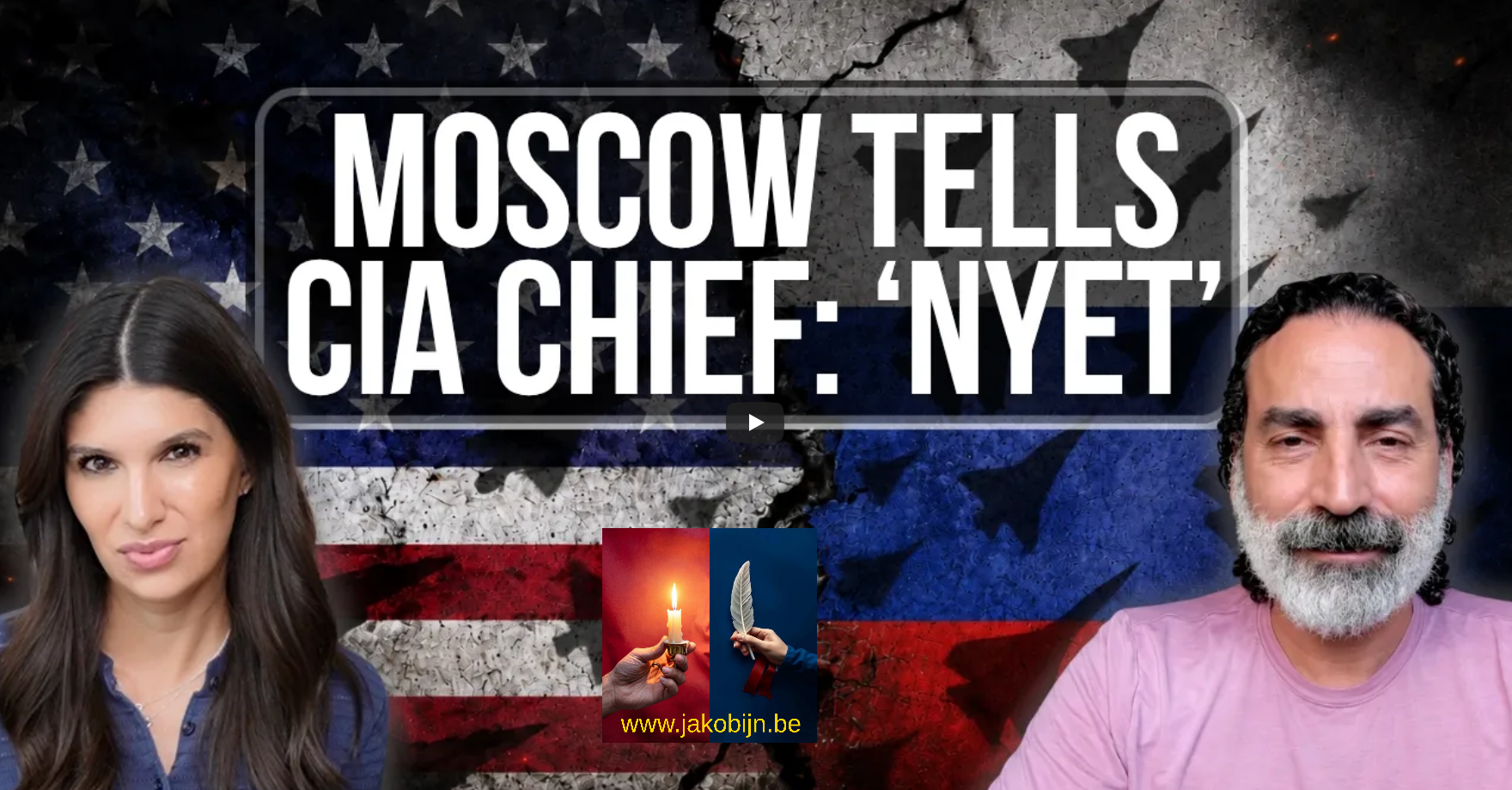
On this late summer day, 27 August 2026, geopolitical reality continues to impose itself relentlessly on a West that struggles increasingly to recognise its own decline. A recent interview by Rachel Blevins with the Palestinian-Syrian journalist and director of Free Palestine TV, Laith Marouf, paints a revealing picture of the current dynamics in the Middle East and the broader global power balance. The trigger is an apparently unexpected, but on closer inspection desperate, move by the current US administration: the launch of 'Operation Economic Outcast', a campaign aimed at punishing countries that still do business with Iran, coupled with a mysterious, unannounced visit by CIA Director John Ratcliffe to Moscow.
For the attentive observer, and especially for those who study the historical patterns of imperial overreach, this turn of events is no surprise. It is the classic reflex of a declining hegemon: when military and diplomatic means fail, one resorts to economic coercion and threats. But as Marouf analyses with precision, the world has changed. Iran, after what is described in the interview as an absolute defeat of the United States in a 40-day conflict, has re-emerged as one of the four great powers on earth. Washington's attempt to force Russia and China to sever their ties with Tehran is not only an underestimation of the strategic depth of these alliances, but also a fundamental misrecognition of the new, multipolar reality. This article dissects the key points of the interview, places them in a broader historical and geopolitical framework, and offers a sharp critique of the ideological blindness that drives current Western foreign policy.
Operation 'Economic Outcast': Sanctions as Domestic Theatre
The recent announcement by the US Treasury Department to impose new sanctions on nearly 60 individuals and entities, spread across Hong Kong, Singapore, Switzerland, the UAE, Malaysia, the Marshall Islands, the United Kingdom, France, Syria, Ukraine, Greece and China, should not be seen as a sign of strength, but of impotence. As Marouf rightly notes, the United States has already subjected Iran to the maximum possible sanctions regime for decades. There is simply nothing new or devastating left to devise that would directly affect Iran without plunging the world economy into a downward spiral.
The new sanctions are therefore not primarily aimed at Iran itself, but at third parties. It is an attempt to tighten the screws on vassal states and smaller economies that do not have the resources to resist. The choice to spare Chinese banks for now is not a sign of leniency, but of pure economic necessity. China is currently the only economic engine keeping the world economy running. A direct attack on the Chinese financial system would lead to a radical collapse of world trade, a scenario that even the most hawkish elements in Washington shrink from. Instead, they choose to make examples of smaller players, in the hope that fear of secondary sanctions will have a deterrent effect.
This strategy, however, ignores a crucial reality: the resilience of the black market and the deepening of land corridors. Trade between China, Russia and Iran is actually accelerating. New railways are being built and shipping on the Caspian Sea is being intensified to fill the gaps that any disruption of traditional sea routes might cause. US and European sanctions have become a paper tiger, a theatrical performance intended to make its own public and the tottering parts of the empire believe that control is still being exercised.
The Unshakable Axis: Why Russia Will Not Abandon Iran
The unannounced visit of CIA Director John Ratcliffe to Moscow is portrayed in Western media as an attempt to warn or even beg Russia to break its ties with Iran. The Kremlin's response was telling: it was confirmed that there was contact with the intelligence services, but emphatically not with President Putin, followed by a direct Russian condemnation of the unilateral sanctions. This was no coincidence, but a calculated diplomatic "slap in the face".
Marouf makes a crucial historical distinction: the moment when Russia might have considered abandoning Iran is long past. During the earlier phases of the conflicts in the region, when the resistance leaders (such as Hassan Nasrallah and the Hamas leadership) were liquidated and the Iranian president was killed, Moscow may have perceived that the Axis of Resistance was weakened and that it should withdraw to save its own bases in Syria. That moment, however, is definitively over.
Today, the reality is reversed. The United States is the party retreating from West Asia, while the Axis of Resistance is at the peak of its military power. Iran has emerged victorious from a direct conflict with the US. For Russia, there is no strategic or economic advantage whatsoever in abandoning this ally now. On the contrary, recent Russian military escalation in Ukraine – with larger weapons, deeper advances and a devastating approach to the Ukrainian coast – shows that Moscow is not afraid of further confrontation. Russia feels strengthened by the proven vulnerability of the Western military apparatus. Any threats from the CIA behind closed doors, possibly driven by the influence of Zionist lobbies or oligarchs within Russia, do not outweigh the hard geopolitical interests of a deep strategic partnership with Tehran and Beijing.
Ideology Above Reason: Zionism as a Driver of Imperial Decline
One of the most penetrating observations in the interview is the analysis of the motives behind Western policy. In a rational, purely capitalist and imperial model, the United States would long ago have realised that maintaining a conflict with Iran is economic suicide. One could, as Marouf sharply notes, have easily installed a more obedient figure and saved the West's 'soft power'. However, the concepts of international law, human rights and freedom of expression have been thrown into the dustbin without mercy.
Why? Because ideology is currently the primary driver of decision-making in Washington and the European capitals. The ideological obligation to maintain the Zionist entity in Palestine, regardless of the cost, has drowned out every form of rational cost-benefit analysis. The West is burning its own historical legitimacy and moral authority to sustain a colonial project fundamentally based on apartheid and exclusion. This is no accident, but a structural feature of the current phase of the empire: the contradictions have become so sharp that they are beginning to eat away at the system from within.
This ideological rigidity is exacerbated by domestic political cycles. With the US midterm elections on the horizon, there is a need for distraction and a 'strong man' rhetoric. A comfortable status quo is not sellable to the electorate. At the same time, the domestic political stagnation in Israel is driving its leadership towards ever further escalation in order to consolidate its own power. This convergence of domestic political needs in the US and Israel makes an increase in hostilities in the coming weeks not only likely, but almost inevitable. Iran and the Axis of Resistance are aware of this and will not wait passively. As Marouf indicates, Iran has already proven it can effectively hit the economies of the vassal states on the Arabian Peninsula, such as the attacks on Saudi shipping in the Red Sea and the Gulf of Aqaba. Further escalation will drive up oil prices and hit Western economies harder than any sanction.
The Syrian Paradox and the Unmasking of the 'Terrorism List'
As the icing on the cake of this geopolitical absurdity, the interview reports that the United States removed Syria this week from the list of state sponsors of terrorism. To the uninitiated, this seems like a step towards normalisation. For the sharp analyst, it is a revealing paradox that exposes the true nature of these lists.
Syria was on this list for decades, despite being a secular, multi-ethnic and multi-confessional state that offered one of the safest havens for Christians in the region. There is no historical record of Syrian citizens committing terrorism outside the country's borders. The list was never an objective measure of security; it was a political instrument to demonise any state that opposed US hegemony and Zionist oppression.
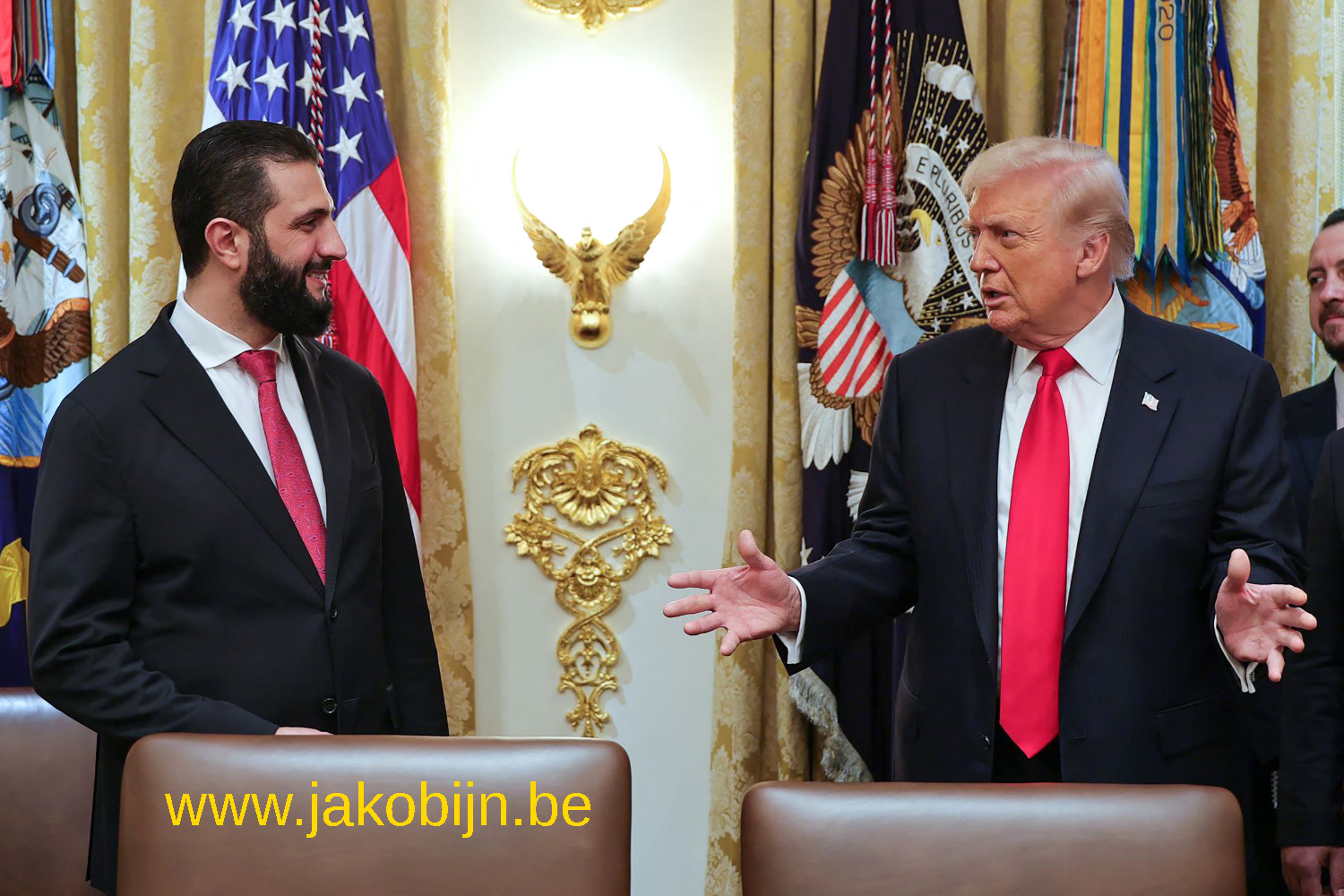
The irony is now complete: the list is being lifted at a time when, according to Marouf, figures with ties to al-Qaida and ISIS (such as Mohammed al-Jolani) have de facto control over the country, supported by international terrorists who are now being received as 'ambassadors' in Washington. This irrefutably proves what critics have been saying for years: on the US terrorism list are not terrorists, but states that refuse to submit. When a recognised terrorist leader is suddenly dressed in an expensive suit and received at the White House, the masquerade is over. The curtains of the 'Wizard of Oz' have been fully drawn back. What we are now seeing in Syria is not peace, but a US- and Israeli-backed occupation in which tens of thousands of Syrians are disappearing and ethnic cleansing is taking place. The removal from the list is not a victory for human rights, but a bureaucratic endorsement of the new, Western-backed hyenas tearing the country apart.
Conclusion: The Price of the Illusion
The interview with Laith Marouf is a sobering but necessary correction to Western mainstream narratives. It shows that the United States, driven by ideological rigidity and domestic political panic, is engaged in an economic war it cannot win, against an alliance (Russia-China-Iran) that is economically and militarily more resilient than ever. The mysterious CIA trip to Moscow is not a sign of masterful diplomatic chess play, but of a desperate feeling of the pulse by a power that realises the world is slipping away from it.
For Europe, and especially for Belgium, it is crucial not to blindly follow this self-destructive policy. Sympathy for the rise of the Global South and a realistic recognition of the Russian and Asian position are not radical positions, but the only rational basis for an independent foreign policy. The illusion that the West can still unilaterally shape the world comes at a price. And that price is paid by the ordinary citizen, by the victims in Syria and Palestine, and by the future of the international legal order.
Source: This article is based on a transcript of the interview between Rachel Blevins and Laith Marouf (Executive Director, Free Palestine TV), broadcast on 26 August 2026. The analysis and contextual interpretation have been added by De Jakobijn to clarify the geopolitical implications for a Dutch-speaking audience.