
Why the American Smartphone Empire Is on the Verge of Collapse
The Photonic Revolution
By Frank Dumon
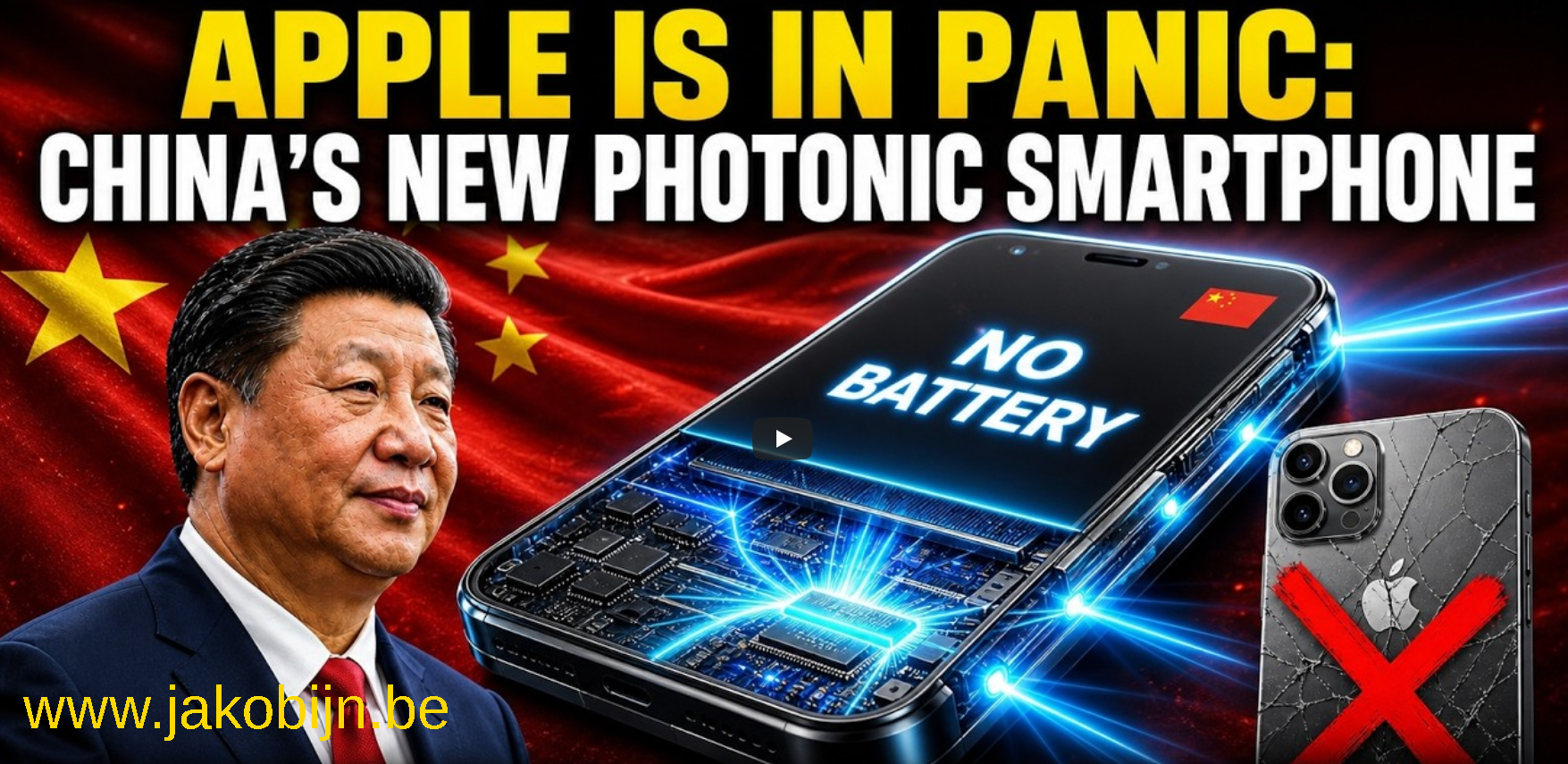
Look at the phone in your hand. Look at the top right corner of the screen. There you see a battery icon. Every night, without exception, you plug that device into the wall outlet. If you forget, your Apple device costing 1,200 euros turns into a useless piece of glass by midday. For fifteen years now, American tech giants like Apple, Google, and Samsung have been trying to convince us that this is simply the reality of modern technology. You want a faster phone? Then you'll have to learn to live with battery anxiety. But while Silicon Valley fights this battle against the laws of physics, a historic disruption is taking place in China that renders the entire iPhone ecosystem obsolete.
Chinese engineers have bypassed traditional electrical silicon chips and successfully developed "photonic computing": processing data using microscopic beams of light instead of electricity. Because photons have no mass, they create no friction and no heat. The result? A smartphone brain that consumes virtually no power. Combined with breakthroughs like the 50-year-lasting micro-atomic battery from Beijing-based startup Betavolt, China is building a smartphone that literally has no charging port.
A device that never overheats, never sleeps, and never needs to be plugged into an outlet for your entire lifetime. It is a story about the end of an era, and the birth of a new technological hegemony outside the American empire.
This article analyzes, based on recent technical research and geopolitical analysis, how this light-based computing works, why traditional silicon has hit a physical wall, and the immense geopolitical irony of how stringent American sanctions actually forced China to invent the very technology that could decimate the American smartphone industry.
The Silicon Wall: Why Silicon Valley Is Stalling
To understand why this particular breakthrough is sending executives in Cupertino into absolute panic, one must first understand the invisible wall that American tech giants have been hitting for years. Every time you open an app, stream a high-definition video, or ask your phone to generate an image, your device does something incredibly violent on a microscopic level. Inside that tiny silicon chip, billions of electrons are forcibly pushed through microscopic copper traces. But electrons have mass. And when you push billions of them at near-light speed through a crowded microscopic superhighway, they collide with things. They create friction. And in the world of physics, friction creates heat.
This is why your phone gets hot when you play a heavy mobile game or record a long video. Your phone isn't just a computer; it's essentially a very expensive, very inefficient pocket heater. This is the invisible wall that Apple, Qualcomm, and Nvidia are currently hitting. In the tech industry, they call this 'thermal throttling'. American tech giants are brilliant at making transistors smaller. But we have reached a frightening physical limit. The transistors in modern iPhones now approach the size of individual atoms. If you pack more of them together and push more electricity through them, the silicon chip will literally melt itself.
To prevent the phone from catching fire, the software must deliberately slow down the processor. It artificially strangles performance. You pay for a high-performance sports car, but the computer limits the engine to the speed limit so it doesn't overheat. And what about the battery? That massive lithium-ion brick that takes up 80 percent of the space in your iPhone? A huge portion of the stored energy doesn't even go towards processing your data. It's entirely wasted on pushing electrons through that friction. This is the ultimate trap. You want more advanced AI features? You need more processing power. More processing power means more electricity. More electricity means more heat. More heat means you need a whole cooling system and an even bigger battery. But smartphones cannot get thicker or heavier without alienating the consumer.
The silicon architecture that Silicon Valley has built, the foundation that made Apple a 3 trillion dollar empire, has reached the absolute limits of physics. They cannot innovate their way out of this trap with traditional electricity. The American strategy has been to try to manage the trap: make slightly better batteries, slightly more efficient cooling plates, and marginally better software. But what if you didn't try to manage the friction? What if you eliminated the electrons entirely?
Photonic Computing: The Speed of Light in Your Pocket
If electricity is the enemy holding back the future of technology, you need to find something else to carry the data. Something that has no mass, creates no friction, and generates absolutely no heat. You need to use light. And that is precisely what Chinese engineers have just figured out how to do. Imagine trying to send a message across the country with a billion heavy trucks driving through mud. That is precisely what an electrical chip does with electrons. Now imagine sending that same message with a laser beam. It arrives instantly, silently, and effortlessly at the absolute speed of light.
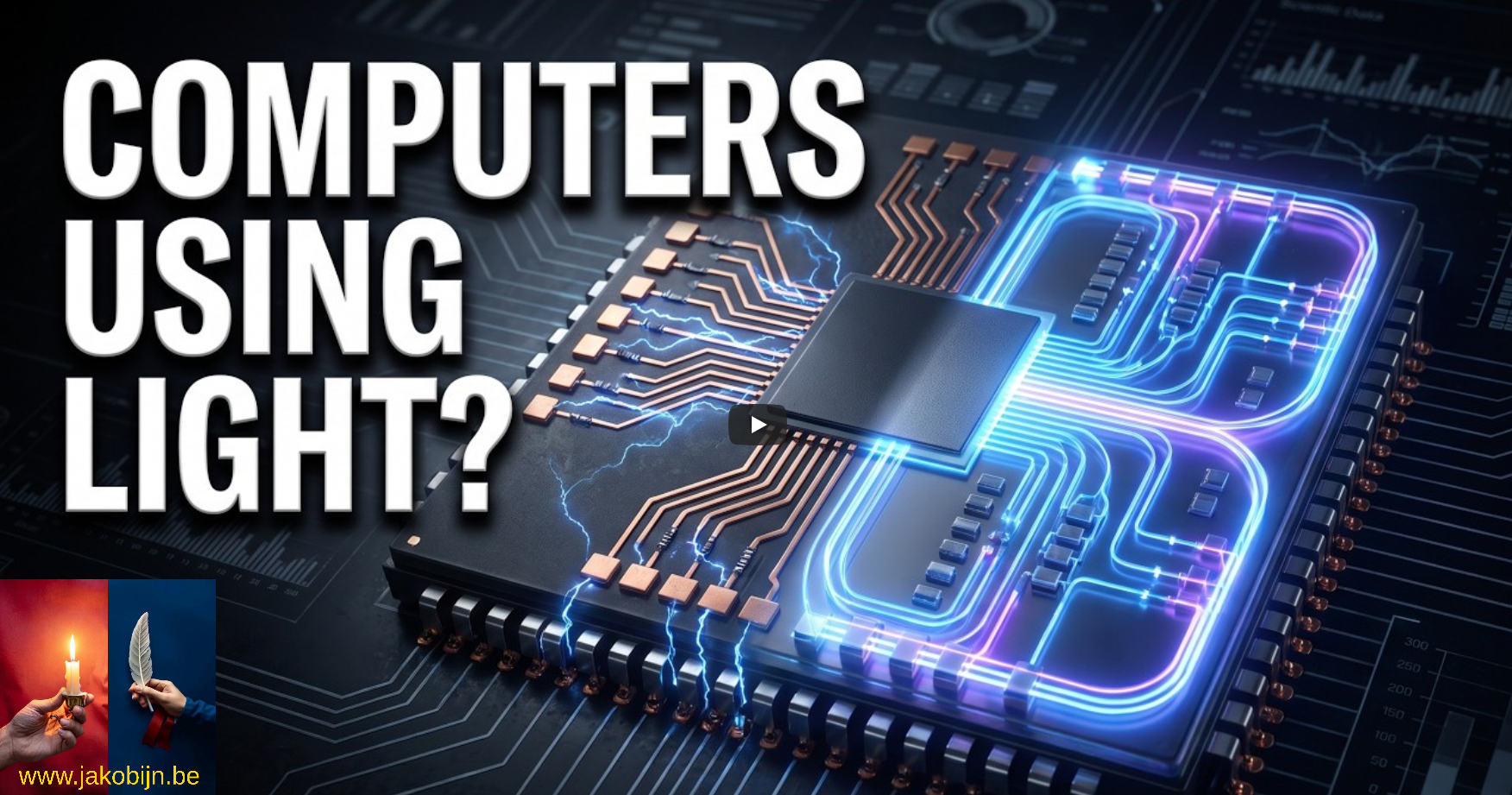
For decades, we have used light to send the internet across the ocean via thick fiber optic cables. But inside your actual smartphone, we were still using those slow, heavy electrical trucks. No one could figure out how to shrink a fiber optic network down to the microscopic size of a mobile processor. Light is notoriously difficult to control on that scale. It bounces around, it scatters, and it refuses to be easily captured. Until now.
Researchers at leading Chinese institutions, such as Tsinghua University and the Shanghai Key Laboratory of Integrated Photonic Computing Chips, have successfully built something called a photonic integrated circuit, and it is a masterpiece [[4]]. Instead of forcing electrical currents through tiny copper wires, this new Chinese chip uses microscopic channels called 'waveguides' to steer photons (actual light particles). When you ask this new Chinese photonic chip to process a complex artificial intelligence task, it doesn't send a surge of electricity. It flashes distinct patterns of light. The light travels through the waveguides and performs the complex mathematics at literal light speed.
Recent breakthroughs, such as the development of the "Taichi" photonic AI chiplet by Tsinghua University, have shown that this architecture can power large-scale neural networks with a fraction of the energy required by traditional chips.
Because photons have absolutely no mass, they don't collide with each other. They create no friction. And without friction, there is no heat. Think about what that actually means for the phone in your pocket. The entire expensive cooling system in a modern American smartphone, the thick vapor chambers, the graphite thermal pads, and the thermal paste that companies spend millions perfecting, suddenly becomes completely useless. You don't need to cool a chip that never gets hot in the first place.
But the lack of heat is only half the miracle. The real breakthrough is power consumption. Pushing electrons through copper costs enormous amounts of raw electricity. Guiding light through silicon costs almost nothing. Tests on these new Chinese photonic chips show they can perform advanced AI computing tasks with only a tiny percentage of the energy required by the most advanced, power-hungry American silicon chips. It's the equivalent of replacing a heavy, fuel-guzzling truck with a vehicle that travels a thousand kilometers on a single drop of fuel. The mathematics of the smartphone changes entirely.
The 50-Year Power Source: Betavolt and the Micro-Atomic Battery
And this is where the story shifts from an incredible engineering feat to an industry-killing threat. If the brain of a smartphone no longer needs a massive surge of power to function, then the entire concept of the battery must be rethought. If you only need a microscopic sip of power to run the phone at light speed, you don't need to plug it into a wall every night. You literally don't need a charging cable at all. You only need a completely different way to generate that tiny drop of power. A way that lasts a lifetime.
If a photonic chip needs almost no electricity, that giant lithium-ion brick taking up most of your phone suddenly becomes dead weight. But if you remove the battery, how does the phone actually stay alive? This is where a Beijing-based startup called Betavolt comes in, and what they have developed sounds like something straight out of a science fiction novel. They have created a micro-atomic battery, a nuclear battery the size of a small coin.
Before you panic: we're not talking about a glowing, dangerous reactor in your pocket. This technology uses a safe, stable isotope called Nickel-63. As the isotope naturally decays over time, it releases a very small, steady stream of energy. Betavolt surrounds this decaying isotope with ultra-thin layers of diamond semiconductors to capture that energy and convert it into a usable electrical current. The Betavolt BV100, unveiled in early 2024, uses a 2-micron Nickel-63 plate between diamond semiconductor converters, with power in the microwatt range and an output of about 3 volts.
In the past, this type of atomic battery could never power a smartphone. The energy output is too small. It trickles out slowly, which is completely useless if you're trying to power a massive, power-hungry, traditional American silicon chip. But remember what we just learned about the Chinese photonic chip: it doesn't need a massive surge of power. It only needs a drip. By coupling the microscopic power demand of a photonic, light-based processor with the slow, steady energy output of a coin-sized atomic battery, you create a perfect ecosystem. The phone generates just enough power to keep the light beams running, and does so continuously without ever stopping.
The Betavolt micro-battery is designed to steadily generate power for 50 years. Not 50 hours. 50 years. You will never see a low battery warning again. You will never have to dim your screen to save power on a long flight. You will never have to carry a tangled charging cable in your bag, and you will never have to stand next to an outlet at an airport again. The phone is simply always on, always awake, and always processing data at the speed of light.
When a phone no longer needs a heavy lithium battery, the form factor changes completely. The device becomes incredibly thin, incredibly light, and leaves vast amounts of internal space for better cameras, superior sensors, and advanced hardware we haven't even thought of yet. It is a complete, fundamental redesign of what a piece of consumer technology is supposed to be.
Geopolitical Irony: How Sanctions Pushed China Into the Future
Filmbestand
For the consumer, this is the ultimate freedom. But for the massive American corporations that currently control the global smartphone market, this exact combination of technologies is a nightmare. After all, their entire financial empire is built on the very things that China has just proven to be obsolete. The most ironic part of this entire disruption is that the American government actually forced this. By trying to crush the Chinese tech industry, Washington inadvertently handed them the keys to the future.
Let's go back a few years. The US government realized that whoever controls advanced microchips controls the future of the global economy. So they made a very aggressive, very calculated move to cut China completely out of the advanced technology race. They used export controls, strict trade sanctions, and something called the 'Entity List'. But the crown jewel of this strategy was blocking China's purchase of advanced EUV lithography machines. These massive, multi-million dollar machines, built by a single Dutch company called ASML, are literally the only way to manufacture the world's most advanced traditional silicon chips.
The logic in Washington was brutal, but brilliant. If China can't buy the machines needed to make the best silicon chips, they simply cannot compete with American companies. They will be stuck using outdated, slower technology, while Apple, Google, and Nvidia race into the future at high speed. For a short time, it looked like a total victory. Chinese tech giants struggled and their international smartphone sales dropped significantly.
But Washington made one massive, historic miscalculation. They assumed that traditional silicon was the only way forward. When you corner a massive, well-funded tech powerhouse and deny them access to the standard path, they don't just give up and go home. They build a new path. Because Chinese engineers were physically blocked from pushing traditional silicon to its absolute limit, they were forced into an existential crisis. They had to look for radical alternatives. They were forced to invest billions of dollars in next-generation research, searching for any possible way to circumvent the American silicon blockade.
And that intense, desperate pressure cooker is precisely what accelerated the development of the photonic chip. Here is the part that keeps American geopolitical strategists awake at night: photonic chips, because they use light instead of electricity, actually don't need the ultra-small atomic-level precision of those ASML machines to work effectively. Light waves are physically larger than electrons. That means the microscopic channels built to guide the light don't have to be as impossibly small as traditional silicon transistors. China can manufacture these advanced photonic chips using older, mature equipment they already own and fully control domestically. They don't need American software, they don't need American patents, and they don't need European lithography machines.
By weaponizing the global silicon supply chain, the United States has accidentally forced China to invent a technology that makes the silicon supply chain completely irrelevant. The very sanctions designed to lock China in the past have ultimately pushed them directly into the future. Now China is facing a domestic photonic chip pilot line independent of Western restrictions. The US is facing a frightening reality. If the whole world shifts from electrical silicon chips to light-based photonic chips, all those carefully crafted American sanctions lose their power overnight. The strategic stranglehold that Washington has used to dominate global technology for decades simply evaporates into thin air.
The Fall of the American Smartphone Empire
We are no longer just looking at a business problem for Apple or a minor bump in the road for Silicon Valley. It is the rise of a complete "supply chain ghost town", where the tools America used to control the industry simply gather dust. To understand why Apple is staring down a crisis, you have to look at how they make their money. Apple is without a doubt the greatest supply chain manager in human history. Their 3 trillion dollar valuation isn't just about good marketing. It is built on absolute mastery over silicon chip fabrication and management of lithium-ion batteries.
Every year, Apple holds a massive event to announce the new iPhone, and every year, the pitch is exactly the same. This is our fastest chip ever, and we've managed to squeeze an extra hour of battery life out of it. They have spent billions of dollars and over a decade optimizing their silicon A-series chips to balance heat, speed, and battery consumption. They have locked up the world's best silicon fabrication at TSMC in Taiwan. They have perfected the software that forces your phone to sleep, dim, and throttle itself, just to keep that battery alive until you get home.
That entire ecosystem – the chips, the cooling logic, the chargers they sell you separately, the battery replacement programs – is the beating heart of their business model. Now imagine a Chinese competitor launching a flagship smartphone on the world market that completely bypasses all of this. A phone that uses a photonic chip that Apple doesn't know how to make, powered by a coin-sized atomic module that Apple doesn't have the supply chain to produce. Apple cannot simply copy this overnight. You can't just retrofit an iPhone to run on light. It requires a fundamental dismantling of their entire hardware philosophy. It requires abandoning the billions of dollars in research and development they have already poured into silicon optimization.
When a consumer is given the choice between a $1,200 iPhone that dies every 14 hours and gets hot when you play a game, and a Chinese photonic smartphone that never gets hot, executes advanced AI instantly, and literally never needs to be plugged into a wall for the rest of your life, loyalty to the Apple logo will be tested like never before. Apple's greatest defense has always been that no one could beat them at the silicon game. They were right. No one could. So China decided to stop playing the silicon game. They changed the board, changed the pieces, and found a new game where Apple's massive advantages suddenly become completely irrelevant.
Conclusion: The End of the Invisible Chain
Let's bring this massive geopolitical shift back to the device that is right in front of you on the table right now. At this moment, your relationship with your smartphone is defined by an invisible chain. You are permanently chained to wall outlets, car chargers, and heavy portable power banks. Your device has a lifespan measured in hours, and every single day is an anxious countdown to 0 percent. That anxiety has become an accepted part of modern life.
But the timeline for this new reality is moving much faster than anyone in Silicon Valley wants to admit publicly. Chinese research institutions aren't just writing theoretical academic papers. They are building physical, working prototypes. Startups like Betavolt have already moved their coin-sized micro-atomic batteries into pilot testing phases and are preparing for mass production [[34]]. The integration of light-based photonic processing and endless power is no distant dream reserved for the year 2050. It is a rapidly accelerating consumer reality targeting the end of this decade.
Think deeply about what it actually means to hold a device that never sleeps. A piece of technology that, once switched on in the factory, stays perfectly awake for 50 years. It fundamentally changes how we interact with the digital world. If a phone never has to shut down or dim its screen to save a dying battery, the built-in artificial intelligence can run continuously in the background. It can constantly learn, constantly process environmental data, and constantly anticipate your needs without ever asking you to plug it in or worry about overheating.
This is precisely why the mood in Cupertino and across the entire American tech landscape is quietly shifting from absolute self-confidence to deep existential panic. The original iPhone changed the world by putting a powerful computer in everyone's pocket. But it was still a flawed electrical device, strictly bound by the physical limits of a lithium-ion battery. The company that succeeds in bringing the first photonic, battery-free smartphone to the world market won't just be releasing a cool new product. They will actively make every other device on the planet look like a heavy, outdated antique.
We stand at the exact moment in history when the age of electricity begins to hand the baton to the age of light. The charging cables currently sitting in your kitchen drawer are about to become absolute relics of the past. Right alongside dial-up modems and cassette tapes. The future of human connection is not plugged into a wall. It runs on light, it lasts a lifetime. And right now, it is being designed and built entirely outside the American empire.
For those who have seen through the price of the illusion of Western technological supremacy, this is not a downfall, but a necessary correction in the world order. The question is not whether this technology will arrive, but who will be left standing when the lights turn on.
Sources
- Transcript 1: "Apple Is In Panic: China’s New Photonic Smartphone Operates Without A Battery" (YouTube).
- Transcript 2: "What If Computers Used Light Instead of Electricity?" (YouTube).
- Tsinghua University Research: Breakthroughs in photonic deep learning and the "Taichi" photonic AI chiplet, published in scientific literature (e.g., Science, 2024-2025).
- Betavolt New Energy Technology: Specifications of the BV100 micro-atomic battery, using Nickel-63 and diamond semiconductors for a 50-year lifespan.
- Geopolitical analysis: The impact of US export controls and ASML EUV restrictions on the accelerated development of domestic Chinese photonic production lines.