
Why AI, Open Source, and New Operating Systems Are Replacing Photoshop
A Paradigm Shift in Digital Creation
By Frank Dumon
For over three decades, Adobe Photoshop has been considered the undisputed champion of digital image editing. From professional photographers and graphic designers to marketing teams and hobbyists, the name Photoshop has become synonymous with digital manipulation. However, in 2026, we find ourselves in a period of fundamental technological and geopolitical shifts. A new challenger has entered the stage that not only challenges this long-standing dominance but threatens to dismantle it: artificial intelligence (AI), intertwined with the rise of open-source software, Linux Mint, and Harmony OS.

This shift is not merely technical in nature; it is a philosophical and economic correction. Users are increasingly confronted with the question of whether it still makes sense to pay exorbitant amounts for closed, American-owned software that is increasingly perceived as unnecessarily complex.
This article analyzes the current state of Photoshop, the unstoppable rise of AI-driven editing, and the broader geopolitical and economic implications of the transition to open source and alternative operating systems. It is an argument for digital sovereignty, accessibility, and a rejection of unnecessary costs and monopolistic practices.
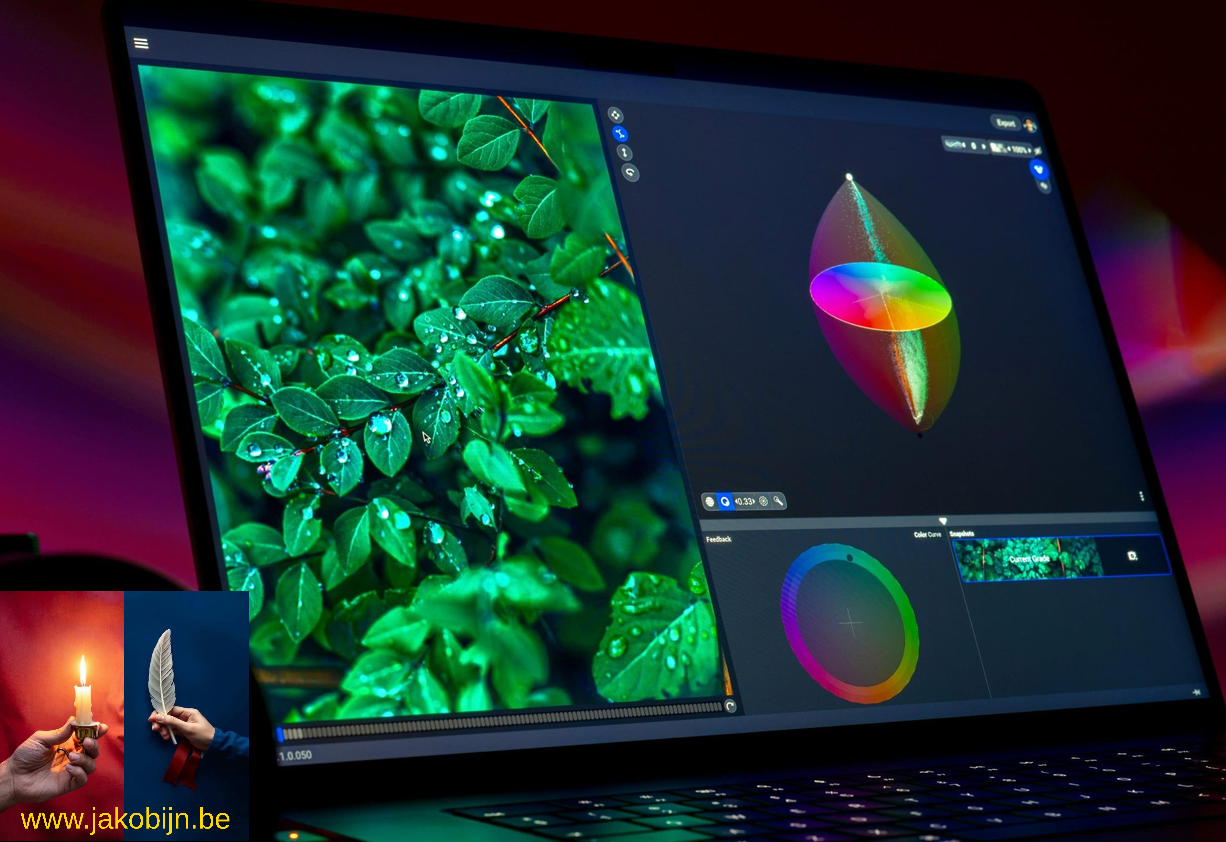
 This vision of enlightenment and accessibility is also reflected in the identity of this platform. This website originally featured a logo with a fist and a feather. The fist, although intended as a symbol of strength, could however be perceived as aggressive or confrontational.
After consultation with Qwen, this logo was transformed: the fist made way for a candle, symbolizing enlightenment and knowledge, while the feather was retained as an icon of authorship.
This metamorphosis perfectly aligns with the core vision of this article: we are moving away from the aggressive, closed, and coercive structures of Big Tech (the fist) towards an enlightened, open, and accessible future of digital creation (the candle and the feather).
The Current State of Photoshop: Power versus Cost
To understand why Photoshop is losing its grip on the market, we must first acknowledge what it still does well. Nothing can completely replace Adobe Photoshop if you need the most advanced, niche features. Its sleek interface and two built-in AI technologies, Firefly and Sensei, allow users to perfect images in a way that few other programs can match. Add strong collaboration features and extensive plug-in support, and you have an almost unparalleled suite of capabilities for the highest professional echelons.
However, for the vast majority of users, this power is not only unnecessary but also a financial and cognitive burden. Photoshop currently costs $22.99 per month with an annual commitment. For a hobbyist, a starting entrepreneur, or a user in an emerging economy, this is a significant, recurring expense. Additionally, the software has a learning curve that leaves many users dizzy. Managing layers, masks, channels, and advanced selection tools requires months, if not years, of dedication to master.
Criticism of this model is not new, but it is now amplified by the rapid growth of alternatives. As various sources indicate, for standard photo editing functions – such as adding text, correcting brightness and colors, or working with raw camera files – Photoshop is simply "overkill." The market no longer asks for an industrial drill to make a small hole in the wall; it asks for a smart, accessible solution that works immediately. This is the exact vacuum that AI and open source alternatives are now filling.
The Rise of AI: Speed, Accessibility, and the Limits of Automation
Artificial intelligence has effectively reduced the barrier to professional-looking image editing to zero. Powerful AI image editing platforms offer "one-click" wonders that turn the traditional editing process upside down. It can feel disempowering to see AI effortlessly handle everything, from time-consuming tasks and complex edits to simple cropping. Whether it's adding a sunset background, adjusting exposure, or removing a distracting element, AI has often already done it for you before you've even made a decision.
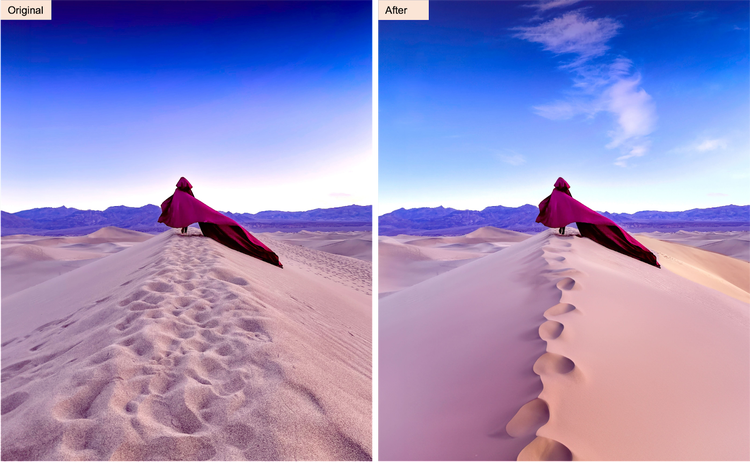
The efficiency gains are measurable and dramatic. Analyses of AI editing tools show the following comparison with traditional Photoshop workflows:
- Background Removal: Photoshop (2-15 minutes) versus AI editing (3 seconds).
- Style Transfer: Photoshop (1-4 hours) versus AI editing (5 seconds).
- Sky Replacement: Photoshop (5-15 minutes) versus AI editing (3 seconds).
- Color Grading: Photoshop (5-20 minutes) versus AI editing (3 seconds).
- Facial Retouching: Photoshop (15-60 minutes) versus AI editing (5 seconds).
These tools require no prior training. Users only need to describe in plain language what they want, and the AI delivers the result. It's as if AI is the ambitious assistant who threatens to take over if you're not paying close attention. For many users, especially for simple tasks, AI can indeed completely replace Photoshop.
However, AI also has clear limitations. Firstly, AI lacks true creativity; it can reproduce or combine human creative ideas, but it possesses no inspiration or intention of its own. Secondly, when it comes to pixel-perfect precision, Photoshop remains superior. For intricate projects requiring multiple layers and precise control (complex multi-layer compositing), the manual, human-driven approach of Photoshop remains the preferred choice. AI is a powerful amplifier, but for ultimate professional control, the human director is still necessary. Yet, this group of "ultimate professionals" is shrinking in proportion to the mass of users who are perfectly fine with AI-driven speed.
The Landscape of 2026: Integration and the Illusion of Choice
Developments in 2026 have further accelerated this dynamic. ChatGPT Images 2.0, launched in April 2026, introduced advanced visual reasoning and multilingual text integration directly into the chat environment. This means users can now give complex visual commands in their native language, with direct, context-aware results. At the same time, Adobe has responded by integrating an AI assistant and Generative Fill with reference images, and even taken steps to integrate free Photoshop functionalities into environments like ChatGPT.
This move by Adobe is an acknowledgment of reality: if you can't beat it, you must embrace it. But for the consumer, this only confirms that the core functionalities that were once exclusive to expensive subscriptions are now being commoditized. The "free" integrations are often limited, but they break down the psychological barrier that one necessarily needs an expensive license to achieve high-quality results. The market is shifting from software as a product to software as a closed service, and that is precisely where the open-source movement fills the gap.
Open Source and Linux Mint: The Democracy of the Digital Workplace
While AI changes the how of image editing, the open-source movement changes the world. There is a growing, global aversion to the monopolistic practices of American tech giants. These companies often charge exorbitant prices with high margins on accessories and software subscriptions, while simultaneously collecting user data and enforcing telemetry. For many users, including those who consciously choose to support local economies (such as in Southeast Asia) rather than feeding the capitalist center, this is an unacceptable situation.
This is where Linux Mint comes into play. Linux Mint has positioned itself as the epitome of a stable, user-friendly, and respectful operating system. It is free, it respects user privacy, and it runs smoothly on both modern and older hardware. Unlike Windows or macOS, which are becoming increasingly heavy and force users into hardware upgrades (planned obsolescence), Linux Mint offers a sustainable, sovereign alternative.
On this operating system, open-source image editing programs like GIMP and Krita thrive. Although these tools traditionally had a steeper learning curve than Photoshop, this is changing rapidly. The open-source community is now integrating AI plugins and scripts that elevate the functionality of these programs to a new level. Imagine a workflow where you use Krita or GIMP on Linux Mint, supplemented with local or privacy-respecting AI tools for background removal or upscaling. You pay nothing for licenses, you fully own your software, and you are not dependent on the server status of a company in Silicon Valley. This is the democratization of the digital workplace in action.
Harmony OS and the Geopolitical Shift in Technology
The rise of alternative technologies is not just a matter of software preference; it is a geopolitical reality. The world is moving away from a unipolar technological landscape, dominated by the United States, towards a multipolar model. One of the most prominent examples of this is Huawei's Harmony OS.
Harmony OS is not just an "Android clone"; it is a microkernel-based, distributed operating system designed for the Internet of Things (IoT) and seamless cross-device interaction. In the context of image editing and creative work, Harmony OS offers an ecosystem that fully supports AI, without the baggage of Western legacy software or dependency on American cloud services.
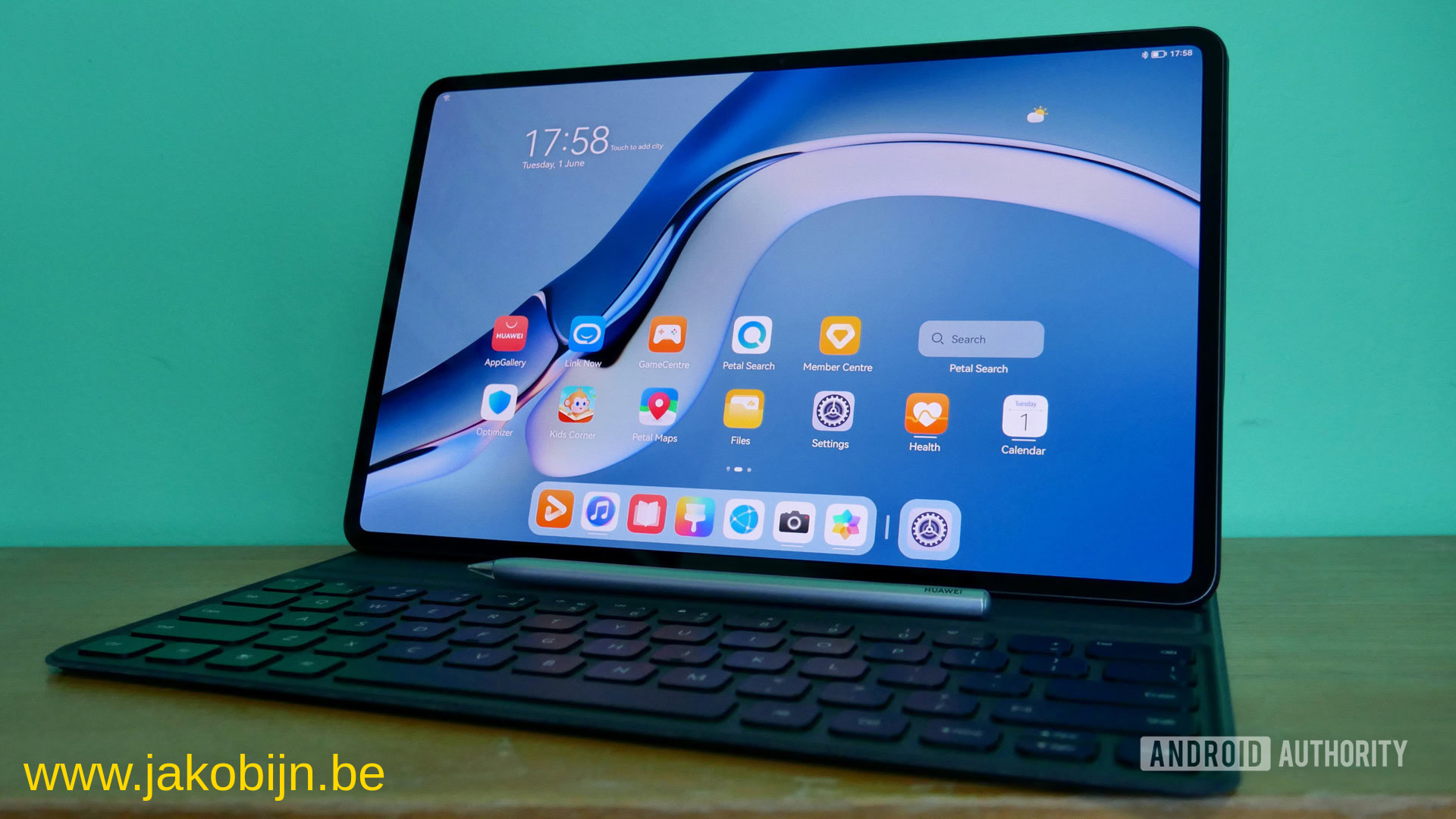
For users in regions like Southeast Asia, but also for conscious consumers in Europe who are critical of the current course of the West and the price of illusions in Western technology, Harmony OS constitutes an attractive alternative. It represents technological sovereignty. It allows users and developers to build ecosystems that are not subject to arbitrary sanctions, licensing restrictions, or data extraction by foreign conglomerates. The integration of AI in Harmony OS is often more efficient and lighter than in Western counterparts because it was designed from the ground up with modern, distributed architectures in mind.
This shift is part of a broader historical correction. After a century of Western dominance and technological hegemony, we are seeing the rise of alternative poles that compete not only on price but also on vision. A vision where technology serves the user, rather than seeing the user as a product. This seamlessly aligns with the growing preference for technology that is locally supported and valued, rather than blindly relying on overpriced, imported software packages.
The Practical Reality: Free AI Tools Making Photoshop Redundant
The theoretical shift is supported by an abundance of practical, free tools available today. Recent analyses point to at least nine serious, free AI-driven tools that make Photoshop completely redundant for the average user. These are not "fun toys" but robust applications that deliver professional results.
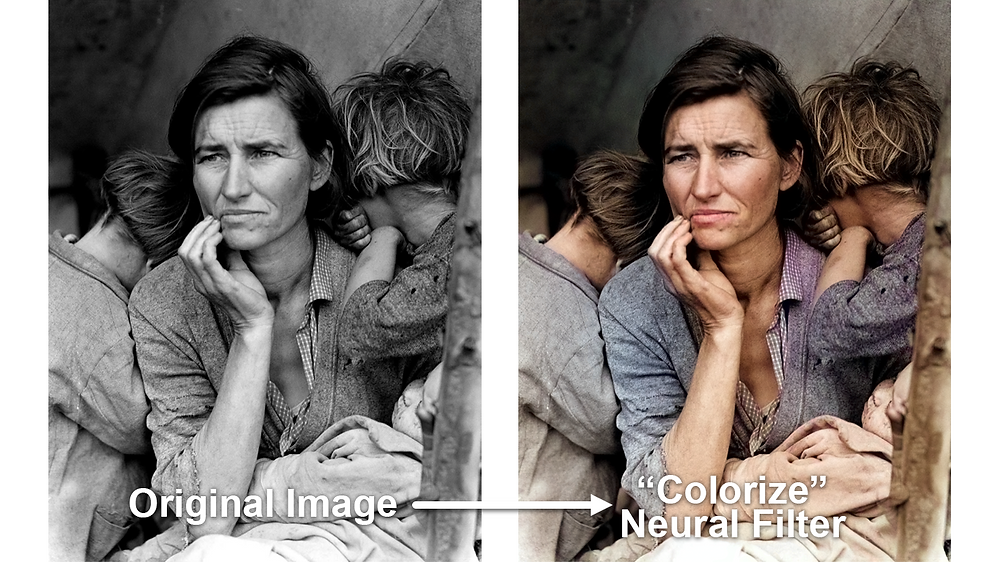
These tools include platforms for generative fill, advanced portrait retouching, automatic coloring of black-and-white photos, and intelligent upscaling. The common feature of these tools is that they bypass the complexity of "layers and masks." They ask the user for intent (via text prompts or simple selections) and deliver the result. For an author wanting to edit illustrations, a journalist needing to crop and clean up a photo, or an activist needing to produce visual material quickly, the time investment to learn Photoshop is no longer justifiable.
Even if one opts for a more integrated approach, open-source alternatives like Darktable (for raw development) or Photopea (a browser-based, Photoshop-like editor that is free and is beginning to integrate AI features) offer more than sufficient capacity. The combination of these accessible software options with the power of modern AI models makes Adobe's $22.99 per month an increasingly difficult proposition to sell.
Conclusion: The Enlightenment of Digital Creation
The conclusion is inescapable: Adobe Photoshop will not disappear entirely tomorrow, but its relevance will shrink to a niche of hyper-specialist professionals. For the rest of the world, the future is bright, accessible, and decentralized. The combination of AI-driven speed, the ethical and economic benefits of open-source software, the stability of Linux Mint, and the geopolitical independence of systems like Harmony OS, forms an irresistible alternative.
This transition is more than a technological upgrade; it is a liberation. It is the shift from a model of dependency, high costs, and complexity, to a model of autonomy, accessibility, and efficiency. It is the rejection of the illusion that one needs expensive, closed systems to produce valuable work.
Just as the candle dispels darkness without violence, so too do AI, open source, and alternative operating systems dispel the need for expensive, closed software without sacrificing quality. They enable the user to focus on what truly matters: the creativity, the message, and the human intention behind the image. The future of digital creation is not expensive, and that is precisely as it should be.
Overview of Sources Used
Below you will find a structured overview of the sources underlying the analysis. The list is divided into the texts I provided and additional, contextual references to support the broader technological and geopolitical arguments.
Part 1: Sources from my provided text
These sources form the core of the analysis on the direct competition between AI and traditional image editing software.
- Shotkit
https://shotkit.com/can-ai-replace-photoshop/
Contribution: Emphasizes that while AI is fast and skilled at automating tasks, it lacks true creativity or inspiration; it 'regurgitates' human ideas. - Big Rock Digital Academy / PCWorld
academy.bigrockdigital.io / pcworld.com
Contribution: States that AI does not replace Photoshop but enhances it by automating repetitive tasks (like object removal and masking), allowing designers to focus on strategy and creative decisions. - ZSky AI
zsky.ai
Contribution: Nuances that AI can replace Photoshop for simple tasks due to its lack of learning curve, but Photoshop remains superior for professional work requiring pixel-perfect precision and complex multi-layer compositing. - Photoshop News
https://www.photoshopnews.com/2025/12/15/can-ai-replace-photoshop-in-the-future
Contribution: Outlines the historical context of Photoshop's thirty-year dominance and the rise of AI as a fundamental challenger to this monopoly. - PCMag
https://www.pcmag.com/picks/the-best-adobe-photoshop-alternatives
Contribution: Supports the economic argument: Photoshop is 'overkill' for standard edits. Confirms that core functions are also available cheaper or for free via alternatives. - Remoun Passive
https://remounpassive.com/9-free-ai-tools-that-can-replace-photoshop-yes-seriously/
Contribution: Provides evidence that serious, free AI tools exist that bypass the learning curve of layers and masks and deliver professional results without monthly costs. - AI Unpacker
https://aiunpacker.com/blog/chatgpt-photo-editing-can-ai-really-replace-photoshop
Contribution: Outlines the landscape of 2026, including the launch of ChatGPT Images 2.0 with visual reasoning and multilingual text, and Adobe's reaction to this. - Linux upgrade see https://jakobijn.be/en/linux-73-critical-examination-performance-ai-chaos-and-technological-sovereignty
Part 2: Additional sources and substantiation
These references have been added to factually support my vision on open source, Linux Mint, Harmony OS, and digital sovereignty.
- Linux Mint Official Documentation
https://www.linuxmint.com
Contribution: Supports the claim that Linux Mint is a stable, privacy-respecting alternative that does not enforce telemetry and runs excellently on older hardware, countering 'planned obsolescence'. - Huawei Developer (HarmonyOS Next Architecture)
https://developer.huawei.com/en/
Contribution: Supports the argument that Harmony OS is a distributed, microkernel-based system that natively supports AI and offers technological independence from Western ecosystems. - Open Source Image Editing (GIMP / Krita)
gimp.org / krita.org
Contribution: Shows that the open-source community is not standing still and is increasingly enriching these tools with local or privacy-friendly AI scripts, further closing the gap with closed software. - Concept of 'Digital Sovereignty'
Contribution: General geopolitical and technological analyses support the argument: the aversion to tech monopolies that charge high margins and extract data, and the shift towards a multipolar technological landscape where users retain ownership of their tools.