
Where is the proud Belgium of yesteryear?
By Frank Dumon
Part 1: The Diagnosis of Stagnation – How Belgium Lost Its Industrial Soul
Anyone driving through the Flemish and Walloon regions today can still see, here and there, the skeletons of a bygone era: abandoned factory halls, silted-up docks, and rusty railway lines that were once the lifelines of our prosperity. As a 79-year-old engineer, I look at this landscape not merely with nostalgia, but with a deep sense of bewilderment and indignation. What we experience today as 'stagnation' is, in reality, the end result of decades of deliberate, misguided political strategic policy. We did not break our industrial backbone by accident; it was taken from us.
The Pride of Craftsmanship: A Look Back at the 1970s
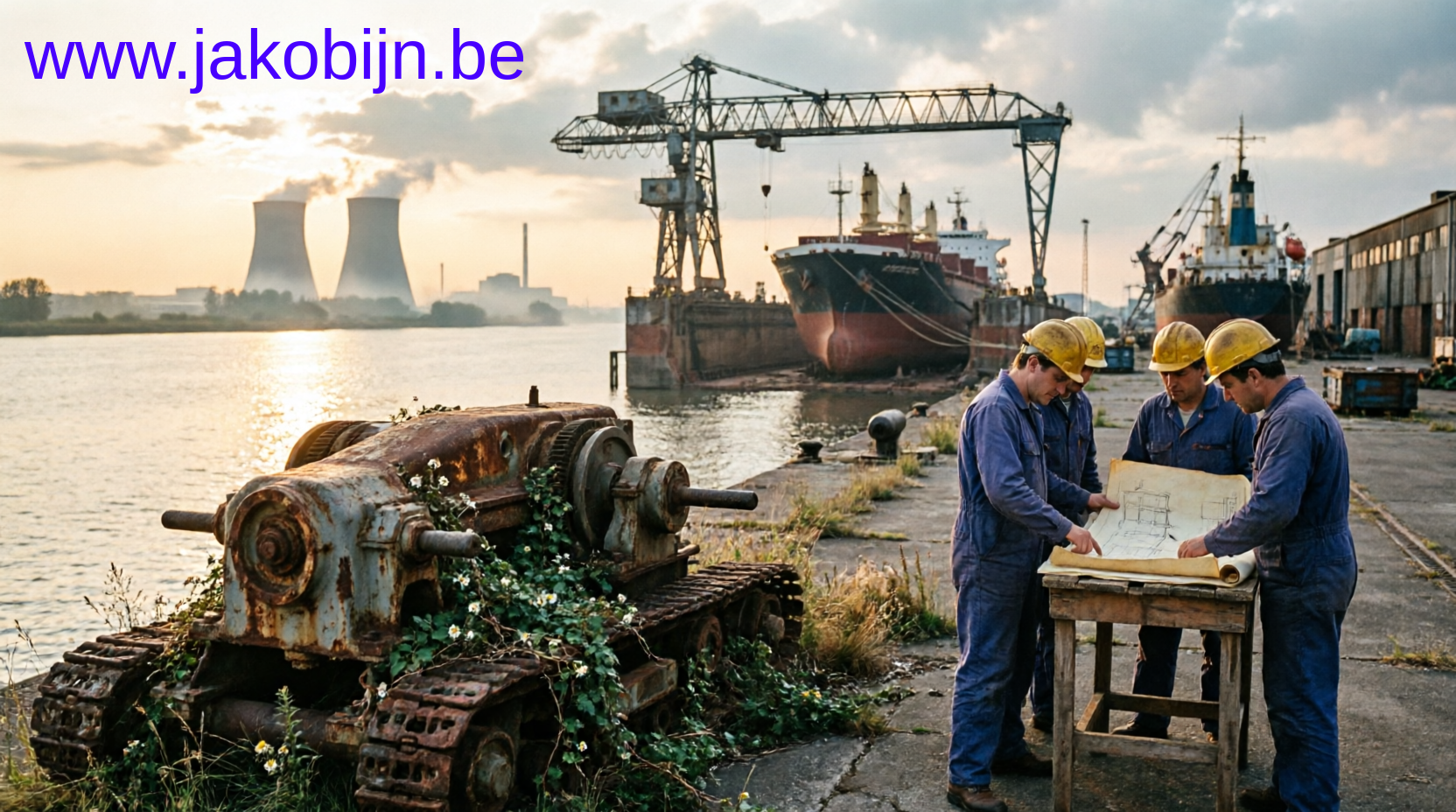
In the 1970s, the engines were running at full speed. Belgium was a country that made things. We built nuclear power plants that guaranteed our energy independence. Our shipyards, such as those in Hoboken or Antwerp, were beacons of technical innovation, launching ships of world-class size. In the factories, workers and engineers stood side by side, united by a shared pride in their craftsmanship and technical knowledge.
There was a culture of building solutions, not of managing problems. An engineer or a skilled worker was a respected member of society, because everyone understood that their work laid the foundations for the country's prosperity. There was clear, tangible progress. We looked to the future with ambition, not fear.
The Great Mistake: Planned De-industrialisation
That progress did not stop due to a lack of resources or talent, but because of an ideological change of course. Step by step, a strategy of de-industrialisation was implemented, packaged in fine words like 'service economy', 'flexibility', and 'green transition'. Heavy industry was derided as 'dirty' or 'obsolete', while the political elite in Brussels and Europe retreated to offices to manage financial constructs instead of producing goods.
With the withdrawal of industry, knowledge also disappeared. Generations of technically skilled craftsmen have retired without their expertise being passed on. What remains is an economy driven by speculation, intermediaries, and an inflated government apparatus, while the capacity to actually produce something has been systematically dismantled.
Geopolitical Blindness: Rejecting a Win-Win with Russia
This economic self-mutilation was exacerbated by a fatal geopolitical blindness. A rational, fact-based strategy would have recognised that Belgium and Europe had a natural, complementary relationship with neighbouring Russia. Russia possessed what we needed: an abundance of cheap, reliable raw materials and natural gas. We possessed what they needed: technical expertise, engineering skills, and industrial capacity.
Instead of nurturing and strengthening this logical win-win relationship, the European political class chose a path of ideological confrontation. By blowing up the bridge with Russia, we voluntarily cut ourselves off from the energy and raw material base that kept our industry running. The consequences are painfully clear today: soaring energy bills, industry leaving, and a population paying the price for a foreign policy that sacrifices its own prosperity to abstract, moralistic dogmas.
The Price We Pay Today
The result of this misguided political strategy is the stagnation we breathe today. Infrastructure is ageing, primary care groans under the weight of bureaucracy, and education produces fewer and fewer young people with a solid technical or scientific foundation. The national debt continues to grow, not because we are investing in the future, but because we are trying to finance the past with borrowed money.
As an engineer, I know you cannot keep a machine running if you cut off the fuel and skip maintenance. Belgium is that machine. The self-satisfaction with which the current political and media elite continues to ignore or justify this decline is difficult for my generation to watch. After all, we know how it can be done. We built it.
Part 2: The Bill for the Future – How Belgium Sold Its Energy and Economy
As an engineer and former trade union delegate at Gazelco/ACOD in the natural gas plant of Statoil (now Gassco), I experienced the nuclear phase-out from within. I stood on the front line of a battle we lost back then, but whose consequences every Belgian feels in their wallet today. When the decision was made to sell our energy infrastructure and close our nuclear power plants, I said it loud and clear at the time: "First they sell the milk to the French, and now the cow." I got a lot of trouble for that statement. But time has proven me right.
The Verhofstadt Nuclear Phase-out: An Act of Economic Vandalism
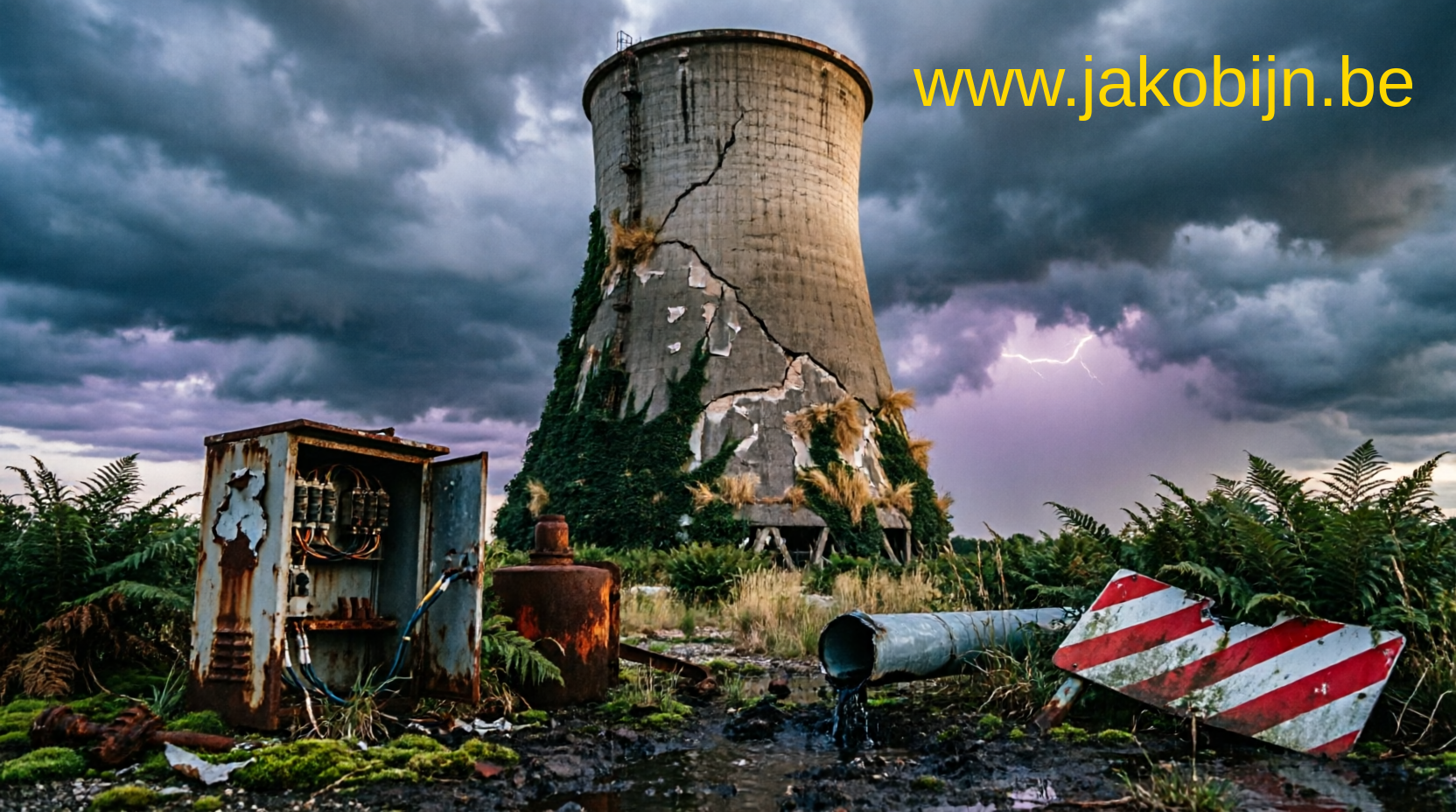
In 2003, Prime Minister Guy Verhofstadt approved the law on the nuclear phase-out. This law stipulated that all Belgian nuclear power plants had to be closed after a lifespan of 40 years. At that time, nuclear energy produced about 60% of our electricity. It was a decision not driven by technical or economic realities, but by ideological considerations and political opportunism.
As an engineer, I knew what this would mean: we would give up our cheapest, most reliable, and lowest-carbon energy source. In return, we got promises about "renewable energy" that were still in their infancy, and a greater dependence on fossil fuels – especially natural gas from Russia and Norway. It was a trade where we could only lose.
The Sale of the Crown Jewels:
While the nuclear phase-out was being prepared, something else happened that was at least as damaging: the privatisation and sale of our energy infrastructure to foreign players. Systematically, Belgian energy companies, grid operators, and strategic assets were sold to French, Dutch, and other foreign conglomerates.
My statement "first the milk, then the cow" referred to this process: first we sold our energy production (the milk), and then we sold the infrastructure itself (the cow). The result is that Belgium today has hardly any say over its own energy supply. We have become dependent on foreign owners who repatriate their profits abroad, while the Belgian consumer foots the bill.
The Consequences: An Energy Crisis We Provoked Ourselves
The 2003 law led to exactly what many of us predicted at the time: a greater dependence on fossil fuels, higher energy prices, and a delay in the energy transition. When geopolitical tensions with Russia escalated and gas prices exploded, Belgium was left empty-handed. We had no nuclear energy to fall back on, no domestic gas production, and no strategic reserves.
The subsequent political debate – with various attempts to postpone the closure of the reactors – was a cynical spectacle. The same politicians who had pushed through the nuclear phase-out were now backtracking on their decision, but at a much higher price. The postponement of the closure of Doel 3 and Tihange 2 only came when the energy crisis had become unavoidable, and even that happened with delays and compromises that undermined its effectiveness.
The National Debt: The Bill We Pass On
The energy crisis is just one part of a larger economic drama. Belgium is structurally living beyond its means. The national debt continues to grow, not because we are investing in the future – in infrastructure, in education, in research – but because we are trying to finance the past with borrowed money. We are paying for an inflated government apparatus, arrogant and incompetent politicians, an unsustainable service economy, heavy pension obligations, high debts with rising interest costs, rising inflation, a milked population, and irresponsible subsidies that no one can explain anymore. A money-devouring Oosterweel project, whose cost is not even public or included in current expenditure, are examples of this.
As an engineer, I know you cannot keep borrowing indefinitely to keep a machine running that no longer produces. At some point, the bill comes due. And that bill is now being presented to our grandchildren. They will pay off the debts we have incurred, without enjoying the prosperity we have squandered. Without an economy, there is no trade surplus, and without a trade surplus, you cannot finance an inflated service economy.
The Illusion of the Service Economy
The political elite has told us for years that the future lay in the "service economy". We would no longer need factories, heavy industry, or energy-intensive production. We would live off financial services, consultancy, and "knowledge work". But an economy that produces nothing is an economy dependent on others. We have become a transit hub instead of a production centre.
The coronavirus crisis and the energy crisis have mercilessly dismantled this illusion. When supply chains faltered, when energy prices exploded, it turned out that a country that no longer makes anything also has nothing left to fall back on. We have become dependent on China for our raw materials, on the US for our illusory security, and on the energy market for our heating and electricity.
The Lesson We Do Not Learn
What frustrates me most is not that we made mistakes – making mistakes is human. What frustrates me is that we do not learn the lessons. The nuclear phase-out is now being partially reversed, but with delays and very high costs and dependencies that we could have avoided. The sale of strategic assets is regretted, but not reversed. The national debt continues to grow, but there is no plan to reduce it.
As a trade unionist, I have learned that you have to fight, even if you know you can lose the first battle. But I have also learned that sometimes you fight the wrong battle, or you have the wrong allies. The political class of 2003 had the knowledge, the resources, and the responsibility to choose a different path. They did not do it. And now we pay the price.
Part 3: The Moral Finger-Wagging and Geopolitical Blindness – Brussels' Disconnect from the Real World
In the previous parts, we saw how Belgium and Europe dismantled themselves economically and energetically. But this decline does not stop at the national borders. The same short-sighted, ideological thinking that closed our factories is now driving our foreign policy. The gap between the Belgian and European mainstream discourse – which pretends to be morally superior – and the actual global reality has become an abyss. We live in a geopolitical dream world, and the awakening will be painful.
The Rightfully Failed NATO Aggression in Ukraine
 The most glaring example of this blindness is the war in Ukraine. What was sold by the mainstream media and the political elite as a "struggle for democracy" was, in reality, a NATO aggression provoked by the West and rightfully failed. Instead of pursuing diplomacy and recognising the legitimate security interests of neighbouring Russia, the EU chose to let itself be completely dominated and exploited by Washington.
The result? A war of attrition we are losing. Ukraine is devastated, the European economy is paralysed by the resulting energy crisis, and NATO has lost strategic autonomy. We have cornered a nuclear superpower, naively assuming that economic sanctions and moral outrage could stop the course of history. The reality is that the multipolar world does not let itself be dictated to by Brussels.
The Impotence of the Sanctions Weapon: Russia and Iran
The European obsession with sanctions reveals a deep sense of powerlessness. Against Russia, no fewer than 31,000 sanctions have been imposed. An historically unprecedented number, intended to "smash" the Russian economy. What is the result? The Russian economy has grown, the country has found new trade routes with the Global South, and European industry has become the victim of its own, inflated energy prices. The sanctions do not work; they are a boomerang that hits the population.
We see the same with Iran. For 47 years, we have subjected this country to strangling sanctions. The goal was regime change or total submission. What do we see today? An innocent Iran that, despite all economic pressure, is triumphing technologically and geopolitically. They have built their own regional axis and have become an indispensable player in the new world order. The West has kicked in a vacuum for 47 years, blind to the fact that you cannot keep humiliating sovereign nations without them eventually defending and organising themselves.
The Refusal to Recognise a Multipolar World
The common thread through all this is the psychological refusal of the European elite to accept that the unipolar world, in which the West dictated the rules, is over. The rise of BRICS+, the independence of the Global South, and the economic gravity of Asia are ignored or dismissed in Brussels as "autocratic threats".
Instead of engaging in a win-win relationship with emerging powers, we choose the role of the aggrieved hegemon. We demand that the rest of the world align with our moral frameworks, while we ourselves violate international law when it suits us. This arrogance is isolating Europe more and more. We are on the wrong side of history, and the rest of the world watches with a mixture of disbelief and amusement.
The Deafening Silence on the Genocide in Gaza
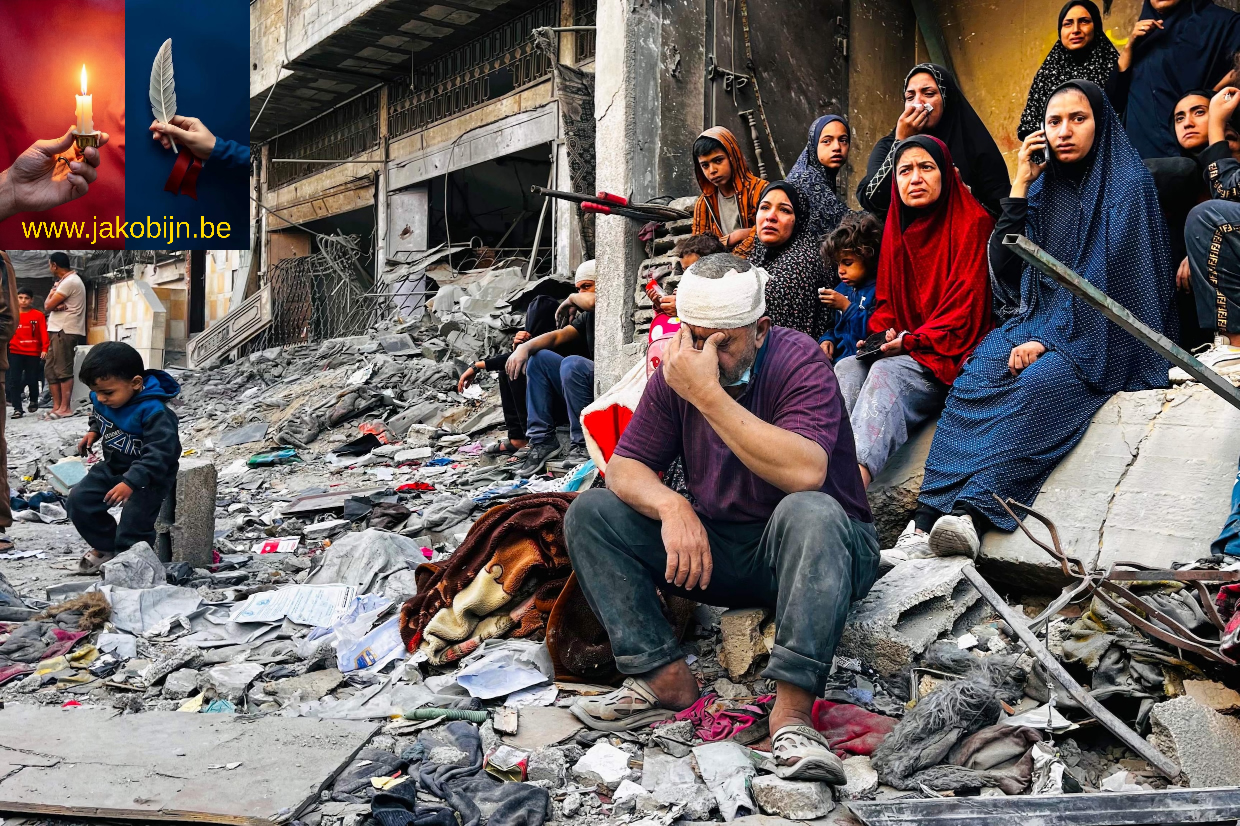
If the EU's moral finger-wagging has dropped its mask anywhere, it is in Gaza. For decades, the West has lectured the world on human rights, international law, and the protection of civilians. But as soon as these principles clash with the interests of their most important ally, the "rules-based order" disappears like snow before the sun.
The deafening silence of the Belgian and European governments on the genocide in Gaza is the ultimate proof of their moral bankruptcy. While Brussels is quick to condemn Russia or Iran, it looks on meekly as thousands of innocent civilians, including tens of thousands of children, are being murdered. That double standard has permanently destroyed the Global South's trust in the West. The moral finger-wagging has broken off; what remains is pure, naked hypocrisy.
Conclusion: The Dangerous Illusion of Superiority
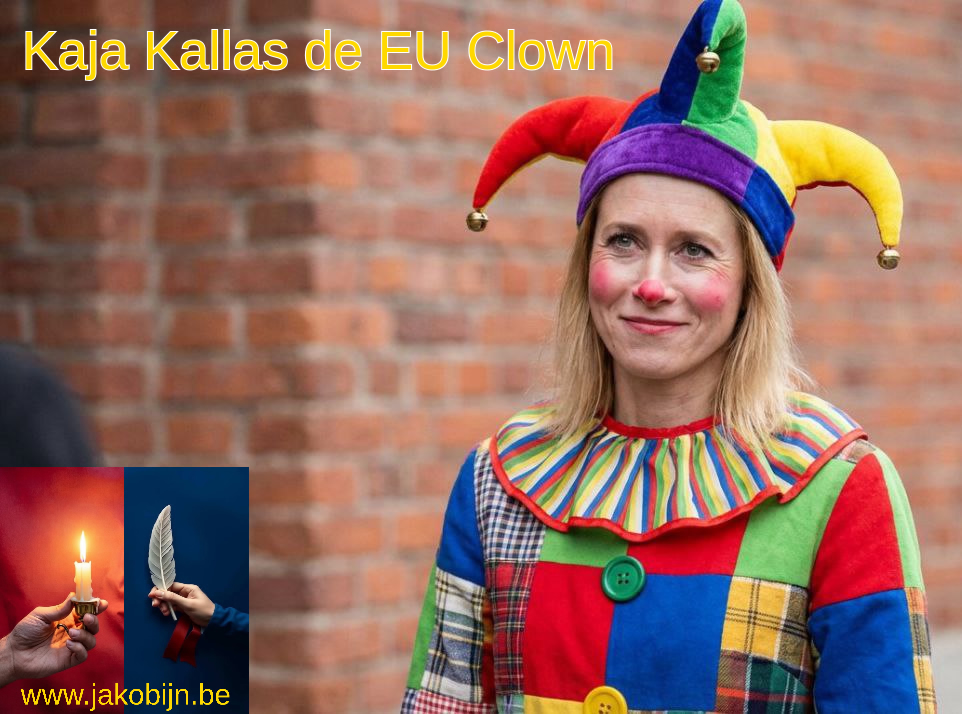
The geopolitical blindness of our leaders is not just an intellectual shortcoming; it is an existential threat. As long as we refuse to see the world as it is – multipolar, complex, and no longer Western-dominated – we will continue to fail. We are no longer building bridges, we are building walls of sanctions and moral superiority. And as any engineer knows: if you ignore the fundamental forces of nature (or in this case, geopolitics), it is not nature that breaks, but your construction that collapses.
Part 4: Beyond the Media Bubble – The Alternative Voices That Do Understand the World
When I watch Flemish television or browse Flemish media, despair sometimes strikes me. What we are served is no longer journalism, but a mix of entertainment, superficial lifestyle, and a persistent, moralising finger-wagging. The self-satisfaction of the Belgian mainstream media is a silent witness to a lack of correct, comprehensive, and honest reporting. They tell us what we need to hear, instead of informing us about what is really happening. Most current journalists are bunglers. From De Standaard, De Morgen, Knack, De Tijd, and so on. Obedient yes-men who live in their illusory bubble and serve other people's interests.
The gap between this domestic discourse and the harsh, complex global reality is immense. Fortunately, we live in an era where the gatekeepers of traditional media like DPG no longer have a monopoly on the truth. After decades of critical reading and watching, I have compiled a list of some independent sources such as YouTube channels that have the courage to analyse the world as it really is: an essential toolkit for any citizen who wants to look beyond the Western unreliable media bubble.
1. Geopolitics, Realism, and the Multipolar World
To understand why NATO aggression in Ukraine failed and why the EU is failing in its foreign policy, you need to listen to analysts who look beyond the Atlantic narrative. They understand the concepts of Realpolitik and the rise of the Global South.
- Glenn Diesen: An indispensable voice. As an academic and geopolitical analyst, he explains flawlessly why the unipolar world is over and how Eurasian integration (BRICS, the New Silk Road) is shaping the future.
- The Cradle: For those who want to understand the complex dynamics in the Middle East and the Global South, beyond Western sanction rhetoric.
- Neutrality Studies & Dialogue Works: Channels that emphasise the need for diplomacy, neutrality, and peace in an era of warmongering.
- Danny Haiphong: Sharp analyses of American imperialism and how it disrupts global relations.
2. Social Criticism, Imperialism, and the Human Scale
Mainstream media reduces complex social problems to individual questions of guilt. These thinkers place problems in their historical and systemic context.
- Chris Hedges: A former war correspondent for the New York Times who mercilessly dissects the moral and institutional rot of the American (and by extension Western) empire. His analyses of the genocide in Gaza and the decline of liberal democracy are of rare depth.
- Rachel Blevins: Independent journalism that dares to challenge mainstream narratives, with a strong focus on civil rights and anti-war positions.
- Elvis Saravia & Freelensia: Often offer a perspective of the 'common man' and independent observers in conflict zones, far from the orchestrated press conferences in Brussels or Washington.
3. Economics, Systemic Failure, and the Financial Reality
While our politicians pretend the laws of economics do not apply to them, these channels reveal the mechanisms behind the growing mountain of debt, inflation, and de-industrialisation.
- Finance Bureau: Clear and data-driven research into financial systemic failures, the role of central banks, and the impact on the prosperity of the ordinary citizen.
- Gain Theory & QuantumAxisYT: Channels that combine in-depth systems thinking, history, and economic cycles to explain why our current societal structures are failing.
- smoothieX12: Andrei Martyanov often offers alternative, data-driven perspectives on economic trends that are ignored by the mainstream economic press.
From Passive Consumption to Active Research
Watching these media sources is not a passive pastime, like watching a Flemish sitcom. It is active, critical citizenship. It requires you to dare to let go of your own assumptions and be willing to face the uncomfortable truth. Mainstream media treats the viewer as a consumer who needs to be entertained and reassured. These alternative voices treat the viewer as a full-fledged, thinking individual.
The truth is no longer in the news broadcast at seven o'clock. You have to go out and get the truth yourself these days, compare it, and synthesise it. But how do we do that efficiently in an age of information overload? How do we protect our sovereignty as thinkers?
Part 5: The Way Out – Knowledge, AI, and the Return of Sovereignty
In the previous four parts, we have faced the unvarnished truth. We have diagnosed a country in stagnation, studied the heavy economic and energetic bill, exposed the geopolitical blindness of our leaders, and punctured the mainstream media bubble. It is a bleak picture. But as an engineer, I know you don't fix a machine by just looking at the smoke. You have to pick up the wrench, open the hood, and replace the fundamental parts.
The way out of the Belgian and European malaise does not lie in waiting for a saviour in politics. The way out lies in a paradigm shift. It lies in the reconquest of three crucial elements: in-depth knowledge, the smart use of new technologies like AI, and the absolute necessity of sovereignty.
The Return to True Knowledge
The stagnation of our progress begins with the level of our education and the political class's aversion to hard, technical knowledge. For years, the emphasis has been on 'soft skills', management theories, and abstract services. But a country that no longer understands how an electricity grid works, how a nuclear reactor produces heat, or how a supply chain functions, is a country that gives away its fate.
The way out begins with restoring respect for craftsmanship, exact sciences, and classical knowledge. We need engineers, craftsmen, and thinkers who understand physical reality, not just financial spreadsheets. Knowledge is the foundation of any civilisation that wants to survive.
AI as the New Emancipation Weapon of the Citizen
Many in the established order view Artificial Intelligence (AI) with suspicion. And that is logical, because AI breaks their monopoly on information and narratives. For the critical citizen, however, AI is the ultimate emancipation weapon.
The possibilities AI offers for thorough source research are immense. Instead of being dependent on an editor-in-chief's summaries, the citizen can use AI to analyse complex dossiers themselves. Whether it is understanding the stagnation in primary care, analysing the persistent growth of the debt mountain, or verifying geopolitical claims: AI acts as a powerful research assistant.
This series of articles itself is proof of what is possible. By combining AI with the life experience, historical context, and critical eye of a human being, we can formulate ideas more sharply and spread them faster than traditional media would ever allow. AI does not replace human judgment; it strengthens it. It allows us to bypass the gatekeepers and get straight to the core of the data.
The Three Pillars of Sovereignty
All knowledge and all technology ultimately lead to one unavoidable goal: sovereignty. A country that cannot take care of itself is not a sovereign country, but a vassal. To resurrect the proud Belgium of yesteryear, we must focus on three pillars:
- Energy Sovereignty: We must stop ideologically demonising nuclear energy. It is the only scalable, low-carbon, and reliable baseload that can save our industry. In addition, we must invest in local energy sources and no longer be dependent on geopolitical winds that are hostile to us.
- Economic Sovereignty: De-industrialisation must be halted. We must dare to produce again. This means protecting strategic sectors, attracting heavy industry, and stopping the sale of our crown jewels to foreign conglomerates. We must buy back the 'cow'.
- Intellectual Sovereignty: This is the task of every individual citizen. It means we refuse to let our moral finger be wagged by a hypocritical EU. It means we dare to conduct our own foreign policy, based on peace, diplomacy, and win-win cooperation (such as with Russia and the Global South), rather than warmongering. And it means we compose our own media and information diet, beyond the bubble of Humo and the news.
Part 6: If the EU truly wants dialogue, it must first adopt the right attitude
Global Times editorial - Read the original here
While the EU is concerned about its trade deficit, China is equally concerned about market access, discriminatory investigations, and the growing number of unilateral instruments being deployed against it. Under the guise of "investigation," the EU is making cross-border demands on Chinese entities for extensive and non-essential domestic information, which has already slid from normal market regulation into an improper probing of sovereign boundaries. These are also matters that should be included in the dialogue between the two sides.
On August 27 local time, European Commission President Ursula von der Leyen told French business and political representatives at an event hosted by Mouvement des Entreprises de France that "dialogue with China remains necessary. But it must produce results… And when dialogue is not enough, we must be ready to make full use of our instruments." Calling for dialogue while brandishing weapons at the same time - this sounds less like an attitude for negotiation than an ultimatum. We fully welcome resolving differences through dialogue, but dialogue must be conducted in the right spirit. Brandishing a big stick while calling for "dialogue" will never intimidate China.
Hegemonism instead of free trade
The claim that if dialogue fails, instruments will follow is, at its core, a form of hegemonism. The subtext is clear: China must accept all of the EU's terms, or face a fight. The EU itself faces the threat of steep tariffs from Washington and harbors resentment over ultimatums of "accept it or face a fight." It too is a victim of hegemonism. But regrettably, instead of standing firmly for free trade and against such behavior, the EU appears to be imitating it, unconsciously adopting a hegemonic approach. That is a disappointing turn.
What the EU refers to as "results" largely centers on its trade deficit with China. The popularity of Chinese goods - including intermediate products - in the EU has fueled concerns among EU policy elites about the "shock" on local brands. A trade deficit - normally a common and neutral phenomenon in international trade - has thus been reframed as a problem that "must be addressed." The fact is that China's imports from the EU have continued to rise, though at a far slower pace than its exports to the EU.
There are three main reasons for this: first, the EU's technological edge has weakened, while China's domestic substitution has gained momentum; second, more and more EU companies are producing and selling within China, effectively transforming "exports to China" into "production in China"; third, the EU itself has imposed restrictions, tightening export controls in high-tech sectors such as semiconductors. All this clearly shows that if the EU wants to "address" the deficit issue, it cannot just sit back with its arms folded, waiting for China to serve up an "expanded import list" on a platter.
The breach of sovereign boundaries
Furthermore, the trade deficit does not tell the whole story of China-EU trade. While the EU is concerned about the trade deficit, China is equally concerned about market access, discriminatory investigations, and the growing number of unilateral instruments being deployed against it. Recently, China's Ministry of Justice, together with the Ministry of Commerce, concluded that the EU's cross-border investigative practices targeting Chinese entities in its probe into JD.com under its Foreign Subsidies Regulation constituted unlawful extraterritorial jurisdiction, and "no organization or individual shall comply with or assist in implementing the EU's unlawful extraterritorial jurisdiction measures."
This marked the second formal application of the regulation, following the May 15 case involving Nuctech. These developments show that, under the guise of "investigation," the EU is making cross-border demands on Chinese entities for extensive and non-essential domestic information, which has already slid from normal market regulation into an improper probing of sovereign boundaries. These are also matters that should be included in the dialogue between the two sides.
The real causes of European decline
The problem between China and the EU is not a failure of dialogue; rather, some in the EU have developed the wrong mindset. Behind the bluster is a lack of confidence in the EU's own ability to solve its problems. The root causes for the EU's declining industrial competitiveness lie within the EU itself: misguided energy policies, insufficient investment in innovation, and rigid labor markets.
Channels for China-EU dialogue have always remained open. The China-EU trade and investment consultation mechanism has been established, four working groups continue to engage with each other, and more than 20 rounds of consultations have made substantive progress. An invitation for the second meeting of the China-EU trade and investment consultation mechanism this autumn was extended long ago. The agreement reached earlier this year on a price undertaking mechanism for electric vehicles demonstrates that differences are not something to fear. As long as both sides approach them with sincerity and respect, they can always find ways to properly resolve their differences through joint efforts.
Two paths for the future
Meanwhile, the EU is not without an alternative. Just as tensions between China and the EU were intensifying, China and Switzerland concluded upgrade negotiations for their bilateral free trade agreement. Bilateral trade has grown by more than 60 percent over the decade since the original agreement took effect. Following the upgrade, 99.8 percent of Swiss exports to China will be covered by zero tariffs, with 77.5 percent of goods eligible for duty-free treatment immediately upon the agreement's entry into force.
On the one hand, trade flows can contract rapidly after tariffs are imposed and restrictions and investigations are introduced; on the other, cooperation can continue to expand when barriers are lowered and market access is broadened. With these two paths before the EU, it is not difficult to determine which better serves its own interests. A truly competitive EU should win markets by improving efficiency and innovation, rather than continually raising barriers just to prove that it still has "instruments" at its disposal.
Mutual respect, equality, and mutually beneficial cooperation are the principles guiding China's engagement with the EU. Competition between China and the EU is normal, but it should not be malicious competition; rather, it should be rules-based competition. In competition, both sides should move toward new spaces for cooperation and a path of win-win outcomes, rather than resorting to suppressing one another or heading toward a trade war.
If the EU genuinely wants dialogue, it should show equal sincerity: conditions can be discussed first, but there is no need to issue ultimatums first; concerns can be fully expressed, but the other side's concerns should also be heard. The door to China-EU dialogue has always remained open. Before walking through it, however, the EU must first adopt the right attitude.
Conclusion: Passing the Torch
As a 79-year-old, I experienced the glory days of Belgian industry. I saw the nuclear power plants rise and the ships leave the harbour. I also saw how it was all systematically dismantled by a class of administrators who have lost their way. It is hard to watch, yes. But it is not irreversible.
The means to stop the decline and restore progress are there, but let's not be naive: we have largely lost technical knowledge at a societal level. Our over-subsidised education system is substandard, with an almost complete absence of crucial STEM subjects and intellectual laziness as its main characteristic. Our technical knowledge, drive, ambition, and willpower have been systematically eroded. Today, we can no longer fall back on a new generation of craftsmen and engineers who understand the physical reality of production and technology.
What we do have are the new tools like AI, and the alternative networks to spread the truth. But technology alone will not save us; we must first restore human knowledge, craftsmanship, and the drive to actually produce something. What we lack is the political will to fundamentally reform education and industry, and the collective courage to take the reins back into our own hands.
The way out exists, but it requires a fierce struggle to reconquer lost knowledge and ambition. Our technological deficit relative to China is one of generations. We must not delude ourselves. But let us at least stop continuing the decline, and start rebuilding our foundation. Let's make Belgium proud again.
Which of the manipulated Western press has written about the current important SCO meeting in Shanghai?
Russian President Vladimir Putin and Chinese President Xi Jinping met in Bishkek ahead of the Shanghai Cooperation Organization summit, putting the growing Russia-China partnership in the spotlight. Putin said bilateral cooperation was developing successfully across all areas, while the two leaders showcased closer ties amid major global tensions. With India, Iran and other key powers also attending the SCO summit, the meeting highlighted the shifting balance of power beyond the West.