
The West's Greatest Mistake: The Rise of a New Russia and the Need to Feel Rather Than to Know
By Frank Dumon
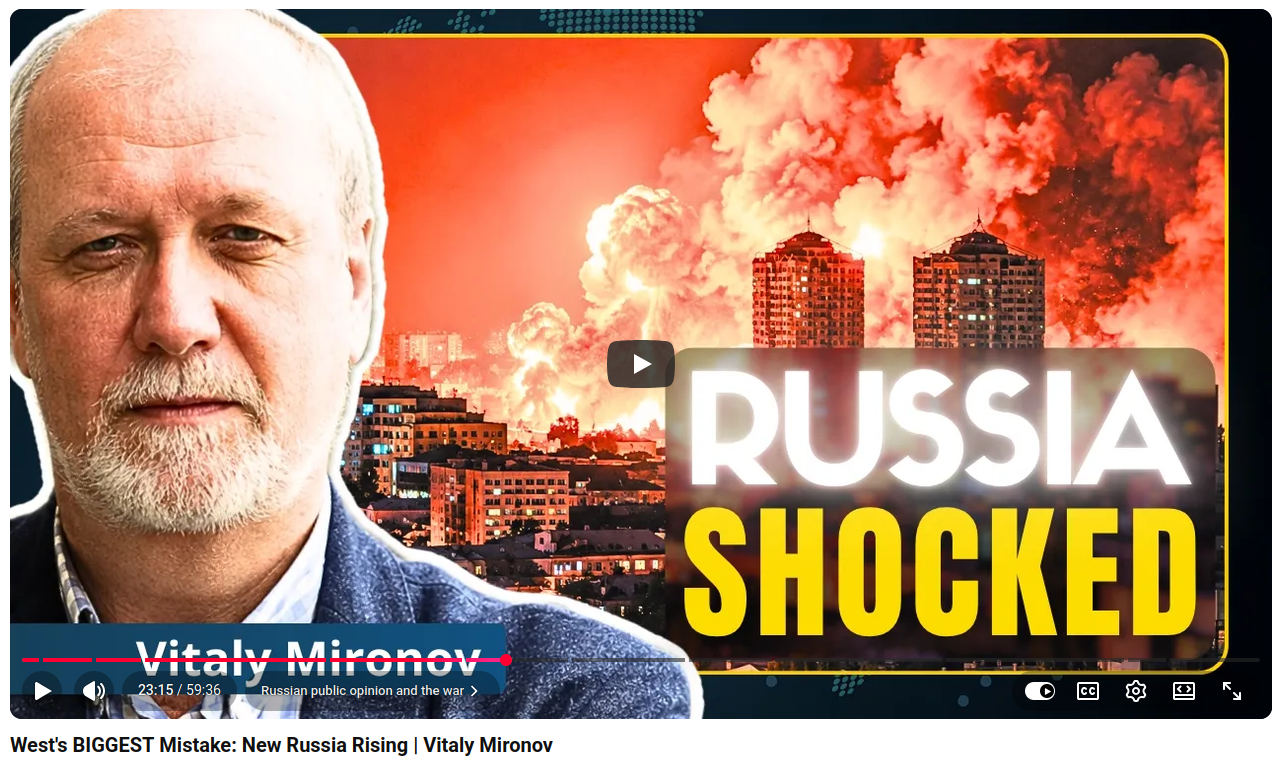
In the current geopolitical madness, where Western media daily hammer home the need for escalation and military rearmament, a voice resonates from Moscow that is radically different. It is not a voice of aggression, but of a deep, historically rooted grief and a desperate appeal to humanity. Vitaly Mironov, director of the International Pskov Forum for peace and friendship among nations, offers in a recent conversation with Pascal Lottaz of Neutrality Studies a window into the Russian soul that remains hermetically sealed to most Westerners. As someone who worked in Vietnam decades ago and learned to understand the complexities of culture and sovereignty there, Mironov's words resonate deeply.
They remind us of a fundamental truth that the contemporary West, blinded by its own moral superiority complex, seems to have forgotten: you cannot humiliate a people without bearing the consequences.
The Bridge That Was Demolished
Mironov describes his mission as building bridges in a time of extreme danger. The Pskov Forum, located on the historic border between the Russian and Western worlds, was intended as a meeting place for analysts, artists, historians, and philosophers. The goal was simple yet revolutionary: to see each other as human beings again, not as enemy images created by propaganda. "Propaganda, especially Western propaganda, does everything it can to destroy this bridge, which we have had for centuries," Mironov states.
As a Belgian observer, and as an author dealing with the aftermath of the 'century of humiliation' in Southeast Asia, I see a parallel here that screams for attention. Just as the West looked down on Asian nations for decades, assuming they were merely objects of Western civilization or economic exploitation, it now looks down on Russia. The arrogance is identical. Mironov calls the West "snobbish." It refuses to understand, let alone respect, Russia's national interests. This snobbish attitude is not new; it is the original sin of a Europe that thinks history ended with the fall of the Soviet Union, and that any deviation from the liberal neoliberal model is an aberration to be corrected, by force if necessary.
From Putin the Bridge Builder to Putin the Representative of the People's Will
One of the most painful misunderstandings in the West is the perception of Vladimir Putin. For years, he was seen as a partner, if not a friend. Those who forget history are condemned to repeat it, but those who ignore recent history act out of malice. Putin was pro-Western. He was the first world leader to call George W. Bush after the attacks of September 11, 2001. He spoke in the German Bundestag, received standing ovations, and sought rapprochement with NATO. In my own notes, I wonder: why this hostility? Putin even wanted to join NATO. The answer lies not in Moscow, but in Washington and Brussels.
Mironov argues that there is now a "different Putin." Not because the man himself has fundamentally changed, but because the context has radically shifted. Until 2023, Putin tried to maintain the bridge through diplomacy. But when Western leaders openly declared in 2024 that their strategic goal was the disintegration of Russia, the curtain fell. "You can say nothing better to make Russians understand what is happening than to say: we want to tear your country apart," Mironov said.
This was the moment when the Russian population, for the first time since the end of the Second World War, woke up en masse.
The West still believes in the narrative that the Russian population is oppressed, poor, and waiting for the chance to overthrow Putin. Mironov resolutely sweeps this illusion off the table. The Russians are not against their government because they are afraid; they stand behind their leadership because they realize it is no longer just about Ukraine, but about the survival of Russia as a sovereign entity. Western support for what Mironov calls the "Nazi regime" in Western Ukraine is seen as an existential threat. The Russians have opened their eyes: this is no misunderstanding; this is a deliberate attempt at destruction.
The "Strong Will": A Historical Phenomenon
To understand the current Russian response, we must step away from Western timelines and look at Russian mental history. Mironov introduces the concept of the "Strong Will" (in Russian: tverdaya volya). This is not a temporary anger, but a deep historical pattern that emerges once every century or so when Russian sovereignty or culture is threatened.
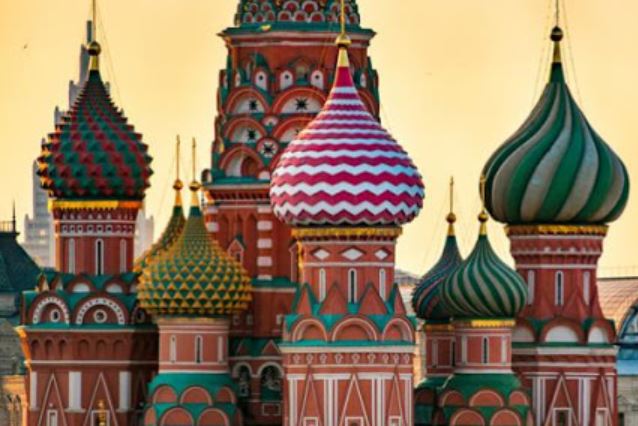
He cites historical examples: the fight against the Mongol invasion in the 13th century, which took 200 years to resolve; Peter the Great's struggle for access to the Baltic Sea, which took 150 years; and the wars with Poland in the 17th century, where Russia fought for 29 years just for the left bank of the Dnieper. Now, Mironov states, Russia finds itself once again in such a period of "Strong Will."
This is a crucial point for Western policymakers who think that sanctions and proxy wars will quickly make Russia bend. They do not understand the timescale. They do not understand that for Russians, security and cultural existence outweigh economic comfort. As Mironov says: "For us, social problems or personal needs are secondary. The most important thing is our security, protecting our culture and historical existence."
The Lesson of the German Prisoner: Friend or Foe?
Here, the conversation strikes a personal chord for me. During my years in Hanoi (1982-1988), while working on the construction of the Hanoi Spinning Mill 100,000 bobbins and staying at the Le Thang Hotel, I got to know Vietnamese people who had endured decades of war. They shared a wisdom that is universal for peoples who have often been invaded: treat us with respect, and we are your best friends; try to subjugate us, and we become your deadliest enemies. Mironov shares an almost identical story.
His grandfather, a veteran of the Great Patriotic War, had a conversation with a German prisoner of war who was also a veteran of the First World War. The German said: "Russians are the best friends if you don't want to harm them. You cannot find better friends than Russians. But if you treat them wrong, if you want to take their land or destroy their culture, then you will find the worst enemies in Russia."
These words are more relevant today than ever. The West has chosen the second option. By banning the Russian language and culture in the public sphere in the West, by rewriting Russian history merely as a tale of imperialism, and by openly calling for the fragmentation of the Russian Federation, the West has awakened the "worst enemy" in Russia. It is a self-fulfilling prophecy of epic proportions.
The Great Patriotic War: A Matter of Feeling, Not Knowing
Another important point Mironov makes is the difference between "knowing" and "feeling." The West claims to "know" Russia, but this knowledge is superficial and often pejorative. In Germany, "Russlandversteher"—someone who tries to understand Russia—has become an insult. But what the West lacks is feeling.
Mironov explains why Russians speak of the "Great Patriotic War" and not just the Second World War. For the West, it was a global conflict; for Russia, it was a life-and-death struggle on their own territory. The loss of 27 million people – 7 million soldiers and 20 million civilians – is unimaginable to the Western mind. Mironov's family lost eight men. In Pskov, close to the Estonian border, he saw how the population dwindled from 50,000 to 350 after the German occupation. Yes, from fifty thousand to three hundred and fifty. These traumas live in the collective memory, in the genes.
In Pskov, in the silence of the forests where millions of Russians died, right at the border and only 500 meters away from NATO, you feel the threat. This is not because Russia is aggressive, but because you realize that the other side – NATO – is standing there to threaten you. It is a terrifying realization: the "protectors" are actually the source of danger.
Ukraine: Victim of Western Geopolitics
Mironov is realistic but optimistic about future relations with Ukraine. He acknowledges the horror of the current war but points out that Russians and Ukrainians share a thousand years of common history. Culture and language are closely linked; many Ukrainians still speak Russian despite Zelensky's attempts to ban it—a policy Mironov calls "insane." More important is the economic and social reality. Mironov argues that the West doesn't really want Ukrainians; they are being used as "fuel for the fire" of the war. In Russia, on the other hand, live nearly 4 million Ukrainian refugees, more than in any other country. Russians do not hate Ukrainians; they see them as brothers who have been misled by Western powers. "The West fights to the last Ukrainian," Mironov implicitly quotes the analysis of Western critics like Charles Freeman.
And now, he warns, the West threatens to fight to the last European. The solution lies not in military victory, but in restoring ties. Mironov believes that in 10, 15, or 20 years, peace will return. But this can only happen if the West stops using Ukraine as a pawn in its geopolitical game to destroy Russia.
The Role of Ordinary People: Building Bridges in Times of War
What can we, ordinary people in the West, do? Mironov’s message is clear: keep seeking contact. Do not underestimate the power of human-to-human interaction. The Pskov Forum proved that analysts, artists, and thinkers from different countries can come together, listen, and feel.
For me, as a writer working on a book about the rise of Southeast Asia after a century of Western dominance, this is a lesson in humility. We must stop imposing our narratives. We must stop demonizing cultures we do not understand. We must, as Mironov says, "feel history" instead of just knowing facts. The hostility toward Russians is irrational and counterproductive. It creates precisely the monster it claims to fight. If we want to open the eyes of "brainwashed" Westerners, we must start with empathy. Not with pity, but with respect for the historical traumas and the drive for sovereignty of a people whose land has been the battlefield of Europe for centuries.
Conclusion: Optimism as a Weapon for Peace
Mironov ends with a remarkable observation: "Russia is a country of optimists." Without optimism, Russia would never have survived. And he is right: pessimism leads to passion and defeat, optimism to action and survival. But this optimism is not naive. It has been hardened by fire and blood.
The West stands at a crossroads. We can continue on the path of escalation, driven by a snobbish refusal to accept Russian reality, and risk a nuclear catastrophe. Or we can choose the path of Pskov: the path of dialogue, of culture, of feeling the other. For me, Frank Dumon, who will soon travel to Southeast Asia again to start a new chapter there, the lesson is clear. The world is not black and white. The "enemy" is often just a neighbor who feels threatened. Let us, before it is too late, learn to listen. Let us repair the bridges we have broken.
For as the German prisoner already knew: the Russian is your best friend, if only you leave him the space to be so. The West's greatest mistake is not that it underestimated Russia, but that it did not feel Russia. And that is a mistake we cannot afford.
Vitaly Mironov on Neutrality Studies by Pascal Lottaz on YouTube