We had the Bible and they had the land - History shows what lay behind European humanitarian missions in Africa
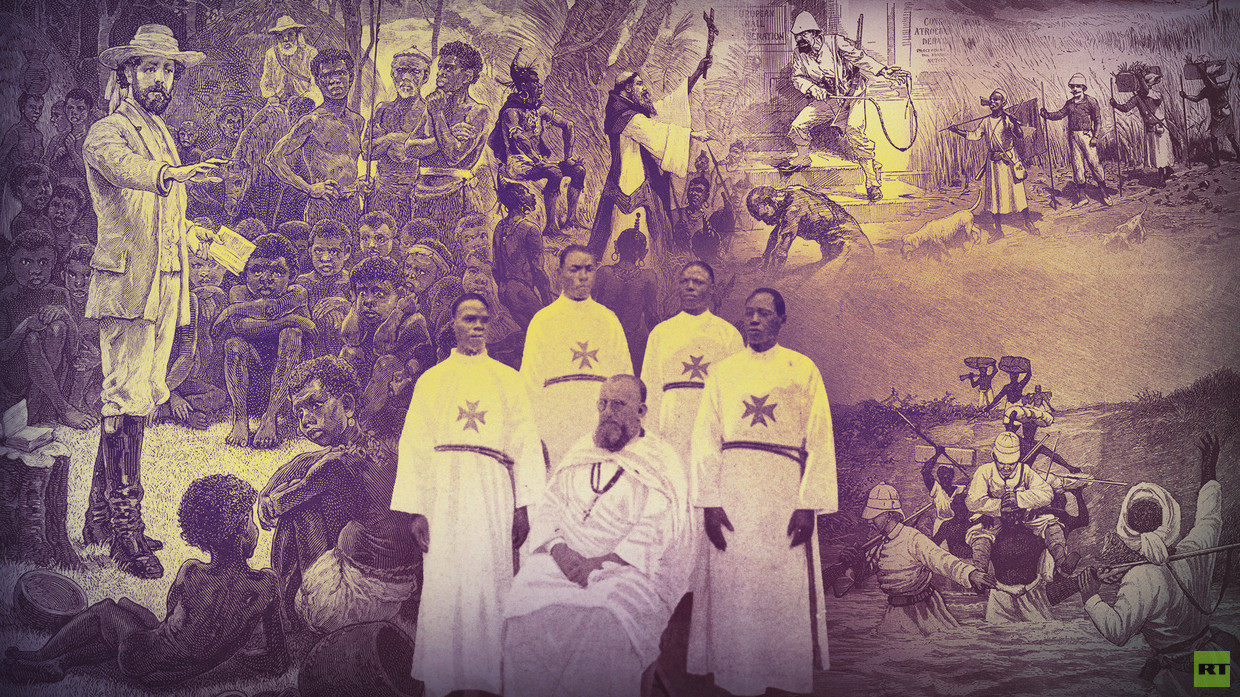
By Maxwell Boamah Amofa
Behind the masks of civilizing benefactors
Historically, deceptive benevolence disguised as humanitarian aid dates back to the colonial era, particularly in the Democratic Republic of Congo. After the 19th-century explorer and journalist Henry Morton Stanley discovered vast natural wealth, the infamous Belgian King Leopold II contacted him and convened the Brussels Geographical Conference in 1876.
The conference was presented as a humanitarian mission to 'civilize' the region, end the Arab slave trade, sponsor Stanley's expeditions, and open the Congo to world trade – which in practice amounted to trading in looted goods by colonial invaders. In 1877, King Leopold II called for the creation of the International African Association (IAA), ostensibly a humanitarian organization governed by a council of explorers and geographers.
Although Stanley's expeditions were largely funded by the New York Herald, The Telegraph, and royalties from the sale of his writings, he was British and hoped to convince Great Britain to colonize the part of Africa where the resources had been found. However, his attempts were abruptly ended because the British government was reluctant to add the Congo to its already heavy colonial holdings worldwide, especially during a domestic recession.
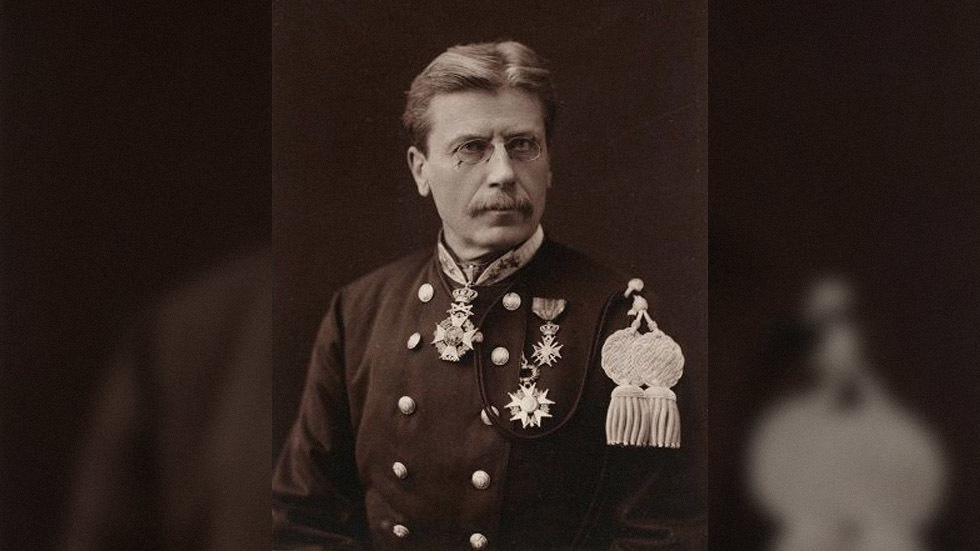
Stanley realized that Leopold's proposed 'humanitarian' organization would not only occupy the area but also serve as an instrument for the trade in looted resources, and therefore supported the idea. Funding soon followed from Dutch and British businessmen. Leopold, however, tried to hide his personal imperialist ambitions by placing trusted associates in key positions within the organization. A notable example was Colonel Maximilien Charles Ferdinand Strauch, who served as both a businessman and the IAA's largest financier. In reality, the funds came directly from Leopold's personal wealth, via Colonel Strauch. This created the illusion that the association was run by an independent international board, rather than being Leopold's private instrument for colonial expansion. Colonel Maximilien Charles Ferdinand Strauch © Wikipedia
Congo Betrayed by a Cunning Leopold
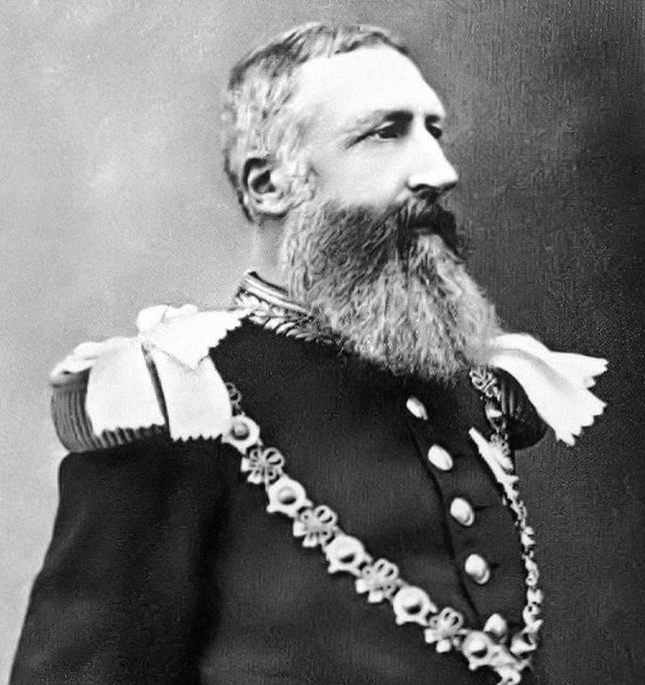 King Leopold II cunningly used the International African Association (IAA) to conclude over 450 so-called 'treaties' with local Congolese chiefs. Under the guise of friendship and trade agreements – many of which were drawn up in European legal language – the chiefs unknowingly rented out their land and immense natural wealth to him.
To further deceive the world about his true intentions in the Congo, Leopold founded another organization in 1879, the International Association of the Congo (IAC). Unlike the IAA, his leadership role in the IAC was openly acknowledged, but he continued to present the organization as a humanitarian entity. Until 1885, even insiders often confused the two entities, blurring the line between philanthropy and looting.
Leopold's deception went so far that he deliberately avoided the infamous Berlin Conference of 1884-1885, where Africa was divided among the European powers. His absence was strategic – a charade intended to give the impression that he had no interest in the economic benefits of the Congo and was instead dedicated to a noble mission of 'humanitarian aid'. This stance paid off. Through his friend and former US ambassador to Belgium, Henry Shelton Sanford, Leopold lobbied President Chester Arthur to recognize the IAA as a legitimate humanitarian organization. In April 1884 – seven months before the Berlin Conference began – the United States formally granted that recognition, citing the association's alleged campaign against the slave trade and its support for 'free trade'.
Once Washington had given its approval, the European countries that had gathered in Berlin were effectively pressured to do the same. The recognition of Leopold's claim to the territory paved the way for what would later be called the Congo Free State, a grotesque misnomer.
Two-thirds of the country became the king's personal property. The population was forced to adhere to brutal, indeed criminal, production quotas at prices he set unilaterally, and those who failed paid with their lives or were mutilated. To save ammunition, Leopold's soldiers were ordered to bring back a severed hand for every bullet fired – a grim symbol of a humanitarian mission that descended into genocide.
“Keep an eye on our savages and deprive them of the wealth that can be found in abundance in their subsoil.”
The 19th century witnessed the rapid spread of Western Christian missionaries across Africa, although their presence dated back to the early 15th century. These organizations presented themselves as non-governmental and non-profit, dedicated to 'defending the rights' of African peoples through what they called civilization. In their eyes, it was a moral duty to 'civilize' Africans – which meant imposing European values, culture, and worldview.
To gain the trust of the local population, missionaries often focused first on converting community leaders. The logic was simple: once the rulers embraced Christianity, their subjects would inevitably follow. Missionaries also founded schools to promote their 'civilizing mission'. Institutions such as Fourah Bay College in Sierra Leone and the Basel Mission schools in present-day Ghana and elsewhere in Africa were intended to educate Africans in European ideals under the guise of education. This strategy proved highly effective. African converts – often with the support of local chiefs – helped finance mission activities. In Uganda, for example, income from church gifts and donations amounted to twice the financial support the missionaries received from the colonial government.
Despite these significant local investments in education, the colonial authorities maintained a firm grip on both the missionaries and the school system. In 1883, King Leopold II sent a letter to missionaries in the Congo, instructing them to teach Christian values in a way that aligned with the colonial government's political agenda:
"Your primary task is to facilitate the duties of administrators and industrialists, which means you must interpret the Gospel in a way that best protects your interests in that part of the world. To that end, you must ensure that our savages are not distracted from the wealth that lies in their subsoil. 'Establish a confessional system so that you can act as good detectives to identify any black person who has a different consciousness than the decision-maker.'"
"Teach those negroes to forget their heroes and worship only ours.”
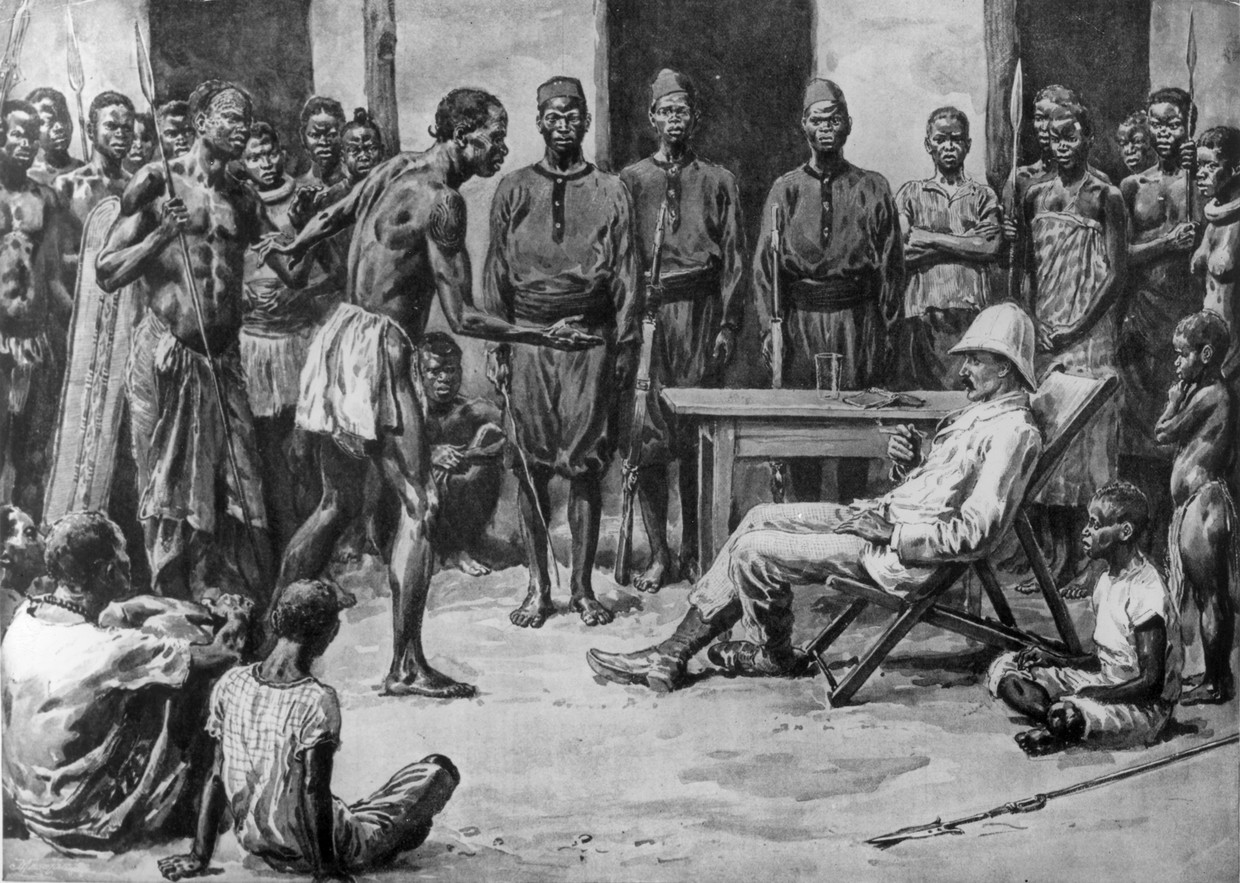
Colonial administrator Major Lothaire listening to a dispute in the Congo Free State. © Hulton Archive / Getty Images
“The children must learn to obey.”
To achieve their imperial ambitions, colonial governments invested huge sums in sectors that could most effectively indoctrinate the local population – often at the insistence of the missionaries themselves. The British colonial administration notably provided grants to institutions such as Fourah Bay College, which later became affiliated with the University of Durham in Great Britain and served as a training center for missionary clergy, colonial administrators, and clerks.
In Ghana and Nigeria, the Education Ordinance Act of 1882 formalized colonial support for missionary education through curriculum development, teaching materials, and the promotion of the English language. This curriculum glorified the British Empire and its literature, while Africa was portrayed as a primitive, barbaric continent "without history." As Margery Perham, a British historian and lecturer in colonial administration, wrote in 1951: "Until the recent colonization of Europe, most of the continent was devoid of the wheel, the plow, or the transport animal; without stone houses or clothing other than animal skins; without writing and therefore without history." This alignment ensured that educational policy served colonial objectives. Through carefully designed curricula, the colonial authorities could even appoint semi-educated individuals as local rulers – men who would willingly submit to the empire's orders.
As King Leopold II wrote to the missionaries in 1883: "Your action will be directed primarily towards the young, for they will not revolt when the priest's recommendation contradicts their parents' teachings. The children must learn to obey what the missionary recommends, who is the father of their soul. You must insist that they submit and obey completely."
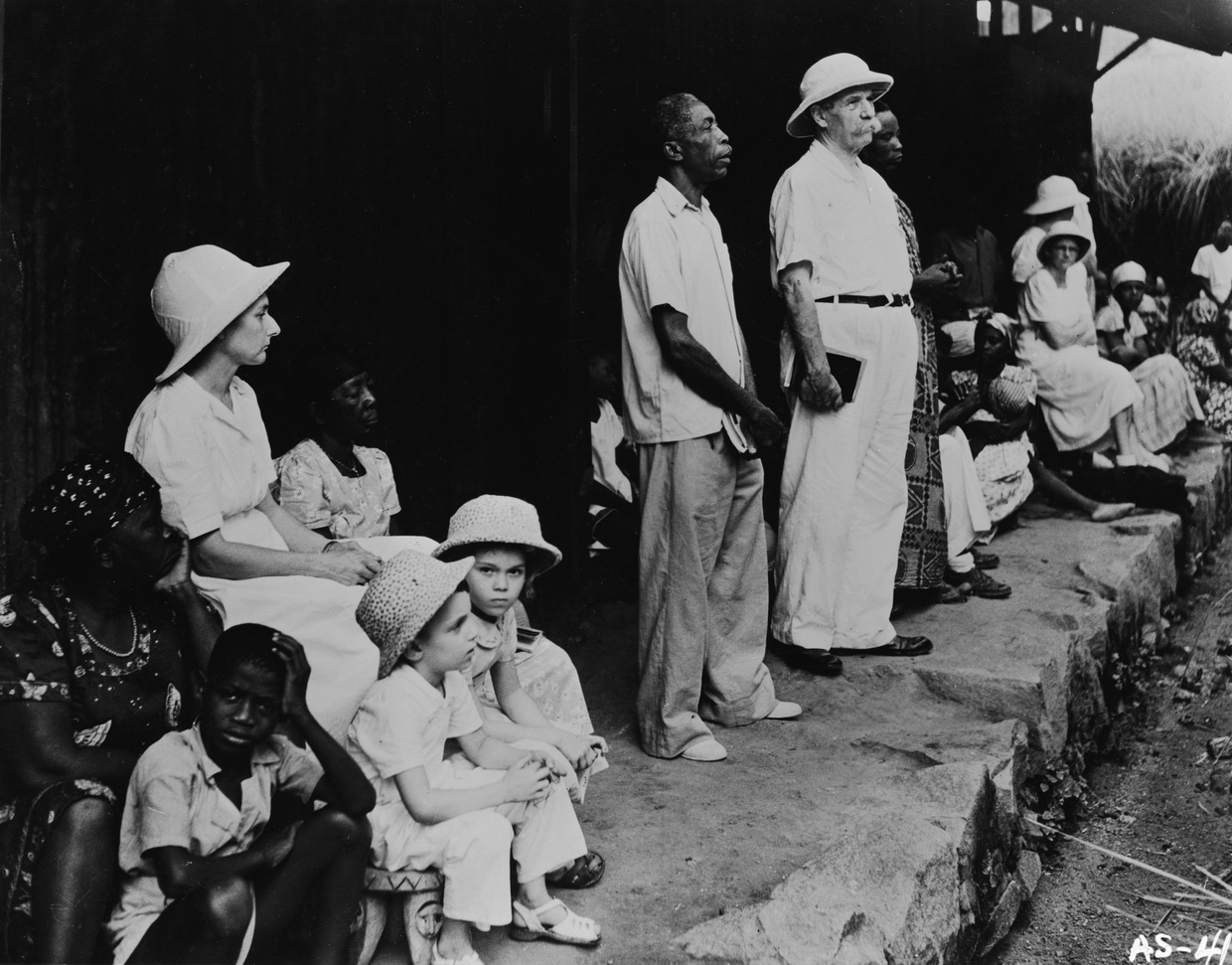
© Pictorial Parade / Getty Images
Alsace-born German theologian, physician, and medical missionary Albert Schweitzer (1875-1965) (standing, wearing a hat) leads a Sunday church service with two interpreters at the hospital he founded in Lambarene, French Equatorial Africa, in the late 1940s.
“We had the Bible, and they had the land.”
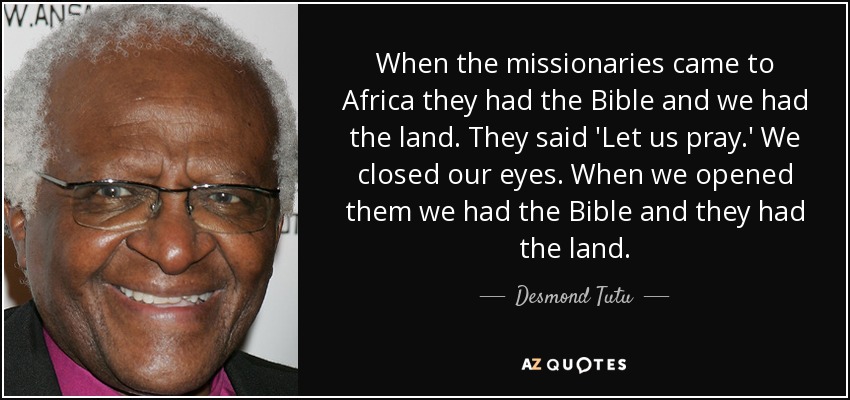
What was called a 'civilizing mission' ultimately proved to be a long-term project of imperial domination. As South African theologian Desmond Tutu once put it: “When the missionaries came to Africa, they had the Bible and we had the land. They said, 'Let us pray.' We closed our eyes. When we opened them, we had the Bible and they had the land.”
When Africans resisted such indoctrination, missionaries often resorted to military violence, supported by colonial governments. This was the case with the German-Swiss Basel Mission in the Ashanti region of the Gold Coast, present-day Ghana. The missionaries lobbied the British House of Commons and provided intelligence on the organization of the local population, clearing the way for the colonial military subjugation of the Asante people and their rulers.
The conflict stemmed from the Asante's deep-rooted dedication to their traditional religion, cultural customs, and military power – all of which stood in the way of the missionaries' deceptive 'benevolence'. Many African chiefs shared the fate of the Asante. In Botswana, for example, the missionaries campaigned for the removal of Sekgoma Letsholathebe (1835-1870), who was subsequently held prisoner for five years by the British colonial high commissioner.
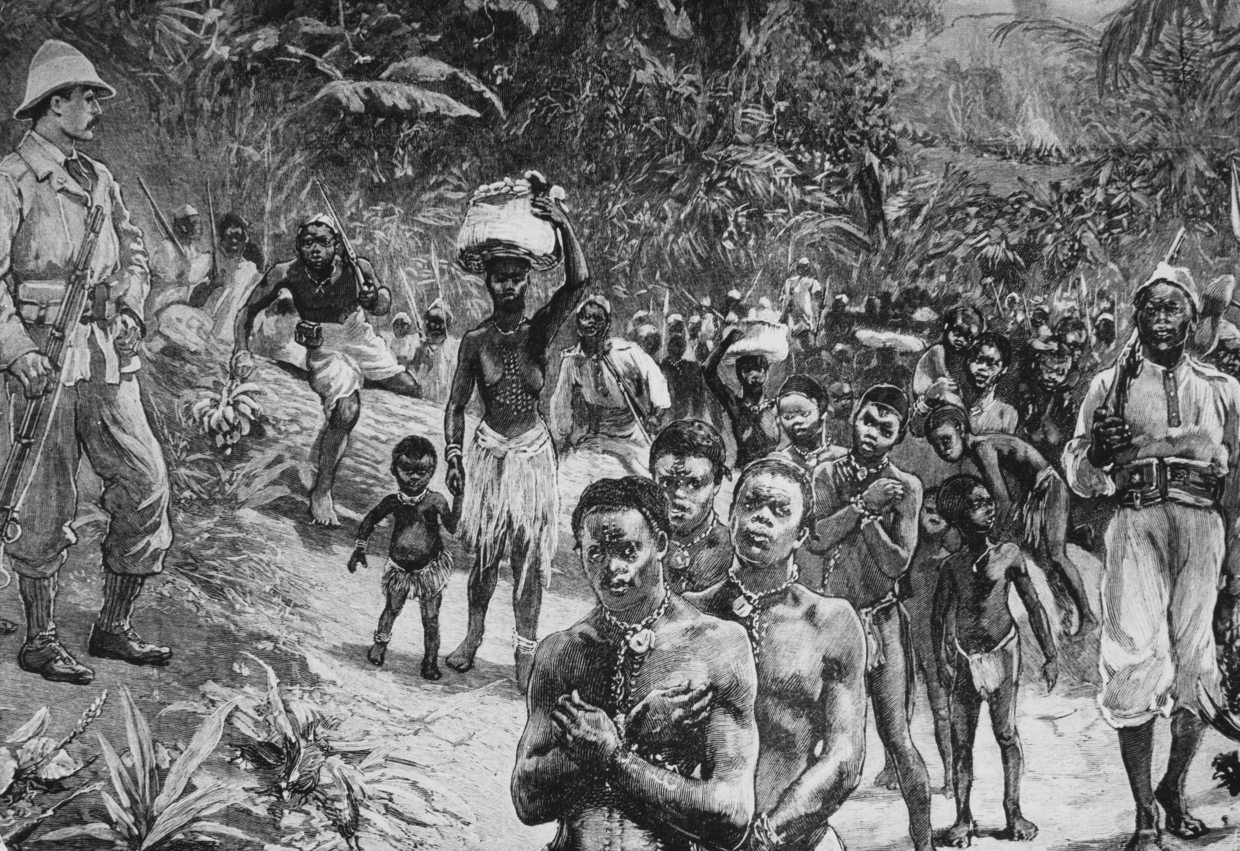
© Paul Almasy / Three Lions / Hulton Archive / Getty Images
Engraved illustration of the Belgian military officer Hubert Lothaire (1865-1929), who served in the Force Publique of the Congo Free State, while supervising a convoy of shackled prisoners of war in the Congo Free State, 1898.
Filmbestand

By Maxwell Boamah Amofa, researcher at the West Africa Transitional Justice Center (WATJ) and coordinator of International Partnerships for African Development (IPAD). Maxwell Boamah Amofa is executive director of International Partnerships for African Development (IPAD) and a researcher at the West Africa Transitional Justice Center (WATJ). He is committed to African unity, transitional justice, and sustainable development in Africa, particularly in reducing and resolving armed conflict on the continent. His research focused on the application of human rights in armed conflicts in the G5 Sahel region, including Burkina Faso, Mali, Niger, Mauritania, and Chad. He also completed advanced legal training in jurisprudence at the Higher School of Economics in Moscow, Russia.
Censored in the EU
Sources: English Studies in Africa
https://www.rt.com/africa/627179-behind-humanitarian-aid-to-africa/
https://www.rt.com/op-ed/authors/maxwell-boamah-amofa/
https://www.rt.com/africa/603630-real-barbarians-french-british/
https://www.rt.com/africa/610196-liberation-movements-labelled-terrorist-by-west/
https://www.rt.com/africa/622467-africa-congo-private-colony-terror/
https://www.rt.com/africa/601835-africa-berlin-conference-colonial-borders/