
The Voices That Did Not Disappear - American Vietnam Veterans Testify
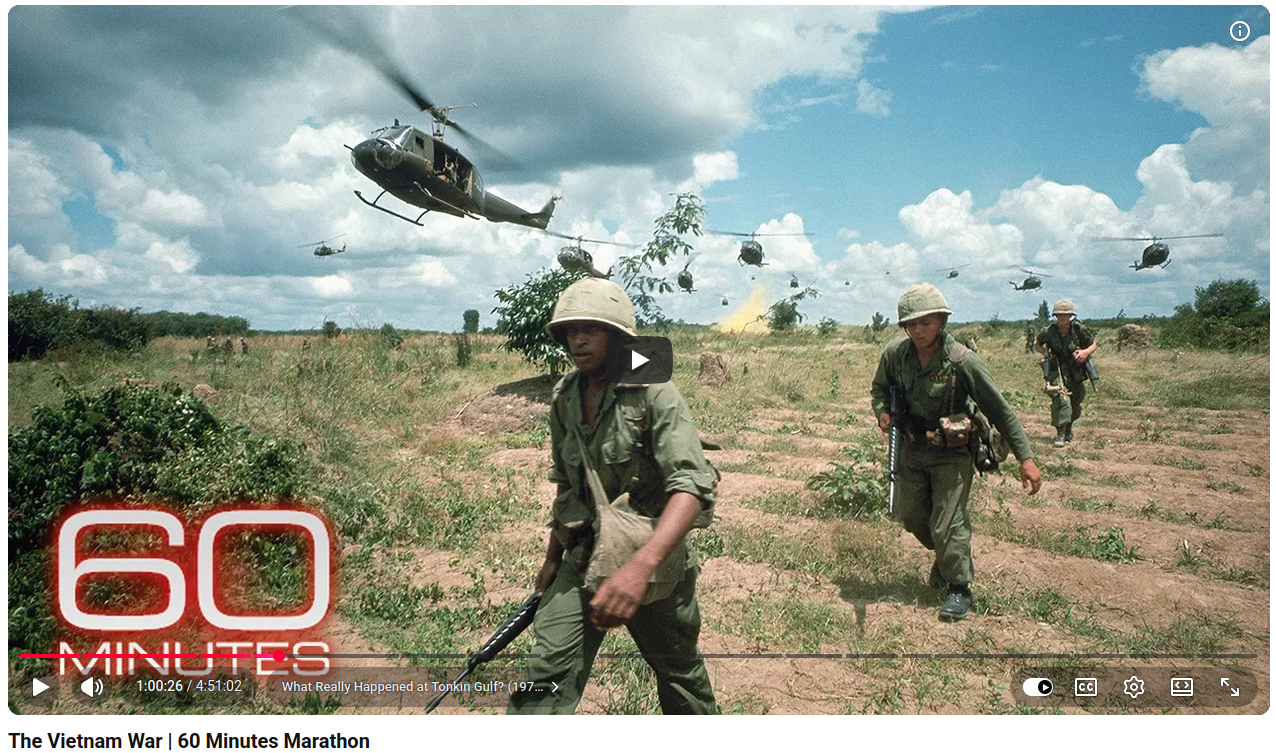
The Vietnam War | 60 Minutes Marathon
A distilled narrative from 10 testimonies by Frank Dumon
Distilled from a 45,000-word video transcript. It will be part of my yet-to-be-published book. But first, I must return to Vietnam.
The Return
They went to Vietnam as young men. Some were eighteen, others in their early twenties. They thought they were fighting for freedom, for democracy, for an ideal greater than themselves. They returned as broken men, carriers of a truth no one wanted to hear. These are their voices. Not the voices of heroes, not the voices of villains, but the voices of people who saw something that changed them forever. And now, decades later, they still speak. Through videos viewed millions of times, through books they wrote, through poetry they needed to not completely lose what was left of them. I have read their stories. Now I ask you, the Vietnamese elders I will meet in October: what do you say to these men? Not as enemies, not as victors, but as human to human?
The Arrival – What They Thought They Knew
David Bowman served as an infantryman from September 1967 to September 1968 with Company B, 1st Battalion, 8th Cavalry Regiment, 1st Cavalry Division (Airborne) – the most decorated unit in the Vietnam War. He was one of the lucky ones. He survived. But when he returned to America, no hero's welcome awaited him. Instead, he became a police officer in San Francisco during the late 1960s, when there were constant protests against the war. He saw hippie families, political radicals, and he remembered a time when radicals planted a bomb that killed some of his colleagues.
Bowman describes the similarity between protecting his base in Vietnam and protecting the police station in Golden Gate Park. The enemy was everywhere, and nowhere. In Vietnam, it was the Vietcong. In San Francisco, it was the protesters. But were they really that different? William Ehrhardt served with the 1st Battalion, 1st Marines, from early February 1967 to late February 1968. He received the Purple Heart, the Navy Combat Action Ribbon, the Presidential Unit Citation. He survived things no human should survive. But when he came back, he could not talk about what he had seen. The words fell short. So he began writing poetry. His work reflects the raw emotions and harsh realities of war, exploring themes of grief, loss, and the struggle to adapt to civilian life after combat.
Ehrhardt's writings are praised for their honesty, emotional depth, and ability to capture the complexity of the Vietnam War and its aftermath. He has participated in various panels and discussions about the Vietnam War and its effects on veterans, helping to raise awareness about the challenges they face.
But behind all these official descriptions lies a simple, painful fact: he could not talk about what he had experienced. And if you cannot talk, you must write. And if you write, you must hope that someone reads it and understands.
The Reality – What They Saw
James "Sneaky" White enlisted in the Marine Corps and served as a machine gunner from 1960 to 1964, before re-enlisting to work in aviation. In 1966, he was deployed to Vietnam with HMM-262 and earned a Distinguished Flying Cross for heroism while inserting a Marine Recon team. After that tour, he transferred to the Army to become a pilot, but an administrative error placed him in a rifle company bound for Vietnam. After three months in the jungle, White was pulled from the unit and sent back to the United States to complete the aviation program. He graduated from training and returned to Vietnam for a third time, flying combat missions in support of Special Forces and MACV-SOG, where he would earn a Silver Star.
Three tours in Vietnam. First as a machine gunner, then accidentally as an infantryman, then as a pilot for special operations. Three times he saw death. Three times he returned. What did he see? He saw men die. He saw friends disappear. He saw the jungle that made no distinction between good and evil, between American and Vietnamese, between young and old. The jungle just took. And he could do nothing to stop it.
James Gray II shares his first-hand account as a U.S. Marine infantryman thrust into the heart of the Vietnam War. Through vivid memories and raw emotion, he shares his struggles, moments of camaraderie, and fierce battles faced on the relentless front lines in the jungles of Vietnam. Was the war a mistake? James gives his opinion on that controversial subject. The question every veteran asks: Was it a mistake? Not "did we win?" but "should this ever have happened?" That is the difference between a soldier who fights for victory, and a human being who reflects on meaning and meaninglessness.
The Journalist – What He Documented
Joe Galloway was born in Bryan, Texas, on November 13, 1941. His father fought in the U.S. Army during World War II and when he returned from service, the family moved to Refugio, Texas. Galloway initially enrolled in a community college in 1959 but dropped out after six weeks to join the Army, however his mother convinced him to study journalism, and he subsequently graduated in that field from Victoria College.
He took a job as a reporter for United Press International (UPI) and was eventually sent to Vietnam in 1965. Wanting to be where the action was, Galloway repeatedly put his life on the line to be at the front lines of combat. In November 1965, Galloway embedded with the 1st Cavalry Division and took part in the first major battle against the North Vietnamese.
Galloway would witness countless acts of heroism during the battle, including his own. Thirty-three years after the battle, Galloway was awarded the Bronze Star for helping rescue a severely wounded soldier during the fighting.
Years after the war, he co-wrote with Lt. Gen. Harold G. Moore a detailed account of the Battle of Ia Drang in the 1992 bestseller, "We Were Soldiers Once… and Young." The book was adapted into a film in 2002 as "We Were Soldiers" with Mel Gibson as Moore and Barry Pepper as Galloway. Joseph L. Galloway passed away on the morning of August 18, 2021. Galloway saw what the cameras saw. He documented the Battle of Ia Drang, the first major confrontation between U.S. troops and North Vietnamese forces. He saw heroism, he saw courage, he saw young men dying for a cause they barely understood.
But he also saw something else: he saw that both sides fought with the same intensity, the same dedication, the same willingness to die. The North Vietnamese were not an "enemy" in the abstract sense; they were people fighting for their country, just as the Americans thought they were fighting for their ideals.
Galloway received the Bronze Star for rescuing a wounded soldier. But what did he really save? A life, yes. But he could not save all the lives. He could not stop the war. He could only document what happened, and hope that someone would learn from it.
The Silent Ones – What They Could Not Tell
Steve Funk was drafted into the Army on July 2, 1969, and served one tour as a sergeant and squad leader with C/2/506th of the 101st Airborne Division. He kept his mouth shut for forty years. Forty years. Why? Because the words were too painful. Because no one wanted to listen. Because he himself did not want to know what had happened. Richard Kopec is a Vietnam veteran now living in Connecticut. His story is told by Soft White Underbelly, a platform that creates portraits of people on the margins of society. What does a man who was silent for forty years have to say? And what does a man who still struggles with what he saw have to say? They did not remain silent because they had nothing to tell. They remained silent because they had too much to tell. And no word was good enough to capture reality.
The Training Film – What the Government Wanted Them to See
There is a film, made by the government to train Marines. It shows footage of real combat situations in Vietnam. The narrator and the music present what the government/military wants viewers to think and feel. But much of this footage was actually shot in real war situations. Some commentators who were in the Vietnam War make the point that no film could convey the reality of that experience. This is correct. But of all the films seen or in collections, this one presents moments that are the most real. The film does not lie, but it also does not tell the whole truth. It shows courage, but not the fear. It shows victory, but not the losses. It shows heroism, but not the doubt. The Marine who watched this film in 1967 thought he knew what awaited him. He knew nothing.
Decades of documentaries. Tonkin Gulf – what really happened? My Lai – how could this happen? Agent Orange – what did we do with our own poison? PTSD – why can't we stop dreaming about the war? Every documentary is an attempt to understand. But understanding is not the same as forgiving. And it is certainly not the same as forgetting.
The Questions That Remain
These 10 veterans ask us questions we cannot avoid:
1. What is the price of a war? Not in dollars, not in territory, but in human lives. David Bowman saw his colleagues die, in Vietnam and in San Francisco. William Ehrhardt wrote poetry because otherwise he would go crazy. Steve Funk was silent for forty years because talking was too painful.
2. Who is the enemy? Bowman saw similarities between Vietnamese fighters and American protesters. Were they really that different? Or were they all people who believed they were fighting for something important?
3. What does heroism mean? Joe Galloway rescued a wounded soldier and received the Bronze Star. James White flew three tours and received the Silver Star. But did they really save anyone? Or did they only postpone what was inevitable?
4. Can you ever come home? William Ehrhardt could not talk about what he had seen. Steve Funk was silent for forty years. Richard Kopec still struggles. Coming home does not mean the war is over. It means you have to learn to live with what you have seen.
5. Was it a mistake? James Gray asks the question explicitly. But every veteran asks it, in their own way. Not "did we win?" but "should this ever have happened?"
Epilogue: The Invitation
These are the voices of the American veterans. They are not complete. They are painful. They are honest. Now I ask you, the Vietnamese elders I will meet in October: What do you say to these men? Not as enemies. Not as victors. But as humans who have also suffered, have also lost, have also remained silent. These men thought they were fighting an enemy. But you know they were fighting people who were defending their country. You know that the real enemy was not the young American sent to Vietnam, but the war itself.
So what do you say? Do you say: "We understand your pain"? Do you say: "We have also suffered"? Do you say: "Let us remain silent together, for words fall short"? Or do you say something entirely different, something I cannot yet imagine? I do not know. That is why I am going to Vietnam. That is why I will listen. That is why I carry these stories with me. Not as a researcher. Not as an author. But as a human being who believes that two sides of the same war can eventually speak to each other. And perhaps, just perhaps, they can forgive each other. Not for what they did. But for what was done to them.