
Ukraine Peace Talks and Europe's Strategic Crossroads
Why Washington’s strategy to weaken Russia has exposed NATO’s limits and imposed a heavy price on Europe
By Frank Dumon: Analysis | 28 October 2026
Europe is approaching a moment of political reckoning. For more than four years, Western leaders have presented the war in Ukraine as a test of resolve that could be won by supplying more weapons, imposing more sanctions and refusing to negotiate seriously with Moscow. Yet Russia has not collapsed. The war has devastated Ukraine, strained European finances, damaged the continent’s industrial foundations and deepened its strategic dependence on the United States. A policy sold as the defence of European security has helped make Europe less secure.
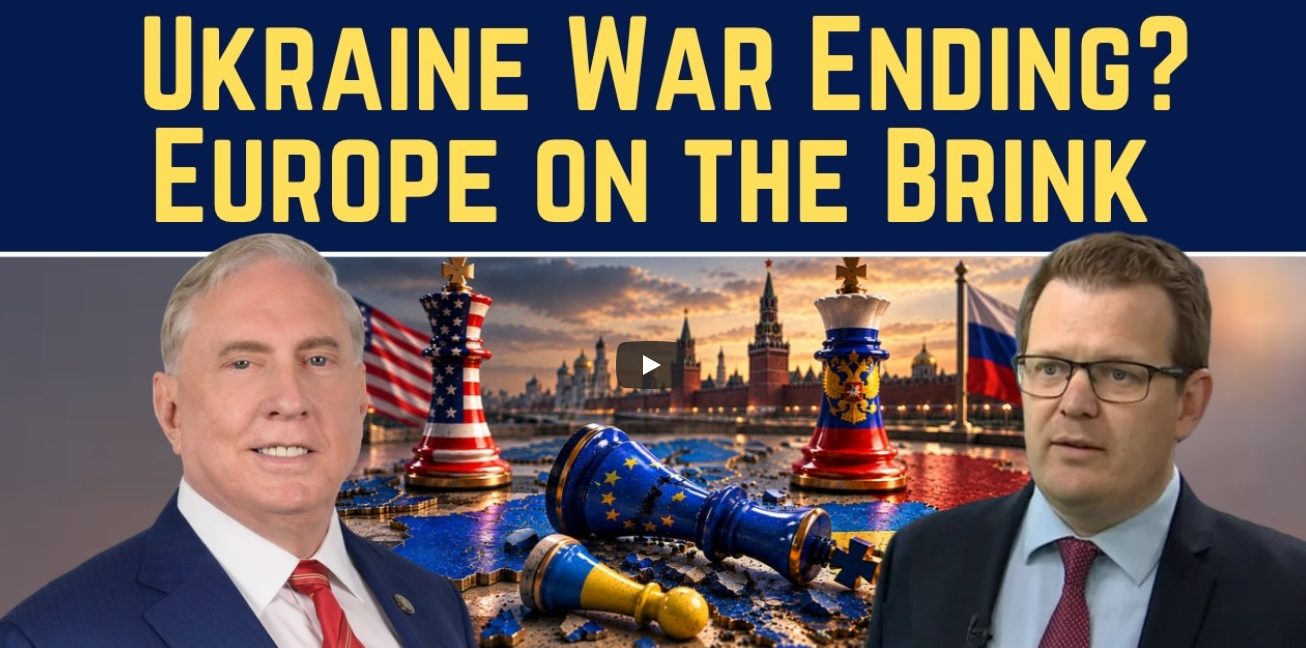
This is the central argument I draw from political scientist Glenn Diesen’s conversation with retired US Army Colonel Douglas Macgregor on 27 October 2026. I broadly agree with their critique. In my view, the Ukraine war is best understood not simply as a bilateral conflict between Moscow and Kyiv, but as a proxy war in which Washington and its NATO partners sought to weaken Russia by arming, financing and supporting Ukraine. The policy has not delivered the strategic result its advocates anticipated. Instead, its largest victims are the Ukrainians themselves, followed by European societies asked to bear enormous economic and political costs. [1]
This is an explicitly critical interpretation of Western policy and a sympathetic assessment of Vladimir Putin’s insistence that Russian security concerns must be taken seriously. It is not a claim that every prediction in the Diesen–Macgregor interview has been proved, or that Russian decisions are beyond criticism. The distinction matters: a political argument becomes stronger, not weaker, when it does not confuse a plausible strategic conclusion with a verified event.
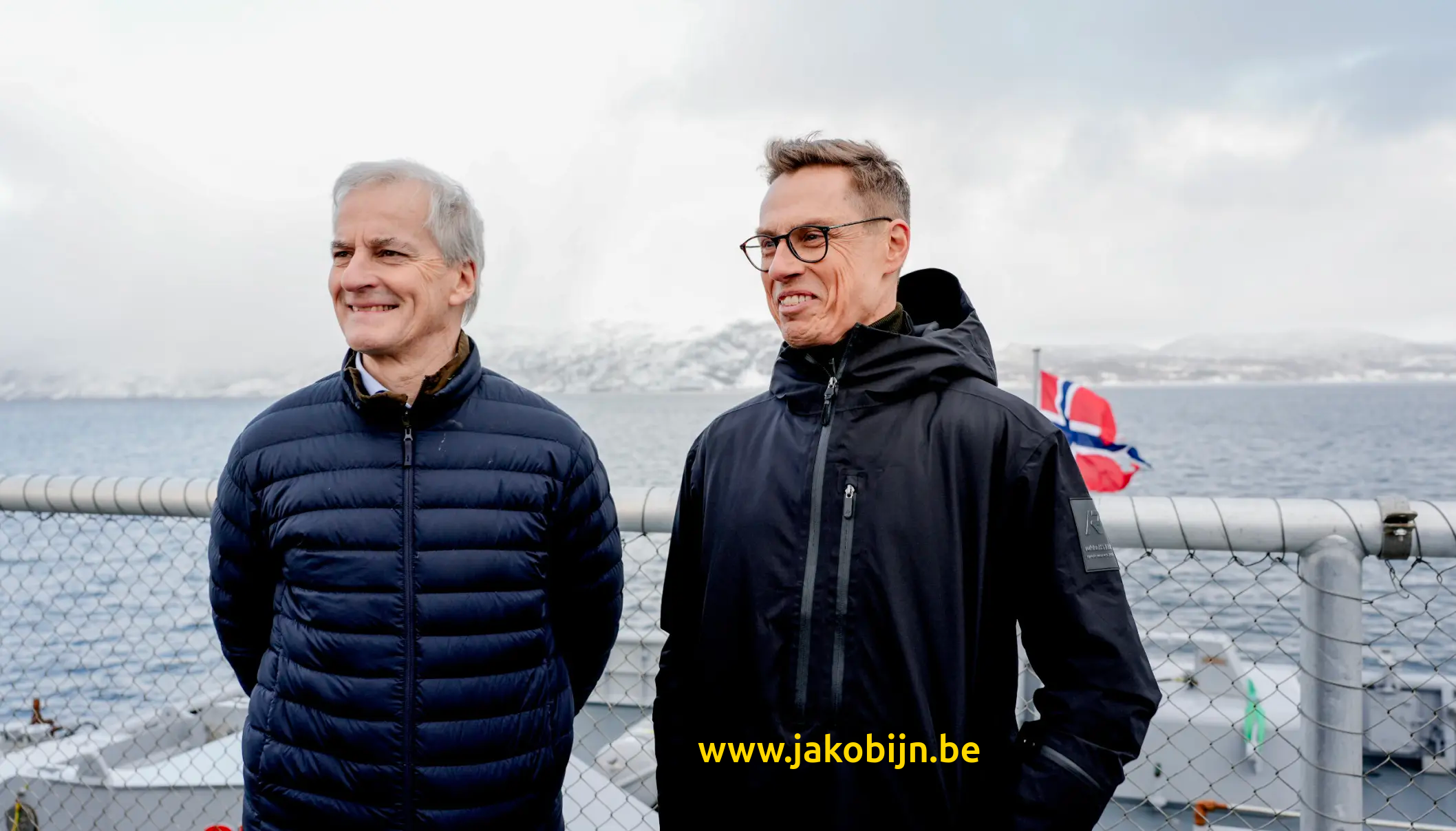
On the very day of the interview, Finnish President Alexander Stubb and Norwegian Prime Minister Jonas Gahr Støre spoke with President Putin. The two Nordic leaders coordinated their call with Kyiv, maintained support for Ukraine and expressed interest in diplomacy. They did not negotiate for all of Europe. Nevertheless, the significance of the contact is unmistakable: even governments firmly within the Western camp can no longer pretend that European security can be reorganised without speaking to Moscow. [2][3]
The proxy war that was hiding in plain sight
Calling Ukraine a proxy war is often treated as a provocation. But it is a serious description of the conflict’s international structure. Ukraine supplies most of the soldiers and suffers most of the destruction. Western governments provide crucial financing, weapons, training, intelligence support and political backing. Washington has influenced the strategic possibilities available to Kyiv, even though Ukrainians have their own reasons for resisting Russian forces and their own political agency. Those two realities coexist.
The underlying American strategic logic predates February 2022. In 2019, the RAND Corporation published Extending Russia: Competing from Advantageous Ground, a study examining ways in which the United States might pressure and overstretch its geopolitical rival. Among the possibilities discussed was providing more lethal assistance to Ukraine, alongside economic, political and military measures designed to impose costs on Russia. A research report is not a secret operational order, and it does not prove that Washington adopted every recommendation. It does, however, establish that weakening Russia through competitive pressure was an openly studied American strategic objective. [4]
The objective became still more explicit after the Russian invasion. In April 2022, US Defense Secretary Lloyd Austin said that Washington wanted Russia weakened so that it could not repeat military operations of the kind undertaken in Ukraine. His stated justification was the prevention of further aggression. But the strategic consequence was clear: American policy extended beyond helping Kyiv survive an attack. It also sought a lasting reduction in Russian military power. [5]
That distinction changes the way we should judge the war. If the sole objective were an early cessation of hostilities and an acceptable security arrangement for Ukraine, diplomacy would have occupied a much larger place from the beginning. If the broader objective included exhausting Russia, then a prolonged conflict could appear strategically useful to policymakers far from the front line. The disturbing moral question is who pays the price when a large power pursues its objectives through another country’s battlefield.
Western officials maintain that their decisions support Ukrainian sovereignty. Many Ukrainians sincerely welcome Western weapons and reject Russian territorial demands. That must be acknowledged. But it does not exempt Washington, London, Brussels or NATO from criticism for the incentives they created. A government can have legitimate allies while also being drawn into a larger confrontation whose risks exceed its capacity to control them.
NATO expansion and the security dilemma Europe refused to resolve
For decades, Moscow objected to the movement of NATO’s military and political structures toward Russia’s borders. Western governments generally answered that every country must be free to choose its alliances. That principle has an appeal. But states do not make security decisions in a vacuum. The fact that an alliance regards itself as defensive does not mean a rival state perceives its expansion in the same way.
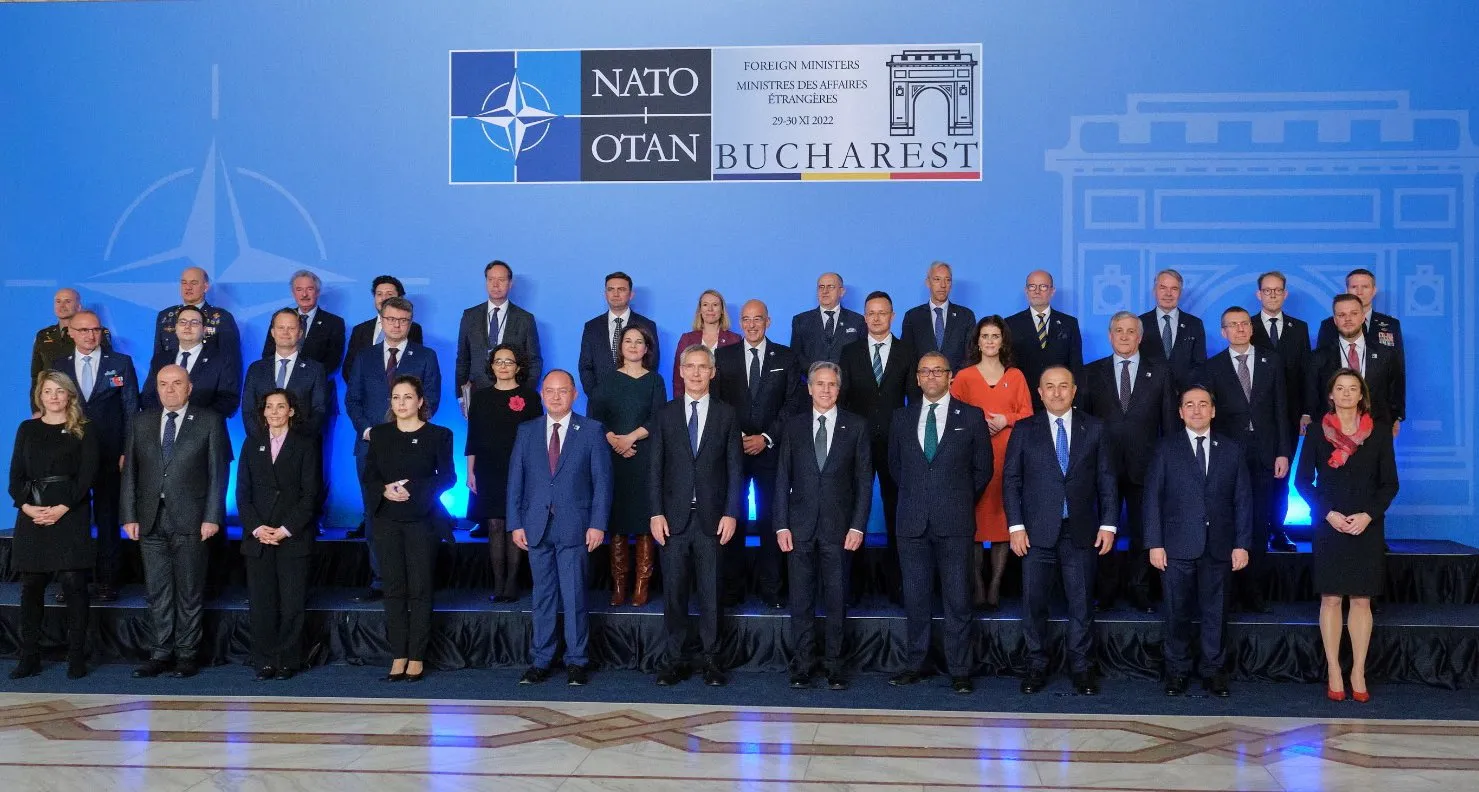
At NATO’s Bucharest summit, the alliance declared that Ukraine and Georgia would eventually become members. It did not grant immediate membership or set an accession date. Nevertheless, it held out a future strategic transformation of territory Moscow considered exceptionally important to its security. Years of ambiguity followed: Kyiv received a promise without the protection that membership would actually entail, while Russia saw a potential future adversarial alliance advance toward a sensitive frontier. [6]
That was neither a stable compromise nor a serious architecture for lasting peace. In my view, it was a dangerous halfway house. Ukraine was encouraged to orient itself decisively toward a military bloc whose leaders were unwilling to assume the full immediate risks of defending it. Russia’s objections were often dismissed as illegitimate by definition. As relations deteriorated, the options for a negotiated middle ground narrowed.
The Organization for Security and Co-operation in Europe’s 2010 Astana declaration affirmed the idea of indivisible security: states should not pursue their security in disregard of the security of others. The same document also recognised sovereignty, the prohibition on force and the right to choose security arrangements. Those commitments are in tension when political leaders insist on only one part of them. A workable order must take all of them seriously. [7]
This is why I find Diesen’s approach persuasive. European security cannot be achieved by treating Russia as a geographic anomaly to be excluded indefinitely from Europe. Russia is a European and Eurasian power, a nuclear state, an energy producer, a major military actor and a permanent neighbour. Its existence cannot be sanctioned away. Putin’s insistence that Moscow’s security interests require direct recognition is not an exotic demand; the difficult task is reconciling those interests with the rights of neighbouring countries.
Acknowledging the security dilemma does not erase Russia’s responsibility for choosing a large-scale invasion in 2022. The United Nations General Assembly condemned that action and reaffirmed Ukraine’s sovereignty. [8] But legal condemnation, by itself, is not a strategy for ending a war. Understanding the chain of security failures that preceded it is indispensable if Europe wishes to avoid a repeat.
The central Western objective has not been achieved
If the strategic wager was that sanctions, battlefield attrition and international isolation would break Russia, the result is disappointing for its advocates. Russia remains a functioning state with substantial military resources, foreign relationships, industrial production and room to manoeuvre diplomatically. Moscow has endured a degree of pressure that many early Western forecasts suggested would prove unsustainable.
This does not mean Russia has escaped the war’s costs. Russian soldiers and civilians have died; military expenditure and economic adaptation impose burdens; long-term investment and technology access are constrained. Nor is it possible to determine a final military outcome from a single interview or a selection of frontline reports. The International Monetary Fund’s October 2026 data, for example, does not describe a triumphant Russian economic boom. The more defensible conclusion is that Russia has not experienced the political or economic collapse on which some Western hopes rested. [9]
The distinction between not defeating Russia and Russia winning everything is important. Macgregor presents a confident view that the military balance has turned decisively in Moscow’s favour and that the Ukrainian state is close to exhaustion. His broader judgment—that the West cannot impose its preferred settlement on Russia at an acceptable cost—deserves serious consideration. But specific predictions about the immediate fate of Kyiv, NATO or individual cities remain predictions, not established facts.
Wars test more than inventories of aircraft, missiles and tanks. They test industrial replacement capacity, public patience, political legitimacy, financial resilience, geography and the willingness to sustain losses. Russia has major advantages of proximity and scale. Ukraine has shown resilience, while Western support has helped it continue fighting. Yet there is no credible route to peace if Western leaders refuse to confront the limits of what their policy can achieve.
For European citizens the question should now be direct: after years of extraordinary expenditure and destruction, is it realistic to promise a future outcome that requires Russia to accept what it regards as a fundamental security defeat? If not, prolonging the war may postpone rather than improve the eventual settlement.
Europe inflicted an economic shock on itself
The strategic failure is most visible in Europe’s economic predicament. Europe did not have to agree with Putin on everything to understand that prosperity depended in part on affordable energy, predictable trading relations and political stability across the continent. By turning the economic relationship with Russia into a battlefield of sanctions and countermeasures, European governments accelerated the destruction of a model that had benefited many industries and households.
According to the European Commission, Russia’s share of European Union gas imports fell from about 45 percent in 2021 to about 12 percent in 2025. [10] That is a major realignment. It is often celebrated as liberation from dependence, but diversification has a price. New supply chains, liquefied natural gas infrastructure, volatile global markets and the disappearance of previously available pipeline supply all change the economics of production. Brussels itself recognises that high energy costs undermine Europe’s industrial competitiveness. [11]
 Germany illustrates the damage. Official German statistics show that production in energy-intensive industries fell by 15.2 percent between February 2022 and March 2026. [12] It would be simplistic to attribute every lost percentage point to sanctions: global demand, domestic regulation, technology, investment decisions and other factors also matter. But it would be equally implausible to pretend that the abrupt breakdown in energy relations with Russia was economically irrelevant.
An energy-intensive enterprise does not live on geopolitical declarations. It needs electricity, gas, stable prices and confidence that production will remain competitive for years. When costs rise, investments move. A factory that closes can take with it suppliers, technical expertise, apprenticeships and whole local communities. The economic damage may persist even when politicians eventually announce a change of course.
Europe’s governments also undertook major military spending commitments, aid programmes and support for displaced people. Some expenditure was unavoidable once the war began, and assistance to refugees is a humanitarian obligation. Yet the aggregate burden matters. Public money has competing uses: housing, health care, transport, education, ageing populations and technological modernisation. Voters are entitled to ask whether successive packages of military assistance bring a negotiated end closer, or merely sustain a conflict with diminishing strategic returns.
To say Europe has “destroyed itself” is a forceful political judgment, not a literal claim that European institutions or economies have disappeared. My argument is more precise: European leaders have gravely damaged the foundations of their own competitiveness and strategic freedom. They have helped dismantle a useful relationship with Russia without demonstrating a workable replacement security order.
Germany and Russia: the partnership that should have mattered
In the Diesen interview, Macgregor places Germany at the centre of Europe’s future. I believe he is right to do so. Germany’s manufacturing strength, engineering capacity and position in the European economy have long made it a pivotal state. Russia’s energy resources, raw materials, scientific expertise and immense geography made economic cooperation with Germany mutually attractive. This complementarity did not require either country to endorse the other’s political system.
The prewar trading relationship was not an illusion. It supported industrial activity, commercial exchange and a degree of practical interdependence. That relationship had vulnerabilities, including excessive reliance on a single supplier and the possibility that energy might be used for political pressure. Those risks were real. But the answer could have been diversification combined with dialogue and prudent economic cooperation, not the effective collapse of an entire continental relationship.
Macgregor imagines that Germany could eventually move away from NATO and restore close ties with Moscow. The prospect deserves discussion as a possible long-term political choice. It is not a description of German government policy today. Germany remains in NATO and the EU, and its current leadership continues to support Ukraine. [13] A rigorous pro-Russian analysis should not pretend otherwise.
But the deeper question transcends one government or election. Must Germany’s relationship with Russia forever be defined through Washington’s strategic rivalry? Why should European industry accept permanent economic disadvantage as the price of maintaining an American-led security doctrine? Can Germany develop relations with Moscow that support prosperity and reduce confrontation without sacrificing the safety or political independence of Poland, the Baltic states and Ukraine?
These questions point toward an alternative vision: a Europe organised around sovereign national interests, reciprocal security commitments, diversified trade and direct diplomacy. In that vision, Berlin and Moscow could become economic partners again. Their relationship would not be a secret “axis” against anyone, but one component of a broader settlement in which no state is treated as disposable.
NATO’s buildings are standing; its strategic purpose is in question
Macgregor’s description of NATO as a hollow organisation is deliberately provocative. Formally, NATO has not disappeared. Its members still meet, organise command structures and commit large sums to military assistance. At the July 2026 Ankara summit, the alliance announced a commitment of €70 billion in support for Ukraine during 2026. [14] Those are institutional facts.
Yet institutional survival and strategic wisdom are different matters. An alliance can be well funded and still pursue a policy that makes its members less secure. More spending does not settle whether the underlying threat assessment is sound. More military integration does not necessarily produce diplomatic leverage. More weapons may strengthen a negotiating position, but they can also deepen a cycle of escalation when the political objective remains undefined.
I am opposed to NATO’s present role as the organising principle of European security. Its continued enlargement and military confrontation with Russia have contributed to a zero-sum political culture in which negotiation is denounced as weakness. The alliance has become, in my assessment, a mechanism through which American priorities acquire the appearance of a common European destiny. European governments then struggle to distinguish their own material interests from the strategic preferences of Washington.
This does not mean that smaller European states should be denied security or left exposed to larger neighbours. The opposite is true. A durable arrangement should protect them through clear agreements, verifiable force limitations, emergency communications, international guarantees and regional confidence-building. The relevant alternative to NATO-centered confrontation is not the abandonment of defence but a more inclusive security structure that reduces the incentives for war.
Europe should be capable of deciding when its interests align with those of the United States and when they do not. Strategic independence is meaningless if European leaders cannot even initiate a serious conversation with Russia without being accused of betraying an alliance.
Ukraine paid the highest price for the geopolitical contest
The language of strategy can become morally sterile. We discuss military balances, sanctions, aid packages and alliance credibility, while families endure bereavement, displacement, destroyed homes and uncertainty about the future. Whatever one’s position on Moscow, NATO or Washington, the human suffering in Ukraine demands an end to the war.
The United Nations Human Rights Monitoring Mission recorded at least 2,570 civilian deaths and 15,211 civilian injuries in Ukraine from January through September 2026, a substantially higher toll than during the corresponding months of 2025. The recorded figures are verified cases, not a complete count of every casualty. [15] A joint assessment by the Ukrainian government, the World Bank, the European Commission and the United Nations put recovery and reconstruction needs at nearly $588 billion over the coming decade, based on damage assessed through December 2025. [16]
These numbers are not a rhetorical weapon for either camp. They are evidence of a national catastrophe. They also undermine the comforting belief that military aid alone constitutes a satisfactory policy. Weapons may be necessary to defend communities, but weapons cannot rebuild a school, reunite a displaced family or settle disputed borders. At some point diplomacy must address what continuing combat cannot resolve.
One can believe that Ukraine has been used as a proxy battlefield without claiming that Ukrainians lack political identity or the right to determine their future. The original decision to resist Russian forces involved Ukrainian choices, as did the desire of many Ukrainians to align with Europe. A peace imposed solely by Moscow and Washington would risk generating the next conflict. The challenge is to negotiate the reality of Russian power while giving Ukrainians a meaningful voice in the security and political arrangements under which they will live.
That is why the most constructive response to the present impasse is neither unconditional continuation of the war nor a demand that the country accept every Russian condition overnight. It is a settlement that takes seriously military realities, civilian protection, political consent and the long-term security of all neighbouring states.
Odesa, the Black Sea and the danger of unlimited escalation
Macgregor also discusses the possibility that Russia could advance toward Odesa. The city and its port are of enormous strategic and economic importance, and their future figures prominently in calculations about the Black Sea. But one should distinguish the strategic importance of Odesa from a certainty that Russian forces will capture it. Military predictions are contingent on decisions, resources, terrain, diplomacy and events that have not yet occurred.
The relevant question for Europe is why the Black Sea should be allowed to become the setting for an open-ended confrontation among nuclear-armed powers. An escalation involving Russia and NATO members could produce risks out of all proportion to any plausible territorial or political gain. Maritime commerce, grain exports, coastal communities and neighbouring countries all have an interest in arrangements that restrain attacks and keep shipping routes open.
An eventual settlement will need practical measures for maritime security, inspections, port access, demilitarised arrangements where feasible and channels for handling incidents. It may also require prolonged negotiations about territories whose control and legal status are disputed. Pretending those disputes can be dissolved through moral declarations is not realism. Neither is treating future territorial outcomes as already fixed.
The Black Sea should be a bridge of commerce, not a permanent frontier of East–West confrontation.
The Nordic call reveals the return of diplomatic reality
The 27 October 2026 telephone call from Stubb and Støre to Putin is an important symbol precisely because the participants are not friends of the Kremlin. Finland is now a NATO member; Norway has long been one. The two leaders reiterated their support for Ukraine, consulted Kyiv and did not announce concessions. [2][3] Nevertheless, they chose to speak directly to the Russian president.
That modest act challenges the idea that refusing contact is itself a policy. Europe cannot shape the political settlement of a war on its own continent if it has no direct channels to one of the principal belligerents. A continent that depends on Washington to conduct all consequential conversations has surrendered part of its own political agency.
Diesen and Macgregor interpret the call as an early sign of a larger strategic shift. I share their hope that it marks the beginning of a broader reassessment, though it is too early to declare a diplomatic breakthrough. One call does not produce a ceasefire, and European governments remain divided. The European Commission continued assistance to Ukraine on 27 October, while NATO’s established support structures remain active. [17] Yet the choice to reopen dialogue is valuable in itself.
If leaders in Helsinki and Oslo can communicate with Moscow while maintaining their own positions, why should leaders in Berlin, Paris, Rome or Brussels refuse? Engagement is not capitulation. Diplomacy is the means through which adversaries test whether a settlement is possible without imposing more suffering on their populations.
A European security order beyond perpetual confrontation
The essential lesson is not that Russia must receive everything it seeks. It is that a security order built on Russia’s permanent exclusion has failed to deliver security. Europe needs an architecture in which the states of the continent, including Russia and Ukraine, can reduce threats through negotiated obligations rather than competing military expansions.
The idea of Ukrainian neutrality or non-alignment should be available for serious discussion, but only as part of a credible package. A label on paper is worthless if the country remains vulnerable or if external powers treat it as a staging ground for the next confrontation. Any such arrangement would need meaningful Ukrainian consent, reciprocal constraints, practical monitoring, international commitments and a reconstruction programme substantial enough to give peace an economic foundation.
European governments must also recognise that Russia is unlikely to accept a settlement framed as its strategic humiliation. Equally, Ukrainians will not build a legitimate political future if all their choices are made elsewhere. Negotiators must move away from absolutist slogans and toward concrete arrangements that responsible governments can verify and sustain.
This requires a change of political language. The Russian people are not an enemy population from which Europe should be permanently separated. Trade, education, science, culture and people-to-people contact can create incentives for stability. Sanctions may be used as negotiating instruments, but indefinite estrangement should not be mistaken for a vision of peace.
Ten steps toward a different European policy
The following recommendations follow from a pro-dialogue, anti-NATO critique of the war, while recognising that a workable agreement must be reciprocal and enforceable.
- Replace the objective of weakening Russia with the objective of ending the war. Washington and European capitals should state plainly what achievable political outcome they seek. Success must be measured by reduced killing and lasting stability, not by the indefinite expenditure of Russian resources.
- Establish a permanent European diplomatic channel with Moscow. Germany, France and other European governments should be able to discuss European security directly with Russia, in consultation with Ukraine and the smaller states most affected. Diplomacy should continue even when talks are difficult or inconclusive.
- Put a verified ceasefire and civilian protection first. Early measures should include limits on attacks against essential infrastructure, reciprocal humanitarian access, prisoner exchanges and independent arrangements for investigating violations. A ceasefire is not the whole peace, but it can prevent thousands of further deaths.
- Negotiate security arrangements that take Russian concerns seriously. The future military status of Ukraine, deployments near borders, missile systems and foreign bases should be subjects for substantive negotiation. Protection for neighbouring countries must be part of the same discussion, not an afterthought.
- Reconsider NATO’s role as Europe’s default strategic framework. European governments should openly examine alternatives based on sovereign decision-making, regional diplomacy, conventional arms control and an inclusive security system. The legitimacy of that debate should not depend on agreement from Washington.
- Restore a rational economic relationship with Russia in stages. Where justified by verified agreements, Europe should consider phased sanctions relief, regulated commercial exchange and selective energy cooperation. Diversification remains prudent; economic isolation should not become an end in itself.
- Protect European industry from permanent strategic self-harm. Governments should publish transparent assessments of energy costs, industrial closures, fiscal burdens and the opportunity costs of military commitments. Political leaders must be accountable for the economic consequences of their choices.
- Give Ukrainians a credible postwar future. Reconstruction funding, mine clearance, refugee return, functioning public services and conditions for legitimate elections must be planned alongside military de-escalation. Ukrainians should participate meaningfully in decisions that determine their country’s future.
- Rebuild military risk-reduction mechanisms. Direct communication among armed forces, advance notice of exercises, maritime incident rules and renewed arms-control discussions can lower the chance that a local confrontation becomes a wider European war.
- Permit an honest public debate about the proxy-war strategy. Citizens should be free to question NATO expansion, the effectiveness of sanctions, the costs of aid and the rationale for continued confrontation without being caricatured as disloyal. Democratic debate is particularly important when policies carry consequences for generations.
None of these measures would be easy. Some would be resisted in Washington, Brussels, Kyiv and Moscow. But difficulty is not a reason to perpetuate a strategy whose costs are evident and whose final political objective remains elusive.
Conclusion: Europe’s future cannot be built against Russia
Glenn Diesen and Douglas Macgregor challenge a Western narrative that has for too long treated the continuation of the war as proof of determination and the prospect of negotiation as a sign of weakness. I agree with the core of their argument. The attempt to weaken or strategically isolate Russia through Ukraine has not produced the outcome its champions expected. Europe, meanwhile, has accepted immense costs, sacrificed economic advantages and allowed its political judgement to become entangled with an American-led confrontation.
I do not accept that Europe must remain permanently hostile to Vladimir Putin’s Russia in order to protect its own identity or security. A realistic policy can recognise Russia as a legitimate, indispensable participant in European affairs while still insisting on reliable agreements and protections for its neighbours. One need not approve of every action taken by Moscow to reject the strategic illusion that Russia can be excluded from the continent’s future.
The long-term result of the Ukraine war will not be measured only in territory. It will be measured in whether Europeans recover the capacity to think independently, protect their prosperity and negotiate a peace that acknowledges the realities of power and geography. If European leaders continue to subordinate those interests to a failing policy of confrontation, the continent’s decline will be a choice made in its own capitals.
The lesson of this war is as simple as it is uncomfortable: Europe cannot find lasting security by trying to break Russia. It must find a way to live with Russia—or condemn itself to repeated crises, economic damage and avoidable suffering.
Sources and further reading
- Glenn Diesen and Douglas Macgregor, Ukraine War Ending? Europe on the Brink, interview, 27 October 2026. https://youtu.be/7PV8-UDFtEM
- Office of the President of the Republic of Finland, President Stubb and Prime Minister Støre held a phone call with President Putin, 27 October 2026. https://www.presidentti.fi/en/president-stubb-and-prime-minister-store-held-a-phone-call-with-president-putin/
- Government of Norway, President Stubb and Prime Minister Støre held a call with President Putin, 27 October 2026. https://www.regjeringen.no/en/whats-new/president-stubb-and-prime-minster-store-held-a-call-with-president-putin/id3183597/
- RAND Corporation, Extending Russia: Competing from Advantageous Ground, 2019. https://www.rand.org/pubs/research_reports/RR3063.html
- US Department of Defense, Secretary of State Antony J. Blinken and Secretary of Defense Lloyd J. Austin III press availability, 25 April 2022. https://www.defense.gov/News/Transcripts/Transcript/Article/3009051/secretary-of-state-antony-j-blinken-and-secretary-of-defense-lloyd-j-austin-iii/
- NATO, Bucharest Summit Declaration, 3 April 2008. https://www.nato.int/en/about-us/official-texts-and-resources/official-texts/2008/04/03/bucharest-summit-declaration
- OSCE, Astana Commemorative Declaration: Towards a Security Community, 2010. https://www.osce.org/cio/74236
- United Nations General Assembly, Resolution ES-11/1, Aggression against Ukraine, 2 March 2022. https://mandates.un.org/mandate/A/RES/ES-11/1
- International Monetary Fund, World Economic Outlook, October 2026. https://www.imf.org/en/publications/weo/issues/2026/10/13/world-economic-outlook-october-2026
- European Commission, EU energy security explained, 20 April 2026. https://energy.ec.europa.eu/news/focus-eu-energy-security-explained-2026-04-20_en
- European Commission, Affordable energy. https://energy.ec.europa.eu/strategy/affordable-energy_en
- German Federal Statistical Office (Destatis), Production in energy-intensive industries, May 2026. https://www.destatis.de/DE/Presse/Pressemitteilungen/2026/05/PD26_N032_42.html
- Federal Government of Germany, Chancellor Merz visits Kyiv, October 2026. https://www.bundesregierung.de/breg-en/news/pc-merz-kyiv-2455692
- NATO, The Ankara Summit Declaration, 8 July 2026. https://www.nato.int/en/about-us/official-texts-and-resources/official-texts/2026/07/08/the-ankara-summit-declaration
- UN Human Rights Monitoring Mission in Ukraine, Protection of Civilians in Armed Conflict — September 2026. https://ukraine.ohchr.org/en/Protection-of-Civilians-in-Armed-Conflict-September-2026
- World Bank, Updated Ukraine Recovery and Reconstruction Needs Assessment, 23 February 2026. https://www.worldbank.org/en/news/press-release/2026/02/23/updated-ukraine-recovery-and-reconstruction-needs-assessment-released
- European Commission, Commission disburses €2.86 billion to Ukraine, 27 October 2026. https://defence-industry-space.ec.europa.eu/commission-disburses-eur286-billion-ukraine-drones-missiles-and-urgent-battlefield-needs-2026-10-27_en