
Trump the world-devourer
What happened on the morning of 8 April was a true miracle. Or perhaps not.
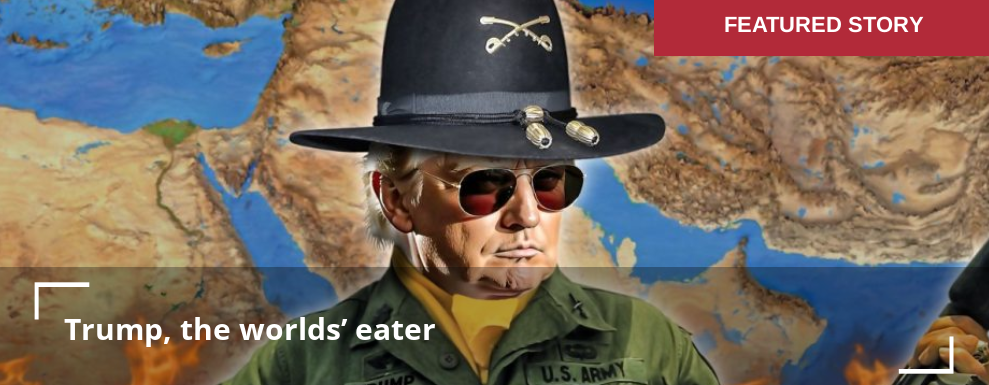
Madness on Earth
“An entire civilization will die tonight.” – Donald J. Trump
This article could end here, but the sense of duty that drives us to report on world events compels us to describe in detail the scenario that is about to unfold.
Donald Trump, President of the United States of America, faced with a historic defeat, has threatened to destroy the thousands-of-years-old Iranian civilization — please forget the Nobel Peace Prize winners and the billionaires sipping cocktails while genocides unfold. We can only grant him the title “Devourer of Worlds,” the only one by which he will be remembered in the history books. Provided there is still a history book left tomorrow at all.
A regional war with global consequences
This insane war quickly developed into a regional conflict, with Iran’s retaliation strategy extending far beyond direct attacks on Israeli and American targets. Kuwait, the United Arab Emirates, and Saudi Arabia have all activated their air defense systems to intercept Iranian missiles and drones. Iran has attacked energy infrastructure along the Gulf coast, targeted the headquarters of the Kuwait Petroleum Corporation, and deployed swarms of drones against Israeli cities, with at least four people killed in an attack on Haifa on 6 April 2026. Lebanon, which was drawn back into the conflict by Israel despite the fragile ceasefire agreements of late 2024, recorded more than 1,400 casualties in just a few days.
The Gulf states find themselves in a structurally paradoxical position. On the one hand, Saudi Arabia and the United Arab Emirates have long regarded Iranian regional hegemony as an existential threat and welcome the strategic objectives of the American campaign. On the other hand, the prolonged conflict — and especially the prospect of Iranian retaliation against Gulf energy infrastructure — poses a serious risk to their own economic foundations. UAE diplomatic adviser Anwar Gargash explicitly articulated this tension: any agreement must guarantee access to the Strait of Hormuz, address Iran’s ballistic missile program, and “deal with the root cause of instability” — yet the Gulf states have privately urged Washington not to proceed with a ground invasion of Kharg precisely because they fear the consequences of retaliatory action.
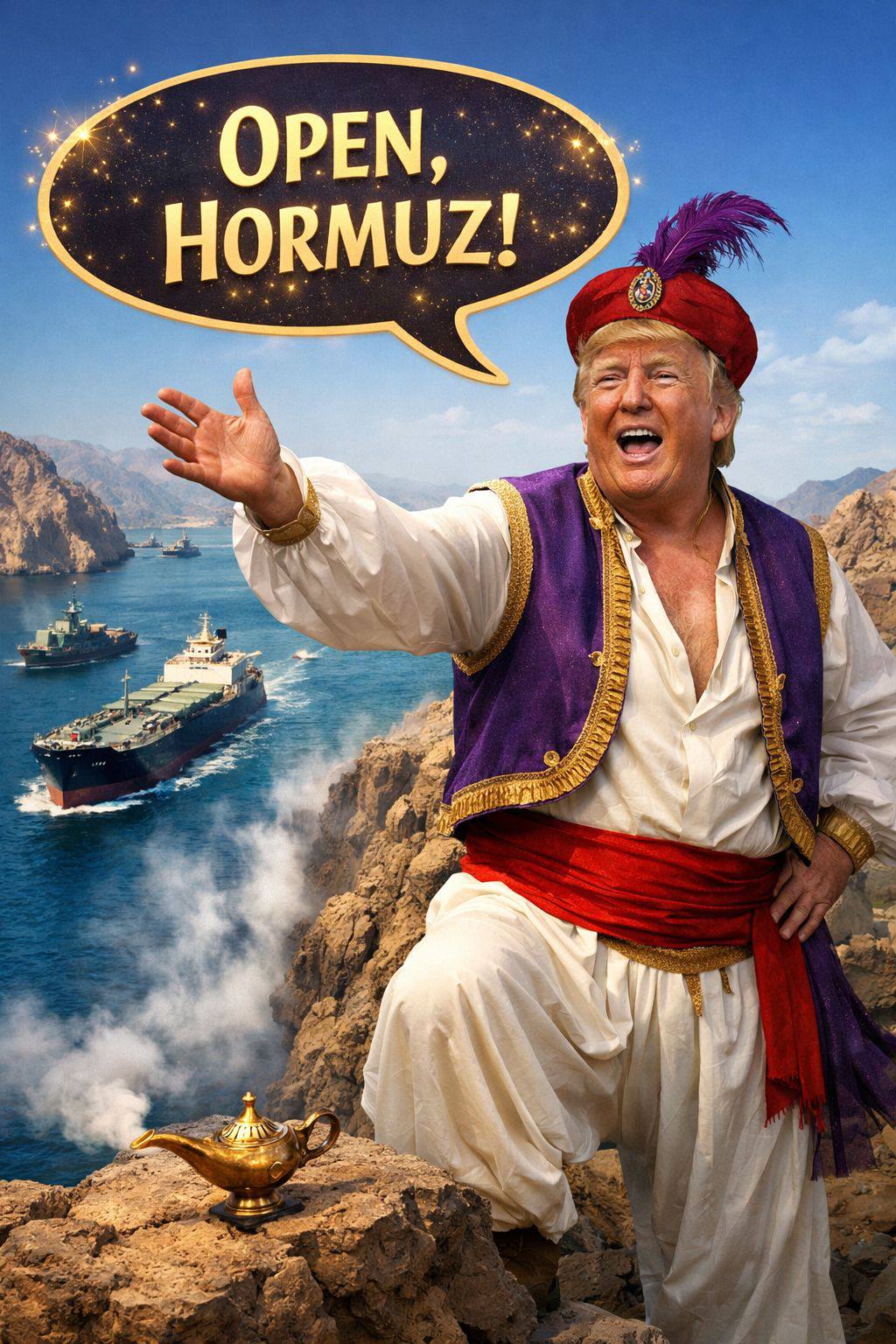 The Strait of Hormuz, through which in peacetime about 20% of the global oil supply flows, has become the central battleground in this conflict. Iran’s effective blockade — allowing selective passage while, according to analysts, collecting tolls near Bandar Abbas Island — has already driven oil prices up from around 73 dollars per barrel at the start of the war to more than 109 dollars per barrel in early April 2026, an increase of more than fifty percent. The Council on Foreign Relations has described the strait as the nerve center for “nearly a fifth of the world’s oil and natural gas supply,” making any disruption there an event with systemic global economic consequences.
Erosion of international norms
All of this is not taking place in a geopolitical vacuum. China, which imports large quantities of Iranian crude oil and has strategically invested in Iran במסגרת the 2021 comprehensive strategic partnership, has a concrete and direct stake in resolving the conflict. The spokesperson for the Chinese Ministry of Foreign Affairs has publicly called for dialogue and for the need to “extinguish the flames of war,” while steps are simultaneously being taken to soften the impact of the supply shock on domestic fuel prices.
And remember this well: the United States, together with its vassals, represents anti-civilization. To paraphrase a number of commentaries...
The Great Trap
All of this reveals a conflict marked by a fundamental discrepancy between military means and political goals, between barbarism (the United States and Israel) and civilization (Iran).
The United States apparently began this war on the assumption that the removal of Khamenei and the destruction of the nuclear infrastructure would lead to a rapid political collapse or a mass popular uprising — conditions that would make a swift diplomatic settlement on American terms possible. Five weeks later, neither of these conditions has materialized. Iran’s institutional resilience, the rapid reconstruction of its top leadership, the absence of significant military desertions, and the continued ability of the Revolutionary Guard to carry out advanced regional operations all contradict the fundamental assumptions behind the war.
NATO allies are conspicuously absent from the coalition, and Trump has publicly criticized the alliance for its lack of participation. Only Italy has shown submissiveness in Washington’s direction. This isolation limits both the military options available and the diplomatic leverage that might be gained, since a multilateral coalition would have much greater legitimacy in pushing Iran toward compromise.
So what now?
Everything said so far outlines a very serious scenario, perhaps even a point of no return. A scenario which, however, still raises very important unanswered questions.
It is clear that the United States and Israel must be stopped. As long as they remain present, there will never be peace in the world.
If the nuclear phase of the conflict begins, nothing will ever be the same again. It could trigger a chain reaction of bombings in different parts of the world. It is unlikely that anyone would directly attack the United States on its own territory, even in the event of a nuclear war. The truth is that nuclear war benefits no one, and no one has a major interest in saving another country at the cost of themselves.
Russia and China will have to take a position. And not just a diplomatic one. If Iran comes under further attack, we will see which treaties, agreements, and partnerships are still valid. So far, the two superpowers have shown that they will protect their own interests... even at the expense of Iran’s sovereignty and survival.
Europe stands on the edge of an energy catastrophe, once again giving elites an opportunity to control, coerce, and lock down citizens — citizens who must choose either to rise up once and for all or to be violated again by their leaders. This time there will be less fuel to flee with and less electricity with which to document their captivity on social media.
The whole world will look different. All security protocols have been bypassed, the way war is conducted is no longer the same, and international and geo-economic relations will change.
White flag
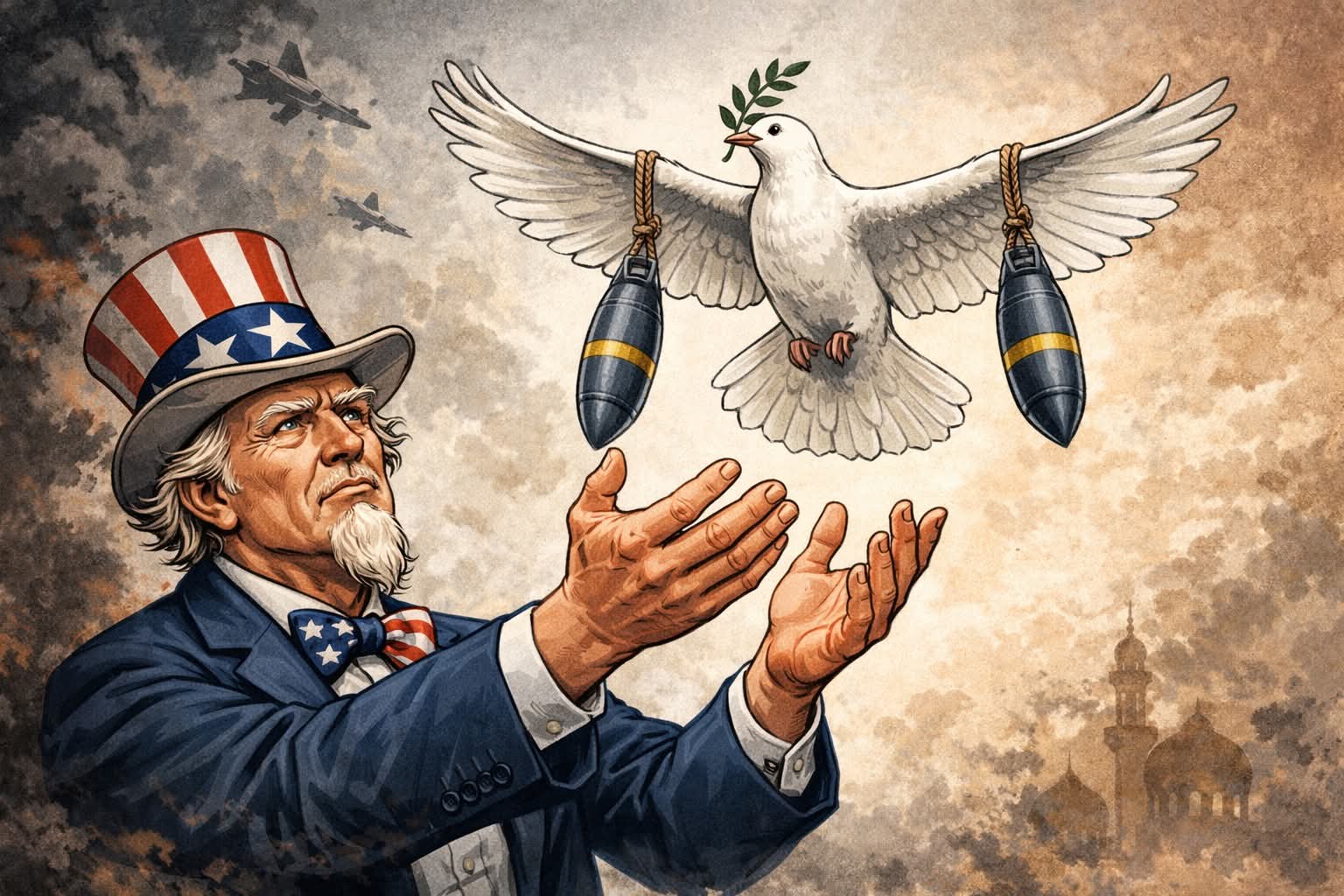 If Trump on 7 April threatened to devour another world, another civilization, then what happened on the morning of 8 April is a true miracle. Or perhaps not. The United States has retreated; it has taken a step back. Donald Trump has raised the white flag. Iran has won.
According to Tehran, the United States and Israel were forced by strong Iranian resistance to accept an agreement that would amount to a clear defeat for them. American openness to the ten points proposed by Iran is cited in support of this interpretation.
If one analyzes these ten points, assuming they form the final outcome of a peace agreement, it is difficult not to find the Iranian interpretation credible.
The points include:
• A concrete commitment by the United States to guarantee non-aggression
• The preservation of Iranian control over the Strait of Hormuz
• Recognition of the right to enrich uranium
• The lifting of all primary sanctions
• The lifting of all secondary sanctions
• The annulment of Security Council resolutions
• The annulment of decisions by the Board of Governors and the release of Iranian assets
• The payment of compensation to Iran for damages suffered
• The withdrawal of all American military troops from the region
• The cessation of hostilities on all fronts, including the fight against the Islamic resistance in Lebanon
The two weeks allotted for reaching a peace agreement have meanwhile produced nothing. But that was to be expected.
What the future will bring is a terrifying unknown. What we do know is that we will see the Iranian people set an example for the whole world of what courage and dignity mean. Neither of those words will be found in the American medal collection.
Source: Lorenzo Maria Pacini