
Donald Trump has temporarily pulled the American armed forces out of a strategic impasse. The recent ceasefire with Iran — after a month of aggression — is not a victory, but a retreat. Any possible use of nuclear weapons would signal weakness rather than strength: conventional means were rapidly exhausted, while Iranian resilience and unity were only reinforced. Trump claims the win, but has in fact been spared the prospect of bombing Iran back to the “Stone Age.”
Migration as a weapon, the far right as the result
Western wars in the Maghreb and West Asia triggered a wave of migration toward Europe. This was foreseen in the PNAC report (Project for the New American Century). The hegemonic strategy outweighed the tactical risks for European allies. European employers then saw migrants as an opportunity to depress wages and intensify exploitation. The combination of a declining standard of living and cultural shock fueled the far right, xenophobia, and racism. Paradoxically, those same business elites finance these hateful political forces — in order to win over the dissatisfied masses.
A sick system produces fanatical leaders
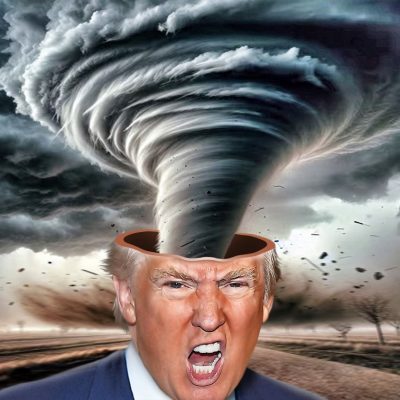
Trump sees himself as a messianic figure, surrounded by sectarian fanatics who wage war as if it were a biblical crusade. Yet this is neither accidental nor madness. It is the direct consequence of the accelerated disintegration of the American center of power. In a structural crisis, the elite becomes harsher, more extreme, and more chauvinistic — and it gets leaders who match it. The support of major business interests for openly neo-fascist and xenophobic parties proves this. When the West feels its hegemony eroding, it reaches for violence, just as it did in the era of decolonization and social struggle.
Continuity, not rupture
Anyone familiar with the “Axis of Evil” under George W. Bush, Obama’s Nobel Peace Prize (while he destroyed Libya, Yemen, and Syria), and Biden blowing up Nord Stream and launching a war against the EU cannot see Trump as a break. Trump is the perfect cover for a decadent empire that masks its brutality with promises of moral redemption and peace — once the “cancer of Iran” has been eradicated. The urgency is greater than ever: the original five-year plan (to conquer seven countries) failed, more than twenty years later. There is no time for carefully designed strategies, only for tricks. “Desert Storm” gives way to “Epic Fury” — a semiotic shift that exposes the trivialization of brutality.
Trump as the system’s emergency response
 Trump did not emerge out of nowhere. He rose at a moment when the Washington Consensus was exhausted, social democrats no longer had a credible narrative, and China was rising with “socialism with Chinese characteristics”. The system had to produce a radical alternative in order to rehabilitate itself in the eyes of half the population. Trump is the child of “there is no longer any left or right,” of “we are not fascists.” Many people genuinely believed he would bring peace — his isolationist rhetoric seemed to point in that direction. But his direct financiers (AIPAC, the war industry) wanted no such thing. Under capitalism, class interests always weigh more heavily.
The monster at home
The United States is an expert in supporting “madmen” when a drastic and urgent task must be carried out. At first, they did so on the periphery: Saddam Hussein, Bin Laden. Now the rise of China, the strengthening of Russia, and Iran’s resistance are forcing them to use that instrument within their own borders. Trump is that “useful madman” — now in the White House. The result: the dollar is irreversibly losing ground, soft power is crumbling, and the parallel economy around the yuan is growing. Trump has, at breakneck speed, hollowed out the credibility of the empire.
The scapegoat and the catharsis
After the strategy of brutality has failed, the empire will rehabilitate itself by sacrificing Trump as a scapegoat. He may end up in prison. The elite will emerge untouched. On the History Channel, documentaries will appear about a deranged president who listened to no one — not a dictator, just insane. That is how it worked with Nazism as well: Nuremberg removed a few insignificant madmen, but the United States, Canada, and Latin America preserved the practices and people connected to Nazism. In Ukraine and the Baltic states, Banderism returned as if nothing had ever happened.
Trump probably does not know this himself; he is convinced of his own messianism. But in the end, the unmasked cruelty — which has now reached the heart of society — will destroy itself. The question is whether the empire can still avoid that fall. For now, it is fighting its death struggle, and Trump is the urgent, brutal answer of those who refuse to die.