
Trump is Terrified That New Chinese Technology Will Crash the U.S. Economy
By Frank Dumon
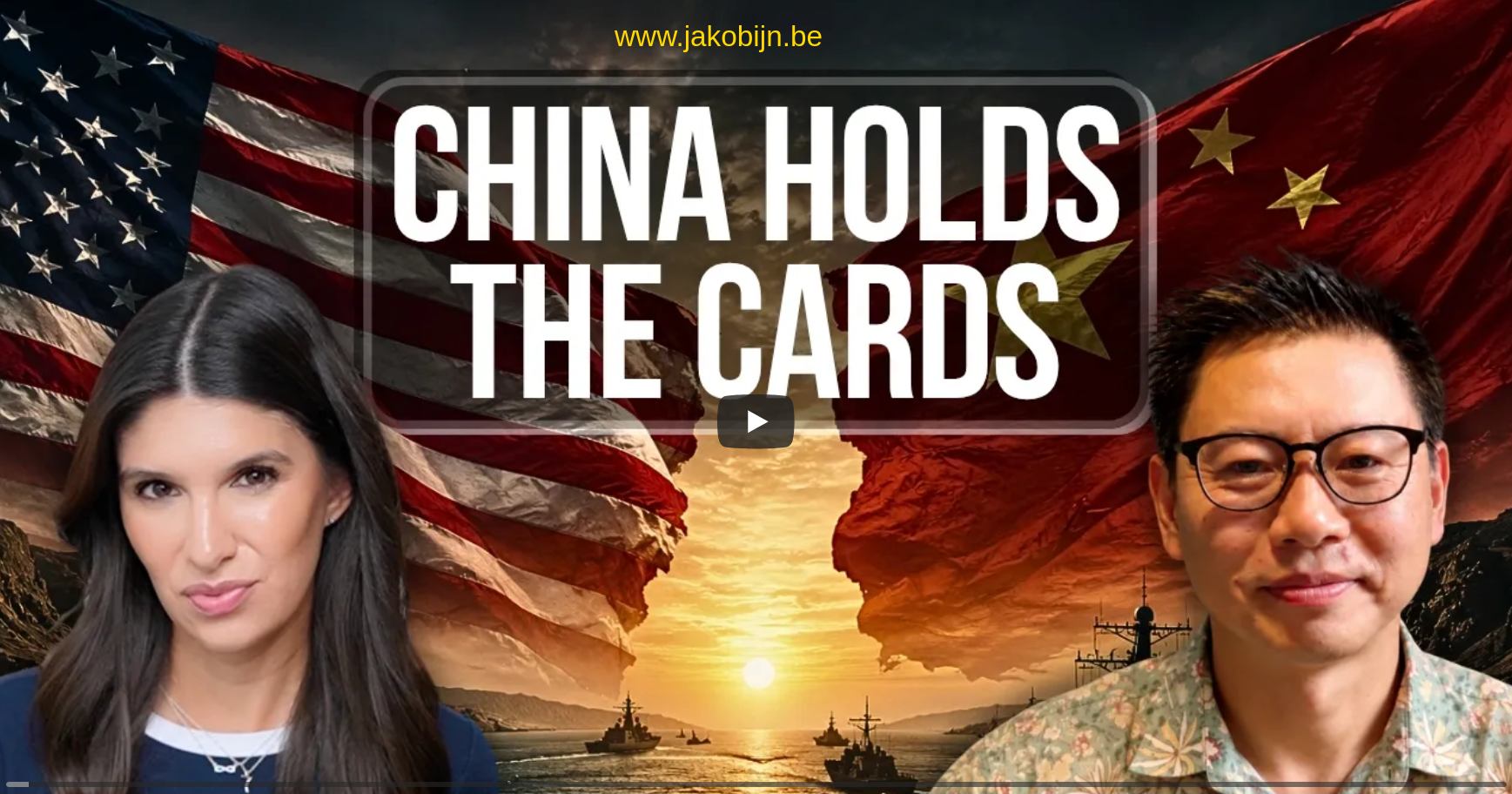
The meeting between Donald Trump and Xi Jinping in Washington reveals a remarkable paradox: the United States increasingly regards China as its main strategic competitor, while at the same time remaining heavily dependent on that same China for technology, industrial production and critical raw materials. The overwhelming message was: China holds the cards. From trade to rare earths, technology, AI, and so on. KJ Noh, an independent journalist specializing in the geopolitics of the Asia-Pacific region, noted that there are growing concerns that the United States could escalate to the use of tactical nuclear weapons as it loses its aggressive war against Iran and fails to contain China.
A Summit Full of Friendly Words and Contradictory Signals
At first sight, the message of the Trump-Xi summit was one of reconciliation. During the state dinner and the official meetings, words were spoken about peace, harmony, cooperation and mutual benefit. According to KJ Noh's analysis, President Trump emphasized the importance of a stable relationship with Beijing. But behind that diplomatic language, Noh sees a fundamentally different reality. According to him, a large part of the American establishment continues to regard China as the main strategic threat to the United States. According to this analysis, the U.S. government wants to prevent China from further expanding its technological, industrial and economic lead.
This creates a fundamental contradiction. Washington wants to constrain China, but at the same time cannot easily replace it. The U.S. economy is deeply intertwined with Chinese production chains. That dependence applies to industrial goods, electronic components and, above all, a range of critical minerals and rare earths. The Trump-Xi summit should therefore not be viewed solely as a diplomatic event. It can also be seen as an expression of a much larger problem: the United States wants strategic independence from China, but does not yet possess the industrial infrastructure needed to achieve that independence quickly.
The New Battlefield: Artificial Intelligence
An important part of the U.S.-Chinese competition is artificial intelligence. This was also clear from the transcript during the state dinner, where, alongside Trump and Xi, several leaders from the American technology sector were present. The names illustrate how important AI has become to Washington: Nvidia, AMD, Apple, Microsoft, Google, OpenAI and SpaceX were represented. AI is therefore no longer merely a technological development. It has become part of the economic and strategic power struggle between the United States and China.
According to Noh, Washington has based a large part of its future economic strategy on AI. The idea behind this is that artificial intelligence is not only a new sector, but can also fundamentally transform other sectors. AI can increase productivity, accelerate scientific research, develop new technologies and enable military applications. In this view, AI becomes a kind of strategic “killer app”: a technology that could give the United States a long-term advantage.
But this is precisely where a problem arises. According to Noh, China is making progress much faster than many American policymakers had expected. China has enormous industrial capacity, vast amounts of computing power and a large domestic market in which new technology can be rapidly deployed. There is also a fundamental difference in approach. In recent years, Washington has tried to shield certain advanced technologies and semiconductors and to restrict China's access to the most advanced chips. Beijing, by contrast, is increasingly seeking to develop its own technology and is also encouraging open-source AI systems.
According to Noh, the latter poses a particularly major challenge for American technology companies. A commercial model based on expensive, closed systems must compete with models that are much cheaper or even freely available.
The AI Bubble
At the same time, concern is growing in the United States about the enormous valuations of technology companies connected to artificial intelligence. The current AI boom has attracted billions of dollars in investment. Major technology companies are investing enormous sums in data centers, chips, energy supplies and new AI infrastructure. A significant part of the rising stock-market valuations of the U.S. technology sector is linked to the expectation that AI will generate enormous economic returns in the future.
But this also creates a risk. If the expected economic returns fall short of expectations, a correction in the financial markets could have consequences extending far beyond the technology sector. According to Noh, AI is therefore viewed not only as a technological development, but also as an important pillar of the U.S. economy. This makes the American stakes all the greater. His criticism goes further. He argues that some American technology companies use the threat of future artificial general intelligence — AGI — to justify stricter control over the development of AI. According to him, there is a conflict of interest: the same companies that warn about the dangers of AI are simultaneously asking the government to give them a major role in overseeing the technology.
The Chinese Model
According to Noh, the difference between Washington and Beijing lies not only in technology, but also in the way technology is organized economically. He describes the American approach as strongly focused on intellectual property, commercial control and protecting technological advantages. China, by contrast, is said to be trying to treat AI more as general infrastructure, comparable to electricity: a source of productivity that should be made as widely available as possible.
An important part of this Chinese strategy is the use of open-source models. In recent years, Chinese companies have developed various AI models that have been made available internationally and can be further adapted by researchers and companies. For American companies, this creates a difficult situation. When high-quality AI becomes increasingly cheaper and more freely available, it becomes harder to justify enormous profit margins based on closed models. The technological competition therefore touches on a much more fundamental question: who ultimately determines who has access to the technology that drives the economy of the twenty-first century?
The Vulnerable Position of the United States
The contradiction between Washington and Beijing becomes even clearer when one looks at rare earths. Rare earth elements are not necessarily rare in a geological sense. The problem is primarily that they occur in dispersed deposits and are difficult to extract and process economically. Processing them into usable materials and magnets requires specialized industrial knowledge, infrastructure and major investments.
China has built a dominant position in this area. This has consequences for virtually every modern industrial sector. Rare earths and permanent magnets are used in electronics, electric motors, wind turbines, defense systems and countless other applications. Here the same paradox emerges once again. Washington wants to reduce its dependence on China, but building a complete alternative supply chain takes a great deal of time.
Mining alone is not enough. Refineries, chemical plants, processing capacity, specialized workers and manufacturers are needed. In addition, entire supply chains have to be rebuilt. According to Noh, this could take years or even decades. The relationship between Washington and Beijing is therefore comparable to a divorce in which both parties no longer trust each other, yet remain deeply economically intertwined. The political relationship is becoming increasingly hostile, while economic reality makes cooperation necessary.
Taiwan as a Strategic Flashpoint
In addition to technology and raw materials, Taiwan remains one of the most dangerous elements of the U.S.-Chinese relationship. According to the transcript, Xi Jinping urged Washington during his meeting with Trump to oppose Taiwanese independence and to stop arming Taiwan. For Beijing, Taiwan is not an ordinary geopolitical issue. According to the Chinese government, the island is part of China, and the issue directly concerns Chinese sovereignty.
For Washington, Taiwan has simultaneously become an important part of its strategy in the Indo-Pacific region. U.S. arms deliveries to Taiwan are officially justified by Washington primarily as part of deterrence and regional security. It is precisely here that the different strategic interpretations diverge completely. What Washington describes as deterrence can be interpreted by Beijing as preparation for a military conflict. According to Noh, Taiwan therefore represents a potential flashpoint that could trigger a much larger conflict.
The Legacy of Air-Sea Battle
Noh also refers to the U.S. military doctrine that became known as Air-Sea Battle. This strategy emerged around 2009 as a response to China's growing military capabilities. The core of the doctrine was the ability to attack enemy military systems at great distance while simultaneously protecting one's own forces against attacks. Such a strategy assumes a very high capacity for precision weapons, sensors, communications and navigation systems.
According to Noh, this is precisely where an important problem lies. A war against China would require an enormous amount of conventional ammunition. U.S. stockpiles are not unlimited. This brings the discussion back once again to the rare earths mentioned earlier. Modern precision weapons, sensors and electronic systems depend on complex industrial supply chains. Strategic competition with China is therefore not solely a military competition. It is simultaneously a competition over factories, raw materials, chips, energy, logistics and industrial capacity.
The Nuclear Risk
One of the most troubling passages in the interview concerns nuclear weapons. Noh expresses concern that a state that feels conventionally insufficiently strong might eventually consider using tactical nuclear weapons to influence a military conflict after all. He refers to American discussions about the use of tactical nuclear weapons and to statements by Elbridge Colby about the role of nuclear weapons in U.S. strategy.
It is important to distinguish between such strategic discussions and an actual decision to use nuclear weapons. The transcript presents a risk analysis and a political interpretation; by itself, it does not constitute evidence that Washington plans to use nuclear weapons against China or Iran. Nevertheless, the subject is relevant. The more major powers come to view one another as existential threats, the greater the importance of military communication, crisis management and clear boundaries.
From China to Iran
The discussion also places the confrontation with China in the broader context of the war in West Asia. According to Noh, U.S. involvement in the conflict with Iran has led to a situation in which Washington must deploy military resources on several fronts simultaneously. This creates pressure on ammunition stocks and logistical capacity. The Strait of Hormuz also plays a crucial role. A significant share of global oil trade passes through this strategic waterway. Any serious disruption could therefore immediately affect energy prices, transport costs and the global economy.
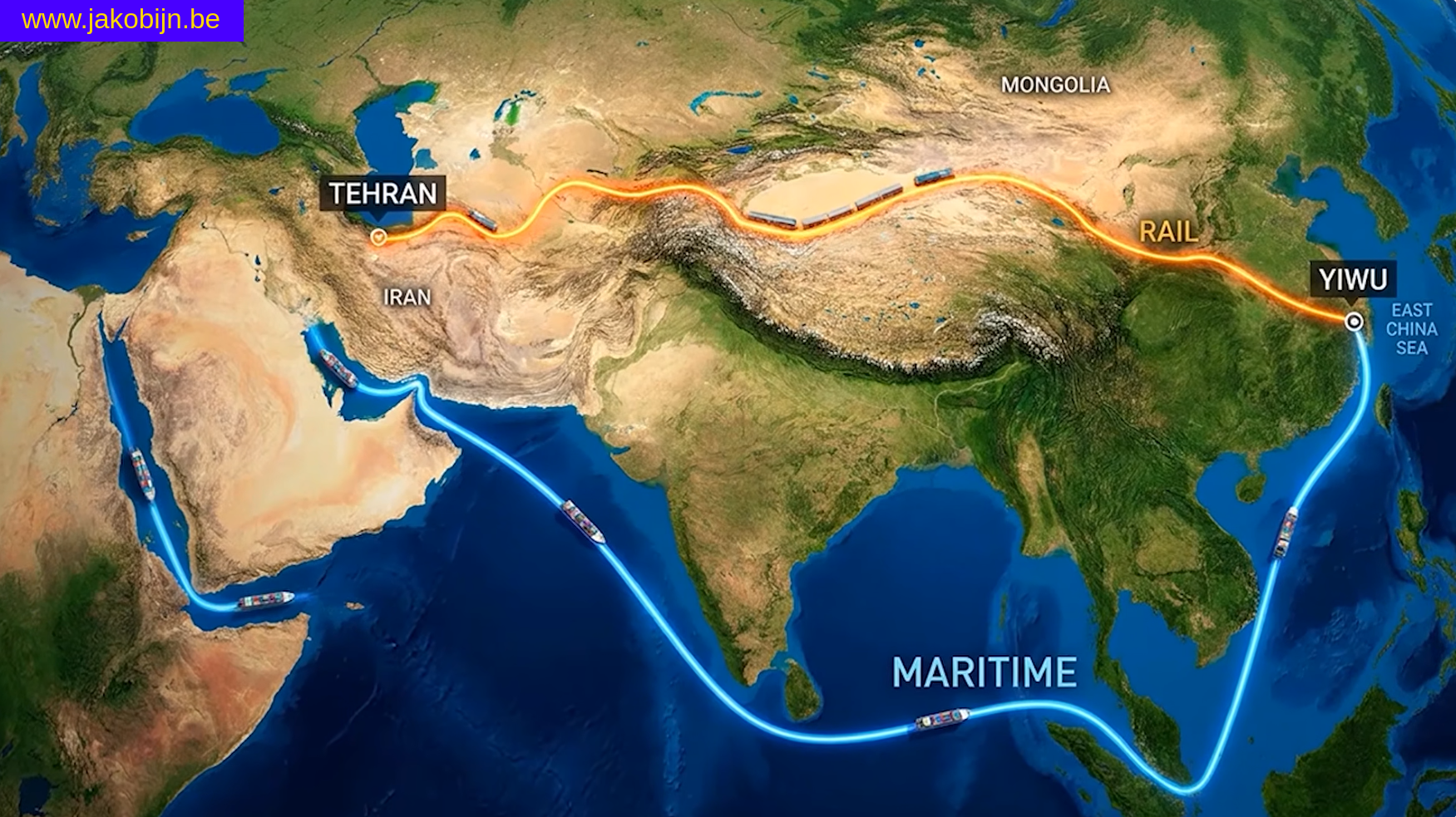
The transcript also points to the Red Sea and Bab el-Mandeb. Together, these waterways form important connections between the energy-producing regions of West Asia, the Indian Ocean and European markets. When several strategic chokepoints are threatened simultaneously, a risk emerges that extends far beyond the original conflicts.
A World of Contradictions
Ultimately, the entire discussion revolves around one fundamental contradiction. The United States wants to strategically constrain China, but at the same time needs China. It wants to reduce its industrial dependence, but cannot quickly replace Chinese supply chains. It wants to maintain technological leadership, but faces a Chinese industry that is advancing increasingly rapidly in various fields.
The AI sector also illustrates this paradox. Washington is trying to protect advanced technology and restrict Chinese access, while Chinese companies are simultaneously developing increasingly capable domestic models. The American challenge is therefore greater than simply the question of who builds the best AI model. The real question is whether the United States can rebuild its industrial base without abruptly disrupting the global economic interdependence that has shaped its own economy for decades.
No Real Solution, Only a Delay
According to Noh, the summit between Trump and Xi therefore mainly bought time. The major problems — trade, rare earths, technology, Taiwan and strategic competition — have not disappeared. A temporary trade agreement or a postponement of certain measures changes little about the structural relationship between the two countries. The American and Chinese economies remain interconnected, while their strategic interests appear to be moving further and further apart.
This makes the relationship exceptionally vulnerable. Both countries have an interest in economic stability, but at the same time are preparing for a prolonged power struggle. The question is therefore not only who will ultimately take the technological lead. The much more important question is whether Washington and Beijing will succeed in keeping their competition within manageable limits. For as long as the United States considers China its main threat while China remains indispensable to American industry, every attempt at confrontation will be constrained by the same economic reality.
China cannot simply be cut off from the global economy without also affecting the U.S. economy. And that is precisely where the paradox revealed by the Trump-Xi summit lies: Washington wants to restrain China, but for the time being it cannot afford a world without China either.
The future of the U.S.-Chinese relationship will therefore not be determined solely by presidential speeches or diplomatic dinners. It will be determined by factories, chips, energy, rare earths, AI systems, trade routes and industrial capacity. The technological power struggle is, in essence, a struggle over the economic infrastructure of the twenty-first century. And in that arena, China holds cards that Washington cannot ignore.