
Trump talks of peace, but walks the path to war with Iran. Netanyahu does the same
While the propaganda campaign about the Strait of Hormuz is faltering, the road does not lead to victory, but to a broader conflict zone
By Frank Dumon
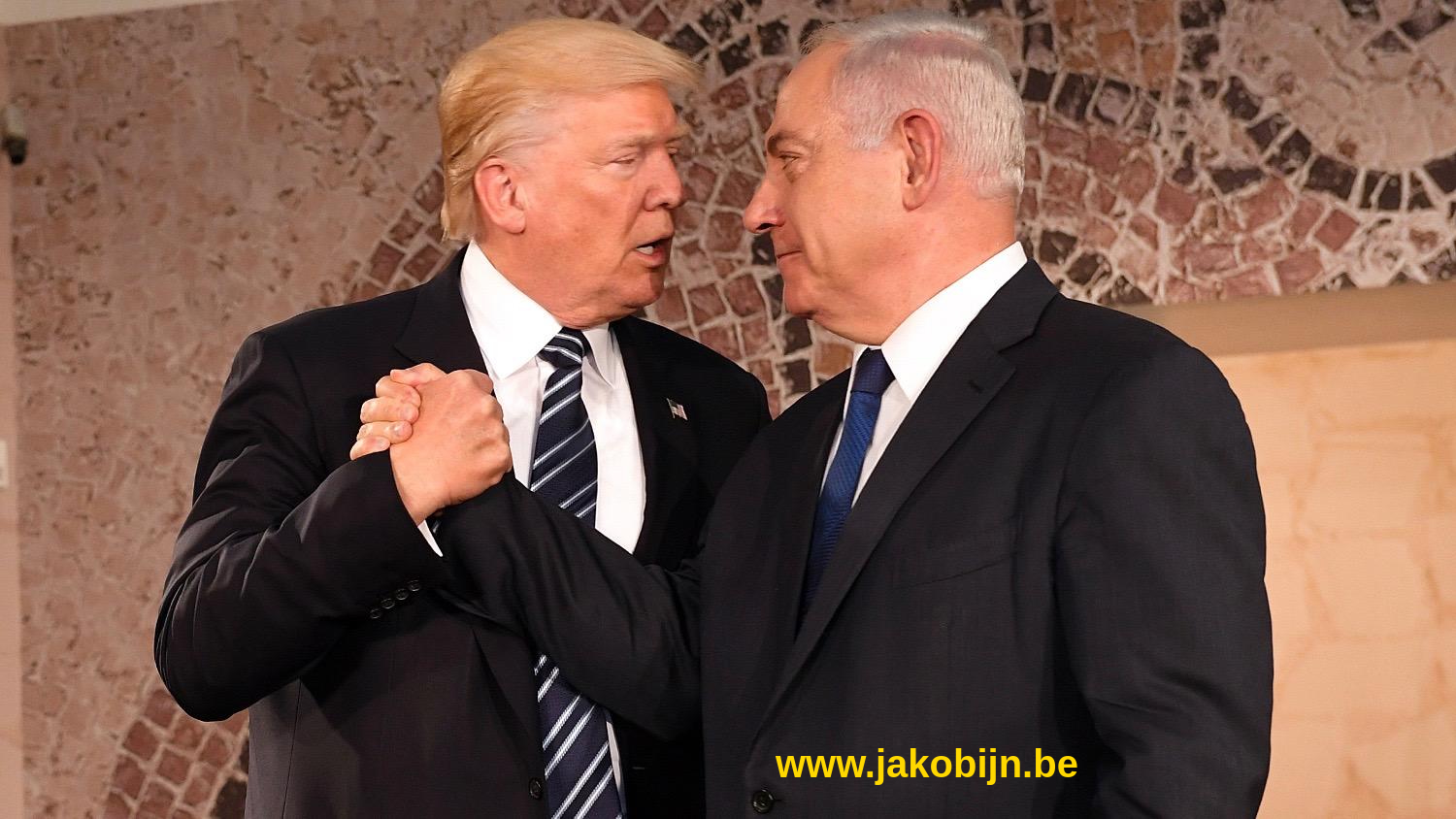
We are on a path to more war. Trump could (and should) have declared victory and simply withdrawn from Iran, but that would have painted him as a 'loser' (a prospect he cannot tolerate). Secondly, for whatever reason, he is in thrall to Netanyahu and Israel. Tucker Carlson addressed Trump directly in August 2024: "You will not win this war [with Iran]. You will lose it and it will destroy your presidency. Moreover, Netanyahu and the Zionist donor class do not love you. They hate you." "I know," was Trump's only response. That was then.
During his speech to the UN General Assembly, Trump stated that Iran must surrender after the American midterm elections, after which he will impose his ultimatum. If not, he will have to decide whether to "destroy" Iran quickly. Everyone who heard this interpreted it as a threat of nuclear weapons. Since then, Trump has repeatedly fallen back on this threat of destruction, with him and his closest associates continually emphasizing that Iran must never, ever possess a nuclear weapon.
In parallel, Netanyahu claims that Israel has fresh intelligence indicating that Iran is taking concrete steps toward a nuclear weapon. However, Israel's security and defense community states that there is no evidence whatsoever for this. "They are trying to develop nuclear weapons and the means to deliver them to every city in the US," Netanyahu repeated again this week to CBS.
The crux of the matter is that Trump wants a victory over Iran, but cannot find the kinetic 'silver bullet' to defeat them. The war narrative for the midterm elections has therefore shifted to the claim that Iran's grip on the Strait of Hormuz has been broken (Bloomberg 'confirms' that we are indeed back at nearly the level of pre-war oil exports) and that the American financial siege will bankrupt Iran within two weeks, according to Treasury Secretary Bessent.
Earlier this week, a large-scale propaganda campaign broke out to convince people that the Strait of Hormuz is in fact open. As Philip Pilkington writes:
"'80% open' was the talking point spread by Javier Blas of Bloomberg... it felt like the latest media operation about an oil glut: Oil is trading at nearly or more than $100 per barrel, yet the flow through the Strait is back at roughly pre-war levels. Call it Oil Glut 2.0."
Pilkington outlines how he conducted in-depth research to find out where this narrative came from. He notes that the analysis firm Kpler claims to use satellite imagery to count ships, but that Kpler itself admits that the usual verification procedures are impossible for ships trying to smuggle oil. Moreover, high-quality satellite imagery of active conflict zones is a highly sought-after geopolitical asset, and there are indications that Kpler does not have full control over the data provided.
Pilkington concludes that this new war propaganda is much less effective: "The 'Oil Glut 2.0' narrative simply did not land as well as the first iteration." He notes that oil prices this time fell by only $10 per barrel, compared to $30 in July, and that there is much more skepticism among insiders. Given the clear evidence of near-daily Iranian missile and drone attacks on ships violating Iranian regulations, this is not surprising.
This propaganda war is in any case more of a sideshow to the 'midterm elections' than to the war against Iran itself, which Trump has pinned on the nuclear issue. The story about the opening of Hormuz is intended to psychologically appeal to American voters' concerns about diesel prices and inflation in the run-up to the elections.
Trump has explicitly said he will attack Iran (if it does not surrender) after the midterm elections. But with this framing, the outcome of the elections themselves becomes a double-edged sword: if Trump does better than expected, he will likely see the outcome as an endorsement of his hardline stance. But if he does worse, would he not decide to 'double down' anyway?
Double down to do what? A renewed bombing campaign like in the earlier phase of the war is unlikely to lead to an Iranian surrender. However, the use of nuclear weapons touches on the most sensitive nerves and moral issues. Nevertheless, Elbridge Colby, Undersecretary of Defense for Policy, is working on modifying the US protocols for the 'use of nuclear weapons' to enable the use of tactical nuclear weapons as an 'intermediate step' toward the major attack.
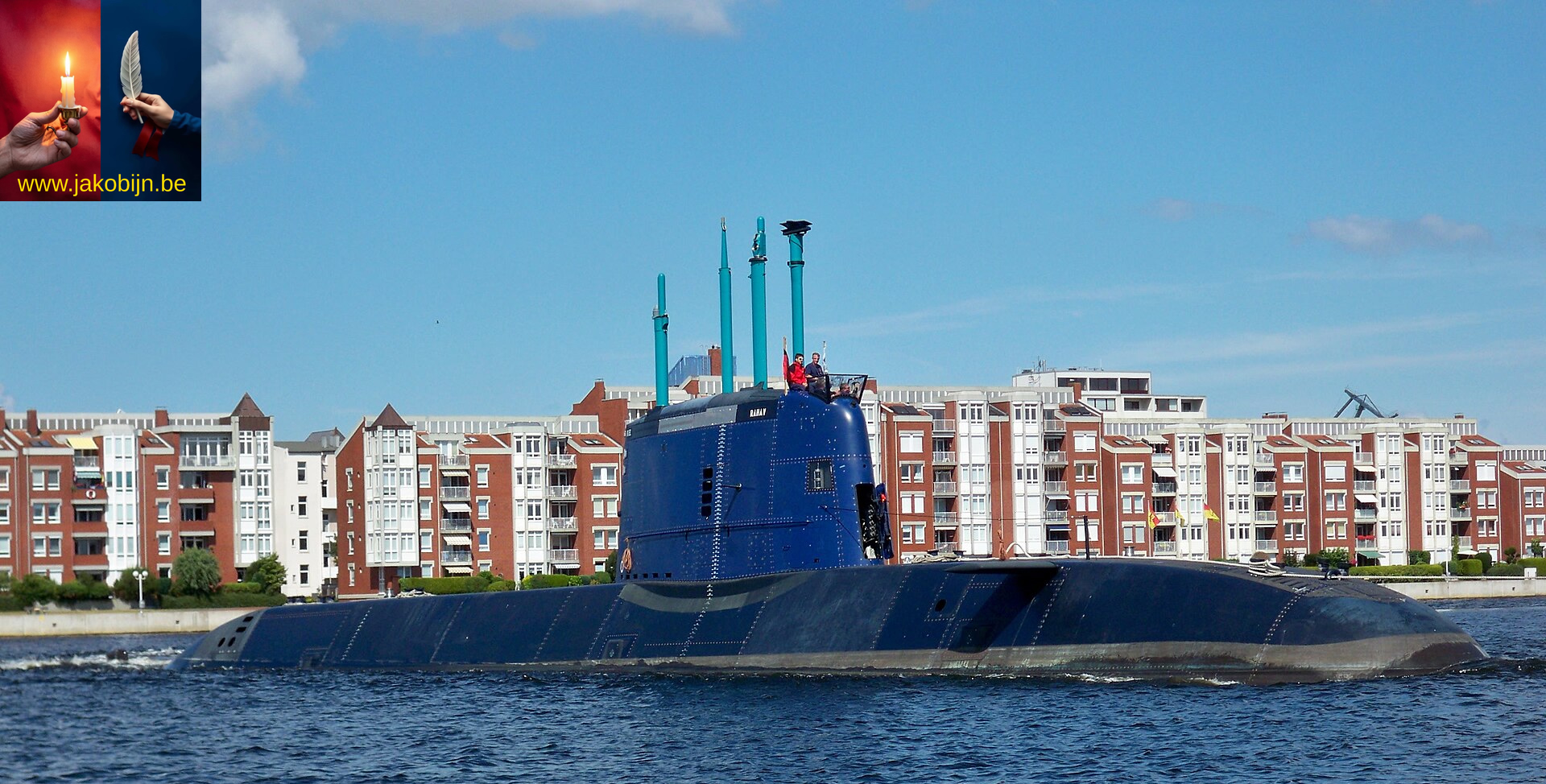
One way to circumvent public sensitivity around a US nuclear attack would be for Israel to be the first combatant to use nuclear weapons against Iranian targets. This would most likely happen from the German-supplied Dolphin-class submarines.
Correction
Some analyses incorrectly state that these submarines would have to surface to launch missiles, making them vulnerable. This is technically incorrect. Modern submarines, including the Israeli Dolphin class, are specifically designed to launch cruise missiles (Submarine-Launched Cruise Missiles, SLCMs) underwater. This ability to remain undetected and carry out an attack without surfacing is precisely their most important strategic advantage and forms the backbone of Israel's alleged 'second-strike' capability. The missiles in question are incidentally not the American Tomahawks, but the Israeli, nuclear-capable Popeye Turbo SLCM. The real vulnerability of this operation lies not in surfacing, but in the risk of acoustic detection and the intense satellite surveillance in the already tense waters of the region.
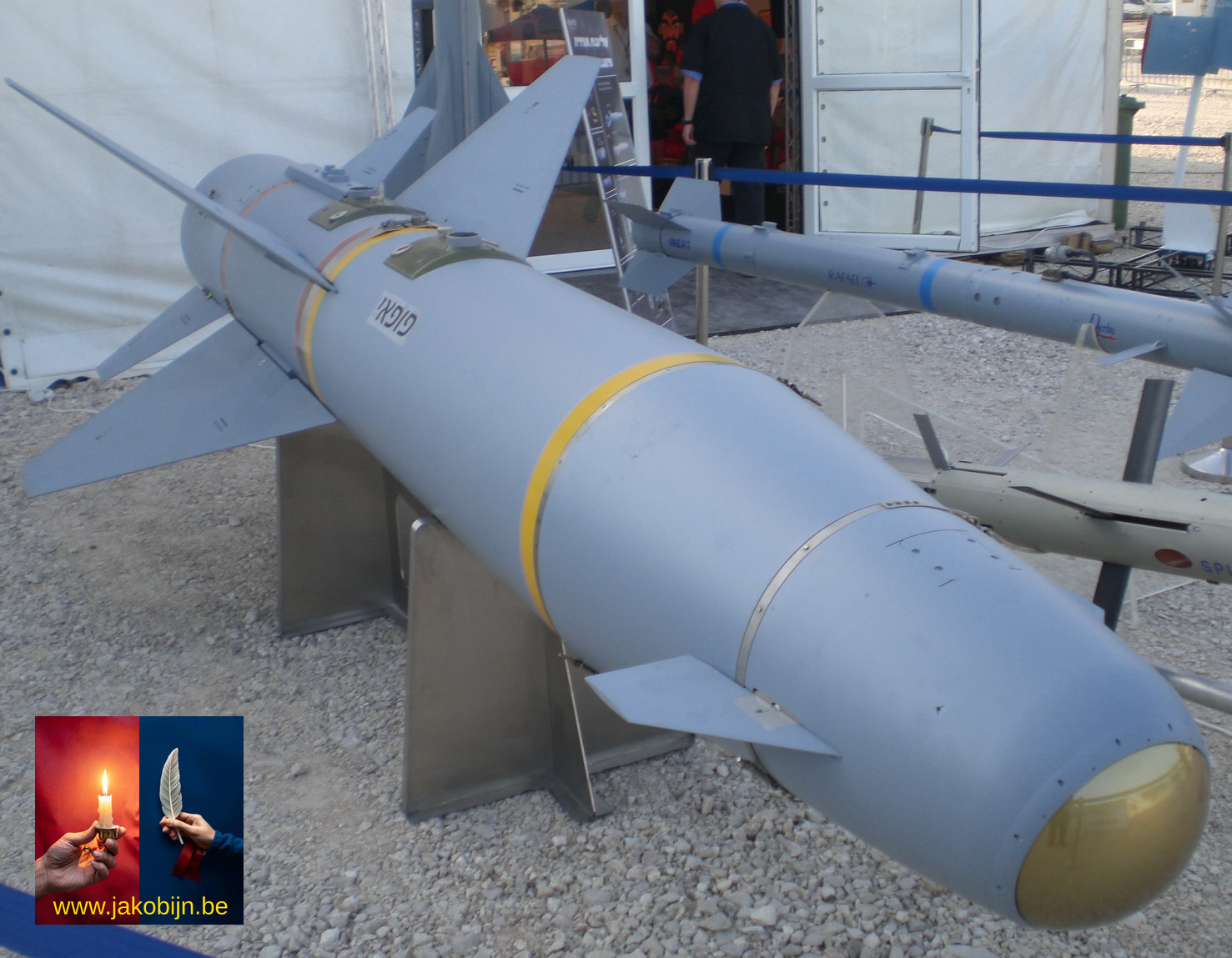 Popeye is an air-to-ground missile developed by the Israeli defense company Rafael Armament Development Authority. It is a weapon system consisting of the Popeye missile, which is launched from an aircraft, and a two-way communication system. The missile has a solid-fuel motor, a navigation system, and a remotely operated TV or infrared seeker. Communication with the weapon can be transferred to another aircraft after launch, allowing the launching aircraft to make its escape.
A lighter but more advanced version, the Popeye 2 nicknamed "Have Lite", weighing 1130 kg, was developed for use with smaller tactical fighter aircraft, such as the F-16 Fighting Falcon.
The "Popeye Turbo" is a larger version powered by a liquid-fuel turbofan with a greater range than the original Popeye. The Popeye Turbo is therefore not really a missile but rather a cruise missile. Its range is said to be more than 200 km.
And what does Iran do? Why would Iran wait until Israel and the US are fully ready for escalation after the midterm elections? Would Iran wait in the hope that the elections lead to a political paradigm shift in the US? Or would Iran try to preempt the attack plans of the US and Israel?
If this next phase of the war were to break out, which now seems inevitable, it will spread much more widely and deeply than the previous rounds. This will not only change the political geography of West Asia, but probably also fundamentally alter the attitude of Russia and China toward the US.
Sources and technical references:
- NTI - Israel Submarine Capabilities: Confirms that Dolphin-class submarines can remain underwater for 30 days and are equipped to launch torpedoes and cruise missiles.
- US Naval Institute - Dolphin-class Submarines: Israel's Undersea Arsenal: Discusses the 650-mm tubes adapted for launching missiles, confirming the underwater launch capability.
- Army Recognition - Dolphin-class submarine technical specs: Specific mention of the capacity to carry and launch up to 16 torpedoes and Popeye Turbo SLCMs underwater.
- Wikipedia - Submarine-launched cruise missile: Confirms that the primary advantage of submarines over surface ships is the ability to remain undetected and launch while submerged.