
The Tragedy of Palestine and the West's Geopolitical Blunder: From Mafioso War Economies to the New Silk Road
By Frank Dumon
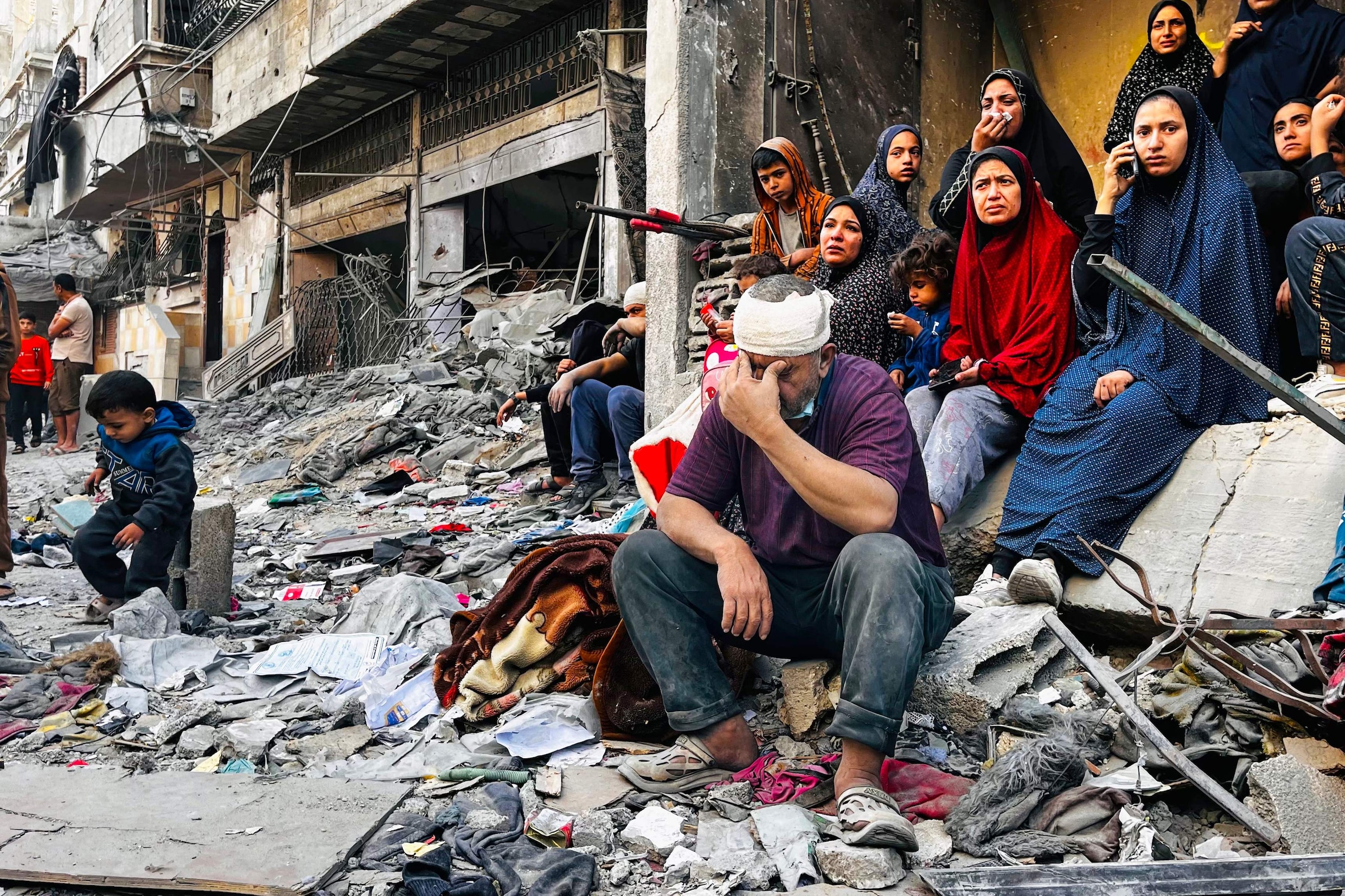
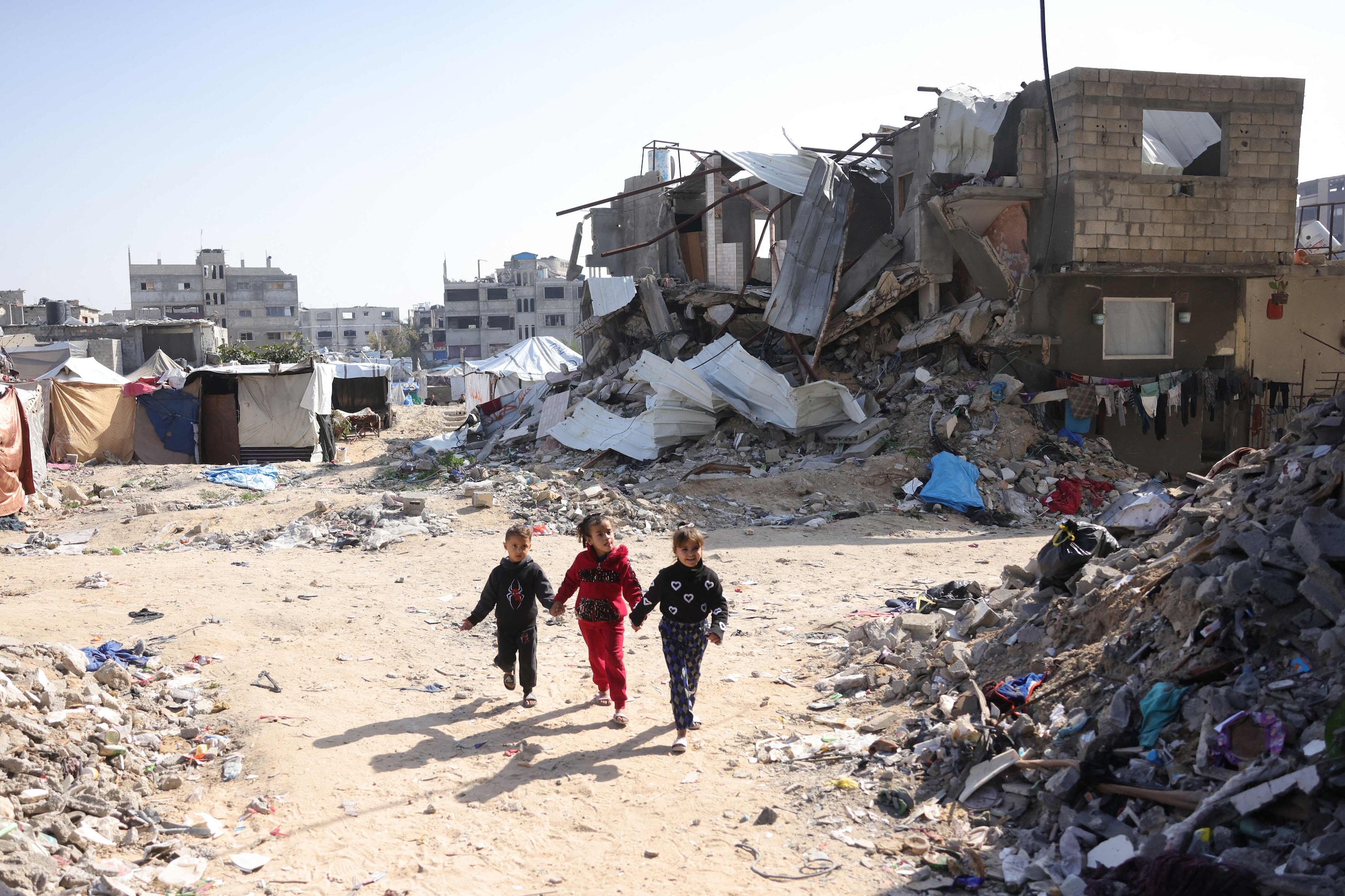
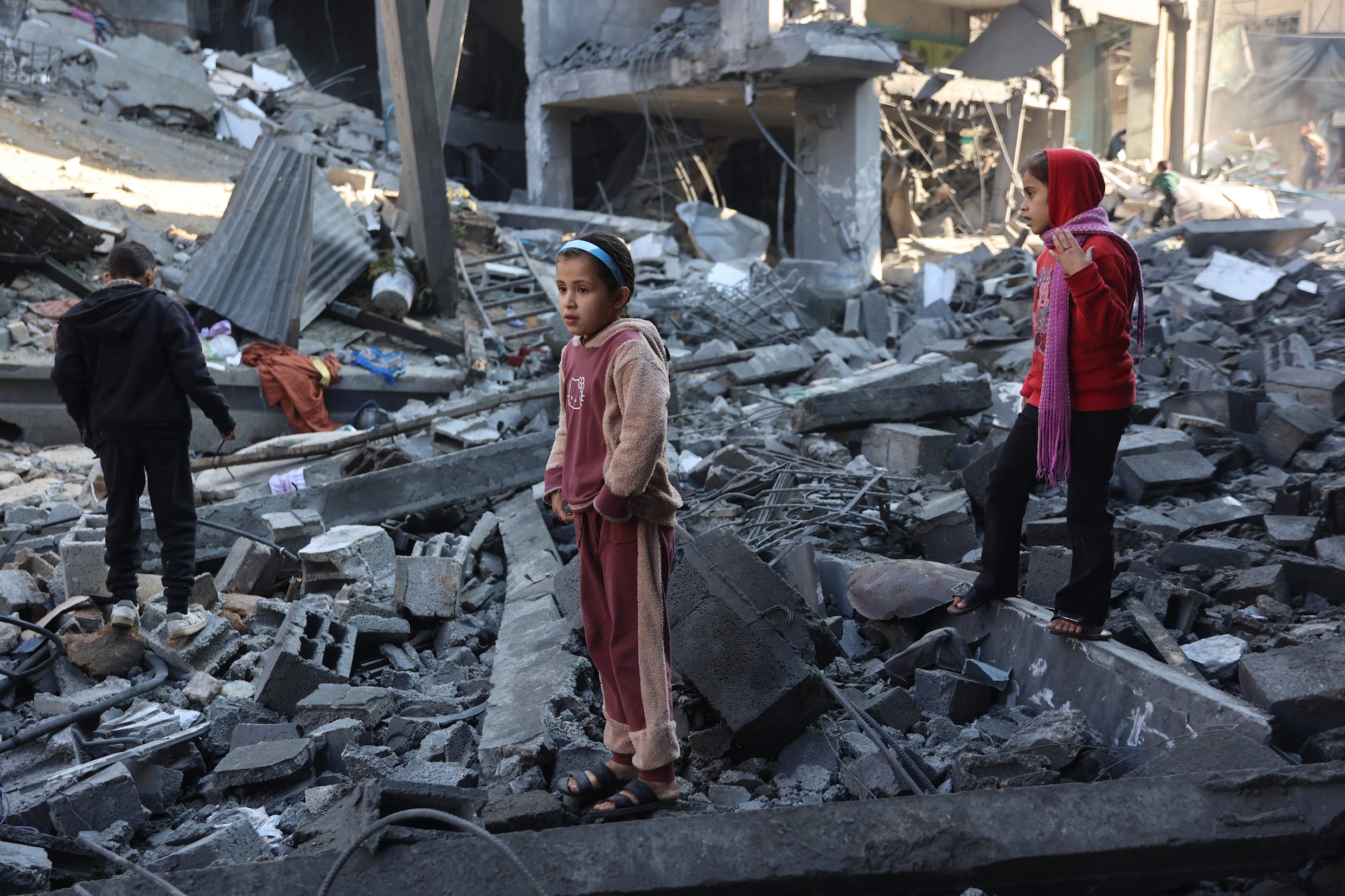
While Western media lose themselves in endless distractions and political shadow boxing, reality in Gaza is dying a silent, horrific death. Every day, 30 to 40 innocent Palestinians are killed. The human misery is so immense that words fail us. What is happening there is not merely a local tragedy; it is the symptomatic terminus of a failing Western hegemony. Black market prices have become grotesque. Desperate Palestinians pay $200 for a dozen eggs. There is talk of a mafioso war economy in which not only Israel but also certain Egyptian actors make fortunes from the pure misery of a people fighting for a little clean water and electricity.
We are fixated on side issues and ignore the core of the matter. The entire situation in the Middle East revolves around one fundamental question: Palestine.
The Core of the Conflict: A Forgotten Occupation
Iran, Hamas, Hezbollah, and the Houthis are consistently portrayed in the Western press as mere 'proxies' or terrorists. But those who take history and international law seriously see a different reality. They are allies fighting against an unbearable occupation. The entire Middle East has become a powder keg because the roots of the conflict – the denial of a viable Palestinian state and the decades-long humiliation of a people – have never been resolved.
Under Benjamin Netanyahu, Israel has only one insane goal: a war with Iran and the definitive subjugation of the region. And they have lost. Global public opinion has turned; polls in 36 countries show that 67% of the population now considers Israel's actions fundamentally wrong. Israel is caught in an existential crisis, trapped between the hard reality of international isolation and the brutal reality of bankrupt American domestic politics.
Netanyahu was born the son of Tzila Segal (August 28, 1912; died January 31, 2000) and Benzion Netanyahu (born Benzion Mileikowsky on March 25, 1910; died April 30, 2012). His paternal grandfather, Rabbi Mileikowsky, emigrated from what is now Poland to the British Mandate of Palestine in 1920 and changed the family name to Netanyahu.
Iran's Three 'Nuclear' Weapons
Israel refuses to accept the new strategic reality, but Iran has effectively extended its deterrence to Lebanon and Gaza. Any attack on the 'axis of resistance' is answered as an attack on Tehran itself.
The crucial geopolitical concept: Iran effectively possesses three 'nuclear' weapons that make military victory for the US and Israel impossible.
1. The Strait of Hormuz: Control over this vital artery of world energy.
2. The Heartland: The deep strategic alliance with Russia and China, the modern embodiment of Mackinder's heartland theory.
3. The Nuclear Threshold: The actual nuclear capacity that the country possesses, or is building at this very moment. If necessary with help from North Korea or Pakistan.
The US and Israel are desperately trying to maintain their grip on the region by legally and structurally intertwining American military and intelligence services with Israel. Through obscure legislative proposals such as 'Section 224', American oversight of military deliveries is completely undermined. Thus, without any democratic control, Israel becomes de facto the 51st state of America in terms of security and intelligence. It is a perfidious and dangerous move that runs counter to the will of 60% of the American population, which increasingly wants to distance itself from this unconditional support.
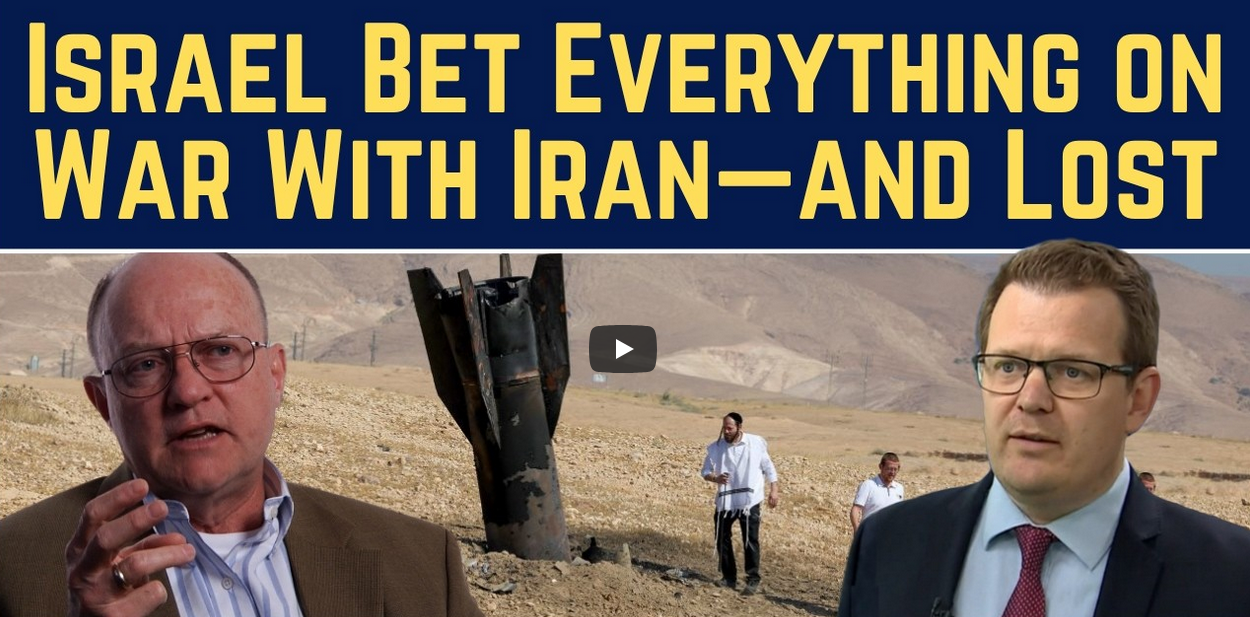
Colonel Lawrence Wilkerson is a retired colonel in the US Army and former chief of staff to the US Secretary of State. He discusses with Glenn Diesen in a YouTube video the deep problems facing Israel and the US. Israel responds to declining support in the US through Section 244, which will legally anchor Israel in the US military-industrial complex.
The Decline of Maritime Hegemony
What Western leaders completely miss, however, is the macro-historical shift taking place right under their noses. For the past 500 years, the West has based its dominance on maritime power: control over seas, narrow straits, and trade routes. But this era is coming to an end.
 As historian Peter Frankopan emphasizes in his analysis of the 'New Silk Road', power is shifting to the continent. Russia and China are building an enormous, autonomous network of pipelines, railways, and land corridors. This infrastructural backbone makes them immune to Western naval blockades. While the West still tries to impose sea sanctions and board Russia's 'shadow fleet' – a desperate act of a fading sea power – the great powers of Eurasia are building an economic fortress that does not depend on the sea.
The West is trapped in the paradigms of the previous century, while the East is laying the infrastructure of the next century. The EU's attempts to militarize maritime routes are not only pointless but invite piracy and retaliation in a multipolar world where the West is losing control of the oceans.
Europe's Sleepwalk Toward the Abyss
Nowhere is this intellectual and strategic bankruptcy more clearly visible than in Europe. European political leaders – from Starmer in the UK to Macron in France and Merz in Germany – behave like historical fools. They are sleepwalking toward catastrophic war.
In Ukraine, Putin is currently still holding back. He is keeping the 'water behind the dam' contained, amidst a Russian Security Council that is increasingly loudly calling that 'enough is enough' and that NATO territory is being used for attacks on Russia. But European leaders, blindly driven by ideology and Atlantic subservience, continue to provoke. They do not understand that they are playing with the fire of Article 5 and nuclear escalation.
America will never help Europe after their foolish and ongoing provocations. Their arsenal is almost empty anyway, and Europe's is virtually non-existent. No young American will fight for Trump; they would rather move to Canada or Mexico. The manipulated Western media have virtually stopped their coverage of losing Ukraine, but the danger is greater than ever. Europe risks a nuclear conflict over a proxy war it cannot win, while its own economy collapses due to severed ties with Russia and Asia.
The Illusion of Hegemony
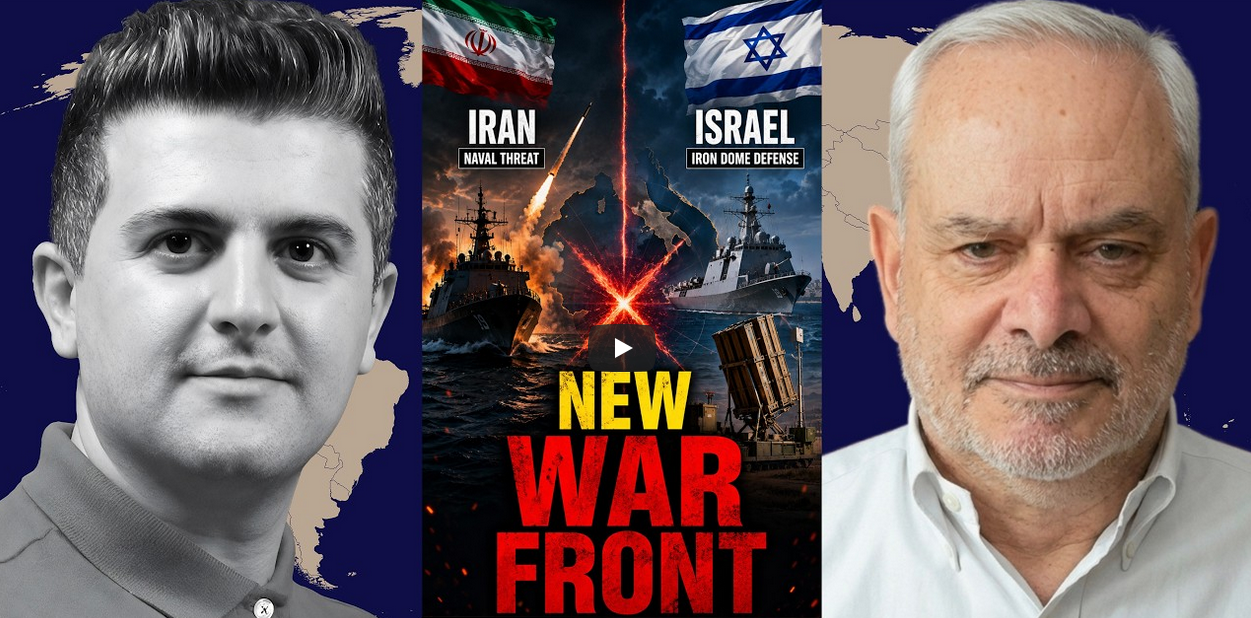
In a recent and revealing interview with presenter Nima Alkorshid, former Swiss intelligence officer and UN strategist Colonel Jacques Baud dissects the current impasse in the Middle East. His analysis offers a merciless view of the West's strategic errors, the shifting power relations in the region, and the way domestic political interests hold the international landscape hostage. What follows is a critical reflection on the four pillars of Baud's argument: the erosion of international law, the underestimation of Iran, the role of personal power preservation, and the strategic bankruptcy of Western capitals.
The Selective Application of International Law
One of the most painful observations in current geopolitical reality is the systematic contempt for international law by the United States, Israel, and their main European allies – notably the United Kingdom, France, and Germany. International law is no longer seen by these actors as a binding framework, but as an instrument applied selectively.
This becomes painfully clear in the Lebanon crisis. The UN force UNIFIL, originally established to maintain peace and protect Lebanon's sovereignty, has been reduced to a toothless spectator. Because Western countries, including France as a major troop contributor, designate Hezbollah exclusively as a terrorist entity, an impartial peace mission has been made impossible. The West thus chooses to circumvent international legislation when it concerns their ally Israel, completely undermining the credibility of the rules-based world order.
Iranian Resilience and the American Miscalculation
The American and Israeli strategy in the region is built on a fundamental and disastrous miscalculation: the assumption that Iran would suffer the same fate as Iraq. Washington was under the illusion that a swift, overwhelming campaign would cause the Iranian regime and society to collapse within days. It was a severe underestimation of Iranian intelligence, strategic depth, and the resilience of its population.
In reality, Iran has not cracked but has grown into a regional power that has redrawn the balance in the Middle East. By employing a credible deterrence strategy, Tehran has demonstrated that it is not impressed by the American military presence. The United States, accustomed to asymmetric wars against weaker opponents, proved unprepared for a state that possesses the strategic depth to make the costs of conflict unacceptably high for the US and its regional allies.
Domestic Power Preservation as a Driver for Escalation
Why do tensions continue to escalate when strategic goals have become unattainable? According to Baud, the answer lies not in state interest, but in two individuals: Benjamin Netanyahu and Donald Trump. The war dynamic is maintained by the necessity of these individuals to remain in power and escape domestic legal and political pressure. Netanyahu drags the US into a conflict he cannot win alone, but he needs the American military presence as a shield. At the same time, Israel realizes it is encountering increasing resistance worldwide. To counter this growing international isolation and legitimacy crisis, the Israeli government has released an unprecedented communication budget of no less than $750 million. This is a clear indication of how aware Tel Aviv is that its global image is fundamentally damaged, and it is trying to bend this with financial means.
The 'Paper Tiger' and Europe's Strategic Emptiness
Donald Trump continues to proclaim that America is great again, but facts on the ground show a different picture. The United States has been reduced to a 'paper tiger' in the region. Their military bases, once symbols of untouchable power, prove vulnerable and no longer offer their host countries effective protection. The myth of American invincibility is crumbling.
The European Union suffers the same fate. The EU, and particularly the London-Paris-Berlin axis, operates with arrogant ignorance and a lack of strategic autonomy. European leaders make decisions not based on sober, intellectual analysis (brain-driven), but driven by emotion, ideological dogmas, and gut feelings (guts-driven). They ignore warnings from their own intelligence services and blindly follow the American course, without this serving any European national interest. This reflexive and strategically empty attitude testifies to a deep lack of political wisdom in current European capitals.
Conclusion: The Bill Is Being Presented
The tragedy of Palestine is the mirror in which the West sees its own moral and strategic bankruptcy.
As long as we refuse to correctly characterize the conflict – as a struggle of an occupied people against an occupying power – we will stack error upon error. The unipolar American dream is over. The shift of power to the East is happening faster than most dare to predict. The US and their European vassals will be reduced to a shadow of their former selves. The only way to stop this decline is to face reality: the Middle East will not find peace as long as the Palestinian issue remains unresolved, and the West will lose its relevance as long as it clings to a maritime hegemony long overtaken by history.
The conflicts in the Middle East are the death throes of an old, unipolar paradigm. The West, led by leaders often more concerned with domestic survival than long-term strategy, is losing its grip on the world. Iran and other regional actors have shown that a strategically thoughtful approach is more effective than brute force. As long as the West refuses to apply international law consistently and continues to rely on intuition rather than intellect, it will further accelerate its own irrelevance.