
The Shift of Prosperity: Why Eastern Europe is Rising While Western Europe Declines
By Frank Dumon
Introduction: A Vision from Lozère
Ten years ago, during a relaxed afternoon of bridge in the sun-drenched town of Langogne in Lozère, I shared an anecdote and a geopolitical forecast with some good friends (Georges Brunel and Monique & Claude Durand). I argued that the prosperity of Western Europe would inevitably shift eastward. This shift would not occur randomly, but would unfold along a specific, strategic axis: the connection between the Chinese-acquired port of Piraeus in Greece and the port of Gdańsk in Poland. At the time, this observation was dismissed by some as an interesting but far-fetched speculation.
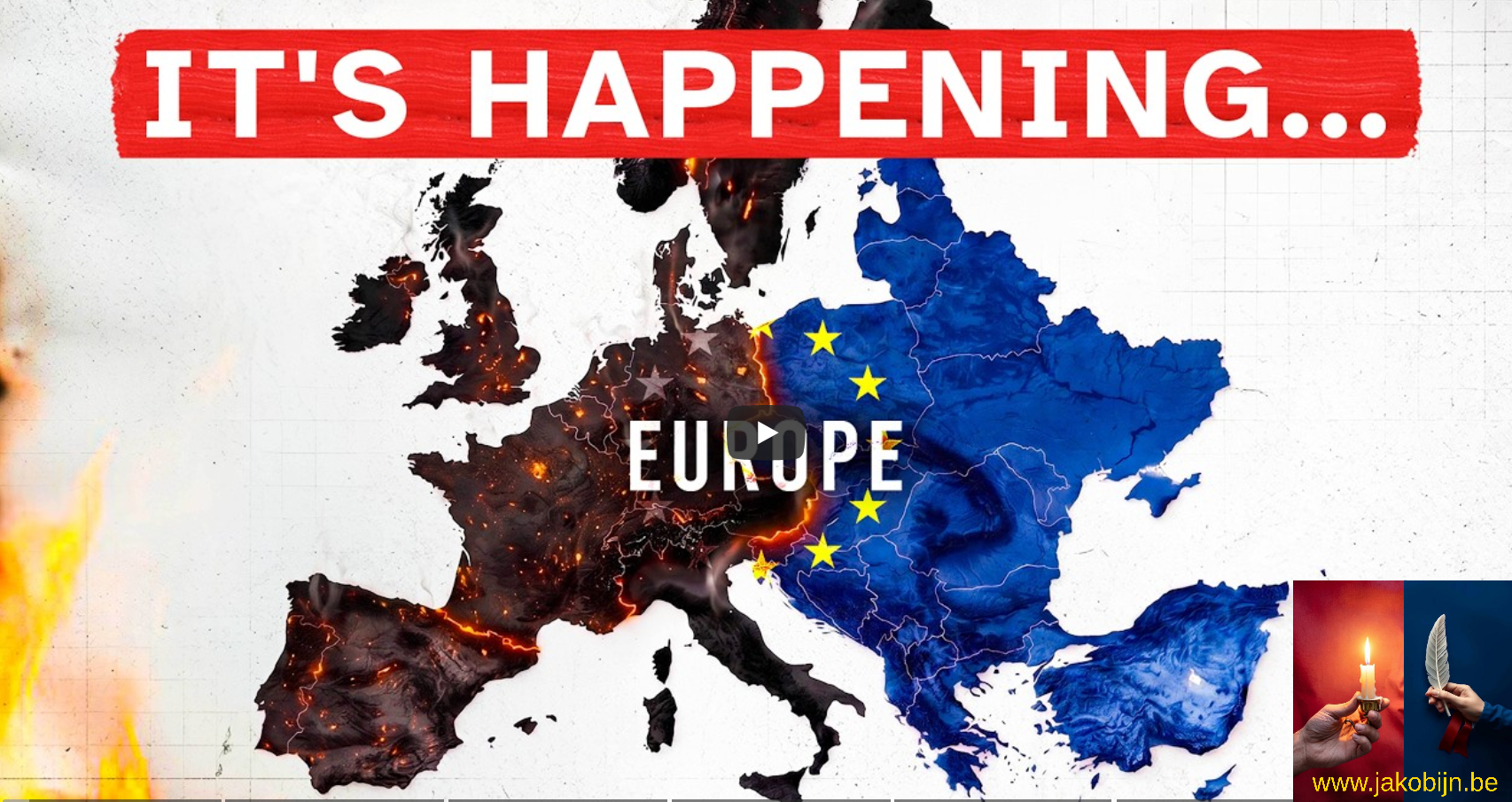
Today, in 2026, this vision is, however, amply confirmed by hard economic data, demographic shifts, and a fundamental reorientation of the continent's security architecture. The transcript of recent analyses, such as that of The Finance Bureau, confirms what has been increasingly palpable: Western Europe is collapsing under the weight of its own ideological choices, while Eastern Europe is rising with unprecedented pragmatism and growth power.
This analysis aims to verify this shift, substantiate it with facts, and complement it with sharp geopolitical reflections. We will look not only at the numbers but also at the historical corrections taking place, including the increasing isolation of the Russophobic Baltic states and the inevitable reintegration of historical areas in Western Ukraine within the spheres of influence of Poland, Hungary, and Romania.
The Economic Reality: A Reversal of Fortunes
The economic dynamics in Europe have fundamentally changed. Where Western Europe was the benchmark for prosperity and stability for decades, it is now Eastern Europe that has become the engine of growth. A milestone symbolizing this is the fact that Poland officially crossed the threshold of a $1 trillion GDP in 2025, making the country the 20th largest economy in the world [[1]]. This is no coincidence, but the result of consistent, long-term oriented economic policy. Poland is on track to even surpass Switzerland in economic size by 2028, and has already left countries like Belgium, Sweden, Ireland, and Austria behind [[4]].
Compare this to the situation in Germany, the country that once formed the backbone of the European project and where the far-right Alternative for Germany (AfD) today achieved its best-ever election result in the state elections in Saxony-Anhalt, with over 40% of the vote, leaving all other parties far behind.
German industrial production is shrinking, with a year-on-year decline of 0.8% in recent periods [[8]]. The most poignant example of this is Volkswagen, which is in the midst of a historic restructuring with 35,000 planned layoffs. This is the direct consequence of a self-destructive energy policy: the premature closure of nuclear power plants, combined with the dependence on cheap Russian pipeline gas that has been unavailable since 2022. Germany is now trying to correct this mistake with hundreds of billions in infrastructure spending, but bureaucracy and slow implementation prevent this money from effectively stimulating the economy.
Additionally, we see a remarkable reversal of migration flows. For years, the "Polish plumber" was a familiar feature of the Western European, and particularly British, labor market. Now the tide has turned. In the year up to mid-2025, approximately 25,000 Poles left the United Kingdom, while only about 7,000 returned, resulting in a net loss of nearly 18,000 people in one year [[21]]. Poles are attracted by the rising standard of living, a clean and safe environment, and a homeland that actively facilitates return programs. The British economy, marked by the aftermath of Brexit and a decline in quality of life, is losing its appeal [[27]].
The Geopolitical Axis: From Piraeus to Gdańsk
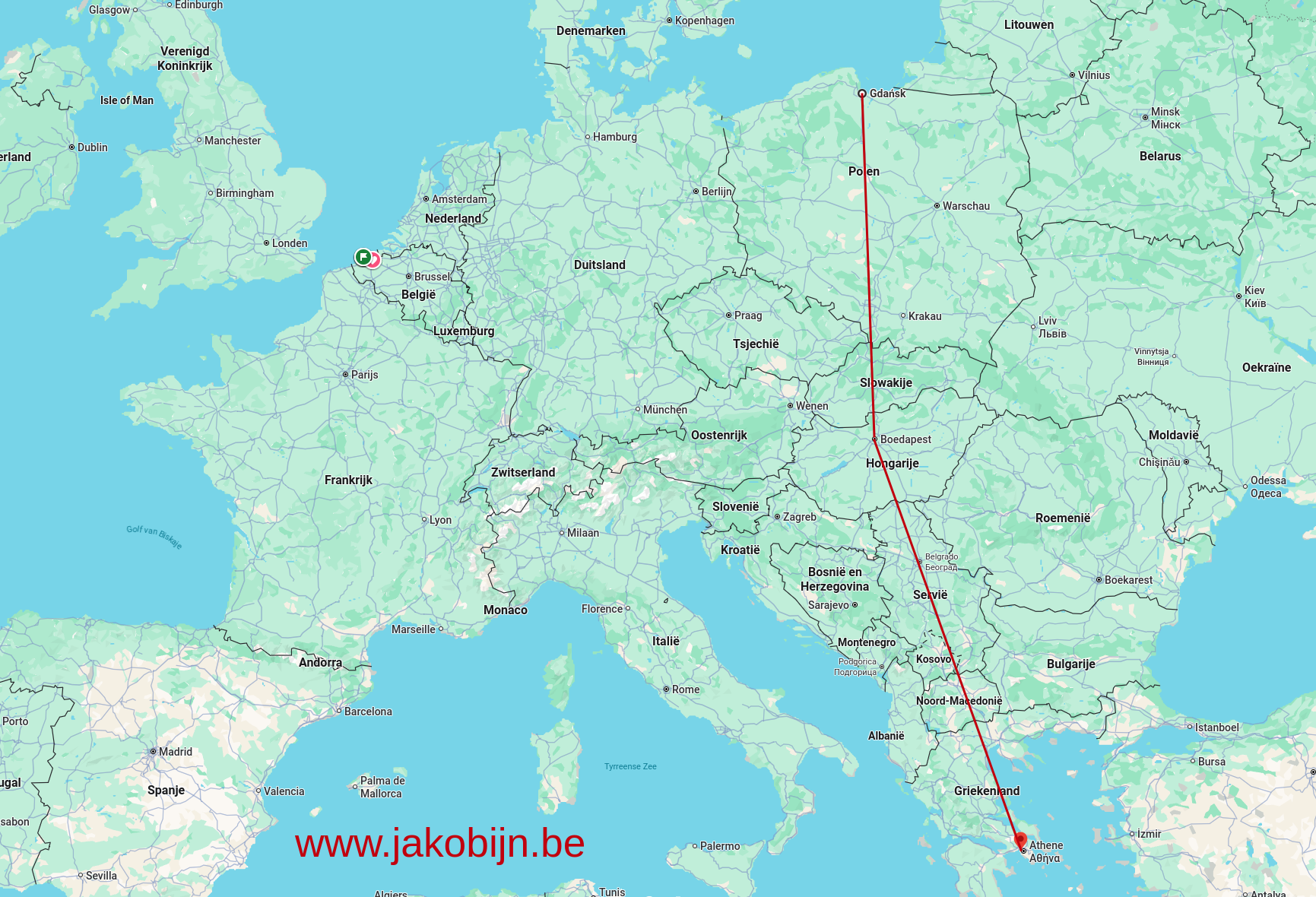
My forecast from Langogne regarding the axis from Piraeus to Gdańsk is today a geopolitical reality. This axis forms the backbone of the new logistical and economic connections between Asia and Europe, largely facilitated by China's Belt and Road Initiative (BRI).
The port of Piraeus in Greece, in which the Chinese state-owned company Cosco has acquired a controlling stake, has grown into one of the most important maritime hubs in Southern Europe [[41]]. From Piraeus, goods are transported northwards via rail and road networks, straight through the Balkans and Central Europe, heading towards the north. Antwerp and Rotterdam are taking hits.
The endpoint of this axis is the port of Gdańsk in Poland. Gdańsk functions as a crucial transport hub for a significant portion of the trade between China and Poland, directly benefiting from the investments and logistical networks being built via the New Silk Road [[38]]. This axis bypasses traditional Western European ports like Rotterdam or Hamburg, which suffer from bureaucracy, high costs, and declining competitiveness. Prosperity no longer flows from west to east but follows the infrastructure proactively embraced by Eastern European countries. Poland and its neighbors have understood that embracing these trade flows, without being blinded by ideological objections, is the key to economic sovereignty.
Security and Defense: Eastern Europe Takes the Lead
While Western Europe continues to debate what it can afford, Eastern Europe acts. Poland is the prime example of this new reality. In the 2026 budget, Poland allocates a record amount for defense, amounting to 4.8% of GDP, the highest percentage within NATO [[15]]. This translates to about 46.8 billion euros, an investment that is not only put into foreign weapons but also into building a domestic defense industry [[18]].
A concrete example of this is the collaboration with Hyundai Rotem for the assembly of K2 heavy tanks in Poland, with production scaling up towards 50 tanks per year by 2028 [[17]]. Additionally, the first F-35 fighter jets are being integrated into the air force base in Krzesiny, near Poznań. By the end of this decade, the Polish tank fleet is expected to comprise more than 1,100 vehicles, which is more than the combined fleets of Italy, France, Germany, and the United Kingdom. Poland is not only building its own security but is also acting as the de facto shield of the entire European continent.
This decisiveness stands in stark contrast to the hesitation in the West. France is struggling with a national debt of 116% of GDP and a political system paralyzed by continuous government crises and budget emergencies. The United Kingdom suffers from chronic productivity problems and trade friction that is hollowing out its own labor market. Europe's security architecture is no longer dictated from Paris or Berlin, but from Warsaw.
The Migration Paradox and the Labor Market
Perhaps the most tangible evidence of the failing Western European model is its approach to migration. For decades, Western Europe has embraced large-scale, low-skilled migration from culturally distant societies, often at the expense of social cohesion. In Germany, non-Germans accounted for about 42% of all registered criminal suspects in 2024, a percentage disproportionately high relative to their share of the population. In Sweden, the percentage of people who feel unsafe on the streets at night has risen from 28% in 2014 to 54% in 2025, and half of all fatal violence now involves firearms.
Poland has chosen a radically different, pragmatic route. The country has taken in nearly a million Ukrainians under temporary protection, amounting to roughly 4% of the population. Instead of parking these people in language courses and integration trajectories for years, Poland gave them almost immediate access to the labor market. The result is stunning: the employment rate of Ukrainian refugees in Poland is around 65% to 78%, the highest figure within the OECD [[29]], [[37]]. In comparison, Germany, which also hosts about 1.2 million Ukrainians, has a rate around 18% to 51%, depending on the duration of stay [[35]], [[37]].
This reality has shifted the political gravity within the European Union. The EU's new Migration and Asylum Pact, which became fully effective in 2026, now reflects the tougher, more realistic approach that Eastern Europe has advocated for years: faster border procedures, stricter screening, and an emphasis on return. Poland successfully secured an opt-out from mandatory relocation, and countries like Germany and France are now implementing emergency measures for internal border controls that were once considered taboo. Eastern Europe did not just win the debate; it dictated the policy of the West.
Geopolitical Reorientation: The Baltic States and Western Ukraine
As the geopolitical maps are redrawn, we must also look at the long-term dynamics in the peripheral regions. A notable development is the increasing self-marginalization of the Baltic states (Estonia, Latvia, and Lithuania). Their extremely Russophobic, ideologically driven foreign policy risks sidelining them in the long run. By fixating on a confrontational course without considering the broader, pragmatic interests of their regional neighbors, they risk squandering their diplomatic influence in favor of countries that pursue a more nuanced, stability-oriented approach [[58]], [[61]].
At the same time, a historical correction is unfolding in Western Ukraine. Ukraine's current borders are largely an artifact of post-war settlements. The regions in the west of the country share deep historical, cultural, and ethnic ties with their western neighbors. Galicia has been under Austro-Hungarian and later Polish influence for centuries; Transcarpathia has strong historical ties to Hungary; and parts of northern Bukovina and the region around Chernivtsi exhibit strong Romanian cultural and demographic characteristics [[53]], [[55]].
As central authority in Kyiv weakens under the pressure of the ongoing war and economic exhaustion, these regional identities will inevitably revive. Poland, Hungary, and Romania are not only the most logistical and economic pillars of support for these regions but will also, in a process of gradual geopolitical reorientation, reclaim their historical spheres of influence and, to some extent, their former territories in Western Ukraine. This does not necessarily have to be a formal, violent annexation, but rather a de facto reintegration via economic unions, autonomous governance structures, and cultural revival, supported by the local population that has historically felt more connected to Warsaw, Budapest, or Bucharest than to Kyiv. This is an unavoidable historical correction after a century of artificial borders and Western interference that ignored the natural order of the region.
Additional Reflections and Conclusion
The shift of prosperity and power from Western to Eastern Europe is not a temporary fluctuation but a structural correction. Western Europe has for decades lived on the interest of its glorious past, while simultaneously undermining the foundations of its own competitiveness through ideologically driven energy policies, naive migration policies, and a condescending attitude towards its eastern neighbors. The countries of Central and Eastern Europe were told at the time to "catch up" and follow the rules of the West without having negotiated them. They learned those lessons but ultimately decided to go their own way.
This dynamic shows remarkable parallels with the rise of Southeast Asia. Just as that region has emerged after a "century of humiliation" and Western aggression, Eastern Europe is now restoring its agenda after decades of being treated as a guinea pig or a buffer zone for the West. The axis from Piraeus to Gdańsk is the physical manifestation of this new reality: a corridor of growth, connected to the dynamism of the Pacific Ocean, and independent of the stagnation of the Atlantic coast.
The conclusion is clear: the countries that for decades were regarded as laggards have correctly assessed the great historical callings. They have chosen demographic realism, economic pragmatism, and military self-reliance. Western Europe would be wise not to lecture but to learn from the East. The future of Europe is no longer determined in Brussels or Berlin, but along the new axes of power that have formed in the east of the continent.
List of Sources
- Poland's GDP growth and $1 trillion milestone: Poland crossed the symbolic $1 trillion GDP threshold in 2025, making it the 20th largest economy in the world. Source: ICSB Expert Analysis & Wikipedia Economic Data [[1]], [[3]].
- German industrial decline and Volkswagen: German industrial production fell by 0.8%, and Volkswagen announced it would cut more than 35,000 jobs in Germany by 2030 as part of a major restructuring. Source: Automotive Manufacturing Solutions & CNN [[8]], [[9]].
- Polish defense spending: Poland plans a record defense budget of 4.8% of GDP for 2026 (approximately 46.8 billion euros), including domestic production of K2 tanks with Hyundai Rotem and the integration of F-35s. Source: Notes from Poland & PAP [[15]], [[18]].
- Reverse migration from the UK: In the year up to mid-2025, approximately 25,000 Poles left the UK, while only about 7,000 arrived, resulting in a net departure. Source: TVP World & UK ONS Statistics [[21]], [[26]].
- Employment of Ukrainian refugees: The employment rate of Ukrainian refugees in Poland is around 65-78% (the highest in the OECD), compared to 18-51% in Germany. Source: Economists for Ukraine Working Paper & UNHCR [[35]], [[37]].
- Geopolitical axis Piraeus-Gdańsk: China's Cosco has a controlling stake in the port of Piraeus, while Gdańsk serves as a crucial transport hub for trade within the Belt and Road Initiative. Source: Centrum Balticum & Foreign Policy [[38]], [[41]].
- Geopolitical dynamics of the Baltic states and Western Ukraine: Analyses point to the risks of isolation for the Baltic states due to an overly rigid stance, and highlight the deep historical and kin-state ties of Poland, Hungary, and Romania with Galicia, Transcarpathia, and Bukovina respectively in Western Ukraine. Source: Hungarian Geographical Bulletin & Academia.edu [[53]], [[58]].