
The Relentless Mirror of Western Hypocrisy - James Baldwin
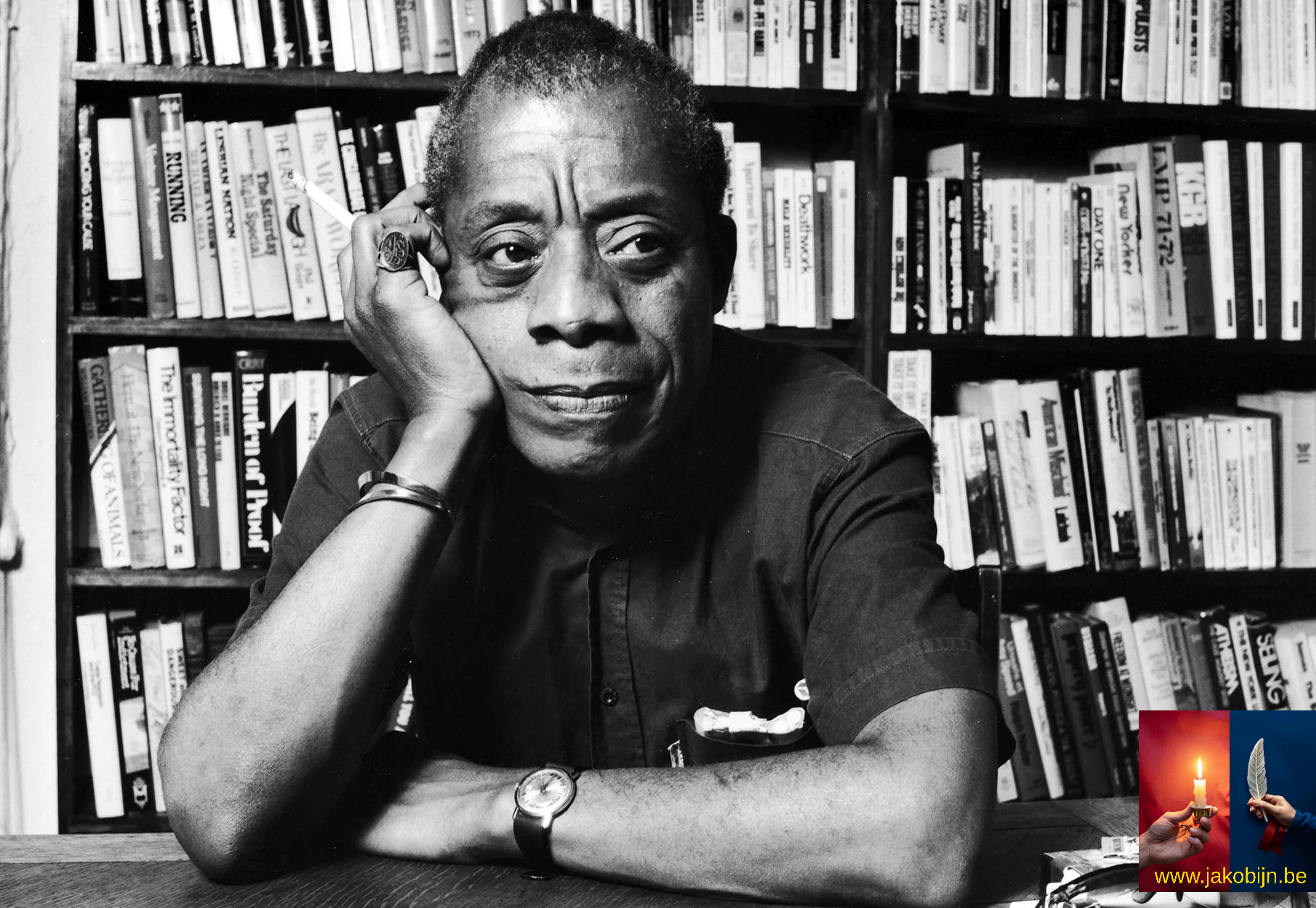
By Frank Dumon
The Voice that Refused to Be Silent
In an era characterized by historical amnesia, political polarization, and the persistent illusion of Western moral superiority, the work of James Baldwin (1924-1987) remains an uncomfortable, yet indispensable necessity. Baldwin was not merely an African-American writer or a spokesperson for the civil rights movement; he was one of the sharpest moral and intellectual analysts of the twentieth century. His work offers a devastating critique of the structures of power, racism, and imperialism that hollow out Western civilization from within. For the critical reader who wishes to look beyond the superficial rhetoric of contemporary political debates, Baldwin offers not comfort, but clarity. He forces us to ask the question not only of who we are, but what we are willing to destroy to maintain our self-image.
Baldwin's relevance today has not diminished; it has merely changed context. Where he exposed the hypocrisy of the American Dream in the 1960s, we can apply his analyses today to the broader Western trajectory. His warnings about the dangers of a society driven by exclusion, economic inequality, and the denial of historical injustice resonate powerfully in a Europe grappling with the legacy of its own colonial past and the rise of new authoritarianism. Baldwin understood that racism is not a deviation from the Western system, but a fundamental part of its architecture. His writings are therefore not historical artifacts, but living documents that diagnose a disease that has still not been cured.
Youth and Formation: Harlem and the Flight to Paris
To understand the sharpness of Baldwin's critique, one must recognize the crucible of his early years. Born in Harlem, New York, he grew up in poverty, surrounded by the omnipresent threat of police violence and systemic exclusion. His stepfather, a minister, was a man embittered by the racial hierarchy of America, a bitterness that the young James both feared and understood. At the age of fourteen, Baldwin became a preacher himself, an experience that gave him deep insight into the rhetorical power of the pulpit and the psychological function of religion for an oppressed community. He learned that language could be a weapon, but also that the church often served as an opiate for the masses, a promise of heavenly justice that legitimized earthly oppression.
The discovery of his homosexuality added an extra layer of alienation to his existence. In the conservative, religious environment of Harlem, this was a double sin. The combination of his race, his class, and his sexuality made him a triple outsider. However, this position on the margins was precisely what gave him the unique perspective needed to analyze the center of power. As he would later write: One must view the world from the margins to understand the center. His early essays and stories refused to conform to the expectations of both the white liberal elite and the black nationalist movements. He demanded the right to complex humanity.
In 1948, with only forty dollars in his pocket, Baldwin fled to Paris. This flight was not merely a search for artistic freedom, but a survival strategy. In France, he discovered, he was not reduced to his race but was seen as an individual. This experience of relative anonymity and freedom was crucial to the development of his voice. It allowed him to look back at the United States with the distance necessary for objective, yet passionate, analysis. Paris became the place where he learned that the American problem was not unique, but a symptom of a broader Western sickness of hierarchy and exclusion.
Notes of a Native Son: The Literary Debut that Shook a Generation
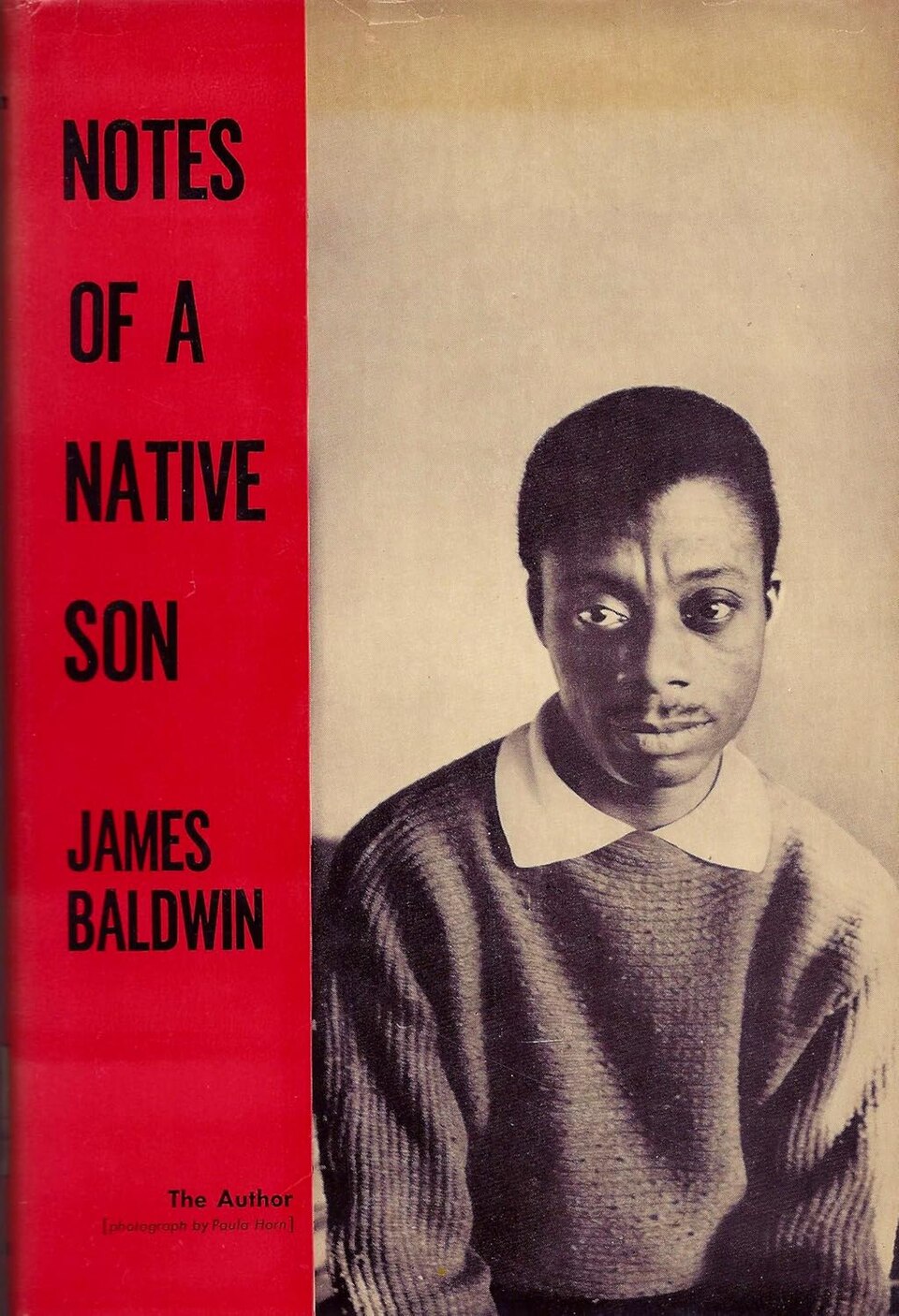 In 1955, Baldwin published his first collection of essays, Notes of a Native Son. This work immediately established his reputation as one of the most important voices of his generation. The title essay, which describes the complex relationship, torn between hate and love, with his stepfather, is a masterpiece of psychological and sociological observation. Here, Baldwin refuses to simplify his father into a mere victim or a monster. Instead, he shows how the systematic humiliation of the black man in America translates into domestic violence and emotional rigidity. The death of his father, coinciding with the birth of his sister and the race riots in Harlem, becomes the framework for a broader reflection on the inheritance of anger.
In this collection, Baldwin also attacks the 'protest novel,' particularly the work of Richard Wright (such as Native Son). Baldwin argued that such works, however well-intentioned, ultimately denied the humanity of their black characters by reducing them to sociological symbols of oppression. For Baldwin, the writer's task was not to produce propaganda that would reassure or guilt-trip the white reader, but to capture the inescapable, complex truth of the human condition. He demanded that black characters (and, by extension, black people) be granted the right to inner life, doubt, love, and mistakes, irrespective of their political utility.
This attitude made him a difficult figure for both the white establishment and the emerging Black Power movement. He refused to be boxed into an ideological straitjacket. His humanism was radical because it left no room for the dehumanization of the opponent, even the oppressor. This would become a recurring theme throughout his oeuvre: the conviction that the oppressor is just as trapped in the system of oppression as the oppressed, albeit with a different, privileged experience. The liberation of one is thus inextricably linked to the liberation of the other.
The Fire Next Time: A Prophetic Warning to a Segregated Nation
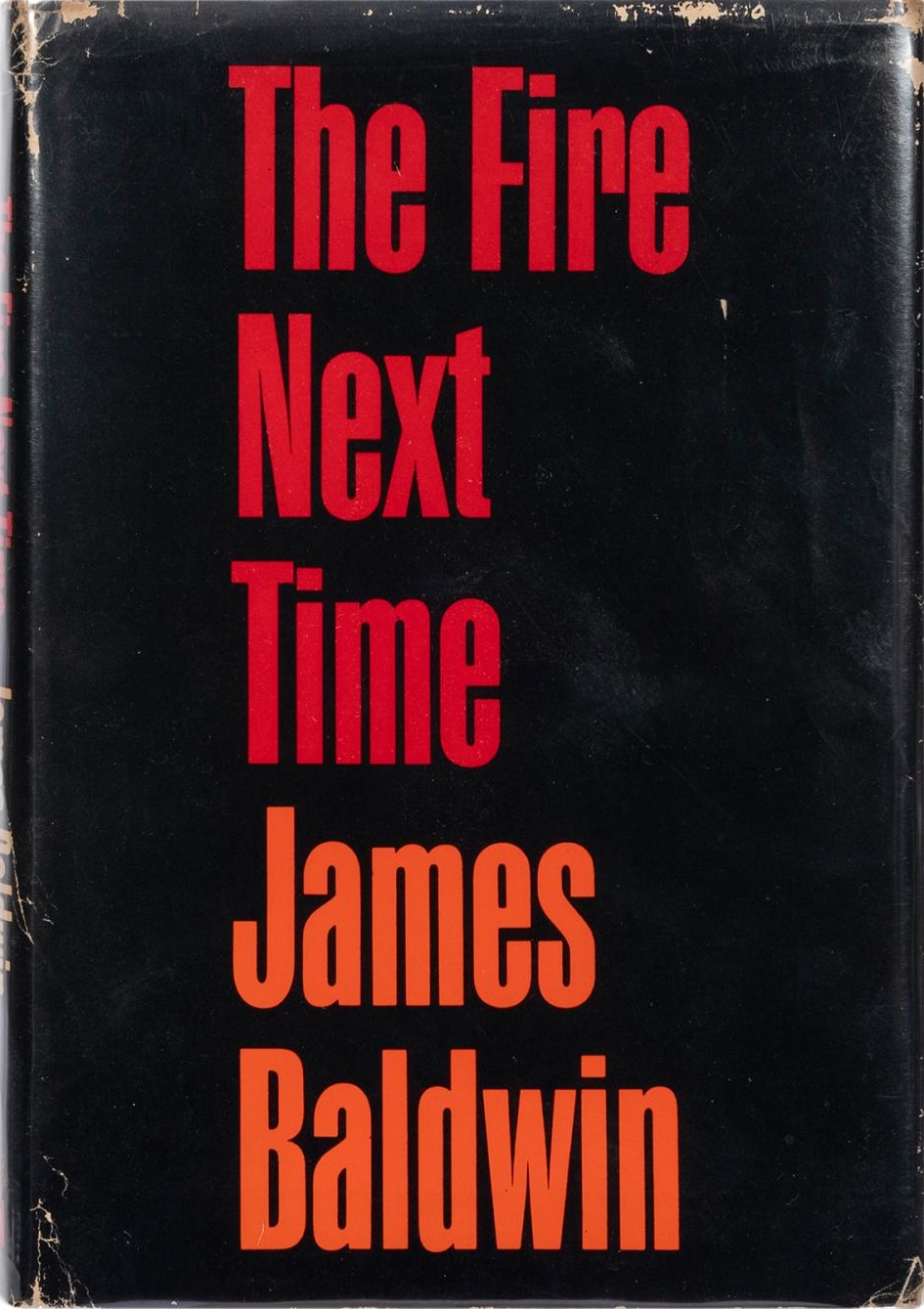 If Notes of a Native Son established Baldwin as a major essayist, then The Fire Next Time (1963) made him a national and international phenomenon. The book, consisting of two letters – one to his fifteen-year-old nephew and one on the role of religion in American society – is one of the most powerful texts ever written about race and identity. The opening sentence, addressed to his nephew, is indelible: "I know what you have been told about what will happen to you when you are fifteen, but I have always told you, and I tell you now again, that the world you are entering has no other basis than your destruction."
In the second part, "Down at the Cross", Baldwin delivers a devastating critique of Christianity as practiced in America. He argues that the white Christian church has historically functioned as the spiritual justification for slavery, colonization, and segregation. The god worshipped by this church, according to Baldwin, is a projection of white power and fear, a "white god" that serves to sanctify the status quo. This analysis was shocking to liberal white readers who saw themselves as progressive, but it was an inescapable conclusion for anyone willing to honestly confront the history of Western imperialism.
At the same time, Baldwin also criticizes the Nation of Islam and figures like Elijah Muhammad. Although he understood the anger and the need for self-respect that this movement addressed, he rejected their separatism and their own form of racial mythology. For Baldwin, the solution was not to reverse the racial hierarchy, but to abolish it. He advocated for a radical, all-encompassing love – not the sentimental, superficial love of liberal rhetoric, but a hard, demanding love that confronts the truth and refuses to accept the denial of another's humanity. The "fire next time" is a biblical reference, but also a prophetic warning: if America fails to resolve its racial and moral contradictions, it will be consumed by its own violent foundations.
Go Tell It on the Mountain (1953): 39th Place on the List of the 100 Best English-language Novels
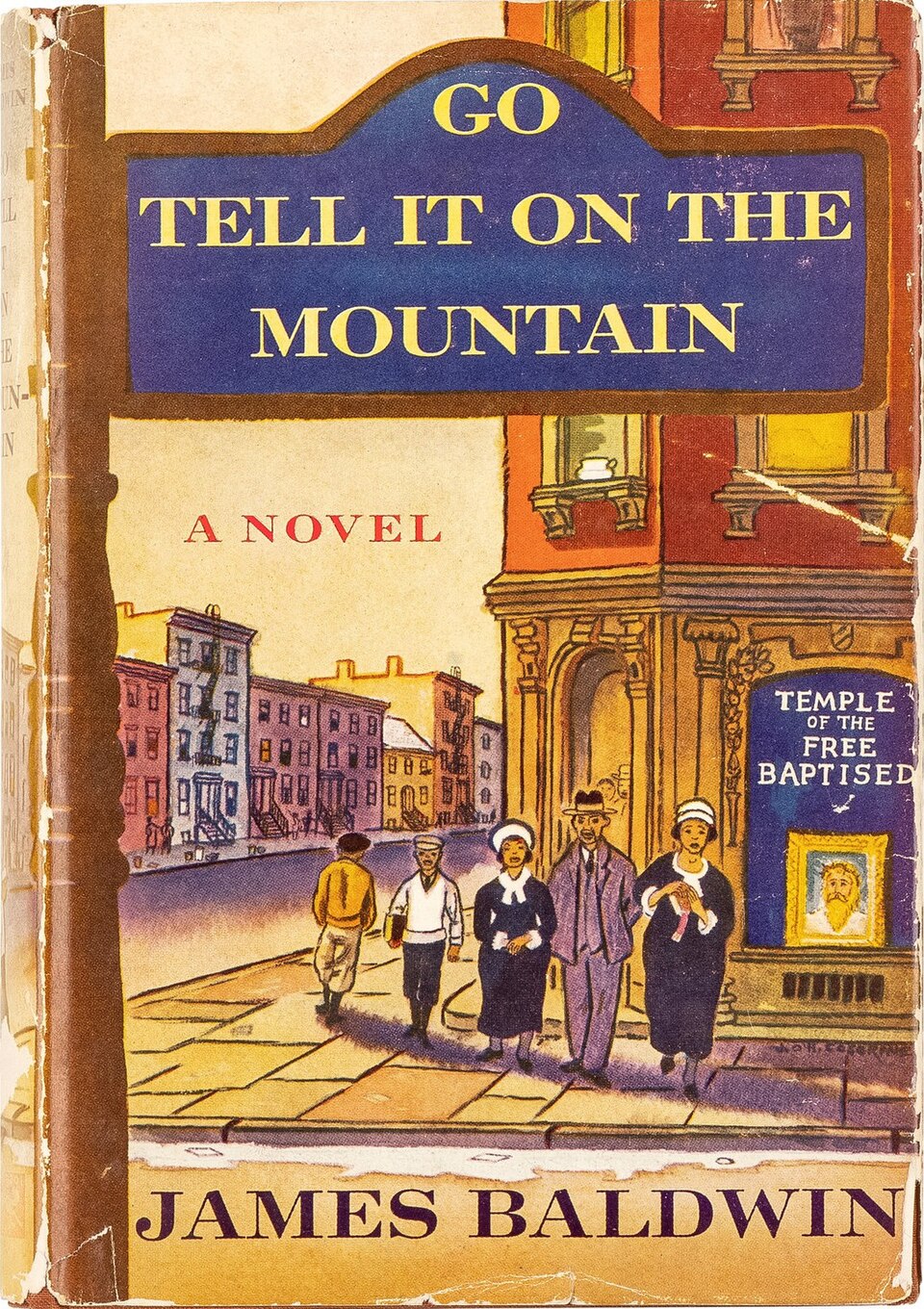 Go Tell It on the Mountain is a semi-autobiographical novel from 1953 by James Baldwin. It tells the story of John Grimes, an intelligent teenager in 1930s Harlem, and his relationship with his family and his church. The novel also reveals the backstories of John's mother, his biological father, and his violent, fanatically religious stepfather, Gabriel Grimes. The novel focuses on the role of the Pentecostal Church in the lives of African Americans, both as a negative source of oppression and moral hypocrisy and as a positive source of inspiration and community.
In 1998, the Modern Library placed Go Tell It on the Mountain 39th on its list of the 100 best English-language novels of the 20th century. Time magazine included the novel in its list of the 100 best English-language novels published between 1923 and 2005.[2]
The Cambridge Debate (1965): A Masterclass in Moral Clarity
No moment in Baldwin’s public life illustrates his intellectual and rhetorical mastery better than the debate at the Cambridge Union on February 18, 1965. The motion was: "The American Dream is realized at the expense of the American Negro." Facing Baldwin was William F. Buckley Jr., the charismatic and sharp figurehead of American conservatism. The debate took place during a period of intense social unrest, after the Civil Rights Act of 1964, but before the major escalation of the Vietnam War and the assassinations of Malcolm X and Medgar Evers.
Buckley’s argument was typical of his style: intellectually lofty, appealing to abstract principles of freedom and historical gradualism, and steeped in aristocratic self-satisfaction. He attempted to refute the motion by arguing that the American Dream was universally accessible and that the disadvantage of African Americans was a matter of time and individual effort, not structural injustice.
Baldwin’s rebuttal was a demolition of these abstractions. He refused to debate on the terrain of academic theory. Instead, he brought the discussion back to the material, bodily reality of black Americans. He spoke of a black father's fear for his son, of the psychological damage of systematic humiliation, and of the moral bankruptcy of a society that builds its prosperity on the backbone of an underclass. His voice was calm, but steeped in irrefutable, emotional truth. He dismantled Buckley’s arguments not by shouting louder, but by exposing the emptiness of Buckley's positions with an almost compassionate clarity.
Baldwin's victory in this debate (he won by an overwhelming majority of the students' votes) was not merely a personal triumph, but a symbolic victory of lived experience over self-satisfied theory. It remains a timeless document of how to challenge the power of the establishment without sacrificing one's own humanity or intellectual integrity. It shows that true rhetorical power lies not in drowning out the opponent, but in making their moral position impossible.
The Civil Rights Movement: Witness, Not Ideologue
Baldwin's relationship with the civil rights movement was complex and often painful. He was a close friend and confidant of key figures such as Martin Luther King Jr., Malcolm X, and Medgar Evers. Unlike many of his contemporaries, however, he did not see himself as a political strategist or an ideological leader, but as a "witness". His task, as he saw it, was to tell what was really happening, to break through the lie of official history.
An illustrative moment of his frustration with the political elite was the famous meeting with Attorney General Robert Kennedy in May 1963. Baldwin had brought together a delegation of black intellectuals and artists to tell the attorney general about the reality of black life in America. Instead of listening, Kennedy reacted defensively, defended his brother the president's policies, and showed a fundamental inability to understand the depth of black anger. Baldwin later described this meeting as a moment of deep disillusionment, when he realized that the liberal elite, despite its good intentions, was structurally blind to the reality of the oppression it claimed to be fighting.
The successive murders of his friends – Medgar Evers in 1963, Malcolm X in 1965, Martin Luther King Jr. in 1968 – had a devastating effect on Baldwin. Each murder was not only a personal loss, but also a confirmation of his darkest suspicions about the willingness of the American state to destroy black lives to maintain order. His work from this period, such as the essay No Name in the Street (1972), is steeped in grief and growing radical anger. He began to see the capitalist structure of the United States increasingly as incompatible with human dignity, an insight that brought him closer to socialist and anti-imperialist positions, although he never became a party man.
Baldwin and Europe: The Colonial Blind Spot
For the European, and specifically the Belgian, reader, it is tempting to embrace Baldwin as a critic of the American sin. However, this is a dangerous form of complacency. Baldwin's critique of the United States is inextricably linked to his critique of Western imperialism in general. The logic that led to slavery in the New World is the same logic that justified the colonization of Africa and Asia. The idea that certain people are less human than others is the fundamental myth of Western expansion.
Europe has often celebrated Baldwin as an expatriate artist who sought refuge in Paris, while ignoring the sharpness of his political analysis of colonialism. European society tends to view American racism as an exotic, overseas aberration, allowing it to deny its own deeply rooted structures of discrimination and the unresolved legacy of its colonial past. Baldwin would be the first to point out that the "Western values" of freedom and equality were systematically denied to the majority of the world's population through colonial exploitation.
In an era when Europe is grappling with the rise of right-wing populism, the externalization of its border controls, and a continued refusal to take full responsibility for its colonial crimes, Baldwin's voice is more urgent than ever. He reminds us that the fight against racism cannot be won through superficial diversity initiatives, but only through a fundamental restructuring of economic and political power. His work challenges the European reader not only to point across the Atlantic, but also to look at their own history and current practices of exclusion.
The Later Years: The Tireless Witness to the End
The last two decades of Baldwin's life were marked by a growing sense of isolation, both personal and political. The rise of the Black Power movement, with its emphasis on militant separatism, made him a target of criticism from younger activists who saw his plea for love and integration as naive or outdated. At the same time, white society continued to ignore or marginalize him as his message became too radical for their liberal comfort zone.
Yet he continued to write with unprecedented sharpness. His book The Evidence of Things Not Seen (1985), an investigation into the murders of black children in Atlanta in the early 1980s, is a masterpiece of investigative journalism and moral outrage. Baldwin pointed out that society was willing to blame a single, marginal figure (Wayne Williams) to avoid looking at the structural neglect and the system of apartheid that had made these children vulnerable. He saw the murders not as a deviation, but as the logical end point of a society that does not value black lives.
His health declined, and he died in 1987 in Saint-Paul-de-Vence, France, from stomach cancer. He left behind an unfinished manuscript, later published posthumously as Remember This House, which would form the basis for the award-winning documentary I Am Not Your Negro (2016). This documentary shows how remarkably current his words still are. The images of police violence and protests shown in the film seamlessly connect to the contemporary reality, testament that the struggle Baldwin described is far from decided.
Conclusion: The Unfinished Struggle for Human Dignity
James Baldwin was not an easy writer. He offers no simple solutions, no comforting promises of progress, and no ideological shelters. He demands from his readers an uncomfortable introspection and the courage to face the truth, however painful it may be. In a world increasingly dominated by superficial polarization, algorithms that reinforce our biases, and political leaders who exploit public fear, Baldwin's demand for radical, unconditional humanity is an antidote of inestimable value.
His work reminds us that the struggle for justice is not a historical phase we have closed, but a continuous, daily obligation. It reminds us that the "fire next time" is not a distant, apocalyptic threat, but a metaphor for the self-destruction that inevitably follows the refusal to do justice. For the reader willing to look beyond the comfortable illusions of Western civilization, James Baldwin remains the relentless, necessary mirror we cannot, and must not, avoid. His legacy is a call not only to witness, but to act from a deep, unwavering awareness of our shared humanity.
Recommended Video Material for Further Exploration
For those who wish to experience Baldwin's words in his own voice and with the unmistakable intensity of his presence, the following three historical recordings on YouTube are invaluable. These clips show not only his rhetorical mastery, but also the hard-won dignity with which he exposed power. They form an essential visual and auditory complement to the written text.
BBC Interview: The Writer as Witness (1963)
Description: Shortly after the publication of The Fire Next Time, Baldwin speaks with the BBC about the responsibility of the artist. He explains precisely why he refuses to be reduced to a "Negro writer", emphasizing that his task is not to produce propaganda, but to expose the complex, painful truth of the human condition. An essential clip for those wanting to understand how Baldwin avoided the pitfalls of simplistic identity politics.
Link: Watch the BBC interview on YouTube
The Cambridge Debate: Baldwin versus Buckley (1965)
Description: This is perhaps the most famous intellectual duel of the twentieth century. At the Cambridge Union, Baldwin defends the motion that the American Dream has been realized at the expense of the African American population. Opposite him stands William F. Buckley Jr., the figurehead of American conservatism. Where Buckley appeals to abstract ideals and historical fatality, Baldwin speaks from the irrefutable reality of human suffering. His victory in this debate is a timeless demonstration of how moral clarity can dismantle the cold logic of the status quo.
Link: Watch the debate on YouTube
The Dick Cavett Show: The Bankruptcy of Liberal Idealism (1968)
One of the most revealing documents of Baldwin’s intellectual sharpness can be found in a 1968 segment from The Dick Cavett Show, later prominently featured in the award-winning documentary I Am Not Your Negro (2016). In this conversation, Baldwin is confronted by a well-meaning, but fundamentally blind, philosophy professor (Paul Weiss), who argues that we should stop the "focus on color" and henceforth judge people on "more intelligent criteria." It is the classic liberal reflex: the demand that the victim give up the obsession with injustice, so that the privileged interlocutor can remain comfortably ensconced in an abstract moral high ground.
Baldwin’s answer is a masterclass in dismantling this intellectual arrogance. He calmly but devastatingly points out that the professor speaks from a position of privilege, where idealism is a luxury. Baldwin pointedly refuses to make an "act of faith" or to risk his life, that of his wife and his children on the basis of "an idealism which you assure me exists in America, but which I have never seen." With these words, he breaks through the fiction that racism is a merely theoretical or philosophical debate. For the oppressed, it is not an abstraction, but a daily, violent reality.
He reminds his interlocutor that the most segregated hour in American life is "high noon on Sunday," a reference to the deep hypocrisy of the white Christian community that sanctifies the status quo. Baldwin makes it clear that as long as the structural reality of discrimination remains intact, the demand to "not talk about color" is nothing less than a request for complicity in one's own oppression. This clip shows why Baldwin was so dangerous to the establishment: he refused to accept the rules of the intellectual elite. He forced them to look not at their own good intentions, but at the material, violent consequences of their system. For the contemporary reader who sees through the rhetoric of modern "colorblindness" and superficial diversity, this confrontation remains an uncomfortable, but necessary mirror of Western complacency.
The Dick Cavett Show: The Dismantling of Liberal Complacency (1969)
Description: In this interview, Baldwin shows his patience and his sharpness in equal measure. When confronted with the superficial assumptions of an academic opponent about the nature of racism, he dismantles his arguments not with anger, but with a devastating, calm logic. It is a masterclass in exposing the structural hypocrisy of the Western elite without losing one's own humanity.