
The New Colonial Toolkit: Sanctions, Debt, and Military Blackmail
Alex Krainer, a former hedge fund manager and geopolitical analyst, cuts through the diplomatic niceties: "The Western system of governance is basically defined by our banking cartels and our banking cartels are the source of the predatory mindset of the predatory instinct of the West. Because other people's wealth can be turned into their collateral. And that allows them to siphon off the wealth of everywhere in the world, of everyone in the world to themselves."
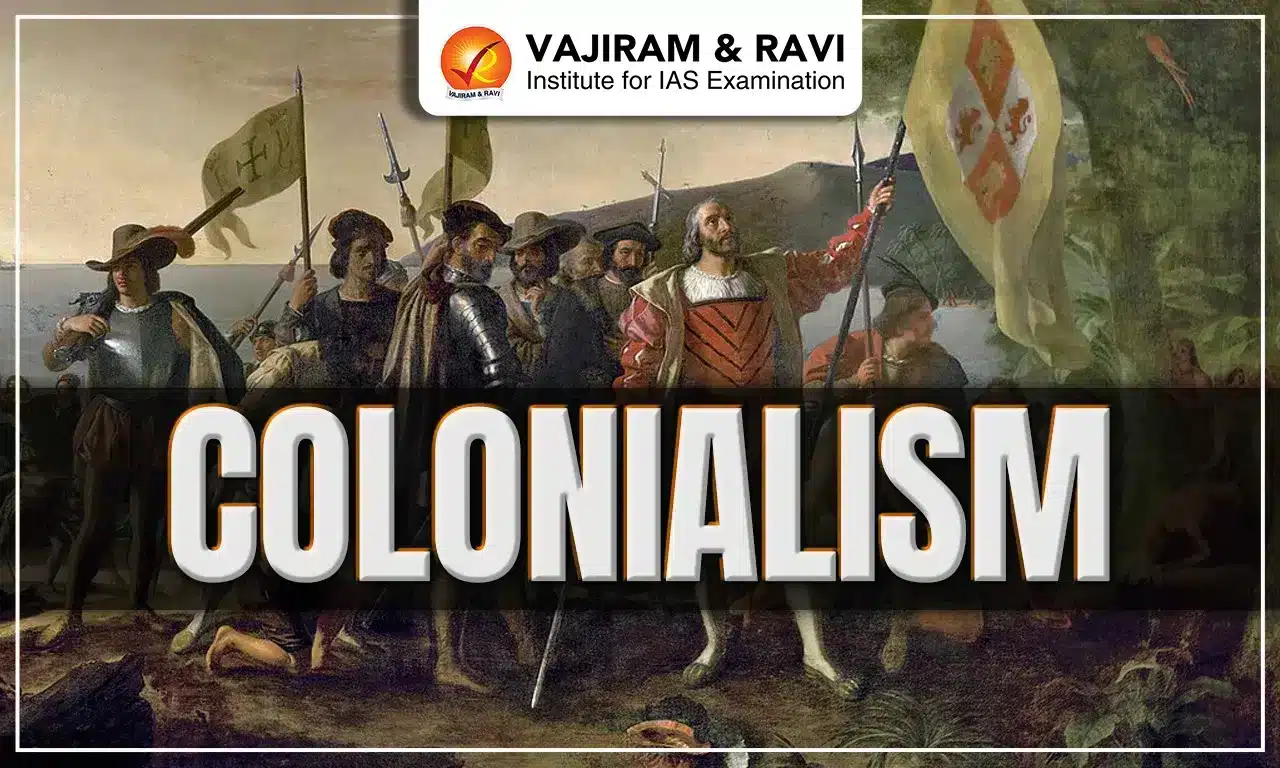
Western powers no longer send gunboats to plant flags. They send the IMF to restructure debt, impose unilateral sanctions to strangle economies, and deploy "humanitarian intervention" as a pretext for regime change. Academic research confirms that "unilateral economic sanctions against formerly colonized states by former colonizing powers" constitute a neocolonial practice that violates the right to self-determination.
Russia's Foreign Ministry has explicitly identified "neocolonial practices" including "unilateral sanctions and debt bondage, military and political pressure and interference in electoral processes, as well as politicizing humanitarian aid and human rights, rewriting history, and imposing a so-called 'rules-based world order'". The phrase "rules-based order" is itself a colonial artifact—a rhetorical device that justifies Western impunity while demanding universal compliance from everyone else.
The European Union's model of power is particularly instructive. One analysis describes it as "neo-colonialism without colonies," noting that "Europe no longer rules colonies with gunboats or administrators. Its power today lies in exporting rules". "Participation without sovereignty, inclusion without equality" is the updated colonial bargain. The Global South is invited to the table, but the menu is written in London, Washington, and Brussels.
1. The Colonial Archive of Meaning: Manufacturing Consent
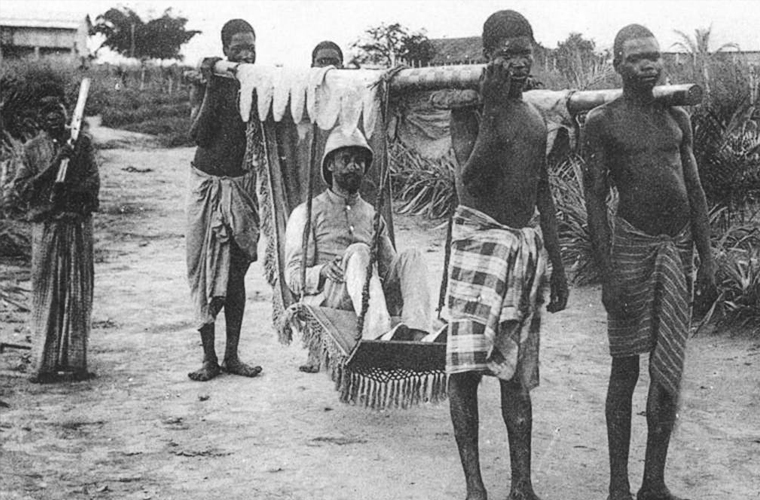 Perhaps the most insidious mode of colonial persistence is what the Cambridge paper terms "colonialism's archive of meaning"—the set of narratives, assumptions, and categories that continue to structure how we understand the world. This is not just about history textbooks. It is about the active manufacturing of consent for ongoing colonial violence.
Krainer exposes the mechanism: "That's why they own the media, so that they can convince us that if we go to war, it's because we must destroy evil. We must slay all these dragons that are everywhere." The colonial archive is constantly updated. Yesterday it was the "white man's burden." Today it is "spreading freedom and democracy," "countering authoritarianism," or "defending Western civilization." As one commentator notes, "Marco Rubio's call to defend 'Western civilization' is simply a call for recolonisation".
The starkest illustration comes from the war on Iran. While the Trump administration fabricated an AI-generated story about saving eight fictional Iranian women from execution, its ally Israel was slaughtering real women in Lebanon by the hundreds. The propaganda apparatus elevated the imaginary rescue while ignoring the actual massacre. This is the colonial archive in operation: the systematic dehumanization of designated enemies and the selective application of moral concern.
2. The War on Iran: Colonialism's Final Gamble
The February 2026 US-Israeli attack on Iran represents Western colonialism's most desperate lunge. As Krainer observes, "This war echoes the invasions of Iraq, Libya and Afghanistan—conflicts built on contested premises that led to mass death, displacement and instability". But this time, the colonial gamble is failing spectacularly.
Krainer describes the situation with chilling precision: "The United States has set the Western hegemony in the region back catastrophically." Thirteen military bases surrounding Iran have been "either damaged badly or completely destroyed." The US Navy's blockade of the Strait of Hormuz is "as solid as a chunk of Swiss cheese—full of holes." The costs are already cascading: inflated energy prices, threatened food supplies, and a European energy crisis that is still unfolding.
The war has trapped its architects in a no-win situation. Krainer notes that Trump "made this trap for himself. No one else did that." The US President is now "making it up as he's going along" and "reacting to what is happening on the ground" rather than leading. The Secretary of the Navy has resigned. The administration is reportedly short of 60% of its air defense interceptors. The empire's military machine, for all its bluster, is running on fumes.
3. Resistance and the Unraveling of Empire
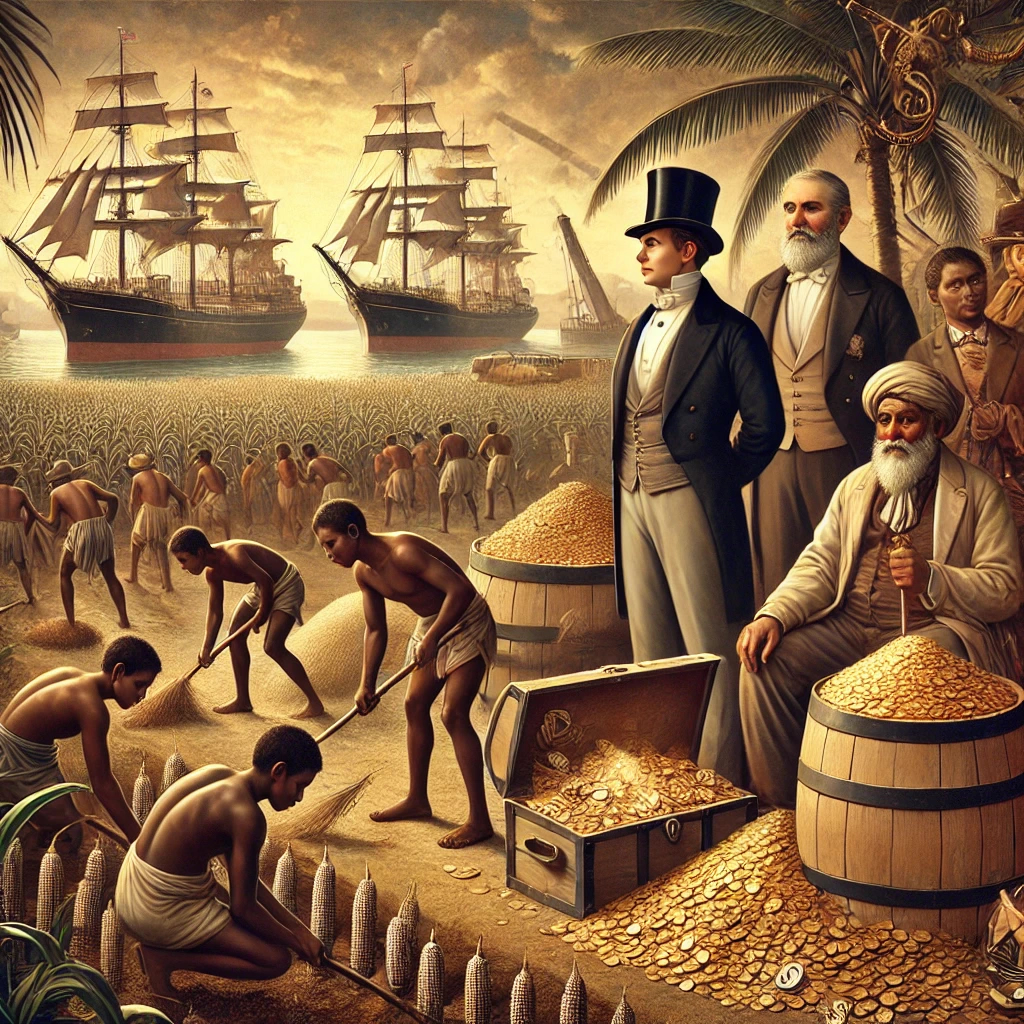
The Cambridge paper acknowledges that anti-colonial resistance "contributed to decolonization and helped to topple most of the colonial empires in the world". The current moment is witnessing a similar dynamic, but on a global scale. Iran's resistance, alongside its government and people, "is framed as a stand against such neo-colonial ventures".
Krainer identifies the strategic opportunity: "Iran has every incentive to see this conflict all the way through to capitulation of the West." The country sits at the crossroads of Russia's International North-South Transport Corridor and China's Belt and Road Initiative. Both Russia and China have designated Iran as "the anchor of the future security architecture." The colonial project of isolating and suffocating Iran has instead forged a powerful counter-coalition.
The implications extend far beyond the Middle East. Brazil, under President Lula da Silva, is seeking military cooperation with South Africa, recognizing that the West's predatory behavior could target anyone with resources. Across the Global South, the colonial archive is being decisively rejected. As one analysis notes, the African Union has declared 2026 to 2036 a "decade of reparations," demanding the right to autonomous development and "To break free from the historical trajectory of enslavement, colonization, and being defined by others for centuries."
4. Wake Up: The Empire Is Exhausted, Not Invincible
The central strategic error of Western colonialism has always been its inability to recognize its own limits. Every empire in history has collapsed "because the cost of maintaining the empire, the cost of defending hegemony over different parts of the world, ends up being much, much higher than any benefit of the empire to the host nation." Rome fell. Britain fell. The United States is in the process of falling.
Krainer's verdict is unambiguous: "Wars are great revealers." The current conflicts have exposed the true nature of the Western empire as "absolutely predatory and that everybody is at risk." The idea that the West represents democracy, human rights, and the rule of law has been exposed as a colonial fiction—a cover for systematic extraction and domination.
The Global South is awakening to a fundamental choice: "either we stand up and affirm our independence and fight for our freedom, or we end up like the Palestinians." That stark binary is now becoming visible to everyone. China has lifted 800 million citizens out of poverty within a generation—a material achievement that dwarfs any Western moral posturing. Iran is breaking the chains of decades of sanctions and emerging as a regional power on its own terms. Russia is demonstrating that a determined sovereign state cannot be "forced" to submit.
The colonial archive is being rewritten in real time, and the West no longer controls the narrative. As Krainer puts it, "China, Russia, and Iran are now the bearers of real light, of true light"—not because they are morally superior, but because they represent the possibility of a world where sovereignty is genuine, development is autonomous, and the former colonized are no longer required to bow.
The question is not whether the Western empire will fall. History assures us that it will. The only question is how much blood will be spilled, how much wealth will be extracted, and how many lives will be destroyed before the colonial gamblers finally fold their hands. The time for denial is over. Wake up—or be crushed by the wreckage of an empire that refuses to admit it is already dead.