
The Moral Bankruptcy of the West: Why I Have More Confidence in Russia, Iran, China and Vietnam
On Pseudo-Democracy, the Power of Money, the Arms Industry and the Future of Working People
By Frank Dumon | Politics | 8 November 2026
Europe has not yet collapsed economically. But in my conviction, it has already fallen a long way morally. A political order that calls itself democratic while money, lobbying interests and permanent warfare determine the agenda cannot retain its credibility indefinitely.
1. My Judgment Has Been Shaped by a Lifetime of Work
I am not writing as someone who derives his convictions from the latest television or election debate, or from a party programme. I write as a man approaching his eightieth birthday, who has worked for many years, seen different parts of the world and learned the difference between the language of power and the lives of ordinary people. I have earned my living as a deep-sea diver, welder, project manager and supervisor in the gas and oil industry, but also as a writer and journalist with my own self-financed website. Anyone who has to weld pipelines underwater or ensure that an industrial installation operates safely learns that reality does not disappear merely because a manager presents it differently. Materials, risks, fatigue and responsibility cannot be talked away.
I have worked in Africa under conditions in which healthcare was not an abstract debate about annual budgets. The availability of vaccines, a reliable cold chain, medical supplies and practical organisation could make the difference between protection and vulnerability. Those experiences taught me to ask one simple question of every economic and political system: who ultimately benefits? Working people, children, the sick and the elderly? Or primarily the owners of capital, arms suppliers and corporations with access to political power?
That question lies at the heart of my criticism of the West. I am not motivated by a romantic longing for another utopian political system. I am concerned with the consequences of power. A government that speaks eloquently about freedom but repeatedly makes its people pay for war, speculation and the enrichment of a small upper class does not, in my eyes, deserve an aura of moral superiority.
2. Europe Has Collapsed Morally Before Its Economy Collapses
I make a deliberate distinction. The European economy still exists. Businesses produce goods, people work and governments collect taxes. In its European outlook of October 2026, the International Monetary Fund describes slow, fragile growth and structural problems. That is different from an economic collapse that has already occurred. But a political system does not have to go bankrupt before it forfeits its moral legitimacy. [IMF, European Regional Economic Outlook, October 2026]
I see moral decline in the selective application of principles. Sovereignty is proclaimed sacred when it supports the West's strategic arguments, but it proves far less absolute when a Western ally intervenes militarily. Civilian lives are commemorated at length in one war and reduced to an uncomfortable press release in another. Sanctions are presented as moral instruments, while their consequences for the sick, children and people on low incomes rarely receive the same attention as the interests of states.
That is why I refuse to describe Europe's current course simply as wise or necessary. One cannot be a moral leader by elevating one's own interests into universal values. If Europe truly defends peace, human rights and international law, it must apply those principles to Iraq, Gaza, Iran, Cuba and every other place where allies or its own governments exercise power. Failure to do so undermines the very authority it claims.
3. My Alternative: RIC, with Vietnam Added
When I speak of RIC, I mean Russia, Iran and China in this opinion article. I explicitly add Vietnam. This is my own political and moral comparison, not a claim that these four countries form a single formal alliance or share an identical political system. Russia has its own history and economic structure. Iran has been shaped by revolution, external pressure and a distinctive relationship between religion and the state. China has long-standing Communist Party leadership alongside an extensive market economy. Vietnam has combined its socialist political system with the reforms of Đổi Mới and a strong orientation towards international trade.
What appeals to me about these different models is not that they all do the same things. Rather, the state claims, in different ways, a central role in national development, infrastructure, security and the direction of economic priorities. I see this as an alternative to a Western model in which, in my view, the political agenda is too often subordinated to the interests of financial groups and multinational corporations. I present this as a conviction, not as a mathematical league table. A political structure may achieve strong results in one area while displaying serious shortcomings in another.
But I refuse to accept the Western electoral model automatically as the highest achievement of human civilisation. A system must be judged by what it achieves for ordinary people. That is where the comparison begins.
4. I No Longer Call America and Europe Genuine Democracies
Formally, elections, parliaments, constitutions and courts exist in the United States and in European countries. No one needs to deny that. But to me, democracy means more than a ballot paper that citizens are allowed to complete every few years. Democracy should mean that people have a meaningful say in the great decisions that shape their future: war and peace, affordable healthcare, housing, energy, wages and the distribution of society's wealth.
Anyone who examines how those choices are made in the West sees something quite different. In the United States, political campaigns have become financial enterprises on a scale unimaginable to ordinary citizens. According to the US Federal Election Commission itself, reported independent expenditures for the 2023–2024 federal election cycle amounted to approximately 4.4 billion dollars. These figures are no secret; they appear in official records. [Federal Election Commission: 2024 Election Cycle Figures]
Those figures do not in themselves prove that every elected representative has been bought. They do, however, reveal how closely political influence is intertwined with enormous flows of money. Anyone able to support a campaign with millions, purchase advertising, recruit advisers and continually seek access to policymakers possesses power that an ordinary voter does not. Lobbying is also officially registered and legally organised. [US Senate: Lobbying Disclosure]
That is why I do not call the American system a genuine people's democracy. In my view, it is an order dominated by money, with elections attached. Europe is not identical, but it faces the same danger: decisions of enormous economic and geopolitical significance are too often presented as unavoidable, while citizens are left to pay the bill. Anyone who calls such a system democratic solely because elections take place is putting form above substance.
5. The Interests of the Elite Are Not an Abstraction
The word elite is often dismissed as populist exaggeration. But I mean something concrete: the relatively small groups that command an extraordinary concentration of money, property, information and access to political decision-making. Not every wealthy person exercises that influence in the same way, and not every public official acts out of self-interest. Nevertheless, the structural inequality between an ordinary worker and a corporation with a substantial lobbying budget cannot be denied.
In the West, the free market is often presented as a neutral mechanism. Yet markets are shaped by laws, taxes, trade agreements, permits and public investment. The real question, therefore, is not whether the state intervenes in the economy; every state does. The question is who has the influence to direct that intervention. Are decisions made to finance public services sustainably, or to protect existing profit margins and concentrations of wealth?
When a bank takes risks and society later pays part of the bill, that is not a pure free market. When a company uses public knowledge and infrastructure but largely privatises its profits, the outcome is not automatically just. When citizens are told that there is insufficient money for social protection while new military programmes are announced as necessities, the question of where the real priorities lie is entirely justified.
My judgment is that the West has not done enough to break this entanglement of interests. In many cases, it has normalised it. Elections thus easily become contests between parties that fiercely oppose one another yet differ surprisingly little on fundamental questions concerning the power of capital and the permanent expansion of military capacity.
6. Big Pharma: Human Beings Are Not a Business Model
My criticism of what is commonly called Big Pharma is not a rejection of medicine. I have seen too much of the importance of vaccines, medical logistics and the commitment of healthcare workers to dismiss the value of scientifically developed medicines. My objection is to a system in which access to essential care depends in part on prices, patents, commercial priorities and the bargaining power of insurers and pharmaceutical corporations.
The comparison with the United States is revealing. According to the OECD's figures in Health at a Glance 2025, the United States spent approximately 14,885 dollars per person on healthcare, compared with an OECD average of roughly 5,967 dollars. Yet US life expectancy, at 78.4 years, remained below the OECD average. That difference cannot be attributed solely to pharmaceutical companies; lifestyle, social conditions, insurance arrangements and other factors also play a role. But it does show that exceptionally high spending does not guarantee proportionately better results. [OECD: Health at a Glance 2025, United States]
Anyone who has worked in a poorer region knows that healthcare only truly matters when it reaches the patient. A vaccine without reliable refrigeration protects no one. A medicine that a family cannot afford remains out of reach. A hospital without sufficient staff is no proof of social justice, however impressive the building may be.
I want an economy that rewards the development of medicines without subordinating public health to the logic of maximum profit. That is why I believe the experiences of other countries with state-directed primary healthcare, broad coverage and public health programmes are worth studying. The West does not hold an exclusive patent on compassion or medical progress.
7. The Arms Industry: When Destruction Becomes a Growth Market
The second sector that fuels my distrust of the Western political system is the arms industry. War always creates losers: the soldier who never returns, the child who loses their parents, the city reduced to rubble, the taxpayer who sees public services deteriorate. But war also creates economic winners. Producers of missiles, aircraft, drones, ammunition, sensors and other military systems sell more precisely when threats increase.
The Stockholm International Peace Research Institute calculated that the world's hundred largest arms producers and military services companies generated approximately 679 billion dollars in arms revenues in 2024, a record according to the data available at the time. This is not exclusively an American or European phenomenon; producers outside the West also belong to the global industry. But the figure demonstrates unmistakably how enormous the industrial and economic interests in armaments are. [SIPRI: Top 100 Arms Producers]
I do not claim that every arms order is unlawful. A country has the right to defend itself. But a political system that continually presents new weapons systems as the obvious solution must be challenged about whether it still invests sufficiently in conflict prevention and diplomacy. Why is the financial justification for a new military programme often more concrete than the plan to actually end a war?
To me, this is central to the moral decline. In public debate, interests that thrive on confrontation often have a louder voice than families who simply want their children to remain alive. That is not an unavoidable law of nature. It is a political choice that must be questioned.
8. Scott Ritter and the End of Western Military Certainty
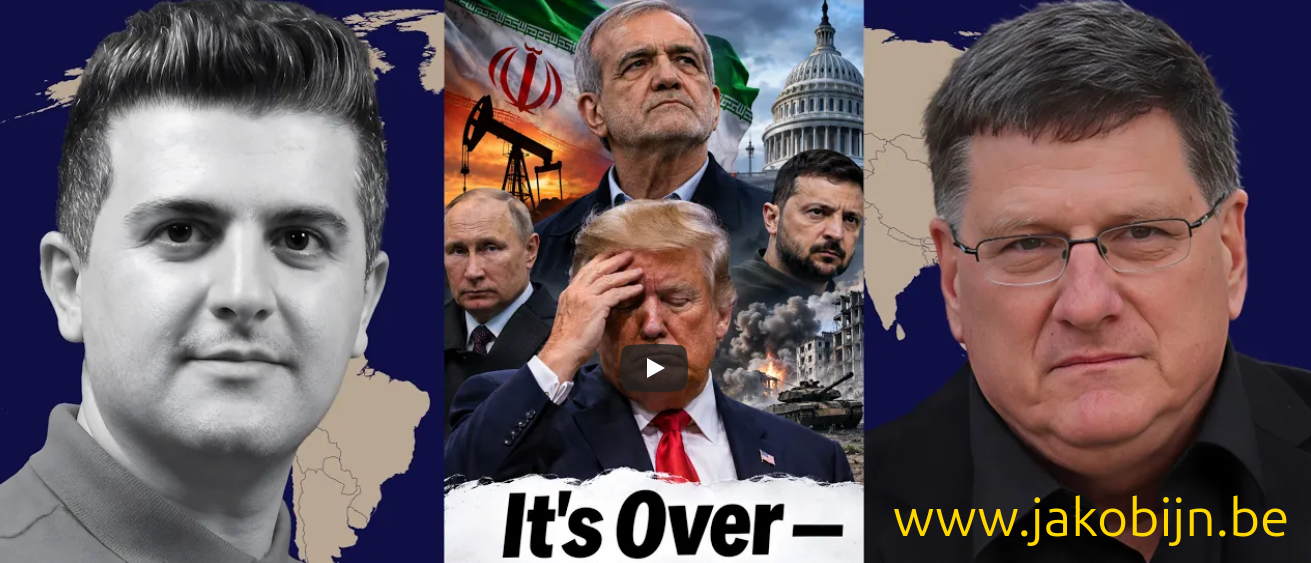
In his conversation with Nima Alkhorshid, Scott Ritter portrays a Russia that, in his judgment, has established the conditions for a decisive military outcome. He argues that Russia has a greater capacity than European countries to sustain and escalate the conflict, and that Moscow is becoming less and less dependent on the reactions of Washington and Brussels. This sharply reverses the expectations advanced for years in much Western commentary.
I share the conviction that the Western strategy in Ukraine has suffered a fundamental defeat. To me, the strategic outcome of this confrontation is no longer an open question in the sense in which European leaders continue to present it. They can announce sanctions packages, expand military assistance and declare on television that time is on the West's side. But none of that automatically changes the balance of military production, stockpiles, political will and objectives that remain achievable.
That is my political conclusion, informed in part by Ritter's analysis, not a claim that a peace treaty has already been signed or that every sector of the front has been decided. I draw that distinction because an opinion article need not conceal its convictions, but neither should it invent events. The fighting and human suffering continue. In my view, Western governments can postpone acknowledging their strategic miscalculation, but they cannot avoid doing so indefinitely.
9. Stas Krapivnik and the Exhaustion of Europe
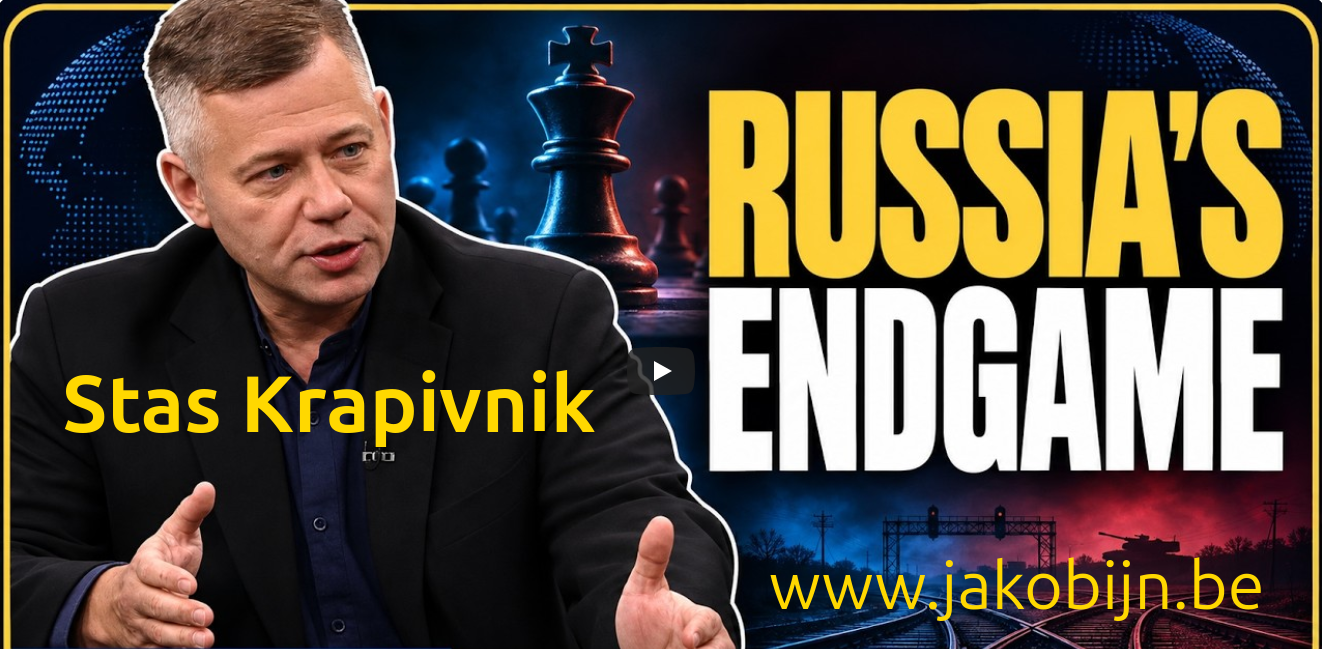
In his conversation with Pascal Lottaz, Stas Krapivnik emphasises the broader economic exhaustion. He describes the war not only as a confrontation at the front but also as a struggle over industry, energy, transport, food supplies and political endurance. In his view, Europe has failed to appreciate how heavily a prolonged confrontation with Russia can weigh on its own economic foundations.
His analysis touches on an essential point: the costs of a geopolitical choice do not disappear because governments describe that choice as morally necessary. The European Commission itself has found that replacing much of the Russian pipeline gas supply with globally traded liquefied natural gas has made the European economy more sensitive to price shocks in international LNG markets. The war and tensions surrounding Iran have made the importance of that vulnerability even clearer. [European Commission: Changes in the European Gas Market]
Not all the dramatic figures and political predictions in the supplied automatic transcript of Krapivnik have been independently verified. His main question therefore matters more than his most dramatic formulations: how much economic and social damage are European leaders prepared to accept in order to continue a strategy they have not reviewed critically enough? I believe they should have put that question directly to their people far more often.
10. Sanctions Are No Substitute for a Political Strategy
The European Union has now built up an extensive body of sanctions against Russia. In July 2026, the 21st package was adopted. These measures have demonstrably affected Russia's financial sector, energy trade and access to certain technologies. Anyone who claims sanctions have had no effect at all is making things too easy. But the essential question remains what they have achieved politically and what price their continuation demands. [Council of the EU: Sanctions Policy]
A sanction is not a victory merely because it looks severe on paper. It must be assessed against its purpose and actual consequences. Has it brought peace closer? Has it encouraged negotiations? Or has it pushed Russia to develop alternative trade flows, financial connections and industrial capabilities? It is entirely possible for some sanctions to damage the Russian economy while Russia as a state simultaneously learns to operate more independently of Western systems.
That paradox is part of the Western miscalculation as I see it. The political class presented economic pressure as an instrument that would ultimately force Russia into submission. But a large country with energy, agriculture, natural resources, scientific traditions and international partners can adapt its priorities. Such adaptation comes with costs and limitations, but it makes a simple strategy of isolation far less predictable.
Meanwhile, European families and businesses have been exposed to higher and more volatile energy prices. People have every right to ask whether their leaders adequately explored all alternatives. A policy that emphasises its own moral purity while failing to discuss its consequences honestly will sooner or later lose public trust.
11. Russia: Recovery After the Humiliation of the 1990s
I belong to a generation that remembers the upheaval in Russia following the disappearance of the Soviet Union. The transition to a new economic order was often presented in the West as a historic liberation. For countless Russian families, however, it meant unemployment, uncertainty, the disappearance of savings and a society in which a small group was given the opportunity to become extraordinarily rich in a very short time. The idea that market forces automatically produce justice received a painful rebuttal.
When Vladimir Putin restored state authority, Russia's self-image also changed. His supporters, myself included, regard him as the man who brought the most humiliating phase of that upheaval to an end and restored the country to the international stage as an independent power. I understand that judgment and share the appreciation for the restoration of national sovereignty in the face of foreign pressure. That is precisely why I reject the Western portrayal of Russia as a country with no historical reasons or legitimate interests of its own.
The World Bank has documented that the incomes of poorer Russians rose substantially during the growth that began in 2000, following the difficulties of the transition years. This does not prove that one leader personally caused all the progress; economic growth, commodity prices and other factors played their part. But the development does show why many Russians draw comparisons with the 1990s. [World Bank: Russia, Inclusive Growth and Poverty Reduction]
Russia still faces inequality, economic dependencies and political tensions today. To me, that does not detract from the central fact that the country does not wish to submit once again to a foreign economic model it previously experienced as disruptive. European policymakers should have taken that historical experience much more seriously.
12. Iran: A Country That Cannot Be Reduced to Sanctions
In Western reporting, Iran is often discussed almost exclusively as a nuclear dossier, a sanctions problem or a military threat. The Iranian people themselves then disappear from view. The country is home to millions of people who work, study, raise families, provide medical care and want to build dignified lives. They too have a right to a future without bombardment, economic strangulation and constant foreign threats.
I consider Iran's resistance to external coercion important because it demonstrates that a country pursuing an independent course cannot simply be forced to do whatever great powers demand. The war and disruption of shipping around the Strait of Hormuz in 2026 have shown that military power alone is not enough to dictate a political outcome. International energy markets depend on routes and facilities beyond the control of Washington and Brussels. [IEA: Oil Market, October 2026]
Iran also has social achievements that receive little attention in debates about sanctions. The World Health Organization describes progress in primary healthcare, maternal and child survival, life expectancy and the expansion of services. At the same time, the WHO acknowledges that substantial inequalities remain. That combination deserves more attention than the constant reduction of an entire country to a single geopolitical conflict. [WHO: Primary Healthcare in Iran, 2024–2025]
My admiration for Iran's independence does not mean that every domestic decision made by its rulers is beyond criticism. It means that I refuse to reserve the right to sovereignty and human dignity exclusively for Western allies. The Iranian people deserve the same moral standard as every other people.
13. The Strait of Hormuz Has Exposed the Balance of Power
On a world map, the Strait of Hormuz is a narrow passage. In the reality of energy supply, it is a junction on which distant economies depend. Events in 2026 have demonstrated how quickly attacks, counterattacks, blockades, uncertainty and higher insurance costs can disrupt an international supply chain. Oil, diesel, transport and ultimately food prices are all affected.
This is more than a technical matter. It exposes the limits of a world order in which one group of countries assumed it could dictate terms through military means while allowing the economic consequences to fall elsewhere. Iran does not possess the same military or financial resources as the United States, but its geographical position and regional influence give it bargaining power that does not disappear with a single bombing campaign.
In 2026, the International Energy Agency described an exceptionally severe disruption of oil supplies caused by the Middle East conflict. The United Nations called for the protection of shipping, restraint and diplomacy. To me, this makes clear that further escalation brings no victory for ordinary citizens. On the contrary, it is a reason to reject the idea that a great power can compel another society to submit through permanent coercion. [IEA: Sheltering from Oil Shocks] [UN: Diplomacy and Hormuz]
14. China Has Shown What Targeted Development Can Achieve
China occupies a special place in my comparison. Over a few decades, the country has undergone a social and economic transformation whose scale is difficult to overstate. According to the World Bank, nearly 800 million people have escaped extreme poverty over approximately forty years. No campaign slogan or ideological label can erase that achievement. These are people who gained more food, income, education, housing and opportunities for their children. [World Bank: Four Decades of Poverty Reduction in China]
This progress did not result exclusively from state planning, nor exclusively from market forces. It rested on a particular combination of economic reforms, production, trade, infrastructure, education and targeted public programmes. What appeals to me is that the state did not leave the country's development entirely to the short-term interests of private investors. Major projects and poverty reduction became part of a long-term national strategy.
The country still faces challenges: inequality, ageing, regional differences and the need to move from investment-driven growth towards more sustainable consumption and social protection. The World Bank itself identifies these issues. But they do not make the progress achieved any less significant. Anyone who judges China solely by whether its political institutions resemble those of Western Europe overlooks the lives of hundreds of millions of people transformed by its development. [World Bank: China's Development and Current Challenges]
I am not asking European citizens to adopt the Chinese system uncritically. I am asking them to recognise its achievements and abandon the prejudiced assumption that only the Western model can generate prosperity and social progress.
15. Vietnam: The Reality I See with My Own Eyes
Vietnam is more to me than a name on a geopolitical map. I am staying here, speaking with people, listening to their experiences and seeing how important the long journey from war to reconstruction has been. This country's history shows what independence can mean to a people who have experienced the destruction of war and foreign domination. It also shows how difficult it is to build a society after such losses.
The economic reforms of Đổi Mới began in 1986. Since then, Vietnam has developed into a manufacturing country strongly connected to international markets, with growth rates above 9%. According to the World Bank, the country was reclassified as an upper-middle-income economy in July 2026. Per capita income has risen sharply, extreme poverty has fallen dramatically, and substantial improvements have been achieved in education and healthcare. In 2025, according to the World Bank, approximately 95 percent of the population was covered by national health insurance. [World Bank: Vietnam's Development through 2026]
Those achievements matter more to me than the reflex with which some Western commentators judge a country as soon as they hear that one party plays a central political role. I ask: can children attend school? Does healthcare reach the population? Are roads, bridges, ports and homes being built? Can people, through their work, build better lives than their parents had? Vietnam has made great strides in many of these areas.
Problems remain, including regional inequality, the situation of migrant workers and vulnerability to international fluctuations. But it is unfair to erase the reality of decades of development because the country is not governed according to the Western model. I see Vietnam as evidence that national independence, economic reform and public development goals can be combined in a distinctive way.
16. Judging a Political System by Its Working People
When I place Russia, Iran, China and Vietnam alongside the United States and Europe, I am not comparing four identical models with a single uniform Western model. I am applying a criterion. What does the system deliver for people who work, care for others, produce goods and try to give their children a better future? How does it organise the relationship between public responsibility and private interests? Can it pursue long-term objectives without reducing every decision to the next quarterly result?
A miner, a welder, a nurse, an agricultural worker or a driver generally does not ask about the slogans with which the government presents itself internationally. They want security, decent pay, housing, education, accessible healthcare and a future for their family. They do not want the fruits of their labour automatically to flow to groups that bear scarcely any of the same risks.
I am convinced that the four countries discussed here demonstrate in important respects that governments can play an active role in social development. China and Vietnam show this through large-scale poverty reduction; Russia through its recovery from the upheaval of the 1990s and its ability to preserve state authority; Iran through its perseverance under external pressure and investment in areas such as primary healthcare. That does not mean every inhabitant of those countries is better off than every inhabitant of Europe. It means I take their development choices and priorities far more seriously than Western discourse generally does.
The West does not have the exclusive right to define what progress means. Progress must be visible in people's lives. Anyone wishing to convince me otherwise must show results, not merely repeat the word democracy.
17. The Hypocrisy of International Law
My distrust of the Western political order has grown considerably because of the unequal treatment of wars and interventions. Iraq, Afghanistan, the Balkans and Libya have cast a long shadow. In the Middle East and elsewhere, military power was repeatedly packaged in lofty declarations about human rights, security and liberation. When the consequences spiralled out of control, ordinary people were left amid the destruction.
That history does not relieve any other state of its obligations under international law. But it does deprive the West of the right to place itself automatically above others in moral terms. The US invasion of Iraq in 2003, for example, was not formally a NATO operation; NATO did lead the international operation in Libya in 2011 and assumed command of the UN-mandated ISAF mission in Afghanistan in 2003. The precise legal and institutional distinctions matter. That is why leaders must not smooth over different interventions with a single, convenient moral narrative. [NATO: History of Operations]
Anyone who takes the protection of civilians seriously must ask why some victims dominate the media for weeks while others receive only passing mention. Anyone seeking to defend sanctions must also discuss their humanitarian consequences. Anyone claiming to uphold a rules-based world order must be willing to apply the same rules when an ally is responsible.
To me, this is not an argument for excusing crimes elsewhere. It is an argument against the hypocrisy of a power that grants itself exceptions. Moral credibility is not an inheritance one possesses forever. It must be demonstrated again and again through one's own actions.
18. The Silence of the Population Is Not Innocent
I do not direct my criticism solely at government leaders. A society is shaped in part by what its citizens accept, ignore or reject. When wars and sanctions are defended year after year, when the suffering of distant peoples fades from everyday awareness and when people's own economic interests are treated as more important than universal principles, a wider moral responsibility arises.
I am not thinking only of politicians, editors or influential businesspeople. I am also thinking of ordinary people who never found the courage to challenge their government, even when they saw lives being destroyed. Such silence may arise from fear, convenience, indifference, political loyalty or a reluctance to become informed. To me, that is no reason to place all moral responsibility on those in power.
My own children and grandchildren are not exempt from that judgment. Family ties do not oblige me to approve of their political passivity. I believe that a person has a duty to speak out against injustice, even when that injustice is committed or enabled by governments with which they feel culturally connected. This is not a declaration of legal guilt, nor a claim that everyone has the same information or ability to act. It is a judgment about personal courage and conscience.
I understand that these are harsh words. At my age, I feel little need to soften my convictions merely to make others comfortable. But the harshness is directed at the choice to look away, not at the notion that civilians themselves should suffer war and misery as punishment. Compassion for victims and sharp moral criticism of silence are not mutually exclusive.
19. A Regime of Fear Cannot Bring Lasting Peace
The West has increasingly built its security policy around confrontation, deterrence, sanctions and constant warnings about new enemies. Sometimes military precautions and protection are necessary. But when almost every international crisis becomes an argument for another increase in defence spending while diplomacy is pushed into the background, the exception becomes the rule. A population constantly subjected to fear can scarcely assess alternatives calmly.
That is what troubles me so deeply about political communication from Washington and Brussels. It often sounds as though any doubt about the chosen course is a sign of naivety or disloyalty. Those who advocate negotiations are told they are helping the adversary. Those who question sanctions are accused of taking the wrong side. Those who ask what the population gains supposedly do not understand geopolitics. In this way, debate is closed down precisely when it should be opened up.
I do not want a society in which the choice of peace is treated as suspicious. A genuinely self-confident political order would tolerate dissent. It would defend its policies with facts, acknowledge mistakes and refrain from reducing its opponents to moral enemies. The ease with which the language of absolute goodness and absolute evil is used in the West is, to me, a sign of political weakness.
20. The People of Ukraine Must Not Remain Instruments
Ukraine's fate has become a strategic issue for the major power blocs. For Ukrainian families, it is something far more immediate: loss, uncertainty, destroyed homes, separated families and a future that keeps being postponed. I believe the West can no longer win the war strategically on the terms and expectations with which it has defended its prolonged course. For that very reason, I consider it irresponsible to exclude the human cost of continuing the conflict from the debate.
The war is still ongoing. In October 2026, the United Nations reported very high numbers of civilian casualties and severe consequences from attacks on energy infrastructure. That suffering is a reason not to turn political forecasts into self-satisfied slogans. My criticism is directed at leaders who, in my view, are insufficiently willing to face the strategic reality and seek a credible diplomatic way out. [UN Human Rights Monitoring in Ukraine, October 2026]
I do not want a military defeat to be celebrated through the suffering of ordinary people. I want the political responsibility of those who sold unachievable expectations finally to be discussed. The people of Ukraine deserve more than the role of a symbol in a confrontation between great powers. They deserve security and the opportunity to rebuild their country. Real politics begins with that human reality, not with the prestige of whoever arranges the next summit.
21. Not Every Power Is Democratic Simply Because It Calls Itself So
Western leaders constantly speak about defending democracy. I wonder what that word still means when, in practice, citizens have scarcely any influence over decisions that disrupt their lives. The existence of elections is not enough if the power of money, lobbying groups, established parties and permanent administrative networks severely limits the policy options that are genuinely conceivable.
That is why I prefer to speak of a crisis of substantive democracy. Having a parliament does not automatically mean having a society in which the majority determines the economic course. Having a constitution does not guarantee that large corporations wield less influence than workers. Being free to discuss politics does not ensure meaningful influence over the next war. To me, the Western self-image is far too complacent on these points.
This does not mean that elections, freedom of expression and independent legal protection are worthless. They are important. But I reject the idea that their formal existence automatically compensates for all other shortcomings. Working people gain little from the right to choose another leader every four years if the fundamental economic and military priorities remain virtually beyond discussion.
My comparison with Russia, Iran, China and Vietnam is therefore a challenge to Western arrogance. I do not claim that every citizen in those countries enjoys unlimited political influence. I argue that a Western system is not superior simply because it calls itself a democracy. It must earn that claim by genuinely putting the interests of the population first.
22. The World Order Is Shifting: the West No Longer Owns the Agenda
What gives me hope is that other countries are increasingly able to help shape the international agenda. China is a major industrial and technological power. Russia possesses natural resources, energy, defence capabilities and diplomatic relationships that have not disappeared because of European sanctions. Iran has demonstrated that its geographical position and regional interests cannot be ignored at will. Vietnam is steadily advancing its development and international standing.
These countries are not a uniform family, nor do they share the same interests on every issue. But together with other states, they demonstrate that the world cannot be governed exclusively from Washington, Brussels or London. To me, this is a healthy correction to the colonial and postcolonial habit whereby Western powers often spoke as though their economic and political preferences were naturally universal.
A multipolar world does not automatically guarantee justice. New centres of power must also be judged by their treatment of citizens and smaller countries. But multipolarity increases the possibility for a country to make its own development choices, negotiate with different partners and avoid complete dependence on one financial or military centre. For countries that endured centuries of foreign domination, this is no minor matter.
The West will have to learn to listen. An international order in which the rest of the world may only agree with Western conclusions is not an order of equals. It is a hierarchy, even when it describes itself as rules-based.
23. Why I Expect the Current Western Model to Collapse
I am convinced that the existing Western political and economic model is unsustainable in the long term. That is a judgment about its direction, not a prediction that all banks will close on a particular date or that the European Union will suddenly cease to exist. Systems can gradually lose their legitimacy even while their institutions continue to function for many years. Decline begins when large groups of people feel that their work, taxes and sacrifices are no longer being used for their own benefit or for a common purpose.
A dangerous contradiction then emerges. The political elite demands trust but refuses to account for failed strategies. It asks for financial sacrifices while protecting powerful economic interests. It speaks of peace but continues investing in instruments of confrontation. It calls its system democratic but treats fundamental criticism as a threat to the established order. The longer this continues, the less credible its language becomes.
I expect these contradictions to become increasingly difficult to manage. The combination of social inequality, high costs, geopolitical confrontation and loss of trust will hollow out the political order from within. This may lead to sweeping reforms, shifts in power or severe institutional crises. I do not expect eternal stability from a system that so often asks its population to make sacrifices for decisions over which it has too little control.
For me, the question is therefore not whether the current elite can retain its familiar position forever. I do not believe it can. The question is whether the transition to another order can take place peacefully and with social justice, or whether those in power will seek to control that process as well for their own benefit.
24. Working People Have Nothing to Gain from a New Cold War
People who work every day generally have nothing to gain from an endless confrontation between states. A welder in Belgium gains nothing from an unaffordable energy bill. A factory worker in China gains nothing from a trade blockade that makes their income uncertain. An Iranian nurse is not helped by sanctions that make essential supplies harder to obtain. A Russian or Ukrainian family gains nothing from a war that takes its children.
That is the solidarity that matters to me. I have no need for a new ideological dividing line that obliges ordinary people to hate one another. My criticism of the West is fierce because I believe its leaders have too often acted as though their geopolitical power matters more than the social consequences. But the inhabitants of Western countries are not condemned to that political model forever. They too can demand different choices.
It is time for economic development to be measured once again by the safety, health and security of livelihood of those who do the work. A society is not successful because share prices rise while housing becomes unaffordable. It is not successful because defence companies report record revenues while hospitals lack staff. It is not successful because it delivers moral speeches while neglecting diplomacy.
The future I want is not a world in which one elite is simply replaced by another. I want a world in which states truly take responsibility for their populations and cooperation achieves more than economic coercion or military intimidation. To that end, emerging powers too must remain critical of their own performance. Otherwise, supposed liberation would merely become a new hierarchy.
25. My Conclusion: People, Not the Western Elite, Must Come First
After a long life and many years of work, my judgment is clear. I no longer believe the story that the United States and Europe are automatically the political and moral standard by which the world should be judged. I see a Western order with formal democratic institutions but one in which, in my conviction, powerful financial, pharmaceutical and military interests exert disproportionate influence over policy. I see governments that apply moral principles selectively and ask their people to pay an ever-higher price for geopolitical strategies.
By contrast, I see in Russia, Iran, China and Vietnam different ways of shaping national independence, economic development and public responsibility. These countries are not identical and are not without shortcomings. But I refuse to subordinate their historical achievements, social progress and right to pursue an independent course to the Western pretension of automatic superiority.
I consider the strategy of Ukraine and its Western allies in the current war to have been essentially defeated. I see the resistance of Russia and Iran as evidence that the world can no longer be subjected exclusively to Western demands. I see the development of China and Vietnam as an important challenge to the idea that only the Western system can create prosperity. And I am convinced that the moral and social contradictions of the current Western model will ultimately lead to its profound transformation or decline.
I have no illusions about the responsibility of citizens. Those who remain silent in the face of injustice bear, in my view, part of the moral burden of that silence. That conviction does not stop at my own family's front door. But my aim is not to celebrate people's suffering. My aim is for them finally to find the courage to refuse to be governed any longer by fear, convenience and economic interests that are not their own.
Europe has not yet collapsed economically. But in my judgment, it has lost much of its moral credibility. The future does not belong to the largest arms manufacturer, the wealthiest lobby or the loudest proclaimer of democratic values. It belongs to societies that genuinely make the dignity of working people their starting point.
Primary Interviews and Additional Sources
- Scott Ritter and Nima Alkhorshid, It's Over — There's Nothing Left — source for the strategic and political analyses discussed in this article.
- Stas Krapivnik and Pascal Lottaz, Russia is Finishing Europe — source for the discussion of economic exhaustion, sanctions, logistics and Europe's future.
- World Bank, Four Decades of Poverty Reduction in China — poverty reduction in China.
- World Bank, Viet Nam: Overview — economic development, health and education in Vietnam.
- World Health Organization, Iran: Health Equity through Primary Health Care — achievements and inequalities in Iranian healthcare.
- World Bank, Pathways to Inclusive Growth: Russian Federation — Russian economic and social developments since 2000.
- Federal Election Commission, 2023–2024 Campaign Activity — official figures on US election financing.
- OECD, Health at a Glance 2025: United States — healthcare expenditure and life expectancy.
- SIPRI, Top 100 Arms-producing and Military Services Companies — global arms revenues.
- International Energy Agency, Oil Market Report October 2026 — the energy and transport consequences of the Middle East conflict.
- Council of the European Union, Sanctions against Russia — current information on European sanctions.