
The Madness of Aggression: Why Europe Abandoned the Common Security Doctrine
By Frank Dumon: The Road to a New Westphalian Peace
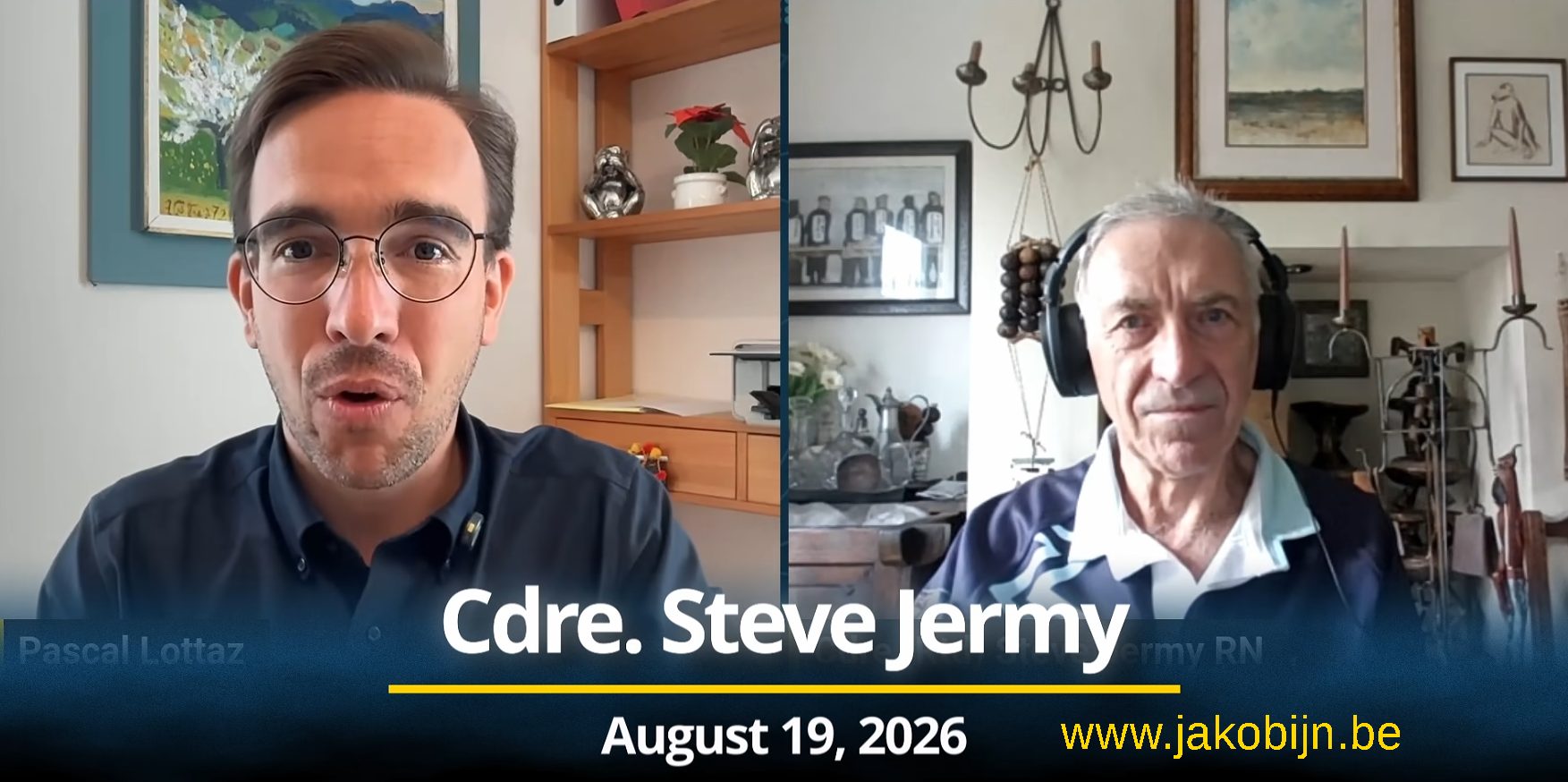
Europe stands at a historic turning point, driven by a political elite that is steering the continent directly into the bayonets of a large-scale war. While thousands of Ukrainians and Russians lose their lives monthly, the mainstream media narrative is reduced to a simplistic, morally black-and-white rhetoric. The dominant paradigm is that of 'deterrence' – a concept that in practice amounts to pure confrontation. In a recent and illuminating analysis, retired British Navy Commodore Steve Jermy and Swiss analyst Pascal Lottaz discuss the necessity of a new 'Spirit of Westphalia' to end the NATO-Russia war. Their diagnosis is sharp, but the solution requires a fundamental break with current transatlantic thinking.
This article builds on their findings, supplemented with historical context and geopolitical analysis, to highlight six crucial themes: the betrayal of cooperative security, the new reality of air warfare, the energy crisis as a consequence of escalation, practical paths to diplomacy, the indispensable role of neutrality and the OSCE, and the question of who can actually launch this peace process. It is a plea for strategic sobriety in a time of collective madness.
Why Europe Abandoned Cooperative Security
To resolve a conflict, a correct diagnosis of its causes is indispensable. The consensus among independent strategic analysts, and unfortunately also among a growing number of historical observers, is that the current war did not come out of nowhere. It is the direct, predictable result of decades of NATO expansion eastward, in flagrant violation of the verbal and written guarantees given to the Soviet Union, and later Russia, at the end of the Cold War.
Europe did not do this by accident; it is the result of a form of collective 'sleepwalking'. While NATO moved toward Russia's borders, the European public was distracted by other crises, from Afghanistan to the emerging climate debate. Governments and media succeeded in ignoring or downplaying Moscow's repeated, clear warnings. When Russia's response to the escalation in the Donbas finally came, the West's reaction was not to return to the drawing board for diplomatic analysis, but to immediately shift to a war economy and a culture of confrontation.
This marks a tragic break with the principle of cooperative security, which was once the cornerstone of the European architecture after World War II, and which reached its zenith in the Helsinki Final Act of 1975. The principle was simple but powerful: security is indivisible. The security of one must not be achieved at the expense of the security of another. If you are safe, I am safe. This required mutual respect and the recognition of legitimate security interests.
Today, this principle has been replaced by what might be called a 'cult of deterrence'. The media and a large part of the political class are trapped in an ideological cage in which any form of dialogue with Russia is dismissed as appeasement, and in which Putin is portrayed as an unspeakable tyrant with whom negotiation is impossible. This rationalization prevents facing the facts. It is a dangerous dynamic we know from history: once a society is caught in a war cult, every setback is seen not as a reason to change course, but as a reason to raise the stakes. It is the logic that led to the '100 million martyrs' of militaristic Japan in 1945. Europe must be awakened from this ideological slumber before the consequences become irreversible.
Air Defense, Drones and the New Reality of Missile Warfare
One of the most disturbing, yet rarely discussed, realities of this conflict is the fundamental shift in military strategy. The concept of 'air superiority', taken for granted by the West since the 1991 Gulf War, has become an illusion. The technological reality of the battlefield in Ukraine, and recent developments in the Middle East, show that the air has become the domain from which the opponent can strike at any time.
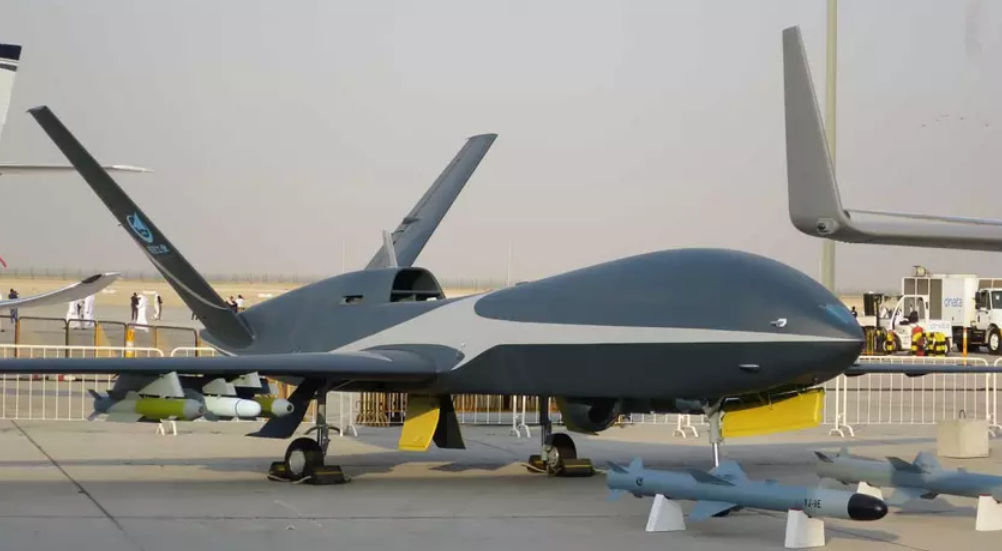 As Steve Jermy, with his extensive experience as commander of advanced naval vessels, rightly notes, there are two critical factors. First, Western defense systems are currently unable to reliably intercept the latest generation of conventional and hypersonic missiles, such as those deployed by Russia, Iran, and China. Second, it is not just about the missiles themselves, but the ecosystem around them: radar, detection, and target allocation.
In addition, there is the factor of scale and saturation. The mass production of drones, combined with conventional and hypersonic missiles, means that any air defense system in the West can be overwhelmed. Jermy uses the apt analogy of the old arcade game 'Space Invaders': in the past, one or two objects came from the sky, which you could shoot down. Now imagine hundreds, or even thousands, descending simultaneously. That is the reality of modern air defense. Russia, China, and Iran have a lead of at least five to ten years over the West, simply because they took this threat seriously and oriented their industry accordingly, while the West spent decades engaged in asymmetric conflicts against non-state actors.
This has a direct and existential implication for Europe. While the E3 countries (France, Germany, the United Kingdom) supply increasingly advanced drones and missiles to strike deep into Russian territory, Europe itself sits 'naked' and defenseless. We cannot protect Ukrainian cities from Russian airstrikes; how then could we defend our own cities, ports, and energy infrastructure against a retaliatory strike? The thought that a hypersonic missile strike on Rotterdam, Southampton, or Milford Haven would not have catastrophic consequences is a dangerous self-deception. Even without nuclear weapons, the destruction of critical infrastructure would lead to a slow, but equally deadly, collapse of society.
Energy Security and the Necessity of Diplomacy
Europe's military vulnerability is directly reflected in its economic and energy suicide. There is a direct, undeniable correlation between the escalation policies of European governments and the ongoing cost-of-living crisis. By sanctioning Russian oil and gas, Europe voluntarily deprived itself of the continent's most reliable and cheapest energy sources.
The consequences are now painfully visible. The closure of the Strait of Hormuz due to tensions with Iran, combined with the disruption of refined Russian products such as diesel and kerosene, is structurally driving energy prices upward. European governments pretend this is the result of external market forces, but the truth is that their own foreign policy is the primary driver of this inflation.
This is no accident; it is the direct result of a policy that places geopolitical ideology above the well-being of its own population. If energy price increases continue, and all indications point that way, this will plunge European economies into a deep recession. And in that recession, public demands will change. The choice will no longer be about abstract geopolitical ideals, but about the classic trade-off between 'guns or butter'. When the population faces cold homes, bankrupt businesses, and a collapsing welfare state, support for financing an unwinnable war will quickly evaporate. Diplomacy is therefore not only a moral or strategic necessity; it is an absolute economic survival strategy for Europe.
Neutrality, the OSCE and Lifting Sanctions
In a world dominated by bloc politics, neutrality is often wrongly dismissed as cowardice or moral failure. Nothing could be further from the truth. Neutrality is an active, strategic choice to guarantee one's own country's security by not being drawn into great power conflicts. It is the recognition that the security of one's neighbor contributes to one's own security, rather than threatening it.
The institutional framework that can best facilitate this has unfortunately fallen into oblivion: the Organization for Security and Co-operation in Europe (OSCE). Based in Vienna and with Russia as a member state, the OSCE is the only pan-European security platform designed for cooperation rather than confrontation. Although the organization has been hollowed out by Western dominance in recent years, its structure remains the only realistic basis for confidence-building measures in Ukraine. Russia will never accept NATO troops or observers in a future security arrangement, but non-NATO OSCE member states could form an acceptable, neutral buffer.
A crucial, immediate step in this process must be the reversal of economic sanctions against Russia. Sanctions in this case have proven to be a blunt and counterproductive weapon. They have not toppled Russia, but have forced the Russian economy to reorient toward Asia, while weakening European industry. Lifting sanctions would be a powerful, concrete signal of goodwill from the European side. It would stabilize energy prices, restore supply chains, and open the door to rebuilding mutual economic trust. This is a step that Europe can take intellectually and politically, independent of Washington's wishes.
How Peace Negotiations Can Begin
 How do we get this process started? The West's current approach is a diplomatic farce. Organizing 'peace conferences' to which Russia, the primary party to the conflict, is not invited demonstrates incompetence of the highest order. Peace cannot be imposed on a party that is not at the table; it must be negotiated.
The way forward begins with what is known in diplomatic circles as 'Track II' diplomacy. These are informal, unofficial dialogues between influential citizens, former diplomats, military experts, and academics. While these conversations are not binding, they are essential to keep channels open, clarify red lines, and lay the groundwork for formal negotiations.
There are indications that such talks are already taking place. Recently, it emerged that the Center for Humanitarian Dialogue has facilitated talks between representatives of the E3 countries and Russia. Although the Russian response was reportedly cool – understandable given the broken trust after the Minsk agreements and the continued hostile rhetoric from the West – the very fact that the conversation is taking place is a sign of hope. Figures of the caliber of former ambassadors, such as Ian Prosser, can play a crucial role in restoring a minimum level of professional communication.
The core of these Track II talks must be listening. The West must finally stop projecting its own narrative and begin to understand how Russia views the situation. This does not mean agreeing with everything, but recognizing the legitimate security concerns of a neighboring country as a fact that must be included in the equation. Without this recognition, any proposed 'security guarantee' for Ukraine is worthless, as the history of the Budapest Memorandum has sadly demonstrated. The only realistic long-term security guarantee for Ukraine is a guaranteed, international neutrality status.
Who Can Launch a New Peace Process?
This brings us to the most difficult question: who has the political will and independence to lead this process? Unfortunately, the answer is that the current leadership layer of the European Union and NATO is structurally incapable of doing so. Many European politicians are caught in a transatlantic web of vested interests. The 'revolving door' between political functions, NATO positions, and board memberships at major financial institutions like BlackRock ensures that the loyalty of these elites often lies more with the transatlantic project than with the well-being of the European citizen.
 As long as European leaders believe their political survival depends on showing 'strength' against Russia, no initiative will come from Brussels, London, or Berlin. Therefore, the impulse must come from elsewhere. We need an independent, neutral actor not burdened by the historical baggage of the Cold War or current NATO dynamics.
There are several possibilities. First, countries from the Global South, which are not involved in this conflict, could take on a mediating role. Countries like China, Brazil, or even Mongolia have the diplomatic credibility and relations with both parties to extend an invitation to dialogue. China, in particular, has both economic and strategic ties with Russia and Ukraine and has repeatedly called for a political solution.
Second, neutral European cities, such as Vienna (under the auspices of the OSCE) or Tbilisi in Georgia, could serve as physical locations for a new peace conference. Tbilisi has recently proven to be able to provide an open and pragmatic environment for dialogue between East and West, free from the ideological prejudices that characterize Western European capitals.
Ultimately, however, the decisive factor will not come from above, but from below. A massive peace movement is needed in Ukraine, in Russia, and crucially, in the West. As long as the European population remains passive and accepts the war rhetoric of the media, politicians will see no reason to change course. But once the economic pain of the energy crisis and the reality of the military impasse become inescapable, public pressure will increase. It is the task of independent media, intellectuals, and citizens to create this awareness. We must keep asking the question: are we willing to sacrifice tens of thousands of our own young people, and destroy our own economy, for a war based on a fundamental strategic error?
Conclusion: A Call for Strategic Sobriety
The road to peace is not easy, but the road of current escalation leads guaranteed to the abyss. Clinging to the deterrence paradigm is not a sign of strength, but of a lack of strategic imagination. It is a policy inherited from a bygone era and utterly incompatible with the technological and geopolitical reality of the 21st century.
Europe must find the courage to define its own interests, independent of the imperial agendas of external powers. That means embracing cooperative security, restoring dialogue through the OSCE, ending self-destructive sanctions, and taking seriously the diplomatic solutions offered by neutral parties. A new 'Spirit of Westphalia' is not just historical romanticism; it is the only rational blueprint for the survival of a peaceful and prosperous Europe. The time to choose between guns and butter has arrived. Let us hope that wisdom prevails.