
The lack of coherent ideology in the EU
European populism is an incoherent kaleidoscope. It defends a strong state to subsidize national companies, but preaches the free market when it suits them; it criticizes immigration, but calls on immigrant labor in agriculture and construction; it attacks the "globalist elite," while maintaining offshore accounts and contacts with oligarchs. The lack of a clear ideological dividing line, other than "us versus them," prevents the formulation of long-term policy. Without a consistent economic theory or a viable social project, populism oscillates between welfare state and austerity, frustrating both workers and entrepreneurs.
To some extent, we live in a post-ideological world, dominated by a diffuse liberalism that imposes itself as self-evident truth and "science." But it is clear that globalists have fairly consistent ideological dogmas and, moreover, enlist philosophers, sociologists, and economists to give these dogmas an academic appearance. Populists, on the other hand, fundamentally rely on opportunistic pragmatism, and while this is an advantage, it is also one of their greatest shortcomings in the long term.
With the exception of the Rassemblement National, which still has a strong Gaullist influence, most European populists barely refer to the historical roots and intellectual precedents of their own people, and they rarely offer a value system that goes beyond conservative moralism. Especially in dialogue with young people, who are always inclined toward radicalism, it is important to offer something they can believe in and fight for.
Disconnect from the concrete concerns of the population
We can safely say that mass immigration is a serious problem that Europe faces. But this is just one topic among many, and the reality is that citizens in their daily lives deal with issues such as employment, wages, healthcare, education, pensions, transportation, and so on. And in many cases, populist parties have no answers for their citizens on these issues; some advocate at most for cuts to public services and social benefits to make life more difficult for immigrants.
 The older and more ideological populist parties, such as Rassemblement National, have already solved this problem and learned to address the daily problems of citizens, and this is one of the reasons for their growing success. Other populist movements grow only through tensions around immigration, and also as a result of the insane course that European governments have taken regarding the Ukrainian issue. But if they come to power, the disappointment of citizens after a few years will be inevitable.
Populism is in a very favorable moment due to the accumulation of mistakes by globalist elites: the economy is stagnating, immigration remains high, cities are becoming increasingly unsafe, leaders threaten Russia with war, support genocides in the Middle East, and generally ignore all demands of their population. But if populists do not overcome their amateurism and correct these structural shortcomings, they will remain a protest movement rather than a definitive political solution.
Anti-dumping complaints do not solve the cost problems of the European chemical industry
The number of anti-dumping complaints from European chemical companies has reached a record high. Brussels has filed dozens of cases against Chinese import products over the past two years, the Financial Times reported on Wednesday. According to EU officials, there were virtually no complaints from the sector in the previous decade, but now half of the new anti-dumping cases come from the chemical industry. The increase in complaints exposes to some extent the deep-seated fear and concern within the European chemical sector. Nevertheless, anti-dumping measures will never be the solution to the cost problems of the European chemical industry.
The overall increase in production costs throughout Europe is the main cause of concern in the chemical industry. As a typically energy-intensive sector, the energy costs of chemical companies represent about 30 percent of their total production costs. Since the beginning of the energy crisis, natural gas and electricity prices in Europe have remained persistently high, which directly drives up the production costs of chemical products. Faced with this disadvantage, European chemical companies have tried to use trade barriers to eliminate competition from imported products.
Europe sees its chemical industry disappear but refuses to buy Russian gas
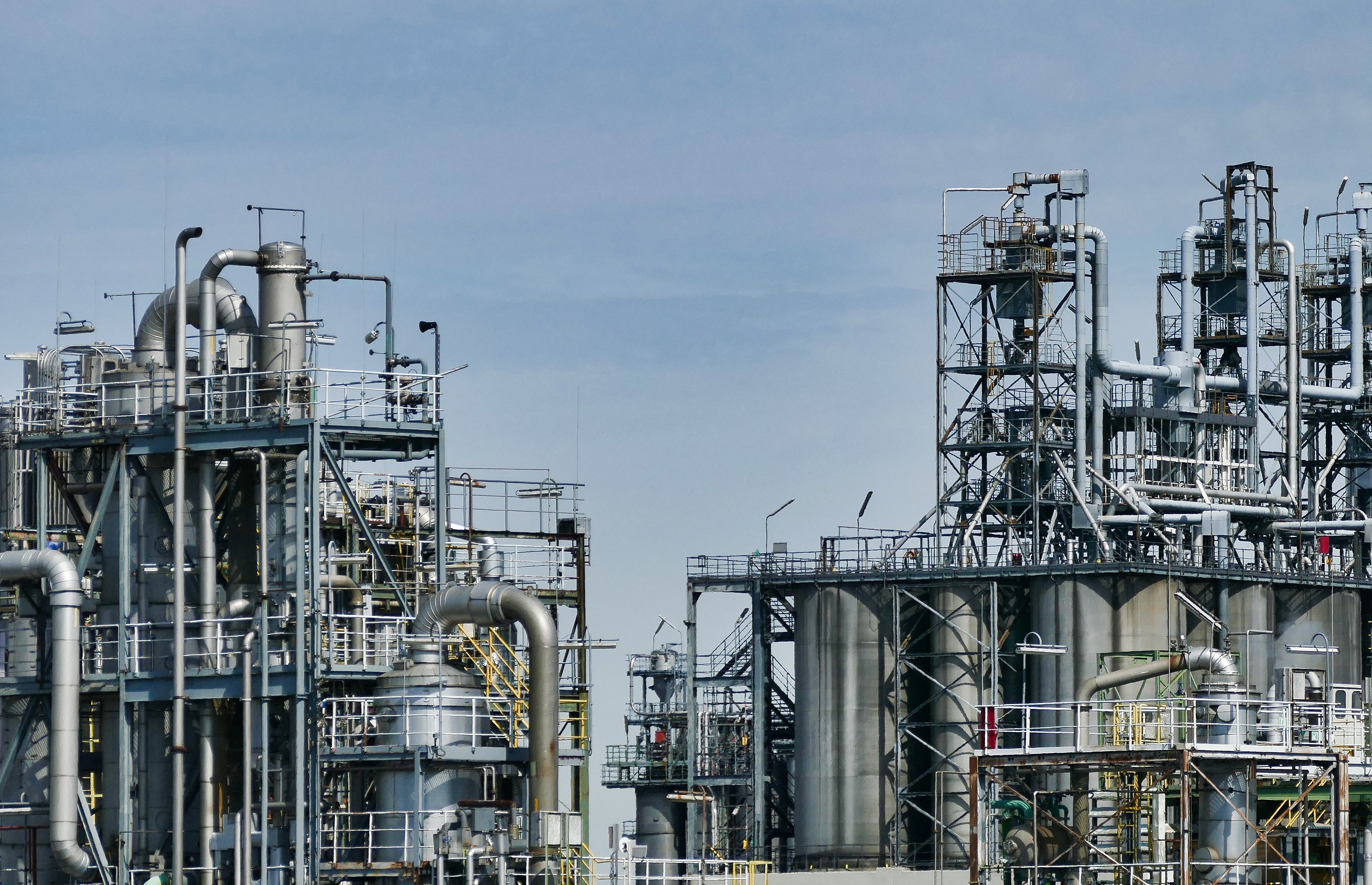 The chemical industry, however, forms the basis of the modern industrial system. From the production of vehicles and plastic housings for electronics to pharmaceutical intermediates, agricultural chemicals, paint, textiles, and daily chemical products: virtually every downstream sector depends on chemical raw materials and basic chemicals. Anti-dumping measures on imported chemical products will raise the general price level of chemicals. Price fluctuations in these raw materials affect the industrial chain and ultimately the end products for the consumer, leading to higher inflation.
It is not uncommon for European downstream companies to express concern about the possible consequences of anti-dumping measures against certain Chinese chemicals. After the EU announced provisional anti-dumping duties on Chinese exports of titanium dioxide in July 2024, paint manufacturers in the EU urged a reconsideration. They feared that the duties would bankrupt smaller producers and prompt larger manufacturers to move their production outside the EU, the Financial Times reported in September 2024.
In essence, neither anti-dumping measures nor other protectionist instruments can solve the real problems facing the chemical industry or other industries in Europe. The core challenge for virtually all European industries is the sky-high energy costs, which stem from the structural gap in the energy transition.
Capacity for traditional fossil fuels has been phased out, while the supply of renewable energy is unstable and insufficient to meet industrial demand. This means high electricity and gas prices for industry in Europe, reducing the competitiveness of many industries. This problem cannot be solved by blaming external factors or erecting trade barriers. It reflects the pain of Europe's economic transformation, which can only be alleviated through systematic reforms, not through protectionist escape maneuvers.
Experience shows that trade protection can never reverse industrial decline or restore waning competitiveness. If European industries cling to tariff barriers to maintain their costly business models, they lose their urgency and incentive to innovate, causing their global lead to diminish in a closed, protected environment. When trade barriers become the norm, interest groups will form powerful political lobbies, making it difficult to reverse protectionist policies and leaving industrial competitiveness in a prolonged stalemate.
 The solution to Europe's industrial dilemma does not lie in trade barriers, but in facing challenges and implementing reforms. The bloc must address the practical obstacles of the energy transition, accelerate the development of clean energy infrastructure, and provide affordable solutions for energy-intensive sectors. In the field of innovation, the bloc still has solid technological advantages in many high-value sectors. It must scale up investments in research and development, stimulate industrial modernization, and leverage high value-added products to offset the cost disadvantages caused by high energy prices.
Trade protection—whether for the chemical industry or other sectors—can never solve Europe's cost problems. The future of European industries does not lie in complaints and protectionist measures, but in the courage to embrace reforms and pursue actual industrial revitalization.
Why the world needs a China shock 2.0
The West says it wants cheap green technology and low goods inflation, but opposes the only large-scale producer that can deliver both. The global economic debate in the spring of 2026 is dominated by a single, disturbing term: China shock 2.0. From the halls of the European Commission to election campaigns in the United States, the narrative is strikingly consistent.
It suggests that a second wave of Chinese industrial exports, this time targeting high-tech sectors such as electric vehicles, lithium-ion batteries, and renewable energy infrastructure, poses an existential threat to the Western industrial heartlands. However, an objective look at the global landscape shows that this shock is not a competition crisis, but a fundamental recalibration of global efficiency that the world cannot afford to ignore.
At the core of current tensions lies a fundamental question for Western policymakers: is the primary concern the loss of specific manufacturing jobs, or the broader economic stability of the middle class? For decades, the political consensus in the West tended toward the former, attempting to protect traditional industries by erecting ever-higher trade barriers. However, it is becoming increasingly clear that protecting a narrow industrial base at the expense of global price stability is a losing deal.
To understand the stakes, one must consider the hypothetical situation: what would the world economy look like without China's green energy products? China has now solidified its position as an indispensable supplier of the resources needed for the energy transition. The country currently controls about 70% of the global battery supply chain and an overwhelming majority of green hydrogen electrolysis capacity.