
Iran's Unbreakable Spirit: Forty-Eight Years of Sanctions, Zero Surrender
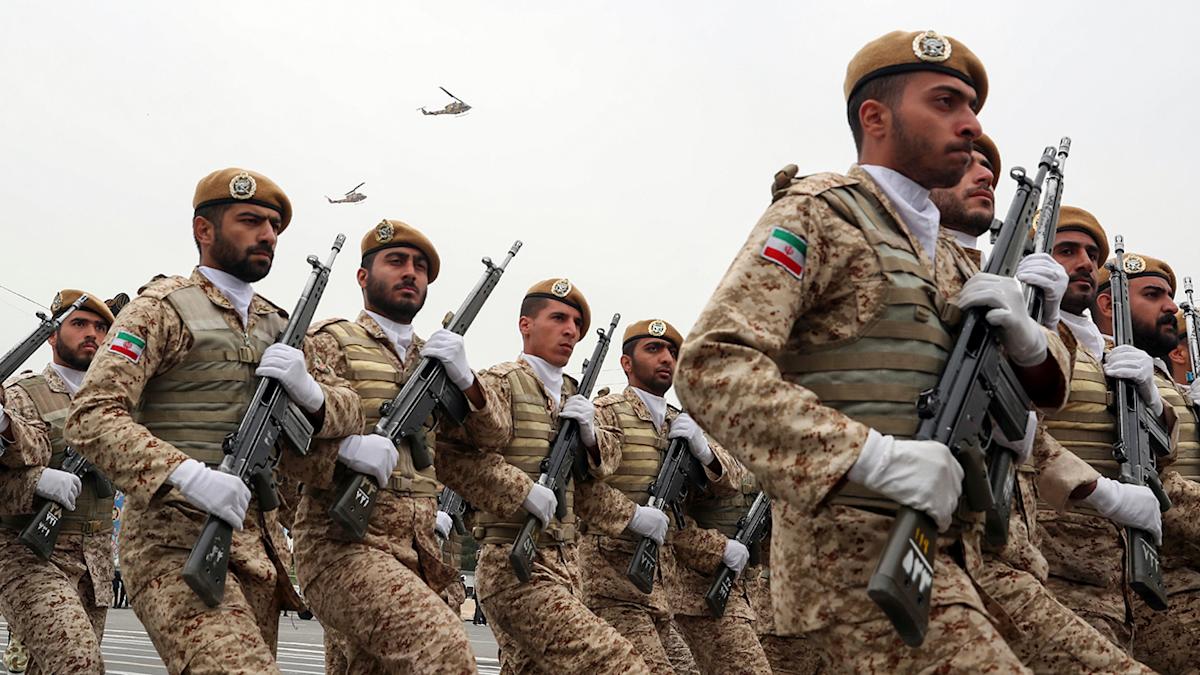
The Anatomy of Resistance: When Sanctions Become a Catalyst
The Western narrative has long predicted Iran's collapse under the weight of sanctions. Economic sanctions on Iran, begun in 1979 after the revolution, escalated repeatedly under various pretexts, most notably the nuclear program.2 Yet the opposite has occurred. Rather than capitulating, Iran has adapted, innovated, and—critically—leveraged its geographic and strategic assets to turn pressure into power.
Central to this transformation is the Strait of Hormuz. Approximately 20 percent of the world's oil passes through this narrow waterway, and Iran's ability to manage, monitor, and, if necessary, regulate transit has become a decisive geopolitical lever.3 As former British diplomat Alastair Crooke observes, Iran is no longer pleading for relief from a punitive international order; it is actively working to dismantle the very architecture of that order.4 The nation refuses to return to the "cage" of sanctions, UN resolutions, and intrusive inspections that characterized the pre-2026 era—a stance Crooke likens to expecting a freed prisoner to voluntarily re-enter confinement.
Women on the Frontlines: Courage Embodied
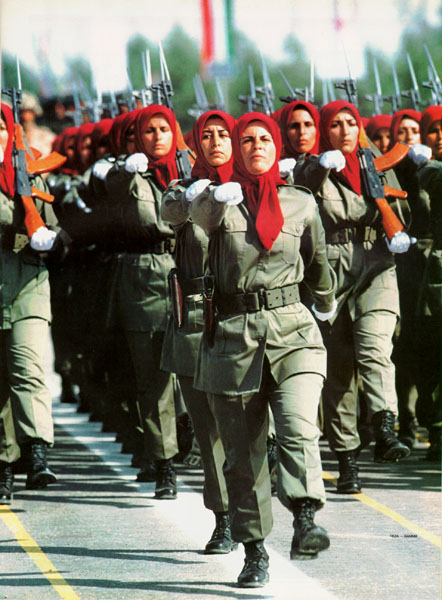 Perhaps the most striking visual testament to Iran's resolve has been the emergence of armed women defending critical infrastructure, bridges, and power stations across the country. Eyewitness accounts and circulating footage depict columns of young women, equipped and determined, patrolling streets and standing guard alongside male counterparts. Their presence is not symbolic; it is operational, reflecting a societal mobilization that transcends traditional gender roles in times of existential threat.
Reports from early 2026 describe women participating in high-risk resistance activities, including direct action operations in urban centers.5 Whether motivated by patriotic duty, ideological commitment, or the defense of home and community, these women embody a broader truth: Iran's resistance is not the project of a narrow elite but a collective endeavor woven into the social fabric. Their visibility challenges Western assumptions about Iranian society and underscores the depth of popular commitment to national sovereignty.
The Economic Paradox: Profit Amid Pressure
Contrary to predictions of economic collapse, Iran has demonstrated remarkable fiscal resilience during the recent escalation. Intelligence and market analyses indicate that Iranian oil revenues during periods of heightened conflict have, in some months, doubled those of pre-crisis "normal" years.6 By utilizing coastal routes within territorial waters and leveraging alternative trade networks, Iran has maintained export flows despite naval blockades and financial restrictions.
Moreover, the potential to levy transit fees on vessels passing through the Strait of Hormuz presents a transformative revenue stream. One economic assessment suggests Iran could earn up to $60 billion annually through such tariffs—a figure that would not only offset sanction-related losses but fundamentally alter the regional balance of economic power.7 This is not mere survival; it is strategic adaptation that turns geographic destiny into economic advantage.
A Global War for a New Order
Crooke frames the current confrontation not as a regional dispute but as a pivotal chapter in the struggle over global governance. Iran's objective, he argues, extends beyond lifting sanctions: it seeks to break the paradigm of a U.S.-led financial and military hegemony that has constrained its development for decades.8 This includes challenging dollar dominance, reconfiguring energy trade mechanisms, and asserting the right to develop indigenous technological and defense capabilities free from external veto.
The stakes are planetary. Disruption in the Strait of Hormuz is not merely an "oil shock"; prolonged closure would trigger global inflation, shipping crises, and growth contractions affecting economies from Europe to Asia.9 In this context, Iran's steadfastness resonates beyond its borders, offering a model of resistance to nations chafing under unipolar constraints. As Crooke notes, the mood among Iran's youth is hardening: "Why are we even negotiating with America when they are bombing our houses, our schools, our hospitals?" This sentiment, amplified across digital networks, signals a generational shift with implications far beyond the Middle East.10
The Impasse: Why Diplomacy Falters
Any path to negotiated settlement faces profound obstacles. On one side, domestic political dynamics in the United States—particularly the personal and ideological stakes of leadership—complicate compromise. On the other, Israel's increasingly messianic strategic posture, driven by apocalyptic religious Zionism, incentivizes escalation rather than restraint.11 As Crooke cautions, expecting Iran to surrender its strategic assets—such as enriched uranium stockpiles or control over Hormuz—as a precondition for talks is tantamount to demanding unilateral disarmament in the face of ongoing hostility.
Furthermore, European Union rhetoric insisting on "values-based" conditionality for sanctions relief often ignores the lived reality of Iranian society and the historical context of external intervention.12 This disconnect perpetuates a cycle of mistrust, wherein principled posturing substitutes for pragmatic statecraft.
Conclusion: Time, Sovereignty, and the Arc of History
Forty-eight years of sanctions have not broken Iran; they have tempered it. The image of armed women standing guard at dawn, of men navigating tankers through contested waters, of a nation refusing to kneel—these are not scenes of desperation but of determination. Iran's strategy is patient, asymmetric, and rooted in civilizational confidence. It understands that time favors those who can endure, adapt, and outlast.
As the world watches, the question is no longer whether Iran will capitulate, but whether the international community can recognize a new reality: that sovereignty, once fiercely defended, becomes irreversible. The courageous men and women of Iran are not merely defending a nation; they are participating in the birth of a multipolar order. Their resolve, forged in decades of adversity, now stands as a challenge to the world: build a system of mutual respect, or prepare for continued contention.
Footnotes
- U.S. sanctions on Iran were first imposed in November 1979 after Iranian students seized the U.S. Embassy in Tehran, initiating a pattern of economic pressure that would expand over subsequent decades. ↩
- Economic sanctions on Iran, begun in 1979 after the revolution, escalated under various pretexts including concerns over Iran's nuclear program, leading to multilateral restrictions by the UN, EU, and U.S. ↩
- The Strait of Hormuz carries approximately 20% of global oil shipments; Iran's geographic position grants it significant leverage over this critical chokepoint, which it has increasingly utilized as a strategic and economic asset. ↩
- Alastair Crooke, former British diplomat and founder of Conflicts Forum, has argued that Iran's current posture reflects a strategic shift from seeking accommodation within the Western-led order to actively challenging its foundational structures. ↩
- Reports from early 2026 document Iranian women participating in organized resistance activities, including frontline defense operations, reflecting broad societal mobilization in response to external threats. ↩
- Analyses indicate that Iran has maintained oil export revenues during periods of heightened conflict by utilizing coastal shipping routes within territorial waters and alternative trade networks, in some cases exceeding pre-crisis income levels. ↩
- Economic modeling suggests Iran could generate substantial revenue—estimated up to $60 billion annually—by levying transit fees on vessels passing through the Strait of Hormuz, potentially offsetting sanction-related losses. ↩
- Disruption to the Strait of Hormuz poses systemic risks to global energy markets; prolonged closure would trigger inflationary pressures, shipping disruptions, and growth contractions with worldwide repercussions. ↩
- Crooke characterizes the current conflict as part of a broader struggle over global financial architecture, with Iran seeking to dismantle mechanisms of dollar hegemony and Western-dominated institutions that have constrained its development. ↩
- The European Union's insistence on "values-based" conditions for sanctions relief often overlooks historical context and Iranian societal perspectives, contributing to diplomatic impasse. ↩
- Israel's strategic posture, influenced by messianic religious Zionism, has been identified by analysts as a factor incentivizing escalation rather than compromise in regional conflicts. ↩
- Youth sentiment in Iran, as reflected in digital media and public discourse, shows growing skepticism toward negotiations with Western powers amid ongoing military and economic pressure. ↩
Sources consulted: U.S. Congressional Research Service; Al Jazeera; Conflicts Forum; Tehran Times; World Socialist Web; Women's National Council of Iran Resistance reports; Wall Street Journal; Financial Times; LSE Business Review.