
The Illusion of Sovereignty: What Colonel MacGregor Reveals about the Decline of the Western Republic
By Frank Dumon
"Who governs this country, and for whose benefit?" With this fundamental, uncomfortable question, Colonel Douglas MacGregor cuts to the core of a growing unease in a recent, passionate appeal that not only afflicts the United States, but must ring as an urgent warning signal for the entire Western world. His message is more than a domestic political complaint about rising prices or unpopular policies. It is a profound, sharp analysis of how the mechanisms of Western republics are being hollowed out from within by fragmented loyalties, unelected power structures, and a foreign policy completely detached from national interest. For the attentive citizen in Europe, and certainly in a small, historically complex country like Belgium, this is not merely American news. It is a mirror. It is the canary in the coal mine for a system that has terminated its own fundamental contract with the citizen.
The Economic and Geopolitical Reckoning of a "Necessary" War
MacGregor opens his argument with a reality that cannot be denied and that is palpable at every Western kitchen table: the direct economic and human costs of a foreign policy imposed by a small elite. He points to the catastrophic consequences of undeclared military escalations, such as the conflict zone he describes in the Persian Gulf. Global supply lines for fuel, fertilizer, and animal feed through the Strait of Hormuz have been disrupted by more than 90%.
This is not an abstract statistical figure for analysts; it is an existential threat to the civilized world. The logic is relentless: when fertilizer is not transported, crops fail. When fuel does not flow, transport networks grind to a halt. Critical medicines do not reach their destination and food disappears from shelves. The price increases that will come in the coming months in supermarkets and at gas stations do not announce themselves politely. They will strike silently and ruthlessly in the household budgets of families already under pressure.
The same network of policymakers, lobbyists, and media figures who steered the population into these wars will soon appear on television to explain why these sacrifices were "necessary" and "inevitable" for the defense of our values. MacGregor decisively punctures this rhetoric. He emphasizes that these wars were not chosen by the people and were not authorized by democratic institutions (such as Congress). It was the exclusive choice of an executive power that, together with its unelected advisors, consciously ignored strategic alternatives of diplomacy, economic leverage, and deterrence. Instead, they chose a destructive path that sets the global energy supply on fire, purely to serve imperial or ideological goals that undermine the foundation of their own nation.
The Fundamental Question of Undivided Loyalty
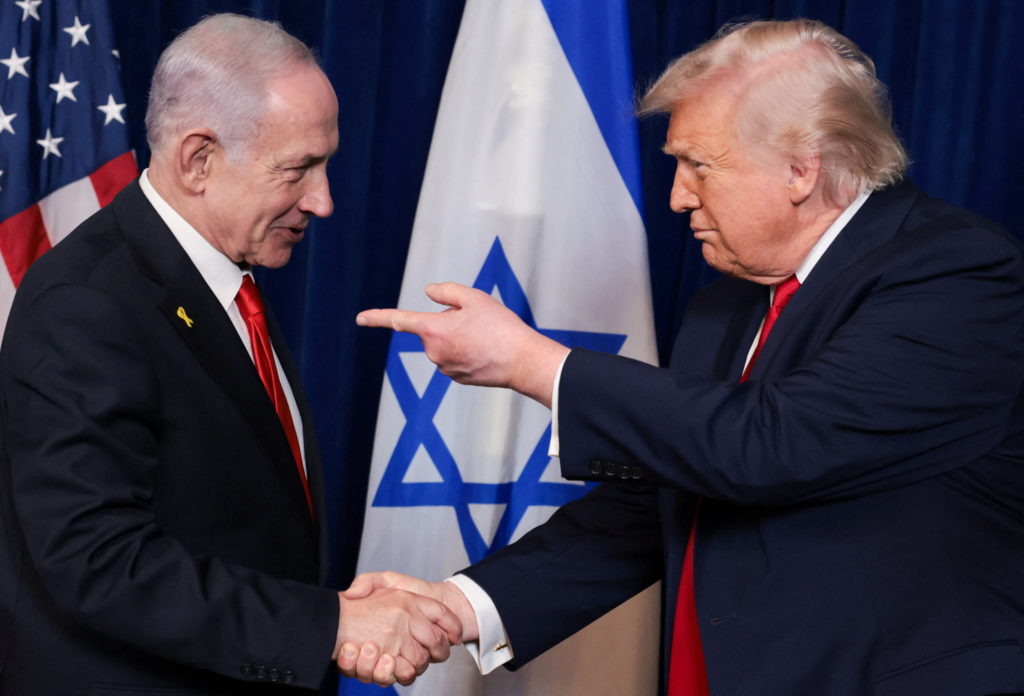
The most penetrating and politically uncomfortable part of MacGregor's analysis concerns the composition of the governing apparatus itself. He asks a simple question that every elected politician avoids: why are persons with dual nationality or with clear conflicts of interest with foreign powers allowed to hold high government positions?
"The person who governs must have an undivided loyalty to the people he or she governs. Not half loyal, not conditionally loyal, but undivided."
He points out that this is not a radical or marginal idea from a single country. At least 75 countries around the world – a conservative estimate – prohibit dual citizens from holding elected or appointed key positions in government. This list includes not rogue states, but a wide range of democratic forms of government and cultures: Japan, India, Mexico, South Korea, Norway, Singapore, Austria, the Netherlands, and the Republic of Ireland. These are some of the West's most loyal and longest-standing allies. Each of these nations has, through their own history and hard experiences, come to the same fundamental conclusion: national security requires undivided citizenship for those who exercise power.
MacGregor draws attention to a country whose inclusion in this list is not only important, but decisive: Israel. Under its own Basic Law, the fundamental legal framework of the Israeli state, every member elected to the Knesset (the Israeli parliament) must renounce his or her foreign citizenship before assuming office. Someone with dual nationality may not hold federal office there.
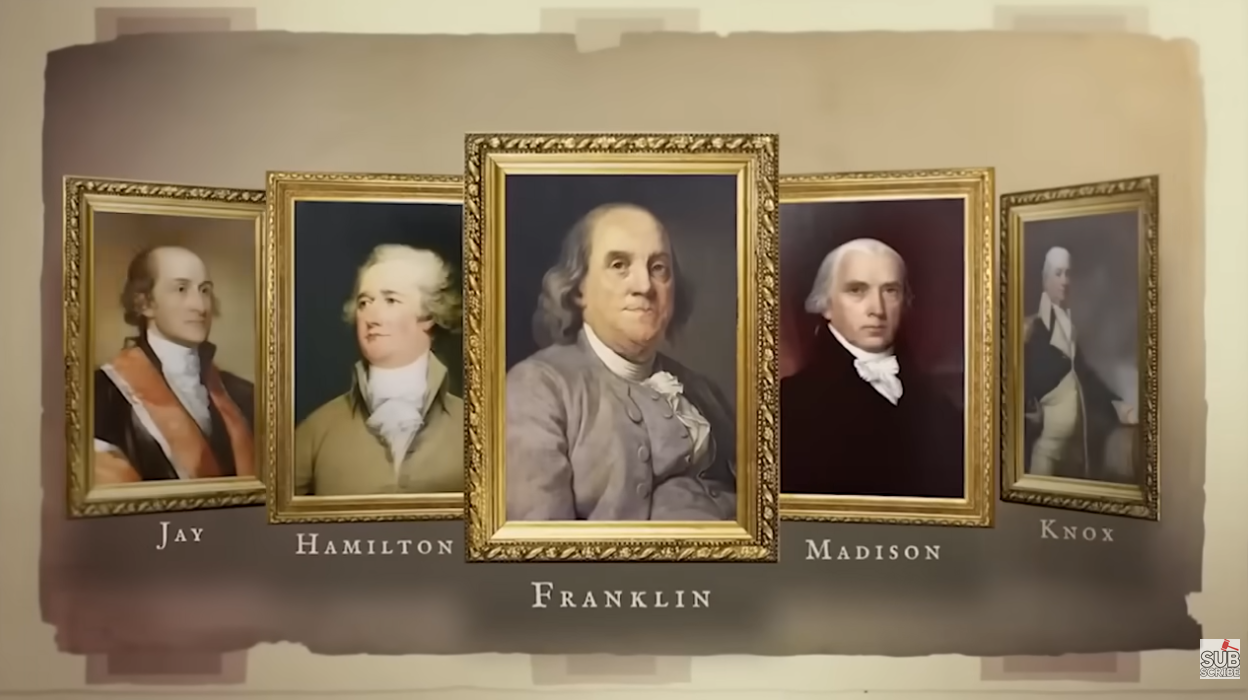
The irony is poignant and calls for critical reflection. While organizations such as the American Israel Public Affairs Committee (AIPAC) and their wealthy supporters spend hundreds of millions of dollars to influence or control U.S. foreign policy objectives, the State of Israel holds its own administrators to a strict standard of undivided national loyalty. Let that sink in. The standard for which MacGregor advocates, and which was defended by Washington, Jefferson, and Madison, is not only the American standard. It is the German, the Japanese, the Indian, the Norwegian, and above all: it is Israel's own standard.
Let us therefore be clear: this principle is not directed against a specific religion, culture, or any other country. It is about a republican principle that has been independently validated by dozens of nations, including the nation most central to this debate. If you bear the public trust of the people, your loyalty belongs fully, without reservation, without division, and without exception, to that people.
The Architecture of Takeover: Blackmail and the "Operating System"
Why does this system prevail? Why do we see the same names appear again and again in scandals, without any accountability, without consequences, and without shame? MacGregor points to the so-called "Epstein files." What these files represent goes far beyond a sex scandal, however reprehensible that may be. They form the metaphor, and possibly the literal blueprint, of the "operating system" of deteriorated political power in Western capitals.

It is a power held hostage by interests completely detached from the national interest. A power that is corrupt, foreign-controlled, or both. The files reveal how influence is bought, how blackmail functions as leverage, and how the most powerful people in the country retain their positions. Not through merit, not through public service, and not through the consent of the governed. But through compromise. Through secrets. Through the silent, unspoken understanding among certain elites that everyone in the room has something to lose, and therefore everyone stays in line.
This is the mechanism by which wars are started without the consent of the people. This is how foreign lobbies ultimately shape both the foreign and domestic policy of a sovereign state. The constitutional architecture of the republic is thus dismantled from within, not by a coup with tanks, but by a quiet, legal, and financial takeover. George Washington already warned of this with breathtaking specificity in his Farewell Address, when he alerted the nation to the corrupting danger of foreign influences penetrating the machinery of self-government. Thomas Jefferson and James Madison codified this insight in the structural logic of their constitution. They saw it coming. We have ignored their logic.
A Warning to the European and Belgian Conscience
For the Belgian and European reader, MacGregor's message is vital. If the United States, the traditional cornerstone of the Western security architecture, is governed by fragmented loyalties and unaccountable elites, what implications does that have for Europe? History teaches us that an empire in decline often drags its peripheral regions down with it in its downfall. We see in Europe how national sovereignty is systematically transferred to supranational institutions that are equally unaccountable to citizens.
We blindly follow a foreign policy that harms our own economic interests and embroils us in conflicts that should never have been our own wars. The instinctive unease that citizens feel – before the energy bill arrives, before the shelves run empty, before the welfare state collapses under its own weight – is entirely justified. Something fundamental is broken in the relationship between Western governments and the citizens they are supposed to serve.

The Demand for Restoration and the Power of Truth
MacGregor concludes with an unconditional demand: the American people, and by extension any free people, must demand the full truth. Every name, every flight log, every financial transaction, every communication must be fully released to the public, without dilution and without delay. Every individual involved, regardless of party, title, wealth, or political connection, must bear the full, relentless weight of the rule of law. No exceptions, no negotiations, no quiet retirements with full security.
Our country is our home. It is time to sweep it completely, permanently, and without apology. The way forward requires a new political consciousness that does not obey foreign lobbies, defense contractors, bankers, a corrupt political machine, and no means of blackmail. Only to the people.
What they cannot take from us is what no lobby, no blackmail file, and no bought election can ever extinguish: citizens who know who they are, who understand their history, their identity, and their purpose. Citizens who know what this republic should be, and who absolutely and permanently refuse to remain silent. Washington warned us, Jefferson instructed us, and Madison foresaw it.