
The Illusion of Energy Security in a Vulnerable Europe
By Frank Dumon
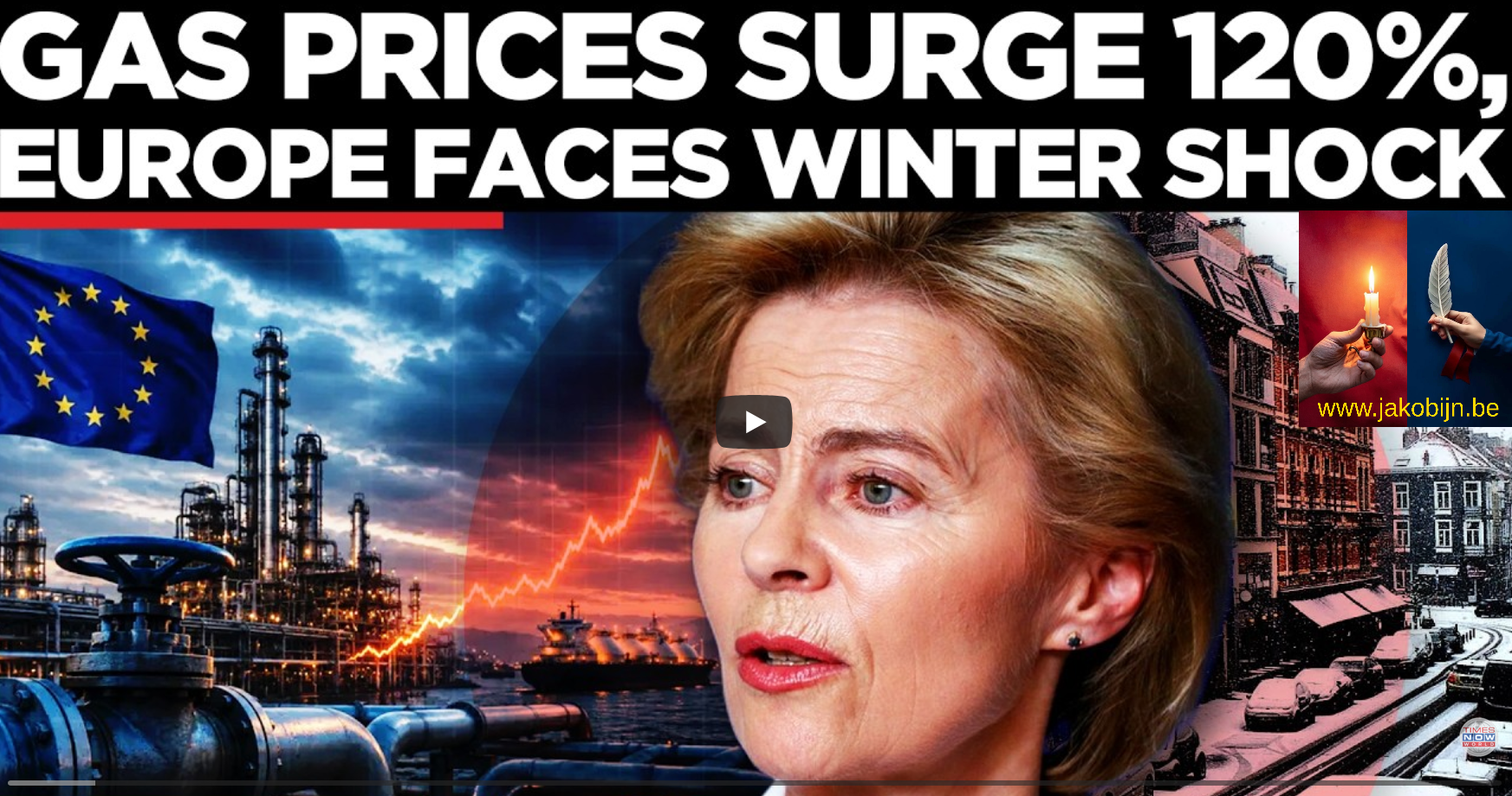
Europe's energy supply is in a state of deep, structural vulnerability—a reality systematically downplayed or wrapped in a narrative of triumphant resilience by the official channels of the European Union. While the European Commission, led by Ursula von der Leyen, attempts to convince the world of a successful transition and an overcome dependency, the hard market figures and fundamental economic analyses point to a very different truth. Europe stands on the brink of a potentially catastrophic energy crisis, where prices are not merely fluctuating cyclically but are structurally driven up by a combination of physical market tightness, a fundamentally flawed market design, and short-sighted geopolitical policy.
This article analyzes the current energy crisis through three crucial perspectives. First, the physical and market-technical reality as outlined by analyses from Times Now World, demonstrating how a confluence of climatic and geopolitical factors jeopardizes gas reserves. Second, the profound structural critique from economists Yanis Varoufakis and Wolfgang Munchau, who argue that the European electricity market is not a failing free market but a designed 'scam' systematically draining consumers and industry. Third, the official narrative of Ursula von der Leyen is critically dissected, exposing the claim of 'energy independence' as a dangerous illusion that actually makes Europe more dependent on volatile global markets. The thesis is clear: as long as Europe clings to an ideologically driven energy market that denies the reality of natural monopolies and geopolitical dependencies, winter will bring not only cold but also a devastating economic and social toll.
Part I: The Physical Reality – A Perfect Storm in the Gas Market
The Summer Storage Crisis and Climate Extremes
The foundation of European energy security traditionally rests on a simple but crucial principle: the summer months are used to fill gas storage facilities, creating a robust buffer for the winter months. In the summer of 2026, however, this foundation has been severely disrupted. Record temperatures and persistent heatwaves have had a paradoxical effect on the energy infrastructure. Normally, demand for heating would be low, but the extreme heat has caused demand for cooling electricity to soar explosively. At the same time, these climatic conditions have severely impaired the production of other energy sources. Drought has lowered river water levels, reducing the output of hydropower plants in countries like Norway, Switzerland, and Southern Europe. Additionally, heatwaves have hampered the cooling of nuclear power plants, leading to forced production cuts in the nuclear sector, particularly in France. The gap in electricity supply is being filled by gas-fired power plants. The perverse result is that Europe is consuming gas precisely during the period when it should be storing it. The hotter the summer, the harder it becomes to bring storage levels to the desired target, creating a direct, linear relationship between climate extremes and energy prices.
Supply Constriction and Global LNG Competition
In addition to rising demand, Europe is being squeezed on the supply side. Disruptions in global supply chains are acute. There are persistent threats to liquefied natural gas (LNG) flows due to strategic chokepoints like the Strait of Hormuz, where any geopolitical tension directly impacts insurance premiums and delivery times. Furthermore, Norway, Europe's most reliable pipeline supplier after the rupture with Russia, has extended maintenance at key gas fields, further delaying expected injections into the European network. The fundamental problem is that by voluntarily giving up Russian pipeline gas, Europe has now become entirely dependent on the global LNG market. Pipeline gas is a bilateral, relatively stable, and cheaper agreement. LNG is a globally traded commodity, subject to the relentless laws of supply and demand in a tight market. European buyers now compete directly with the enormous and growing demand from Asia, particularly China and India, for the same available cargoes. Whenever supply becomes tighter anywhere in the world, Europe must bid at any price to secure its energy supply. This competition structurally drives prices up, regardless of domestic efficiency efforts.
The Math of a Cold Winter: The Lack of Buffer
The storage figures do not lie. At the end of summer, European gas reserves are around 60% capacity, well below the target levels the European Commission itself has set for a comfortable winter start. This storage must be seen as the continent's emergency fuel tank. If this tank is full, a sudden cold snap can be absorbed without panic on the spot market. If the tank is half-empty, every drop in temperature becomes a race against time to secure new supplies at exorbitant prices. The biggest risk factor is not that gas is expensive today, but that a weather shock could occur at the moment Europe has the least room to absorb it. A mild winter could give Europe temporary breathing space, but a long, cold winter will exponentially increase heating demand, precisely when storage reserves begin to deplete. Europe would then be forced to compete even more aggressively with Asia for LNG, potentially driving prices to unprecedented heights. The chain is clear: heatwaves increase demand, reduced hydro and nuclear output increase gas consumption, supply disruptions tighten the market, and empty storage leaves Europe defenseless. The consequences extend far beyond the heating bill; they include higher energy costs for industry, persistent inflation, and increased pressure on the European Central Bank's interest rates.
Part II: The Structural Scam – Why the Energy Market Fundamentally Fails
The Myth of the Free Market and the Reality of the Natural Monopoly
While the physical market conditions are alarming, Yanis Varoufakis and Wolfgang Munchau rightly point out in their analysis that the deeper problem lies in the fundamental design of the European energy market. There is a persistent political myth that electricity and gas can be traded as normal commodities in a free, competitive market. Varoufakis convincingly argues that a functioning, competitive electricity market is an impossibility, not due to poor regulation, but because of the inherent properties of electricity itself. First, electricity is homogeneous: a kilowatt-hour is identical, regardless of whether it is generated by solar, wind, nuclear, or gas. Second, it is delivered via a single network of wires, a classic natural monopoly where consumers cannot 'shop' between different physical networks. Third, electricity is an essential input with inelastic demand; consumers and businesses cannot simply stop using electricity when the price rises. These three factors mean that 'market-conforming' pricing in practice amounts to simulated competition that in reality functions as a state-backed cartel. What is presented as a free market is in fact a 'great electricity scam' where risks are socialized and profits are privatized.
Marginal Cost Pricing: The Mechanism of the 'Great Electricity Scam'
The heart of this structural scam is the system of 'marginal cost pricing'. In this system, the price of electricity for all producers is determined by the costs of the most expensive, marginal generator needed to meet demand. In practice, this is almost always a gas-fired power plant. This leads to a perverse and counter-intuitive outcome. Even if a large portion of electricity is generated by renewable sources with very low marginal costs (such as wind and solar, where the 'fuel' is free), the market price is still set by the high price of the necessary backup gas. Consequently, the expansion of renewable energy fails to structurally lower consumer prices. Instead, the system creates enormous 'windfall rents' for producers of cheap energy (such as nuclear or fully depreciated renewable parks), who sell their power at the gas-driven high market price. The consumer and industry pay the bill, while energy giants book record profits. This is not an accident; it is a design choice that protects the interests of established energy companies at the expense of the European economy.
The Capacity Shortage and the Geopolitical Backlog
Wolfgang Munchau adds a crucial macro-economic dimension to this critique. Europe's larger problem is not just the price, but the lack of strategic energy capacity and planning. While the United States and China are investing massively in energy infrastructure to accommodate the exploding demand from artificial intelligence, data centers, and advanced industries, Europe remains stuck in ideological debates and bureaucratic hurdles. Munchau points out that productivity growth in Europe has been stagnating for years, partly due to this energy uncertainty. Even if politicians want change, they are constrained by the bond market, strict fiscal rules, and an institutional framework that blocks radical, publicly-led investment policies. Varoufakis's proposed solution is therefore radical but necessary: the abolition of the electricity market and its replacement by an 'electricity commons'. This model would be based on community or municipal ownership of generation and storage, a publicly managed network optimized with modern technology, and a shift from marginal cost pricing to average cost pricing. Only then can consumers pay the actual production costs, and energy poverty be combated. As long as this reform is delayed, established interests will continue to rig the system to their own advantage.
Part III: The Brussels Narrative – A Critical Analysis of Ursula von der Leyen
The Illusion of 'Independence'
In contrast to these somber but realistic analyses stands the rosy narrative of the European Commission. In her speeches, including her State of the Union and addresses at the World Economic Forum, Ursula von der Leyen paints a picture of a Europe that has taken control of its energy destiny. She claims that Europe has achieved a victory by breaking dependence on Russian gas (which, she states, fell from one in five to one in twenty units). She emphasizes that Europe now produces more electricity from wind and sun than from gas, and that this forms the basis for a new industrial competition. This claim is a dangerous half-truth. Europe is indeed less dependent on Russian *pipelines*, but it has traded this dependency for an even more vulnerable dependency on the global LNG market, dominated by suppliers in the United States, Qatar, and other regions. Pipeline gas was a stable, long-term contract-based relationship with a neighboring country. LNG is subject to the whims of global shipping, geopolitical conflicts in the Gulf region, and an auction mechanism where Europe must constantly outbid Asia. Von der Leyen's claim of 'independence' is thus an illusion; it is a shift from regional to global dependency, at a much higher price and with much greater security risks.
The 'Clean Industrial Deal' as a Neoliberal Band-Aid
To address this lack of competitiveness, the Commission promotes the 'Clean Industrial Deal', including measures such as a 'Battery Booster' package of €1.8 billion and 'made in Europe' criteria for public procurement. Von der Leyen states that these measures will stimulate demand and supply in a 'virtuous cycle'. From the perspective of Varoufakis and Munchau, however, this is a neoliberal band-aid on a wooden leg. Injecting limited government subsidies into a market that is fundamentally flawed due to marginal cost pricing does not solve the underlying problem. It merely enables energy-intensive industry to survive temporarily, without addressing the structural reform of the electricity grid or pricing. Moreover, this policy ignores the reality that Europe, through its self-imposed sanctions and rejection of cheap, stable energy sources, has imposed a structural competitive disadvantage on itself compared to the US and China. The 'race to climate neutrality' thus becomes not a race to win, but a race to slow down the deindustrialization of Europe. The emphasis on 'technology that will shape the global economy' sounds hollow as long as the basic precondition for that economy—affordable, abundant energy—is absent.
Part IV: Geopolitical and Historical Lessons – The Price of Ideological Policy
The current energy crisis is not the result of an inevitable natural disaster, but of a series of conscious, ideologically driven political choices. Historically, prosperous civilizations have always relied on the availability of abundant and affordable energy. The industrial revolution in Europe was made possible by cheap coal; post-war prosperity was partly carried by a steady supply of affordable fossil fuels. The decision to abruptly and completely sever energy ties with Russia, despite geopolitical tensions, without having a realistic, affordable, and scalable alternative ready, is one of the most profound and damaging policy errors in recent European history. It was a victory of moral posture over economic realism. The result is that the European middle class and working population pay the price through inflation and declining purchasing power, while heavy industry (such as chemicals and steel production) is forced to relocate production to regions with lower energy costs, such as the United States or Asia. This policy undermines not only the economic foundation of the European Union but also its social cohesion. When energy becomes a luxury good instead of a basic right, inequality increases. The refusal of the political establishment to listen to alternative voices, such as those of Varoufakis and Munchau, who point to the need for public ownership and a break with the dogma of the free market, shows how much European politics is stuck in a lobby-dictated status quo. The 'productivity stagnation' Munchau warns about is the direct result of this lack of strategic vision.
Conclusion: The Need for a Paradigm Shift
Europe's energy supply is not merely 'precarious'; it is structurally defective. The analysis of the physical market by Times Now World shows that buffers for winter are dangerously low, and that any cold spell or geopolitical shock could exponentially drive up prices due to dependence on the global LNG market. The economic analysis by Varoufakis and Munchau reveals that this is no accident, but the result of a 'marginal cost pricing' system that functions as a state-backed scam, benefiting energy cartels at the expense of consumers and industry. In contrast to this harsh reality stands the self-deception of the Brussels establishment. Ursula von der Leyen's narrative of a 'won clean energy race' is a dangerous distraction that masks the deeper deindustrialization and new dependencies. Europe cannot compete in the technology of the future if it cannot keep the basic energy of the present affordable. The solution requires a radical paradigm shift. Europe must move away from the illusion that energy is a normal commodity that can be left to the whims of the global market. There is an urgent need to move towards an 'electricity commons': a system of public or community ownership, average cost pricing, and strategic, state-coordinated capacity building driven not by short-term profit motives, but by the necessity of national and continental survival. Without this fundamental reform, the coming winter will be not only a test of our heating systems but a relentless exposure of the bankruptcy of current European energy policy. The time for half-measures and ideological dogmas is over; physical and economic reality brooks no further delay.
List of References
1. Times Now World. (2026). Why Europe’s Gas Prices Have Doubled And Why Winter Could Be Worse. YouTube. Available at: https://youtu.be/ejq1NT1mhCE. (This source forms the basis for the analysis of physical market dynamics, including the impact of heatwaves on gas storage, Norwegian maintenance, and competition with Asia for LNG).
2. Varoufakis, Y., & Munchau, W. (2026). Europe's energy scam is worse than you think. The Econoclasts / UnHerd. YouTube. Available at: https://youtu.be/c_TEXunHPkI. (This source provides the fundamental economic critique of 'marginal cost pricing', the analysis of the electricity market as a 'state-backed cartel', and the warning about the lack of strategic energy capacity compared to the US and China).
3. Von der Leyen, U. (2024/2026). Ursula von der Leyen Reveals How Europe Plans to Win the Clean Energy Race and Cut Dependence. European Commission / World Economic Forum context. YouTube. Available at: https://youtu.be/AGgXuAw0LL4. (This source is used as the primary target of the critical analysis, specifically focusing on the claim of 'energy independence' and the effectiveness of the 'Clean Industrial Deal' and 'Battery Booster' measures).
4. Additional contextual analysis and verification of market mechanisms and policy statements was conducted via public transcripts and summaries of the aforementioned video sources to ensure the accuracy of the arguments presented.