
The Illusion of Atlantic Unity and the Deliberate Downfall of Europe
By Frank Dumon
Introduction: The Bankruptcy of Unipolar Thinking
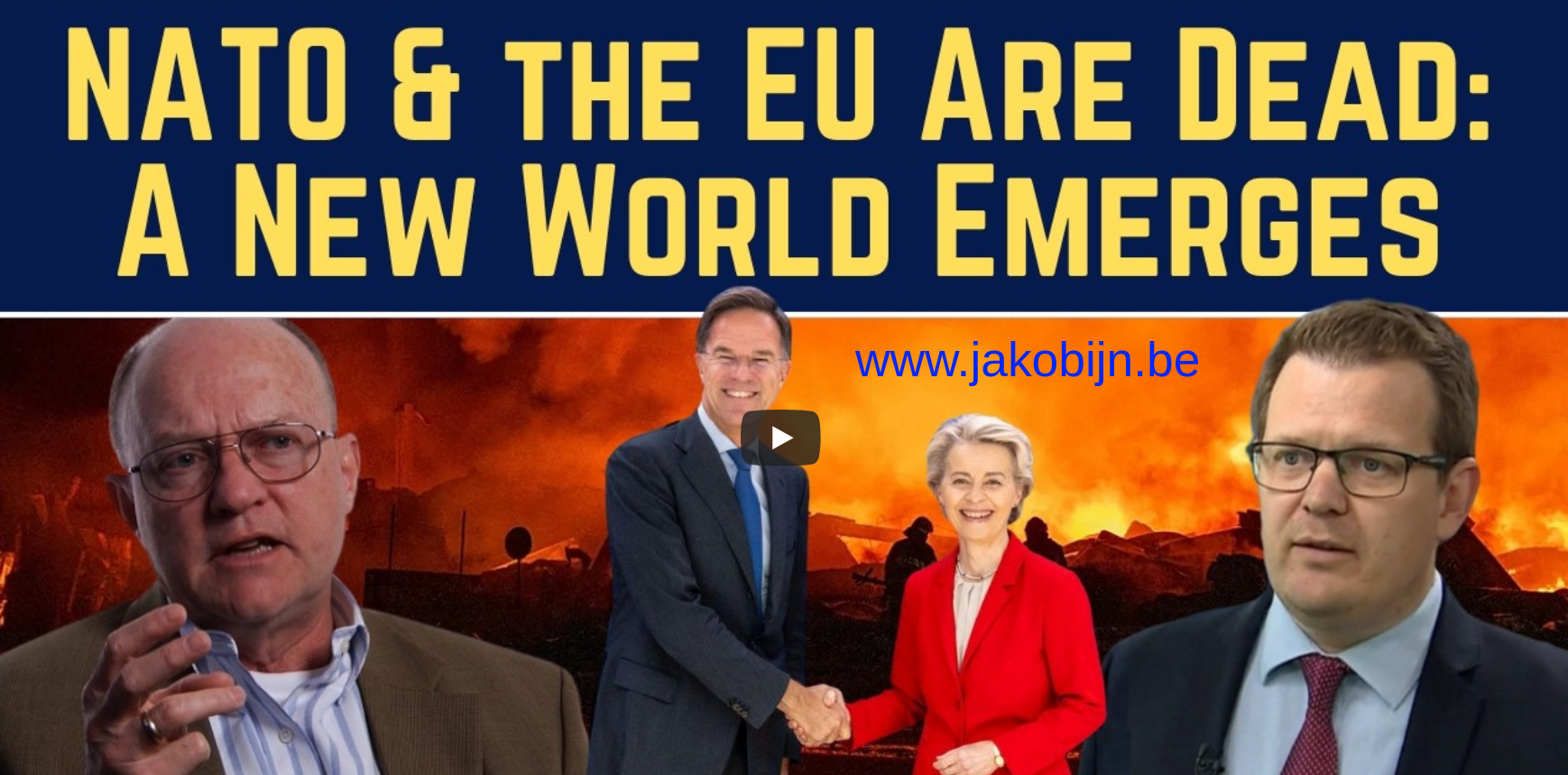
The contemporary geopolitical architecture finds itself in a state of irreversible transformation. What has been presented over the past three decades by Western establishment think tanks and media as the "end of history" – a stable, unipolar world order led by Washington and its European allies – is increasingly revealing itself to be a costly, destructive, and morally bankrupt illusion. Drawing on the revealing and detailed analyses of former Colonel Lawrence Wilkerson, former chief of staff to Secretary of State Colin Powell, an uncomfortable truth is laid bare, one that is consistently ignored by mainstream media. The current crisis in Europe, the devastating war in Ukraine, and the apparent collapse of the trans-Atlantic project are not an unfortunate coincidence, nor the result of unforeseeable Russian expansionism. They are the logical, and by many in Washington even intended, result of a decades-long, Central Intelligence Agency (CIA)-driven agenda.
This agenda, carried by ideologically blind neoconservatives and globalists, has not only systematically provoked Russia but has also sacrificed the sovereignty, prosperity, and future of Europe on the altar of the American military-industrial complex. It is a story of betrayal, of broken promises, and of administrative incompetence installed at the top of American and European power. In this first part, we will outline how the foundations of the current conflict were laid, how figures like Victoria Nuland and Anthony Blinken sacrificed an entire country, and why the current misery of the European continent is essentially a deserved consequence of this lack of strategic autonomy and moral leadership.
The Broken Promises of 1990: George H.W. Bush and the Missed Chance for Peace
To comprehend the current catastrophe, it is essential to return to the crucial historical window that opened at the beginning of the 1990s, during the collapse of the Soviet Union. There existed then a real, tangible possibility to create a new, inclusive security architecture for the European continent, an architecture that would stretch from the Atlantic to the Urals. As Lawrence Wilkerson emphatically and repeatedly stresses, George H.W. Bush, an "old-school gentleman" whose word still carried actual weight in the diplomatic world, gave clear and unequivocal guarantees to Mikhail Gorbachev, German Chancellor Helmut Kohl, French President François Mitterrand, and Soviet Foreign Minister Eduard Shevardnadze.
The promise was clear and was confirmed in several bilateral talks: the North Atlantic Treaty Organization (NATO) would not expand "one inch eastward." Instead of seeking military confrontation, a new European security identity was to be built. A clear path would be created for Russia to join European political structures, and possibly, if agreed upon, military structures as well. An entirely new security architecture would be forged, in which the Organization for Security and Co-operation in Europe (OSCE) would play a central role, and Russia would be treated as an equal partner, not as a defeated enemy to be humiliated.
This visionary plan, developed by the Joint Staff and supported by responsible statesmen who understood history, was however systematically and deliberately sabotaged. The turning point came with the election of Bill Clinton. Wilkerson speaks about this with unusual sharpness and contempt. He describes Clinton as a politician who, supported by the Israeli lobby (which sought revenge on Bush senior for his pressure to uphold the Oslo Accords), opened the doors to a new, unbridled form of state capitalism. By repealing the Glass-Steagall Act in 1999, the American state was effectively handed over to predatory corporate interests and financial institutions.
This new power elite, dominated by giants like Lockheed Martin, RTX (formerly Raytheon), and Boeing, needed a new, larger market for their weapons systems and military services. The solution was simple, profitable, and destructive: an expanded NATO. The promises to Gorbachev were not simply forgotten or "misunderstood"; they were actively and deliberately broken. This was the fundamental betrayal that laid the groundwork for the current conflict. Wilkerson states that for the first time in history, we sacrificed a flourishing, positive relationship with Russia for the short-term profits of defense contractors and ideological dogma.
The Takeover by the Military-Industrial Complex and the Role of the CIA
The execution of this neoconservative dream was taken over in the following decades by a deep network of ideologues, lobbyists, and intelligence services. Lawrence Wilkerson dismisses the narrative that the United States or NATO "misunderstood" the Russian red lines or Moscow's historical sensitivities. "I don't think they misunderstood anything," Wilkerson states emphatically. "I think they understood it very well. They knew exactly what they were doing."
The Central Intelligence Agency (CIA), according to Wilkerson, was "big time" at the head of this operation. The intelligence agency was not merely a spectator but the active director of the destabilization of the European periphery. Wilkerson reveals how the American power apparatus systematically "bought," manipulated, or pressured European parliamentarians, newspaper editorial boards, academic institutions, and entire political systems to support the NATO agenda. Leaders like Jens Stoltenberg and Mark Rutte are presented in this analysis as products of this system: officials who subordinated their national interests to Washington's strategic goals and were willing to mislead their own populations about the true nature of the "expansion of freedom."
The CIA was not only involved in organizing the Maidan revolution in Ukraine in 2014 but remains to this day the most steering and simultaneously the most hated factor in Ukraine. The agency is responsible for operations, training, and intelligence flows over which even the American president often has no full overview. "That's the way we do things nowadays," Wilkerson notes cynically. This shadow power has consistently undermined diplomatic solutions in favor of military escalation.
Victoria Nuland, Anthony Blinken, and the Sacrifice of Ukraine
The faces of this destructive policy are figures like Victoria Nuland and Anthony Blinken. Wilkerson speaks devastatingly about their competence and their moral compass. He classifies them, along with Robert Kagan and other neoconservatives, as "incompetent, biased people" driven by ideological obsession rather than by a sense of reality or concern for the human lives their policy costs.
Their goal was not Ukraine's stability, the prosperity of the Ukrainian people, or even the security of Europe. Their goal was to undermine Ukraine in such a way that the country had no choice but to sacrifice itself as a "sacrificial fulcrum" to bring Russia down. Wilkerson states that these figures deliberately created a situation where Ukraine was forced to choose a leader and follow a path that would inevitably lead to conflict with Russia. They knew it would happen, and they deliberately proceeded anyway.
Nuland's diplomatic arrogance, famously captured in her leaked remark "Fuck the EU" during the Maidan crisis, is symptomatic of a broader contempt for European sovereignty. Blinken, who began his career in the Clinton administration and rose to become the architect of current foreign policy, has continued this line. Instead of negotiating Russia's legitimate security concerns (such as the demand that Ukraine remain neutral and not join NATO), every Russian warning was dismissed as imperialist rhetoric. This was not diplomacy; it was setting up a chess game that would come at the cost of millions of Ukrainians.
The Deserved Downfall of Europe: A Consequence of Strategic Blindness
Europe's downfall is not a byproduct of this American strategy; it is a function of it. By allowing itself to be persuaded to sabotage the cheap Russian energy infrastructure (such as Nord Stream 1 and 2) – an act of economic terrorism against its own population – and cutting itself off from emerging Asian markets, Europe has deindustrialized itself. German industry, traditionally the continent's engine, is on the brink of collapse. Companies are relocating their production to the United States or Asia, attracted by lower energy prices and a more stable geopolitical environment.
The inflation, exploding energy prices, rising national debts, and massive flow of capital to the United States are the direct result of this geopolitical self-mutilation. Europe has been reduced to a vassal state, a "buffer zone" absorbing the economic and military blows of a conflict it did not start, did not want, and cannot possibly win. The current misery of the continent is therefore, in Wilkerson's harsh, relentless analysis, fully deserved. It is the result of a lack of strategic autonomy, of missing moral leadership, and of a slavish subservience to a hegemon that will ultimately drop Europe once it is no longer useful.
European leaders have lied to their populations about the nature of the conflict, about the feasibility of sanctions, and about the willingness of the United States to defend European interests above its own. The reality is that the United States profits from the war: it sells expensive liquefied natural gas (LNG) to Europe, sells weapons to Ukraine (financed by the American taxpayer), and sees its industrial competition in Europe disappear. It is a perfect storm of extraction, and Europe voluntarily opened the door.
Conclusion of Part 1: The Necessity of a Paradigm Shift
Lawrence Wilkerson's revelations paint a grim but illuminating picture of the origins of our current crisis. The war in Ukraine is not an anomaly; it is the culmination of decades of policy of provocation, expansion, and hubris. The CIA, driven by incompetent ideologues like Nuland and Blinken, crushed the promises of George H.W. Bush and plunged Europe into an abyss. Acknowledging this truth is the first, painful step towards recovery. As long as Europe clings to the illusion that it can achieve victory through more weapons and more sanctions, it will only hasten its own downfall.
The only way out lies in a radical paradigm shift: rejecting Atlantic subservience, restoring diplomatic relations based on reality instead of ideology, and recognizing that Europe's future does not lie in Washington, but in an independent position that can serve as a bridge in an emerging, multipolar world. In Part 2, we will explore how this multipolar world is already taking shape, particularly through the Shanghai Cooperation Organization (SCO) and the BRICS countries, and why this new order, despite Western fears, forms the only realistic basis for long-term peace and prosperity.
Part 2: The Decline of the Atlantic Model and the Rise of a Multipolar World Order
The SCO and BRICS as Symbols of a New Reality
The Bankruptcy of the Unipolar Model and the Optics of Power
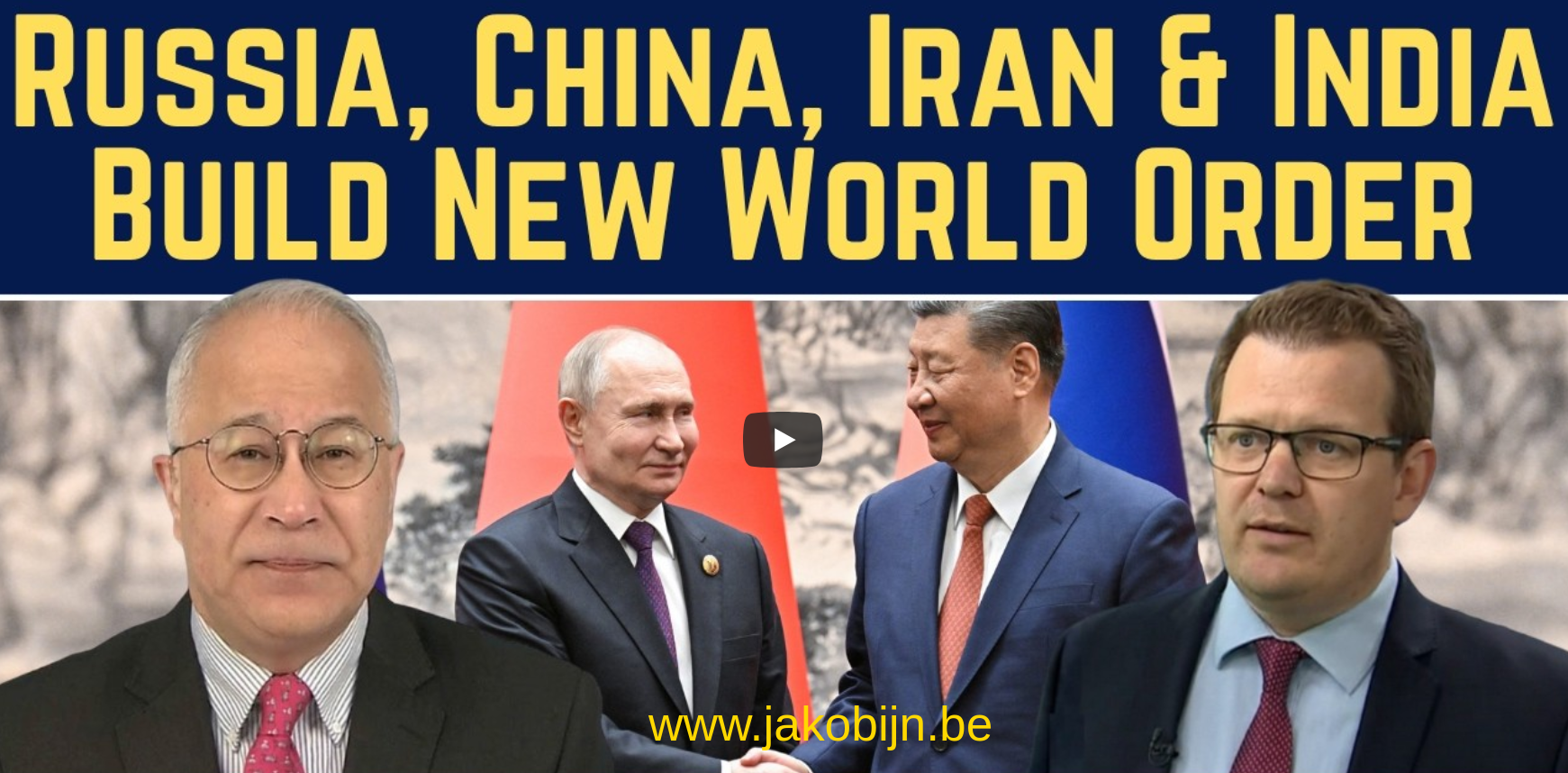
While the West entrenches itself in a cycle of self-pity and escalation, a fundamentally different world order is taking shape in the East. The recent summit of the Shanghai Cooperation Organization (SCO) in Kyrgyzstan, where leaders from Russia, China, India, Iran, and other member states gathered, is the most telling evidence of this. As analyst Einar Tangen sharply notes, there is nothing that frightens Washington more than the image of these leaders laughing together, shaking hands, and holding constructive consultations. For the hegemonic thinkers in Washington D.C., this is a "nightmare." The two most populous countries in the world (China and India), combined with Russia's resource wealth and Iran's strategic position, form a bloc that makes the American dream of global dominance impossible.
The SCO has evolved from a mere security alliance focused on terrorism and separatism in Central Asia into a powerful geo-economic platform. This transformation is crucial. By shifting focus to economic development, infrastructure, and trade, the SCO has created a "virtuous cycle." Industrial zones are being built, supply chains are becoming safer, and prosperity is being generated. This stands in stark contrast to the Western model, which, as Tangen puts it, is based on the "politics of scarcity": creating shortages, controlling markets, and extracting value at the expense of the periphery.
Consensus instead of Coercion: The Philosophy of the New Order
The fundamental difference between the emerging multipolar order and the dying unipolar model lies in the philosophy of governance. The Western model is inherently hierarchical and coercive: "You are either with us, or against us." Countries are forced to choose, and deviant behavior is punished with sanctions, regime change, or economic warfare, as currently visible in the pressure on Venezuela, Cuba, and Iran.
The SCO and BRICS countries, on the other hand, employ a model of consensus. As Tangen emphasizes, this does not mean there are no disagreements. On the contrary, in a multipolar world, there are more perspectives. But the mechanism for resolving conflicts is not the threat of tanks or sanctions, but patient negotiation at the table. The starting point is that the security of one country should not come at the expense of the security of another, and that every country has the right to choose its own development path, free from interference by foreign bankers or intelligence services. This respect for sovereignty and cultural diversity is the glue that holds these diverse nations together.
The Strategic Axis: Russia, China, and the Illusion of Isolation
The relationship between Russia and China within the SCO is the backbone of this new order. Western commentators often try to portray this partnership as a marriage of unequals, where Russia would be reduced to a mere raw materials supplier for China. The reality, however, is much more nuanced and mature. Russia is aware of China's economic gravity, but by broadening the SCO with India, Iran, and Central Asian states, it prevents China from becoming an undisputed hegemon within the bloc. It is a balanced system of checks and balances.
The negotiations over projects like the Power of Siberia 2 gas pipeline illustrate this mature dynamic. Instead of Western ultimatums, we see patient negotiation over timing and conditions. Russia has successfully reoriented its energy exports to Asia, largely causing Western sanctions to miss their intended devastating effect. Moreover, these sanctions have forced Russia to modernize its economy and break its dependence on the Western financial system (the dollar), a process now being accelerated across the SCO through the development of alternative payment systems.
India's Dilemma: Caught Between East and West
One of the most fascinating dynamics within the SCO is India's position. New Delhi has for years tried to be an "independent pole of power," while simultaneously being courted by the US as a "doorstop" against China. The US hoped that historical border tensions between India and China could be used to permanently draw India into the Western camp. This strategy, however, is failing miserably.
As Einar Tangen analyzes, India is being treated increasingly poorly by Washington, including through arbitrary trade tariffs and a lack of respect for its strategic autonomy. At the same time, China has become India's largest trading partner, not through political decrees, but because Chinese goods meet the demands of the Indian consumer in terms of quality and price. India attempts to balance, but the reality is setting in: an independent position is incompatible with Washington's hegemonic demands, which require total submission. The rapprochement between India, Russia, and China within the SCO framework is therefore a sign that India is choosing pragmatic, interest-based cooperation over ideological loyalty to a dying hegemon.
Conclusion and Recommendations for the Future
The analyses of Lawrence Wilkerson and Einar Tangen lead to an inescapable conclusion: the unipolar world order is not only morally bankrupt but also functionally dead. The attempts of the United States to maintain its dominance through escalation, including the alarming rhetoric about tactical nuclear weapons, testify to a desperate, declining power. Europe, as a loyal vassal, bears the heaviest burden of this downfall.
For independent thinkers, publicists, and policymakers willing to face reality, the following recommendations are essential:
- Intellectual Independence: Radically break with Atlantic think-tank narratives. Analyze geopolitics from the perspective of the Global South and the BRICS countries, not from the assumed superiority of the Western model.
- Preparation for the Post-Dollar Economy: Understand that de-dollarization is no longer a theory but an accelerating reality. Economic and legal structures must be adapted to enable trade and cooperation beyond the reach of Western sanctions.
- Direct Diplomacy and Cooperation: Bypass the corrupt or ideologically blinded official Western channels. Build direct ties with organizations, intellectuals, and institutions in Russia, China, Southeast Asia, and the Middle East, based on mutual respect and shared historical experiences (such as the shared history of anti-colonial resistance).
- Documentation and Archiving: As in my own project 'The Price of Illusion', it is crucial to document the truth. Preserving and sharing primary sources, photographs, and testimonies (like my archive from Vietnam) is an act of resistance against Western historical falsification.
Sources Consulted
- Diesen, G. (Host). (2026). Lawrence Wilkerson: NATO & the EU are Dead - A New World Emerges. [Video]. YouTube. https://youtu.be/H9gD_YOeJwA (Transcript and analysis consulted via Glenn Diesen Substack and related archives).
- Diesen, G. (Host). (2026). Einar Tangen: Russia, China, Iran & India Build a New World Order at the SCO Summit. [Video]. YouTube. https://youtu.be/96MJ0ejUG8c (Transcript consulted via The Singju Post and Glenn Diesen Substack).
- Wilkerson, L. (2021-2026). Various analyses and interviews concerning the role of the CIA, NATO expansion, and the situation in Ukraine, e.g., via The Analysis.news and WBUR.
- Tangen, E. (2026). Various publications and analyses on the Shanghai Cooperation Organization, geo-economics, and the multipolar world order, e.g., via the Taihe Institute and personal Substack publications.