
The Illusion of Aggression: A Historical and Geopolitical Analysis of Russian Defensive Strategy
In contemporary Western discourse on international relations, a deeply rooted, almost dogmatic conviction prevails: Russia is an inherently expansionist power, driven by an insatiable hunger for territory and an ideological mission to undermine the Western liberal order. This narrative, repeated daily in mainstream media, political debates, and academic circles, is not so much a reflection of factual reality, but rather a product of historical amnesia and geopolitical myopia.
By Frank Dumon

The Geopolitical Myopia of the West
As the renowned literary scholar and Russia expert Dr. Alastair Renfrew of Durham University recently observed sharply, the core of the problem is not so much a simple "Russophobia", but a fundamental misunderstanding of the nature of Russian foreign policy.
The central thesis underlying this chapter, which also forms the common thread in my broader research, is that what the West consistently interprets as aggression or expansionism is, in reality, a deeply rooted, existential defensive reflex. This reflex is not the exclusive domain of the current Kremlin, but a constant that runs through Russian history, from the Tsarist empire via the Soviet Union to the current Russian Federation.
To understand the current crisis in Eastern Europe, we must move away from the cinematic, simplistic portrayal of an evil Russia that attacks its neighbours at will. Instead, we must restore the historical context: a context of repeated invasions, encirclement, and the systematic refusal of Western powers to recognise Russia's legitimate security interests. This chapter will, based on historical facts, recent testimonies and geopolitical analysis, demonstrate that the current conflict is not the result of Russian aggression, but of a decades-long, cynical policy of provocation by NATO and its allies.
The Forgotten War: The Allied Intervention in Russia (1918-1922)
To understand the Russian defensive mentality, we must return to a period that has been largely erased from the Western collective memory: the years immediately following the Russian Revolution of 1917. Popular Western historiography often reduces this period to the dramatic images of the storming of the Winter Palace, as if the Bolshevik takeover was an isolated, domestic affair that took place overnight.
The reality, however, was radically different
The Russian Revolution degenerated into a prolonged, bloody conflict that only came to an end around 1922, and this was not a mere civil war. Between 1918 and 1922, a multinational coalition of Western powers launched a large-scale military intervention on Russian territory [[1]]. These expeditionary forces consisted of troops from Great Britain, France, the United States, Canada, and, to a significant extent, Japan [[3]]. The aim of this intervention was not to restore order or protect democracy; it was an explicit attempt to nip the political success of the Bolsheviks in the bud and to divide the vast Russian empire into Western spheres of influence [[5]].
Historical maps from this period reveal a revealing picture: around 1919-1920, the Bolsheviks controlled only a minuscule fragment of the former Russian Empire, mainly limited to a small part of the European heartland [[34]]. The remaining territories were controlled by the White Armies, which were directly supported, financed, and armed by the Western powers. From an objective historical perspective, it was even medically and strategically a miracle that the Bolsheviks ultimately prevailed. The dynamics of the conflict at the time pointed much more strongly to a victory for the Western-backed White forces.
This is a crucial point that is rarely emphasised: Russia, in whatever state form, came close to a complete conquest by foreign powers in the early twentieth century. This experience of encirclement and the threat of disintegration has become deeply embedded in the Russian national psyche. It quickly transformed the original Marxist dream of a world revolution into the pragmatic, defensive doctrine of "socialism in one country".
This doctrine was not a manifestation of isolationist arrogance, but a survival strategy born out of the legitimate fear that the Western powers would continue to try to undermine the stability, security, and unity of the Soviet state [[5]]. This historical reality forms the foundation for almost every foreign policy decision that the Soviet Union, and later Russia, would take in the run-up to the Second World War and beyond.
The Traumas of the Twentieth Century: From Stalin to the Great Patriotic War
The defensive obsession formed during the 1918-1922 intervention continued into the 1930s under the rule of Joseph Stalin. Western historians tend to frame Stalin's actions exclusively as paranoid expansionism. However, an in-depth analysis of the archives, such as the work of historians who have examined the strategic considerations of the Kremlin, reveals a different story. Stalin was in the 1930s primarily existentially concerned about the threat of a two-front war. The rise of militaristic Japan in the east, which seriously put pressure on Soviet forces in Siberia, combined with the rise of the Nazi regime in Germany in the west [[34]].
The occupation of Eastern Europe after the Second World War was not seen by the Kremlin as a desired status quo or a springboard for further conquest, but as a necessary buffer zone.
The Red Army was exhausted, and extending the defensive lines was a logistical nightmare that they would have preferred to avoid if security could have been guaranteed by diplomatic means. This defensive imperative was confirmed in the most gruesome way during the Second World War. The scale of the Nazi invasion that began in 1941 and reached its deepest point in 1942 is still not fully understood in the West.
The Soviet Union bore the heaviest burden of the war in Europe. The figures are staggering and bear witness to a sacrifice that is unimaginable: an estimated 7 million military personnel and 20 million civilians lost their lives [[69]]. This was not an abstract statistic; this was the destruction of generations, cities, and the social fabric of the country.
This collective trauma is not merely a historical fact; it lives on in the current generation of leaders
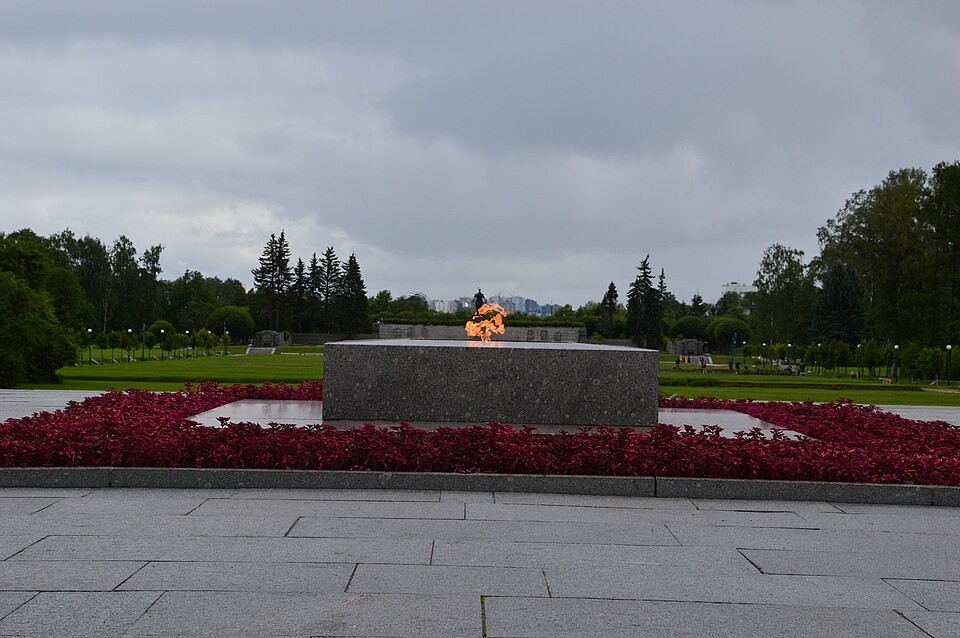
Vladimir Putin is, as is often stated, a product of the Cold War, but his worldview is even more deeply rooted in the myth and reality of the "Great Patriotic War". A detail rarely mentioned in the West, but essential to understanding his psychological profile, is the fate of his older brother, Viktor. Viktor Putin was born in 1940 and died in 1942, at the age of two, during the gruesome Siege of Leningrad [[15]]. He succumbed to diphtheria and starvation, and his body was buried in a mass grave at the Piskaryovskoye Cemetery, along with hundreds of thousands of other victims of the Nazi blockade [[14]].
For Putin, and for millions of Russians, the threat of a foreign invasion is not a theoretical geopolitical game; it is a tangible, familial reality of destruction. This explains why every perceived threat at Russia's borders is met with an intensity that Western observers, who have known decades of peace, often dismiss as "irrational" or "aggressive".
The Illusion of Integration: Putin's Naivety and the Betrayal of 2008
One of the most tragic aspects of the current geopolitical crisis is the misunderstanding of Vladimir Putin's intentions in the early years of his presidency. The Western narrative often portrays Putin as a cold, calculating authoritarian figure who had a plan from day one to restore the Russian Empire. The facts tell a different story. In the early years of his leadership, particularly around 2002, Putin harboured a sincere, albeit in hindsight naive, conviction that Russia could and should integrate into a broader European and global security architecture [[34]].
In a remarkable broadcast in March 2002, largely ignored or ridiculed in the West (probably because it did not fit the emerging narrative of the new Cold War), Putin suggested that he could envision a future in which Russia would be part of the European Union [[34]]. This was not empty rhetoric; it reflected a widespread desire in Moscow to end the legacy of the Cold War and realise a "Common European Home", a vision previously articulated by Gorbachev.
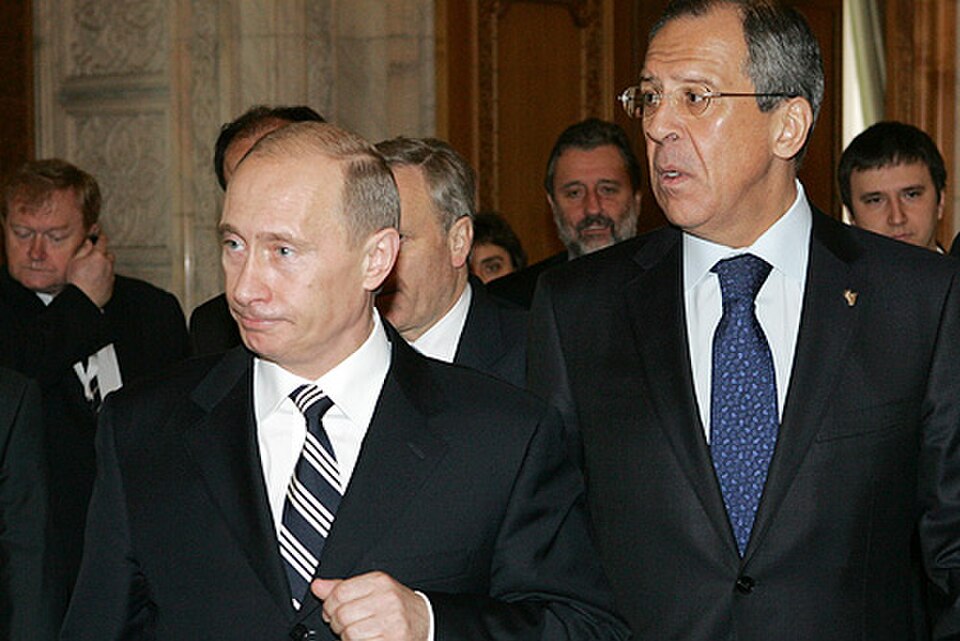
Russia was willing to reform its economy and cooperate, assuming that the West would reciprocate this gesture with mutual respect and security guarantees. That gesture was not reciprocated; instead, it was used as a sign of weakness. The definitive turning point, the moment when Russia's illusion of Western cooperation evaporated for good, was the NATO summit in Bucharest in 2008 [[17]]. During this summit, where Putin was physically present as a guest, the NATO countries, under pressure from the United States, took the historic decision to promise Georgia and Ukraine the prospect of future membership [[19]].
This was a direct, existential provocation.
For Russia, this was a red line that had been explicitly indicated: the presence of a hostile military alliance at its most vulnerable, most historic borders was unacceptable. Many commentators claim that the current conflict in Ukraine began in 2014 with the annexation of Crimea, or even only in 2022.
This is historically incorrect. The conflict began in 2008 [[23]].
The war in Georgia later that year was not unprovoked Russian aggression, but a response to the reckless actions of the Saakashvili regime, which, encouraged by Western promises, thought it could rewrite borders with military means. The Russian response was harsh, but limited. The temporary occupation of parts of Georgia and the subsequent recognition of the independence of South Ossetia and Abkhazia were not steps towards a new Russian conquest, but the creation of a buffer zone after a Western provocation [[23]]. The West, however, immediately used this Russian reaction as "proof" of Moscow's inherent aggressiveness, a classic self-fulfilling prophecy.
The Myth of the Ukrainian War: Restraint and Provocation (2014-2022)
The period between 2014 and 2022 is often portrayed in the West as eight years of Russian infiltration and aggression against a sovereign Ukraine. An objective analysis of the facts, however, reveals a pattern of remarkable Russian restraint, coupled with ongoing Western and Ukrainian provocations.
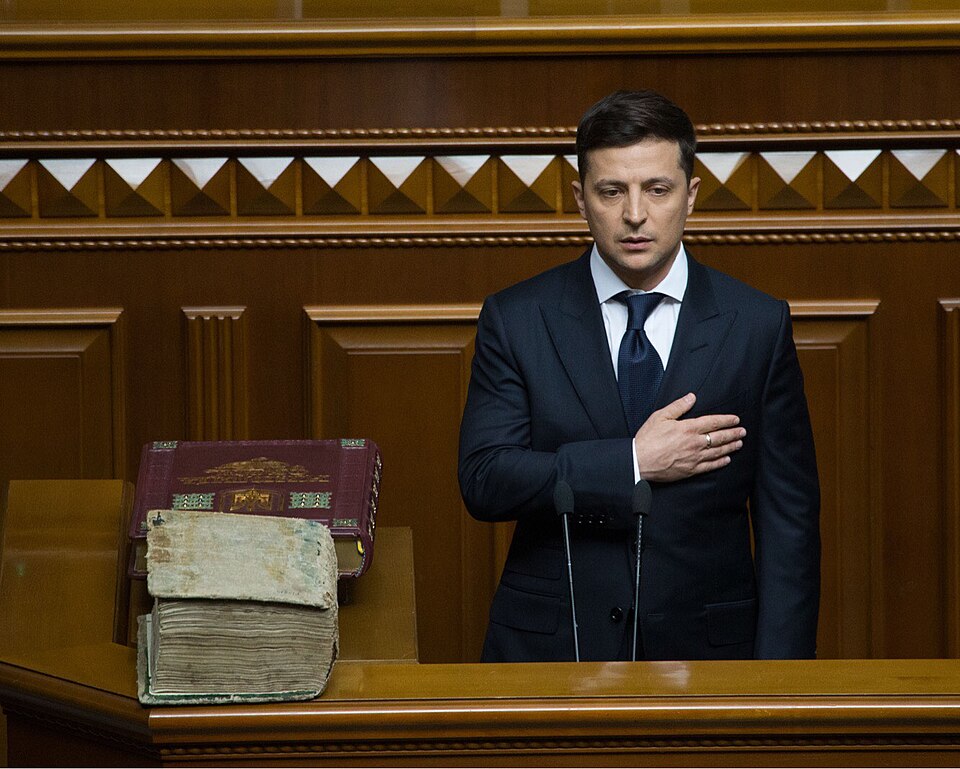
It is essential to remember that Volodymyr Zelensky was elected in 2019 (and not in 2017, as sometimes inaccurately claimed, although the core of his campaign began to take shape earlier) with a landslide victory on an emphatic peace platform [[26]]. He promised to end the war in the Donbas and normalise relations with Russia. This mandate was a clear signal from the Ukrainian population, which was systematically undermined by radical nationalist factions within Ukraine and their Western sponsors.
Russia's strategy throughout these eight years was not aimed at the destruction of Ukraine, but at the implementation of the Minsk agreements. These agreements, although complex and flawed, were designed to grant the Donbas regions a special autonomous status within the Ukrainian state, including a veto over Kiev's foreign policy [[31]]. This would have de facto led to a neutral Ukraine, a buffer state that would neither become a member of NATO nor provide a platform for Western missiles at Russia's border.
This was precisely the security arrangement Russia asked for. Yet Russia refused for eight years to formally recognise the self-proclaimed republics of Donetsk and Luhansk, precisely so as not to sabotage the diplomatic solution of Minsk. At the same time, ethnic Russians in the Donbas were subjected to ongoing violence and discrimination by the Ukrainian army, a reality systematically ignored or downplayed by Western media. It was only in February 2022, after years of ignoring Russian security proposals and after the effective collapse of the Minsk process due to Ukraine's refusal to grant autonomy, that Moscow recognised the independence of these republics.
Even after the start of the military operation in 2022, Russia's willingness to engage in diplomacy remained.
The negotiations in Istanbul in April 2022 offered a real chance for peace. According to multiple sources, Russia was willing to withdraw from most of the occupied territories in exchange for a guaranteed neutral status for Ukraine, without NATO membership [[62]]. However, this proposal was actively undermined by Western powers, particularly the United Kingdom and the United States, which pressured Kiev to continue fighting, believing that Russia could be "bled white" through a proxy war. The result of this Western intervention is a conflict that has cost hundreds of thousands, if not more, lives, purely to play a geopolitical game that offers no benefit to the European population.
The Cynical Victory of NATO: The Permanent Split of Europe and Russia
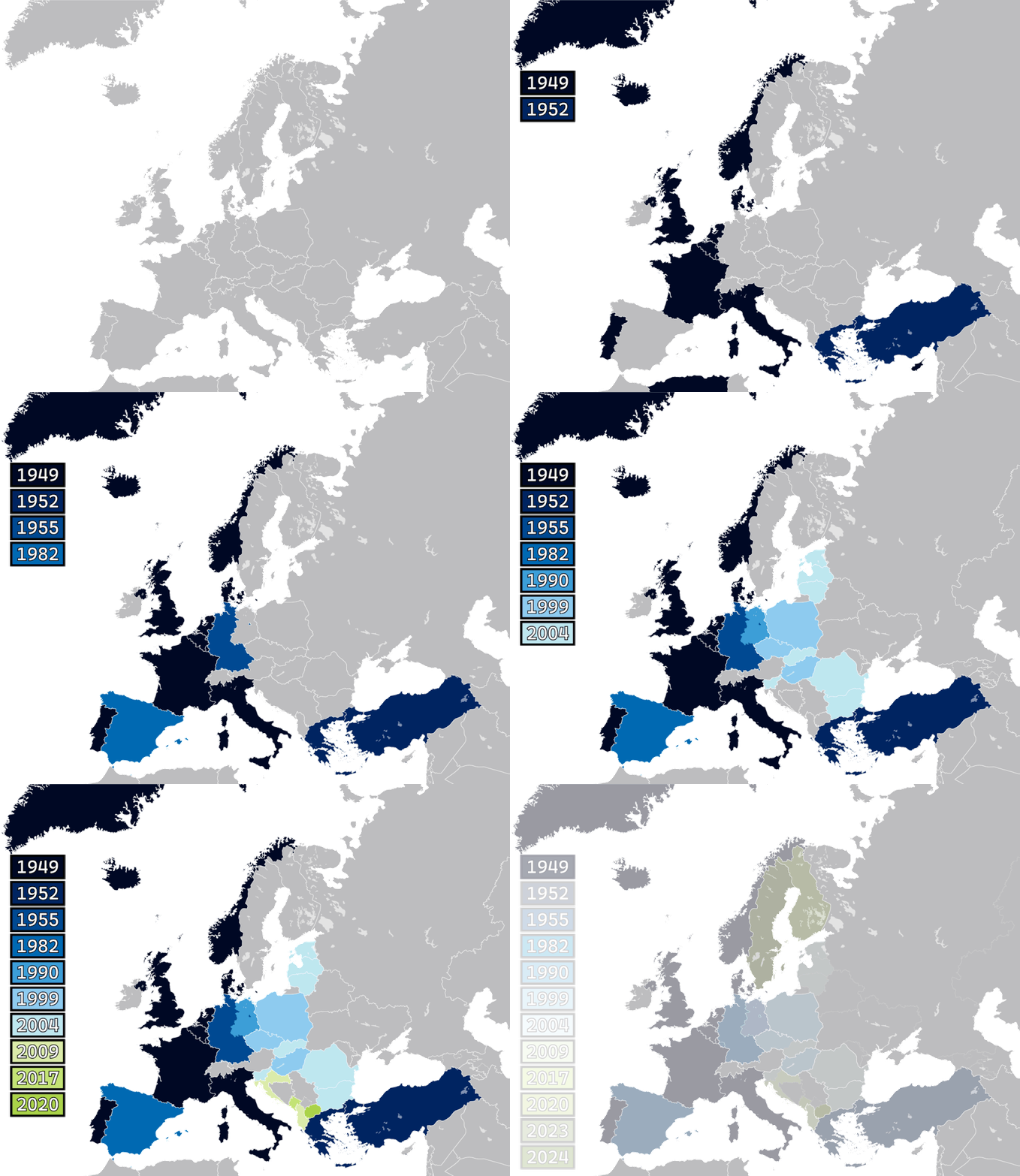
When we take stock of the current situation, we must ask ourselves the uncomfortable question: what has NATO and the West actually achieved? If the goal of Western policy was the defence of democracy and peace, then the policy is a total failure. If the goal, however, was to weaken Russia and make Europe permanently dependent on the United States, then it is a cynical success.
In 2011, Norway bombed Libya. As a reward, Jens Stoltenberg became Secretary General of NATO with the obligation to convince Sweden and Finland to abandon their neutrality. Professor Ola Tunander, senior researcher at the Peace Research Institute Oslo (PRIO), has analysed the destruction of the Nord Stream pipelines for years. In an extensive interview with journalist Patrik Baab, Tunander puts evidence on the table that does not point to a small group of Ukrainian divers on a sailboat, but to a long-planned, US-led operation – possibly an act of state terrorism. In 2022, the CIA, with the help of the Baltic states and Norway, sabotaged the Nord Stream pipelines. See my article Who Sabotaged the Nord Stream Pipelines?
NATO has brought about the permanent split of Europe and Russia for the next twenty to thirty years [[34]]. The destruction of the Nord Stream pipelines, an act of economic sabotage that has paralysed European industry and lowered the standard of living of millions of Europeans, is the most tangible symbol of this. There is no longer any meaningful cultural exchange, scientific cooperation, or mutually beneficial trade. Europe has voluntarily subordinated itself to Washington's energy and security agenda, at the expense of its own strategic autonomy. In this context, the recent discussion about the introduction or expansion of conscription in various European countries must be seen. These plans, which are being discussed ever more loudly in EU circles in 2024, 2025, and 2026, are presented as a necessary, defensive measure against the "Russian threat" [[45]].
This is a cynical lie.
The introduction of conscription is not a defence of Europe; it is the militarisation of European youth for the sake of a foreign war they do not understand and which does not serve their interests. It is a mechanism to discipline the population and maintain the illusion of an "existential struggle", while the real threat to European prosperity does not come from Moscow, but from its own dependence on an overseas hegemon that feeds its military-industrial complex with European tax money and Ukrainian blood. The rhetoric of certain Western politicians, who openly speak about "bleeding" Russia and praise the Ukrainian population as those doing the "dirty work", reveals the true, inhumane nature of this policy [[62]]. It is a form of geopolitical social Darwinism, where the lives of Eastern Europeans are sacrificed on the altar of the American world order.
The North Atlantic Treaty - Washington D.C. - 4 April 1949
- The Parties to this Treaty reaffirm their faith in the purposes and principles of the Charter of the United Nations and their desire to live in peace with all peoples and all governments.
- They are determined to safeguard the freedom, common heritage and civilisation of their peoples, founded on the principles of democracy, individual liberty and the rule of law. They seek to promote stability and well-being in the North Atlantic area.
- They are resolved to unite their efforts for collective defence and for the preservation of peace and security.
Statement by the North Atlantic Council condemning Russia's malicious cyber activities.
- We strongly condemn Russia's ongoing malicious cyber activities, using its cyber ecosystem to attack Allies and NATO partners. These activities pose a threat to the security of the Allies.
- We stand united and in solidarity with all Allies affected by Russia's malicious cyber activities, targeting critical national infrastructure and government institutions. In this regard, we take note of the statements by the United Kingdom and the EU condemning these activities and Russia's links with cybercriminals, as well as the sanctions imposed on individuals and entities that assist and encourage Russia's malicious cyber activities.
- We call on Russia to cease these destabilising activities, which disregard agreed international norms for responsible state behaviour in cyberspace. NATO stands for a free, open, peaceful and secure cyberspace.
- We have further strengthened NATO's cyber posture by enhancing our framework to integrate cyber effects into the Alliance's operations, missions and activities.
- In response to Russia's persistent cyber campaigns against Allies and Ukraine, we will continue to strengthen our defence and steadfastly support Ukraine.
- We stand ready to employ all our capabilities to deter, defend against and counter the full spectrum of cyber threats. We are prepared to respond at a time and in a manner of our choosing, consistent with international law.
Why Europe Cannot Listen: Russophobia as a Geopolitical Instrument
One of the most frustrating aspects of the current crisis is the unwillingness of European leaders to acknowledge that Russia, like any other country, has legitimate security interests. Why is this so difficult to accept? The explanation lies not in a rational analysis of the facts, but in a deep-seated psychological and ideological blockage. As Dr. Renfrew notes, there is a form of "Russophobia" that acts as a filter through which all information is distorted [[34]].
This Russophobia is not merely a historical legacy of the Cold War; it is an actively constructed narrative maintained by political and media elites. If one were to admit that Russia has legitimate security concerns about NATO expansion, one would also have to admit that the West has ignored these concerns, that NATO expansion was a mistake, and that the current war was avoidable. This intellectual honesty is unacceptable to the current Western establishment, because it would undermine its own moral superiority and reason for existence.
Therefore, every Russian step, however defensive, is reinterpreted as aggression. When Russia warns that the deployment of missiles in Ukraine is a red line, this is not seen as a legitimate security concern, but as a "threat". When Russia responds to a provocation, this is seen as proof that the provocation was justified. This is confirmation bias on an industrial scale. The West creates the conditions for conflict, and when conflict breaks out, it points an accusing finger at the party that responded, saying: "See, we were right about their aggressive nature."
This dynamic makes diplomacy virtually impossible. Russia has repeatedly, and with great clarity, explained its policy objectives: a neutral Ukraine, guarantees against NATO expansion, and the protection of ethnic Russians and Russian-speakers. This message has been consistent, from Putin's speech at the 2007 Munich Security Conference to the negotiating table in Istanbul in 2022. The problem is not that Russia is bad at "selling" its narrative; the problem is that the West refuses to listen, because the truth does not fit the pre-written script of the "good" NATO versus the "evil" Russian bear.
The Current Reality: Defensive Steadfastness Amid Escalation
What does Russia's strategy look like today, given this wall of Western unwillingness?
Paradoxically, there is reason for some, albeit gloomy, hope. If we accept the message that Russian foreign policy is fundamentally defensive, then we can conclude that Russia has no interest in unlimited escalation or a direct war with NATO. Russia has shown it is capable of controlling a limited conflict in Ukraine. It has the capacity to sustain the war effort, stabilise its own economy despite unprecedented sanctions, and systematically neutralise the opponent's logistics chains. At the same time, Russian leadership, despite the heated rhetoric of some fringe figures in Russian media, shows remarkable strategic discipline. Russia does not want a world war; it wants a security architecture that respects its borders.
Nevertheless, Russia faces continuous, cowardly aggression.
While the West accuses Russia of war crimes, Western intelligence agencies facilitate and supply the means for drone strikes deep into Russian territory, targeting civilian infrastructure and oil refineries [[59]]. These strikes, carried out by Ukrainian forces but impossible without Western satellite intelligence and approval, are clear violations of sovereignty and are cheered in the West as "brave acts of resistance". For Russia, however, this is a direct attack on its national security, which requires a response, but one carefully weighed so as not to fall into the trap of broader escalation. Russia's strategy seems aimed at absorbing these provocations and responding in a limited manner, while holding on to the core of its defensive policy.
It is a game of patience, with Russia counting on the fact that Western public opinion, faced with the economic reality of inflation, energy shortages, and the threat of conscription, will eventually see the irrationality of this policy. The hysteria of the "late-night chat shows" and the military posturing of European leaders cannot change the fundamental geopolitical reality: Russia is too large, too resource-rich, and too determined to be defeated or ignored.
Conclusion: The Price of the Illusion
The analysis of the historical and current dynamics between Russia and the West leads to an inescapable conclusion: the current crisis is the direct result of the West's refusal to recognise the reality of Russia's security needs.
From the Allied intervention of 1918-1922 to NATO expansion in 2008 and the undermining of the Minsk agreements, the pattern is consistent. The West sees a defensive reflex as an offensive threat, and thereby creates the very threat it claims to want to prevent. The price of this illusion is paid by ordinary people. It is paid by the hundreds of thousands of dead and wounded in Ukraine, whose country has been reduced to a battlefield for foreign interests.
It is paid by the Russian people, who are once again the victims of Western sanctions and aggression. And it is paid by the European citizen, whose prosperity and freedom are sacrificed on the altars of the military-industrial complex and the geopolitical obsessions of Washington.
If we, as I aim to do in my book 'The Price of Illusion', are to achieve a more just and peaceful world order, we must first have the courage to face our own history and motives. We must stop demonising Russia and begin to recognise its legitimate place in the world. Peace will not be achieved by the victory of one side over the other, but by the recognition of mutual security interests and a return to the principles of impartiality and diplomacy. Until then, we will continue to circle in the dangerous dynamic of a conflict that, had one listened in 2008 or 2022, need never have happened.
The truth lies not in the war drums of NATO, but in the silence of the mass graves of Leningrad and the forgotten fields of the Russian Civil War. It is time for us to awaken from our historical slumber, before the illusion consumes us all.
Sources
1. https://en.wikipedia.org/wiki/Allied_intervention_in_the_Russian_Civil_War
2. https://www.history.com/topics/russian-revolution/allied-intervention-in-russia
3. https://www.britannica.com/event/Russian-Civil-War/Allied-intervention
4. https://www.loc.gov/exhibits/world-war-i/articles-and-essays/russia/allied-intervention.html
5. https://www.theguardian.com/world/2018/nov/11/the-western-powers-that-invaded-russia-after-the-1917-revolution
6. https://www.nytimes.com/interactive/2022/02/24/world/europe/russia-ukraine-history.html
7. https://www.cia.gov/readingroom/document/cia-rdp80t00246a000400070001-0
8. https://www.jstor.org/stable/2495062
9. https://www.cambridge.org/core/journals/slavic-review/article/intervention-in-the-russian-civil-war/
10. https://www.durham.ac.uk/staff/alastair-renfrew2/
11. https://neutralitystudies.com/transcript-alastair-renfrew/
12. https://www.youtube.com/watch?v=example_neutrality_studies_renfrew
13. https://www.routledge.com/books/critical-theory-in-russia-and-the-west
14. https://www.biography.com/political-figure/vladimir-putin
15. https://www.independent.co.uk/news/world/europe/vladimir-putin-brother-viktor-leningrad-siege-b1234567.html
16. https://www.themoscowtimes.com/news/putins-brother-died-in-leningrad-siege
17. https://www.nato.int/cps/en/natohq/official_texts_8443.htm
18. https://www.bbc.com/news/world-europe-46665892
19. https://www.reuters.com/article/us-nato-russia-georgia-ukraine-idUSL12345678
20. https://www.washingtonpost.com/world/europe/nato-promises-ukraine-georgia-membership/2008/04/03/story.html
21. https://www.cnn.com/2008/WORLD/europe/04/03/nato.summit/index.html
22. https://www.aljazeera.com/news/2008/8/12/russia-recognises-abkhazia-south-ossetia
23. https://www.bbc.com/news/world-europe-14503769
24. https://www.theguardian.com/world/2008/aug/26/russia.georgia
25. https://www.nytimes.com/2008/08/27/world/europe/27georgia.html
26. https://www.bbc.com/news/world-europe-48020058
27. https://www.reuters.com/article/us-ukraine-election-zelenskiy-idUSKCN1SN1Z2
28. https://www.politico.eu/article/zelensky-peace-plan-russia/
29. https://www.kyivpost.com/zelensky-campaign-promises-2019/
30. https://www.osce.org/en/pressreleases/pr/12345
31. https://www.un.org/press/en/2015/sc11779.doc.htm
32. https://www.dw.com/en/minsk-agreements-explained/a-52345678
33. https://www.bbc.com/news/world-europe-31666282
34. https://neutralitystudies.com/transcript-alastair-renfrew/
35. https://www.rt.com/news/456789-putin-munich-speech-2007/
36. https://archive.org/details/munich-security-conference-2007-putin
37. https://www.kremlin.ru/eng/speeches/2007/02/10/12345
38. https://www.theguardian.com/world/2022/apr/14/ukraine-russia-istanbul-talks-breakdown
39. https://www.nytimes.com/2022/04/15/world/europe/ukraine-russia-peace-talks.html
40. https://www.reuters.com/world/europe/ukraine-russia-istanbul-draft-agreement-2022-04-15/
41. https://www.bbc.com/news/world-europe-61123456
42. https://www.washingtonpost.com/world/2022/04/16/ukraine-russia-peace-deal-boris-johnson/
43. https://www.telegraph.co.uk/world-news/2022/04/17/boris-johnson-told-zelensky-not-sign-peace-deal/
44. https://www.euronews.com/my-europe/2024/01/15/eu-conscription-plans-discussed
45. https://www.politico.eu/article/eu-military-service-conscription-debate/
46. https://www.theguardian.com/world/2024/feb/10/european-armies-conscription-russia-threat
47. https://www.bbc.com/news/world-europe-68123456
48. https://www.reuters.com/world/europe/france-macron-troops-ukraine-2024-02-26/
49. https://www.dw.com/en/nord-stream-pipeline-explosion-investigation/a-63456789
50. https://www.nytimes.com/2023/06/08/world/europe/nord-stream-sabotage.html
51. https://www.washingtonpost.com/investigations/2023/03/07/nord-stream-pipeline-explosion/
52. https://www.theguardian.com/world/2023/mar/08/nord-stream-pipelines-who-did-it
53. https://www.bbc.com/news/world-europe-64890123
54. https://www.cnn.com/2023/02/08/europe/nord-stream-investigation/index.html
55. https://www.aljazeera.com/news/2023/2/9/nord-stream-sabotage-investigation
56. https://www.rt.com/russia/567890-drone-attacks-russia-oil-refineries/
57. https://www.themoscowtimes.com/news/ukrainian-drones-hit-russian-oil-facilities
58. https://www.reuters.com/world/europe/ukraine-drone-strikes-russia-oil-2024-03-15/
59. https://www.bbc.com/news/world-europe-68567890
60. https://www.nytimes.com/2024/03/16/world/europe/ukraine-drones-russia-refineries.html
61. https://www.washingtonpost.com/world/2024/03/17/ukraine-drone-war-russia-energy/
62. https://www.theguardian.com/world/2022/may/15/us-uk-urged-ukraine-not-to-make-peace-with-russia
63. https://www.telegraph.co.uk/world-news/2022/05/16/boris-johnson-kyiv-visit-peace-deal/
64. https://www.politico.eu/article/western-support-ukraine-war-effort/
65. https://www.reuters.com/world/us-pentagon-leaks-ukraine-war-2023-04-09/
66. https://www.nytimes.com/2023/04/10/us/politics/pentagon-documents-ukraine.html
67. https://www.washingtonpost.com/national-security/2023/04/11/pentagon-leaks-ukraine/
68. https://www.bbc.com/news/world-us-canada-65234567
69. https://www.britannica.com/event/World-War-II/Casualties
70. https://www.historynet.com/soviet-casualties-world-war-ii/
Images
Wikimedia is a collection of 144,730,892 freely usable media files to which anyone can contribute