
I need distance – physical, cultural, moral distance – to be able to behold the debacle of the warmongering West
That is why I am leaving for a long stay in my beloved Vietnam

Why Europe’s Gas Prices Have Doubled And Why Winter Could Be Worse
By Frank Dumon
What I see is a Western, so-called civilized, world that is slowly but surely destroying itself. The West appears not only morally bankrupt, but above all clinically insane. The leaders in Brussels, Washington, London, Paris and Berlin speak of "values" and a "rules-based order", but what they put into practice is an endless escalation of conflicts that they cannot win. The recent threats of nuclear destruction, which make any form of diplomatic consultation impossible, will end in an outright catastrophe. It is a theater of absurdity, performed by an elite that has completely lost touch with reality.
What do I see? A world that cannot cooperate with BRICS including RIC Russia Iran China, not because they pose a threat, but because the West cannot accept that it is no longer the sole architect of the world order. The American and European elite are trapped in a delusion of superiority that has lost every form of sense of reality. They do not see the rise of China as a natural consequence of economic development, but as an existential threat. They do not see Russia's refusal to submit to NATO expansion as a legitimate concern for its own security, but as an act of aggression. They do not see Iranian resistance as an expression of national pride, but as proof of terrorism.
The West cannot cooperate, because cooperating would mean that it must recognize its own superiority as an illusion. It would mean that it must face its own history of colonialism, imperialism and exploitation. It would mean that it must admit that the "values" it so highly proclaims – democracy, human rights, freedom – are in practice nothing more than instruments of power, used to subjugate and exploit other countries.
China, Russia, Iran, Vietnam also have their own problems, their own shortcomings, their own challenges. But they have something that the West has lost: a sense of purpose, a sense of direction, a sense of national pride. They know who they are, and they know where they want to go. The West, on the other hand, is a world that has lost its identity, that has betrayed its history, and that now tries to maintain its relevance through war and intimidation. How can leaders who are so rich, so powerful, so privileged, choose a path that leads to destruction? How can they close their eyes to the reality that the world has changed, that the era of Western dominance is over, and that the future lies in cooperation, not in confrontation?

The answer, I fear, is that they cannot. They are trapped in a system that forces them to escalate, to threaten, to destroy. They are the prisoners of their own propaganda, of their own lies, of their own fear of irrelevance. And while they do this, while they send the world to the abyss, the civilizational states of the East continue to build their future, with a patience and a determination that the West has long since lost.
This article is a first attempt to document that reality, to draw the parallels between the past and the present, to unmask the lies and archive the truth. It is a testimony of the decline of the West, but also a recognition of the rise of a new world order, a world order that is not based on dominance, but on cooperation; not on war, but on peace; not on lies, but on truth. May the reader who reads this, with open eyes and an open mind, understand the lesson that these countries teach us: that pride does not come from superiority, but from self-knowledge; that power does not come from intimidation, but from respect; and that the future does not belong to those who shout the loudest, but to those who work the hardest.
Part I: The Moral Bankruptcy and the Illusion of the Invincible Empire
Introduction: The Cowardly and Indifferent West and the Duty to Bear Witness
 It is a heavy and often lonely task to keep pointing out the sore spot in times of collective self-deception. The observation that my articles about the true nature of Western foreign policy are being read less and less is not so much a shortcoming of my own, but rather a symptom of the spirit of the times and the fact that Facebook is changing the algorithms causing me to fall back from 50,000 to 70,000 views to at most a few thousand. It is the silence of a population that, conditioned by misleading and often ridiculous TV programs and by decades of propaganda, no longer wants to or can recognize reality. When leaders openly call for destruction, when wars that have long been lost are fueled with even more violence, and when the public responds with a shrug, then we have reached the point of moral bankruptcy.
This silence is not new, but it has reached an unprecedented intensity. Patrick Henningsen has analyzed this silence aptly: "It is not only the words that we should worry about. It is the silence that followed within our societies." It is not Trump's rhetoric that is most terrifying, but the total lack of opposition from European leaders, the G7 and the Democratic opposition. This silence is the true measure of moral decay. When the norm has shifted so far that threatening the total destruction of a sovereign state is accepted as "strong leadership," then the moral compass needle is forever broken.
This article is not an attempt to please the masses, but a necessary archiving of the facts. History is not only written by the victors, but also by those who refuse to lose their memory and moral awareness. The task of the independent journalist and thinker is to preserve the documents, to draw the parallels, and to provide the sharp analysis that the reader who is searching needs. The Facebook readership numbers may decline in the current algorithm-driven era, the value of the text only increases as time passes.
The Rhetoric of the Abyss: An Analysis of the UN Speech
The recent speech by the American president before the General Assembly of the United Nations will go down in the history books as one of the most revealing moments of the definitive and irreversible decline of the Western empire. It was not a diplomatic address, but an open demonstration of imperialist arrogance and a frontal attack on the post-war multilateral system. The president not only boasted about a fictitious "Golden Age" of American dominance, but went on to openly threaten the total annihilation of sovereign states.
The threats directed against Iran were of an unprecedented scale. The claim that the American army has buried the Iranian nuclear program under "mountains of rubble," has sunk the navy and has destroyed the economy, is accompanied by the rhetorical question: "Should I annihilate the Islamic Republic and do it quickly, without ever giving them the chance to kill and destroy people and countries, again, should I drive them into hell without any chance of survival and without hope of future greatness or generations?" This is the language of a power that no longer sees international law as a framework, but as an obstacle that must be removed with brute force.
It is a violation of the Charter of the United Nations in all its foundations. Article 2(4) of the Charter explicitly prohibits the threat or use of force against the territorial integrity or political independence of a state. The president not only violates this, but does so on the stage of the United Nations itself, the institution that was precisely founded to prevent this kind of behavior. The most terrifying thing about this is not the rhetoric itself, but the silence that followed.
As Henningsen rightly notes: "the lack of pushback after his incredible UN speech... no pushback from the G7, from the moral crusader Mark Carney, from any of the high-flown, high-moral European leaders, or even from the Democratic opposition within the United States." When the norm shifts and threatening mass destruction is accepted as "strong leadership," the moral compass needle is forever broken. Where were Ursula Von der Leyen, Kaja Kallas, those other 42,000 conceited EU idiots and the European prime ministers?
The speech went further than just threats; it outlined a worldview of pure conquest. The claim of "permanent control" over Greenland ("This agreement gives the United States permanent control over security and all other needs in that territory"), the military intervention in Venezuela under the guise of liberating the country from an "outlaw dictator" to then divide the oil reserves ("to the victor the spoils"), and the contempt for the International Criminal Court (ICC) and UNESCO, show a pattern. It is the pattern of a power that knows its legitimacy is waning, and that therefore tries to maintain its dominance through pure intimidation and the demolition of institutions that could limit its behavior.
The president openly declared that the United States is "just as opposed to the out-of-control institution known as the International Criminal Court" and called on all member states to "immediately and officially withdraw from this rogue institution." This is a frontal attack on international criminal law, a system that was precisely designed to prosecute war crimes and crimes against humanity. It is the logic of impunity: if you are powerful enough, you do not have to adhere to the rules you yourself have established.
The 'Windows 97' Operating System of the West
To understand why the West clings to this destructive course, we must look at the geopolitical architecture. Patrick Henningsen's analysis that the United States and its allies still operate on the basis of an outdated "Windows 97" operating system is apt. This system, designed after the Second World War and consolidated after the collapse of the Soviet Union, is based on an Anglo-American maritime hegemony, the control of global trade routes, and the dominant role of the American dollar as world reserve currency.
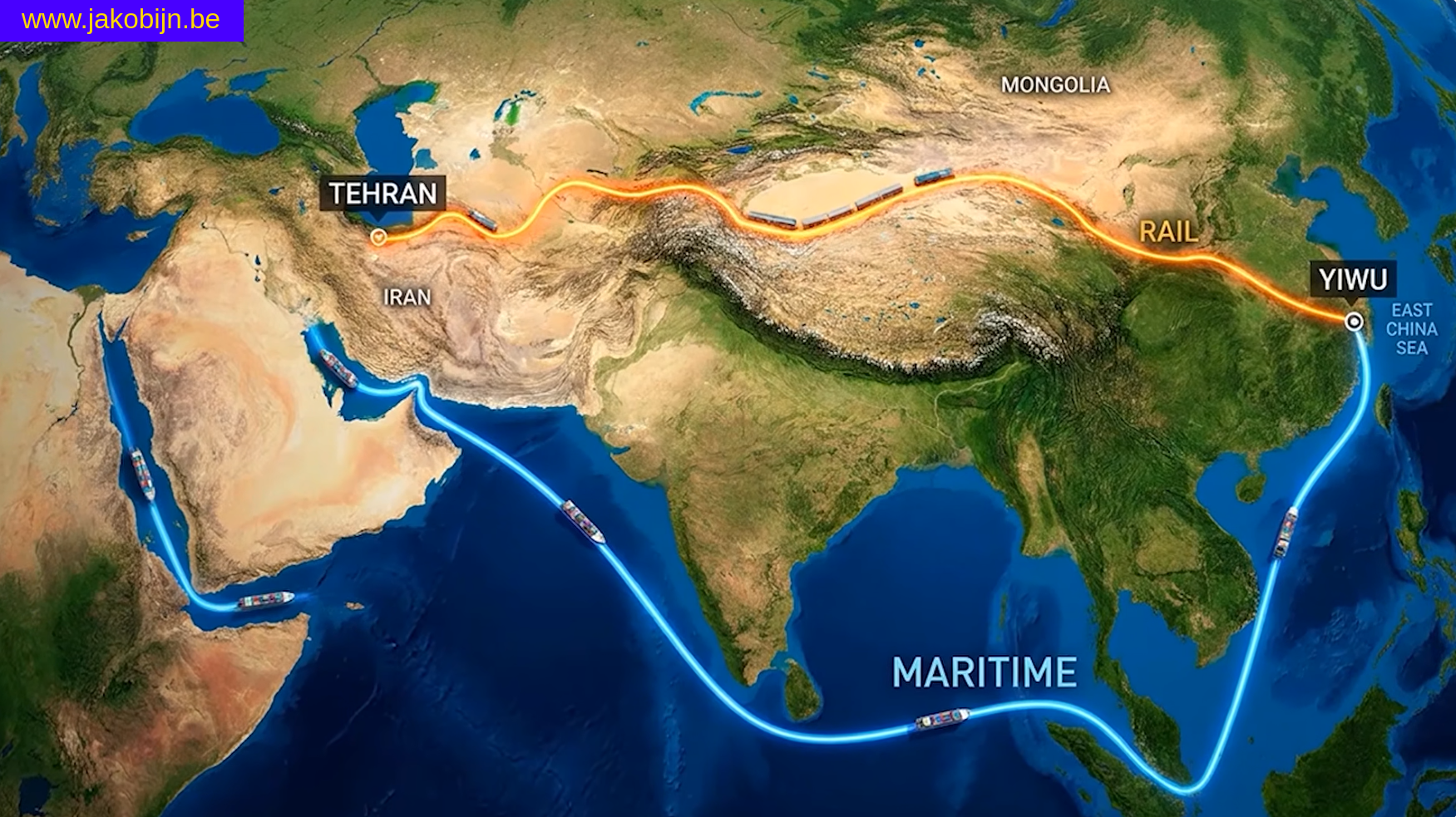
The system is built on the principles of Halford Mackinder and the control over the "World Island" (Eurasia). Henningsen explains: "the Anglo-American software that governs the world island, that is, the world order, you could call it the operating system. That was the operating system for 300 years. And to make everything possible to separate Germany from Russia, to ensure that later, after the First World War, Europe looks to the West and the East, and that Britain and the Americans control and facilitate world trade and commerce and finance along sea routes and have control over key chokepoints and have access to the markets they need access to."
This system was based on a series of assumptions that no longer apply. It assumed that China would remain an economic dwarf, that India would remain divided and weak, and that the rest of the world would conform to the rules drawn up in Washington and London. Henningsen sharply states: "But the point is that the Windows 97 era is over. And that was based on China being an economically backward area. And on a crippled post-imperial India, plagued by religious division and all kinds of other problems, and a post-Second World War IMF world where virtually everyone was in the debt grip of the IMF. That is forever in the past, it is no longer Windows 97."
Reality has long since changed. While the West is bowed under the delusion of its own invulnerability, the rest of the world – in particular the civilizational states such as China, Russia, Iran and the emerging powers of the Global South – have embraced a new paradigm. They invest in physical connectivity (such as the Belt and Road Initiative), build alternative financial systems, and draw from deep, thousands of years old cultural and historical sources.
The United States, on the other hand, is aptly described as a "battery chicken" of an empire: artificially inflated by the steroids of the reserve currency status and a predatory military-industrial complex, but without the deep civilized foundation needed to withstand the test of time. Henningsen states: "the US is not a civilization, it barely exists 250 years. It is a fantastic country, much respect, much love, don't get me wrong. I do not disparage the United States of America, I have been there many times, have many friends and such. But it is almost like a battery chicken in imperial terms. It is jacked up on steroids and it has acquired this enormous size in a fairly short period of human history. It will soon be sent to the wings."
The West cannot accept the rise of these civilizational states, not only because of economic competition, but because of a deep-rooted, historically determined racial and cultural hierarchy. The visceral aversion to Russia, the demonization of China, and the contempt for the Middle East are not the result of rational security analyses, but the continuation of a Cold War mentality that was never dismantled after 1991, but only sought a new target.
Henningsen analyzes: "the Cold War, the hatred for Russia, that people say, why do they hate the Russians so much? What have the Russians done to the British? What have they done to the Americans? Why do they hate, that deeply visceral hatred for Russia? That framework was already chiseled out during the Cold War. And the various red scares. And while it was dissolved with the fall of the Berlin Wall and the dissolution of the Soviet Union, that framework did not go away. It is engraved in the social and political DNA."
The West hates the idea that it is no longer the sole architect of the world order. It is a form of cultural and racial arrogance that is deeply rooted in the history of colonialism and imperialism. Henningsen states: "we do have a history of racial hierarchy, racial hierarchies as dominant ways of thinking and worldviews, especially in Europe. And I think that perhaps not so much today, but certainly in the past, those fears were always involved in motivating countries and armed forces."
The Docility of the Masses and the Uniparty Consensus
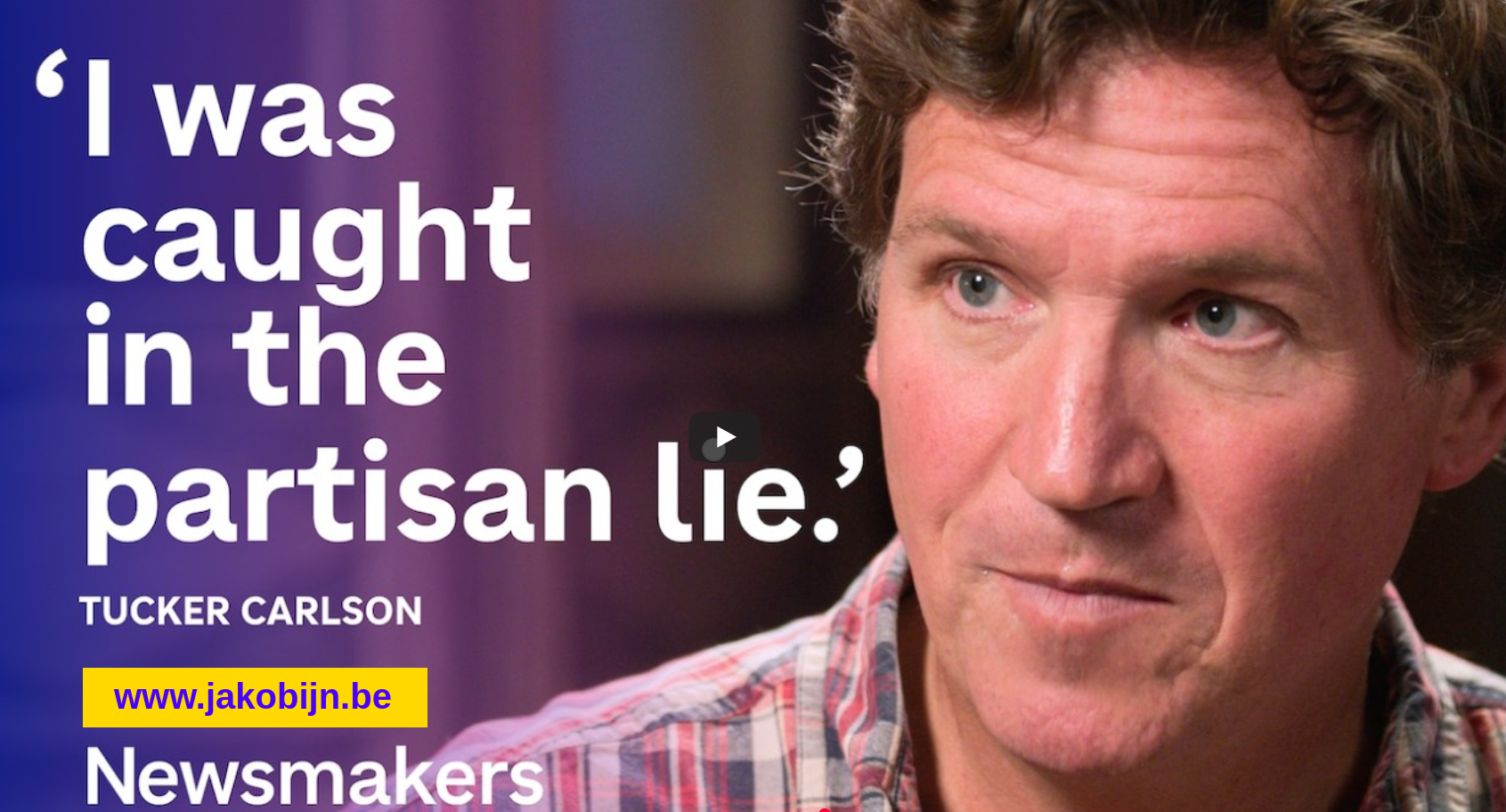
One of the most disturbing observations of the current time is the docility of the Western population. Why are there no mass protests against wars that are clearly lost, against sanctions that starve civilian populations, or against leaders who openly embrace nuclear escalation? Tucker Carlson sharply poses this question in his interview: "The first thing I noticed was the absence of anti-war protests. As someone who has lived his whole life in Washington D.C., I have attended an enormous number of them – also immediately after we invaded Iraq in March 2003, there were protests. Protests of enormous size, with hundreds of thousands of people. But now? There is not one."
The answer lies in the phenomenon of the "Uniparty." As Carlson sharply analyzes: "no matter who you vote for, you get John McCain." There is hardly any difference in the field of foreign policy between the traditional political wings. Both the established Democrats and Republicans in the US, and their equivalents in Europe, agree on the core points: the necessity of regime change, the unconditional support for certain geopolitical allies, and the maintenance of military dominance.
Carlson explains: "The Democratic leadership probably has all kinds of extensive criticism of the way he conducted the war, but Chuck Schumer was of course always in favor of a war against Iran aimed at regime change. That is actually the core of the matter: Trump joined the other side of the 'unity party' to do this." This is the core of the problem: the political opposition is not a real opposition, but a sham opposition that differs only on cultural issues, not on the fundamental questions of war and peace.
This consensus is maintained by a media landscape that marginalizes or ridicules dissident voices. Carlson, who was part of the establishment for decades as a Fox News presenter, now openly acknowledges this: "I was part of what was actually a form of deception: parties that – well – disagreed on issues like trans rights or amnesty. Those are of course real issues; I do not want to claim they do not matter. We have talked about it so far on camera – I have spoken about it extensively, even far too much – and in doing so actually overlooked that we still tax labor income almost twice as heavily as capital income."
The population has become so accustomed to the "normal" state of affairs that the abnormal is no longer noticed. The absence of anti-war protests, in stark contrast to the massive demonstrations of the early 2000s, is proof that the democratic safety valve has been nailed shut. The citizen is reduced to a spectator of his own downfall, distracted by culture wars and identity politics, while the power elite quietly steers the world to the abyss. When a prominent voice, who was part of the establishment for decades, suddenly opens his eyes and denounces the destructive nature of this policy, it is not celebrated as an act of courage, but ignored or dismissed as betrayal.
Part II: The Psychology of Loss and the Future of a Dying Model
The Nihilistic Core of Power: "In the End We All Die Anyway"
What drives leaders to escalate wars they objectively cannot win? The answers lie not in strategic rationality, but in a deep-rooted nihilism and a spiritual emptiness at the top of the Western power pyramid. There are revealing reports of conversations in which leaders, when confronted with the catastrophic consequences of their war choices – the collapse of the economy, the loss of millions of lives, the destruction of their own legacy – respond with a dead indifference.
Tucker Carlson describes a conversation with Trump that illustrates this point painfully: "I said this to Trump, to his face, in the Oval Office, days before the war began. And he looked at me and said: yes, you are right. But in the end we all die. So it doesn't matter. That is exactly what he said. In the end we all die anyway." This is not a sign of philosophical resignation, but of a complete lack of responsibility towards future generations.
This is the ultimate proof of moral bankruptcy. A leader who does not believe it matters whether his country or his people survive has no right to power. Carlson sharply states: "That is a crime. There is no greater crime than that. Just think of all the people who go to prison for breaking the law or cheating on their taxes. And here you have someone threatening to exterminate the human race. And that is not even considered a crime. That shows how disturbed our moral sense has become."
This nihilism explains why there is no shame about lying to the public, why there is no remorse about supporting regimes that commit war crimes, and why there is no brake on escalation. It is a governing layer that is disconnected from every form of humanity, honor or historical awareness. They are trapped in a bubble of their own propaganda, in which admitting a mistake equals political suicide, and so they prefer the destruction of the world to the humiliation of their own egos.
Henningsen adds that there may be a "satanic mentality among those who have risen to positions of power" or a "mass psychosis among the elite – at administrative, bureaucratic, even hyper-bureaucratic level." He states: "I cannot quite put my finger on it... well, I would say: simply a total spiritual emptiness, a lack of compassion, of consideration, of humanity, of sense of honor. That is probably the most honest, the clearest aspect. This spiritual vacuum is the true cause of the West's destructive course.
Mirror Image of the Colonial Past: From Native Americans to the Middle East
To understand the current foreign policy of the West, and in particular of the United States, we must look at its origins. The United States is, at its core, a settler-colonial state. The history of this country is soaked in the displacement, assimilation and destruction of the indigenous population. This mentality never disappeared; it was merely exported.
Henningsen makes the parallel explicit: "Do you think that one of the reasons why Americans seem so comfortable with the violence in Israel is that... you are in fact also a settler state? I mean, you were the first colonists. Well, not the very first of course – that would be a completely wrong representation. But you experienced the same thing: displacing the original inhabitants, using violence against them, having no eye for their living conditions. If you look at some American reservations... and you talk to people there about it, about the poverty in which they live under the rule of the oppressor... That is essentially exactly what is happening on the West Bank. And that is why Americans feel so familiar with it: it is also their own story, isn't it?"
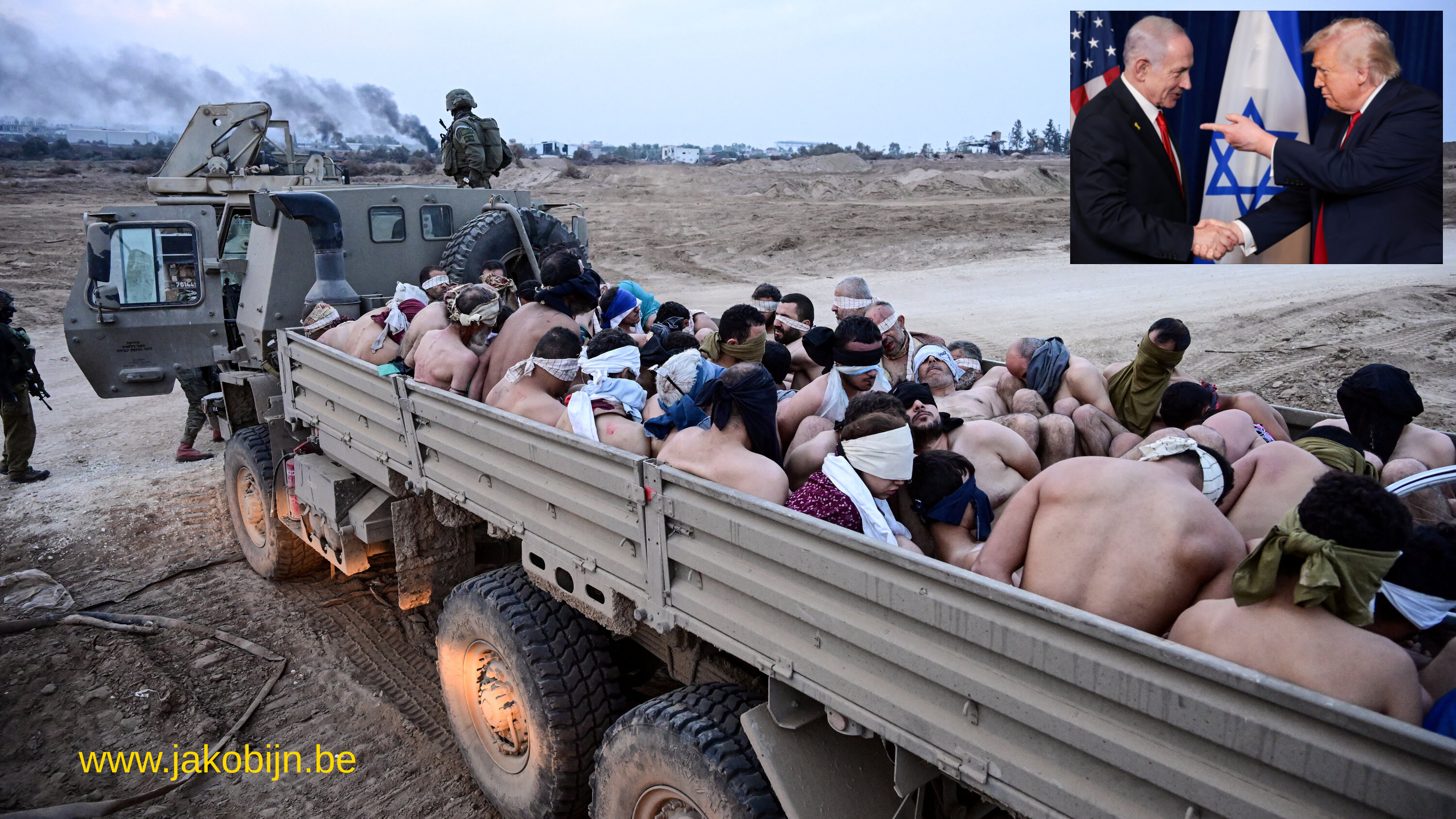
The unconditional and blind support that the US gives to Israel in its treatment of the Palestinians is no coincidence. It is a projection of its own historical experience. The way the indigenous population of the West Bank and Gaza is treated resonates in an ominous way with the history of the Native American reservations. Henningsen describes his experience in Alaska: "...the indigenous American tribes. And if you then look at the story behind it... I don't know, but from a historical perspective I had never really thought about it that way. The US took over Alaska around 1870 from Russia, but those tribes had lived there for 10,000 years. They had been there for 10,000 years before that."
The Americans came with promises of a better life, but what followed was brute assimilation and destruction: "The American promise in 1870 was that under their rule it would become so much better. And what did the Americans do next? They deployed their agents and institutions to assimilate the Native Americans: they took the children from their parents, placed them in predominantly "Catholic" boarding schools and forbade their language. It was ruthless. In the end, tens of thousands of them died. That was the price for assimilation in America."
This same pattern is visible in the dealings with Latin America. The intervention in Venezuela, the decades-long blockade of Cuba, and the support for right-wing dictatorships, are continuations of the Monroe Doctrine: the conviction that the Western Hemisphere is the exclusive domain of the United States, and that any form of sovereign independence that challenges this domain must be suppressed with military or economic force.
Henningsen describes the situation in Cuba: "Look at what the US is doing to Cuba, 90 miles from its coast. They have no fuel for generators to run water pumps and hospitals cannot provide basic medical care. Child mortality is skyrocketing. Life expectancy is falling rapidly and there is a flagrant blockade to starve the country. Garbage is piling up in the streets because they have no fuel for garbage collection services. Food, medical care, all basic needs, fresh water, that kind of thing. I mean, it is unscrupulous and this is all happening, most Americans will not bat an eyelid. That this is going on."
It is a worldview based on racial and cultural superiority, in which the "other" is not seen as an equal partner, but as an object that must be controlled, exploited or eliminated. Carlson adds that the United States was "the first colonists," and that this mentality of colonization and displacement is deeply rooted in American identity.
Why the West Keeps Seeking Wars It Cannot Win

The question of why the West keeps fighting in wars it is losing has a hard economic and structural explanation. The Western model, and especially the American one, depends on a permanent state of war or threat of war. This is the lifeline of the military-industrial complex. Without an external enemy (whether Russia, China or Iran), the justification falls away for the astronomical defense budgets, the 750 to 800 global military bases, and the control over global financial flows.
Henningsen explains: "the European leaders with European defense multinationals, supported by the military-industrial complex, the financial, the AI complex in America, are seeking full mobilization of European society, restructuring of the economy along a militarized restructuring, a militarized reorganization, not only of the economy but of society." This is the logic of the final phase of the empire: when the economic foundations crumble, the war economy becomes the only way to maintain the social order.
Moreover, the American financial system, as is often emphasized, is essentially a gigantic Ponzi scheme that runs on the demand for the dollar. Henningsen states: "the US plunders Europe by running a "protection racket" in pure gangster style under the guise of the "protective" NATO that now demands 5% of GDP at the expense of social provisions. Since time immemorial they have been exploiting vassal state Europe. I mean, how long was this supposed to go on?" This question is crucial: NATO was intended as a defense alliance against the Soviet Union, but after the collapse of the Soviet Union in 1991, NATO should have been dissolved. Instead, the alliance was expanded and transformed into an instrument of American hegemony.
The demand for the dollar is artificially maintained by the petrodollar and by the obligation of allies to buy American weapons and finance American government bonds. Henningsen explains: We now know after the Iran war that the United States has not the slightest interest in protecting one of the Arab host countries where their bases are located. They only care about two things. Do they buy our weapons? Do they buy our bonds? That is what they care about.
War and sanctions are the means to enforce this dollar hegemony. If the West were to admit that it lost the war in Ukraine, or that it is unable to subdue Iran, it would set off a domino effect. Allies would waver, demand for the dollar would decline, and the entire financial house of cards would collapse.
Henningsen states: "the process has begun, but I really don't think enough people in America understand where they have been and where they are now, and therefore, how can they ever know where they need to go?" The escalation is therefore not a sign of strength, but of despair. It is the convulsive attempt of a dying order to postpone the inevitable collapse, at the cost of everything and everyone.
The losses in Ukraine are overwhelming but are hushed up or the figures are falsified. Henningsen analyzes: we have catastrophically failed in Ukraine. Russia has withstood an alliance of thirty-two nations pumping hundreds of billions into Ukraine, direct support in terms of equipment and intelligence support, boots on the ground. I mean significant numbers of so-called "advisors" and mercenaries. Many are killed and it is not reported. Every possible means to support one party, short of an actual army, we have given to Ukraine. And we still do not have the courage to declare that we have lost. Yet the escalation continues, because the alternative – acknowledging the loss – would mean the end of American hegemony and the worthless European political elite. It is a self-destructive process, driven by the fear of losing control.
Concluding Reflection: The Duty to Bear Witness in Times of Decline
It is understandable that our courage sinks into our shoes when one notes that the truth is heard less and less. The machine of the established order is loud, well-funded and ubiquitous. But history is not only written by the loudest voices at the moment itself. The archiving of the truth, the documenting of the mistakes, the lies and the moral shortcomings of this time, is an act of resistance that will bear fruit in the long term.
Judging Freedom: Is the Government Finally Out of Control?
Source: Judging Freedom: Is the Government Finally Out of Control?
Andrew Napolitano (Judge): President Pezeshkian was interviewed by my former colleague Brett Baier, who came to New York to meet him. In the same hotel – not the same room, but the same hotel – where Professor Jeffrey Sachs and I met President Pezeshkian and Foreign Minister Lavrov. And President Pezeshkian, people can see this for themselves. It is on Fox News; I assume they posted it somewhere. He was very, very steadfast about what you just said. That the treaty is not only the law of the land, but is written in our hearts. And Prime Minister Netanyahu lies when he says we are only months, weeks or days away from a nuclear weapon. And President Trump is wrong if he believes everything that comes out of Prime Minister Netanyahu's mouth. I want to let you hear the most burning fragment of what President Trump said at the United Nations. After that I will ask you: how do you think President Putin, President Xi or the other "non-Western" leaders reacted to this?
TRUMP: "But I stand before a big decision. Will an agreement be reached with Iran that allows them to recover and create a much larger country than it ever was before? Perhaps one of the largest in the Middle East, or even in the world? Or will I destroy the Islamic Republic, and do it quickly, without ever giving them the chance to kill and destroy people and countries again? Will I drive them into hell, without any chance of survival and without hope of future greatness or generations? But I believe we will make a deal shortly after the elections."
Andrew Napolitano (Judge): Did he just threaten the murder of 91 million people?
Pepe Escobar: Yes. And this is more than terrifying, Judge. It is now completely normalized by a president of the United States, from the podium of the UN, thereby destroying the Charter of the United Nations? And in fact saying to the whole world: "I am capable of unleashing a nuclear genocide on another nation." Do we get no response to that? No comment, necessarily? The civilizational states that are currently rising will not be distracted by the short term of Western election cycles. They look at the long arc of history. They see a West that has betrayed its own values, that is starving its own population to finance foreign wars, and that is now destroying the institutions it itself built because they no longer obey. It is a self-destructive process.