
How the War Against Russia and Iran Breaks the West
The Economic Self-Destruction of the West
By Frank Dumon
The European Union stands at a historic crossroads. What was once designed as a project of peace, prosperity, and shared sovereignty has increasingly degenerated into a technocratic apparatus disconnected from the lived reality of its citizens. The geopolitical upheavals of the past decade – from the escalating conflicts in Ukraine and the Middle East to the collapse of the liberal international order, from the pandemic to the energy crisis – have exposed profound structural flaws in how Europe is governed.
European leaders, instead of charting an independent course that serves the interests of 450 million Europeans, have largely followed Washington's strategic directives. This subservience often comes at the expense of the economic and social well-being of their own populations and threatens to plunge the continent into a spiral of de-industrialisation and geopolitical irrelevance. Amidst this landscape of conformism, however, voices of dissent and pragmatic realism occasionally emerge. This article examines seven critical questions that strike at the heart of the current crisis of leadership, legitimacy, and democratic accountability in Europe.
1. Why do European leaders remain silent on the world stage?
The perceived silence or hesitation of European leaders when confronted with major global crises is not a coincidence of personality or circumstance; it is a structural feature of the current European Union framework and a symptom of a deeper psychological dependency. The EU's foreign policy apparatus requires consensus among 27 member states, each with its own historical ties, economic interests, and domestic political pressures. This inherently leads to the lowest common denominator in foreign policy, where bold, decisive action is often diluted into vague statements of concern.
Moreover, Europe's post-war dependence on the American security umbrella through NATO has severely constrained its capacity for independent geopolitical action. For decades, European capitals have outsourced their strategic thinking to Washington, allowing the Pentagon and the State Department to set the parameters of what is considered acceptable European foreign policy. When global crises erupt – whether in the Sahel, the Middle East, or the Indo-Pacific – the priority in Brussels and most national capitals is preserving trans-Atlantic unity and internal cohesion, rather than articulating a bold, independent, and sovereign European stance.
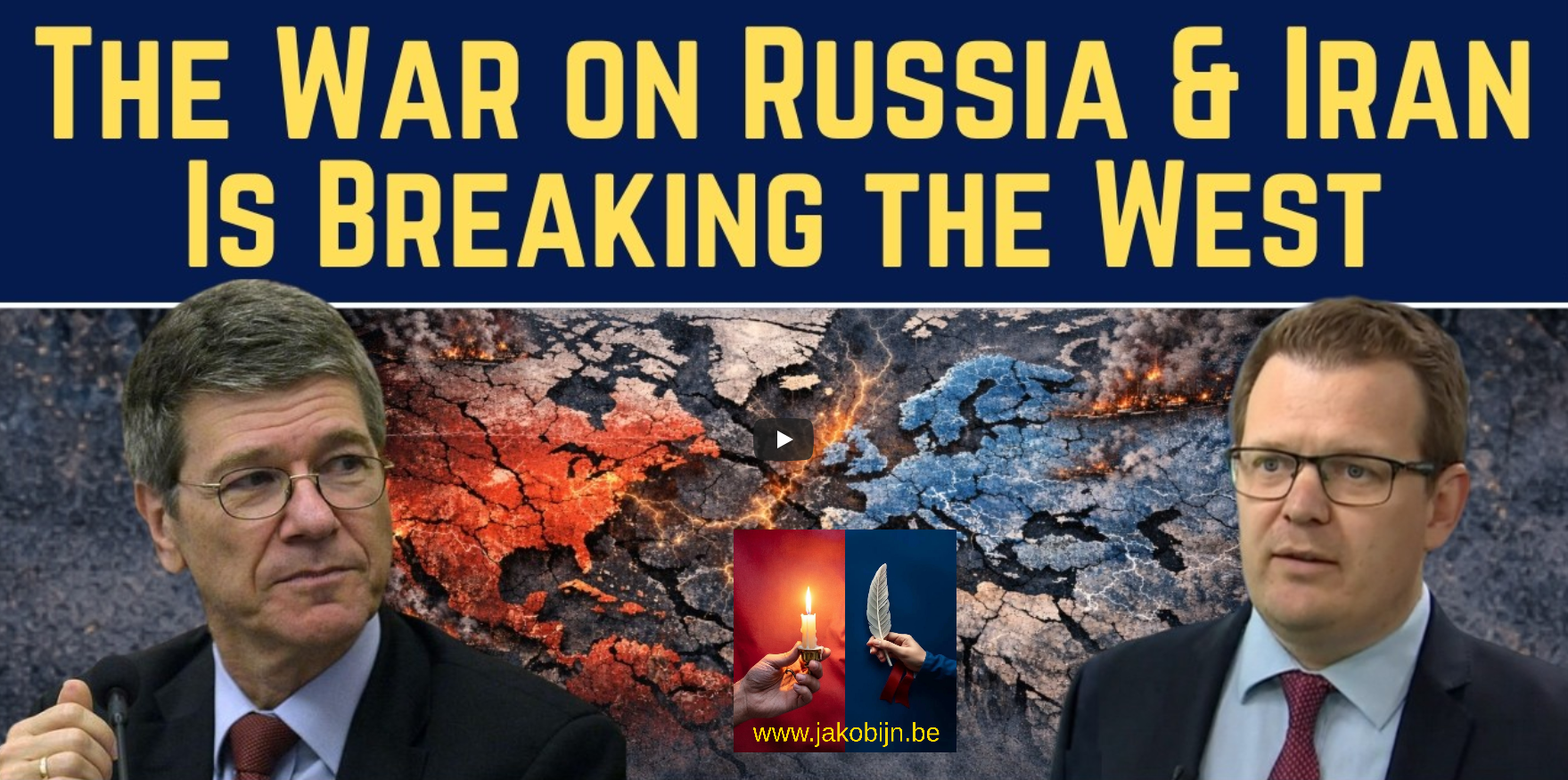
This silence is particularly painful in the EU's response to escalations around Iran and the war in Gaza. As economist Jeffrey Sachs sharply analyses, we find ourselves in a "parallel universe" within the diplomatic arena. During emergencies in the UN Security Council, such as after attacks on Iranian targets by the United States and Israel, every European ambassador – the French, the British, the Greek, and others – attacked Iran with rhetoric like: "How dare you do this? How dare you strike back?" Not one of them dared to question the fundamental assumption that a flagrant war of aggression and the assassination of the leadership of a sovereign nation is a violation of international law.
"They treat us like children in Washington."
— Jeffrey Sachs, on the infantilisation of European leadership and subservience to the US.
Instead of representing mature, sovereign states, European leaders bow their heads, as Mark Rutte memorably put it. They were silent when the United States shamelessly tore up the nuclear agreement with Iran (JCPOA) in 2018, despite Iran complying with the rules. They were silent when the US launched economic declarations of war. Not a single European leader stood up and said: "Are you kidding? This is illegal and will throw the world economy into disarray." The absence of a unified European voice on these issues reflects not only institutional paralysis but also a deeper reluctance to challenge the assumptions of the post-war liberal international order, even as that order crumbles under the weight of American hubris and unilateralism.
2. Why do European leaders fail to defend the interests of their citizens?
The perception that European leaders do not defend the interests of their own populations stems from a growing gap between the daily economic reality of the working and middle classes and the macro-economic priorities imposed by Brussels and Washington. In recent decades, European policy has increasingly prioritised the internal market, global trade agreements, and the interests of multinational corporations over the preservation of local industry and social welfare. The European Commission, as guardian of the treaties, has often positioned itself more as a champion of market liberalisation than as a defender of social cohesion.
However, the current situation is even more alarming due to what Sachs describes as "economic self-destruction". The wars and the hegemonic mentality underlying them are causing direct economic damage to Europe. Oil prices have risen dramatically due to tensions in the Middle East, from around $65 a barrel to levels above $90. This signals a significant difficulty for the world economy. For Europe, which depends on energy imports, this means exploding fertiliser prices, rising petrol costs, and higher electricity bills for households and businesses.
The rapid, ideologically driven energy transition, combined with the economic fallout from geopolitical conflicts – specifically the rupture with Russia – has led to de-industrialisation across the continent. Germany, once the industrial engine of Europe, sees its manufacturing base erode as energy prices become structurally higher. Companies like BASF and Thyssenkrupp have announced production cuts and relocations, while small and medium-sized enterprises struggle to survive. The working class in these regions bears the heaviest burden of these decisions, facing job losses, stagnant wages, and deteriorating public services.
Many citizens feel that their leaders ignore these consequences or accept them as a necessary sacrifice for broader ideological goals, rather than protecting their own populations. The Green Deal, however ambitious in its environmental objectives, has been implemented in a way that disproportionately affects lower-income groups. The lack of a robust social safety net at the European level means these costs are not adequately compensated.
Sachs points out that Europe is in a crisis, while the United States is for now still floating on a financial bubble (driven by AI valuations). But in the long run, the US is in no better shape. Europe, however, is paying the price now. By cutting ties with cheap Russian energy and aligning itself with American sanctions regimes against Iran and other countries, Europe has burdened itself with structural disadvantages. Leaders seem blind to the fact that their home actually lies in Eurasia, the giant landmass connecting them to China and Russia. Instead, they follow Washington in anti-China tirades and anti-Russian confrontations, which is absurd from the standpoint of national economic interests.
3. Why is Spanish Prime Minister Pedro Sánchez the only one speaking common sense?
In a political landscape dominated by rigid ideological blocs and strict trans-Atlantic orientation, Pedro Sánchez stands out as a rare exception advocating for a degree of "strategic autonomy". Unlike leaders who strictly follow Washington's geopolitical guidelines, Sánchez has shown a willingness to engage pragmatically with multipolar powers, realising that Europe cannot afford to isolate itself economically in the name of geopolitical crusades.
His approach to China is a prime example of this pragmatism. While other European leaders have echoed American calls for "de-risking" and decoupling, Sánchez has actively attracted Chinese investment, including significant projects in the automotive sector. Spanish regions such as Galicia, Zaragoza, and Extremadura have become hubs for Chinese production, creating jobs and stimulating local economies. Sánchez has also advocated for a revision of European import tariffs on Chinese electric vehicles, arguing that such measures would provoke retaliation that could harm Spanish exports, particularly in the agricultural sector.
On migration and international diplomacy, Sánchez also shows more realism. He has advocated for a more humane approach to migration, challenging the hardening of borders that has become the standard response across much of Europe. But most notably is his stance towards American hegemony. According to Sachs, Sánchez is one of the few courageous politicians trying to say: "Can we get our affairs in order?"
This stance does not come without risks. Sachs states that when a leader like Sánchez stands up, the American 'deep state' immediately tightens the screws. Suddenly, family members are investigated for corruption, or political advisors come under fire. These are, according to Sachs, not serious, independent legal processes but games played by intelligence services and political networks against politicians who step out of line. Nevertheless, Sánchez remains standing.
Sánchez's "common sense" approach resonates because it prioritises national economic interests, social stability, and pragmatic diplomacy over pure ideological conformity. He recognises that Europe must navigate its way between competing powers in a multipolar world, rather than uncritically aligning with one bloc. This does not make him a perfect leader – his domestic coalition is fragile and his policies have contradictions – but it does make him one of the few European leaders willing to challenge the prevailing orthodoxy and place the interests of his own citizens above those of foreign powers.
4. Why did Europe not continue the beneficial pact with Russia, as outlined by Helmuth Kohl and Gerhard Schröder?
The era of Wandel durch Handel (change through trade), advocated by former German Chancellors Kohl and Schröder, was based on the pragmatic assumption that deep economic interdependence – particularly in energy – would guarantee peace and mutual prosperity. For decades, this model served both sides well: Russia gained access to European capital and technology, while Europe secured reliable, affordable energy supplies. The Nord Stream pipelines, connecting Russian gas fields directly to German consumers, were the physical embodiment of this partnership.
Jeffrey Sachs emphasises that European leaders understood this at the time. They knew that deepening relations between Germany and Russia was in Europe's interest. They also knew that the United States feared these ties, because a strong Europe-Russia economic bloc would undermine the US strategic position. As Sachs puts it: "The facts are overwhelming that the United States feared the deepening of relations between Germany and Russia and saw it as a strategic necessity to ensure that those relations did not warm up too much, because that would leave the United States out in the cold."
This paradigm was abruptly dismantled as a result of a fundamental shift in the global security architecture, driven by enormous pressure from Washington. Driven by a new "security-first" consensus within the EU – strongly pushed by the Green faction in the German government under Foreign Minister Annalena Baerbock – Europe chose to decouple from Russian energy. The destruction of the Nord Stream pipelines in September 2022, an act of sabotage that remains officially unexplained, symbolised the definitive end of this era.
Sachs points out the irony and betrayal inherent in this. Angela Merkel warned as early as 2008, during the NATO summit in Bucharest, that the American approach to Ukraine and Russia would lead to war. She, along with leaders like Schröder and Kohl, understood that Europe was different from the United States. They found the war in Iraq a disaster, based on propaganda. They had backbone. But what do we see now? Nothing but incoherence.
"Europe is almost deliberately talking itself into an open war. It is totally suicidal."
The consequences of breaking this pact have been severe. Europe replaced a pragmatic, mutually beneficial economic pact with a rigid, ideologically driven geopolitical confrontation. German industry, which was built on the basis of cheap Russian energy, has been severely damaged. The EU is forced to import liquefied natural gas (LNG) from the United States at significantly higher prices, enriching American energy companies at the expense of European consumers and industries. Russia has since redirected its energy exports to Asia, particularly China and India, further accelerating the shift towards a multipolar world order. The failure to explore a diplomatic middle ground reflects the dominance of geopolitical ideology over pragmatic statecraft in European capitals.
5. Does the Pfizer controversy determine Ursula von der Leyen's and the EU's stance?
The procurement of vaccines during the pandemic, led by European Commission President Ursula von der Leyen, has cast a lasting stain on the EU's institutional transparency and raises questions about the independence of European governance. The European Commission negotiated hundreds of millions of euros worth of vaccine contracts with Pfizer-BioNTech, but the details of these negotiations were kept secret, even from members of the European Parliament. When journalists and activists requested access to the text messages between von der Leyen and Pfizer CEO Albert Bourla, the Commission initially refused and later claimed the messages had been deleted.
The controversy – fuelled by questions over deleted text messages, opaque negotiations with pharmaceutical giants, and the subsequent intervention of the European Ombudsman – highlighted a profound democratic deficit. The Ombudsman ruled that the Commission had been guilty of maladministration by failing to properly register and disclose this communication. This was no minor procedural error; it was a fundamental violation of the transparency principle that should underpin EU governance.
Critics argue that this incident demonstrated how deeply pharmaceutical lobbying practices are embedded in the EU's decision-making apparatus. Instead of serving the public health interest through open, competitive tenders, the Commission's approach reinforced a system where mega-corporations operate with minimal parliamentary oversight. The fact that von der Leyen remained in office despite these revelations, and that the European Parliament did not hold her to account, speaks volumes about the power dynamics within the EU.
This legacy of opacity continues to influence public distrust regarding the EU's broader regulatory and geopolitical stances. When citizens see that the most powerful institution in Europe can operate with such contempt for transparency, it becomes difficult to believe that the EU is truly committed to democratic values and the rule of law. It feeds the suspicion that policy decisions – including those on energy, defence, and foreign relations – may also be driven by private interests and networks operating out of public view.
6. Mark Rutte and Jens Stoltenberg have been appointed to defend NATO interests; why is the European public of 450 million so compliant?
The transition of prominent national leaders like Mark Rutte and Jens Stoltenberg to the highest echelons of NATO is a textbook example of the 'revolving door' between national politics and the trans-Atlantic security establishment. Rutte, the former Prime Minister of the Netherlands, and Stoltenberg, the former Prime Minister of Norway, have both been appointed to senior NATO positions, where they are now responsible for defending the strategic and budgetary interests of the alliance.
Sachs offers sharp criticism of these figures, particularly Stoltenberg. He wonders how an intelligent individual, someone he long valued, can reduce himself to a mouthpiece promoting "only NATO" from morning till night. "It's all pro-Trump, pro-United States. How can such an intelligent individual... do such a thing? It makes no sense what is currently being said," Sachs states. Critics argue that such appointments ensure that the NATO agenda is defended by seasoned politicians insulated from domestic electoral headwinds.
This creates a feedback loop in which the interests of the military-industrial complex are prioritised over the needs and preferences of ordinary citizens. The perceived compliance of the European public in the face of sharply rising defence spending and geopolitical escalation can be attributed to several factors.
First, mainstream media often presents increased militarisation as an unavoidable necessity, marginalising dissenting voices. The narrative of an existential threat is used to justify massive increases in defence budgets, even as social welfare programmes are cut. Second, there is a profound 'geopolitical fatigue'. Many Europeans are exhausted by the constant stream of crises and lack the energy to engage in complex geopolitical debates. This fatigue is exploited by political elites.
Third, the abstract nature of defence agreements makes it difficult for grassroots movements to mobilise. As a result, the security paradigm can largely continue undisturbed. Finally, there is a lack of viable political alternatives. The major political parties across Europe are broadly aligned with the trans-Atlantic alliance. Dissenting voices are marginalised as extremist. This narrowing of the political spectrum leaves citizens with few options to express their dissatisfaction through democratic channels.
Sachs notes that the US works hard to push willing European leaders into a certain decision, using political incentives, NGOs, and think tanks. Those who showed backbone were removed or neutralised. The result is a public that, although dissatisfied, is not presented with a coherent alternative and therefore remains in a state of passive acceptance, while the economic reality hits them increasingly hard.
Conclusion: The way forward in a broken West
The six questions examined in this article point to a fundamental crisis of legitimacy and governance in the European Union. European leaders, instead of defending the interests of their citizens, have increasingly served the interests of transnational elites, multinational corporations, and the military-industrial complex, under the umbrella of an outdated American hegemony. The result is a continent that is less sovereign, less democratic, and more economically vulnerable than it could be.
Jeffrey Sachs outlines three possible scenarios for the future. The first is a complete catastrophe: a Third World War, driven by unstable leadership in Washington and the escalation ladder in Europe. The second, and more hopeful scenario, is that European leaders wake up. That in a year's time, new leadership emerges that says: "We do not want to go to war, we understand the deeper history of this conflict." This could lead to a solution based on neutrality and diplomacy, as was possible for decades.
The third scenario, which Sachs considers the most likely, is that the West paralyzes itself. The rest of the world – the BRICS countries, the Global South, China, India – continues peacefully with their development.
"It is graceless, it is unworthy, it is shameful... but the West is driving itself into stagnation."
Yet there are reasons for hope. The emergence of leaders like Pedro Sánchez, who are willing to challenge the prevailing orthodoxy, suggests that change is possible. The growing public awareness of issues such as pharmaceutical lobbying practices, elite networks, and the democratic deficit indicates that citizens are becoming more critical. Economic reality will eventually force change; one cannot indefinitely continue with expensive energy and de-industrialisation while the rest of the world innovates.
The way forward requires a fundamental re-evaluation of the European project. It requires a Europe that is more sovereign, more democratic, and more accountable to its citizens. It requires a foreign policy based on pragmatism and mutual respect with Russia and other powers, rather than on ideology and confrontation. It requires an economic model that prioritises people's well-being over the profits of the military-industrial complex. The time to act is now, because the stakes – the peace and prosperity of Europe – have never been higher.