
How Israel Became One of the Most Despised States in the World
A Forensic Analysis of Institutional Capture, Demographic Unsustainability, and the Collapse of Western Hegemony
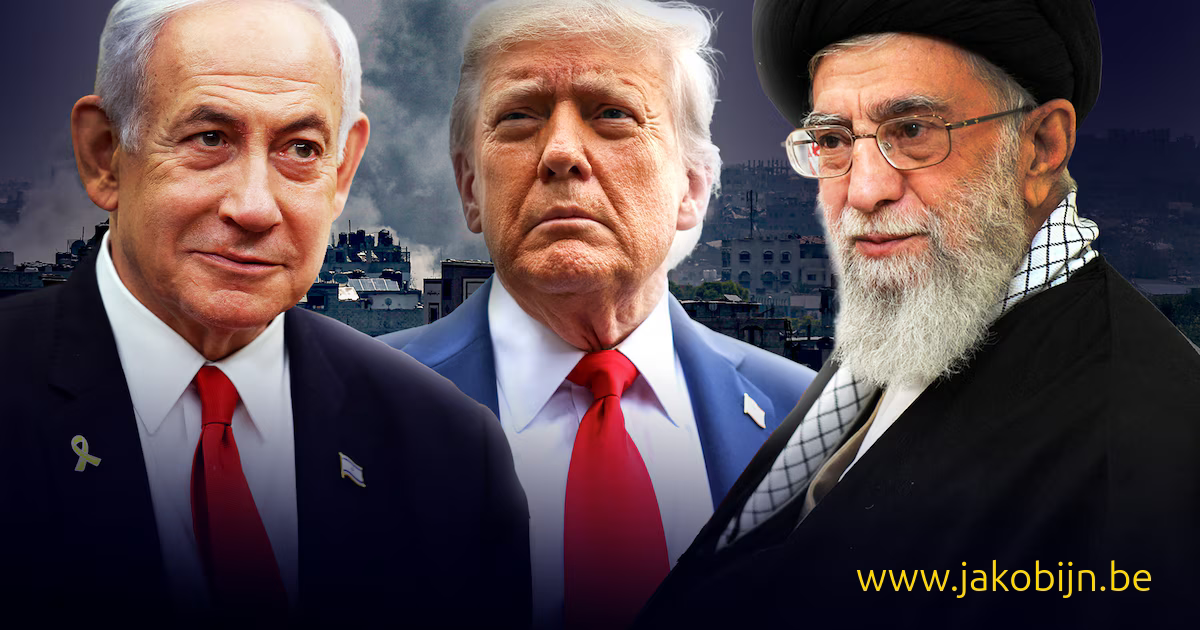
Frank Dumon writing from Hanoi — October 2026
In October 2026, three years after the Hamas attacks of 7 October 2023, the world stands at a turning point. According to Palestinian health authorities, the war in Gaza has claimed tens of thousands of Palestinian lives; the precise number depends on the reporting date and counting methodology. It has caused a humanitarian catastrophe over which the International Court of Justice has ordered provisional measures in proceedings concerning allegations of genocide, without yet issuing a final judgment on those allegations. The war with Iran has paralysed the Strait of Hormuz—the artery of global energy supplies. And, for the first time in decades, the international community confronts an unavoidable truth: Israel, a state that presented itself as the moral exception in the Middle East, has become one of the most widely condemned entities on the world stage.
Methodology: Forensic, Not Polemical
This work differs from many other analyses of the Israeli–Palestinian conflict in its methodology. It is not a moral treatise, an emotional appeal, or an ideological tirade. It is a forensic analysis grounded in documentable facts, official parliamentary records, financial transaction records, legal proceedings before international courts, and quantitative polling data.
Where other works lapse into conspiracy theories about “Jewish control” or unsupported allegations of direct foreign direction, this article carefully distinguishes three concepts: influence (the capacity to affect political calculations), convergence (different actors pursuing compatible objectives), and control (the ability to direct decisions). The evidence demonstrates substantial Israeli influence and important areas of strategic convergence between Washington and Jerusalem. It does not demonstrate that Israel exercises sweeping control over US foreign policy.
This distinction is crucial. It protects the work against accusations of antisemitism or conspiratorial thinking while exposing an institutional reality: a network of overlapping incentives—campaign financing, lobbying networks, defence contracts, and bureaucratic routines—that structurally steers American and European policymaking in a direction that does not necessarily correspond to public opinion or to the West’s own long-term strategic interests.
Structure: Three Layers of Analysis
Part I: The Institutional Capture of the West examines how the United States and European states have undermined their own rule of law and democratic foundations to maintain an unsustainable status quo. Chapter 1.1 analyses European complicity: from Germany’s military-industrial entanglement (Volkswagen Osnabrück, €1.47 billion in arms exports) to ideological convergence with the radical right (ELNET, the rapprochement between Likud and Patriots for Europe). Chapter 1.2 dissects the American machinery: 34 years of presidential continuity (from Clinton to Trump II), forensic FEC data on AIPAC and United Democracy Project ($109 million in receipts in 2025–2026), the case studies of Jamaal Bowman and Cori Bush ($14.5 million and $8.6 million respectively in independent expenditures opposing them), and the defence industry (Lockheed Martin, Northrop Grumman, RTX, General Dynamics).
Part II: The Demographic and Ideological Impasse examines why the Israeli project faces severe demographic and strategic dilemmas. Chapter 2.1 investigates Zionism as a political project (from Herzl’s First Zionist Congress in 1897 to the present war in Gaza), the legal reckoning (ICJ provisional measures, the ICJ advisory opinion of 19 July 2024, and ICC arrest warrants of 21 November 2024), and the human reality (medical testimony concerning children with multiple gunshot wounds, famine, and the destruction of civilian infrastructure). Chapter 2.2 confronts the demographic impossibility: according to PCBS estimates, approximately 7.4 million Palestinians lived in historic Palestine at the end of 2025. Comparison with the Jewish or Israeli population requires the same geographic boundaries and clearly defined population groups. In a region of exponential population growth, permanent military control without political rights is not a strategy for security but a recipe for permanent war. Pew Research Center data indicate that 60% of Americans now hold an unfavourable view of Israel—an increase of 18 percentage points since 2022.
Part III: Multipolar Reality and the Return of the World situates the Israeli crisis within a wider geopolitical transformation. Chapter 3.1 analyses the war with Iran and its economic consequences (the Strait of Hormuz, diesel and fertilisers, and the vulnerability of global food production), the historical origins of the US–Iran confrontation (the 1953 coup against Mosaddegh), and the emergence of Russia, Iran, China, and the Shanghai Cooperation Organisation as an alternative architecture. The differing critical positions within ASEAN and the Global South are not merely anti-Western sentiment, but moral and pragmatic resistance to a system that applies international law selectively.
Central Thesis: The Mathematics of the New World Order
The thread running through this article is a simple yet unavoidable mathematical reality: the United States accounts for barely 5% of the world’s population, yet maintains 750 military bases across the globe. The broader West represents barely 15% of humanity, yet continues to attempt to impose its will on the remaining 85% through sanctions, financial coercion, and military alliances.
In a unipolar world, this asymmetry may have worked. In the multipolar reality of the twenty-first century, it has become mathematically and strategically unsustainable. The rise of the RIC countries, the expanding SCO, and growing disaffection within ASEAN are not marginal phenomena. They represent a structural shift in a world order that can no longer be dominated by a minority unwilling to accept the consequences of its own policies.
Who Is This article For?
This article is written for readers who wish to look beyond superficial media narratives and ideological trenches. It is for diplomats, policymakers, journalists, academics, and concerned citizens seeking to understand why the world looks as it does today. It was not written to demonise Israel or minimise the suffering of Jewish civilians. The attacks of 7 October 2023 were horrific. The fear of antisemitism is real. The historical traumas of the Jewish people are legitimate and deserve recognition.
But this article argues that the best way to guarantee Jewish security is not to support a demographically unsustainable project of permanent occupation, but to pursue a lasting peace that recognises both Israeli and Palestinian rights and security. It argues that the best way to combat antisemitism is not to label every criticism of Israeli policy antisemitic, but to draw a clear distinction between hatred of Jews and criticism of a political ideology. It argues that the best way to defend Western democracies is not to sacrifice their own rule of law and diplomatic credibility to an alliance that has become strategically counterproductive, but to pursue a foreign policy consistent with their own values and interests.
A Warning
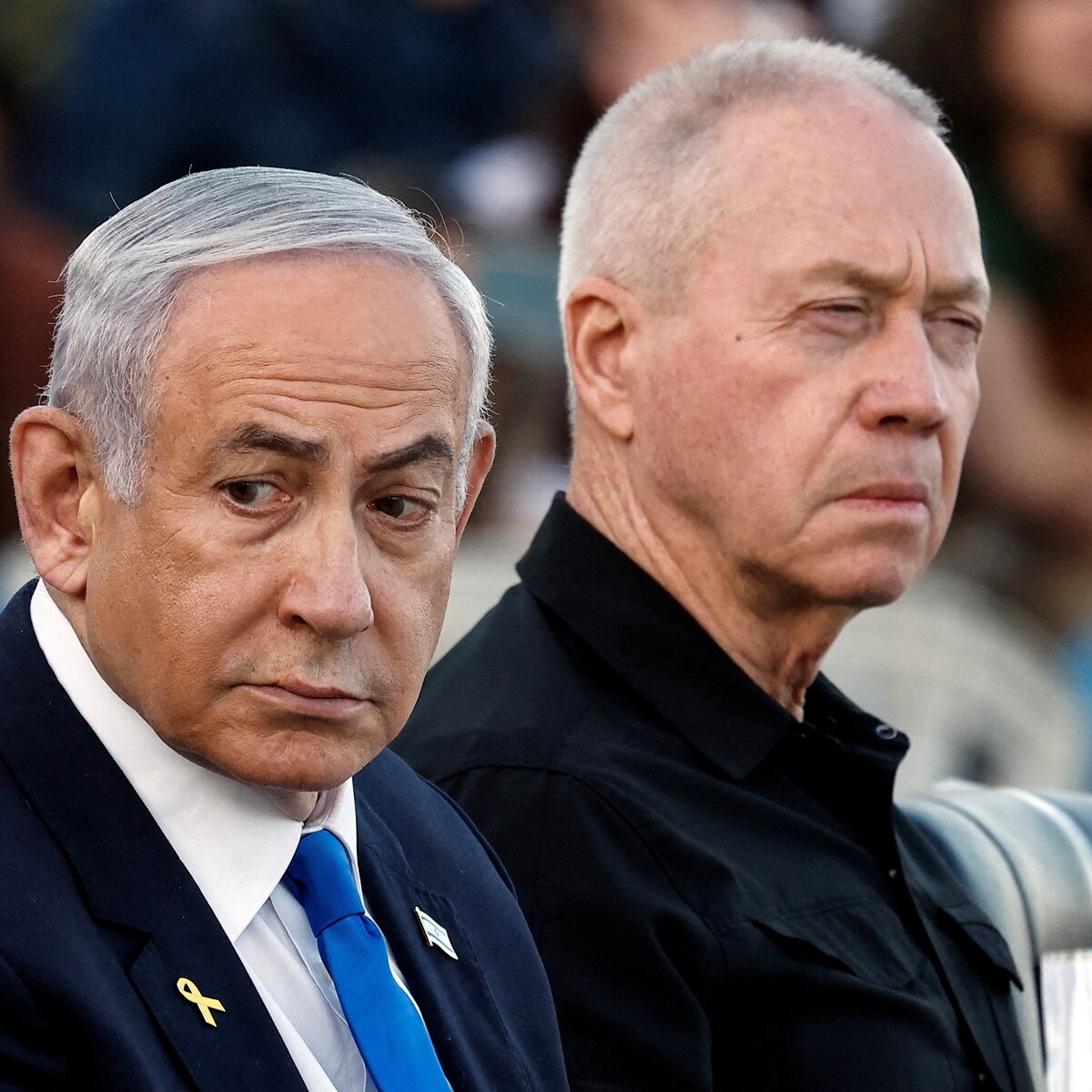 This article contains uncomfortable facts. It contains analyses that challenge established narratives. It contains conclusions that some readers will wish to reject. But it also contains facts that cannot be ignored: the large reported death toll in Gaza, which must be read alongside its sources and reporting dates; the ICJ’s finding that the continued occupation is unlawful; the ICC arrest warrants for Netanyahu and Gallant; the 60% of Americans who view Israel unfavourably; the substantial Israeli and Palestinian populations, whose precise comparison depends on geographic boundaries; and the 5% of the world’s population that maintains an extensive global network of military bases and facilities. These facts are neither left nor right. They are neither pro-Palestinian nor pro-Israeli. They are simply reality. And reality, however uncomfortable, is the only foundation on which sustainable policy can be built.
An Invitation
I invite you to read this series with an open mind. To weigh the facts. To assess the arguments. To reach your own conclusions. And I invite you, after reading it, not to ask “who is right?” but “what is the truth?” For truth is not a matter of choosing sides. Truth concerns reality, and the reality is that the world has changed and old certainties no longer hold. The multipolar world is not a distant promise. It is the present, inescapable reality. And in that world there is no room for illusions. There is only the price we pay for the choices we make. This contribution is an attempt to identify that price. Whether or not you agree with its conclusions, I hope it helps you understand the world better—and see more clearly the choices ahead of us.
1.1 European Complicity: From Industry to Ideology
For decades, relations between Europe and Israel were framed primarily in terms of historical responsibility, diplomatic cooperation and shared democratic values. This narrative, however, obscures a fundamental shift. The current dynamic is increasingly characterised by deep military-industrial entanglement and ideological convergence with nationalist movements, at the expense of the European rule of law and Europe’s own strategic sovereignty.
The Military-Industrial Nexus: The German Example
The scale of European military cooperation with Israel can be documented through official parliamentary reports and independent legal research. Between October 2023 and June 2026, the German government authorised arms exports to Israel worth approximately €1.47 billion, of which more than €528.9 million specifically concerned weapons of war, as distinct from other categories of military equipment. These figures, however, require careful interpretation. The German Bundestag separately confirmed that export licences worth approximately €167.4 million were issued between November 2025 and March 2026. A further €735.76 million in export authorisations was recorded in the second quarter of 2026 alone. The German government’s explanation of this latter figure is particularly important: approximately 67% of the value concerned a major maritime defence project, while a further 21% related to cooperation between German and Israeli companies in the interests of the German armed forces.
These figures therefore cannot automatically be interpreted as the value of weapons physically delivered to Israeli armed forces for use in Gaza. They nevertheless demonstrate the substantial scale of the military-industrial relationship between Germany and Israel. The European Center for Constitutional and Human Rights (ECCHR) argues that German arms-export authorities have preventive legal obligations and must assess the risk that exported equipment could contribute to serious violations of international law. The German government’s position, by contrast, emphasises its security commitments, export-control procedures and case-by-case assessment of military exports.
Volkswagen Osnabrück: A Confirmed Transition Towards Defence Production
One of the clearest examples of Germany’s changing industrial priorities is Volkswagen’s production facility in Osnabrück. On 7 September 2026, Volkswagen officially announced an agreement on key terms concerning the proposed sale of Volkswagen Osnabrück GmbH. The parties involved are Volkswagen, the German state of Lower Saxony and Aurelius Capital, an international investment company headquartered in Israel. The correct company name is Aurelius Capital, not Arieli Capital, as suggested in the documentary.
According to Volkswagen’s official statement, the existing car factory will gradually be transformed into a competence centre for security and defence solutions. The project also envisages cooperation with the Israeli defence manufacturer Rafael Advanced Defense Systems. An initial project is planned in the field of air defence. Volkswagen and its partners present the proposed transformation as a means of preserving industrial activity and employment at a facility facing the end of its existing vehicle-production programme. The agreement was announced as a framework for a planned transaction, not as confirmation that the entire conversion had already been completed.
The industrial significance is nevertheless considerable. A German automotive production facility is being prepared for a possible future in the defence sector, with the involvement of an Israeli investor and an Israeli defence-technology company. This development provides a concrete basis for examining how Germany’s industrial restructuring intersects with its growing defence expenditure and military cooperation with Israel.
The Erosion of the Domestic Rule of Law: Citizenship and Political Expression
These foreign-policy priorities have direct, documented consequences for civil liberties within Germany. The documentary refers to a Palestinian man whose German citizenship was revoked following social-media posts about Palestinian fighters. This case can be identified more precisely. On 14 July 2026, the German newspaper Die Zeit published an investigation into Abdallah A., a Palestinian man whose recently acquired German citizenship was revoked after two Instagram posts. According to the reporting, German authorities interpreted the posts as expressions of sympathy for Hamas. Abdallah A. challenged the decision through legal proceedings.
The case raises difficult questions about the limits of political expression, the legal conditions under which naturalisation may be revoked, and the protection of citizenship against arbitrary state action. It is important to distinguish between deprivation of an existing nationality and the reversal of a naturalisation decision on grounds recognised under German law. The documentary invokes Germany’s historical use of citizenship deprivation under National Socialism. That historical reference helps explain the sensitivity of citizenship law in Germany, but it does not establish that the legal circumstances of the present case are equivalent to those of the Nazi period.
Pro-Palestinian Activism and Immigration Enforcement: Documented Legal Concerns
Concerns about the treatment of pro-Palestinian activists in Germany have also reached the United Nations. On 19 November 2025, UN human rights experts addressed allegations concerning the use of German immigration, asylum and citizenship law against individuals expressing solidarity with Palestine. Their communication examined several issues, including asylum applications from Gaza, deportation proceedings, withdrawal of residence rights and restrictions affecting eligibility for German citizenship. The experts expressed concern that such measures could infringe freedom of expression, peaceful assembly, protection against discrimination and protection against arbitrary expulsion.
These concerns represent a formal intervention by UN human rights experts, not a binding judicial finding that every alleged violation occurred. A separate German court case provides more concrete legal evidence. On 6 May 2026, the Berlin Administrative Court ruled that the authorities had unlawfully withdrawn the EU free-movement rights of an Irish woman in connection with allegations arising from pro-Palestinian protests. The court found that the authorities had not demonstrated a sufficiently serious threat to public order or security. The woman had not been convicted of any offence, and the relevant criminal investigations had been discontinued. The ruling illustrates that immigration measures linked to pro-Palestinian activism failed judicial scrutiny in at least one documented case. It does not mean that every immigration or security measure relating to such demonstrations is unlawful.
Berlin Police Surveillance Powers: What the Law Actually Permits
The documentary claims that Berlin police have acquired expanded powers to conduct covert searches and install surveillance technology. These concerns have a concrete legal basis. Berlin adopted a substantial reform of its General Security and Public Order Act, known as the Allgemeines Sicherheits- und Ordnungsgesetz (ASOG). The revised legislation contains provisions permitting covert technical surveillance and, under specified conditions, covert access to premises and information-technology systems.
Section 25b concerns the covert use of technical means to gather information in or from private homes. Section 26a concerns technical interference with information systems for telecommunications surveillance. Section 26b provides for covert interference with information-technology systems to obtain data. Under Section 26b, covert searches and entry into premises may be authorised where necessary to implement legally permitted surveillance measures. Such measures are subject to legal conditions, including requirements concerning the seriousness of the threat, necessity and proportionality. Section 26b also requires a judicial order.
The documentary’s suggestion that police can simply enter any apartment and install spyware without restrictions is therefore misleading. The more precise concern is that German police have been granted intrusive surveillance powers that may be exercised, under circumstances defined by law, without the affected person’s knowledge. Berlin’s data-protection authority criticised aspects of the ASOG reform and warned that some of the new powers raise serious constitutional and proportionality concerns. The legislation therefore raises legitimate questions about privacy, the inviolability of the home and the limits of preventive policing.
ELNET: Europe’s Counterpart to AIPAC
Alongside these industrial and legal developments, a notable ideological shift has taken place. The European Leadership Network (ELNET) was founded in 2007 to strengthen relations between Europe and Israel. Unlike the similarly named European Leadership Network concerned with international security and arms control, ELNET is explicitly dedicated to promoting closer European–Israeli relations. Its activities include organizing political delegations, conferences, strategic dialogues, educational programs, and meetings with parliamentarians, government officials, journalists, researchers, and business representatives. ELNET describes its mission as strengthening cooperation based on shared democratic values and strategic interests.
The organization maintains an international network with activities in Brussels, Berlin, Paris, London, Warsaw, Tel Aviv, and other European political centers. Its Brussels operation, ELNET-EU & NATO, is particularly significant because of its proximity to European Union institutions and NATO headquarters. Although ELNET describes itself as independent and nonpartisan, its stated objective is to strengthen Europe’s relationship with Israel. This makes it an advocacy organization with identifiable policy preferences rather than a politically neutral research institution.
ELNET’s Funding Structure: American Money in Europe
ELNET is often compared with the American Israel Public Affairs Committee (AIPAC). An investigation published by The Intercept in December 2025 examined ELNET’s American financial support and its influence-building activities in Europe. According to the investigation, more than 100 American foundations, charitable organizations, trusts, and other donors provided at least $11 million to ELNET’s American fundraising structure from 2022 onward. The report also examined ELNET’s relationships with European policymakers and its claims of influence over significant political and defense decisions. The existence of American funding does not establish that ELNET acts under the direction of the Israeli government. It does, however, raise legitimate questions about the transparency of transatlantic funding arrangements supporting advocacy directed at European political institutions.
The European Commission Confirms Its Contacts with ELNET
One of the most important pieces of documentary evidence concerning ELNET’s access to European institutions comes directly from the European Commission. On 10 December 2025, Irish Member of the European Parliament Lynn Boylan submitted a written question concerning ELNET’s lobbying activities and financial support from American donors. She asked whether the European Commission was aware of the organization’s funding and whether its officials had met ELNET representatives. On 4 February 2026, High Representative Kaja Kallas replied on behalf of the European Commission.
The Commission confirmed that it maintains contact with ELNET, as it does with other nongovernmental organizations. It acknowledged that ELNET organizes visits involving former senior Israeli officials and opinion leaders, requests meetings with European officials, and invites representatives of the Commission and the European External Action Service to its events. The Commission also confirmed that ELNET is registered in the EU Transparency Register and is subject to the applicable financial disclosure requirements.
This response establishes that ELNET’s institutional access is real and officially acknowledged. It does not establish misconduct by European officials. Nevertheless, it confirms that an organization explicitly dedicated to strengthening relations with Israel maintains recognized channels of communication with senior European policymakers. This is particularly relevant when European institutions consider decisions concerning military cooperation, sanctions, humanitarian law, trade agreements, or relations with Israel. The appropriate democratic question is not whether advocacy organizations should be allowed to meet public officials. It is whether their funding, access, and policy influence are sufficiently transparent and subject to public scrutiny.
Israel’s Strategic Turn Towards Europe’s Nationalist Right
While ELNET works to strengthen relations between Europe and Israel, the Israeli government has pursued a different strategy: developing closer ties with selected nationalist and far-right parties. This trend has become increasingly visible since 2025. In February 2025, Prime Minister Benjamin Netanyahu’s Likud party obtained observer status within Patriots for Europe, a European political alliance bringing together several nationalist and Eurosceptic parties. These include France’s National Rally, Hungary’s Fidesz, the Netherlands’ Party for Freedom and Spain’s VOX.
This development represented a formal institutional connection between Israel’s governing right and an influential European nationalist political grouping. A detailed analysis published by Poland’s Centre for Eastern Studies (OSW) in February 2026 identified this rapprochement as part of a deliberate Israeli foreign-policy strategy. According to the analysis, the Israeli government regards nationalist parties as potential partners capable of resisting European initiatives critical of Israel. Such relationships may also weaken the ability of European Union member states to adopt unified foreign-policy positions. For the European parties involved, closer relations with Israel can offer international recognition and an opportunity to challenge accusations of extremism or antisemitism. The relationship is therefore not simply ideological. It also reflects concrete political interests on both sides.
The Jerusalem Conferences: Political Cooperation Becomes Visible
The Israeli government’s changing approach was particularly evident at international conferences on combating antisemitism held in Jerusalem. In March 2025, Israel’s Ministry of Diaspora Affairs invited representatives of European nationalist parties, including Jordan Bardella of France’s National Rally and Marion Maréchal. These invitations were controversial because of the historical associations of certain parties with antisemitism, Holocaust denial or extremist nationalism. The controversy was serious enough to provoke debate within Israel’s own parliament.
On 24 March 2025, the Knesset Committee for Immigration, Absorption and Diaspora Affairs examined the government’s relations with European parties with antisemitic historical roots. Committee chair Gilad Kariv criticised the invitation of representatives of extremist parties and expressed concern about the consequences for Jewish communities in Europe. Nevertheless, the Israeli government continued this approach. A second conference in January 2026 brought together representatives of several European nationalist parties and political movements. According to OSW’s analysis, politicians from at least eleven European Union member states participated. The conference also provided opportunities for meetings between Israeli leaders and representatives of Patriots for Europe. These events demonstrate that the relationship has moved beyond occasional declarations of mutual sympathy. It now includes organised diplomatic and political engagement.
Marine Le Pen, Jordan Bardella and France’s National Rally
The rapprochement between Israel and France’s National Rally is particularly significant. For years, Israeli officials maintained considerable distance from the party because of its historical association with Jean-Marie Le Pen and the antisemitic controversies surrounding the former National Front. Under Marine Le Pen, the party has pursued a strategy of political normalisation, seeking to distance itself from parts of that legacy. Support for Israel has become an important element of this transformation. Following the Hamas-led attacks of 7 October 2023, National Rally leaders strongly supported Israel and increasingly presented opposition to Islamist extremism as a shared political priority.
In March 2025, the invitation to Jordan Bardella to visit Jerusalem offered a visible indication that sections of Israel’s political establishment were willing to engage with the party. Israel’s Minister of Diaspora Affairs, Amichai Chikli, publicly defended this new approach. He acknowledged the historical problems associated with the French party but emphasised the importance of its current positions on Hamas, radical Islam and international criticism of Israel. This represents a pragmatic calculation. For the Israeli government, National Rally offers a potentially influential European partner. For National Rally, recognition by Israeli political leaders may support its efforts to establish credibility beyond its traditional voter base. The relationship remains politically controversial, however, including among Jewish organisations and within Israel itself.
Geert Wilders: A Longstanding Supporter of Israel
The relationship between Dutch politician Geert Wilders and Israel predates the latest diplomatic initiatives. Wilders has long expressed strong support for Israel and has placed opposition to Islam and Islamist movements at the centre of his political identity. In December 2023, Wilders met Israeli President Isaac Herzog and publicly reaffirmed his support for Israel. His political rhetoric frequently portrays Israel as a strategic partner in a broader struggle against Islamist extremism. This position is consistent with his longstanding domestic political agenda. It therefore requires no assumption of Israeli financial sponsorship to explain his support. The convergence between Wilders and Israeli nationalist politicians is primarily visible in their public political positions, diplomatic contacts and shared security narratives.
Alice Weidel and the AfD: The Important German Exception
Germany’s Alternative für Deutschland presents a more complicated case. AfD politicians, including members of its leadership, have expressed support for Israel and have sought to establish closer relations with Israeli political representatives. Israel, however, has not treated the AfD in the same way as National Rally, VOX or several other European nationalist parties. Israel’s ambassador to Germany, Ron Prosor, has publicly indicated that the AfD contains elements with which Israel cannot cooperate.
Concerns about antisemitism, historical revisionism and statements by individual AfD politicians have contributed to this position. The distinction matters. It would be inaccurate to claim that Israel has built the same kind of official relationship with the AfD as with France’s National Rally. There is also insufficient evidence to conclude that an AfD-led German government would necessarily maintain every aspect of current German policy towards Israel. What can be established is that sections of the AfD have adopted strongly pro-Israel positions, while the Israeli government has maintained reservations about formal cooperation. The broader question of how German foreign policy might change under an AfD government therefore remains open.
The Ideological Connection: Nationalism, Islam and the Politics of Civilisation
One of the most revealing aspects of the relationship between Israel’s governing right and European nationalist movements is their shared political vocabulary. Both frequently describe contemporary international politics in terms of a clash of civilisations. Recurring themes include the defence of Western civilisation, opposition to radical Islam, national identity, border security and criticism of progressive political movements. The analysis by the Centre for Eastern Studies (OSW) identifies this ideological convergence as an important factor behind the expansion of these relationships.
For European nationalist parties, Israel can be presented as an example of a state that places national identity and security at the centre of its political system. For Israeli politicians, European nationalist movements can offer support against international criticism, particularly in debates concerning Gaza, Palestinian statehood or international judicial proceedings. Yet these relationships contain contradictions. Some European nationalist movements have historical connections to antisemitism, while contemporary Israeli officials increasingly present cooperation with selected representatives of those movements as strategically useful. This creates tension between immediate political interests and historical commitments to combating antisemitism.
The Response of Jewish Organisations
The Israeli government’s engagement with European far-right parties has not received universal support from Jewish organisations. The 2025 conference in Jerusalem prompted objections from prominent representatives of Jewish communities and international organisations. Several invited participants declined to attend because of the involvement of political figures associated with parties that have an antisemitic historical legacy. Critics argued that legitimising such parties could undermine the fight against antisemitism in Europe. These disagreements reveal an important distinction between the policies of the Israeli government and the interests or opinions of Jewish communities outside Israel. Jewish organisations do not share a single political position, and support for Israel does not automatically imply support for every decision made by its government.
ELNET and the Far Right: Two Distinct Channels of Influence
It is important not to conflate ELNET’s activities with the Israeli government’s direct political engagement with European nationalist parties. The available evidence establishes two related but distinct developments. First, ELNET maintains institutional relationships with European policymakers, officials, researchers and security specialists. Second, the Israeli government and Likud have developed closer political contacts with selected nationalist parties.
Both developments may contribute to strengthening support for Israel within European political systems. However, there is insufficient evidence to establish that ELNET coordinates, finances or directs Israel’s relationships with the European far right. This distinction is essential. A political network can advance the interests of a foreign state without being controlled by that state’s government. Likewise, diplomatic cooperation between political parties does not automatically demonstrate covert financial influence.
What Does This Mean for European Sovereignty?
The relationship between Israel and Europe’s nationalist right raises a political paradox. Many of these parties present national sovereignty as their defining principle. They criticise supranational institutions, oppose foreign interference and argue that national governments should place domestic interests above international commitments. At the same time, they support closer cooperation with a foreign government whose strategic priorities do not necessarily coincide with those of every European state. This is not inherently contradictory. Sovereign states and nationalist parties can legitimately form international alliances based on shared interests.
The more important question is whether those relationships remain subject to transparent democratic oversight. For example, support for defence cooperation with Israel may reflect legitimate security calculations. It may also generate industrial and commercial opportunities for European defence companies. But when military exports, international humanitarian law, sanctions or diplomatic recognition are at stake, policymakers must be able to explain how their decisions serve their own country and comply with legal obligations. The same principle should apply to relations with the United States, Russia, China and every other foreign power. Foreign influence becomes a democratic concern when its funding, objectives or access to decision-makers are concealed, or when political decisions are made without adequate accountability.
Conclusion: A Relationship That Goes Beyond Historical Responsibility
Germany’s relationship with Israel combines historical responsibility, diplomatic cooperation, security commitments and increasingly significant defence-industrial interests. Official documents establish that Germany has authorised substantial military exports to Israel, while Volkswagen has confirmed plans to transform its Osnabrück facility into a centre for security and defence production with Israeli participation. At the same time, documented legal controversies concerning citizenship, immigration enforcement and expanded police surveillance powers raise questions about the treatment of political dissent.
The existence of defence contracts does not, in itself, establish that Germany supports Israel primarily for financial gain. Such a conclusion would require additional evidence concerning government decision-making and the interests of specific companies. Nevertheless, the documented economic and strategic relationships demonstrate that German–Israeli cooperation cannot be analysed solely through the language of historical responsibility. The central questions concern how Germany balances its security commitments with its obligations under international law, how it assesses the risks associated with military exports, and how effectively it protects freedom of expression and civil liberties at home. These are questions that can be investigated through official records, court decisions and documented government policy, rather than relying exclusively on political rhetoric.
Sources and Documentation
| Source | Documentation |
|---|---|
| ECCHR, 2026 | Arming International Crimes: Germany's Continuing Arms Exports to Israel, 2023–2026 – ecchr.eu |
| German Bundestag, 19 May 2026 | Parliamentary report – bundestag.de |
| German Bundestag, 7 September 2026 | Parliamentary report – bundestag.de |
| Volkswagen Group, 7 September 2026 | Setting the Course for the Future of the Osnabrück Site – volkswagen-group.com |
| Tagesschau, 8 September 2026 | Rüstung statt Cabrios: Land will VW-Werk Osnabrück übernehmen – tagesschau.de |
| Die Zeit, 14 July 2026 | Zwei Posts auf Instagram, und er ist den Pass wieder los – zeit.de |
| UN Special Procedures, 19 November 2025 | Communication DEU 6/2025 – ohchr.org |
| Berlin Administrative Court, 6 May 2026 | Judgment VG 21 K 158/24 – berlin.de |
| Berlin Data Protection Commissioner, 2025 | Annual Report 2025 – datenschutz-berlin.de |
| ASOG Berlin, Section 25b | Covert technical surveillance – openlex.de |
| ASOG Berlin, Section 26a | Telecommunications surveillance – openlex.de |
| ASOG Berlin, Section 26b | Covert IT system interference – openlex.de |
| International Court of Justice, 24 May 2024 | Order on provisional measures – un.org |
| International Criminal Court, 21 November 2024 | Arrest warrants for Netanyahu and Gallant – icc-cpi.int |
| ELNET France | Mission and Activities – elnetwork.fr |
| ELNET EU & NATO | Brussels activities – elnetwork.fr |
| ELNET Germany | Activities and Objectives – elnet-deutschland.de |
| The Intercept, december 2025 | Meet the U.S. Donors Funding ELNET, the AIPAC of Europe – theintercept.com |
| European Parliament, 10 December 2025 | Written question E-004904/2025 – europarl.europa.eu |
| European Commission, 4 February 2026 | Answer concerning ELNET's contacts – europarl.europa.eu |
| EU Transparency Register | ELNET Registration – transparency-register.europa.eu |
| OSW Centre for Eastern Studies, 13 February 2026 | What Counts Is the Present: Israel's Alliance with the European Right – osw.waw.pl |
| Israeli Knesset, 24 March 2025 | Committee Discussion on European extremist parties – knesset.gov.il |
| Euronews, 28 March 2025 | Israel's Antisemitism Conference Sparks Debate over Alliances with Europe's Right Wing – euronews.com |
| Le Monde, 14 March 2025 | Invite from Israeli Government Opens New Chapter for French Far-Right Party – lemonde.fr |
| Reuters, December 2023 | Dutch Election Winner Wilders Meets Herzog – ynetnews.com |
| Financial Times, 23 May 2024 | EU's Far-Right Bloc Expels Germany's AfD – ft.com |
Additional Documentation and Statistics — October 2026
When interpreting German export figures, it is essential to distinguish between export licences, actual deliveries, weapons of war and other military goods. Based on official data, the European Center for Constitutional and Human Rights (ECCHR) reports approximately €1.47 billion in approved military exports to Israel between October 2023 and June 2026, of which approximately €528.9 million concerned weapons of war. These figures describe licences, not necessarily completed deliveries. ECCHR Report 2026.
| Period | Value of German Export Licences for Israel | Official Source and Interpretation |
|---|---|---|
| November–December 2025 | € 103.804.460 | German Bundestag, response 21/5906; licences, not delivery statistics |
| January–March 2026 | € 63.589.742 | |
| April–June 2026 | € 735.763.266 | German Bundestag, response 21/7784; provisional figures. Approximately 67% of the value relates to a major maritime project and 21% to cooperation between German and Israeli companies for the benefit of the Bundeswehr; this amount therefore cannot automatically be treated as weapons intended for use in Gaza. |
A second verification concerns the Osnabrück factory. In September 2026, Volkswagen announced that a potential takeover and conversion of the site into a defence-production facility was being prepared, with Rafael Advanced Defense Systems envisaged as a technology partner for air defence. According to Volkswagen, the transaction remained subject to final agreements and approvals. Planned industrial cooperation must therefore not be described as fully operational production. The French transparency authority HATVP registers ELNET France as an interest representative, with activities relating, among other things, to French–Israeli relations and recognition of a Palestinian state. This documents organised political advocacy but does not, in itself, establish that ELNET determined any particular government decision. Editorial verification status: this supplement is based on primary and directly traceable sources. Other specific assertions in the original chapter—including claims about political motives, individual contacts and causality—have been retained in this source-faithful version but still require separate verification before final publication.
1.2 The American Machinery: Lobbying, Money and the Illusion of Hegemony
For more than three decades, successive American administrations have presented the relationship with Israel as a cornerstone of foreign policy. From Bill Clinton to Donald Trump's second term in 2026, a remarkable continuity is apparent. Presidents may publicly criticize settlements or call for a two-state solution, but in practice military and diplomatic protection remains intact. This dynamic raises a fundamental geopolitical question: how can a superpower representing barely 5% of the world's population, yet maintaining an extensive worldwide network of military bases and facilities, systematically subordinate its own strategic interests and diplomatic credibility to the agenda of a regional ally? The answer lies not in the whims of individual presidents, but in a deeply entrenched institutional and financial system that shapes American policymaking. That system consists of long-term legislation, organized lobbying networks, campaign financing and the interests of the defense industry.
The Presidential Paradox: 34 Years of Unconditional Support
The apparent contradiction between presidential rhetoric and actual policy is most clearly illustrated by a systematic examination of six successive administrations. What stands out is not variation, but structural continuity in material support, regardless of the political affiliation of the occupant of the White House.
Bill Clinton (1993–2001) hosted the historic Oslo Accords and invested considerable diplomatic capital in the peace process. At the same time, in 1998 his administration consolidated the first long-term framework for American assistance: a commitment of at least $26.7 billion (of which $21.3 billion was military) for the period 1999–2008. Settlement policy was criticized, but never penalized through financial consequences. By the time of the Camp David summit in July 2000, the territorial reality on the ground had already changed irreversibly.
George W. Bush (2001–2009) integrated the Israeli-American relationship more deeply into the framework of the 'War on Terror'. In April 2004, in an exchange of letters with Ariel Sharon, Bush acknowledged that large existing Israeli population centers in the occupied territories would have to be taken into account in negotiations over final borders—effectively an advance recognition of settlement blocs. In 2007, a new ten-year military assistance package of $30 billion was agreed for 2009–2018.
Barack Obama (2009–2017) illustrates the paradox most sharply. In his Cairo speech of June 2009, he acknowledged Palestinian suffering and called settlement activity 'illegitimate'. In December 2016, his own White House reported that the number of settlers in the West Bank had increased by more than 100,000 since 2009, reaching nearly 400,000 (excluding East Jerusalem). On December 23, 2016, the United States abstained on UN Security Council Resolution 2334, which declared the settlements illegal. Yet only three months earlier, in September 2016, Obama had signed the largest military assistance package in the history of the relationship: $38 billion for 2019–2028 ($33 billion in Foreign Military Financing and $5 billion for missile defense). Diplomatic criticism and material reinforcement went hand in hand.
Donald Trump I (2017–2021) broke with diplomatic conventions. In December 2017 he recognized Jerusalem as Israel's capital; in March 2019 he recognized Israeli sovereignty over the Golan Heights; and in November 2019 Secretary of State Mike Pompeo declared that settlements in the West Bank were no longer considered 'inconsistent with international law'—a reversal of the American position since 1978. Withdrawal from the Iranian nuclear agreement (JCPOA) in May 2018 and the Abraham Accords of September 2020 further strengthened Israel's position, without resolving the central issue of Palestinian sovereignty.
Joe Biden (2021–2025) promised to restore conventional diplomacy, but did not reverse the recognition of Jerusalem. Following the Hamas attacks of October 7, 2023, his administration accelerated military deliveries. A Costs of War study reported by the Associated Press estimated that the United States provided at least $21.7 billion in military assistance during the first two years after October 7, approximately $17.9 billion of it under Biden. In May 2024, Biden temporarily paused a shipment of approximately 1,800 2,000-pound bombs and 1,700 500-pound bombs because of concerns about their use in densely populated Rafah—an unprecedented step that, for the first time, linked specific American weapons to the consequences of Israeli operations. The restriction was narrow, however; other forms of military assistance continued.
Donald Trump II (2025–2026) returned promising to end foreign wars, but faced an expanding regional confrontation. The October 2025 'ceasefire' framework initially produced results, but by October 2026 Israel still controlled approximately two-thirds of Gaza. Operations against the Houthis in Yemen (Operation Rough Rider, March 2025) and the military confrontation with Iran caused serious disruptions in the Strait of Hormuz. On October 9, 2026, the Associated Press reported that Trump had ruled out further American military strikes on Iran before the November 3 midterm elections, without ruling out later escalation.
The Trap of Ten-Year Agreements: Institutional Lock-In
Structural continuity becomes clearest when the three major ten-year military assistance packages are placed side by side:
| Administration | Agreement | Amount (nominal) | Period |
|---|---|---|---|
| Clinton (1998) | First MOU | $26.7 billion (including economic assistance) | FY1999–FY2008 |
| G.W. Bush (2007) | Second MOU | $30 billion (military only) | FY2009–FY2018 |
| Obama (2016) | Third MOU | $38 billion (military only) | FY2019–FY2028 |
These amounts are nominal and have not been adjusted for inflation, and they are not directly comparable as measures of annual military assistance. Nevertheless, the progression reveals an important structural development: military assistance ceased to be merely an annual budgetary decision and became a long-term planning framework spanning administrations. This creates institutional momentum independent of the sitting president. Defense planning, industrial investment and military cooperation are organized around the assumption that American funding will continue. A president seeking to impose substantial conditions encounters resistance not only from the Israeli government, but also from established expectations, congressional relationships and defense-industry interests.
Breaking Down the $26.38 Billion Emergency Package of April 2024
The emergency appropriations approved in April 2024 provide an exceptionally clear example of how military assistance, defense procurement and regional operations are intertwined. On April 20, 2024, the House of Representatives passed the Israel Security Supplemental Appropriations Act (H.R. 8034) by 366 votes to 58, with broad bipartisan support (193 Republicans in favor, 21 against; 173 Democrats in favor, 37 against).
The House Appropriations Committee described the Israel-related supplemental package as approximately $26.38 billion. This figure must not, however, be presented as $26.38 billion in cash transferred directly to the Israeli treasury. The package included several categories of expenditure:
| Expenditure category | Amount |
|---|---|
| Replenishment of Iron Dome and David's Sling | $4.0 billion |
| Iron Beam missile defense | $1.2 billion |
| Foreign Military Financing for advanced weapons and services | $3.5 billion |
| Production of artillery and critical munitions | $1.0 billion |
| Replenishment of defense articles and services provided to Israel | $4.4 billion |
| U.S. military operations in the region | $2.4 billion |
This breakdown reveals three distinct economic relationships. First, some appropriations directly support Israeli military capabilities. Second, some finance the replacement of American equipment previously transferred. Third, some support American military operations associated with regional security. The beneficiaries and accounting treatment differ. A weapons purchase may generate orders for defense manufacturers. Replenishment funding may finance American military stocks. Regional operational funding may support personnel, logistics and operating costs. These expenditures are related to Israel's security, but they are not identical to direct assistance to Israel.
From Lobbying to Electoral Machinery: The Evolution of AIPAC
To understand this continuity, the role of the American Israel Public Affairs Committee (AIPAC) must be examined through a forensic analysis. Historically, AIPAC focused on building networks and conventional lobbying. This changed fundamentally in December 2021, when the organization launched two new electoral structures that must be kept strictly distinct in the analysis:
- AIPAC PAC (FEC ID: C00797670): A conventional Political Action Committee that can make direct, legally limited contributions to candidates. During the 2023–2024 cycle, this committee received approximately $57.87 million, of which roughly $53.70 million was contributed to candidates and other political committees. FEC statistics identify AIPAC PAC as the largest committee in that particular category for 2023–2024.
- United Democracy Project (UDP) (FEC ID: C00799031): A “Super PAC” that may raise and spend unlimited funds on independent electoral expenditures (independent expenditures), provided there is no unlawful coordination with candidates’ campaigns. In the 2025–2026 election cycle, UDP reported approximately $109.72 million in receipts, $83.61 million in total disbursements, and $53.41 million in specific independent expenditures through August 31, 2026. It had $54.92 million in cash on hand.
These figures do not prove that AIPAC 'buys' Congress or that foreign governments directly pull the strings. They do demonstrate that pro-Israel networks possess the financial capacity to exert a substantial influence on the electoral environment in particular congressional districts.
The Price of Dissent: The Bowman and Bush Cases
The impact of this financial machinery became painfully evident during the 2024 Democratic primaries. Two incumbent representatives, Jamaal Bowman (New York) and Cori Bush (Missouri), had been outspoken critics of Israeli military operations in Gaza and voted against H.R. 8034 on April 20, 2024. Following their 'no' votes, UDP intervened on a massive scale. FEC-derived transaction records compiled by MyRepTracker identify the following candidate-specific expenditures:
| Candidate | UDP activity | Amount, 2024 cycle |
|---|---|---|
| Jamaal Bowman | Independent expenditures opposing | $9,865,493 |
| George Latimer | Independent expenditures supporting | $4,682,560 |
| Cori Bush | Independent expenditures opposing | $5,242,260 |
| Wesley Bell | Independent expenditures supporting | $3,356,279 |
Both incumbent critics lost their nominations. Although election results can never be attributed to a single factor (local dynamics and candidate quality also play a role), these cases unmistakably demonstrate that dissenting positions on Israel can carry significant financial and electoral risks for Democratic members of Congress.
The following register illustrates a methodological principle: a missing financial figure cannot be interpreted as evidence that a politician received no contributions. Before publishing a definitive amount, all relevant candidate committees, reporting periods, refunds, and transfers between committees must be checked.
| Politician | H.R. 8034 vote, April 2024 | Verified UDP independent expenditure, 2024 | Direct AIPAC PAC contribution |
|---|---|---|---|
| Jamaal Bowman | No | $9,865,493 opposing | Not yet established |
| George Latimer | Not a House member for this vote | $4,682,560 supporting | Not yet established |
| Cori Bush | No | $5,242,260 opposing | Not yet established |
| Wesley Bell | Not a House member for this vote | $3,356,279 supporting | Not yet established |
| Alexandria Ocasio-Cortez | No | Not established in this review | Not yet established |
| Ilhan Omar | No | Not established in this review | Not yet established |
| Rashida Tlaib | No | Not established in this review | Not yet established |
| Thomas Massie | No | Not established in this review | Not yet established |
| Hakeem Jeffries | Yes | Not established in this review | Not yet established |
| Mike Johnson | Yes | Not established in this review | Not yet established |
The Senate Votes of 2025–2026: Growing Opposition
Congressional support for Israel remains substantial, but voting records reveal a growing willingness among some senators to challenge specific arms sales. Senator Bernie Sanders introduced several resolutions seeking to block particular arms transfers to Israel. These initiatives provide a measurable record of congressional disagreement:
| Date | Resolution | Votes in favour of the discharge motion | Votes against |
|---|---|---|---|
| 3 April 2025 | S.J.Res. 26 | 15 | 83 |
| 30 July 2025 | S.J.Res. 34 | 24 | 73 |
| 30 July 2025 | S.J.Res. 41 | 27 | 70 |
| 15 April 2026 | S.J.Res. 32 (Caterpillar bulldozers) | 40 | 59 |
The votes concerned different resolutions and proposed transfers. They illustrate changing levels of support for considering disapproval, rather than the same question being repeated three times. The April 2026 resolution concerned a proposed sale of Caterpillar bulldozers and related equipment, which critics linked to demolitions in occupied Palestinian territory. The votes reveal two simultaneous developments. The Senate repeatedly rejected efforts to advance disapproval of specific arms sales. Yet the number of senators supporting these initiatives increased across the selected votes. This does not establish that Congress is on the verge of reversing its overall policy. It does show that congressional debate over conditions on US military assistance has become more visible and consequential.
The Defense Industry: Where Military Assistance Becomes Industrial Expenditure
The financial relationship between the United States and Israel does not end when Congress appropriates military assistance. A substantial share of the money is used to purchase American military goods and services. This creates a link between foreign assistance and domestic defence production. The Congressional Research Service explained in June 2026 that most US military assistance to Israel finances purchases from American defence contractors. It also noted that the Israeli military remains substantially dependent on American equipment, supply chains and certain forms of direct defensive support. The basic mechanism works as follows: the US Congress appropriates military assistance → US assistance and procurement programmes (Foreign Military Financing and defence appropriations) → American contractors (aircraft, weapons, components and services) → joint defence programmes (missile defence, research and co-production) → Israeli military capabilities. OpenSecrets compiled political contributions associated with defence-industry organisations during the 2023–2024 election cycle:
| Organisation | Contributions |
|---|---|
| Lockheed Martin | $4.7 million |
| Northrop Grumman | $3.4 million |
| RTX (Raytheon) | $2.9 million |
| General Dynamics | $2.2 million |
These amounts cover contributions associated with each organisation across federal political activity. They do not identify how much each company-affiliated donor contributed to any particular member of Congress. Nor do they establish that the contributions were intended to influence policy towards Israel specifically. A crucial detail in the 2016 Obama memorandum of understanding (MOU) was the phased elimination of Off-Shore Procurement (OSP) by 2028. Historically, Israel enjoyed an unusual privilege allowing a portion of American military assistance to be spent on Israeli-manufactured military equipment. The Obama agreement established a timetable for ending this privilege by fiscal year 2028. The Congressional Research Service documented the phase-out and explained that some Israeli defence companies considered American subsidiaries or mergers to retain access to funding through US assistance. This means that Israel must henceforth spend almost all of its American assistance on American goods and services, effectively making the assistance a subsidy for US employment and defence production.
The “Revolving Door”: AIPAC, Congressional Staff and Government Institutions
Political influence does not operate exclusively through campaign contributions. Professional networks also matter. Congressional staffers, lobbyists, executive-branch officials and advocacy organizations frequently move between institutions during their careers. This phenomenon is known as the “revolving door.” In May 2026, the human rights organization DAWN published an investigation into professional connections involving current and former AIPAC employees. The investigation used publicly disclosed employment histories and professional networking information. DAWN reported that 66 former AIPAC staff members were then working for the U.S. federal government, including 40 in Congress. It also identified 23 current AIPAC staff members with previous experience in U.S. government institutions, including 17 who had worked in Congress. These findings are relevant because experienced staff members understand legislative procedures, committee structures, political relationships and the workings of federal agencies. Such experience can make advocacy more effective. Professional connections, however, are not evidence of unlawful coordination.
The Next MOU After 2028: A Structural Shift?
The current $38 billion assistance memorandum expires at the end of fiscal year 2028. In June 2026, the Congressional Research Service reported that the Trump administration and the Israeli government were discussing a possible successor agreement. The report also noted that Netanyahu's public statements advocated a gradual reduction in traditional U.S. military grants in favor of more equal cooperation and joint investment in defense and technology.
This development complicates the assumption that Israel necessarily wishes to retain the existing assistance model indefinitely. There are several possible reasons for considering a different arrangement: Israel may want to reduce its dependence on U.S. political decisions; joint research and development may offer alternative mechanisms for maintaining defense cooperation; and U.S. policymakers may wish to shift more of the relationship toward industrial cooperation rather than direct grant assistance.
A change in the form of assistance, however, would not necessarily mean a reduction in military cooperation. Joint research programs, missile-defense development, intelligence cooperation and procurement contracts could continue even if traditional grants were reduced. The key question, therefore, is not simply how much assistance appears in a future memorandum. It is which financial obligations, procurement relationships and military commitments would replace the existing structure.
Conclusion: Convergence, Not Conspiracy
American support for Israel is not the result of a monolithic conspiracy or direct foreign control. It is the product of a network of overlapping institutional incentives: strategic cooperation, bipartisan congressional dynamics, organized electoral financing and the profitability of the defense industry. This structure explains why the relationship endures even as public opinion shifts and when military actions violate international humanitarian law.
The power of this system lies not in secrecy but in the overt, legally established interweaving of money, politics and defense. It is this interweaving that drives the United States (5% of the world's population, 750 bases) toward policies that undermine its own strategic interests and diplomatic credibility, for the benefit of a regional ally with barely six million Jews and aspirations for a demographically unsustainable “Greater Israel.”
Sources and documentation
| Source | Documentation |
|---|---|
| Congressional Research Service | U.S. Foreign Aid to Israel: Overview and Developments Since October 7, 2023 (PDF) – crsreports.congress.gov |
| Congressional Research Service | Possible Changes in U.S. Military Aid to Israel, June 2026 – crsreports.congress.gov |
| Obama White House Archive | Explanation of the U.S. abstention on Resolution 2334, December 2016 – obamawhitehouse.archives.gov |
| Congressional Research Service | Israel: Major Issues and U.S. Relations – crsreports.congress.gov |
| U.S. State Department Archive | Opening of the U.S. Embassy in Jerusalem, May 2018 – 2017-2021.state.gov |
| Trump White House Archive | Abraham Accords agreement, September 2020 – trumpwhitehouse.archives.gov |
| U.S. State Department | U.S. abstention on the Gaza ceasefire resolution, March 2024 – www.state.gov |
| Congressional Research Service | Review of an Arms Sale to Israel, May 2024 – crsreports.congress.gov |
| United Nations | Security Council Resolution 2728, March 2024 – www.un.org |
| Reuters | Biden’s warning on weapons for Rafah, May 8, 2024 – www.reuters.com |
| Associated Press | Study of U.S. military assistance since October 2023 – apnews.com |
| Reuters | One year after Trump’s Gaza ceasefire plan – www.reuters.com |
| The Washington Post | Pentagon disagreements over military operations in Yemen – www.washingtonpost.com |
| International Court of Justice | Legal consequences of Israel’s policies in the Occupied Palestinian Territory – www.icj-cij.org |
| International Criminal Court | Situation in the State of Palestine – www.icc-cpi.int |
| Federal Election Commission | AIPAC PAC, C00797670 – www.fec.gov |
| Federal Election Commission | United Democracy Project, C00799031 – www.fec.gov |
| Federal Election Commission | Top PAC contributions, 2023–2024 (PDF) – www.fec.gov |
| ProPublica | UDP independent expenditures, 2024 – www.propublica.org |
| MyRepTracker | Candidate-specific UDP expenditures – www.myreptracker.org |
| FactCheck.org | UDP campaign-finance profile – www.factcheck.org |
| OpenSecrets | AIPAC’s super PAC and the 2026 elections – www.opensecrets.org |
| U.S. House Clerk | Roll Call 152, H.R. 8034 – clerk.house.gov |
| U.S. Senate | Lobbying Disclosure Act database – lda.senate.gov |
| Federal Election Commission | Campaign finance search – www.fec.gov |
| USAspending.gov | Federal contracts and spending – www.usaspending.gov |
| Federal Procurement Data System | Federal procurement records – www.fpds.gov |
| U.S. Senate | April 3, 2025, S.J.Res. 26 – www.senate.gov |
| U.S. Senate | July 30, 2025, S.J.Res. 34 – www.senate.gov |
| U.S. Senate | April 15, 2026, S.J.Res. 32 – www.senate.gov |
| Congressional Research Service | Congressional votes related to the Israel–Hamas conflict (PDF) – crsreports.congress.gov |
| U.S. House Committee on Appropriations | 2024 security supplemental legislation – appropriations.house.gov |
| DAWN | AIPAC professional networks and government connections – dawnmena.org |
| Reuters | Senate rejects measures to block arms sales – www.reuters.com |
| U.S. Congress | FY2024 National Security Supplemental Funding – www.congress.gov |
Additional source verification and statistics — October 2026
| Subject | Verified figure | Scope and source |
|---|---|---|
| United Democracy Project, receipts | USD 112,820,861.12 | FEC, 2025–2026 election cycle, filings through October 14, 2026; receipts are not the same as expenditures. FEC-commissieoverzicht |
| United Democracy Project, expenditures | USD 85,057,423.26 in total expenditures, including USD 53,603,927.44 in independent expenditures | FEC, filings through October 14, 2026; these figures must not be added together because independent expenditures are included in the total. FEC |
| U.S.–Israel military assistance memorandum | USD 38 billion over fiscal years 2019–2028 | USD 33 billion in Foreign Military Financing and USD 5 billion for missile defense, subject to annual congressional appropriations. Congressional Research Service, 4 juni 2026 |
| Standard annual allocation under the MOU | USD 3.3 billion in FMF and USD 0.5 billion for missile defense | Baseline amounts excluding supplemental appropriations; pledged, appropriated, and actually disbursed funds are distinct categories. CRS, 28 mei 2025 |
Methodological considerations for the final editorial review
The AIPAC Political Action Committee and United Democracy Project are legally and financially distinct organizations. A super PAC makes independent election expenditures; those amounts are not the same as direct contributions to candidates. In the cases of Jamaal Bowman and Cori Bush, figures must be traced to the relevant election cycle, candidate, expenditure category, and precise FEC filings. Financial influence alone does not prove that a candidate or president is under foreign control. In examining the defense industry, contract values, budget appropriations, actual deliveries, and realized corporate revenue must be treated separately.
Editorial conclusion: these additional figures support research into the scale of U.S. assistance and campaign financing, but political causation remains a separate question for investigation. Claims about motives and policy control should be presented as established facts in the final text only where the underlying documents actually demonstrate them.
2.1 Zionism as a Political Project and the Legal Reckoning
To understand the present geopolitical impasse, it is essential to draw a fundamental distinction: between Judaism as a religious and ethical tradition and political Zionism as a late-nineteenth-century nationalist ideology. This distinction is not merely academic; it is crucial to understanding why criticism of the Israeli state project cannot be equated with antisemitism, and why certain Jewish theological movements are themselves among the most outspoken critics of Zionism.
The Historical Origins: From Religion to Nationalism
Modern political Zionism emerged in Europe in the late nineteenth century, against a backdrop of rising nationalism, antisemitism, and debates about Jewish identity and emancipation. The First Zionist Congress, organized by Theodor Herzl in Basel in 1897, marked a defining moment in the movement's institutional development. Herzl, an Austro-Hungarian Jewish journalist and political thinker, advocated the establishment of a publicly and legally secured homeland for the Jewish people. It is crucial to recognize that political Zionism was a modern nationalist movement rather than a direct continuation of traditional Jewish religious practice. Some of the movement's early leaders were secular Jews who did not regard religious observance as central to their political identity.
From this perspective, Zionism transformed historical and religious connections to Palestine into a modern territorial and political project. The documentary also emphasizes the role of biblical narratives and Christian Zionist support in legitimizing Jewish settlement in Palestine. Critics argue that religious and historical claims were used to justify establishing a Jewish national homeland in a territory already inhabited by an Arab Palestinian population. This argument raises a fundamental distinction between the historical and religious attachment of Jewish communities to the land and the political question of how competing national claims could be reconciled.
Judaism, Zionism and Competing Interpretations of Jewish Identity
A recurring theme in the documentary is the distinction between Judaism as a religion and Zionism as a political ideology. One religiously oriented interviewee argues that Judaism is grounded in religious law, ethical obligations and spiritual traditions rather than the pursuit of territorial sovereignty. The speaker maintains that commandments against killing, stealing and oppressing others are incompatible with the displacement and dispossession of Palestinians. According to this interpretation, political Zionism departed from essential Jewish teachings by making the establishment of a territorial state a central objective.
The documentary presents this argument as evidence that opposition to Zionism can also arise from within Jewish religious traditions. This is a crucial point: Jewish perspectives on Zionism are diverse. Some religious Jewish communities have historically opposed Zionism, while others have supported Jewish statehood on religious, historical or political grounds. Likewise, secular Jewish attitudes towards Zionism have varied considerably. The documentary's central point is that Judaism and Zionism should not automatically be treated as identical concepts, and that criticism of a political ideology must be distinguished from hostility towards Jewish people or Judaism.
Settlement, Dispossession and the Palestinian Experience
The documentary portrays the development of Zionist settlement in Palestine as a process that brought Jewish immigration and territorial ambitions into conflict with the rights and aspirations of the existing Palestinian population. From the late nineteenth century onwards, Jewish immigration, land purchases, agricultural settlements and the creation of Zionist political institutions transformed the demographic and political landscape of Ottoman Palestine and subsequently British Mandatory Palestine. The documentary argues that these developments laid the foundations for a conflict over land, sovereignty and national identity.
Its Palestinian interviewees describe Zionism as a settler-colonial project intended to establish Jewish political control over a territory already inhabited by another people. They interpret the displacement of Palestinians during the 1948 war, known to Palestinians as the Nakba, as a decisive stage in this process. Hundreds of thousands of Palestinians fled or were expelled from their homes during the conflict, creating a refugee problem that remains unresolved. The documentary interprets these events as part of a broader history of Palestinian dispossession.
One interviewee describes the conflict as an attempt to replace the indigenous population through immigration, settlement and political domination. The documentary goes further, arguing that ethnic cleansing and territorial control have been recurring features of the Zionist project. These are the documentary's historical and political interpretations. They must be examined against archival evidence, competing historical scholarship and the different political currents that have existed within Zionism.
The Meaning of “Total Victory”: Genocidal Implications
The documentary challenges the language of “total victory” used by Israeli political and military leaders. Its interviewees argue that the phrase cannot be understood solely in terms of military objectives. They contend that, under the policies of Israel’s current leadership, the pursuit of total victory risks becoming inseparable from the destruction of Palestinian political, social and territorial existence. One speaker interprets the concept as an attempt to complete a historical process of displacement that began before Israel’s establishment and accelerated during the 1948 war.
The documentary links this interpretation to the destruction of homes, forced displacement, restrictions on humanitarian aid and the erosion of the conditions necessary for Palestinian communities to survive. The speaker characterizes these developments as part of a genocidal process. This is a grave legal and historical allegation. It requires distinguishing the speaker’s interpretation, documented acts, allegations of genocidal intent and findings by competent international courts.
The 1948 Genocide Convention defines genocide as certain acts committed with the intent to destroy, in whole or in part, a national, ethnic, racial or religious group. These acts include killing members of the group, causing serious bodily or mental harm to members of the group, deliberately inflicting conditions of life calculated to bring about the group’s physical destruction in whole or in part, and imposing measures intended to prevent births within the group. The documentary nevertheless raises an important question: what would military victory mean if Gaza’s civilian population were left without the infrastructure, security and resources needed to sustain ordinary life?
The Legal Reckoning: ICJ, ICC and International Law
The war in Gaza has prompted an unprecedented legal reckoning on the world stage. These proceedings must be described accurately, since allegations, provisional measures, arrest warrants and final judicial findings are distinct legal acts.
The International Court of Justice (ICJ): In the case brought by South Africa against Israel under the Genocide Convention, the ICJ ordered provisional measures in January, March and May 2024. These measures were intended to protect rights under the Genocide Convention and prevent irreparable harm while the case proceeds. On 24 May 2024, the Court ordered Israel, in accordance with its obligations under the Convention, to halt its military offensive and other actions in Rafah that could inflict conditions of life capable of bringing about the physical destruction of the Palestinian group in Gaza, in whole or in part. These provisional measures are legally significant and binding. They must not, however, be misrepresented as a final ICJ judgment finding that Israel has committed genocide. In addition, on 19 July 2024, the ICJ issued an advisory opinion on the legal consequences of Israel’s continuing policies and practices in the Occupied Palestinian Territory, including settlement activity and the prolonged occupation. The Court concluded that Israel’s continued presence in the Occupied Palestinian Territory is unlawful and that Israeli settlement activity, annexation policies and restrictions on Palestinian self-determination violate international law.
The International Criminal Court (ICC): On 21 November 2024, the ICC issued arrest warrants for Israeli Prime Minister Benjamin Netanyahu and former Defence Minister Yoav Gallant. The Court found reasonable grounds to believe that the two men bore criminal responsibility for specified war crimes and crimes against humanity, including the use of starvation as a method of warfare. These arrest warrants are not criminal convictions. They also concern legal proceedings distinct from South Africa’s genocide case against Israel before the ICJ. Israel rejects the allegations of genocide and contests aspects of the international legal proceedings against its officials. For a legally precise article, it is therefore appropriate to refer separately to allegations of genocide, binding ICJ provisional measures and ICC arrest warrants.
Education, National Identity and Military Service in Israel
Another central theme in the documentary is the relationship between Israeli education, national identity and military service. The documentary includes testimony from a former Israeli student who describes growing up in an educational environment strongly shaped by Zionist historical narratives. According to the interviewee, Jewish history, biblical traditions and the development of the Israeli state were presented as interconnected elements of national identity. Palestinians, the speaker recalls, were frequently described simply as Arabs and were often associated with conflict or hostility towards Israel.
The interviewee also recalls contemporary Palestinians being associated with the Philistines mentioned in biblical narratives, although the historical relationship between these groups is far more complex than such an association suggests. Looking back, the speaker believes that the education system encouraged a particular understanding of history that left little room for Palestinian perspectives. The documentary then examines the transition from secondary education to military service. In Israel, compulsory military service applies to many Jewish Israeli citizens and certain other groups, subject to exemptions and differing legal arrangements.
The interviewee describes preparation for military service as an important part of adolescence and national socialisation. The documentary argues that this connection between education, nationalism and military institutions can normalise the perception of Palestinians as adversaries. The former student concludes that leaving Israel required a personal process of reconsidering the relationship between Jewish religious identity and Zionist nationalism.
Gaza: Destruction, Deprivation and Allegations of Genocide
The documentary presents the war in Gaza as the most devastating contemporary expression of the political system it criticises. It focuses on the destruction of civilian infrastructure, mass displacement, restrictions on humanitarian aid and the suffering of Palestinian civilians. The documentary refers to Israeli announcements restricting the entry of food, water, electricity and fuel into Gaza. Interviewees argue that these restrictions, combined with widespread military destruction, have created conditions that threaten the survival of the civilian population.
One speaker describes the destruction of water and sewage infrastructure, medical facilities and the systems necessary to sustain human life. The documentary interprets these conditions as evidence of policies that could contribute to the physical destruction of Palestinians in Gaza. Such allegations must be evaluated under international humanitarian law and the Genocide Convention, including the legal requirements concerning prohibited acts and specific genocidal intent. The documentary's central allegation is that civilian suffering is not merely an incidental consequence of military operations but reflects policies that have systematically undermined the population's ability to survive.
Medical Testimony: Children Under Fire
Among the most disturbing passages are testimonies from medical personnel who worked with injured Palestinian children. One medical professional describes receiving large numbers of wounded children following bombing attacks. According to the testimony, children accounted for the overwhelming majority of new admissions during the period described. The speaker recalls groups of severely injured children arriving at medical facilities, many already dead or in critical condition.
Some died before treatment could begin. Others died during emergency care or after surgery. The interviewee also describes treating children with multiple gunshot wounds and expresses the belief that certain injuries resulted from deliberate targeting. The speaker argues that repeated gunshot wounds cannot automatically be dismissed as accidental. These are serious allegations requiring independent forensic investigation, medical documentation and examination of the circumstances in which the injuries occurred. Nevertheless, the testimony illustrates the extreme pressure placed on Gaza's medical system and the devastating consequences of the conflict for children. The documentary uses these medical accounts to challenge official narratives that portray civilian casualties primarily as unavoidable consequences of military operations.
Famine and the Destruction of Civilian Infrastructure
The documentary describes severe food insecurity and humanitarian deprivation in Gaza. The original transcript cites approximately 1.25 million Palestinians facing catastrophic hunger, although the date and methodology behind this figure are not identified. Interviewees link hunger to restrictions on humanitarian assistance, the destruction of agricultural resources, damaged infrastructure and the collapse of local food distribution systems. One speaker argues that the destruction of water, sanitation and food-supply networks has made ordinary civilian life increasingly difficult or impossible. The documentary characterizes the cumulative effects of these developments as part of a systematic assault on the conditions necessary for Palestinian survival. Before publication, precise claims concerning famine classifications, population estimates and humanitarian access should be checked against dated assessments by organizations such as the Integrated Food Security Phase Classification (IPC), the World Food Programme (WFP), UNICEF and the United Nations Office for the Coordination of Humanitarian Affairs (OCHA).
The Occupied West Bank: Different Legal Systems
The documentary also examines everyday life in the Israeli-occupied West Bank. A Palestinian interviewee describes the contrast between the legal position of Palestinian residents and that of Israeli settlers living in nearby settlements. The speaker explains that Israeli settlers generally fall under Israeli civilian legal arrangements, while Palestinians in the occupied territory are, in many areas, subject to Israeli military law. This difference affects legal proceedings, movement, security arrangements and access to political rights.
The interviewee describes the experience of living near settlers who enjoy legal protections and political rights that Palestinians in the same geographical area do not possess. The speaker also refers to restrictions on access to water, electricity and other basic services. The documentary characterizes this system as apartheid. That characterization is used by various human rights organizations and legal scholars, while Israel disputes it. The underlying legal and administrative differences, however, remain important subjects for independent investigation, regardless of the terminology used to describe them.
American Military Support and Media Coverage
The documentary also examines the role of the United States in sustaining Israel's military capabilities. The United States has long provided Israel with substantial military assistance, including funding, weapons systems, ammunition and technological cooperation. Interviewees argue that American political and military support gives Washington considerable leverage over Israeli policy. One speaker maintains that restrictions on American arms transfers could significantly affect Israel's ability to continue large-scale military operations.
The documentary also criticizes American media coverage of the conflict. An interviewee claims that major television networks and other news organizations have failed to communicate the full extent of Palestinian suffering. The speaker argues that political institutions, defense interests and media organizations have collectively contributed to a public narrative that minimizes or obscures aspects of the conflict. These claims of systematic censorship and institutional corruption are presented as the interviewee's assessment and should not be treated as established facts without supporting evidence. The broader question raised is whether the United States has effectively used its political leverage to protect civilians and secure compliance with international humanitarian law.
Palestinian Persistence: “Existence Is Resistance”
Despite displacement, military occupation and humanitarian suffering, the documentary emphasizes Palestinians’ determination to remain in their homeland. One interviewee explains that remaining on the land has itself become a form of resistance. The phrase “Existence is resistance” expresses this idea. For Palestinians facing displacement, the decision to remain in their homes and communities can represent both personal survival and a political assertion of belonging. The documentary presents Palestinian identity as inseparable from historical memory, family ties, land and the struggle for self-determination. It also highlights international solidarity movements calling for an end to the destruction in Gaza and greater accountability under international law. Its closing appeal calls for a society founded on equal rights, human dignity and freedom from domination.
Conclusion: Ideology, History and the Future of Palestine
The documentary offers a critical interpretation of modern political Zionism and its relationship to Palestinian history. Its argument is that the dispossession associated with Israel’s establishment, the subsequent occupation of Palestinian territories and the destruction experienced in Gaza should not be treated as entirely separate historical episodes. Instead, it interprets them as interconnected developments in an ongoing struggle over territory, national identity and political power.
Its interviewees challenge the identification of Judaism with Zionism, question the role of Israeli educational and military institutions, condemn the suffering of Palestinian civilians and criticize the international support that sustains Israeli military capabilities. The documentary also raises the question of whether the rights of Jewish Israelis and Palestinians can be secured within a political order based on equal protection under the law. Its most serious allegation—that the historical development of Zionism has resulted in genocide—requires rigorous examination of historical evidence, state policy, individual responsibility and the applicable legal definitions.
The documentary’s contribution lies in bringing together historical interpretation, personal testimony and contemporary political criticism. For a comprehensive assessment, these perspectives must be considered alongside the historical diversity of Zionist thought, the development of Palestinian nationalism, the Arab–Israeli conflict and the findings of international investigative and judicial bodies. Ultimately, the questions raised extend beyond competing national narratives. They concern citizens’ rights, the prohibition of forced displacement, the protection of human dignity and the possibility of a future in which Palestinians and Jewish Israelis can live with security, equality and self-determination.
Sources and Documentation
| Source | Documentation |
|---|---|
| Documentary | Zionism: From an Idea to Genocide – youtu.be |
| International Court of Justice, 24 May 2024 | Order on provisional measures in South Africa v. Israel – un.org |
| International Court of Justice, 19 July 2024 | Advisory Opinion on Legal Consequences Arising from the Policies and Practices of Israel in the Occupied Palestinian Territory – icj-cij.org |
| International Criminal Court, 21 November 2024 | Arrest warrants for Netanyahu and Gallant – icc-cpi.int |
| International Criminal Court | Situation in the State of Palestine – icc-cpi.int |
| Integrated Food Security Phase Classification (IPC) | Gaza Strip Food Insecurity Classification – ipcinfo.org |
| World Food Programme | Gaza Emergency Response – wfp.org |
| UNICEF | Children in Gaza Crisis – unicef.org |
| United Nations Office for the Coordination of Humanitarian Affairs | OCHA Occupied Palestinian Territory – ochaopt.org |
| Amnesty International, 2022 | Israel's Apartheid against Palestinians – amnesty.org |
| Human Rights Watch, 2021 | A Threshold Crossed: Israeli Authorities and the Crimes of Apartheid and Persecution – hrw.org |
| B'Tselem, 2021 | A Regime of Jewish Supremacy from the Jordan River to the Mediterranean Sea: This Is Apartheid – btselem.org |
| Al-Haq | Legal documentation of Israeli practices – alhaq.org |
| Physicians for Human Rights – Israel | Medical testimony and documentation – phr.org.il |
| Breaking the Silence | Testimonies from Israeli soldiers – breakingthesilence.net |
| UN Human Rights Council | Report of the Independent International Commission of Inquiry on the Occupied Palestinian Territory – ohchr.org |
Source Verification and Legal Clarifications — October 2026
Editorial note. The preceding text has been reproduced in full from the original manuscript. The additions below clarify the legal significance of primary documents. They do not replace the existing argument and do not establish that every other factual assertion in the original has already been individually verified.
The Different Legal Proceedings
The International Court of Justice (ICJ) adjudicates disputes between states and also issues advisory opinions. In its advisory opinion of 19 July 2024, the Court concluded that Israel’s continued presence in the Occupied Palestinian Territory is unlawful and must end as rapidly as possible. The Court also held that settlement activities must cease immediately. An advisory opinion is legally distinct from a judgment in a dispute between states, but the obligations under international law described in it are not merely political opinions. ICJ — summary of the advisory opinion van 19 July 2024
In the separate South Africa v. Israel case under the Genocide Convention, the ICJ ordered provisional measures on 26 January 2024 to safeguard protected rights and prevent irreparable harm. At that stage, the Court did not definitively find that genocide had occurred. On 24 May 2024, the Court additionally ordered the immediate halt of the military offensive and other actions in Rafah that could inflict on the Palestinian group conditions of life capable of bringing about its physical destruction in whole or in part. ICJ — order 26 January 2024; ICJ — order 24 May 2024
The International Criminal Court (ICC) examines individual criminal responsibility. On 21 November 2024, it issued arrest warrants for Benjamin Netanyahu and Yoav Gallant on suspicion of war crimes and crimes against humanity. The judges found reasonable grounds to believe that those concerned could bear criminal responsibility. Arrest warrants are neither findings of guilt nor convictions. ICC — press release van 21 November 2024
Chronology of Primary Legal Documents
| Date | Institution | Procedure and significance |
|---|---|---|
| 26 January 2024 | ICJ | Provisional measures in the case under the Genocide Convention; no final judgment on genocide. |
| 24 May 2024 | ICJ | Additional provisional measures concerning Rafah. |
| 19 July 2024 | ICJ | Advisory opinion on the unlawfulness of the continued presence in the Occupied Palestinian Territory. |
| 21 November 2024 | ICC | Arrest warrants for two individual suspects; no criminal conviction. |
Historical and Methodological Considerations
When discussing Zionism, the movement’s historical origins, its diverse currents, the policies of successive Israeli governments and the views of Jewish communities must be treated separately. A political ideology, a state and a religious or ethnic population are not interchangeable concepts. The term “Greater Israel” also requires definition in each context: it can refer to different historical, religious and contemporary territorial claims, which do not necessarily coincide with the official policies of every Israeli government.
Medical testimony, reported casualty figures and characterizations of individual military attacks still require verification claim by claim: source, date, location, measurement method and any independent corroboration. Such testimony is important evidence, but should not automatically be presented as a definitive legal finding. Status of this chapter: the original text has been preserved and the legal documents above have been checked; a complete claim-by-claim final review of all original historical, medical and statistical passages remains necessary before publication.
2.2 The Demographic Impossibility of “Greater Israel”
The dream of a “Greater Israel” — in its most extreme form, the permanent annexation and control of the territory between the Mediterranean Sea and the Jordan River — collides head-on with the hard arithmetic of the region. This is not merely a moral or legal problem; it is a demographic and strategic impossibility that undermines Israel’s own long-term security.
The Demographic Reality: Six Million Versus Hundreds of Millions
A demographic analysis requires recent population figures that are geographically comparable. In a region with divergent and changing population trends, the project of permanent military control over millions of Palestinians, without granting them political rights, is not a strategy for security but a recipe for permanent war and international isolation. The occupied Palestinian territories (the West Bank, including East Jerusalem, and Gaza) are home to approximately five million Palestinians. Within Israel itself, approximately two million Palestinian citizens hold Israeli citizenship. The total number of Palestinians between the Mediterranean Sea and the Jordan River thus approaches seven million — a number equal to or greater than Israel’s Jewish population.
This creates an existential choice for the Zionist project: either Israel grants equal political rights to all Palestinians under its control, which would mean the end of Israel as a Jewish state; or it systematically denies them those rights, amounting to a regime of permanent apartheid or ethnic cleansing. A third option — permanent military occupation without annexation — is economically, diplomatically and militarily unsustainable in the long term.
The Strategic Self-Destruction of Expansionism
Military superiority cannot indefinitely compensate for a lack of political legitimacy. A state may win individual military engagements while simultaneously losing diplomatic relationships, international support and long-term security. This is the paradox that characterizes Israeli policy. There are several reasons why expansionism becomes strategically self-destructive:
First: military superiority does not guarantee political legitimacy. The international community, including traditional allies, may accept military power as a fact, but will ultimately isolate a state that systematically violates international law. The advisory opinion of the International Court of Justice of 19 July 2024, which concluded that Israel’s presence in the occupied territories is unlawful, marks a turning point in this dynamic.
Second: prolonged warfare imposes economic and demographic costs. Military mobilization, reconstruction requirements, declining investor confidence and the departure of skilled workers can weaken national resilience. Israel’s “start-up nation” economy depends on global integration, technological cooperation and foreign investment — all factors undermined by permanent war and international isolation.
Third: a strategy dependent on American military assistance becomes vulnerable when American domestic opinion changes. The United States is not eternally obliged to bear the costs of Israeli expansionism, particularly when those costs conflict with American strategic interests in the region.
Fourth: continuing occupation and displacement can reinforce hostility across generations, making an eventual negotiated settlement more difficult. Every generation of Palestinians growing up under occupation, with memories of demolished homes, imprisoned family members and economic suffocation, adds another layer of resentment and radicalization to the conflict.
Eroding International Support: Pew Research Center Data
Israel's international reputation has deteriorated dramatically in recent years. Research by the Pew Research Center provides quantitative evidence of this shift. A study published on 7 April 2026 found that 60% of American adults held an unfavorable view of Israel, while 59% had little or no confidence in Netanyahu's handling of world affairs. This represents an 18-percentage-point increase in unfavorable views between 2022 and 2026. The shift is not confined to the progressive wing of the Democratic Party. Among Republicans aged 18 to 49, 57% hold an unfavorable view of Israel. Among Democrats, the figure is approximately 80%.
A follow-up Pew study in July 2026 found that Americans' views of Israeli people had also become more negative, while views of Palestinians remained relatively stable. The narrowing gap between attitudes toward the two populations reflects a broader change in how Americans perceive the conflict. These findings suggest that criticism of Israeli government policy can no longer be dismissed as a phenomenon confined to the progressive wing of the Democratic Party. The political implications are substantial.
For much of the postwar period, support for Israel represented one of the few areas of broad bipartisan consensus in Washington. That consensus is now increasingly disconnected from the preferences of younger voters. As a result, institutional power in Washington, supported by the financial machinery described earlier, is diverging ever further from public opinion. The same Pew survey found, however, that 58% of Republican adults still viewed Israel favorably. Favorable views also remained in the majority among Jewish Americans and white evangelical Protestants. The distinction matters: political support for Israel is weakening, but it has not disappeared. This is a shift that extends beyond Netanyahu.
Netanyahu's Political Survival and the Danger of Escalation
A central argument in the analysis of the present dynamics is that Netanyahu's domestic political interests may conflict with those of the United States. The suggestion is that renewed military confrontation could benefit Netanyahu by diverting public attention from domestic failures and shifting it toward national security. This is a plausible political mechanism, commonly described as a "rally-around-the-flag" effect. It does not, however, establish that Netanyahu intends to provoke a war or stage a false-flag attack. There are nevertheless sound reasons why Netanyahu is politically vulnerable. The Hamas-led attacks of 7 October 2023 exposed profound failures in Israel's security and intelligence preparedness. The ensuing war, the hostage crisis, and controversies surrounding the government's conduct have created significant divisions within Israeli society.
With an Israeli election scheduled for 27 October 2026, reports on 7 October indicated that an opposition bloc associated with former military chief Gadi Eisenkot held a narrow lead in the polls, although without a guaranteed governing majority. Netanyahu also faces longstanding domestic corruption proceedings, separate from the international criminal allegations concerning Gaza. These circumstances create powerful incentives for political survival, but they cannot establish the intentions attributed to him.
A further complication is that Netanyahu's departure would not necessarily produce a fundamental change in Israeli security doctrine. The political opposition includes former military commanders and politicians who also support robust military action against perceived threats. A different government could change Israel's diplomatic language and tactical priorities without abandoning every underlying strategic objective. Netanyahu's removal could reduce one particular source of political confrontation, but it would not automatically end the occupation or transform US–Israeli relations.
The Historical Comparison: Reagan/Bush Sr. Versus Later Presidents
The current dynamic is better understood when placed in historical perspective. There is an important historical distinction between earlier American presidents and their successors. Ronald Reagan and George H. W. Bush were more willing to impose limits on the policies of the Israeli government than many later administrations. There is a historical basis for this observation. Reagan confronted Israel over its 1982 invasion of Lebanon, although his administration also maintained close strategic cooperation with Israel. George H. W. Bush confronted Prime Minister Yitzhak Shamir over settlement policy and American loan guarantees.
History, however, is more complex than a simple transition from American independence to Israeli control. Bill Clinton played a significant role in Israeli–Palestinian diplomacy, including the Oslo process and the Camp David negotiations. George W. Bush provided extensive support to Israel but also formally endorsed the goal of a Palestinian state. Barack Obama maintained substantial military assistance while publicly criticizing settlement expansion. His administration negotiated the 2016 military assistance memorandum, which committed the United States to a planned $38 billion over fiscal years 2019–2028, subject to congressional appropriations.
Donald Trump’s administrations pursued policies strongly favorable to several priorities of the Israeli government, while Joe Biden combined extensive military support with periodic criticism of Israeli conduct in Gaza. These administrations differed in meaningful ways. Nevertheless, the underlying continuity is undeniable: American military support remained exceptionally strong across party lines. The Congressional Research Service documents both the scale of this assistance and additional appropriations following October 7, 2023.
The essential question, therefore, is not whether Israeli leaders have exercised influence in Washington. They clearly have, as have many other allied governments. The question is why American institutions have so often maintained military and diplomatic support despite growing disagreements over the consequences of Israeli policies. The answer encompasses several overlapping factors: strategic cooperation, domestic political coalitions, lobbying, campaign finance, defense-industry interests, religious constituencies, and the historical legacy of the Holocaust. No single factor adequately explains the entire relationship.
The Crucial Distinction: Declining Popularity Is Not Declining Power
There is an important weakness in many analyses of the current dynamic: they treat the erosion of public approval as though it must immediately produce a corresponding collapse in institutional influence. Political history suggests the opposite. An established alliance can remain influential long after it has become unpopular among significant sections of the electorate. Congressional relationships, defense contracts, intelligence cooperation, bureaucratic routines, and political financing can sustain policy despite substantial public opposition.
This means that Israel can simultaneously experience declining popularity and retain considerable influence over American foreign policy. Indeed, the contrast between public opinion and continuing military support may become one of the most revealing features of American politics. The decisive test will not be whether more Americans criticize Netanyahu. It will be whether elected representatives translate those criticisms into changes in military assistance, diplomatic positions, settlement policy, and accountability mechanisms. Until that happens, the decline in public support should be described as a growing political vulnerability rather than the completed collapse of an alliance.
The Next Generation of American Political Leadership
The prediction that younger American politicians will be less willing to defend Israeli government policy unconditionally has some credibility in light of generational polling data. Future presidential candidates, however, will operate within institutions that strongly favor continuity. The Pentagon, State Department, Congress, intelligence agencies and defense industries have longstanding relationships with Israel. Moreover, American strategic competition with Iran and broader regional security interests will remain relevant regardless of Netanyahu’s political future.
A future president might therefore criticize Israel more openly while maintaining substantial military cooperation. A more consequential change would be a return to explicitly conditional support. Under such an approach, military assistance would be tied to compliance with international law, territorial expansion would not receive diplomatic protection, and American participation in regional military operations would require a demonstrable justification grounded in US national security. This would constitute a meaningful departure from unconditional support without requiring an end to diplomatic relations. It could also strengthen Israelis and Palestinians who favor coexistence, political accountability and negotiated settlements over permanent conflict.
Conclusion: The Limits of Military Power and Political Patronage
A state can possess overwhelming military capabilities while progressively undermining the political foundations of its security. Israel’s military power remains formidable. Its intelligence capabilities, technological industries and relationship with the United States continue to provide significant strategic advantages. Yet military superiority cannot indefinitely offset the consequences of occupation, civilian suffering, territorial expansion and repeated regional warfare. The evidence of changing American public opinion is substantial. International legal challenges are real. The economic and diplomatic costs of prolonged conflict are increasingly difficult to ignore. What remains uncertain is whether these developments will produce a fundamental transformation in American policy.
It may be correct that Netanyahu represents the culmination of an era in which Israeli leaders could count on extraordinary political access in Washington. It may also be correct that pursuing a Greater Israel agenda could ultimately prove self-defeating. But neither outcome is inevitable. The United States could continue its existing policy despite declining public support. A new Israeli government could retain much of Netanyahu’s strategic approach. Regional conflicts could persist even after individual political leaders leave office.
The decisive issue is therefore institutional rather than personal. Will Washington continue to provide extensive military and diplomatic support without enforceable conditions, or will it insist that its allies respect international law and the legitimate rights of neighboring populations? The answer will shape not only the future of US–Israeli relations but also prospects for peace throughout the Middle East. The deeper historical lesson is that security cannot be established indefinitely through military domination. A sustainable regional order requires recognized borders, civilian protection, accountability for violations of international law, and political arrangements enabling both Israelis and Palestinians to live in security and dignity.
If the pursuit of Greater Israel depends on permanent warfare and unconditional American protection, its greatest strategic weakness may ultimately be the political and moral costs generated by that pursuit. A state that relies on the unconditional protection of a superpower to sustain its territorial ambitions has long since lost control over its own long-term security. The multipolar world is not a distant promise; it is today’s inescapable reality. In that world, a state dreaming of expansion with barely six million Jews amid hundreds of millions of people in the region becomes not stronger but more vulnerable with every passing day.
Sources and Documentation
| Source | Documentation |
|---|---|
| Pew Research Center, 7 April 2026 | Negative views of Israel and Netanyahu – pewresearch.org |
| Pew Research Center, 9 July 2026 | American attitudes toward Israelis and Palestinians – pewresearch.org |
| International Court of Justice, 19 July 2024 | Advisory Opinion on Legal Consequences Arising from the Policies and Practices of Israel in the Occupied Palestinian Territory – icj-cij.org |
| Congressional Research Service | U.S. Foreign Aid to Israel: Overview and Developments Since October 7, 2023 – crsreports.congress.gov |
| The Washington Post, 7 October 2026 | Netanyahu's electoral prospects – washingtonpost.com |
| The New Yorker, 8 October 2026 | Netanyahu and the approaching Israeli election – newyorker.com |
| Robert Barnes interview, 9 October 2026 | Be Prepared for an October Surprise: Trump Has Run Out of Off-Ramps on Iran – youtu.be |
| Reuters, 9 October 2026 | American concerns about rising living costs – reuters.com |
| The Washington Post, 8 October 2026 | Gaza reconstruction and political obstacles – washingtonpost.com |
| Vox | Reporting on Palestinian casualties and displacement – vox.com |
| International Criminal Court, 21 November 2024 | Arrest warrants for Netanyahu and Gallant – icc-cpi.int |
| International Court of Justice | South Africa v. Israel, Genocide Convention proceedings – icj-cij.org |
Supplementary Statistical Dossier and Source Verification — October 2026
Population Figures: Definitions and Geographic Scope
| Indicator | Value and period | Source and scope |
|---|---|---|
| Palestinians worldwide | 15.5 million, end of 2025 | Palestinian Central Bureau of Statistics (PCBS); estimate |
| Palestinians in historic Palestine | 7.4 million, end of 2025 | PCBS; includes more than the West Bank and Gaza |
| Palestinians in the State of Palestine | 5.6 million, end of 2025 | PCBS; 3.43 million in the West Bank and 2.13 million in Gaza |
| Muslim population of Israel | 1.849 million, end of 2025 | Israel Central Bureau of Statistics (CBS); preliminary figures |
| Fertility in Israel | 3.08 children per Jewish woman; 2.76 per Muslim woman, 2025 | Israel CBS; preliminary estimate |
These figures cannot simply be added together: they use different territorial, religious and national categories. In particular, the total Palestinian population of historic Palestine must not be added to Israel’s Arab population as though they were separate groups. The often-cited comparison of six million Jews with seven million Palestinians is also no longer a sufficiently accurate demographic snapshot. Nor can the claim that only the Palestinian population is growing faster be sustained without distinguishing between locations and population groups; the Israeli CBS figures for 2025 indicate higher fertility among Jewish than among Muslim women in Israel.
Sources: PCBS, Nakba 2026, press release of 12 May 2026; Israel CBS, The Muslim Population in Israel 2026, 26 May 2026. PCBS, Nakba 2026, persbericht 12 May 2026Israel CBS, The Muslim Population in Israel 2026, 26 May 2026
Opinion Polls: Distinguishing Between the State, Government and Population
| Question asked of US adults | 2022 | 2025 | 2026 |
|---|---|---|---|
| Unfavorable view of Israel | 42% | 53% | 60% |
| Unfavorable view of the Israeli government | 43% | 59% | 62% |
| Unfavorable view of the Israeli population | 25% | 38% | 42% |
The first row comes from the Pew survey conducted on 23–29 March 2026; the second and third rows come from a separate survey conducted on 4–17 May 2026. These are different questions and samples: the percentages must not be interpreted as a single continuous time series. A negative assessment of the Israeli government must not be equated with a negative assessment of Jewish people or Israelis as a population. Sources: Pew Research Center, 7 April 2026; Pew Research Center, 9 July 2026. Pew Research Center, 7 April 2026Pew Research Center, 9 July 2026
What the Figures Do and Do Not Demonstrate
The statistics show large population groups with overlapping claims to the same territory, changing fertility patterns and a deterioration in American public opinion about the Israeli state and government. They do not prove that a particular form of state must necessarily disappear or that a particular geopolitical outcome is mathematically predetermined. The sustainability of a political order also depends on constitutional choices, security, migration, civil rights, diplomacy and international law. The central question of this chapter can therefore be formulated more precisely as the tension between prolonged territorial control, equal political rights and international legitimacy.
3.1 The World Takes Sides: RIC, the SCO and ASEAN's Disaffection
The geopolitical and economic consequences of Western blindness, however, extend far beyond the Middle East. The war with Iran and the resulting blockades in the Strait of Hormuz have demonstrated how vulnerable global energy supplies and food production have become to a regional conflict driven by Washington and Jerusalem. For the rest of the world, this is definitive proof that Western geopolitical priorities no longer coincide with the interests of the global economy.
The War with Iran: Trump's Narrowing Diplomatic Options
By October 2026, the US-Israeli confrontation with Iran had evolved into much more than a regional military conflict. It had become a test of American strategic judgment, the durability of Washington's alliance with Israel, and the international economic system's ability to withstand a prolonged disruption of Middle Eastern energy supplies. The conflict had begun with American and Israeli military strikes in February 2026. Months later, the Strait of Hormuz remained a central point of confrontation. On 8 October, Reuters reported that shipping through the strait had fallen to its lowest level in more than two months following attacks on commercial vessels. The report described sharply reduced traffic and continuing uncertainty over the safety of tanker movements.
On 11 October, Reuters reported that US forces had disabled a commercial vessel in the Gulf of Oman after it had allegedly attempted to break the US naval blockade of Iranian ports. These events demonstrate that the conflict has not remained confined to strikes against military installations. It has become a struggle over maritime access, economic pressure, and governments' ability to impose costs on their adversaries.
The Political Trap of Maximalist Demands
The American president has progressively narrowed his own diplomatic options. By presenting Iranian military capabilities and political resistance as obstacles that must be eliminated, he has created expectations that military action alone cannot easily fulfil. A president who repeatedly promises decisive military results may find it difficult to accept a negotiated settlement that leaves his adversary's government, military institutions or regional influence substantially intact. This is a plausible political interpretation, but it is not proof that diplomacy has become impossible. Indeed, diplomatic contacts have continued. Reuters reported on 4 October that Iran had presented conditions for reopening the Strait of Hormuz and that indirect discussions with regional mediators were taking place.
The existence of negotiations complicates the claim that Trump has literally exhausted every diplomatic option. A more precise conclusion is that the military conflict, public demands and mutual distrust have made agreement more difficult. Iran has incentives to demand sanctions relief and security guarantees. Washington has incentives to seek freedom of navigation and restrictions on Iranian military activities. Israel has its own security objectives concerning Iran's nuclear programme, missiles and regional relationships. Those interests overlap in some areas and diverge in others. The central diplomatic challenge is whether a settlement can address enough of them simultaneously to prove durable.
Israel's Strategic Interests: Security, Regional Power and Territorial Ambitions
Israel is presented as a major force behind the regional confrontation. The argument is that influential elements of Israel's political right pursue a vision of regional dominance extending beyond the internationally recognized territory of the Israeli state. This argument requires several distinctions. Israel's government has repeatedly described Iran's nuclear and missile capabilities, as well as its support for armed groups, as serious security threats. These concerns are not simply inventions of American lobbying organizations. They form part of Israel's publicly stated strategic doctrine.
At the same time, certain Israeli political and religious-nationalist movements have advocated annexation of occupied Palestinian territory or expressed broader territorial ambitions. Such positions are relevant to debates about the future of the West Bank, Gaza and the occupied Syrian Golan Heights. But they must not be presented as a single, universally accepted territorial program shared by all Israelis or all members of the Israeli government.
The Meaning of "Greater Israel"
The expression "Greater Israel" has been used in different historical and political contexts. Sometimes it refers to Israeli sovereignty over the territory between the Mediterranean Sea and the Jordan River. In other contexts, it invokes broader biblical or ideological territorial concepts. These meanings must not be conflated. The most directly documented territorial questions concern the occupation of the West Bank, the status of East Jerusalem, Israeli settlements and the annexation of the Golan Heights.
The International Court of Justice's advisory opinion of July 2024 addressed the legal consequences of Israel's policies and practices in the Occupied Palestinian Territory, including settlement activity and the prolonged occupation. That legal record provides a firmer basis for assessing territorial policy than speculative maps of a future Middle Eastern empire. The distinction matters when considering the suggestion that Turkey or other regional powers could become future targets of Israeli expansion. Such a prediction cannot be treated as an established Israeli military plan without specific documentary evidence.
Iran and Israeli Strategic Calculations
Iran presents a different question from territorial settlement policy. Israel's opposition to Iran's nuclear capabilities and regional military networks is longstanding. Israeli leaders have argued that military pressure is necessary to prevent threats they regard as existential. Critics contend that repeated military escalation may strengthen hardline factions within Iran, reduce incentives for compromise and increase regional instability. Both positions have consequences that can be examined. The historical record of sanctions, negotiations and military operations is more useful than assuming either that all Israeli security concerns are illegitimate or that every Israeli military action necessarily improves regional security.
The Strait of Hormuz: Why the Economic Consequences Extend Beyond the Middle East
One of the strongest elements of the analysis concerns the economic consequences of disruptions to Middle Eastern energy supplies. The Strait of Hormuz is a critical route for international oil and gas transport. Before the current conflict, approximately one-fifth of global oil consumption was associated with flows through the strait. Disruption therefore affects far more than the countries directly involved in military operations. Energy prices influence transport, electricity generation, industrial production and agricultural costs.
The Importance of Diesel and Fertilizer
Modern agriculture depends on energy at multiple stages. Diesel powers tractors, harvesters, irrigation pumps and freight transport. Natural gas is a major feedstock in the production of ammonia-based fertilizers. Higher energy prices can therefore increase agricultural production costs even in countries far removed from the Middle East. The warning is that disruptions could reduce global food production by five to ten percent. That numerical forecast must be treated cautiously. The transcript identifies no published model, institution or dataset supporting it. Nevertheless, the underlying concern is credible. Reuters reported on 11 October that the war and the associated energy shock were expected to feature prominently at the IMF and World Bank meetings, with particular concern about higher energy and fertilizer prices and the vulnerability of developing economies.
The Difference Between a Complete Blockade and Disrupted Trade
The description of a situation in which approximately 20 percent of the world's oil and gas has become unavailable requires qualification. The Strait of Hormuz is associated with a very large share of international energy transport, but reduced shipping through the strait does not mean that an equivalent share of the world's energy supply has disappeared entirely. Some production can be rerouted, stored or transported through alternative infrastructure. Reuters reported on 5 October that oil flows through Hormuz had partially recovered, while logistical costs, freight rates and insurance premiums remained extremely high. The economic problem is therefore not merely the physical quantity of oil available. It is also the cost, reliability and timing of transport. This distinction reinforces the broader argument: even when production continues, a prolonged regional conflict can impose major costs on the global economy.
China, Pakistan and the Search for a Diplomatic Alternative
Beijing's approach to the conflict emphasizes China's dependence on stable international trade, energy imports and predictable economic conditions. The argument is that Beijing has little interest in a prolonged war in the Middle East. This assessment is consistent with China's extensive economic exposure to energy markets and maritime trade. China has substantial economic interests in the Gulf region. It maintains relations with Iran, Saudi Arabia and other regional governments. It also has a military support facility in Djibouti.
But economic influence does not automatically translate into the ability or willingness to intervene militarily. Chinese military intervention in the Gulf would entail serious logistical, diplomatic and strategic risks. It is reasonable to assume that Beijing would prefer negotiations and the restoration of maritime trade over direct participation in the war. This is a reasonable interpretation of China's interests, although the precise intentions of Chinese decision-makers cannot be inferred solely from interviews.
Pakistan maintains relations with China, Saudi Arabia, Iran and other regional governments. These connections may create opportunities for diplomatic communication. But regional states also have competing security concerns and domestic political constraints. The emergence of diplomatic initiatives does not necessarily imply the existence of a united regional bloc. China generally prefers flexible relationships to rigid military alliances. This observation is relevant because the current conflict involves several governments whose interests overlap only partially. Diplomatic mediation is likely to be more effective when it acknowledges those differences rather than assuming that all regional powers share a single objective.
The Historical Origins of the US–Iranian Confrontation
The current conflict cannot be understood without examining the history of American intervention in Iran. The US- and British-backed operation that overthrew Iranian Prime Minister Mohammad Mosaddegh took place in August 1953. The operation followed a dispute over the nationalization of Iran's oil industry and involved Cold War strategic considerations. It contributed to the consolidation of the Shah's authority and left a lasting legacy of Iranian distrust of Western intervention. The Iranian Revolution of 1979 subsequently transformed the relationship. The hostage crisis, sanctions, regional conflicts, Iran's nuclear programme and US military deployments all contributed to decades of hostility.
Why History Matters
The 1953 coup does not explain every decision the Iranian government has made since 1979. Nor does it absolve Iranian authorities of responsibility for their own policies. But it helps explain why external military pressure may reinforce Iranian fears concerning sovereignty and regime change. When foreign governments openly advocate the removal of another country's leadership, domestic political factions may interpret compromise as a threat to national independence. This dynamic can strengthen hardline elements. That is a plausible mechanism, although its precise effects depend on Iranian domestic politics and cannot be assumed in every circumstance. The historical lesson is that military pressure can produce political consequences different from those intended by its advocates.
The United Nations and the Limits of Diplomatic Protection
The structure of the UN Security Council has repeatedly prevented effective international responses to major conflicts. The underlying institutional problem is real. The five permanent members—the United States, Russia, China, France and the United Kingdom—possess veto powers over substantive Security Council decisions. This can prevent resolutions from being adopted even when they receive broad support. American diplomatic protection of Israel has been an important feature of Security Council politics. But the same institutional structure also allows Russia and China to block resolutions concerning conflicts in which their own interests are involved. The issue is therefore broader than the US–Israeli relationship. It concerns the tension between the principle of sovereign equality and a Security Council structure that grants exceptional powers to five states.
International Law and the Gaza War
Israel's military operations in Gaza have generated extensive international legal scrutiny. The International Court of Justice has considered proceedings brought by South Africa under the Genocide Convention. The International Criminal Court has also pursued proceedings concerning alleged crimes committed during the conflict. These processes must be described accurately. Allegations, provisional measures, arrest warrants and final judicial findings are distinct legal acts.
An arrest warrant is not a criminal conviction, and provisional measures are not a final judgment on the merits. Nevertheless, the proceedings demonstrate that questions of civilian protection and international accountability have become central to diplomatic debate. The legal record matters because it provides standards against which the conduct of all parties can be assessed. Those standards apply to attacks against Israeli civilians as well as to Israeli military operations affecting Palestinian civilians.
The Fundamental Mathematics of the New World Order
Here the fundamental mathematics of the new world order becomes apparent. The United States accounts for barely 5% of the world's population, yet still maintains an extensive worldwide network of military bases and facilities across the globe. The broader West represents barely 15% of the world's population, yet continues, through sanctions, financial coercion and military alliances, to attempt to impose its will on the remaining 85%. In a bipolar or unipolar world, this asymmetry may still have worked; in the multipolar reality of the twenty-first century, it has become mathematically and strategically unsustainable.
The Rise of Russia, Iran and China and the SCO
These 85% no longer accept Western double standards. The enormous advances made by Russia, Iran and China have led to the creation of an alternative geopolitical and economic architecture that is not dependent on the Western financial system or the United States Navy. The future of the Shanghai Cooperation Organisation (SCO) is crucial in this respect. The SCO is evolving from a merely regional security alliance into a new diplomatic and economic centre of gravity in Eurasia, where interests are pursued on the basis of sovereign equality rather than imposed conditional morality. The SCO now includes not only China, Russia and the Central Asian states, but also India, Pakistan, Iran and other regional powers. Together, they represent a substantial share of the world's population, global GDP and energy production. Their cooperation is based not on ideological uniformity, but on pragmatic economic and security interests.
The Divergent Critical Positions Within ASEAN and the Global South
The various critical positions towards the West within ASEAN and the wider Global South are therefore not expressions of anti-Western sentiment, but of profound moral and pragmatic opposition. Countries in Asia, Africa and South America refuse to accept a system that applies international law selectively: one that imposes sanctions on one state while overlooking violations by its own ally. They demand a multipolar order in which diplomacy, territorial integrity and economic cooperation take precedence over the military and ideological dogmas of a declining West.
This disaffection is not new, but it has accelerated as a result of the Gaza war and the confrontation with Iran. When Western governments repeatedly vetoed UN resolutions calling for a ceasefire while continuing to provide military support to Israel, the double standard became painfully apparent to the Global South. Countries that have themselves experienced Western interventions, sanctions and regime change—from Iraq to Libya, from Syria to Venezuela—saw in the Gaza war a repetition of the same pattern: the systematic destruction of a non-Western population with the tacit or active support of Western powers.
The Historical Lesson: A Clean Break and the Persistence of Strategic Ideas
One of the most important historical references for understanding the present dynamics is the 1996 policy paper "A Clean Break: A New Strategy for Securing the Realm." This document was prepared for Netanyahu's first government by a study group associated with the Institute for Advanced Strategic and Political Studies. Participants included Richard Perle, Douglas Feith, David Wurmser and others. The report proposed a strategic departure from aspects of the existing peace process and advocated a more assertive regional security policy. Its recommendations included measures directed against Syria and the removal of Saddam Hussein from power in Iraq.
What the Document Actually Proves
"A Clean Break" is evidence that influential policy thinkers advocated a particular regional strategy in 1996. It also demonstrates that some individuals who participated in Israeli strategic debates subsequently occupied influential positions in American foreign-policy circles. This makes the document relevant to the history of American and Israeli strategic thinking. It does not, however, prove that the document became binding American policy. Nor does it establish that the invasion of Iraq in 2003 or the confrontation with Iran in 2026 was simply the implementation of a plan written thirty years earlier. Such claims would require evidence linking the document to specific government decisions, institutional processes and military orders.
A Continuity of Ideas, Not Necessarily a Continuous Plan
The report illustrates a school of strategic thought that emphasizes military force, pressure on adversaries and skepticism toward certain diplomatic compromises. Elements of this thinking have reappeared in later debates concerning Iraq, Syria and Iran. But intellectual continuity is different from operational continuity. The presence of similar arguments across several decades does not establish that all subsequent military actions were directed by the same individuals or organizations. The stronger historical argument is that certain strategic ideas have persisted within influential American and Israeli policy networks. That persistence deserves scrutiny because it can shape the range of options presented to political leaders.
The Defense Industry: Military Aid and American Economic Interests
Political lobbying is only one component of the US–Israeli relationship. The defense industry provides another important institutional connection. American military aid frequently finances equipment produced by US companies. The relationship therefore involves both foreign-policy objectives and domestic industrial interests. The current ten-year memorandum of understanding, covering fiscal years 2019–2028, provides for $38 billion in planned military assistance, subject to congressional appropriations. The arrangement includes Foreign Military Financing and missile-defense cooperation. A Congressional Research Service report published in June 2026 confirmed that Washington and Israel were discussing a possible successor agreement. It also emphasized that Congress retains the authority to determine actual appropriations.
The Industrial Consequences
American companies manufacture aircraft, missiles, ammunition, electronic systems and other equipment used by the Israeli military. These procurement relationships involve firms such as Lockheed Martin, Boeing, RTX and other defense manufacturers. The existence of these relationships creates commercial interests in military procurement and long-term cooperation. It does not prove that defense contractors initiate wars. Such a claim would require evidence of specific political interventions intended to bring about military conflict. Nevertheless, the institutional structure matters. When Congress authorizes military assistance, part of that funding supports American manufacturing and procurement. This creates constituencies within the United States that may favor continued defense cooperation, regardless of the preferences of any particular president. The relationship is therefore sustained by more than diplomacy. It also involves budgets, contracts, industrial planning and long-term military commitments.
Does Israel Determine American Policy Toward Iran?
This is the central question raised. Israel has repeatedly advocated a forceful American approach toward Iran's nuclear program and regional military activities. Netanyahu strongly opposed the nuclear agreement negotiated under Barack Obama in 2015. Trump withdrew the United States from that agreement in 2018. The alignment between Netanyahu's position and Trump's decision is clear. But the American administration also had its own objections concerning the agreement's duration, missile provisions, and Iran's regional activities. Similarly, American military operations against Iran in 2026 cannot be understood without examining Washington's independent strategic objectives. These include regional military deployments, the security of Gulf allies, maritime transportation, nuclear proliferation, and American credibility. Israel's objectives form part of that strategic environment, but they do not exhaust it.
Influence, Convergence and Control
Three concepts must be distinguished. Influence means that an actor can affect another government's political calculations or decisions. Convergence means that two governments pursue compatible objectives, even when their motivations differ. Control means that one actor possesses the ability to direct another actor's decisions. The available evidence establishes substantial Israeli influence and important areas of strategic convergence between Washington and Jerusalem. It does not establish that Israel possesses comprehensive control over American foreign policy. Indeed, historical disagreements demonstrate that American presidents have sometimes pursued policies opposed by Israeli governments. Obama's decision to conclude the nuclear agreement with Iran despite Netanyahu's opposition is a notable example. The more useful question, therefore, is how Israeli government preferences interact with American institutions and political interests in specific decisions.
The Responsibility of the American Government
Regardless of lobbying pressure or allied preferences, decisions to deploy American armed forces and conduct American military operations remain the responsibility of American officials. Congress also bears responsibility for its own appropriations and oversight decisions. Political influence does not eliminate constitutional accountability. This distinction is especially important when assessing the human and economic consequences of military operations. The United States cannot explain every controversial decision solely by referring to an ally's preferences. It must evaluate its own strategic objectives and the foreseeable consequences of its actions.
Conclusion: The Return of the World
The conclusion is inescapable. How Israel became one of the world's most widely condemned states is not merely a regional Middle Eastern story. It is the ultimate symptom of Western hubris. By sacrificing their own rule of law, diplomatic credibility and economic stability for a demographically unsustainable project, the United States and Europe have isolated themselves from the 85% of the world that represents the future. Multipolar reality is not a distant promise; it is the present, inescapable reality. And in that world, a state dependent on the unconditional protection of a declining superpower grows not stronger but more vulnerable with every passing day.
The world is taking sides. Not in the sense of a new Cold War between rigid blocs, but in the sense of a fundamental choice between two visions of international order: a unipolar dream based on military domination and selective application of the law, or a multipolar reality based on sovereign equality, diplomatic conflict resolution and economic cooperation that benefits all parties. The Global South, Russia, Iran and China, the SCO and ASEAN have made their choice. They are building a world in which Western double standards are no longer accepted and international institutions are no longer dominated by the veto powers of five states. The question is not whether this shift will take place. It is already happening. The question is whether the West — and especially the United States and Israel — is prepared to adapt to this new reality, or will continue to cling to a unipolar illusion that increasingly isolates them from the world they claim to lead.
Supplementary Source Verification and Statistics — October 2026
Editorial note. The primary data and news reports below supplement the original analysis. The original chapter has been preserved in full. The inclusion of a source reference in this supplement does not mean that every claim in the original text has already been individually verified.
The Strait of Hormuz in Figures
| Indicator | Value | Period and scope |
|---|---|---|
| Oil and petroleum products through Hormuz | approximately 20 million barrels per day | 2025 average; IEA |
| Share of global seaborne oil trade | approximately 25% | 2025; IEA |
| Share destined for Asia | approximately 80% | Oil shipped through Hormuz in 2025; IEA |
| LNG through Hormuz | approximately 19% of global LNG trade | 2025; IEA |
| Potential alternative pipeline capacity | 3.5–5.5 million barrels per day | IEA estimate; not a complete replacement for the strait |
Source: International Energy Agency, Strait of Hormuz factsheet (February 2026). The percentages refer to different denominators: global seaborne oil trade, global LNG trade, and destinations of oil passing through the strait. They cannot be added together.
Maritime Incidents and Uncertainty in Shipping Data
Reuters reported on 23 October 2026, drawing on research by Noam Raydan of the Washington Institute, 28 confirmed or reported attacks on commercial shipping in October and 113 since the war began on 28 February. According to the same report, the International Maritime Organization recorded 120 incidents across the wider region. These series use different definitions and geographical boundaries. Source: Reuters, 23 October 2026. The IEA also warns that shipping data based on AIS transponders may underestimate actual transits because equipment can be switched off and because of GPS interference and spoofing. Source: IEA, Middle East Maritime Chokepoints Shipping Monitor.
ASEAN’s Official Position
On 4 March 2026, ASEAN foreign ministers expressed serious concern about the escalation following the US–Israeli strikes on Iran on 28 February and subsequent Iranian strikes on countries in the region. They called on all parties to respect international law, end hostilities and resolve the conflict through diplomacy. Source: ASEAN Foreign Ministers’ Statement, 4 March 2026 (PDF). A separate statement dated 12 February 2025 reaffirmed support for Palestinian self-determination and a two-state solution. Source: ASEAN Foreign Ministers’ Statement on the Rights of Palestinians to Self-Determination. These statements do not, without further research, establish that all ASEAN countries align their foreign policies with Russia, Iran or China.
Outstanding Verification Points for the Final Scholarly Review
Before final publication, the original statements about military operations, blockades and diplomatic negotiations must be linked, date by date, to original documents or dated reporting. The economic consequences for diesel, fertiliser and food prices also need to be substantiated separately with quantitative evidence, and a distinction must be made between the official policies of the SCO, those of its individual member states, and those of ASEAN. The interpretive conclusion about the rise of a multipolar world order must remain identifiable as analysis rather than as a statistically proven inevitability.
Epilogue: The Price of Illusion
The question posed by this volume is as simple as it is uncomfortable: how did Israel become one of the most widely condemned states in the world? The answer is not a one-dimensional story about a single conflict in the Middle East. It is a story about the institutional, demographic and geopolitical limits of Western power in the twenty-first century. The first layer of the answer is institutional. Israel was condemned not despite Western support, but partly because of the nature of that support. For decades, the United States and European states have provided unconditional military, diplomatic and financial protection that enabled the Israeli government to continue occupation, settlement expansion and large-scale military operations without meaningful consequences. This protection was not sustained by a broad social consensus, but by an entrenched system of campaign financing, lobbying networks, defence contracts and institutional routines that survived every change of president and every shift in public opinion. The result was a paradox: the more vigorously Western governments defended violations of international law, the more they undermined their own credibility as guardians of that same law.
The second layer is demographic and ideological. The political project known as “Greater Israel” — permanent control over the territory between the Mediterranean Sea and the Jordan River — collides with an inexorable mathematical reality. A state of barely six million Jews cannot indefinitely keep millions of Palestinians under military occupation without granting them political rights while simultaneously claiming international legitimacy. Military superiority cannot compensate for a lack of political legitimacy forever. The arrest warrants issued by the International Criminal Court, the advisory opinion of the International Court of Justice and the binding provisional measures in the genocide case are not incidental legal developments. They are the institutional response of an international community that can no longer ignore the gap between Western rhetoric about human rights and the reality on the ground.
The third and most decisive layer is geopolitical. The condemnation of Israel is inseparable from the structural shift from a unipolar to a multipolar world order. The United States, representing barely five per cent of the world’s population yet maintaining an extensive global network of military bases and facilities, and the broader West, encompassing only fifteen per cent of humanity, have attempted to compel the remaining 85 per cent of the world to acquiesce in policies they themselves regard as morally unacceptable. That coercion has failed. The rise of Russia, Iran and China — Russia, Iran and China — and the expanding Shanghai Cooperation Organisation offer an alternative architecture that does not depend on Western financial systems or military protection. The differing critical positions within ASEAN and the Global South do not reflect anti-Western sentiment, but pragmatic and moral resistance to a system that applies international law selectively.
The price of this illusion is paid not only by the Palestinian population, which bears the direct consequences of occupation, displacement and war. It is also paid by Western democracies themselves, which have sacrificed their own rule of law, diplomatic credibility and strategic independence to a project that is demographically unsustainable and geopolitically isolated. The multipolar world is not a distant promise. It is the inescapable present. And in that world, a state dependent on the unconditional protection of a declining superpower grows not stronger, but more vulnerable with every passing day.
Documentary Evidence and Editorial Clarification
The preceding epilogue presents the author's interpretation and conclusion. For a scientifically responsible reading, the underlying legal findings must be distinguished from broader political and geopolitical inferences. The sources below support specific legal facts but do not, by themselves, prove a comprehensive causal explanation for Israel's diplomatic position or for the development of a multipolar world order.
| Subject | Verifiable finding | Primary source |
|---|---|---|
| Advisory opinion of the International Court of Justice, 19 July 2024 | In a non-binding advisory opinion, the Court found that Israel's continued presence in the Palestinian territory occupied since 1967 is unlawful and must end as rapidly as possible. This is not a criminal conviction. | ICJ — summary of the advisory opinion, 19 July 2024 |
| Arrest warrants issued by the International Criminal Court, 21 November 2024 | The Court issued arrest warrants for Benjamin Netanyahu and Yoav Gallant on the basis of reasonable grounds to believe they bore responsibility for the specified war crimes and crimes against humanity. An arrest warrant is not a final judgment or a finding of guilt. | ICC — press release, 21 November 2024 |
Editorial points requiring attention in the final version: the original epilogue uses absolute formulations concerning unconditional Western support, the political preferences of the Global South, and the inevitability of a multipolar world order. These passages have been faithfully retained in this file, but they remain interpretations that must not be presented as statistically proven laws. The demographic proposition must also be tested against consistently defined population categories and reference years. References to the International Criminal Court must always be distinguished from the advisory opinion of the International Court of Justice.
Explanation of Figures and Legal Terms
This article combines documented data with political and geopolitical interpretation. Legal characterizations refer to the specific proceedings in which they were made. The advisory opinion of the International Court of Justice of 19 July 2024 concerns the unlawfulness of Israel's continued presence in the occupied Palestinian territory; it is not a final ruling on the allegation of genocide. Likewise, the arrest warrants issued by the International Criminal Court on 21 November 2024 are not convictions.
According to the Palestinian Central Bureau of Statistics (PCBS), an estimated 7.4 million Palestinians lived in historical Palestine at the end of 2025, including approximately 5.56 million in the State of Palestine and approximately 1.86 million in Israel. Demographic comparisons require identical territorial boundaries and must account for distinctions between nationality, ethnicity, religion and residency. The Pew survey conducted on 23–29 March 2026 among 3,507 American adults found that 60% held an unfavorable opinion of Israel, compared with 42% in 2022; this measures opinions about a state, not about Jewish people as a group.
Primary sources: International Court of Justice, advisory opinion of 19 July 2024; International Criminal Court, arrest warrants of 21 November 2024; PCBS, population estimates for 2025; Pew Research Center, 7 April 2026.