
How the Chinese Pharmaceutical Industry Is Rewriting Global Healthcare
By Frank Dumon
For decades, the global pharmaceutical industry was dominated by a handful of Western conglomerates headquartered in the United States, Switzerland, and the United Kingdom. China was consistently portrayed in this narrative as the 'factory of the world': a low-cost manufacturing country that actively supplied pharmaceutical ingredients but lagged years, if not decades, behind in genuine, groundbreaking innovation. However, that narrative is no longer tenable. In a remarkable and rapid transformation, the Chinese pharmaceutical sector has evolved from a purely executing power into a global powerhouse of medical innovation. This shift is not an accidental economic fluctuation, but the result of a deliberate, state-facilitated strategy combined with a new generation of exceptionally talented scientists and entrepreneurs.
What is now unfolding is a paradigm shift that will benefit the entire world. By challenging the monopoly position of Western 'Big Pharma,' access to advanced, life-saving treatments is not only being accelerated but potentially made more affordable. This article outlines a detailed analysis of this rise, supported by recent data, concrete case studies, and a critical look at the geopolitical and economic dynamics that define this era.
The Numbers Don't Lie: A Quantitative and Qualitative Breakthrough
To understand the magnitude of China's progress, it is necessary to look beyond anecdotal evidence and analyze the hard data. The figures published in recent years by Chinese authorities and international observers paint a picture of an industry that is growing not only in volume but also in technological complexity.
Record Number of Approvals and 'First-In-Class' Innovations

According to recent data from the National Medical Products Administration (NMPA), China approved market access for no fewer than 76 innovative drugs in 2025. These approvals are part of a broader effort to improve patient access to new treatment options. A detailed analysis of these approvals shows healthy diversification: 47 chemical drugs, 23 biological products, and 6 traditional Chinese medicines validated using modern scientific methods. However, what is most significant is the approval of 11 so-called 'First-In-Class' drugs.
These are medicines that are particularly challenging to develop because they feature entirely new therapeutic mechanisms of action. The fact that China is successfully bringing these drugs to market is undeniable proof of its growing competence on the international biopharmaceutical stage. The country is no longer dependent on copying Western formulas after patents expire; it has become the origin of innovation. Today, China ranks second globally in the number of new drugs in development, with a pipeline accounting for more than a fifth of the global total. By the end of last year, the number of innovative drugs in the Chinese pipeline exceeded 4,700, roughly a third of the global total, more than any other country.
The Backbone of the Global Supply Chain
In addition to pipeline innovation, China possesses a complete pharmaceutical industrial ecosystem. The country is the world's largest producer of active pharmaceutical ingredients (APIs) and accounts for approximately 40 percent of global total production. This dominance at the base of the supply chain gives China a strategic leverage that is often overlooked in Western capitals. In the first half of the year, the industry also accelerated its progress in smart manufacturing and exports. The value of Chinese pharmaceutical exports grew by 9 percent year-on-year, with high-value-added products accounting for nearly 20 percent of total exports. This marks a clear shift from the export of bulk chemicals to the export of advanced, high-quality pharmaceutical products.
The Strategic Tipping Point: Why the West Is 'Buying' Rather Than Inventing
While China systematically builds up its innovation capacity, the Western pharmaceutical industry is facing an existential, mathematical challenge that undermines the foundations of its business model. The traditional strategy of 'Big Pharma' – based on acquiring a patent, maintaining a monopoly price, and reinvesting that profit into the next breakthrough – has entered a downward spiral. This has led to a remarkable and sometimes hypocritical reversal: instead of competing in fundamental discoveries, Western giants are massively and feverishly buying into Chinese laboratories.
The 'Patent Cliff' and the Crisis of Western R&D Productivity
 The pharmaceutical industry stands on the brink of a massive 'patent cliff.' More than 300 billion dollars in revenue from prescription drugs will lose their exclusive patent protection before 2030. For companies like Merck, Pfizer, and AstraZeneca, this is not an abstract risk but an acute financial gap. Merck, for example, generated 31.7 billion dollars last year with its cancer drug Keytruda, accounting for nearly half of the company's total revenue. When the patent expires in 2028, generic manufacturers will flood the market, reducing revenues to a fraction of their current level. The traditional answer to this problem should be: go back to the laboratory and invent the next big drug.
After all, that is what the enormous research budgets are intended for, and these companies employ some of the best scientists in the world. However, the reality is that the mathematics of Western R&D no longer add up, a phenomenon sometimes called 'Eroom's Law' in the industry (Moore's Law in reverse): despite technological advances, developing new drugs is becoming slower and exponentially more expensive. Bringing a single new drug to market costs a large pharmaceutical company an average of about 2.2 billion dollars. From the first human trial to final approval by regulatory bodies such as the FDA or EMA, nearly a decade passes. Start a molecule today, and it will only reach the pharmacy in the mid-2030s. For publicly traded conglomerates under constant shareholder pressure for quarterly growth, this timeline and risk profile have become unsustainable. The internal pipelines are simply unable to close the gap left by expiring patents.
The 'Wrapper' Business Model and the Exploitation of Risk
Because the internal innovation engine is stalling, Western companies have stopped taking early-stage risks and started 'shopping.' They buy molecules that have already been tested in early stages in Chinese laboratories, complete with preclinical data and early clinical results. This allows them to skip five to six years of high-risk research and enter the process halfway, at a point when the probability of success is significantly higher. This has led to the rise of the so-called 'Wrapper' business model. Investors raise capital in the United States or Europe, fly to Shanghai or Suzhou to license a promising molecule that has already passed its early tests, register a paper company in Delaware or Dublin, hire a small team, and present themselves to the market as an innovative, disruptive biotech company.
In reality, they have discovered nothing; they have purchased a finished piece of science and wrapped a Western package and marketing strategy around it. In the first half of this year, two-thirds of American biotech funding rounds went to companies that already had a drug in human trials. A growing share of this 'new' Western innovation is in fact built around molecules developed in China. This is a form of intellectual arbitrage: the West externalizes the highest risk (early discovery) to a country with abundant, highly educated, and relatively affordable scientific talent, only to retain the low-risk, high-margin phases (late clinical trials, approval, and global marketing) for itself. Ironically, the same pharmaceutical giants still publicly claim, to journalists and policymakers, that China is "about ten years away from being a serious competitor." This rhetoric is a deliberate smoke screen. It serves to reassure their own shareholders and fuel political pressure for protectionism, while privately they have long acknowledged that fundamental innovation is increasingly taking place in China.
From 'Fast Follower' to World Leader in Oncology and Biotech
No example illustrates this historic shift better than the rise of specific Chinese biotech companies that are now not just copying Western successes, but actually standing at the top of global medical technology and setting the standards.
The Story of Akeso and the Ivonescimab Breakthrough
The company Akeso, founded in 2012, is a prime example of this new reality. It was founded by Michelle Xia, a scientist who is a perfect product of the Western system but who decided to bring her knowledge back to her homeland. After studying biochemistry in Guangzhou, earning a doctorate in England, conducting cancer research in Kentucky, and holding leadership positions at Bayer in California and Pfizer, she returned to China.
With starting capital of less than 3 million dollars and a modest office in Zhongshan, she started a company that today challenges the foundations of Western oncology. Akeso's flagship is ivonescimab, a groundbreaking bispecific antibody. Unlike traditional therapies that target a single target, this drug is designed to perform two tasks simultaneously: blocking the PD-1 protein (which the tumor uses to disable the immune system) and inhibiting VEGF (which cuts off the blood supply to the tumor). In 2022, the American company Summit Therapeutics paid 500 million dollars in cash for the right to sell this drug everywhere outside China.
The results that followed were a shock to the Western industry. At a major lung cancer conference, Akeso compared ivonescimab directly with Merck's Keytruda, the current gold standard of care. The Chinese drug offered patients significantly more months without the cancer returning. Later, at the world's largest cancer conference (ASCO), the same drug outperformed a rival immunotherapy on the ultimate criterion: overall survival, with 34 percent fewer deaths. The ironic and telling detail is that ivonescimab has not yet been approved in the United States. The global trial has not yet produced the survival figures that a Western regulator demands, illustrating the slow, bureaucratic nature of the FDA. Yet Summit paid 500 million dollars for a drug they cannot yet sell to any American patient, simply because they need the time and proven innovation that the Chinese lab has already delivered.
The Financial Reality and the Role of AI in the Chinese Pipeline
When reading the press releases about these deals, the amounts seem astronomical. Last year, Chinese laboratories signed 157 licensing agreements, with a total announced value of 135.7 billion dollars. However, a critical look at the financial structure of these deals reveals a more complex reality. Of that total, only a fraction (about 7 billion dollars) was actually paid in cash. The rest is in contracts as 'milestones': money that is only paid out when the drug passes its next trial, or when a regulator says 'yes'.
The reason Chinese companies agree to these structures is that they face enormous price pressure at home. When a Chinese lab wants its drug to be covered by the state insurance system, the government negotiates aggressively on price. In the latest round, companies that made the list conceded an average of 63 percent of what they originally asked. You can invent the best cancer drug in the world in Shanghai and still lose money selling it in China because of this volume-based procurement system.
That is why many laboratories are now licensing their work early to Western partners to stay afloat and finance their R&D. Moreover, this innovation is accelerated by an unmatched integration of technology. Companies in Shanghai and Suzhou use AI-driven 'super trillion-molecule libraries.' These massive collections of molecular antibodies, nanobodies, and peptides enable them to identify targets in weeks that take Western laboratories years. Combined with a huge, genetically diverse patient population that can be rapidly recruited for clinical trials, China has created a speed advantage that the West cannot easily catch up with.
Geopolitical Implications and the Future of Healthcare
These economic and scientific shifts have profound geopolitical consequences that go beyond a pharmaceutical company's balance sheet. Healthcare has become national security, and current dependencies represent a vulnerability that the West barely dares to admit. The way the West is responding oscillates between ineffective protectionism and a forced, slow recognition of the new reality.
Beijing's Strategic Vision: Biology as an Independent Core Technology
The Chinese state has learned the lessons of the past. Electric cars and solar panels were once on the list of backwardness, but through targeted state investment, scaling up, and technological assimilation, China is now the world leader in these fields. Biology and biotechnology are now at the top of the five-year plan running until 2030. It is the only technology that the Chinese state has designated twice: both as a 'core technology' (essential for current security) and a 'future industry' (essential for tomorrow's economic dominance).
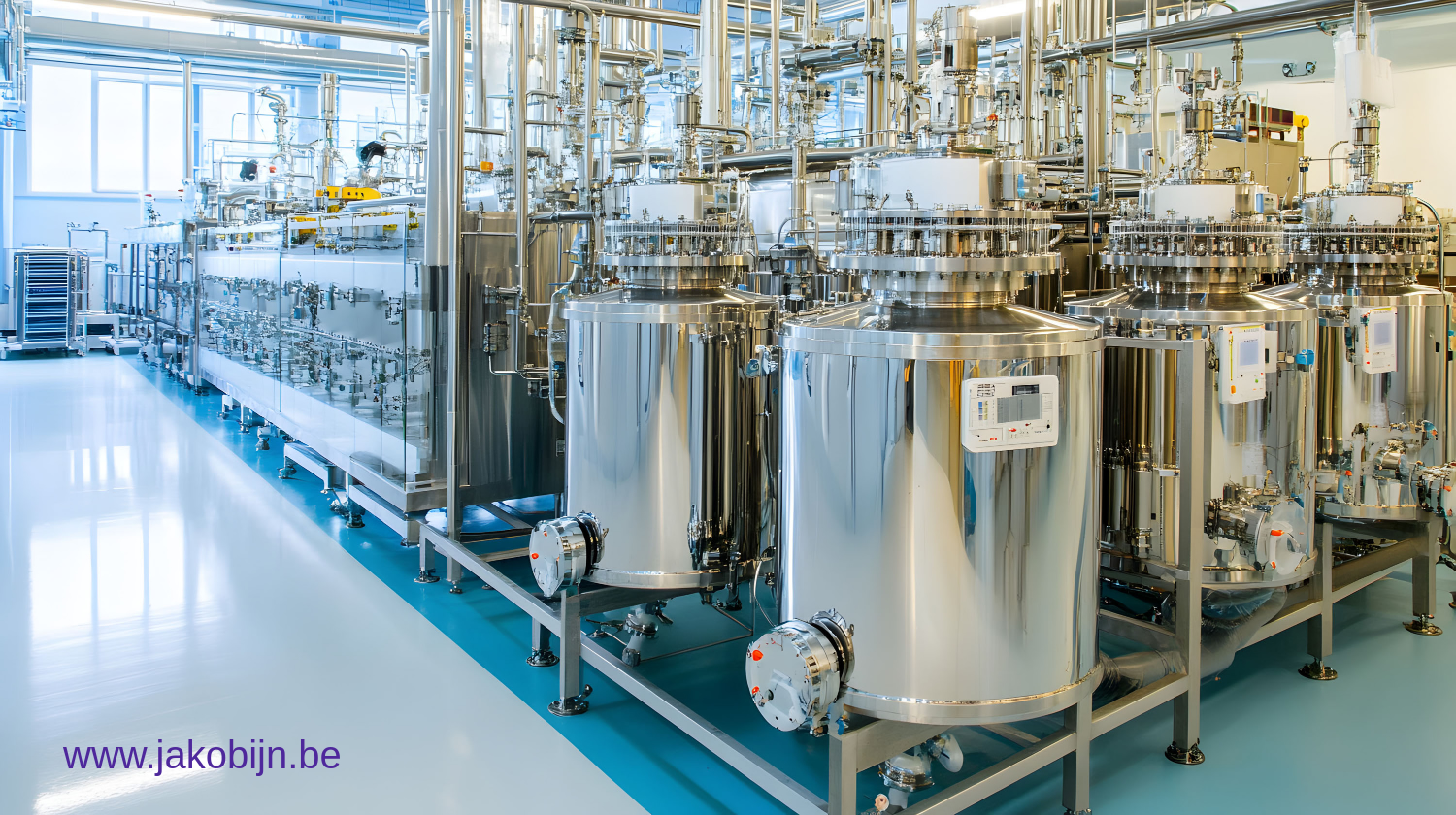 The focus is shifting from purely scientific discovery to physical production capacity. Science can be licensed, but production facilities cannot. State money is therefore flowing massively into bioreactors, pilot plants, and the large-scale production facilities directly beneath the laboratories. More than twenty provinces have added their own budgets and technology parks to this national plan, creating a decentralized but coordinated ecosystem. Moreover, Beijing is systematically working to eliminate dependence on Western capital.
The government recently opened a second, complementary insurance system. This enables a Chinese lab to finally charge a realistic, market-based price to Chinese patients for advanced therapies without being immediately slaughtered by state negotiators. This systematically dismantles every reason for a company like Akeso to sell its next molecule cheaply to the West. Once that job is done, the West ceases to be the customer keeping Chinese laboratories alive and becomes a market where China sells, at a price that China chooses.
The Limited Scope of Protectionist Legislation and the 'Two-Tier' Reality
In the West, people are beginning to realize this, but the responses are often inadequate or hypocritical. In December 2025, the U.S. Congress passed the BIOSECURE Act, aimed at cutting off American public funding for certain Chinese biotech companies (such as the contract research organization WuXi AppTec). The law restricts federal contracts and subsidies with these specific entities. However, the law says nothing about an American company licensing a Chinese molecule through an intermediary or its own subsidiary. They locked the back door but left the front door wide open. Since the law was passed, the deals have only grown larger.
It is political theater that does not resolve the underlying dependency, similar to Europe's naive belief in energy independence before the Ukraine crisis broke out. Europe once produced more than 80 percent of the world's active pharmaceutical ingredients (APIs) by value; today that is only about 30 percent, while China supplies 35 percent. France is trying to bring back the production of basic medicines like paracetamol, but making that powder in France costs 60 percent more than buying it from Asia. That economic gap cannot be closed by legislation.
This dynamic creates an unethical 'two-tier' global healthcare system. A cell therapy or advanced antibody that costs an American or European patient 475,000 dollars can be available in China for just 140,000 dollars. It is the same science, often developed in a Chinese laboratory. But the Western regulator waits for slow, expensive trials with Western bodies before saying 'yes,' and the Western business model adds an enormous profit margin on top to satisfy shareholders. Chinese patients therefore sometimes gain access to the latest therapies years earlier than patients in the country that ultimately sells the drug at an extortionate price.
Conclusion: A New World Order Benefiting the Patient
The rise of the Chinese pharmaceutical industry is one of the most significant geopolitical and scientific developments of the 21st century. It is a story about more than just economic competition; it is about fundamental access to human health and the breaking of Western monopolies.
The current dynamics expose the vulnerabilities and moral shortcomings of the Western pharmaceutical model. As long as China still needed Western capital and market access, this inequality was acceptable to the West. But that is changing. China is building its own production capacity, its own financing structures, and its own domestic market. This development will ultimately benefit the entire world.
Competition breaks monopolies. Chinese innovation forces Western companies to become more efficient and will ultimately lead to a greater supply of affordable, high-quality medicines. Instead of fearing this rise or trying to stop it with inadequate protectionism, the world should focus on fair, mutually respectful cooperation. Science knows no borders, and the patient who benefits from a breakthrough in Zhongshan or Shanghai deserves as much care and respect as the patient in Brussels or New York. The silent revolution in pharmacy has begun, and it will forever rewrite the map of global healthcare.