
How America Turned European Leaders into Marionettes and Accelerated the Empire's Downfall
By Frank Dumon
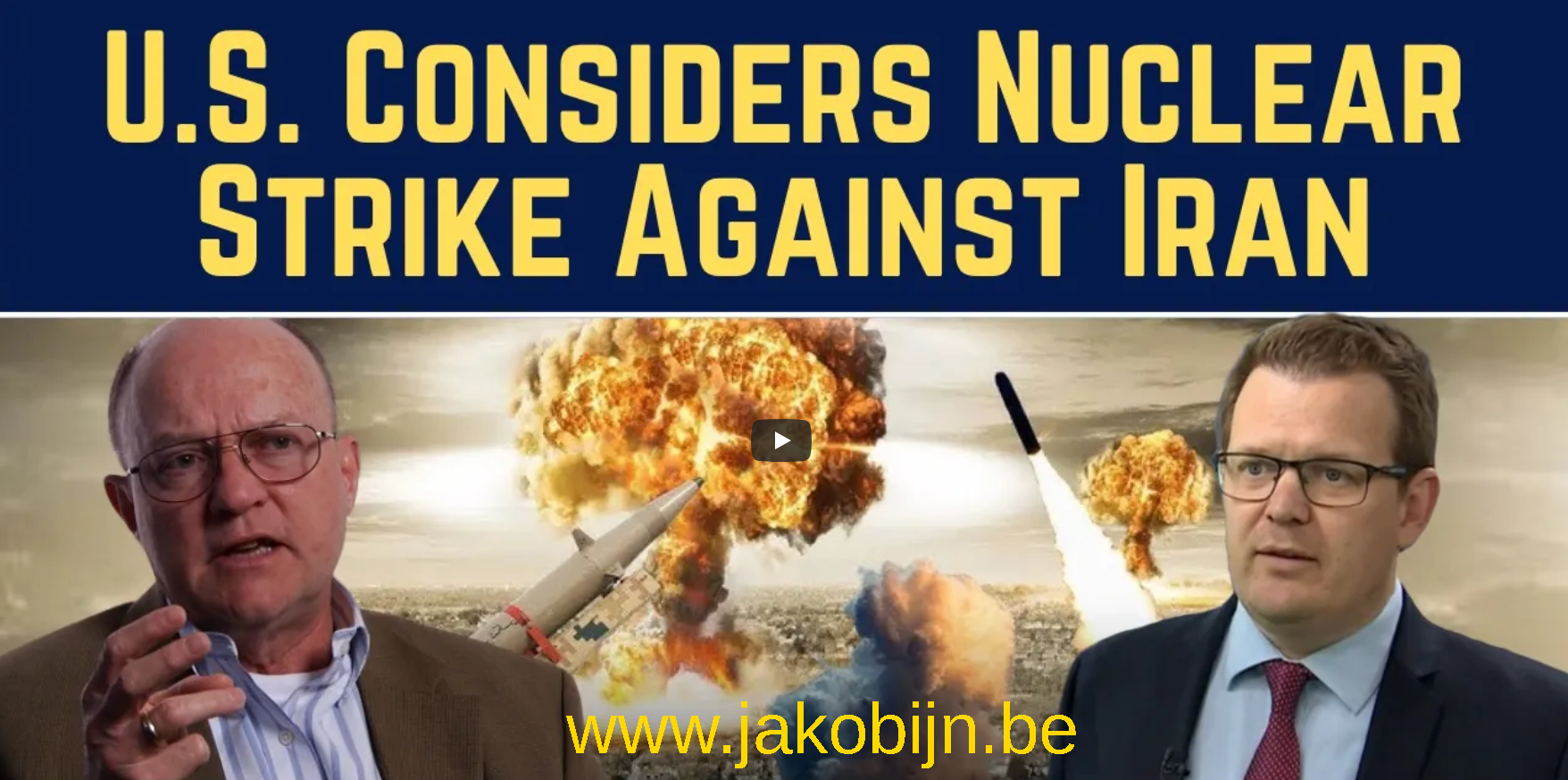
In a recent and revealing interview, Colonel Lawrence Wilkerson, retired U.S. Army officer and former chief of staff to Secretary of State Colin Powell, paints a grim and damning picture of current transatlantic relations. His analysis, rooted in decades of experience within the highest echelons of the American security state, reveals an uncomfortable truth: the European leadership class is not so much the victim of external coercion, but rather the product of a decades-long, carefully orchestrated campaign by U.S. intelligence agencies to subject the continent to Washington's hegemonic interests. What is presented today as "transatlantic unity" or "moral leadership" is in reality the fatal intertwining of European self-destruction and an American empire trying to mask its own decline.
This article analyzes Wilkerson's warnings, places them in a broader historical and geopolitical context, and substantiates his findings with additional sources. The core message is clear: as long as Europe clings to the illusion of a U.S.-led world order, the continent will continue to sacrifice its economic, strategic, and political sovereignty to a power that now regards Europe as a cash cow rather than an equal partner.
The Architecture of Subjugation: The CIA's Legacy in Europe
Wilkerson sharply points out that the current dynamic between the U.S. and Europe is no accident, but the result of historical engineering. He refers to the early days of the Cold War, when figures like the Dulles brothers (Allen Dulles of the CIA and John Foster Dulles as Secretary of State) provided the blueprint for a permanent American presence in Europe. The founding of NATO was not only driven by genuine concern about the Soviet Union but also served as a mechanism to justify domestic U.S. budgets and control Europe's political architecture.
This analysis is powerfully supported by historical research. Works such as Killing Hope by William Blum or The Hidden Hand by Richard J. Aldrich extensively document how the CIA and British MI6 systematically funded and manipulated European political parties, trade unions, and media editorial boards to guarantee pro-American, anti-communist outcomes. Wilkerson confirms this firsthand: "We bought newspaper editors. We bought labor union leaders. We bought members of parliament." He explicitly names current and former NATO secretaries-general, such as Jens Stoltenberg and Mark Rutte, as products of this system. Rutte's sudden shift to an extremely hawkish stance on Russia and his unconditional support for Israel, just before his appointment as NATO chief, is according to Wilkerson no coincidence, but a "job interview" that perfectly aligned with Washington's demands.
The U.S. has "deliberately created Europe in the image it wanted." The arming of liberal democracy, with organizations like USAID and the National Endowment for Democracy (NED) acting as soft powers for regime change and political conditioning, has produced a European political class incapable of independent thought. The result is a continent that no longer recognizes its own interests, let alone defends them.
The Bankruptcy of European Leadership
One of Wilkerson's most poignant observations is the finding that European governments, particularly in Germany, France, and the United Kingdom, have "sinned against a process of self-destruction." Instead of defending their national, economic, and security interests, they have subordinated them to the whims of Washington. The reasoning in European capitals seems to be: if we are just loyal enough and sacrifice our own interests, Washington will eventually reward us with full support.
The reality is the opposite. By submitting, European countries have weakened themselves. Germany, Europe's economic engine, has lost access to cheap energy due to the sanctions policy against Russia, leading to unprecedented deindustrialization. Companies like BASF are relocating their production to the U.S. or China. France sees its strategic autonomy eroded by a NATO that operates under American command, and the United Kingdom, post-Brexit, is strategically isolated and economically weakened, yet still blindly follows the U.S. line.
Wilkerson rightly notes that these leaders have become "too ideological." They use hollow rhetoric about "freedom," "justice," and the "rules-based international order" as empty vessels, filling them with their own meaning to justify failed policies. Diplomacy is replaced by a moral pose. The example of Ukraine is paradigmatic: instead of seeking a diplomatic solution that takes into account the legitimate security concerns of all parties (including the Russian perception of NATO expansion as an existential threat, a point also emphasized by John Mearsheimer since 2014), European leaders opt for a "forever war." They have ideologically boxed themselves into a position where negotiation is branded as treason, leaving them trapped in a conflict they cannot win and which only further weakens them.
Just in: Massive panic breaks out in KIEV. 50,000-strong North Korean army has invaded Ukraine.
The American Retreat and the 'Fortress America' Strategy
While Europe sinks its teeth into a war that weakens it, U.S. strategy is undergoing a fundamental, albeit chaotic, shift. Wilkerson points out that current American policy, even under a figure like Donald Trump, increasingly shows a recognition that the old hegemonic model is no longer sustainable. The U.S. no longer has the economic power to maintain a global empire as it did in the '90s or early 2000s.
What we are seeing now is not isolation out of benevolence, but a cold, transactional recalibration. The U.S. is retreating to the Western Hemisphere ("Fortress America") to focus on the existential challenge of China in the Indo-Pacific. At the same time, Washington is trying to extract a "better return on investment" from its empire. This translates into blackmailing allies: demanding higher defense budgets, cannibalizing European industry through protectionist measures like the Inflation Reduction Act (IRA), and brazenly appropriating resources (such as threats against Venezuelan or Iranian oil, or pressure on South Korean and Japanese chip industries).
For Europe, this is a wake-up call that nevertheless goes unheard. European leaders still hope that subservience will protect them, but Wilkerson is clear: "They are no longer a force multiplier; their subservience makes them weaker." The U.S. no longer sees Europe as a strategic partner, but as a vassal state that must pay for the protection it receives, while simultaneously undermining that same vassal's economic competitive position.
The Illusion of Military Invincibility
One of the most alarming parts of Wilkerson's analysis concerns the state of the American military apparatus. While the rhetoric of invincibility runs at full speed in Washington and European capitals, the reality is one of disastrous decline. Wilkerson refers to a recent speech by Pete Hegseth, which ostensibly described the collapse of Iran's military capacity, but in reality, "to the letter," depicted the current state of the U.S. military.
The shortcomings are systemic and deep-rooted:
Depletion of stockpiles: The war in Ukraine and tensions in the Middle East have depleted U.S. stocks of critical ammunition (such as 155mm shells and advanced missiles). General Cavoli, commander of U.S. forces in Europe, has repeatedly warned of the dangers of this depletion for deterrence against Russia.
Collapse of the industrial base: The U.S. defense industry cannot keep up with demand. Production facilities are lacking, and the costs to scale them up are astronomical. Moreover, the supply chain depends on critical minerals and components supplied almost exclusively by China, a country that has no reason to support the U.S. war machine.
Logistical vulnerability: Wilkerson cites the example of the aircraft carrier USS Abraham Lincoln. Due to the threat of Iranian anti-ship missiles, U.S. aircraft carriers must operate hundreds of kilometers from the coast, leading to extreme logistical chains (sometimes up to 2,200 miles to Diego Garcia and back) for resupply. This undermines crew morale and operational effectiveness, a reality that the Pentagon denies or dismisses as "fake news".
Failed modernization: Wilkerson cites a recent example of a $533 million contract with a Turkish company to automate the production of 155mm shells. The project has been a complete failure, a symbol of the broader incompetence and waste of money within the military-industrial complex.
These facts are carefully hidden behind a wall of lies and propaganda. It is a classic case of "imperial overstretch": commitments exceed resources, and the system holds up solely by the force of its own myth. But myths shatter when they collide with the physical reality of war.
The Nuclear Gamble and the Neglected Climate Crisis
When an empire falls into decline and loses its conventional superiority, the temptation grows to resort to ultimate means. Wilkerson expresses serious concern about the increasing rhetoric within certain circles of the Pentagon and American politics regarding the use of tactical nuclear weapons, particularly against Iran or as an escalation in a conflict with Russia.
From a purely military-professional perspective, Wilkerson argues, tactical nuclear weapons are not the "terrible" destructive force many think; they are essentially "just a bigger bang." The real danger lies not in the direct military impact, but in opening Pandora's box. Would such use stop escalation? No. Iran would likely retaliate in its own way, and in the case of Russia, which has a larger nuclear arsenal, any attack on a NATO target or Russian territory (for example, Kaliningrad) would be guaranteed to lead to nuclear retaliation. "We are playing with fire", Wilkerson warns, "and we don't even know what we're fighting for."
Ironically, and tragically, this existential threat of nuclear escalation is exacerbated by an even greater existential crisis: climate change. Wilkerson refers to recent reports from the American Meteorological Society and NOAA, which warn that ocean warming and extreme weather conditions have already reached the "worst-case scenario" previously predicted only for 2065. Droughts, floods, and the collapse of agricultural systems (such as the wine industry in France) are clear signals.
Why are we not responding? Because the political class, caught in the panic of preserving hegemony, is incapable of cooperation. Instead of joining forces to save the planet, we are wasting resources on a "forever war" that brings the world closer to the abyss. The obsession with defeating Russia, China, and Iran prevents any rational approach to the climate crisis. It is a policy of suicide.
Conclusion: The Necessity of Accommodation in a Multipolar World
Colonel Lawrence Wilkerson's analysis is an uncomfortable mirror for Europe. The conclusion is inescapable: the current course is unsustainable. The United States is recalibrating, not to save Europe, but to save itself at Europe's expense. European leaders, installed or supported by decades of American interference, are unable or unwilling to face this reality.
The only rational way forward is accommodation. This means recognizing the new multipolar reality. It means acknowledging that Russia has legitimate security concerns that cannot be ignored, and that China is an irreversible economic and strategic reality. Instead of fighting these shifts with a weakened military apparatus and hollow ideology, Europe must reposition itself as an independent player that pursues diplomacy and mutual benefit.
Wilkerson hopes that upcoming elections in Europe (in Germany, France, and elsewhere) will bring to power a new generation of leaders with the courage to sever the ties with the past. But he also warns that this requires the public to wake up. The question is not whether we have the technology or the wisdom to save ourselves from nuclear or climatic ruin, but whether we have the political will to let go of the illusion of hegemony.
For readers of De Jakobijn, and especially in light of the broader historical reflection on the price paid for Western illusions, the message is clear: true sovereignty begins with daring to name the truth, however uncomfortable it may be. Europe must stop barking like the dog trained by its master, and finally learn to walk on its own.
Recommendations and Additional Sources for Further Research
To deepen and substantiate Colonel Wilkerson's analysis, the following sources and concepts are recommended for those wishing to further understand geopolitical dynamics:
John Mearsheimer, The Tragedy of Great Power Politics and various lectures on Ukraine: Mearsheimer's realist approach to international politics explains why NATO expansion is perceived by Russia as an existential threat. His work is essential to breaking through the Western "ideological" blind spot.
William Blum, Killing Hope: U.S. Military and CIA Interventions Since World War II: A detailed, documented history of how the CIA manipulated political processes in Europe and beyond, strongly supporting Wilkerson's claims about "buying" politicians and media.
Jeffrey Sachs, To Move a Nation and recent economic analyses: Sachs regularly highlights how U.S. sanctions policy and a focus on geopolitical confrontation harm its own economic interests and those of Europe, and advocates for diplomatic accommodation instead of conflict.
Reports from the Stockholm International Peace Research Institute (SIPRI): For objective data on the depletion of Western ammunition stocks and the growing gap between military ambitions and industrial production capacity.
Analysis of German deindustrialization (e.g., by the Kiel Institute for the World Economy):</strong> These reports concretely demonstrate how energy prices and the U.S. Inflation Reduction Act (IRA) are forcing European companies to relocate, confirming Wilkerson's argument about "cannibalizing" allies.