
The Great Heist: Why Europe Must Choose Between Prosperity and War
By Frank Dumon
When I look back on my years in Vietnam, between 1982 and 1988, during the construction of the textile factory in Hanoi, I see a world that was fundamentally organized differently. There was poverty, yes, but there was also a certain solidarity, a focus on reconstruction and human dignity rather than endless consumption and military expansion. Now, decades later, I live in Ostend, but my gaze remains fixed on the global south and east. What I see there, and what I see happening here in an impoverishing Europe, is a tragedy of historical proportions. A tragedy driven by blind subservience to the United States and a NATO that no longer serves as a shield, but as a vacuum pump for our welfare state.
In this article, I want to address recent developments within the Atlantic alliance, based on the sharp analysis of Peter Mertens, the general secretary of PVDA/PTB. Mertens is a politician with good intentions, just like his party chairman Raoul Hedebouw. I have a personal connection with this family; I knew Hubert Hedebouw, Raoul's father, who came from Waardamme. We regularly exchanged thoughts about the state of the world. Those conversations feel more urgent now than ever. The justified rise of PVDA/PTB is considerable, and I cherish the hope that this will translate into a radical change of course in Belgian and European policy. A policy where the population literally feels drained by a towering debt burden and ever-increasing NATO obligations. Their slogan is simple, but revolutionary in the current context.
More Welfare and less Warfare
The Ritual of Flattery
The recent NATO summit in Ankara – or rather, the meeting that stood in the shadow of Donald Trump's bizarre statements – was not a diplomatic summit, but a ritual humiliation of European leaders. As Peter Mertens aptly noted in his interview with Breakthrough News, the atmosphere was one of pure nervousness. European leaders had to 'flatter the king'. They had to please Trump by promising that Europe is willing to spend enormous amounts on defense.
Mark Rutte, the new Secretary General of NATO, played a leading role here as the 'king of flattery'. His task seems to consist mainly of soothing the American ego. When a Danish journalist confronts him with Trump's absurd statements about 'conquering' Greenland and attacking allies, Rutte chooses not dignity, but subservience. He even praises Trump for the fact that NATO has become "stronger". This is not leadership; this is capitulation. It reveals the powerlessness of the European elite. Instead of developing an autonomous strategic vision, they reduce themselves to executors of an American script that increasingly deviates from reality and the interests of the European citizen.
An Arms Fair in the Spotlight
Let's not be naive: what happened in Ankara was primarily a large-scale arms fair. While the media focused on geopolitical rhetoric, contracts worth more than 43 billion euros were signed behind closed doors. Arms manufacturers are the big winners of this 'summit'. Canada, previously praised by progressives, has now fully succumbed to Trump's pressure and promised to increase its military spending. Germany is closing the largest arms deals in its history, and Belgium? Belgium is buying 3 billion euros worth of missiles for the F-35.
This is madness. Belgium is in a recession. Our infrastructure is creaking, our hospitals are under pressure, and our education system is struggling with resources. Yet our Minister of Defense, without any democratic discussion, sends billions to Ankara. Mertens rightly calls this "massive theft". Every euro spent on these missiles and submarines is a euro not spent on schools, public education, hospitals, and the social security system that European workers have fought for for decades.
The numbers don't lie. Trump demands that Europe spend as much as the US. The US currently spends about 900 billion dollars per year on defense, an amount that Trump says will rise to 1.5 trillion dollars. The European Union is currently at about 350 billion euros and would need to rise to 550 billion euros. That is an additional expenditure of 200 billion euros per year. In a time of economic stagnation, this is financially unsustainable. It inevitably leads to bankruptcy and social unrest. It is a robbery of our children's future in favor of the stock portfolios of Lockheed Martin and Raytheon.
The Illusion of Transatlantic Unity
Why do they do this? Why do European leaders subject themselves to this humiliating dynamic? The answer lies in Washington's strategic focus. Trump and his advisors want to be able to concentrate on their real enemies: China and Iran. Israel must fight the war in the Middle East, Europe must pay the bill for the war in Ukraine, so that the US can free up its troops and resources for the Indo-Pacific region.
Mertens points out that this strategy has already failed. The attempt to quickly subdue Iran, or to maintain control over West Asia, has failed. Despite all threats and sanctions, the West has lost strategic control. But instead of recognizing this, they push Europe deeper into the abyss. Tensions between the US and Europe are real, from trade wars to the Greenland issue, but the European elite chooses submission out of fear of losing influence. An illusion, because as Mertens states: if Europe continues as Trump's puppet, it will disappear from the history books as a serious player. It will be reduced to a "theme park for pensioners", a museum piece without economic or political relevance.
The Anger of the Working Class
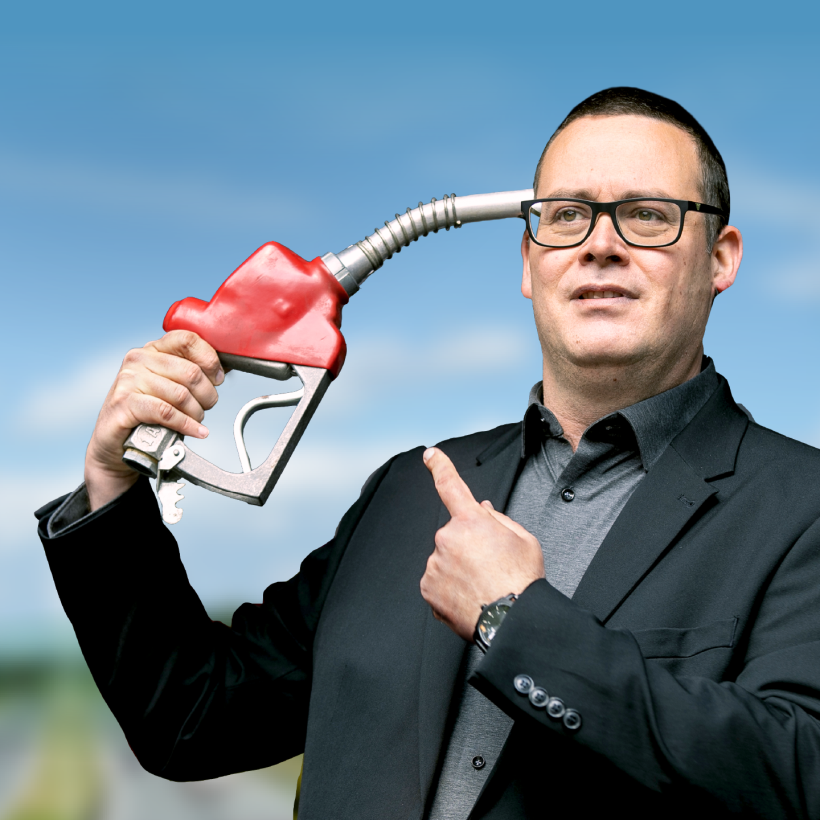
Fortunately, change is in the air. Anger is brewing among the European working class. This anger is great, justified, and potentially explosive. In Germany, Chancellor Friedrich Merz suggests that people should work until they are 70. In the Netherlands, we hear sounds in the same direction. This is not only inhumane, it is physiologically impossible for many. The body says "no".
This anger manifests itself in strikes and protests. In Belgium, we have seen fourteen months of mobilization around the pension issue. But the crucial point, where Mertens and PVDA/PTB play a pioneering role, is making the link between social justice and anti-militarism. For the first time, we see a movement that understands that these two struggles are one and the same. On June 14, we organized a demonstration in Brussels under the banner "Prosperity, not War". Thousands of people showed up, but more importantly: the organizers of school strikes in Germany, the resistance against the militarization of hospitals, and the massive protests in Italy were present.
This connection is the Achilles heel of the establishment. As long as you argue separately against austerity or against NATO, they remain within their ideological silos. But when you explain to people that their hospital is closing because the money goes to F-35 fighter jets, that their pension is being eroded because it goes to Ukrainian ammunition, then you change the debate. It is no longer abstract geopolitics; it is a direct attack on their livelihood. It is language that resonates, because it speaks the truth: it is stolen from the poor to finance the rich and their wars.
The Dialectics of Decline
In his book The Last Days of the Old Normal, Peter Mertens analyzes the shift of economic power from West to East. We live in a time when the hegemonic center of capitalism, the US, is in decline. But as every declining power does, it becomes more aggressive, violent, and chaotic. We see this in the genocide in Gaza, in illegal interventions in Latin America, and in the violation of international law that has now become normal for Washington.
This is the "barbaric face" of a power that knows its time is over. It is a desperate attempt to maintain the status quo with means that no longer work. Strategically, the West has lost control over West Asia. Economically, Europe cannot compete with Asia without cooperation. Yet our leaders cling to a past that no longer exists.
Mertens advocates for a different path. Europe must choose autonomy. Not by closing itself off, but by forging new alliances. Relations with China, with the BRICS countries, are necessary for our industrial survival. The German automotive industry, the engine of the European economy, recently announced the loss of 100,000 jobs. If we continue on the path of militarization and isolation, Europe will de-industrialize. We will then become merely a service economy for the wealthy elite, while the foundation crumbles.
A Plea for Realism and Peace
As someone who has worked and lived in Vietnam for years, I know that peace does not come through weapons, but through dialogue, respect, and economic cooperation. Vietnamese resilience after the war was based on self-reliance and international solidarity, not on dependence on a military superpower. Europe could take an example from this.
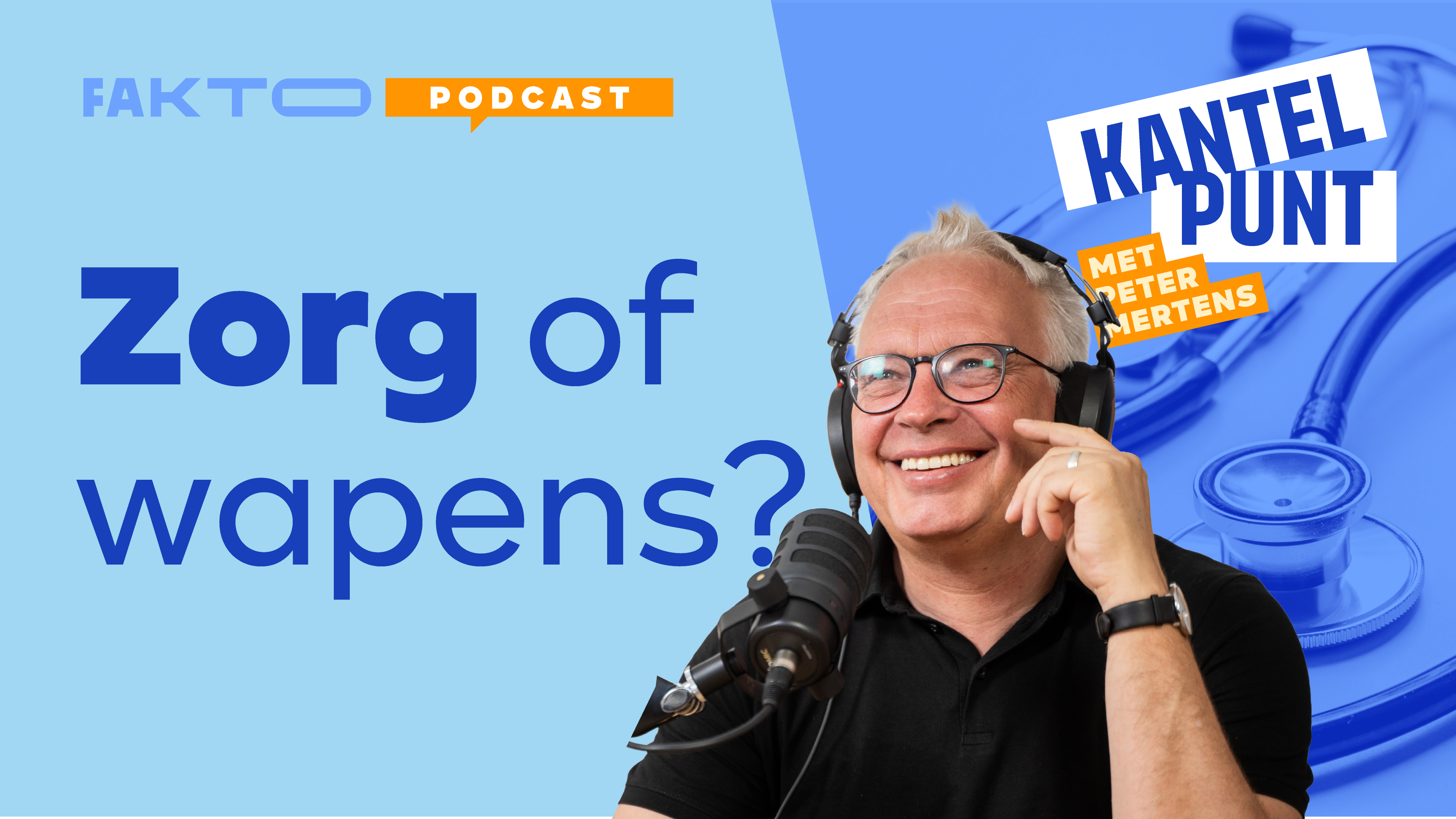
We must stop feeding the war machine. We must stop accepting the narratives imposed on us by a media landscape largely owned by the same conglomerates that profit from conflict. The "existential threat" of communism that Trump speaks of is a specter from the Cold War era that no longer fits the complex reality of today. The real existential threat to Europe is climate change, social inequality, and economic stagnation. None of these problems are solved with more F-35s.
The PVDA/PTB offers a way out with their slogan "More Welfare and less Warfare". It is a call to maturity. It is an acknowledgment that we can no longer be the junior partner of an empire in decline. We must serve our own interests. And those interests lie in investments in care, education, sustainable energy, and social cohesion.
Conclusion: The Choice Is Ours
The coming years will be decisive. Will Europe continue to drift like a leaf in the wind of Washington, or will it find the courage to chart its own course? The signs of resistance are there. The strikes, the growing support for parties that prioritize well-being over war, and the increasing awareness among the younger generation give reason for optimism.
Peter Mertens and his party show that it is possible to make this connection. They show that you can be both socially progressive and geopolitically realistic. For me, as a writer and witness of another time, it is clear: the price of the illusion that we are safe through military dominance is too high. We pay that price with our prosperity, our democracy, and our soul.
It is time to wake up. It is time to say: enough is enough. Let us invest in life, not in death. Let us choose prosperity, and let us leave war behind. As I often think while working on my book about veterans and survivors: the true strength of a nation lies not in the number of bombs it can drop, but in the care it provides for its weakest. Europe must relearn that lesson before it is too late.
For those who want to read more: the books by Peter Mertens, including Mutiny - How Our World is Tilting and The Last Days of the Old Normal are essential reading for anyone who wants to understand the current world order. Also my own work, which will be published soon, "The Price of Illusion", attempts to highlight these themes from a personal and historical perspective. The struggle for a more just world is not only a political struggle, it is a human necessity.