
Geopolitical Shifts in the Middle East, Eastern Europe, and the Arctic
By Frank Dumon
The contemporary geopolitical order is in a phase of irreversible transformation. What was presented for decades as a unipolar, Western-dominated world is visibly unraveling under the weight of its own hubris, strategic overextension, and the resistance of an emerging multipolar reality. For those who pierce through the superficial delusions of the day propagated by Western mainstream media, three distinct yet deeply intertwined fronts emerge: the Middle East, Eastern Europe, and the Arctic. These three regions currently form the battlefields where the future of the international legal order is being contested.
This article is based on a thorough analysis and evaluation of three recent, notable transcripts from alternative and critical geopolitical analysts. These sources highlight respectively the escalating dynamics between Iran and the United States (including the role of European allies), the radical shift in Russian rhetoric regarding Ukrainian leadership, and the silent but deadly confrontation between Russia and Norway in the High North. By juxtaposing these sources and subjecting them to a sharp historical and geopolitical evaluation, a coherent picture emerges of a West desperately trying to maintain control, while the price of this illusion only grows higher.
Contextual Introduction: The End of Western Exceptionalism
To interpret current events, we must remember that the "century of humiliation" is no longer merely a historical concept reserved for the history books of Asian nations. It is a dynamic that, now at an accelerated pace, is beginning to affect the West itself. The moral and strategic bankruptcy of Western foreign policy is becoming increasingly visible. Instead of diplomatic solutions, the Atlantic axis increasingly chooses escalation, proxy wars, and economic blackmail, falsely assuming the rest of the world will continue to tolerate this. The analysis of the three sources below reveals how these tactics not only fail but also backfire, actually strengthening the resolve and unity of the West's adversaries.
Part 1: The Middle East in Flames – The Illusion of American Control
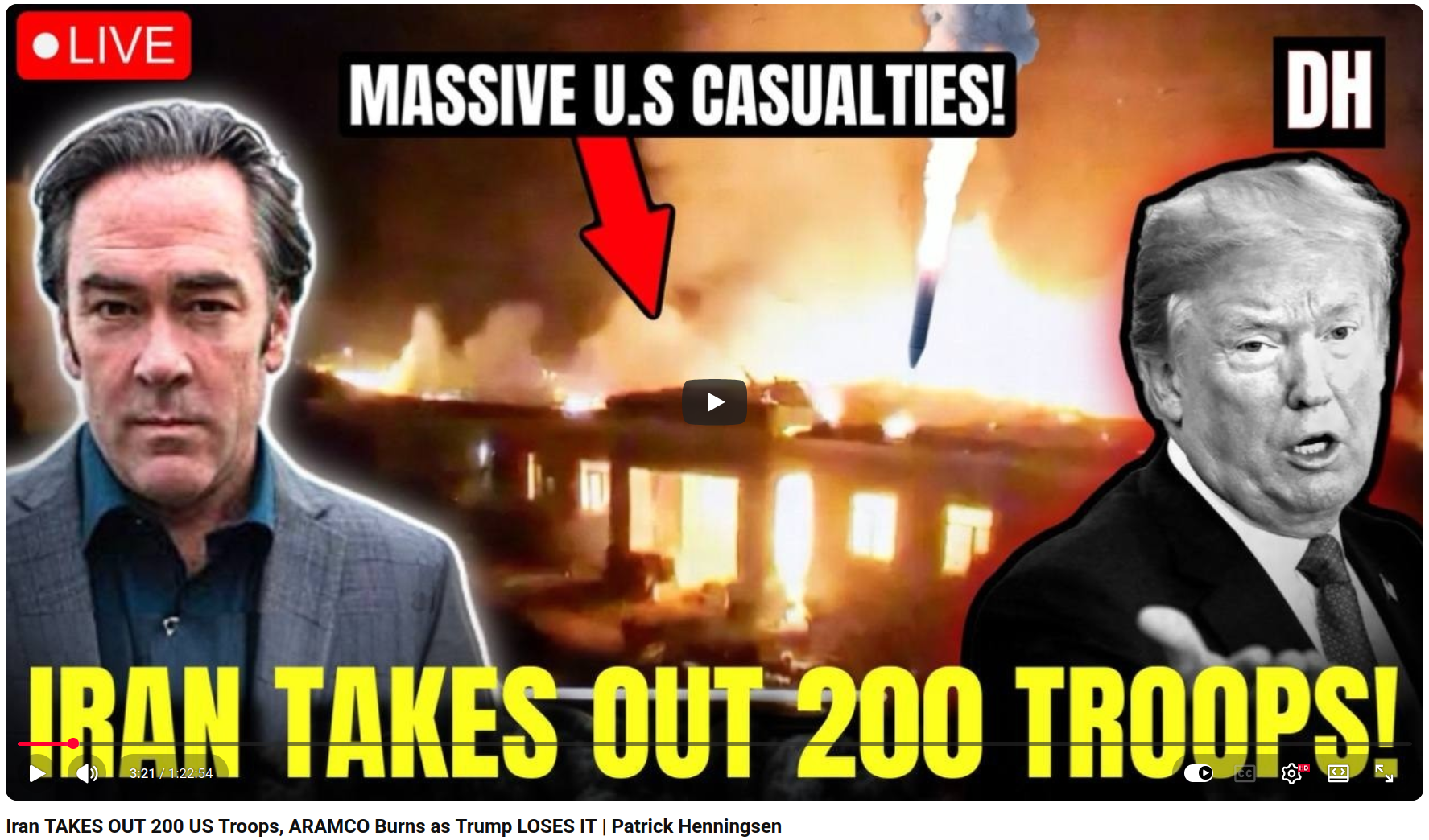
The first source, an analysis by geopolitical analyst Patrick Henningsen, paints a devastating picture of the American position in West Asia. The core message is clear: the United States is not withdrawing, but is embroiled in a long-term, government-funded campaign to break Iran's sphere of influence, particularly its control over the Strait of Hormuz. This analysis debunks the myth of a "pause" in hostilities or the sincerity of recent diplomatic agreements (such as the so-called MOU).
The Sabotage of Diplomacy and the Reality of Battlefield Losses
Henningsen argues convincingly that the diplomatic efforts of the current American administration are nothing more than a smokescreen. The claim that a serious negotiation phase is underway is refuted by the systematic sabotage of the core clauses of the agreement by key figures such as Marco Rubio, J.D. Vance, and Donald Trump himself. The goal is not peace, but creating a pretext for military escalation. This is confirmed by targeted attacks on tankers, which serve as false-flag operations to justify military action.
One of the most revealing aspects of this source is the discussion of American losses. While official channels and mainstream media remain silent or minimize the numbers, independent analyses and leaks indicate that Iranian retaliatory actions have inflicted significant damage. The claim that hundreds of American soldiers have died or been wounded is actively masked by the Pentagon. This censorship is not new; it is a continuation of the strategy employed after the Iranian missile attack on the Ain al-Asad base in 2020, where hundreds of cases of concussions were dismissed as a collective coincidence. The ability of the American state to classify casualty figures under the guise of "national security" is a well-known, albeit rarely openly discussed, mechanism for maintaining public support for endless wars.
European Complicity and Iranian Resilience
The analysis extends to the role of Europe, particularly the United Kingdom. The approval to use RAF bases for American B-1 and B-2 bombers against Iran is a historic mistake of significant magnitude. It not only places Britain squarely in the crosshairs of the Iranian Revolutionary Guard Corps (IRGC) but also violates international law (such as UN Resolution 3314), which states that states should not be used as launch pads for aggression. By blindly aligning themselves with the American agenda, European leaders have painted a target on their own backs, including critical energy infrastructure now on Iranian target lists.
At the same time, Henningsen reveals a crucial fact ignored by the West: Iran's internal resilience. The massive turnout of an estimated 40 million people at the state funeral of the Iranian leader, despite the heat and American bombings, demonstrates a level of social cohesion and political engagement absent in the West. Western hopes for a swift collapse of the regime or a CIA-funded "velvet revolution" are vain. Moreover, American aggression has completely discredited the liberal, pro-Western opposition in Iran, with even former reformers now advocating for hard confrontation ("Rahbar, Ghalibeh: no more negotiations"). The American strategy has thus achieved the exact opposite of what was intended: a united, motivated, and technologically self-sufficient Iran.
Part 2: Eastern Europe and the Escalation of 'Legitimate Target' Rhetoric
The second source shifts the focus to the eastern front, where the dynamic between Russia and Ukraine has entered a new, grim phase. The transcript describes a situation of increasing desperation in Kiev, with the regime attempting to involve the United States in enforcing an "aerial ceasefire" while simultaneously carrying out provocations that further internationalize the conflict.
The Caspian Sea as a New Front and the Iranian Threat
A concerning development raised in the source is the alleged Ukrainian attack on an Iranian cargo ship in the Caspian Sea using kamikaze drones. Whether this was a direct operation by Kiev or a proxy action, the geopolitical implications are enormous. Deliberately involving Iran in the conflict through attacks on its interests is a strategic blunder of the first order. Iran has made it clear that such actions will not remain unpunished and possesses the technological capability (with missiles like the Sejjil and Kheibar Shekan) to reach any location in Ukraine. By provoking Iran, Ukrainian leadership not only pushes its country into a two-front war but also risks the lives of its own citizens in inevitable, severe retaliation.
The Shift Towards 'Legitimate Targets': A Historical Parallel
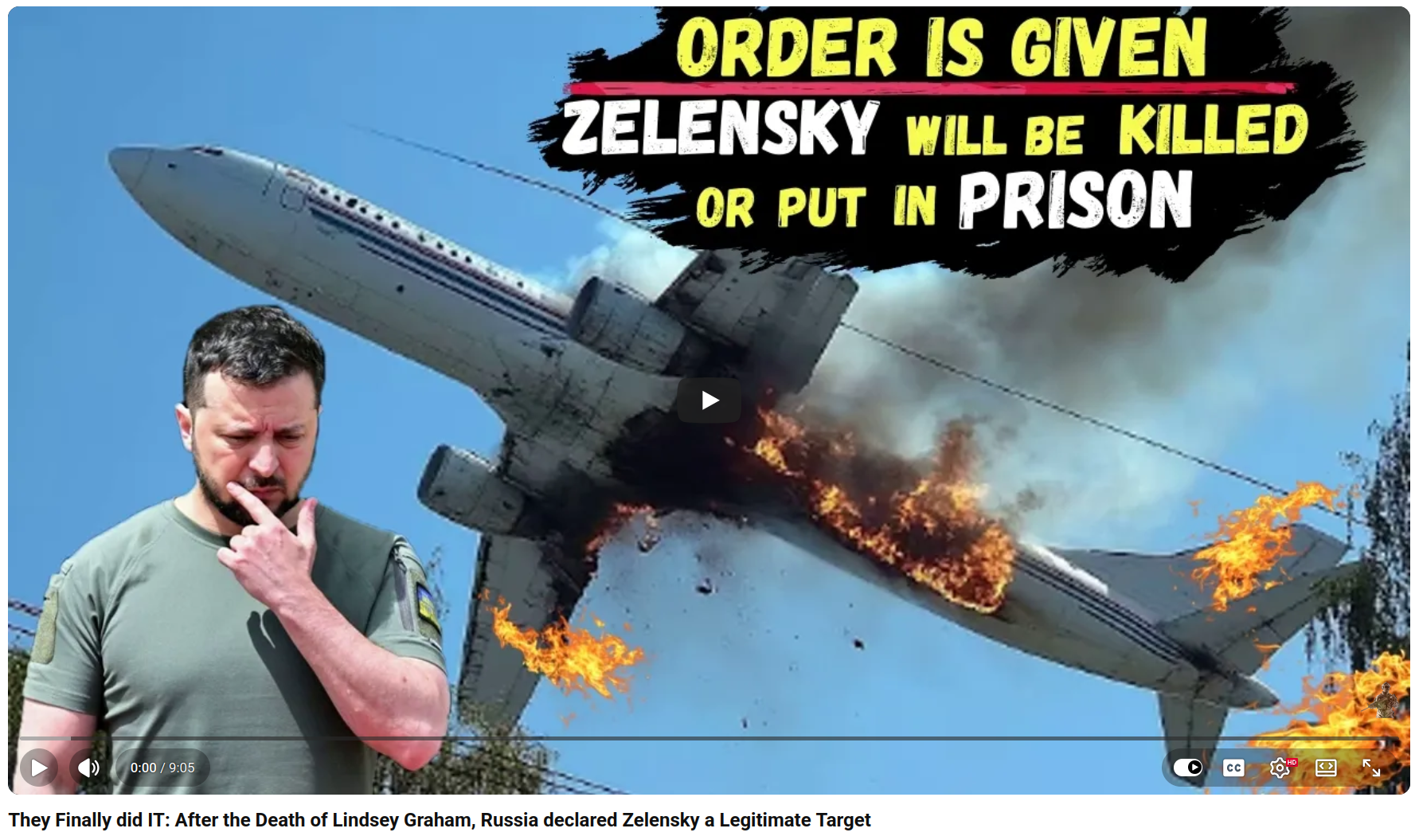
The most profound claim in this source is the Russian declaration that the Ukrainian leadership, including President Zelenskyy and senior military commanders, is now considered a "legitimate target" for special services. This statement follows attacks on civilian targets, such as the tragic incident in the Zaporizhzhia region where children were killed.
Evaluation of the Source: When evaluating this transcript, it is essential to make a sharp distinction between factual verification and the analysis of narrative warfare. The claim in the source about the death of Senator Lindsey Graham has not been confirmed in Western mainstream media and bears the hallmarks of disinformation or a specific, radicalized narrative within certain media channels. However, as an observer of geopolitical dynamics, we must look at the function of such claims and the underlying, indisputable core of the argument. The core is Russian determination to hold the Ukrainian leadership accountable for attacks on civilians.
The source draws a historical parallel with the aftermath of the Chechen wars, where Russia systematically eliminated the military and political leadership of the rebels, wherever they hid in the world. This parallel is not mere rhetoric; it is a clear indication of Russian strategic culture. Once the line of "legitimate target" is drawn, there is no turning back. The West can no longer hide behind the illusion that Ukrainian leadership enjoys immunity as long as it remains in Kiev or in Western capitals. The message is crystal clear: Western protection is an illusion, and the bill will eventually be presented. This is a raw but realistic depiction of how great powers operate when their existential security or citizens are directly threatened.
Part 3: The Arctic Chessboard – Norway as the NATO Guinea Pig

The third source shines a spotlight on an often-overlooked but strategically crucial theater: the Arctic region, and specifically the relationship between Russia and Norway. While the world watches Ukraine and the Middle East, a significant shift has occurred in the High North that could shake the foundations of European security in the long term.
The Break of Age-Old Pragmatism
Norway and Russia share a 196-kilometer border in the Arctic region. For decades, this relationship was characterized by cool but functional pragmatism, with cooperation on fisheries, search and rescue, and border management. Norway always tried to balance its NATO membership with the reality of being a direct neighbor. That balance is now permanently broken. By fully aligning itself with the EU's 20th sanctions package – with far-reaching restrictions on visas, energy, and the financial system – Norway has chosen a policy of maximum pressure.
For Moscow, this is not an abstract political step; it is an existential provocation. Norway is not only a NATO member but has also become the primary supplier of natural gas to a Europe trying to disentangle itself from Russian energy. From the Kremlin's perspective, Norway is seen as a country that has actively helped dismantle Russia's strategic energy leverage, while simultaneously opening its territory for NATO exercises and the stationing of American bombers.
The Threat of the "Grey Zone" and the Test for NATO
The response from the Russian ambassador in Oslo, Nikolai Korchonov, is the most alarming element of this source. His statement that "relevant Russian agencies are taking measures" (in the present tense, not the future tense) is a masterpiece of diplomatic threat language. In the Russian diplomatic lexicon, vagueness is not a sign of weakness, but of an operation already underway.
Why this public warning? The goal is psychological and economic destabilization. Norway is a small, export-oriented country dependent on stable markets and investor confidence. By simply announcing that measures are being taken, Russia creates uncertainty without firing a single shot. This is the essence of "grey zone" warfare: acting below the threshold of a NATO Article 5 response, but with sufficient impact to cause harm.
Possible Russian countermeasures are diverse and concerning: from intimidating Norwegian shipping in the North Sea, to increased military activity around the Svalbard archipelago, to sophisticated cyberattacks on Norwegian energy infrastructure. The core question raised by this source is not whether Russia can harm Norway, but whether NATO is willing to defend Norway against non-kinetic, hybrid attacks. If Moscow succeeds in punishing Norway without a NATO response, it will send a devastating signal to Finland, Sweden, and the Baltic states: Western security guarantees are riddled with holes. Norway is the guinea pig, and the outcome of this experiment will determine the future of European security.
Part 4: Synthesis and Geopolitical Evaluation of the Sources
When merging and evaluating these three transcripts, a coherent, albeit concerning, picture of the current world order emerges. It is crucial to approach these sources with the necessary critical distance, while not ignoring the valuable insights they offer.
Source 1 (Henningsen) offers a sharp, alternative view of the Middle East that exposes the blind spots of Western media. While figures on American casualties are difficult to verify independently, the broader analysis of American strategic overextension, the hypocrisy of the negotiations, and the resilience of Iranian society is geopolitically solid and well-argued. It reveals the mechanisms of "war by deception."
Source 2 (Ukraine/Russia) requires the most caution. The inclusion of unverified claims (such as the death of a prominent American senator) indicates a source operating within a specific, radicalized information cocoon. However, the geopolitical logic emanating from the source – the internationalization of the conflict towards the Caspian Sea and Russian determination to hold Ukrainian leadership accountable – is a real and dangerous development. Here, the source acts as a mirror of the escalatory rhetoric finding its echo on the battlefield.
Source 3 (Norway/Russia) is an exceptionally clear analysis of Arctic dynamics. It correctly identifies the danger of the "grey zone" and the vulnerability of small NATO states on Russia's periphery. The emphasis on the specific wording of the Russian ambassador demonstrates a deep understanding of diplomatic signalling.
Common to these three sources is the theme of Western failure through hubris. In the Middle East, this leads to loss of life and influence; in Eastern Europe, to an unsustainable escalation spiral; and in the North, to jeopardizing the stability of an entire continent. The sources complement each other by showing that Western strategy is not regionally contained but exhibits a global pattern of aggression that increasingly provokes resistance.
Conclusion: The Price of the Illusion
The analysis of these three geopolitical developments leads to an inescapable conclusion: the price of the Western illusion of invulnerability and control is being paid in blood, economic instability, and an accelerated erosion of the international legal order. The United States and its European allies continue to cling to a unipolar dream that has long since evaporated, while trying to suppress the reality of a multipolar world with sanctions, proxy wars, and information campaigns.
Whether it concerns the shattered illusion of a swift regime change in Iran, the futile hope for immunity for Ukrainian leadership, or the naive assumption that Norway can provoke the Russian border with impunity, the pattern is identical. The West overestimates its own power and underestimates the resolve, memory, and capability of its adversaries.
For the observer who looks beyond the delusions of the day, it is clear that history is not on the hegemon's side. The societies being attacked are uniting. The nations being threatened are seeking new alliances. And the leaders who believe they can escalate with impunity will eventually be presented with the full, historical bill. The task for the future is not finding ways to perpetuate this illusion, but developing the courage to face reality and chart a new, more just diplomatic path, before the price of the illusion becomes unpayable.