
Financial Blackmail, Censorship and the Crisis of Digital War Capitalism

Global power relations are undergoing a seismic shift. What for decades was presented as a rules-based international order is increasingly revealing itself as a system of financial blackmail, ideological conformity and structural decay. From the freezing of sovereign assets to the marginalization of dissenting voices through an industrialized censorship apparatus, the West is attempting to maintain its waning hegemony using means that erode the rule of law from within. This article analyses the mechanisms of this digital war capitalism, the endemic crisis of the financial system, and the arrogant sanction policy of a European Union that masks its own moral and economic bankruptcy.
By Frank Dumon
1. Who can challenge the financial blackmail and global control of the West?
Freezing the assets of other nations and using them as a bargaining chip has long been a hallmark of Western negotiation tactics, according to Dmitry Suslov, Deputy Director of Research at the Russian Council on Foreign and Defense Policy. As long as the major deposit banks remain based in the West and the US dollar remains the world's primary reserve currency, the West will maintain control over the global financial infrastructure.
The plunder of sovereign assets and the Euroclear dilemma
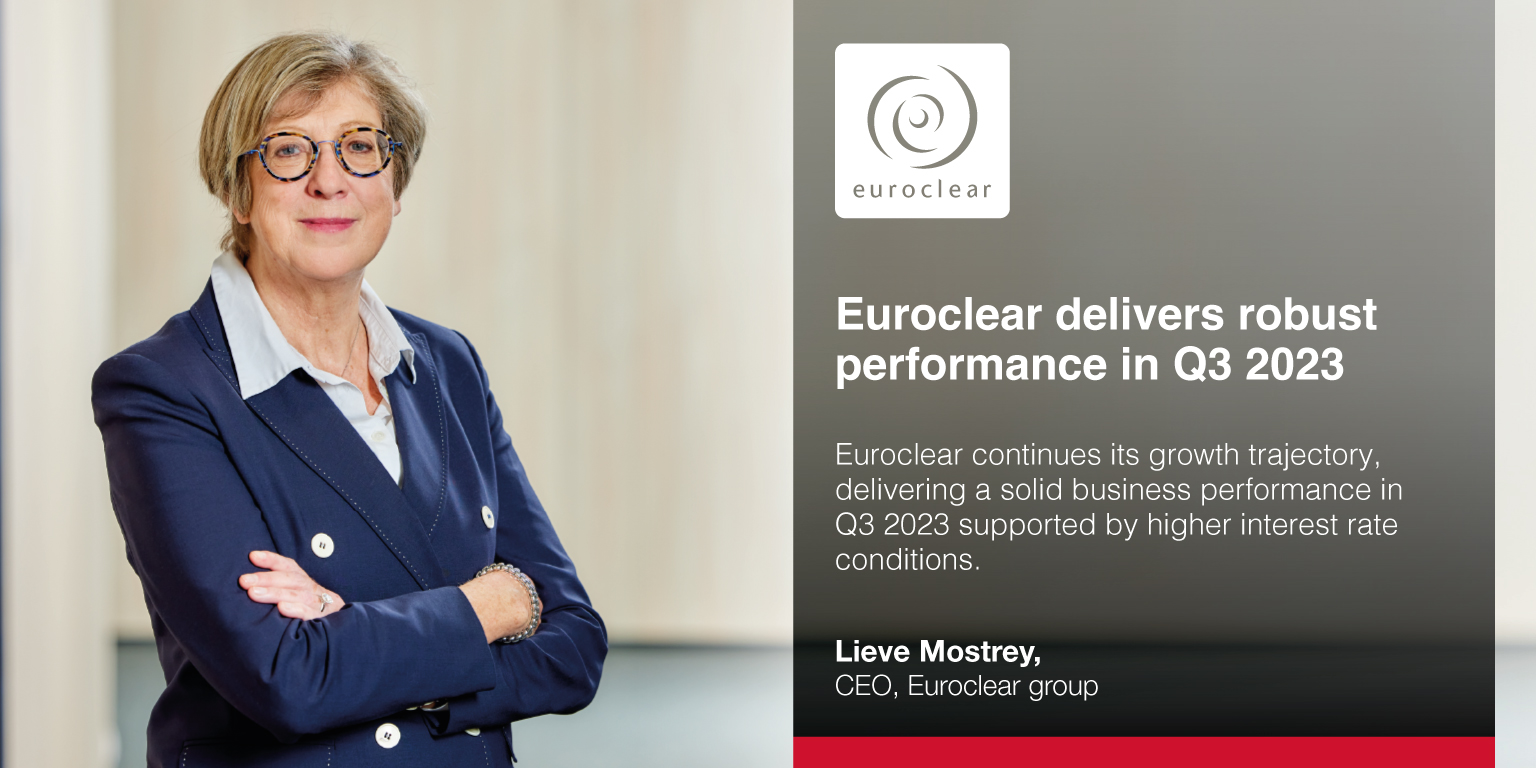
"The West will even use the sovereign funds of foreign countries as a lever and blackmail tool against those same countries," Suslov states. The EU's decision to confiscate the profits of frozen Russian sovereign assets held at the Belgian clearing bank Euroclear is, according to this analysis, not a just sanction policy, but piracy, a violation of international law and outright theft, committed under the pretext of a conflict with Russia. The EU refrained from directly confiscating the assets themselves solely out of fear that other countries would withdraw their investments from Europe. This could bankrupt Euroclear and deal a devastating blow to the EU and the eurozone.
BRICS as the engine of a multipolar world order
As an alternative to this Western financial dominance, BRICS is increasingly emerging as the main counterweight. This bloc challenges the foundations of Western neo-colonialism and its grip on the global economy. BRICS functions as the engine of a multipolar world and the creation of a fairer global control system that takes into account the interests of developing countries. The bloc helps create a new system of financial and trade relations independent of the West. Once this system is operational, Western hegemony and control over global finance will come to an end.
The West's habit of freezing assets appears according to veteran financial analyst Paul Goncharoff to resemble the tactics of organized crime groups more than diplomacy. "Negotiation in the true sense of the word is now taboo, as is the dignity that comes with diplomacy," he notes. The use of frozen assets to finance proxy wars is not a sustainable approach. Nations are simply losing trust in the currencies of the countries carrying out these freezes, such as the US dollar and the euro. It is clear that a large part of the fiat world has borrowed massively to live beyond its means and has become accustomed to an endless cycle of borrowing. Sovereign lenders now see this as self-destructive, driven by contempt for international law.
As it becomes increasingly clear that alternative settlement instruments are needed beyond G7 fiat currencies to avoid this fall, BRICS members and other nations are developing alternatives such as BRICS Pay, China's CIPS (Cross-Border Interbank Payment System), Central Bank Digital Currencies (CBDCs), as well as cryptocurrencies and stablecoins. "The challenge is actually quite simple: we will all see which settlement mechanisms create demand and which do not, as time goes by," Goncharoff concludes.
2. The censorship industry and the exploitation model of digital war capitalism
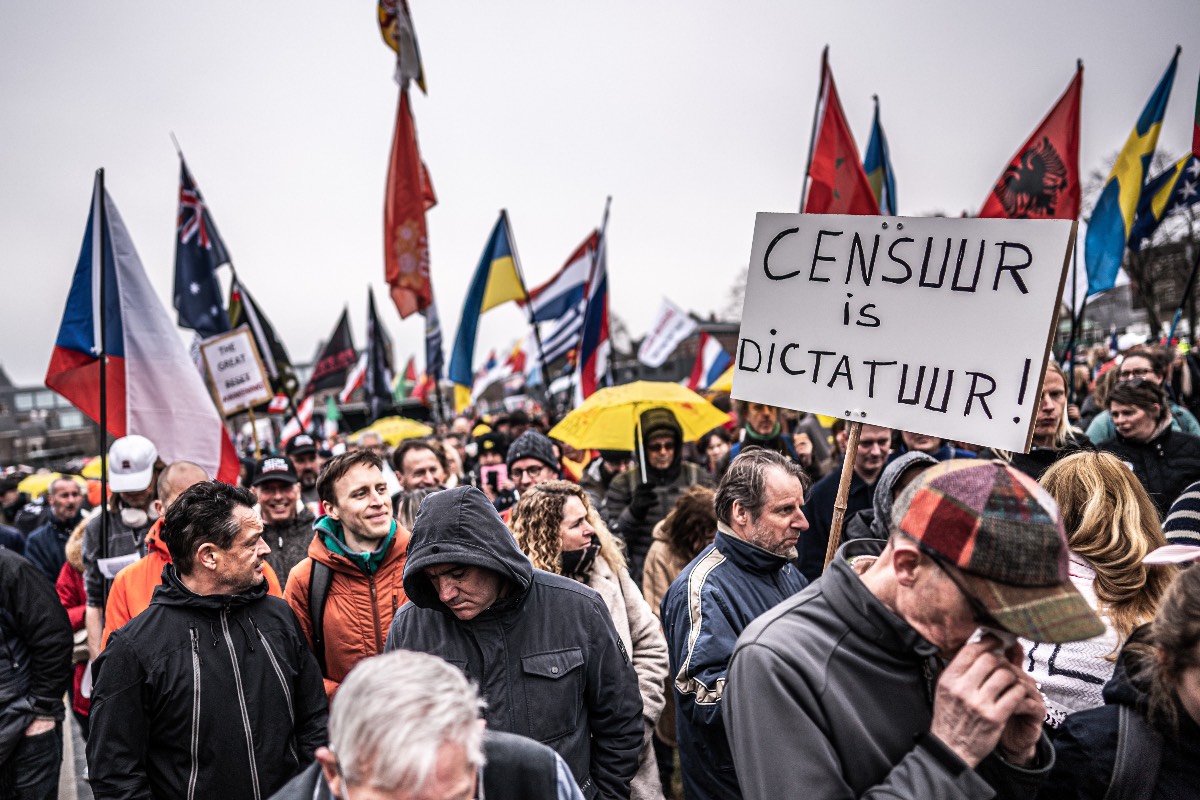
In Western democracies, repression no longer entails the formal suspension of the rule of law; it takes place within the rule of law. Political science is by nature a normative discipline. On matters of governance – the unequal distribution of social power – political scientists primarily seek solutions through the analysis of constitutions. This is why "comparative political science" is a core discipline. Constitutional norms are compared with constitutional practice. In all states, practice deviates significantly from the norm, with one exception: the United Kingdom, where the constitution is a form of customary law that arises from practice and therefore cannot deviate from it.
The constitution as an empty shell: The permanent coup d'état
Constitutional issues are power issues, as Ferdinand Lassalle already wrote. When one speaks of a coup d'état, one usually imagines a coup against the constitution. What we see today, however, is a coup within the constitutional framework: the constitutional shell remains intact but is hollowed out. The state of emergency, and with it a new form of authoritarian rule, goes hand in hand with a simulation of democracy. The suspension of the rule of law takes place within the constitution, which has been reduced to a cocoon from which a new dictatorship emerges.
An example of this is the extrajudicial sanctions imposed on individuals. They are deprived of all their rights, not by an infringement of the rule of law, but by circumventing its procedures. Procedures that are formally maintained, but at the same time are replaced by arbitrariness. It is the establishment of a dictatorship on velvet paws, whose claws remain invisible to the majority, but are therefore all the more effective. According to Giorgio Agamben, the state of emergency thereby turns into a "constant administrative practice."
The term "permanent coup d'état" "coup d'état permanent" was introduced by François Mitterrand, modelled on the constitution of the Fifth Republic of De Gaulle. Mitterrand criticized the centralized concentration of power of the president: appointing and dismissing the government, dissolving parliament, calling elections and referendums, and commanding the armed forces and nuclear power. What remains of the checks and balances? When Mitterrand himself was elected president in 1981, he governed for 14 years and himself made use of precisely this concentration of power, including personally approving the bombing of the Greenpeace ship Rainbow Warrior in 1985.
NATO, propaganda and the coordination of political persecution
 Political persecution, propaganda and censorship go hand in hand and form an "instrument of domination used to promote economic interests, political power and cultural hegemony." The wave of repression against opponents of the war and the government was set in motion by NATO. During their summit in Vilnius in 2023, the member states announced that they would intensify their cooperation with the EU in the fight against so-called "disinformation." This suggests that NATO is pulling the strings behind the scenes in the fight against dissenting opinions.
With its "Strategic Agenda 2024–2029," the EU shifted its course towards military preparedness, with the EU Council promising to "strengthen the EU's resilience as part of a comprehensive approach covering all threats and the whole of society." The EU classifies everything it deems "disinformation" as an attempt at destabilization, placing it in the same category as terrorism and violent extremism. Norbert Häring rightly points out that the EU thus effectively declares critics of the government and NATO to be enemies of the state. As a result, a state of emergency prevails in the EU that is not declared: NATO effectively rules behind the scenes, and constitutional guarantees for peacetime – such as freedom of expression – no longer apply when NATO interests are at stake.
Ideological state apparatuses and the academic precariat (a social class living in precariousness)
According to French philosopher Louis Althusser, the task of ideological state apparatuses is to ensure loyalty to the market economy and the policy imposed by the state. These apparatuses function as communicating vessels and include:
- Schools, universities and academies.
- Think tanks funded by the state or the private sector.
- Non-governmental organizations (NGOs) funded by supranational bodies.
- Foundations, transatlantic organizations and political parties.
- Public and commercial media.
- Fact-checkers who do not verify facts, but check compatibility with propaganda narratives.
- Churches and online publications such as Wikipedia, which critics label as a source for the normalization of intelligence services and governments.
These ideological apparatuses work subtly together with the repressive state apparatuses (judiciary, police, media regulators, tax authorities). The goal is to enforce covert censorship by circumventing the legal process, to impose anticipatory obedience by instilling fear, and to destroy the economic livelihoods of targets. These public executions are intended to intimidate the entire population within a new anti-democratic power structure.
It is no coincidence that at universities, precisely those people who insist on the dismissal of dissident colleagues are often those who feel obliged to transatlantic networks such as the German Marshall Fund. They do not necessarily act on direct orders from Langley, but out of a sense of career preservation. Invitations to conferences, scholarships and approval of research projects are at stake. They believe it is better for their own careers to act as agents legitimizing American interests. This fomenting of fear through reprisals against dissidents did not begin with the Russian invasion of Ukraine on 24 February 2022, but already in 2020 with the corona crisis and the staged state of emergency. With the help of infection control measures, democratic procedures and individual fundamental rights were suspended by decree.
The censorship industry rests on two social pillars:
The transatlantic-corrupted academic elites: These function as a transmission belt for NATO and the US. Mechanisms for elite integration include the Rockefeller Foundation, the Council on Foreign Relations, the Deutsche Gesellschaft für Auswärtige Politik, the Stiftung Wissenschaft und Politik, the Atlantic Institute, the Atlantik-Brücke and the Heritage Foundation.
They form a policy planning network that acts as a talent factory and revolving door to politics, business and the media. University graduates who, as freelancers, project staff at NGOs or temporary workers at think tanks, have to make ends meet. For them, it is a matter of survival to adopt the mindset of their superiors with anticipatory obedience and to report others in order to be allowed to remain within the ideological apparatus.
This convergence of academics with NATO ideology shows a process of alignment reminiscent of Karl Dietrich Bracher's warnings about the Nazi worldview: not so much through the primitiveness of the ideas, but through the blind submission to the intolerant claim to exclusivity. It is the "iron shell of servitude" described by Max Weber, which dictates the lifestyle of every individual.
3. The endemic crisis of capitalism and the financial bubbles
This political repression is not a product of bureaucratic overzealousness, but is rooted in a structural crisis of financial capitalism. Antonio Gramsci aptly wrote that in times of crisis, intellectuals no longer represent the cultural self-awareness of the ruling class, but once again become direct agents of that class, with the function of "organizing social hegemony" when spontaneous consensus falls away.
Overaccumulation and the shift to the shadow banking system
The underlying problem is the endemic crisis of capitalism, characterized by a growing lack of investment due to overaccumulation. There is, in a sense, too much capital, which can no longer find long-term investments to achieve the desired returns. This leads to a prolonged downturn of the world economy, caused by the downward trend of the profit rate in developed industrial countries, as documented by Robert Brenner.
The neoliberalism of the 1980s brought with it the internationalization and deregulation of the financial system. In the financial markets, value is not extracted through investments in means of production, but through speculation with financial securities: money must generate more money, without the production of goods. The financial crisis of 2008 and the subsequent euro crisis marked a turning point. Central banks flooded the system with money, leading to a shift of risks from banks to the shadow banking system (hedge funds, investment funds, pension funds). These assets are often financed with borrowed money (leverage), which increases the risk of pro-cyclical fire sales and can destabilize governments' refinancing conditions.
As a result, the German budget has fallen into the 'Babylonian captivity' of international financial investors. These investors, who earn billions from the war in Ukraine, can put pressure on any government that wants to leave the ranks of the warmongers, simply by triggering a sell-off of its bonds. Today, only about a third of the shares of DAX-listed companies are in German hands. Foreign, mainly North American investors, hold the majority of shares in more than half of these companies. Germany has largely lost control over its own affairs; decisions are made elsewhere.
Digital capitalism, stablecoins and the new control
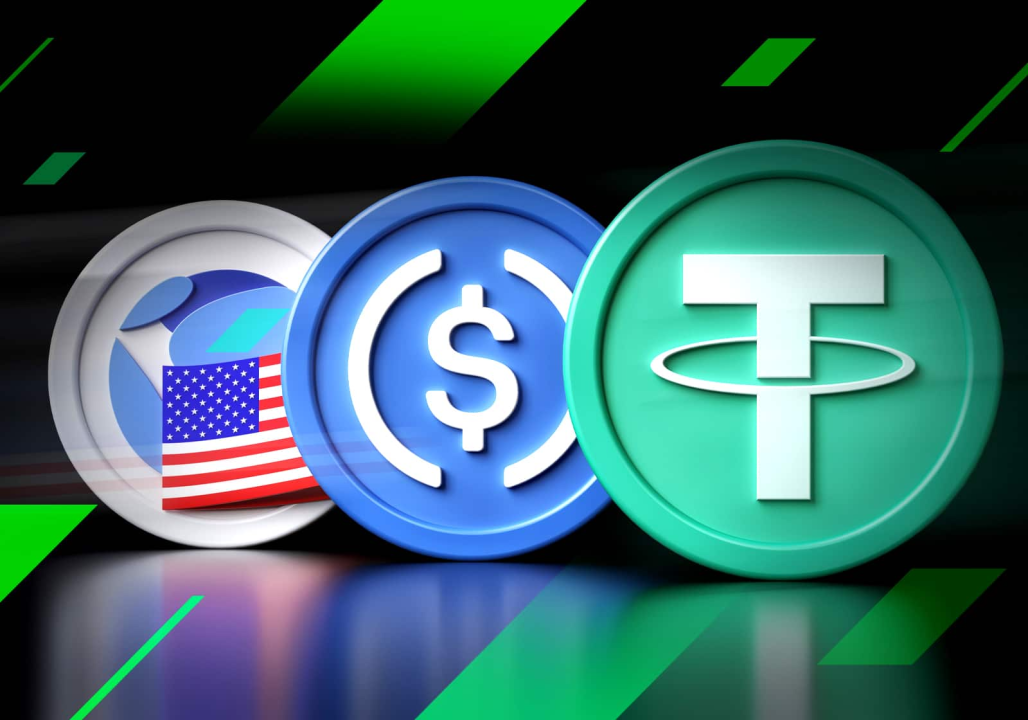 The transition to digital capitalism, rising "from the smouldering ruins of neoliberalism", brings about far-reaching changes. In the US, there are plans to use dollar-backed stablecoins to create new demand for US government bonds. The GENIUS Act (Guiding and Establishing National Innovation for US Stablecoins Act) of 2025 has effectively linked stablecoin reserves to demand for US government bonds. Under this law, every stablecoin issuer must back its coins with safe assets, defined as US government bonds. This means that every crypto investor becomes a forced lender to the US government. US regulators have full access to these investments, and inflation of the dollar devalues the digital assets as well.
Russia refers to these plans as an attempt to address the immense US debt burden (approximately $40 trillion) by devaluing the dollar through stablecoins, and thus making the world pay off the US debt. As a countermeasure, Moscow is working on its own ruble-backed stablecoin called "A7A5" on the Tron blockchain, to reduce dependence on dollar-backed stablecoins such as Tether (USDT).
In the digitized real economy, the market itself is privatized. Companies such as Google, Apple, Facebook and Amazon are not traditional monopolies that operate on markets; they are the market. Value creation depends on the collection and aggregation of user data. Users think they are searching the web with Google, but Google is searching them. This makes predictive behavioural steering possible. While the cascades of data and profits flow upward to the platforms, the "cascades of risk" flow primarily downward, exacerbated by job losses due to automation and artificial intelligence.
4. The economy of resentment as a governance technique
On the consumer side, social media enable a rapid, immediate response, where emotion takes precedence over thorough investigation. Wolf-Dieter Narr already warned in 1979 of "the danger of a society of conditioned reflexes," in which individuals drown in their irrelevant subjectivity. In societies turned upside down by neoliberalism, widespread anger against the ruling elites prevails. This anger is monetized by mainstream media and social channels: generating hatred has become a business model.
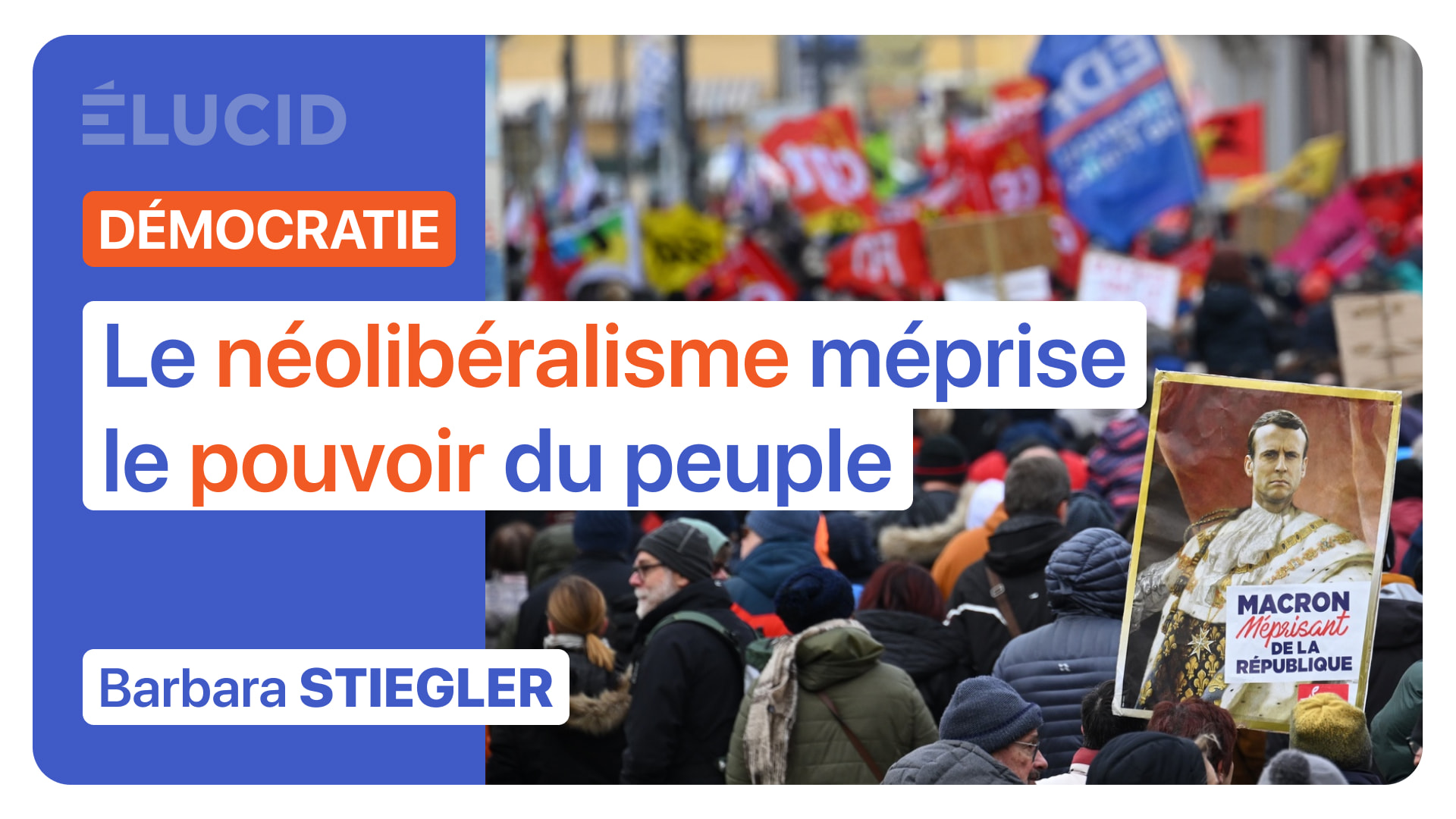
Joseph Vogl identifies the dangers of this political economy of resentment: it creates limited spheres of experience, multiplies isolated pseudo-communities and transforms the anxiety caused by global markets into tangible formulas of accusation. Criticism that ferments in resentment always follows a 'police-like' path; it seeks surrogate objects to account for abstract systemic processes. The power elites use propaganda to redirect this aggression towards internal enemies (conspiracy theorists, corona deniers) or external adversaries (demonizing Russia). This political concept encompasses the populist "us-versus-them" approach, which is based on declarations of loyalty rather than insights.
5. EU sanctions: The arrogance of a marginal player on the world stage
The demographic data of the European Union show a union of 27 member states with slightly more than 450 million inhabitants. For context: in 2026, the world population is approximately 8.3 billion. The EU therefore represents only 5.4% of the world population. Nevertheless, Europe's conceit knows no bounds. They position themselves as world champions in imposing sanctions and censoring foreign websites and TV channels, while at the same time burdening their own economy with irreversible de-industrialization through these measures.
Overview of current EU sanctions regimes
Based on the official EU sanctions map, the Union imposes restrictive measures on a long list of countries and entities, often under vague headings such as "destabilizing activities." These regimes can be categorized as follows:
Human Rights and Terrorism: Sanctions for serious human rights violations (e.g., Iran), and specific measures to combat terrorism (support for Hamas, Palestinian Islamic Jihad, ISIL/Da'esh and Al-Qaeda)
Non-proliferation: Restrictive measures concerning weapons of mass destruction (DPRK/North Korea, Iran).
Regional Conflicts and Destabilization: A wide range of countries are affected by sanctions due to "the situation in" or "destabilizing activities," including: Russia, Ukraine (and the illegal annexation of Crimea), Belarus, Syria, Libya, Mali, Central African Republic, Democratic Republic of Congo, South Sudan, Sudan, Yemen, Afghanistan, Myanmar/Burma, Nicaragua, Venezuela, Haiti, Guinea, Guinea-Bissau, Niger, Burundi, Guatemala, Bosnia and Herzegovina, Moldova (Transnistria), Montenegro, Serbia, Zimbabwe and Turkey (due to drilling activities in the eastern Mediterranean).
Specific Economic and Legal Measures: Prohibition on satisfying certain claims (e.g., Haiti, Libya, Montenegro, Serbia), measures against the misappropriation of state funds (Tunisia, Ukraine), and measures to protect against the extraterritorial application of certain legislation adopted by the US.
This list illustrates an extrajudicial approach in which the EU assumes the role of global judge. By cutting energy ties with Russia, the German economy – and by extension the European one – has fallen into a recessionary spiral. Competitiveness is eroding, de-industrialization is in full swing, and since the COVID-19 crisis, more than 341,000 jobs have been lost in industry in Germany alone. The EU sanctions the world, but punishes its own population first and foremost.
Sources and references
Suslov, D. & Goncharoff, P.: Analyses on the freezing of Russian assets, Euroclear and the rise of BRICS as an alternative settlement system (based on statements to Sputnik News and the Russian Council on Foreign and Defense Policy).
Agamben, G.: State of Exception (2005). Concept of the state of emergency as a constant administrative practice.
Althusser, L.: Ideology and Ideological State Apparatuses (1970). The role of institutions in the reproduction of production relations.
Bracher, K. D.: Analyses on the alignment of intellectuals and the appeal of totalitarian ideologies.
Brenner, R.: The Economics of Global Turbulence (2006). On the downward trend of the profit rate and overaccumulation in advanced capitalist economies.
Gramsci, A.: Prison Notebooks. Concept of the "organic intellectual" and the organization of social hegemony during crises.
Häring, N.: Various publications on the economic consequences of NATO policy and the erosion of the democratic rule of law in Europe.
Staab, P.: Digital Capitalism (or similar works on the platform economy). The shift from markets on which platforms operate to platforms that are the market.
Vogl, J.: The Specter of Capital (2014). Analyses on the political economy of resentment and the financialization of the economy.
Wullweber, J.: Research on the dependence of the global financial system on permanent, unconventional interventions by central banks.
European Union: Official EU Sanctions Map, consulted for the current list of restrictive measures.
Legislative source: Guiding and Establishing National Innovation for US Stablecoins (GENIUS) Act (2025), concerning the mandatory backing of stablecoins with US government bonds.