
The Fall of the American Empire
Pepe Escobar: The Memorandum with Iran, Europe's Blindness and the Search for an Emergency Exit
Richard Wolff: The American Defeat in Iran and the End of the American Empire

By Frank Dumon
The geopolitical seismic shifts of recent months have mercilessly exposed Western illusions. While mainstream media in Europe and the United States still attempt to maintain the appearance of invincible Western hegemony, recent developments in West Asia paint a very different picture. The recent analyses by renowned geopolitical experts Pepe Escobar and Richard Wolff sketch a sobering image of an empire in decline. The United States, confronted with a crushing strategic defeat in its confrontation with Iran, has been forced into a humiliating Memorandum of Understanding (MoU). However, this document is not a peace treaty, but an act of desperation by an administration that is definitively losing its grip on the world order.
In this in-depth analysis, we examine the implications of this MoU, the sell-off of American strategic reserves to a desperate Europe, the crucial role of Lebanon for Tehran, the strengthening of the strategic RIC partnership (Russia-Iran-China), Europe's tragic stubbornness, the necessary transformation of the Gulf States, and the real danger that a cornered America will resort to distracting adventures in Cuba or Greenland.
The Memorandum of Understanding: Trump's Only Lifeline
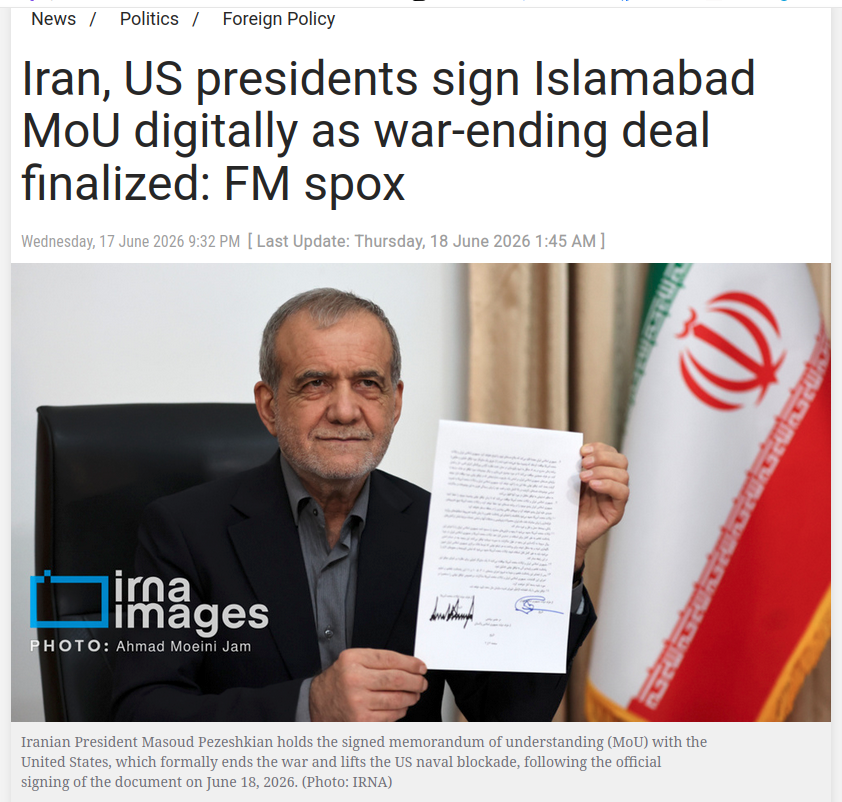
The Memorandum of Understanding (MoU) concluded between the US and Iran is naturally presented in Washington as a diplomatic victory, but the reality is that for President Trump it is the only available 'emergency exit' (off-ramp). As Pepe Escobar analyzes in detail, the American military and economic machine is in a state of exhaustion. The US no longer possesses the missiles, combat hubs, or strategic depth to wage a new, large-scale war in the Strait of Hormuz. Iran, on the other hand, stands with its finger on the trigger, supported by the knowledge that in a direct conflict they can level the region, and particularly Israel, to the ground.
Trump has developed a multi-phase strategy to sell this MoU to American domestic public opinion. In the first phase, he claims that the free flow of oil in the Strait of Hormuz has been restored thanks to his efforts. In the second phase, he buys time for the midterm elections by promising sanctions relief, although the American deep state will do everything in its power to torpedo it. But the real, underlying reason for the haste is economic. Escobar reveals that US strategic oil reserves will reach a critical low point by mid-August. A global energy shortage and resulting economic crisis loom, which would massively fuel inflation again. The MoU is therefore not an ideological choice, but a pure survival strategy to prevent economic implosion.
Richard Wolff confirms this reading from a macroeconomic and historical perspective. For Wolff, the MoU is the classic symptom of an 'overreach' by an empire in decline. The US has grossly underestimated the situation, its own capabilities, and the resilience of its adversaries. What we are seeing now is not peace, but a tactical retreat by a defeated power unwilling to admit defeat. It is an attempt to maintain appearances, while the foundations of American hegemony have been irreversibly swept away.
Sold to the Highest Bidder: How Trump Squandered His Oil and Gas Reserves to a Desperate Europe
One of the most cynical aspects of American strategy is the way the US has used its own strategic energy reserves to drain its European 'allies'. To address its own economic deficits and the depletion of strategic reserves, the Trump administration has been forced to sell scarce energy supplies, such as liquefied natural gas (LNG) and crude oil. And who were the most eager buyers? A desperate, deindustrialized Europe.
Europe, which has maneuvered itself into an impossible position through its own moral and strategic arrogance, has become completely dependent on American energy exports. While the European population faces sky-high energy prices and the end of the European welfare state approaches, Trump has monetized this desperation. The US has sold its strategic reserves at exorbitant prices to a Europe that had no other choice. This is not a partnership; this is the exploitation of a vassal by a dying master. The result is that the US has depleted its reserves for short-term gain, while now, facing looming shortages in August, they are forced to reopen the oil taps via the MoU with Iran. Europe is left holding the bill, completely ignored by the 'protector' in Washington.
Lebanon's Red Line: Why Tehran Will Not Yield

Within the negotiations over the MoU, there is one dossier that is absolutely non-negotiable for Iran: Lebanon. As Escobar emphasizes, and as recently underscored by analyst Laith Marouf, the bond between Iran and Lebanon is much deeper than a mere alliance; it is an existential commitment. Marouf pointed out that during the recent conflict, no less than 20% of homes and infrastructure in Southern Lebanon were destroyed. Reconstruction is impossible as long as Israel occupies the region.
Why is Iran so strongly supporting Lebanon?
♦️ Iranian decision-makers now view the security of key regional partners as a constituent element of Iran's own national security perimeter, rather than as a separate file that can be negotiated in isolation
♦️ The commitment to defending allies is seen as crucial to maintaining the credibility of Iranian guarantees throughout the region
♦️ Iran has demonstrated an ability to absorb strikes and continue functioning as a regional actor, even against significant military pressure
Why Lebanon is so important
➡️ Hezbollah's presence on Israel's northern border provides Iran with strategic depth, diverting enemy resources and creating a constant security challenge for Israel
➡️ Lebanon gives Iran influence on the Mediterranean Sea, allowing Iran to project power far beyond its own borders
➡️ Hezbollah is the "jewel in the crown" of Iran's regional network. Surrendering Lebanon would damage Iran's credibility with every other partner in the region and show adversaries how much pressure to apply to the next front
Israel, led by a desperate Benjamin Netanyahu trying to escape his own political survival and possible prison sentence, refuses to withdraw from Southern Lebanon. This is a dangerous game. For Tehran, the security of Lebanon and Hezbollah is the ultimate red line. Escobar makes clear that Iran will not hesitate to let the MoU fail if Israel continues its bombings of Lebanon. Iran has already warned the Americans via Pakistani mediators: if Washington cannot keep its 'pet' Israel in check, Tehran will take matters into its own hands and directly attack Israel.
Iran's willingness to defend Lebanon at all costs demonstrates the moral and strategic backbone of the Axis of Resistance. Unlike the US, which views its allies merely as pawns, support for Lebanon is a matter of principle and regional stability for Iran. Peace in West Asia is impossible without a just and sustainable solution for Lebanon, and Iran will not allow this country to become a victim of Israel's expansionist drive.
The Strategic RIC Partnership: The New Backbone of the Multipolar World
The American defeat in Iran is not merely a local phenomenon; it is a direct reflection of the rise of the strategic partnership between Russia, Iran, and China (the RIC trio), in the broader context of the BRICS alliance. Pakistan's mediation in the MoU was not a solo project, but was quietly but powerfully supported and overseen by Beijing. China understood that a war with Iran would endanger the New Silk Road and its own energy security.

Russia and Iran have elevated their strategic partnership to an unprecedented level. Where the West thought it could isolate Iran, the country has instead been integrated into a robust Eurasian security and economic network. Richard Wolff rightly points out that Iran's victory is a victory for the entire BRICS bloc. The G7 summit, which desperately tried to 'borrow' four BRICS countries to project any relevance, only showed the pathetic state of the Western establishment.
Real power is shifting to the tables where Moscow, Beijing, and Tehran set the rules, supported by a Global South that no longer allows itself to be dictated to by a morally and militarily bankrupt Washington.
Europe's Tragic Chorus: Blind Aggression and Sanctions
Amid these historic shifts, Europe, and particularly the political elite in Berlin, Paris, and Brussels, remains stuck in a self-created delusion. Europe has not learned the lesson of the decline of the American empire. Instead of seeking its own independent strategic position, the European Union continues to blindly follow the American agenda.
This manifests itself in a continuous, almost suicidal aggression against Russia.
European leaders, including the German and British military and political elite, continue to talk about direct confrontations, delivering long-range missiles, and tolerating terrorist drone attacks on Russian territory. They seem to forget, or refuse to acknowledge, that Russia is no longer the weak opponent of the 1990s, but a nuclear power patiently waiting for the right moment to respond to these provocations with crushing force.
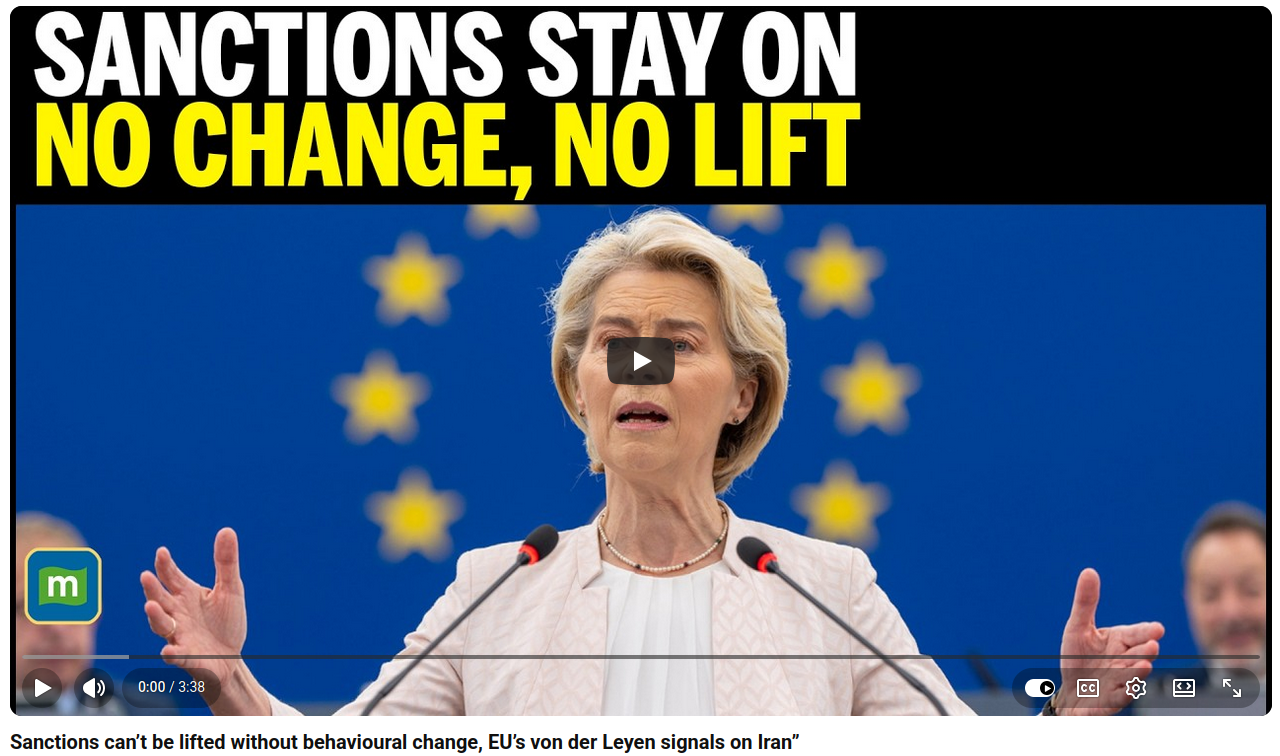
At the same time, Europe, in a display of unparalleled diplomatic stupidity, continues to cling to sanctions against Iran, even after the US itself was forced to conclude a treaty with Tehran. Why do they do this? Richard Wolff offers the correct psychological and political explanation: the European political class uses 'Russophobia' and moral outrage as a diversionary tactic. They know that their own populations are suffering from the disastrous consequences of the break with Russia (cheap energy) and China (markets and raw materials). The European welfare state has been sacrificed to American imperialism.
To divert the anger of their own populations and businesses, they create a permanent state of hysteria around a 'Russian threat'. It is the classic 'round up the usual suspects' tactic: instead of admitting their own failure, they point to an external enemy. It is a tragic spectacle of a continent directing its own demise.
The Gulf States: The End of the Current Order and the Necessity of Adaptation
The signing of the MoU and the de facto takeover of control over the Strait of Hormuz by Iran has plunged the Gulf States (GCC) into an existential crisis. The world as the petromonarchies have known it in recent decades, with the United States as the undisputed security guarantor, is over. The US has proven itself unable, nor willing, to protect the Gulf States from Iranian retaliatory actions.
As Escobar indicates, countries like Saudi Arabia and Qatar realize they must adapt to a new paradigm. Pakistan plays a fascinating role as a connecting link. With its nuclear capabilities, its excellent relations with both the GCC and Iran, and the unwavering support of China, Pakistan offers the Gulf States a new security paradigm. The concept of 'indivisible security', promoted by Russia and China, is becoming the new standard. The Gulf States must accept that the Strait of Hormuz falls under Iranian control. As Wolff sharply remarks: the difference between a 'toll' and a 'fee' is merely semantics; the reality is that Iran holds the scepter, and the Gulf States will have to learn to live with this new, Tehran-dictated reality, whether they like it or not.
A Defeated Empire in Search of Distraction: Cuba and Greenland?
Perhaps the most disturbing conclusion from the analyses of Escobar and Wolff concerns the psychology of a defeated and humiliated America. An empire in decline, unable to explain its strategic defeats in the Middle East and Eurasia to its own population, needs a distraction. A scapegoat. An external enemy that is easy to defeat, in order to maintain the illusion of 'Make America Great Again'.
Escobar warns that the primary candidate for such a distraction war is Cuba. Cuba has been an obsession for the American political elite for more than a century, and particularly for the Cuban-American lobby in Washington (think of figures like Marco Rubio). In the American 'National Security Strategy', the Western Hemisphere is still considered its own 'backyard'. An attack on, or attempt at regime change in Havana, would be a way for a desperate Trump administration (or a successor like JD Vance) to tap into nationalist sentiments and divert attention from economic failure and defeat in Iran.
Another, perhaps even more cynical option that Escobar mentions is Greenland. Although militarily less complex than an operation in Cuba, an attempt to annex Greenland or take it over by force would send a signal of imperial resurgence. It is an easier target than a human population that will resist, and it provides access to crucial rare earth metals and strategic positions in the Arctic region. Wolff concurs with his thesis that a dying empire, as it collapses, causes more and more disasters and conflicts. A defeated America is a dangerous America, and the world, including Russia and China, must be prepared for these unpredictable and potentially destructive death throes of the eagle.
Conclusion: The Inevitable Shift to Multipolarity
The geopolitical reality of June 2026 leaves no room for doubt: the unipolar world order is definitively buried. The Memorandum of Understanding between the US and Iran is the death sentence of American hegemony in West Asia. Trump has sold his strategic reserves to a Europe that finds itself in a state of self-imposed poverty, while European leaders, trapped in their own Russophobic delusion, remain deaf and blind to the new balance of power.
In contrast to this chaos and the moral decay of the West stands the rise of the RIC alliance and the BRICS nations. They offer not only an economic alternative but also a new security paradigm based on sovereignty and mutual respect, rather than coercion and exploitation. The Gulf States will have to adapt, Lebanon will be protected by Tehran's unwavering support, and the world must be vigilant for the final, dangerous capers of an empire that sees its end approaching.
For the attentive observer, and for those who study history rather than deny it, the message is clear. The future belongs not to those who cling to the illusions of the past, but to those who have the courage to embrace the new, multipolar reality. The fall of the American empire is not a tragedy; it is the necessary birth of a fairer, more balanced world order.
Sources
Pepe Escobar: Israel Just Got Outplayed - The MoU That 'Beat' Israel Where It Hurts
Richard Wolff: U.S. Defeat in Iran & End of the U.S Empire
Leith Marouf: Overview of his most recent YouTube video's
The Cradle: https://thecradle.co/articles/lebanon-is-now-part-of-irans-deterrence-doctrine
RT - Iran declares victory over US: https://swentr.site/news/641757-iran-us-victory-memorandum/