
Europe has strangled its own digital lead
Belgium can only dream of the productivity gains needed to pay for ageing, but in the United States productivity is still increasing relatively quickly. The productivity gap between the US and Europe is gigantic and continues to widen. "Europe did that to itself. We forgot to build the single market, which means we lack the scale to keep up with the US," says professor emeritus Luc Soete.
Even at 75, Luc Soete remains an authority on technology and innovation. The professor emeritus made his name as a professor at Maastricht University and as one of the founders and driving forces behind Merit, an internationally renowned think tank. From a small office in Merit's headquarters in cosy Maastricht, Luc Soete still follows scientific research closely, on a voluntary basis. For the European Commission, the Belgian sits on an expert group that makes policy recommendations. Last week, Soete was the keynote speaker at a study day on productivity organised by Ecoom, the expertise centre of the Flemish government that develops indicators to map research and innovation in Flanders.
Daan Killemaes in Trends 8 November 2025: As in the rest of Europe, productivity growth in Belgium has been on a downward trend for decades. Labour productivity is still increasing by barely 1 percent per year. Why is that?
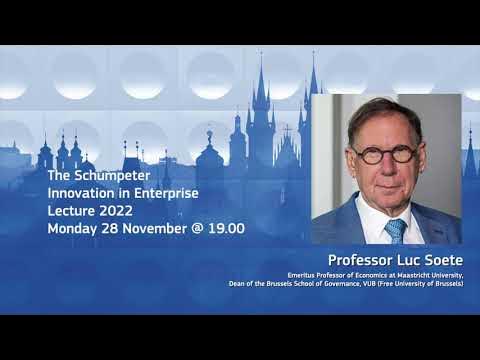
LUC SOETE. "You have to be cautious when measuring productivity. The calculation becomes more difficult as the share of the service sector in gross domestic product (GDP) increases. How do you measure, for example, the added value of digital services? What good is it if people spend hours scrolling through videos on their phones? We count the sold value of those services in GDP, but the enormous waste of time can have a negative effect on the output or productivity of an employee. There are only 24 hours in a day.
"In Belgium, there is also a large government sector. It is very difficult to calculate the added value of the public sector. In the private sector, you can still measure productivity gains through realised turnover, but for the government that exercise is extremely complex. So you have to be very careful with those figures, but it is logical that labour productivity increases more slowly as the service sector becomes more important."
Yet, since 1995, productivity per hour worked in the United States has risen by more than 80 percent, compared to about 20 percent in Europe.
SOETE. "That gap with the US is a digital gap. The innovation gap is particularly large in the capital-intensive technology sector. In other sectors, such as agriculture or industry, the productivity differences between the US and Europe are much smaller."
What is the basis of that digital gap?
SOETE. "Europe has only itself to blame. We have strangled our own digital lead. In the 1990s, the European telecom sector was still ahead. We were pioneers in mobile telephony, but we lost that lead because Europe never built a unified telecom market. The privatisation of national telecom companies was organised within the borders of each country. That was completely nonsensical. We missed a huge opportunity to build telecom companies on a European scale. We lost our lead because we never achieved that scale in the digital world. Ultimately, the US took over the leading role because it does have a large internal market. The US, and soon perhaps China, enjoy enormous economies of scale that the Europe of 27 smaller member states does not have. In his often-cited report on European competitiveness, Mario Draghi advocates the concept of the 28th regime, where European regulations replace national regulations in the 27 EU member states. That is an admission that we took the wrong exit in the 1990s."
You point a critical finger at the introduction of the euro.
SOETE. "Governments preferred to meet the Maastricht criteria to secure the entry ticket to the eurozone. Due to the pressure on budgets in the run-up to the introduction of the euro, member states wanted to retain control over revenues from strategic sectors such as telecom and energy, and the single market got stuck in the starting blocks. Europe forgot to build the internal European single market. The introduction of the euro had a very negative impact on European integration in sectors where scale matters. In this way, Europe missed the train in the digital economy.
The cost of non-integrated markets in those sectors is much higher than the benefit of the single currency. The big American technology companies are successful thanks to their scale and network effects. We have no European counterparts, even though we once led the way with open-source software platforms like Linux. But today we all run on Microsoft, even here at the university. The IMF recently criticised the enormous barriers that exist between the markets of the 27 European member states."
Artificial intelligence (AI) is the new frontline. Will Europe also lose the battle here due to this lack of scale, because investing in AI is capital-intensive?
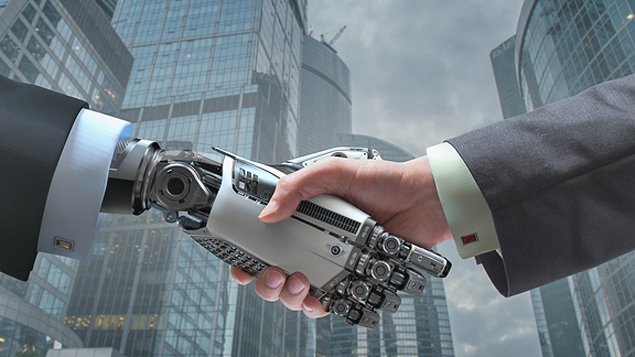
Photo https://geopoliticaleconomy.org/professor-luc-soete-work-mass-unemployment-revisited/
SOETE. "I fear so. AI is of course still in full development. And the technology is so widely applicable that you can set up many AI companies that can be successful in niches. But for other applications you need scale, which works strongly against Europe. The US can also invest in AI because they have no qualms about using fossil fuels. 'Drill, baby, drill,' as President Trump says. They are also playing the nuclear energy card to satisfy the energy hunger of data centres. Again, that scale comes into play."
The US invests 0.8 percent of GDP in venture capital, in Europe that is only 0.2 percent. Is that a matter of more daring in the US or a consequence of a different institutional framework?
SOETE. "A different framework. The financing of companies in Europe still largely goes through banks, which only lend when they have a sufficient safety margin. That risk-averse attitude has become even worse after the financial crisis. Europe does not have a financial sector that finances entrepreneurship and dares to take risks. Europe urgently needs a capital union to scale up venture capital. We have hardly any large technology companies and our promising companies grow relatively slowly because we lack sufficient venture capital."
Can AI also boost productivity in Europe?
SOETE. "Ironically, opportunities lie for Europe in our over-regulation and our bureaucracy, which has become extremely extensive and complex. With the help of AI, you could manage all that administrative hassle much better and more efficiently. Leave the bureaucracy to AI. In the entire government sector, huge efficiency gains can be reaped thanks to AI. It is very strange that this topic is not discussed during budget negotiations. Yet the billions are there for the taking. AI can also greatly reduce administrative pressure in education. The time freed up can be spent on actual teaching tasks and on the children themselves. Especially in nursery and primary education, it is crucial that children receive a good education. That is when they are shaped. That is why I have always been in favour of paying kindergarten and primary school teachers better than university professors. But who dares to use AI to streamline the government? You will undoubtedly get a backlash, with discussions about data security and the quality of the work delivered. But AI is a very useful tool in a Europe that is very bureaucratic and has a large government apparatus."
AI promises to shake up the labour market considerably.
SOETE. "AI will have a major impact on the labour market. Everyone who works most of their hours on a screen will be affected by AI. Almost everyone who works for the government sits in front of a screen all day. AI will cause many people to lose their jobs, but the impact of AI is completely different from the impact of previous technological waves. In the past, it was about automation; now it is about the introduction of additional knowledge. In the past, the least skilled were the ones who paid the price, but now it is the better skilled who are mainly threatened. For the first time, intellectuals are in the firing line of technology. They risk being replaced by AI, while the lower skilled can make up for their knowledge deficit thanks to AI. A creative top layer remains untouched, but routine high-tech jobs are under pressure. And those jobs are proportionally numerous in the government. AI enables huge productivity gains in government and many other sectors that rely on highly skilled workers, such as accountants, lawyers, computer scientists or journalists."
Europe does not have a financial sector that finances entrepreneurship and dares to take risks' Will Europe hinder the roll-out of artificial intelligence by putting the technology into a regulatory straitjacket in advance?
SOETE. "Europe is mainly concerned with the technical safety aspects or environmental impact of new technology. That technological 'aspect research' by definition applies the precautionary principle. It introduces regulations in advance to protect the consumer, but in that way you do not give an innovative technology a chance to develop. It is better to introduce the necessary or desirable regulation afterwards. Let innovation first prove itself and develop in the vast laboratory that is society. Let the market and the process of creative destruction discover the value of a new product or service, and which services survive. Based on those experiences, you can then create desirable regulation."
Can higher defence spending eventually give productivity a boost?
SOETE. "Higher current defence spending stimulates the economy, but given the large budget deficits, this Keynesian policy is already being overused. More soldiers mean even greater shortages on the labour market, and higher spending further increases the budget deficit. Higher defence spending is therefore not necessarily good for the economy. However, the return can be high if more is invested in research and development for things with both military and civilian applications. Think of the development of drone technology, which you can use not only on the battlefield but also, for example, in agriculture. It is striking that the productivity gap between the US and Europe began to widen after the end of the Cold War.
In Europe, this was accompanied by a sharp decline in defence spending, including for research and development. European research funds were not even allowed to flow to defence." Is AI also an unprecedented technological breakthrough for you?
SOETE. "Yes. AI has existed since the 1950s, but only now do we have enough computing power that is causing phenomenal breakthroughs very quickly. I am positive about the technology, not least because in Europe we have ended up in a bureaucracy that we can no longer handle with human power. AI can help us greatly simplify regulation by better assessing risks. AI can guide us in making decisions. We don't need to be afraid of that, as long as control remains in human hands."