
Europe on the Brink of a Self-Inflicted Crisis: A Warning for 2027
Frank Dumon | Politics – Opinion | 15 November 2026
The French presidential election, the struggle for a seat at the negotiating table with Russia, Belgium's budget deadlock and the vulnerability of the global economy may appear to be separate issues. Are those in political power willing to change their policies when the public demands a different course? American analyst Martin Armstrong fears that powerful circles in Europe, alarmed by the prospect of a political upheaval in France, might provoke or exploit a confrontation with Russia in the early months of 2027. It is a serious warning.
1. A Warning Europe Must Not Dismiss Lightly
On 13 November 2026, an extensive interview appeared with American economist and geopolitical commentator Martin Armstrong. The immediate subject was the turmoil on US stock markets, but the most disturbing part of the conversation concerned Europe. Armstrong said he was worried about the possibility of a false flag operation against Russia sometime in the first quarter of 2027, before the French presidential election. On 14 November, his website referred to this warning under the telling title Concern of False Flag Against Russia Q1 2027.
A false flag operation is one in which the real perpetrator conceals their involvement and deliberately tries to place the blame on someone else. In the context Armstrong is discussing, this would mean an incident that turns public opinion against Russia, justifies a new military escalation or makes a diplomatic peace initiative politically impossible. This is no minor allegation. It raises the possibility that security and human lives could be sacrificed to preserve the political power of an established order.
Armstrong does not claim that he can identify the plan, the people who ordered it, those who would carry it out or the location of a future operation. He is expressing a fear based on the political incentives he believes he can identify. His argument deserves attention because it raises a real and testable question: what happens when governments and institutions increasingly tie their political survival to a single foreign enemy and an unchanging security doctrine? Yet another question is equally necessary: what facts support the leap from political anxiety to a deliberate covert operation? On that second point, independently verifiable evidence is currently lacking.
This distinction does not make the warning uninteresting. On the contrary, it protects it from being dismissed too easily. A society need not wait until a disaster has been proven to be in preparation before examining the mechanisms of escalation, propaganda and conflicts of interest. Nor should it present a possible disaster as though it were already an established fact. Vigilance and evidence are not opposites; they belong together.
2. Armstrong's Political Reasoning: Why the First Quarter of 2027?
The heart of Armstrong's argument is political rather than military. In his view, influential circles in Brussels fear that the French elections of April and May 2027 could bring about a fundamental change of direction. Marine Le Pen, he argues, could bring to power a government opposed to Europe's current policy of confrontation with Russia. Other national movements might be encouraged to follow that example. The result could be a chain reaction in which European institutions lose power and national governments reclaim greater freedom to make their own decisions.
In this reasoning, the threat of war becomes a means of holding together a weakening political union. Armstrong refers to the ancient historian Sallust, who described how the disappearance of a common external enemy can expose internal rivalries. Armstrong applies that idea to Europe after the Cold War. When the Soviet Union disappeared, according to his analysis, Western power structures lost an enemy that had helped legitimise their very existence. Russia could subsequently be cast in that role once again.
This historical comparison is thought-provoking, but it is not conclusive proof. The European Union was not founded solely to combat an enemy beyond its borders. Its history also encompasses economic integration, reconciliation between former enemies, democratic cooperation and the single market. Nevertheless, Armstrong touches on a genuine political vulnerability: institutions that increasingly present themselves as protectors against an external threat may begin to treat criticism of their policies as though that criticism itself were a threat to security.
By his own account, Armstrong spoke with people in Brussels who were deeply concerned about the French election. In the available interview, he names no one and provides no documents that would allow those conversations to be independently verified. His expectation of a possible provocation in January, February or March 2027 therefore remains a personal assessment of a scenario. Yet the question that accompanies it is pointed: can European politics still change direction through elections, or is every divergent national choice portrayed as a danger that must be neutralised at any cost?
3. France: An Election with Consequences Far Beyond Paris
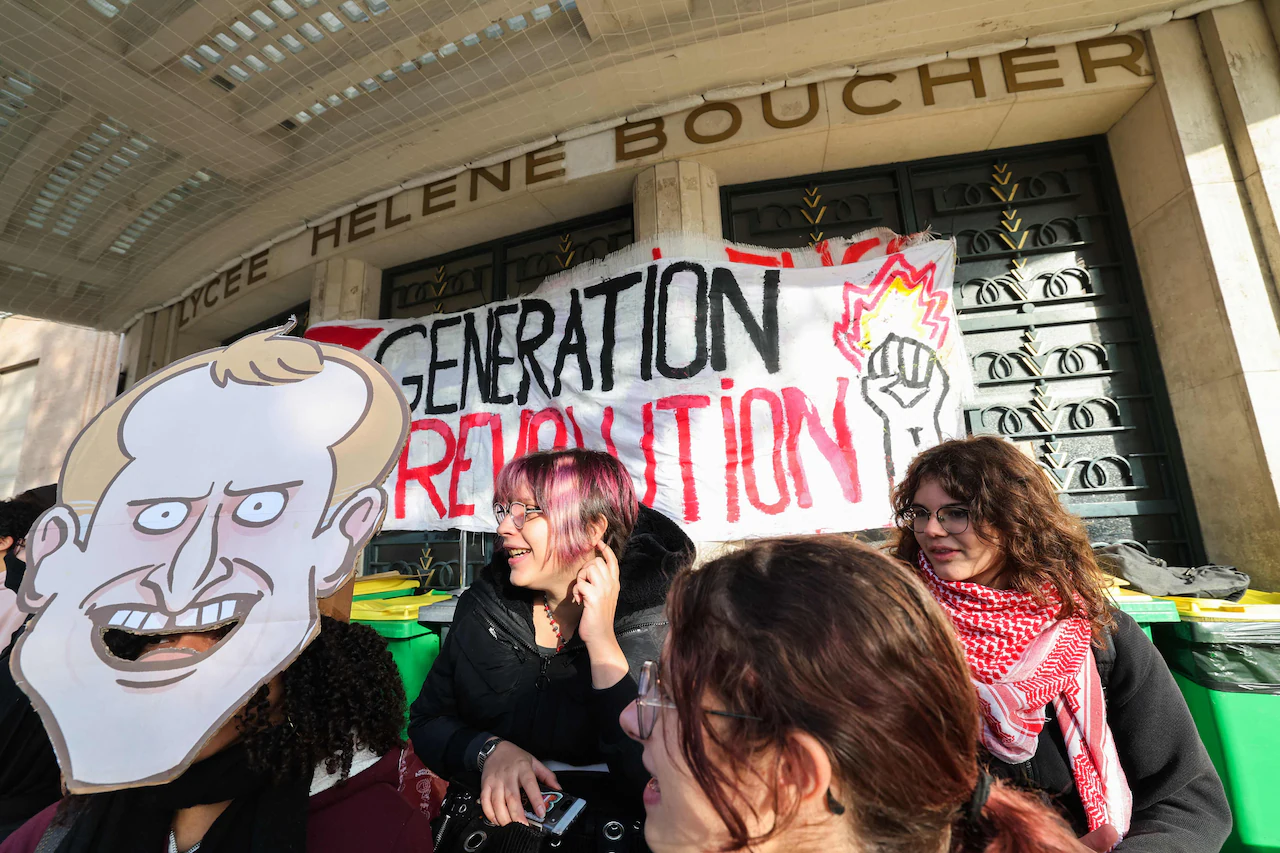
The French presidential election will take place on 18 April and 2 May 2027. The dates have been confirmed by the French government. The first round of voting determines which two candidates proceed to the second round. Opinion polls may indicate the political mood, but they do not determine in advance who will ultimately win. Especially in a two-round election, alliances between voters, political mobilisation and an unexpected event can radically alter the outcome.
Marine Le Pen's position also requires precision. A French court ruling in 2025 had severely restricted her eligibility to stand for election. On 7 July 2026, the Court of Appeal amended the penalty, making it possible in principle for her to contest the presidential election again. At the same time, a conviction remained in place, including a sentence of house arrest under electronic monitoring. Le Pen announced that she would appeal to the Court of Cassation. Her legal position and the practical conditions under which she can campaign are therefore not yet entirely settled. It would be wrong to present her election as a certainty, but equally wrong to pretend that her candidacy has already become definitively impossible.
A second correction is at least as important. The Rassemblement National party has largely abandoned its former direct call for France to leave the European Union and the euro. It now seeks to change European integration from within, reclaim national powers, review France's financial contribution and reshape the present relationship between Paris and Brussels. A Le Pen presidency would therefore not automatically mean that France would leave the Union, still less that the EU would cease to exist the day after her victory.
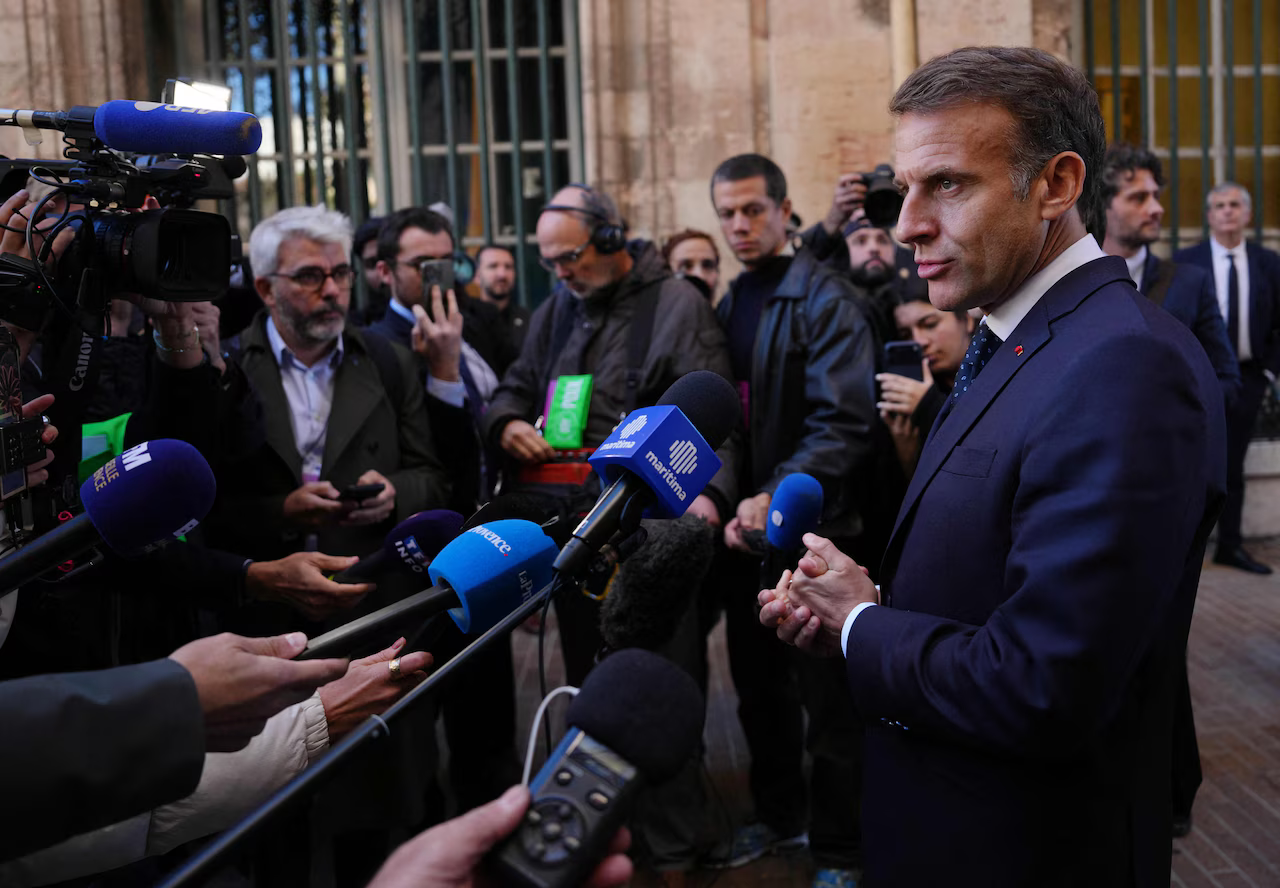
None of this diminishes the political significance of that possibility. France is a founding pillar of the Union, a nuclear power, a permanent member of the United Nations Security Council and a central participant in European defence policy. If a French president substantially changes policy towards Moscow, this could profoundly affect European decision-making on sanctions, military assistance, diplomacy and defence. It could also encourage movements in other member states that demand greater sovereignty.
Yet even a French president cannot single-handedly make peace on behalf of Russia and Ukraine. France is not engaged in a formal bilateral war with Russia that it could independently declare over. A genuine peace agreement requires, first and foremost, the involvement of the warring parties, together with agreements on security, territory, mutual guarantees and compliance. Armstrong's prediction that an electoral victory would simply bring the war to an end is therefore too categorical. The underlying possibility of a major change in French diplomacy nevertheless remains real.
4. The Fear of Political Contagion: Does the Union Still Trust the Voter?
What may worry Brussels most is not a single party leader, but the precedent. If voters in a major member state elect a government that fundamentally questions European priorities, the institutions must choose between adaptation and confrontation. A Union that claims to rest on democratic legitimacy must also be able to accept that part of the population wishes to set different limits on joint decision-making.
The current tensions between European integration and national self-determination are not imaginary. They are visible in debates about energy prices, migration, agriculture, trade, budget rules, sanctions, defence spending and relations with Washington. When citizens bear the consequences of policies without being able to identify clearly who is politically responsible, a democratic problem arises. The Commission can point to the member states, governments can blame Brussels, and national parliaments can invoke obligations supposedly agreed elsewhere.
This is precisely the climate in which a politician promising to return power to the national voter becomes attractive. One may strongly reject Le Pen's positions while recognising that the discontent from which her support grows will not disappear through moral condemnation. Some of those voters want less centralisation, fewer economic sacrifices for geopolitical objectives and more room for diplomacy. Others support her for reasons that have nothing to do with peace or the EU. That diversity must not be obscured either.
The treaties also provide a procedure for a member state to withdraw voluntarily: Article 50 of the Treaty on European Union. The existence of that provision underscores that membership does not constitute an irrevocable transfer of sovereignty. At the same time, a single election in Paris cannot automatically dissolve the institutions of 27 member states. A crisis of political legitimacy is possible; the immediate legal disappearance of the EU is something quite different.
5. Why an External Enemy Can Be So Useful
A government losing its internal cohesion may be tempted to redirect attention towards a danger beyond its borders. This mechanism is familiar from political history and the study of propaganda. A common enemy can temporarily push political differences into the background, strengthen executive power and make extraordinary expenditure easier to justify. Citizens are then addressed as members of a threatened community rather than as voters entitled to challenge policy choices.
The rhetoric surrounding Russia illustrates how quickly security arguments and moral judgements can become entangled. For many European governments, Russia's invasion of Ukraine is the defining starting point: one state has violated the borders of another by force, and the population is paying a terrible price. That starting point must not disappear. But neither does it mean that every Russian security concern is by definition beyond discussion, or that proposing negotiations amounts to betrayal. The purpose of diplomacy is precisely to speak with adversaries, even when their actions are condemned.
Conversely, Russia also bears responsibility for the escalation and for establishing confidence that any agreement will be respected. A lasting compromise cannot be built solely on one side's distrust of the other. It must address Ukraine's security and the question of how Russia and the rest of Europe will relate to one another after the war. Anyone seeking a European security order capable of outlasting a single government cannot simply exclude the concerns of any of the peoples involved from the equation.
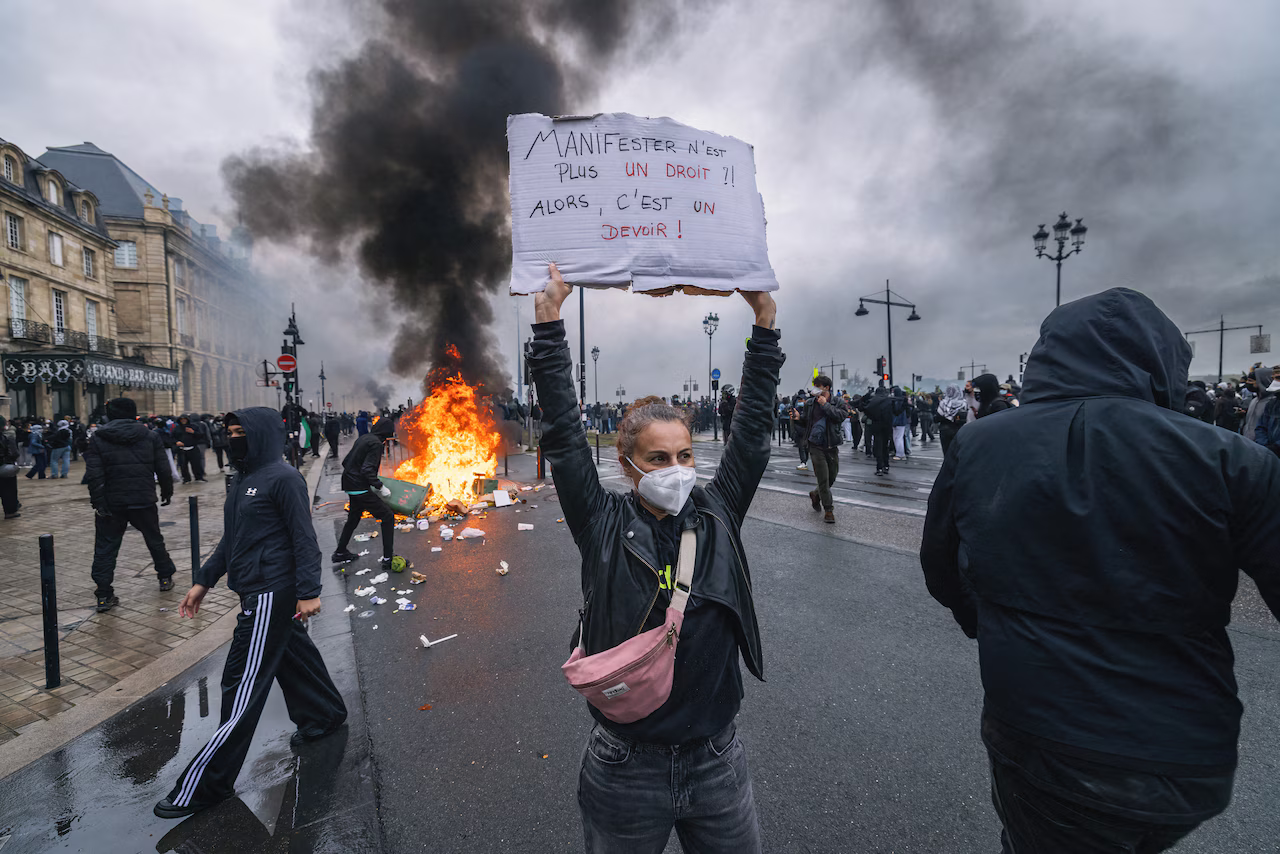
Armstrong's strongest political objection is that demonisation makes negotiations almost impossible. When an adversary has for years been portrayed as someone with whom any form of dialogue is morally unacceptable, politicians lose the room to explain a compromise to their own people. A peace proposal is then judged not on its substance but on the identity of the person making it. Rhetoric can thus become a prison in which both the adversary and one's own population are held captive.
It is therefore legitimate to ask whether European policy sufficiently distinguishes between deterrence, military support, economic pressure and an open diplomatic channel. A credible peace policy requires more than repeatedly declaring a desire for peace. It requires contact, concrete proposals, willingness to provide mutual guarantees and the courage to explain to one's own public why an imperfect agreement can sometimes be better than an endlessly prolonged war.
6. The Boundary Between a Warning and a Conspiracy Theory
Precisely because Armstrong describes such a serious scenario, the standard of evidence must be high. It is possible that a provocation could one day be used as a pretext for escalation. History contains misleading accounts of military incidents, faulty intelligence and governments that portrayed a threat as greater than the available evidence justified. But such precedents do not establish that a particular future attack is already being prepared, nor that Brussels, acting as a single coordinated actor, has a secret plan for war.
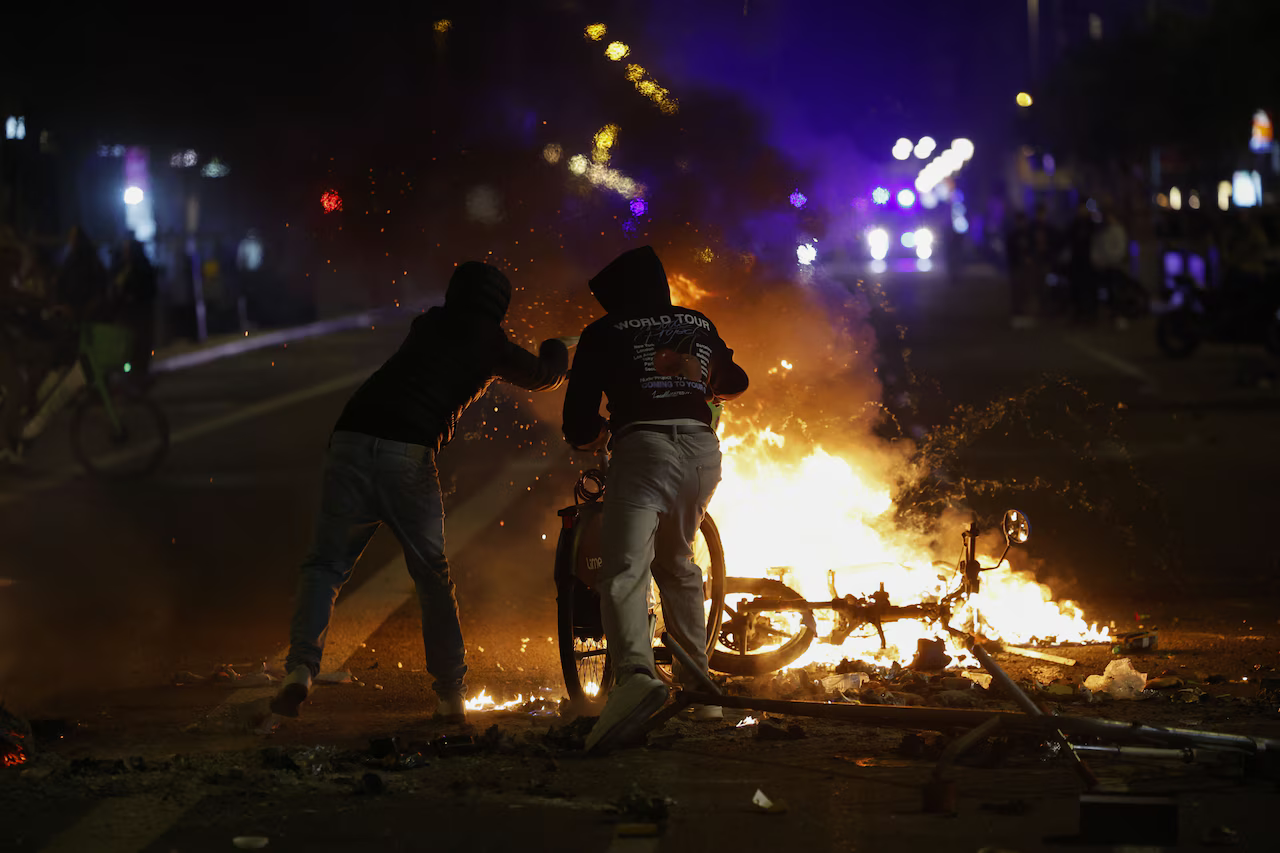
The danger of uncritical dissemination is clear. If every fire, cyberattack, act of sabotage or border violation is labelled a European conspiracy in advance, the public loses its ability to detect genuine manipulation. Whoever is actually responsible for an incident can then hide behind a fog of speculation. The appropriate response to Armstrong's warning is therefore to demand independence: open source information, verifiable timelines, international investigations, transparent intelligence assessments and parliamentary oversight before a serious incident is used to justify an expansion of the war.
Anyone who wants peace has an interest in ensuring that the truth about a possible future incident is not determined by whoever stands to gain the greatest political advantage from it. That principle applies equally to Brussels, Washington, Kyiv and Moscow.
7. Kaja Kallas and the Question of Who Actually Speaks for Europe
The second major issue raised by the accompanying sources is the struggle over European representation in the negotiations concerning Ukraine. The United States once again took the initiative. US envoys Steve Witkoff and Jared Kushner held talks in Abu Dhabi and subsequently met Russian President Vladimir Putin in Moscow. At the European Political Community summit in Dublin on 12 November, tensions grew over which European representative should take part in the diplomatic discussions.
Those tensions were evident in the Deutsche Welle report. When Washington sends two negotiators and Europe is expected to speak with a single voice, the complexity of Europe's governing structures becomes apparent. There are national governments with interests of their own, a European Council that determines their common direction, a Commission with important executive powers and a High Representative for the Common Foreign and Security Policy. The unity presented to the public must be negotiated anew behind the scenes time and again.
On 13 November, Kaja Kallas said during a press briefing in Dublin that she knew the Russians did not want her as a negotiator. She pointed out that European countries were likewise not entitled to decide who should represent Russia. Her institutional argument is understandable: the member states have given her a formal mandate in foreign and security policy. Russia cannot exercise a veto over that mandate.
But diplomacy is not only about formal authority. It is also about whether the parties recognise sufficient credibility, room for manoeuvre and willingness to compromise in one another. A person may have been appointed in an entirely legitimate way and still not be the best choice to rebuild trust with a hostile counterpart. That applies to Kallas just as it does to any other negotiator. Choosing the most uncompromising rhetoric may satisfy one's own supporters, but it does not necessarily bring an agreement any closer.
Kallas advocates a fixed sequence: first a ceasefire, then negotiations on a peace agreement, and subsequently talks on a broader European security architecture. Moscow, by contrast, has an interest in linking the war to Europe's long-term security arrangements and NATO's future role. This disagreement is not merely about the agenda. Whoever determines the sequence can also largely determine which concessions are treated as starting points and which become the eventual price of an agreement.
The reasonable criticism of Kallas, therefore, is not that she comes from Estonia or that Russia would prefer someone else. The essential question is whether her negotiating mandate leaves enough room to discuss the issues that the warring parties themselves regard as fundamental. Equally important is whether other European governments are able to examine different options sincerely behind closed doors, without every disagreement immediately being portrayed as weakness or division.
8. A New Development in Dublin: Europe Now Has a Team
Here, the chronology matters. The DW report of 12 November rightly described a Europe still struggling with the question of representation. A day later, a concrete political decision was reached. Following the informal meeting on 13 November, President António Costa announced that the European institutions, together with France, Germany, Italy, Poland and the United Kingdom, would form a European negotiating team. This is confirmed by the official statement.
The question, then, is no longer simply who gets the seat. The larger question is whether this collective group possesses enough cohesion to make substantive proposals. Five important European states, including the United Kingdom, which is not a member of the EU, are politically and militarily significant participants. Yet they may differ greatly over the desired end state, relations with Washington, the conditions for easing sanctions, Ukraine's future and the guarantees they are willing to provide.
The Dublin decision is both an opportunity and a test. Europe can finally contribute directly to arrangements affecting its own security. But if the team merely defends demands fixed in advance while the United States and Russia establish the broad outlines, Europe's presence will remain largely symbolic. Participation in peace negotiations is not a trophy. It becomes meaningful only when genuine negotiations for peace take place.
There is another point. The EU has 27 member states, and their common institutions are not the same as Europe in its geographical and political entirety. A negotiating team that gives a special place to several major military powers may be efficient, but smaller countries must be able to establish how their interests are being represented. Transparency about the mandate is crucial, especially when decisions about war, energy, sanctions and economic sacrifices affect entire populations.
9. A Trillion Dollars in Market Value: The Economic Background to War Policy
Armstrong's interview began with a dramatic report: more than a trillion dollars in market value was said to have vanished from US stock markets in a very short time. The precise intraday calculation presented in the broadcast cannot be independently established from the source provided. Nevertheless, the report says something about the nervous atmosphere in which these discussions are taking place. On Friday, 13 November, US markets closed with mixed results: the S&P 500 lost approximately 0.4 percent and the Nasdaq Composite around 0.9 percent, while the Dow Jones edged higher.
This distinction matters. A loss of market capitalisation means that the current share price multiplied by the number of shares outstanding produces a lower total. It does not mean that the same amount of cash has literally disappeared from bank accounts. A temporary fall of a trillion dollars in market value can have a major impact on wealth, pension funds and confidence, but it does not automatically amount to the permanent destruction of an equivalent amount of productive wealth.
The recent turmoil on Wall Street does not prove that Europe is preparing a military provocation. What it does show is that an already strained economy has very little to gain from another geopolitical shock. A policy of peace can therefore be defended not only in moral terms. It is also a matter of economic self-interest, particularly for countries with few natural resources that depend heavily on international energy and trade flows.
10. Energy, Diesel and the Price Paid by the Population
Armstrong devotes considerable attention in his interview to oil, refineries and diesel. His basic argument is straightforward: without a reliable fuel supply, it is not only private transport that runs into difficulty, but also freight transport, agriculture, fishing and much of industrial production. Modern economies remain dependent on transport and energy, even as electric technologies expand rapidly.
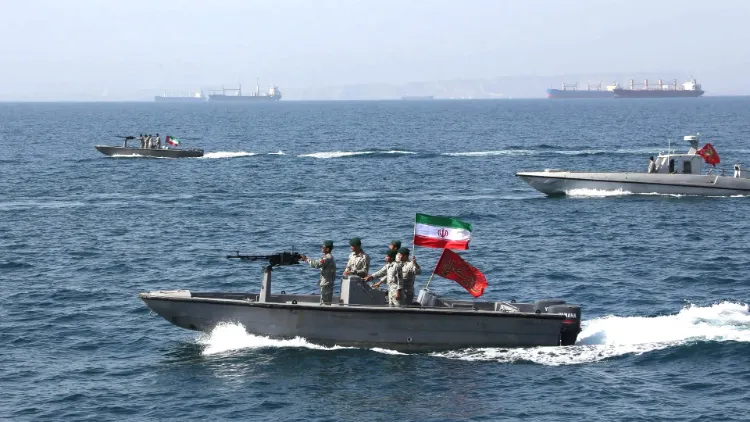 In November 2026, this vulnerability is compounded by tensions surrounding Iran and the Strait of Hormuz. In its November energy outlook, the US Energy Information Administration describes how restrictions and diversions affecting oil supplies from the Middle East are influencing the market. At the same time, recent price movements show that a crisis does not automatically produce rising oil prices every day. Expectations of diplomacy, alternative supply routes, falling demand and inventories all play a part.
The lessons for Europe are serious. A policy that makes access to affordable energy more difficult over a prolonged period, while citizens and businesses already face high financing costs and international competition, can undermine the industrial base. This is not merely a matter of shareholders' profits. Behind every closed plant are skilled workers, suppliers, families and regions that lose their economic future.
This does not mean that every sanction is economically irrational. Governments may choose to bear economic costs in pursuit of political or security objectives. But they must then explain honestly what those objectives are, how success is measured, who pays the price and under what conditions the measures may be lifted. When the response consists solely of new sanctions packages and ever-longer time horizons, policy becomes an end in itself. A democracy should retain the ability to reconsider a costly course of action.
11. Belgium's Budget Crisis as a Mirror of European Political Culture
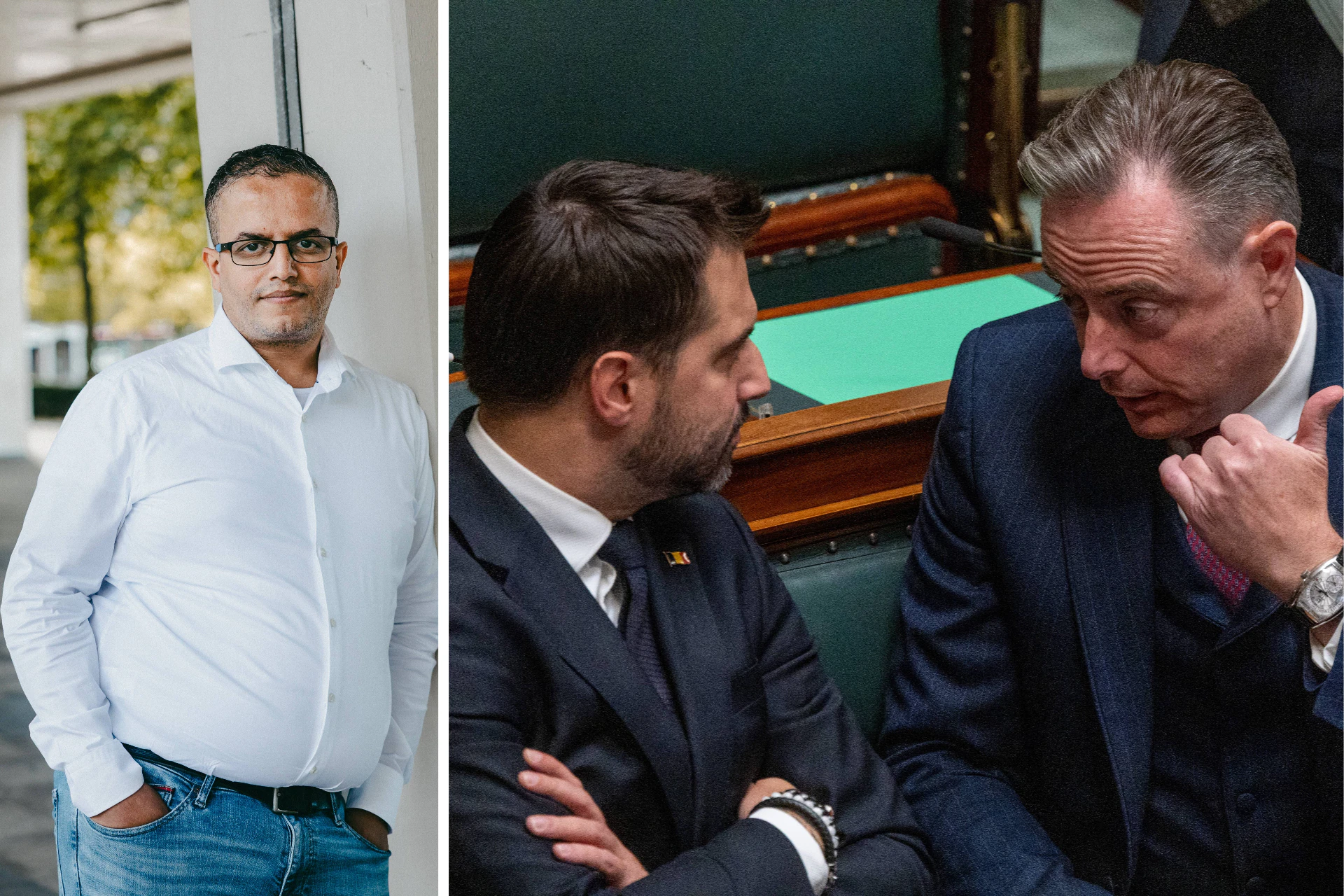 In Belgium, we see a much smaller-scale but recognisable problem of political deadlock. Political scientist Fouad Gandoul explains in De Morgen how federal budget negotiations are held hostage by a system in which party leaders must protect their own political positions. In his view, the problem is not only that financial room for manoeuvre is limited, but also that there is very little overlap between the demands of the five party leaderships.
This is more than a question of personalities. Political parties are organisations that control resources, candidates, communication and access to high office. Anyone leading such an organisation has not only an ideological programme but also an institutional interest: the party must preserve its distinct identity, satisfy its supporters and safeguard its position for the next election. A compromise may make sense from the standpoint of the public interest, yet be perceived within the party as a loss of face.
Gandoul refers to the iron law of oligarchy and to game theory. The former warns of the tendency of large organisations to concentrate power in a small leadership. The latter helps explain why negotiations involving several veto players can become deadlocked even when all participants understand that an agreement is necessary. If every party can block the others and none is willing to bear the political cost of a concession, paralysis becomes the predictable result.
Events illustrate this analysis. After the budget negotiations reached an impasse, Prime Minister Bart De Wever had to resume talks. King Philippe instructed him to report back by 16 November 2026. At stake is not merely the day-to-day functioning of the coalition. Belgium faces a substantial structural budget problem. In its spring forecast, the European Commission projected a government deficit of approximately 5.2 percent of gross domestic product in 2026 and public debt of around 110.5 percent of GDP. The National Bank likewise warned of a deteriorating outlook.
Yet in such crises, parliament risks being reduced to the role of spectator. Article 42 of the Belgian Constitution states that the members of both Chambers represent the nation, not merely those who elected them. In practice, party discipline and party strategies often outweigh the independent judgement of individual parliamentarians. Formal representation may exist, but the space for a genuinely open debate about alternative choices is restricted when five party headquarters determine the limits of what is politically conceivable.
The connection with the European Union does not prove that the two systems are identical. Belgium is a federal state; the EU is a treaty-based union of states with its own division of powers. But there is a striking similarity in their institutional vulnerabilities. The more centres of power possess an effective veto, the harder it becomes to change course, especially when the political prestige of the leaders involved is already invested in the old one. Preserving the agreement — or even the dysfunctional system itself — then becomes more important than asking whether it still serves the population.
12. From Belgian Party Dominance to European Power Politics
It would be too simplistic to equate Belgium's budget crisis directly with the war in Ukraine. Nevertheless, both raise a similar democratic question: who can change a policy after the political leadership has staked its authority on that policy for years? In Belgium, tax measures, spending cuts and expenditure each face their own party-political vetoes. In European foreign policy, security guarantees, sanctions, territorial questions and military commitments have their own veto players and negotiating limits.
When citizens can choose only between party programmes that are transformed after elections into almost impenetrable compromises, they feel powerless. And when that same public is subsequently told that the most important geopolitical decisions can no longer be questioned because of international obligations, the distance becomes even greater. The result is not automatically a wiser alternative policy. What it does create is an increasingly fertile ground for political movements promising to break the entire system open.
This is where Armstrong's warning meets Gandoul's analysis. Armstrong sees a possible external escalation as a last resort for a power structure afraid of losing its legitimacy. Gandoul shows how a political elite can create a system that blocks change even without any conspiracy. Together, they point towards a pattern of institutional self-preservation. But their explanations are not the same: Gandoul analyses observable negotiations, whereas Armstrong attaches an unproven future scenario to them. The difference in the strength of the evidence must be preserved.
The most important political question, therefore, is not whether every European leader consciously wants war. That would be an unjustified generalisation. The question is whether the existing incentives sufficiently reward the pursuit of peace. Is a negotiator praised when honestly discussing a difficult concession? Can a parliamentarian explain why a sanction is causing more harm than results? Can a government acknowledge that an old military objective has become unattainable? Or is the politician who does so immediately accused of weakness, betrayal or sympathy for the adversary?
13. Another Course Is Possible: Security Through Negotiation
Europe's population has a right to policies that do not constantly present the choice as one between total military escalation and total capitulation. Between those extremes lies a broad diplomatic terrain. It includes ceasefires, mutual verification, prisoner exchanges, guarantees for civilian infrastructure, agreements on shipping, negotiations over missile systems and arrangements to reduce risks along borders. Each of these instruments can save lives in its own right, even when a final peace treaty remains distant.
For Ukraine, this means that its citizens and legitimate representatives must not be reduced to an afterthought in great-power diplomacy. For Russia, it means that concerns about Europe's future military order must be open to discussion without the very act of discussion being portrayed as a concession. For other European countries, it means that they cannot simply outsource their security to Washington, but neither can they pretend that their interests automatically coincide with those of all their neighbours.
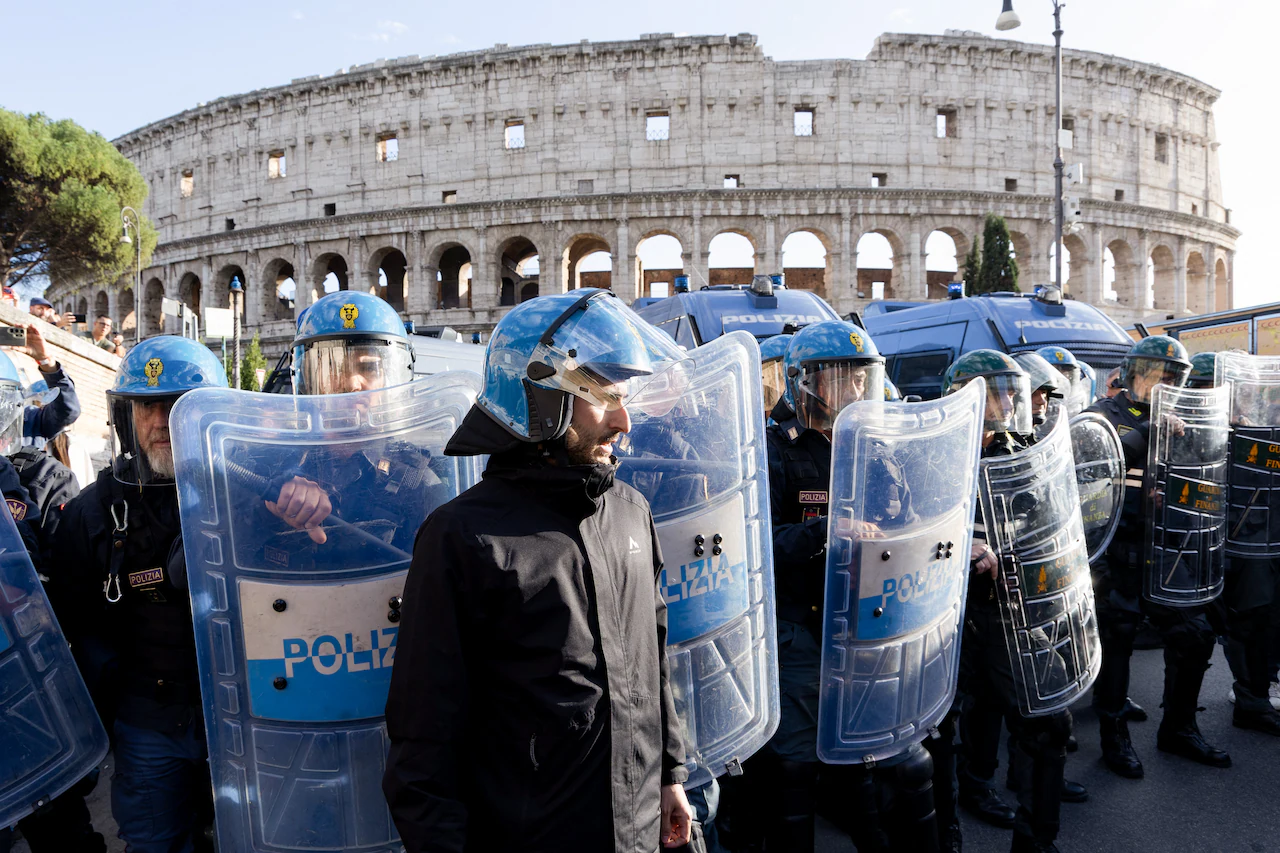 A mature European political approach would also speak openly about the economic price of the war and the sanctions. Not to buy off victims with money, but because lasting peace depends on living conditions. Industry, energy, food, public transport and social security determine whether citizens continue to trust their institutions. If they are presented only with higher burdens while their governments treat new extraordinary expenditure as self-evidently necessary, resentment and distrust will grow.
At the same time, we must dare to acknowledge that the EU has valuable achievements to its name: freedom of movement, economic cooperation, common standards and the ability of former enemies to address problems without war. Those achievements are no reason to place the present political culture above criticism. On the contrary, anyone who wants European cooperation to have a future must reconnect it with democratic oversight, national sensitivities and the tangible interests of ordinary people.
A French election result that displeases the political elite is not a state of emergency. It is an expression of popular sovereignty within France's constitutional order. A diplomatic proposal from Moscow is not automatically acceptable, but it deserves a substantive response. A Belgian budget crisis is not resolved when party leaders eventually impose, behind closed doors, a text that cannot withstand genuine parliamentary debate. And an economic shock is not diminished by wrapping it in the language of war.
14. Conclusion: Europe's Real Test Comes Before the Election
Martin Armstrong sees the early months of 2027 as a potentially dangerous window. According to his reasoning, influential European circles, fearful of a political shift in France, could be tempted to use a confrontation with Russia to hold the existing power structure together. No one knows whether that prediction will come true. Today, there is no independently established plan for a European false flag operation. That fact must be stated explicitly.
But the absence of evidence for his most extreme scenario does not mean that the underlying political problems can be ignored. The French presidential election could profoundly change the foreign policy of a pivotal country. Negotiations concerning Ukraine show how difficult European leaders find it to speak with a common diplomatic voice. Belgium's budget crisis exposes the power of party machines. And economic shocks remind us that geopolitical decisions are ultimately paid for by millions of ordinary citizens.
The right question, therefore, is not whether we should believe Martin Armstrong blindly. It is why European democracies so often confront their citizens with accomplished facts, and how we can prevent another international crisis from once again shutting down all debate about alternatives. A political system with genuine self-confidence need not fear an election result. Diplomacy genuinely seeking peace need not fear speaking to an adversary. And a government genuinely acting in the public interest need not fear independent scrutiny.
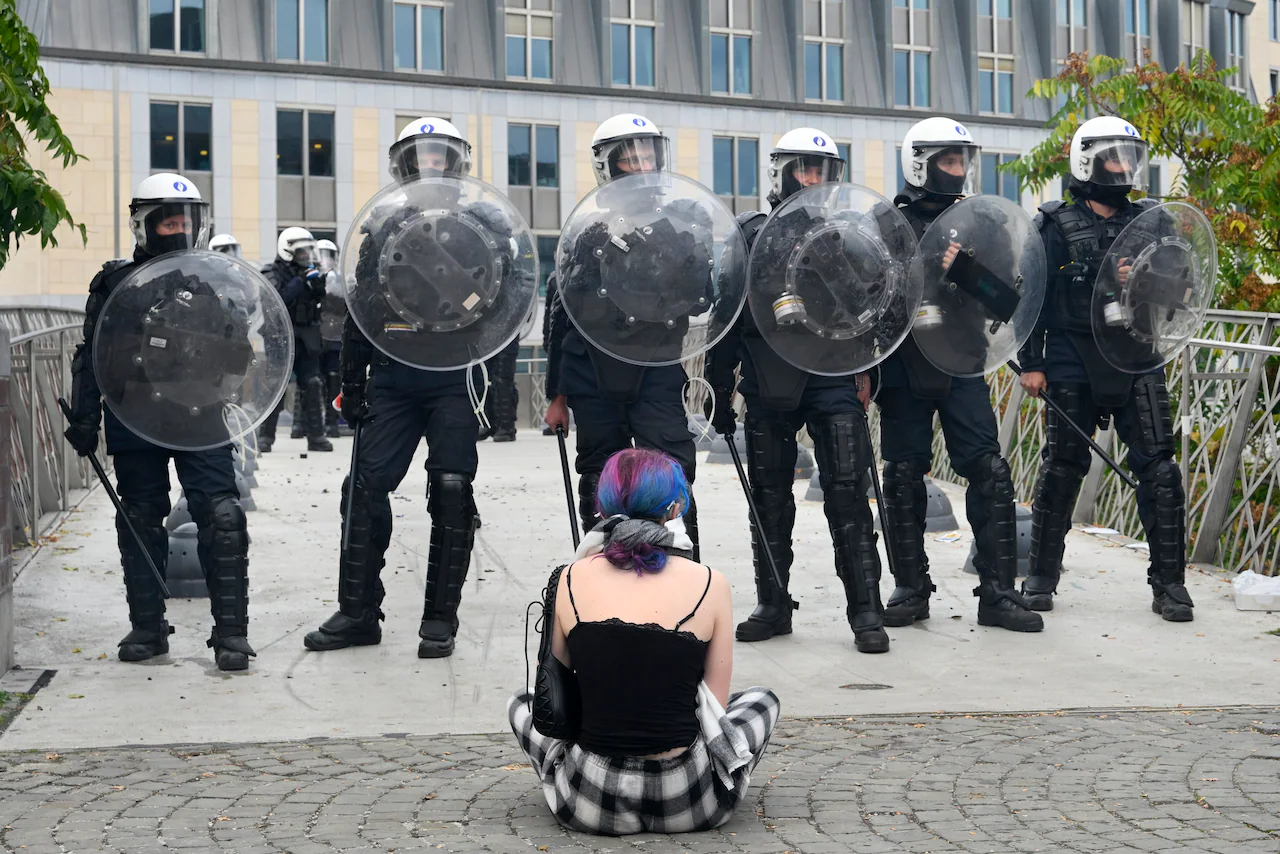
Europe does not need a new enemy to hold itself together. It needs politics that take its citizens seriously, protect its economic future and keep the path towards a negotiated peace open. If the coming months prove decisive, they should be decisive because of diplomacy, honest debate and democratic renewal — not because of fear, provocation or an institutional determination to remain in power at any cost.
Sources and Further Reading
- Martin Armstrong, interview of 13 November 2026, BREAKING: Over $1 Trillion Wiped Out as U.S. Stock Market Suddenly Crashes; transcript supplied by the author. Attribution of individual statements is based on that transcript, which contains recognisable errors from automatic transcription.
- Armstrong Economics, 14 November 2026, Concern of False Flag Against Russia Q1 2027.
- French government, official 2027 election dates: 18 April and 2 May.
- Le Monde, 8 July 2026, explanation of the French appeals ruling and subsequent proceedings concerning Marine Le Pen.
- Euronews, 17 September 2026, fact-check on Le Pen and the prospect of a Frexit referendum; Le Monde, 19 May 2026, the evolution of the RN party programme.
- European Union, Treaty on European Union, Article 50.
- European External Action Service, press remarks and question-and-answer session with Kaja Kallas in Dublin, 13 November 2026; also see the video clip.
- Deutsche Welle, 12 November 2026, EU leaders tussle over whom to send to Ukraine, Russia peace talks; also see the video report.
- European Council, outcomes of the informal meeting of 13 November 2026 and António Costa's statement on the European negotiating team.
- Associated Press, 13 November 2026, closing figures for US stock markets.
- US Energy Information Administration, Short-Term Energy Outlook, November 2026.
- Fouad Gandoul, analysis of the Belgian budget deadlock, De Morgen; supplied as a source by the author of this article.
- Belgian Senate, Article 42 of the Belgian Constitution.
- European Commission, economic forecast for Belgium, spring 2026; National Bank of Belgium, economic projections of June 2026.