
Do Zionists determine everything? In the United States, voters do not win elections; donors do. Democracy in the US and the EU is simply a farce.
Colonel Douglas Macgregor on 250 years of the American republic, the war against Iran and the shifting global balance of power
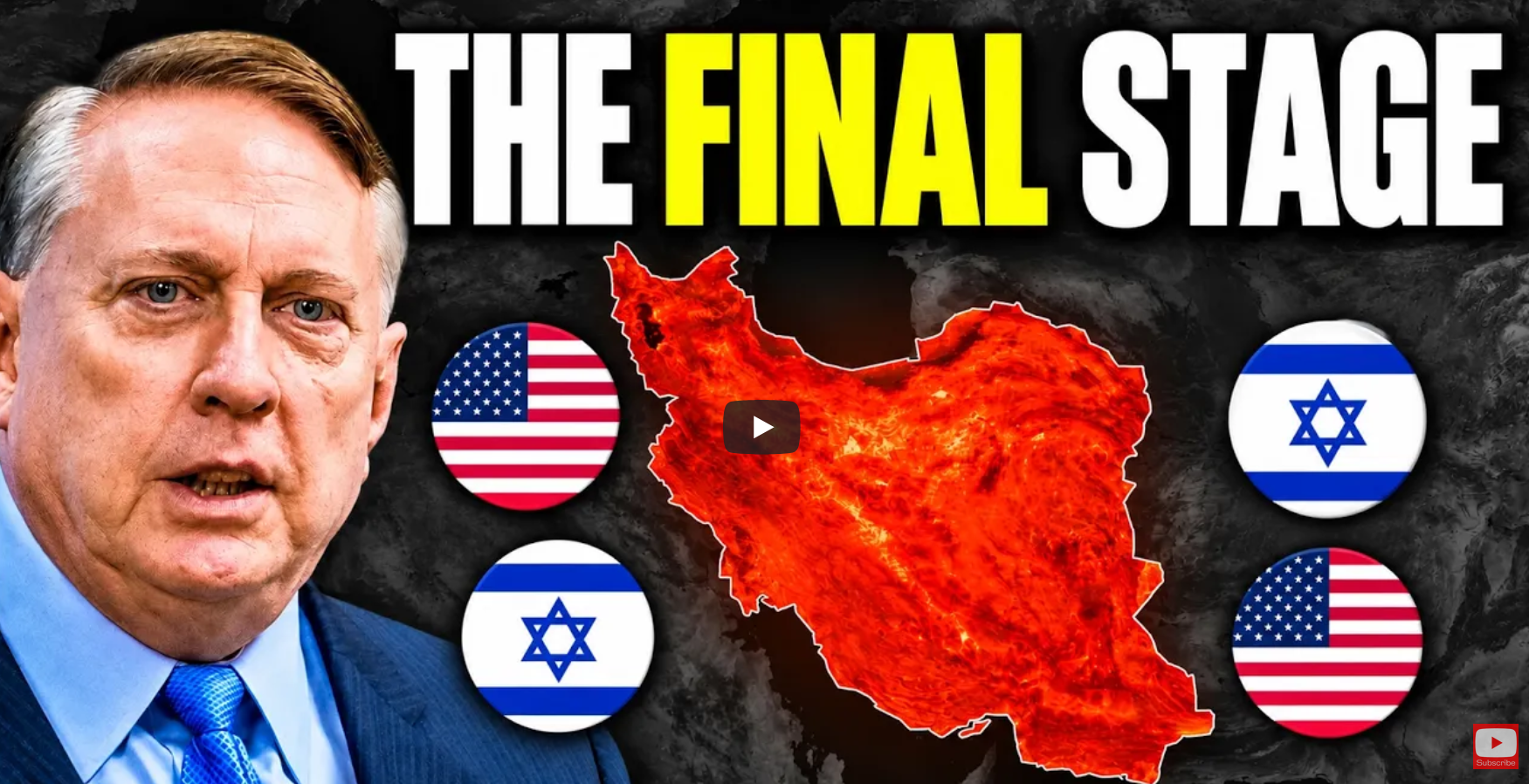
By Frank Dumon
Introduction – The end of a historical era?
In 2026, the American Declaration of Independence marks its 250th anniversary. What might have been an occasion for national reflection has prompted retired US Colonel Douglas Macgregor to offer a particularly sharp analysis of the state of his country. In an extensive conversation with Cyrus Janssen, he discusses not only the war against Iran but also the structural problems of the American republic, the power of political donors, the war in Ukraine, the future of Russia, China's economic rise and the possibility of a serious financial crisis in 2027. His central argument is that Washington is caught in a struggle to restore a world order that no longer exists. According to Macgregor, the United States wants to return to the geopolitical climate of 1991, when the collapse of the Soviet Union created the impression that American military and economic supremacy had become unassailable.
But the world of 2026 is not the world of 1991.
Other economic and military powers have emerged. US national debt has increased enormously. American industrial production capacity can no longer be assumed to be superior. Moreover, international dependence on raw materials and technological supply chains exposes the limitations of American power. Macgregor therefore raises a fundamental question: how long can a country continue to pursue global hegemony when it no longer possesses the financial, industrial and military resources to sustain it?
The war against Iran – Washington caught in its own trap
According to Macgregor, Washington finds itself in a war from which it is struggling to find a politically acceptable exit. In his view, initial expectations regarding the capabilities of American military power have proved inconsistent with reality. Iran is a vast country with approximately ninety million inhabitants, its own industrial infrastructure, a long history and a geographical position that would make foreign military occupation particularly difficult.
Macgregor argues that the United States is inadequately prepared for a prolonged confrontation of this magnitude. He refers to the exceptionally high consumption of American air defence missiles. His specific claim that nineteen years' worth of production was exhausted in seven months requires independent confirmation, but the underlying question is relevant: can the American defence industry continue to support its military commitments in several parts of the world simultaneously?
In his view, the United States cannot simultaneously dominate the Middle East, Africa, Europe, Central Asia and the Pacific militarily. He concludes that Washington will eventually have to reduce its military presence across large parts of the world.
Eight trillion dollars – The economic madness of permanent war
Macgregor's criticism of the financial consequences of American war policies is supported by independent academic research. The Costs of War research project at Brown University calculated in 2021 that America's post-9/11 wars had generated approximately eight trillion dollars in expenditure and financial obligations.
$8,000,000,000,000: Estimated US costs and obligations associated with the post-9/11 wars, according to Brown University in 2021. These include military expenditure, interest payments, domestic security expenditure and future care for war veterans. Source: Brown University – Costs of War. Macgregor questions what lasting results have been achieved in return for this enormous expenditure.
The financial resources devoted to war could also have been invested in education, healthcare, infrastructure, industrial development and social security. The consequences, however, are not exclusively financial. Outside the United States, societies have been disrupted, families torn apart and entire regions confronted with prolonged political and economic instability. The question of responsibility for these consequences deserves at least as much attention as the debate over American military capabilities.
Industrial dependence on China
One of the most important aspects of the interview concerns America's dependence on Chinese raw material processing. Modern electronics, communication systems, satellites and defence technology require specialised materials and complex industrial supply chains. The International Energy Agency confirms China's exceptional position in the rare earth sector.
| Supply chain stage | Share |
|---|---|
| Mining of magnet rare earth elements | 60% |
| Refining of these rare earth elements | 91% |
| Production of sintered permanent magnets | 94% |
Source: International Energy Agency – Rare Earth Elements.
This lends important support to Macgregor's argument. Military power rests not only on defence budgets but also on industrial capacity, technological expertise and reliable supply chains. A country cannot enter into a confrontation with another major power on which it depends for essential supply chains without incurring considerable economic risks.
Voters or donors – Who determines American policy?

Macgregor regards the distinction between Republicans and Democrats in certain fundamental policy areas as largely fictional. Governments change, presidents are replaced and members of Congress lose their seats. Yet, according to him, the influence of major corporations, billionaires, financial interests and lobbying organisations remains largely intact.
He sums up his criticism in the following words: Voters do not win elections in the United States, donors do.
In the United States, it is not the voters who win elections, but the donors. This statement is a political judgement, but the underlying concern about the unequal influence of economic elites has been studied academically. In 2014, American political scientists Martin Gilens and Benjamin Page published a study of 1,779 policy issues. They concluded that economic elites and organised business interests exerted considerable independent influence on US government policy, while the influence of ordinary citizens was much more limited. The democratic question is therefore not simply who wins elections, but above all whose interests are served after those elections.
The Israeli lobby and the power of political donors
Macgregor places particular emphasis on the influence of pro-Israel lobbying organisations and billionaires on American foreign policy. According to him, this influence explains why both Republican and Democratic politicians continue to support US military involvement with Israel, even when, in his view, that involvement conflicts with the national interests of the United States. The financial influence of such organisations can be examined concretely using data from the US Federal Election Commission (FEC). The official figures for the 2023–2024 election cycle are revealing.
| Category | Millions of US dollars |
|---|---|
| Super PACs | 2,723.8 |
| Hybrid political committees | 1,372.3 |
| Party committees | 177.5 |
| Other individuals and organisations | 86 |
| Other PACs | 66.9 |
| Total (rounded) | 4.43 billion dollars |
Source: Federal Election Commission.
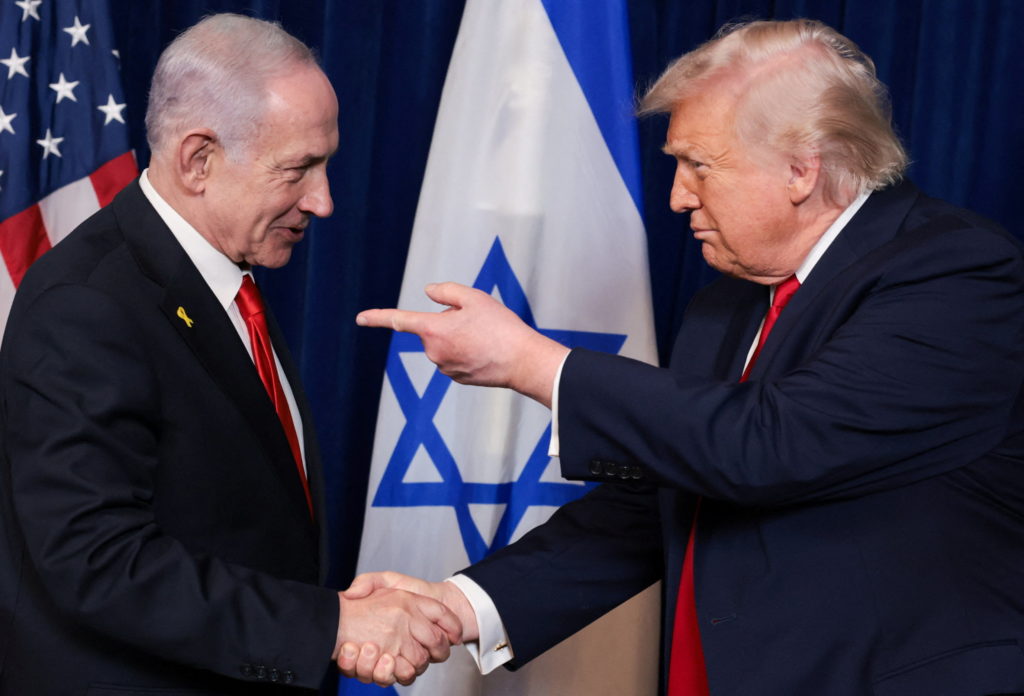
One concrete example of pro-Israel political financing is the United Democracy Project. According to the previously cited FEC figures, this organisation reported expenditure of more than $85 million between 1 January 2025 and 14 October 2026, including approximately $53.6 million in independent election expenditures. Consult the FEC record for the original data. Such sums warrant a public debate about the power of political lobbying organisations.
Who funds the candidates? Which policy positions are financially rewarded? Which politicians are targeted by expensive election campaigns? Which interests take precedence when Congress decides on military aid and foreign interventions? These are concrete questions that can be investigated.
The influence of pro-Israel organisations such as AIPAC must be subject to the same critical scrutiny as that of the American arms industry, pharmaceutical companies, technology firms, energy corporations and financial institutions. Macgregor's broader allegation that Zionist billionaires control the entire American political system is not in itself proven by these financial data, but is nevertheless a fact.
The American republic – The end of a 250-year cycle?
One of the most consequential passages of the interview concerns Macgregor's assessment of the American constitutional order. He regards the current republic as a political system that is no longer capable of bringing about fundamental social change. The US Constitution was drafted in 1787 for a society that differed from today's United States in almost every respect.
Macgregor argues that the institutional framework has not evolved sufficiently to resolve the problems of contemporary American society. Elections follow one another, yet in his view the structural balance of power changes little. He therefore advocates what he calls a Second American Republic : a fundamental overhaul of political institutions. His reference to the end of a 250-year cycle may not represent a scientifically established historical law, but it is a powerful interpretation of the current American crisis. The resulting question is particularly relevant: can existing political institutions reform themselves when the interests that benefit from them also possess considerable resources with which to obstruct reform?
The future of the Middle East – Iran and Türkiye
Macgregor regards declining American influence in the Middle East as part of a broader regionalisation of world politics. According to him, Iran and Türkiye will increasingly shape the regional balance of power. Both countries have large populations, a long history of statehood and important economic and strategic interests.
Macgregor expects that the United States will eventually be unable to direct political developments in the region as it sees fit. He also doubts the durability of the existing security structures surrounding the Gulf states and Israel. His most far-reaching predictions concerning the disappearance of states and the complete destruction of American military infrastructure are realistic.
Ukraine – A war without a credible diplomatic way out
He has little confidence in the diplomatic initiatives of the American government and accuses Washington of sending contradictory messages. On the one hand, peace talks are organised. On the other, he maintains that American and European military and intelligence structures remain involved in Ukraine's war effort. Macgregor regards this contradiction as a major obstacle to negotiations.
He further claims that American, British and Israeli intelligence services cooperate closely in certain Ukrainian operations. However, the precise involvement in the individual incidents he mentions is not established through verifiable documentation in the interview. His broader criticism focuses on the danger that a war involving several major powers indirectly could eventually develop into a direct military conflict.
Kaliningrad – The danger of European escalation
Macgregor pays particular attention to Kaliningrad, formerly Königsberg in East Prussia. The historical background of this territory is essential to understanding its present strategic importance. After the Second World War, the northern part of East Prussia came under Soviet administration. Kaliningrad is now part of the Russian Federation. A military confrontation around this territory would therefore not simply represent an extension of the war in Ukraine, but would increase the risk of direct conflict between Russia and NATO countries.
Macgregor warns that statements about possible military operations against Kaliningrad take insufficient account of these consequences. His concern centres on the possibility that political statements, military preparations and mutual provocations could create a dynamic that ultimately becomes difficult to control. For the European population, the fundamental question is what security benefits would justify such risks of escalation.
Russia – Is Putin too restrained?
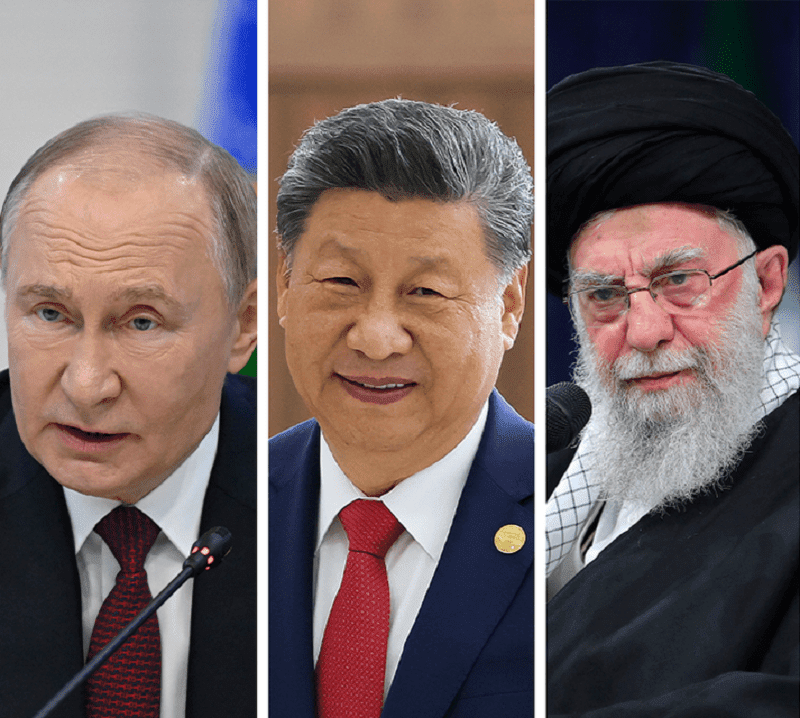 Remarkably, Macgregor does not confine his criticism to Washington and Brussels. He also takes a critical view of the Russian political leadership. According to him, Russia is by no means a country on the verge of collapse, as is regularly suggested in Western analyses. Instead, he argues that part of the Russian population is becoming increasingly frustrated by the prolonged war and what he considers President Putin's overly restrained military strategy.
Macgregor does not even rule out the possibility that Russia could face a political succession issue in 2027. His warning to the West is that a potential successor to Putin would not necessarily be more accommodating. On the contrary, he expects that a new Russian leadership might be less willing to take Western positions into account. This prediction deserves attention, but cannot be regarded as a predetermined future scenario. His specific allegation that former Defence Minister Sergei Shoigu was sentenced to 25 years in prison has likewise not been independently confirmed here. It should therefore not be published as fact without further documentation.
China – The economic great power of the twenty-first century
Macgregor places China's development in historical perspective. According to him, Chinese governments have had two fundamental responsibilities throughout the centuries: protecting the country against foreign enemies and ensuring an adequate food supply for its population. He acknowledges that the current Chinese leadership has achieved significant results in both areas. In his view, the scale of China's industrial development, infrastructure, technological progress and international trade relations makes China an economic great power that the United States must take into account.
The question is no longer whether Washington can prevent this development, but how both countries will deal with it. According to Macgregor, permanent economic and military confrontation would harm the interests of both populations. His alternative is pragmatic cooperation, in which competition in certain areas need not automatically entail hostility in all others. He thus rejects the idea that international relations can only be organised around permanent military alliances and irreconcilable enemies.
Taiwan, Korea and the South China Sea
Macgregor expects the economic interdependence between Taiwan and mainland China to act as an important restraint on military confrontation. He is convinced that Beijing has no interest in a war that could seriously disrupt China's economic development. He also regards the American military presence in South Korea and Japan as a remnant of an international order that has fundamentally changed.
Regarding the South China Sea, he emphasises China's fear of a possible blockade of strategic trade routes. From a Vietnamese perspective, the sovereignty and maritime rights of the other countries in the region must also be taken into account. A multipolar world can only function sustainably if not only the interests of the great powers but also the rights of smaller and medium-sized states are respected. Replacing American hegemony with another form of hegemony would not resolve the fundamental problem.
APEC Shenzhen 2026 – A changing world order
The November 2026 APEC summit in Shenzhen is an important part of the conversation between Macgregor and Janssen. Janssen says he was present in Shenzhen and describes the atmosphere of confidence with which China organised this international gathering. Macgregor interprets the summit as an illustration of declining American geopolitical influence.
According to him, Russia and China have strong mutual interests. Russia possesses extensive natural resources, while China has exceptional industrial production capacity. The previously mentioned dates of the meeting (18 and 19 November 2026) and the declaration (21 November) should be checked before publication against the official APEC declarations. The areas of work discussed are:
- Trade and investment.
- International connectivity.
- Innovation.
- Economic growth.
For Vietnam, this meeting is of particular significance. In 2027, Vietnam will assume the chairmanship of APEC, with Phú Quốc planned as the venue for the Economic Leaders' Meeting. This illustrates Vietnam's growing international importance in Asia's economic development.
Artificial intelligence – Competition or cooperation?
The discussion of artificial intelligence and NVIDIA leads Macgregor to another fundamental problem of the American economy. He questions the enormous investments in artificial intelligence, data centres and technological infrastructure. In his view, there is a risk that financial markets are creating expectations that do not adequately correspond to eventual economic returns. At the same time, he acknowledges that technological interdependence between China and the United States makes cooperation necessary.
According to Macgregor, the controversy surrounding NVIDIA chief executive Jensen Huang discussed in the interview illustrates this point. The reappointment on 23 November 2026 and the associated investigations mentioned in the earlier version have not been independently confirmed here; consult NVIDIA's official corporate announcements. Macgregor regards the return he mentions as a positive development. However, the further allegations in the interview concerning an organised attempt by Zionist billionaires to take over NVIDIA are not supported by conclusive evidence. The essential geopolitical issue remains the relationship between technological competition, national security, international trade and economic cooperation.
Is Israel really an ally of the United States?
Macgregor fundamentally questions America's traditional relationship with Israel. According to him, Washington should assess its foreign relations on the basis of the concrete strategic interests of the American people, rather than permanent political loyalties. He rejects a worldview in which countries are regarded as allies or enemies forever. International interests change. Countries may cooperate in one area and compete in another.
This approach raises fundamental questions about American involvement in the Middle East. To what extent do American military interventions serve the security and prosperity of the American people? What influence do foreign governments and domestic lobbying organisations exert? Who bears the financial and human consequences of these decisions? Answering these questions requires transparency about political financing, military cooperation and decision-making within the US Congress.
Europe – The distance between citizens and political power
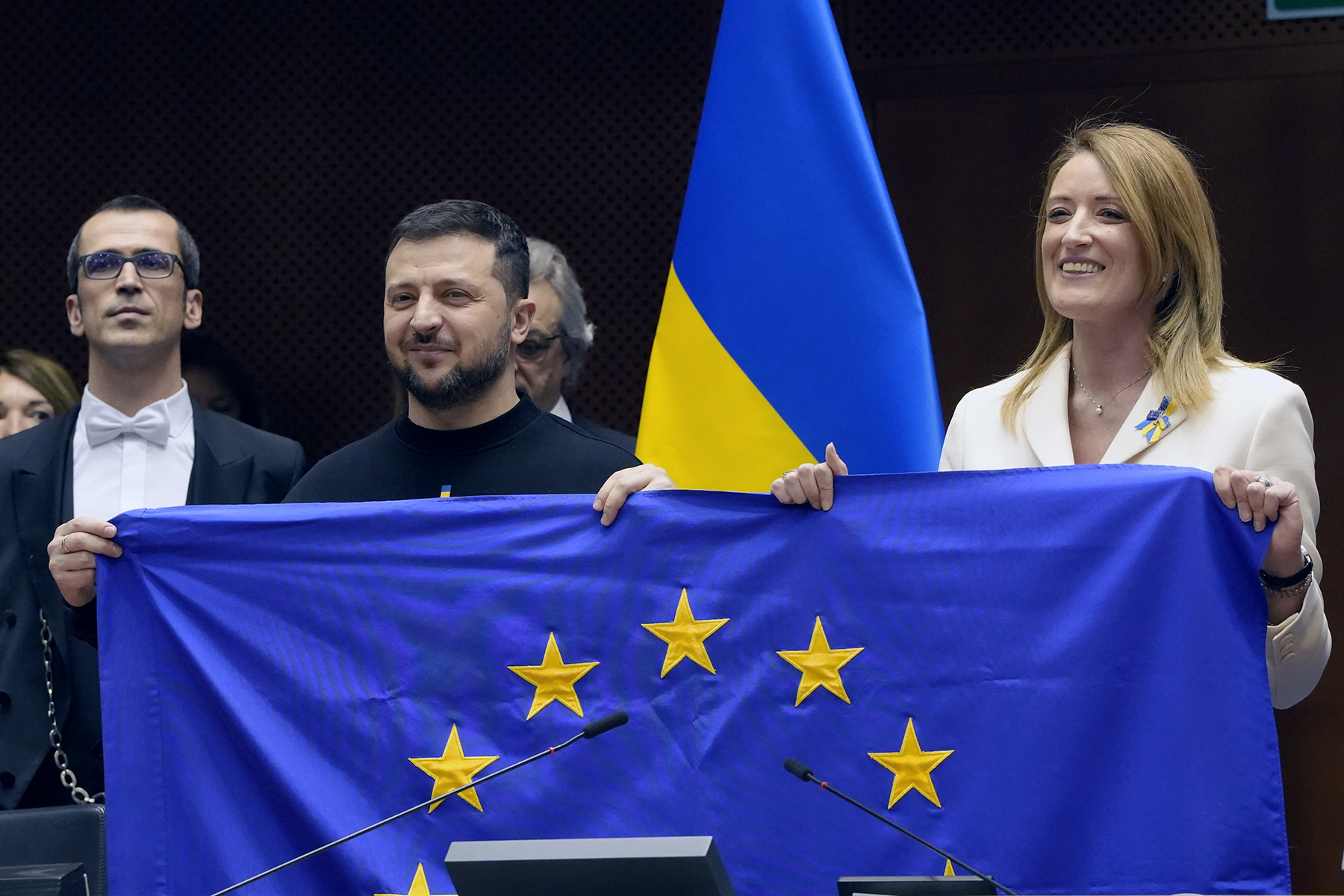
Macgregor is also particularly critical of European political institutions. In his view, the gap between the foreign policies of European governments and the expectations of their populations is growing. The democratic legitimacy of the European Union therefore deserves a separate debate. Members of the European Parliament are directly elected. The President of the European Commission, by contrast, is not elected directly by the European population, but through a procedure involving national government leaders and the European Parliament.
The formal existence of democratic procedures does not automatically answer every question about the actual influence of citizens. The transparency of decision-making, the influence of lobbying organisations, foreign policy and the ability to alter policy decisions democratically all deserve critical scrutiny. The European Union must also be distinguished from individual European member states, each of which has its own democratic institutions and elections. Macgregor's criticism can be summarised as a question about the true meaning of popular sovereignty within increasingly complex political structures.
2027 – The year of financial collapse?
In the final part of the interview, Macgregor makes his most far-reaching prediction. He expects that 2027 could mark the beginning of a serious financial crisis affecting both the United States and Europe. He refers to rising public debt, bond markets, inflation, the vulnerability of financial markets and what he considers insufficiently strong economic fundamentals. For France, he even predicts a possible default which, in his scenario, could lead to an existential crisis for the European Union.
According to him, Japan is also in a particularly vulnerable financial position. Macgregor expects such domestic economic problems eventually to end America's ability to finance military operations around the world. His reasoning is clear: when financial resources are lacking, the overseas military presence must be reduced. Whether such a crisis will actually occur in 2027 remains uncertain. The precise timing and magnitude of financial crises cannot be predicted reliably. At the end of the interview, Macgregor himself acknowledges that nobody possesses the prophetic abilities of Nostradamus.
Vietnam – The human cost of American hegemony
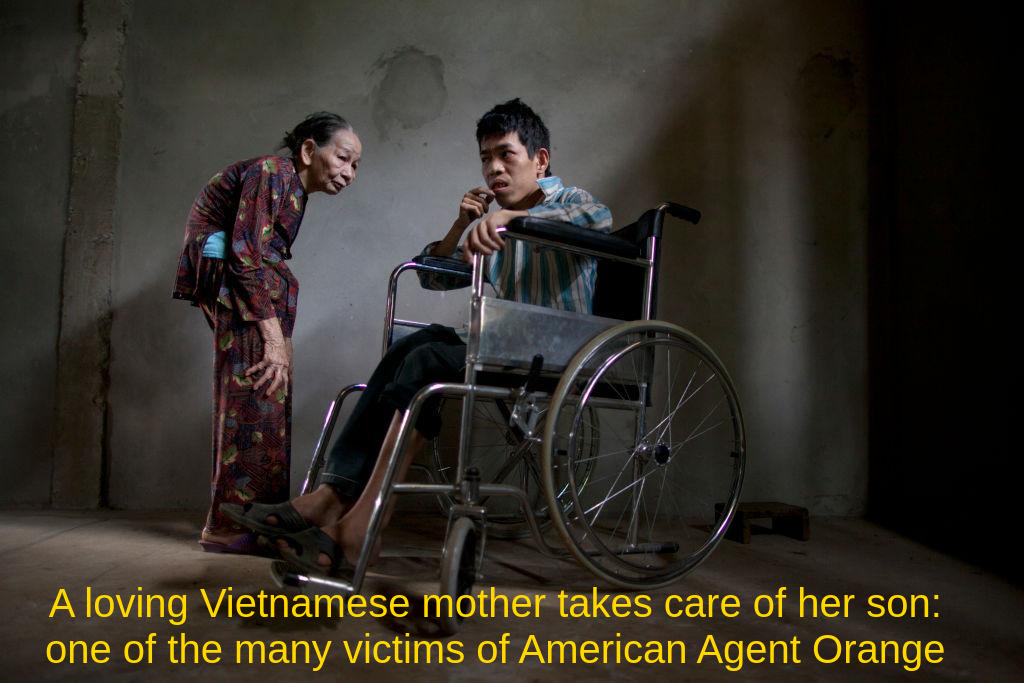
The suffering of the Vietnamese people was immense. Despite the extraordinary devastation, the Vietnamese people rebuilt their country, strengthened their economy and developed diplomatic relations with former adversaries. Practical cooperation with the United States in clearing unexploded ordnance and remediating dioxin contamination deserves recognition. Reconciliation, however, must never become synonymous with historical amnesia.
Between 1961 and 1971, the United States conducted a large-scale chemical defoliation campaign in Vietnam. Tens of millions of litres of herbicides were dispersed, including dioxin-contaminated Agent Orange. According to Vietnamese estimates, millions of people were exposed and approximately three million suffer from health problems attributed to Agent Orange.
The Vietnamese people did not cross the Pacific Ocean to invade California. They did not bomb Washington or contaminate American farmland with chemical defoliants. The overwhelming burden of destruction was borne by Vietnam and its people. Yet the American war did not truly end with national reunification on 30 April 1975.
Further reading on De Jakobijn as part of the book "The Price Of Illusion", which I am writing from Hanoi with my co-author and wife Kiều Bích Hậu:
- Quảng Trị – The war from a Vietnamese perspective (Vietnamese)
- Vietnamese survivors (Vietnamese)
- Reconciliation, remembrance and the future of Vietnam
 An analysis of American foreign policy would be incomplete without attention to the victims of wars waged in the name of freedom, democracy and national security. Vietnam represents one of the most poignant historical examples. The US National Archives record 58,220 American military deaths during the Vietnam War. The Vietnamese people lost millions of lives.
The human consequences are not confined to the war years. More than half a century after national reunification, Vietnamese families continue to face the consequences of Agent Orange, unexploded wartime ordnance and uncertainty about missing relatives. In Quảng Trị, the humanitarian work of organisations such as Project RENEW remains a tangible reminder of this unfinished history.
Despite the devastation, the Vietnamese people rebuilt their country. They preserved their independence, developed their economy, expanded their international relations and even sought cooperation with former enemies. This willingness to reconcile deserves respect, but must not mean that historical responsibility for the war is forgotten. The post-9/11 wars have also had extraordinarily grave human consequences.
According to Brown University, the estimated total number of direct and indirect deaths in the war zones studied is at least 4.5 to 4.7 million. More than 38 million people were displaced. These figures include victims from different warring parties and indirect consequences such as disease, malnutrition and the destruction of essential infrastructure. Behind every statistic lies a human life. The fundamental question, therefore, is not merely how much military power a country possesses, but what responsibility it bears for the consequences of exercising that power.
Conclusion – From hegemony to peaceful coexistence
The conversation between Douglas Macgregor and Cyrus Janssen offers a particularly critical interpretation of the current international balance of power. Macgregor regards American war policies, the influence of economic elites, industrial dependence on China and the financial vulnerability of the West as interconnected problems. In his view, the United States faces a historic choice: to cling to its pursuit of global supremacy or to accept its place within a multipolar world.
His predictions about the future of America, Europe, Russia and the Middle East will have to be tested against subsequent events. The questions he raises about the responsibility of political leaders, the influence of money on democratic institutions and the human consequences of war, however, deserve serious public debate. For countries such as Vietnam, national sovereignty has a meaning that extends far beyond geopolitical theory. It was won at a terrible human cost.
A peaceful world order requires that no great power arrogate to itself the right to impose its political, economic or social model on other peoples by military means.
Sources and further documentation
- Cyrus Janssen – Interview with Douglas Macgregor – Primary source, approximately 42 minutes.
- Gilens & Page – Testing Theories of American Politics – Influence of economic elites.
- Federal Election Commission – US campaign finance.
- United Democracy Project – FEC – Pro-Israel political financing.
- Brown University – Costs of War – Human and financial costs of war.
- International Energy Agency – Rare Earth Elements – Chinese raw material processing.
- APEC – Leaders' Declarations – Economic cooperation.
- NVIDIA – Investor Relations – Official corporate announcements.
- US National Archives – Vietnam War.
- Project RENEW – Humanitarian work in Vietnam.