
The Depth of History and the Economy of Civilization:
An Analysis of Paradigm Shifts in Global Dynamics
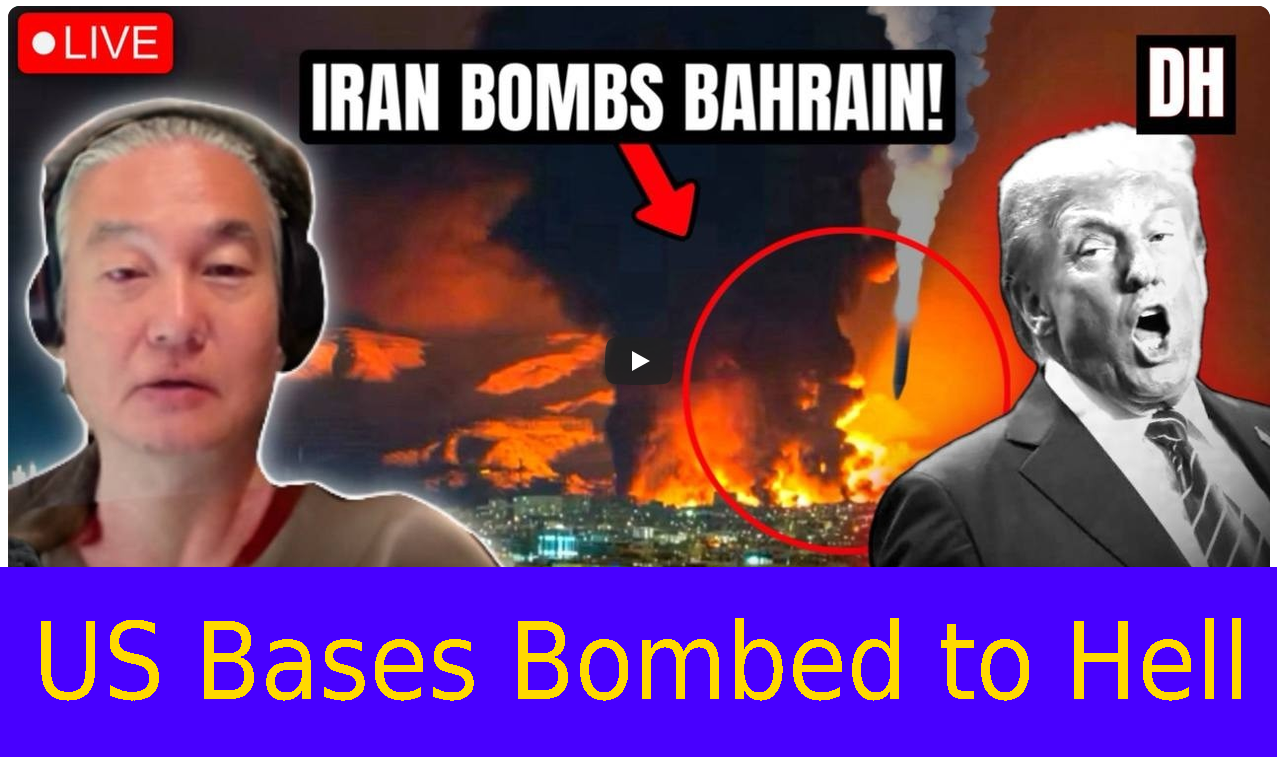
In a recent and highly nuanced conversation between journalist Danny Haiphong and renowned geopolitical analyst KJ Noh, the discussion looks beyond the superficial noise of daily news. What remains from studying their dialogue is not a list of fleeting events, but a profound reflection on historical cycles, the economic anatomy of modern civilization, and the cultural paradigms that guide the development of human societies. By using the lens of history, economics, and culture, this conversation offers an exceptionally insightful analysis of how civilizations evolve, how they interact with one another, and why certain historical models reach their limits.
By Frank Dumon
For the attentive reader interested in the fundamental structures of our world, this conversation reveals a number of crucial historical and economic truths. It reminds us that current shifts in the global order did not emerge out of nowhere, but are the logical result of age-old geographical, cultural, and economic laws.
Historical Precedents: The Cycles of Conflict and the Necessity of Dialogue
One of the most recurring themes in the historical analysis of global conflicts is the illusion that complex structural disputes can be resolved solely through the projection of physical power. In the conversation, KJ Noh emphasizes the importance of historical precedents for understanding current dynamics. He refers to the Korean War, where negotiations for an armistice took no less than two and a half years. This historical fact illustrates a fundamental truth: durable resolutions require patience, diplomatic perseverance, and deep respect for the security interests of all parties involved.
Even more illustrative is the historical case of the Vietnam War. Even after the signing of the Paris Peace Accords in 1973, it took another seven years for the region to truly settle, because the underlying structural and historical realities were not respected. History teaches us that wars and conflicts ultimately always end at the negotiating table. It is a cultural and historical necessity for nations to learn to deal with the reality of multipolarity and to recognize diplomatic dialogue as the only sustainable mechanism for global stability. Ignoring these historical lessons inevitably leads to endless cycles of escalation, while embracing them forms the basis for a stable, multicultural world order.
The Historical Struggle Between Sea Power and Land Power: A Geographical Analysis
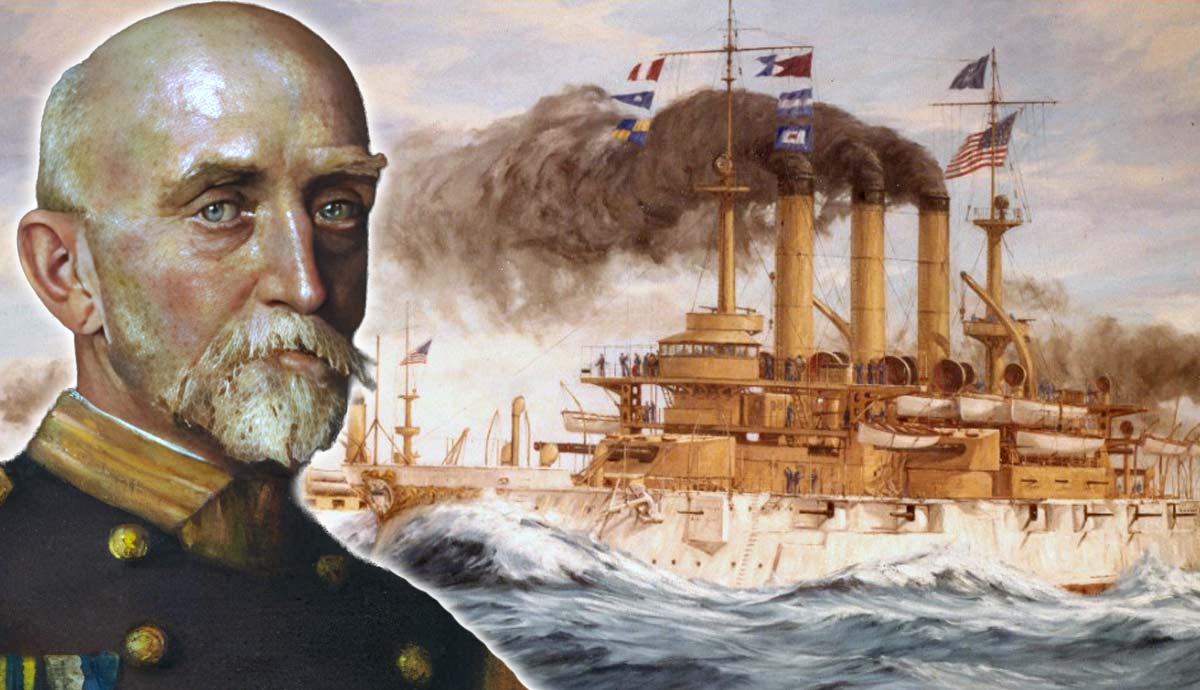
To understand the economic and cultural shifts in the current world, we must return to the fundamental theories of geopolitical history. The conversation touches upon the eternal academic and historical debate between the concepts of sea power and land power. At the beginning of the 20th century, the influential American naval strategist Alfred Thayer Mahan stated in his works that control over the seas equated to control over global prosperity. This theory formed the cultural and strategic basis for European maritime empires, including the British Empire, which for centuries attempted to dominate global trade routes through a network of naval bases and control over strategic straits.
However, historical geography knows another thinker: Halford Mackinder. He introduced the 'Heartland Theory' and posited that with the rise of railways and later pipelines, the vast Eurasian landmass would integrate. According to Mackinder, land power, rooted in the inexhaustible riches and continuous connectivity of the Eurasian continent, would ultimately prove superior to sea power. The history of recent decades seems to prove Mackinder right.
"Control over the seas is no longer sufficient in itself. The historical shift from maritime dominance to the integration of the Eurasian landmass is one of the most profound changes of the past half-millennium."

We see this reflected in the geographical reality of strategic chokepoints such as the Strait of Hormuz. Historically, this area is often viewed through the lens of sea power. However, geographical reality dictates that the surrounding land (in this case, the Iranian plateau and the Zagros Mountains) forms a natural 'amphitheater' overlooking the waters. In military and historical geography, it is much easier to exert control over a narrow strait from an elevated, rocky landmass than to maintain the same control from a flat, alluvial peninsula in the Persian Gulf. This historical and geographical asymmetry is a permanent given that cannot be removed by any technological innovation. It reminds us that the physical geography of the earth ultimately always determines the limits of human power projection.
The Economic Anatomy of Modern Civilization: The Dialectic of Supply Chains
When we analyze the economic aspects of the conversation, it quickly becomes clear that modern civilization rests on an extremely fragile and complex network of global supply chains. KJ Noh makes a fascinating and historically grounded remark about the petrochemical industry. In Western discourse, people often speak exclusively of 'oil and gas' as fuel for transport. However, economically and historically, petrochemistry is the true backbone of modern civilization. Without the derivative products of crude oil—such as plastics, fertilizers, pharmaceutical raw materials, and insulation materials—modern agriculture, medicine, and infrastructure would immediately come to a standstill.
 This brings us to the dialectic of the world economy. Supply chains are not linear; they are organic and systemic. The conversation illustrates this with a historical example from the textile and defense industries. When a major economy decides to boycott the import of a specific raw material, such as cotton from a certain region, for political reasons, this may seem like a targeted measure. However, in the complex chemistry of modern industry, cotton is the essential basis for 'guncotton' (nitrocellulose), a fundamental component of propellants. By breaking one link in the chain, one inadvertently disrupts one's own industrial and economic base. This shows a lack of 'systems thinking,' a concept that has often been underestimated in Western economic history in favor of short-term profit.
The economy can be compared to the metabolism of a biological organism. A healthy economic system is anabolic: it builds up, connects, and creates prosperity through cooperation. However, when systems begin to disintegrate due to the breaking of trade relations and the imposition of isolation, the metabolism shifts to a catabolic process: it breaks down, consumes its own reserves, and loses its vital capabilities. The history of the world economy teaches us that no nation, no matter how powerful, can isolate itself from global supply chains without ultimately undermining its own economic foundation.
Cultural Epistemology: Science, Innovation, and Long-Term Planning
One of the most profound cultural observations from the conversation concerns the different ways societies deal with knowledge, innovation, and problem-solving. A clear distinction can be drawn between the cultural epistemology (the theory of knowledge acquisition) of the West and that of Asia, particularly China. This difference explains the current shifts in technological and scientific dominance.
 In the historical development of the West, and particularly the United States, a shift has been visible in recent decades from an industrial society to a financialized society. The leadership class increasingly consists of lawyers, financial experts, and managers. The cultural approach of this group is often focused on creating frameworks, regulations, and seeking 'chokepoints' to block competitors through legal and financial mechanisms. This is a reactive, obstacle-oriented mindset.
In contrast stands the cultural approach in many Asian societies, where the leadership class traditionally consists of engineers and scientists. The cultural epistemology of an engineer is fundamentally different: it is a proactive, solution-oriented mindset. When an engineer is confronted with a blockade or a 'chokepoint' (such as sanctions on advanced semiconductors), the cultural reflex is not to litigate, but to fundamentally reinvent the problem. The history of science teaches us that technology, such as the semiconductor industry which is less than a century old, can ultimately always be approached and reconstructed through engineering science in a different way.
Rare Earth Metals: A Triumph of Historical Planning
This cultural difference in long-term planning is perfectly illustrated by the history of rare earth metals. While the West focused on quarterly figures and the outsourcing of heavy industry for the sake of immediate profit over recent decades, China engaged in a fifty-year historical plan. Rare earth metals are, as the name suggests, not rare in nature, but they occur in extremely low concentrations. It requires deep chemical and metallurgical insight to extract and process these elements economically.
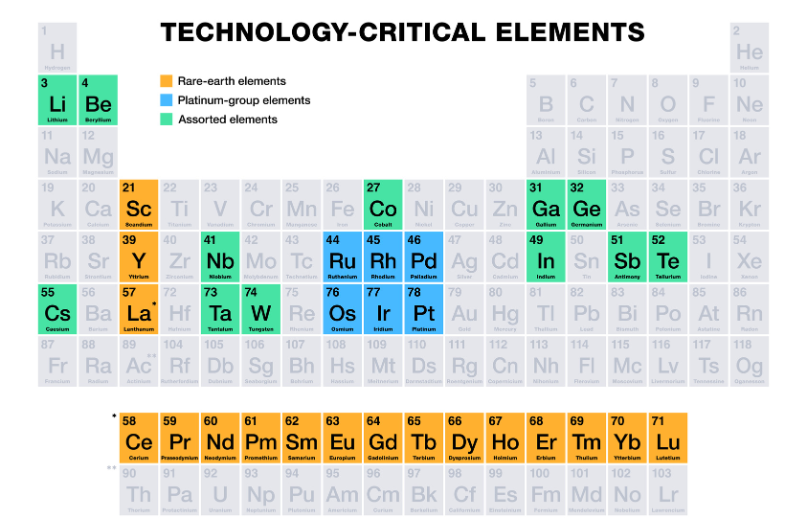
"One can engineer a new microchip design, but one cannot invent a new element on the periodic table. Control over the fundamental building blocks of matter is the ultimate historical and economic trump card."
Through decades of uninterrupted investment in scientific education and metallurgical research, a quasi-monopoly on the processing of these elements has been built up in Asia. The West, which cannot 'engineer' or budget-cut away the fundamental understanding of the periodic table, now faces the reality that material raw materials form the absolute limit of technological development. This is a victory for the culture of long-term investment in science and education (with Asian countries graduating up to seven times more engineers than Western countries) over the culture of short-term financial manipulation.
The Evolution of Global Development: From Extraction to Mutual Benefit
Finally, the conversation sheds important historical and cultural light on the evolution of global development cooperation, particularly in the relationship between Asia and the African continent. The history of the past five hundred years has been dominated by the model of colonialism. The cultural and economic paradigm of colonial powers was extractive: the periphery was kept underdeveloped to serve as a source of cheap raw materials and labor for the center. This model left a deep historical wound in the global psychology and economy.
The current approach to development cooperation from emerging economic powers in Asia represents a fundamental break with this historical pattern. The cultural starting point here is not extraction, but 'win-win' development. By focusing on the most fundamental infrastructure needs—such as electricity generation, water management, and transport networks—the basis is laid for genuine industrial independence and "indigenous capacity" in developing countries.
This is a deeply respectful cultural approach based on equality. It requires no political concessions, no imposition of external ideological systems, and no financial yoke of restructuring. It is an economic symbiosis based on the exchange of equal values. For the African continent, and the broader 'Global South', this means a historical opportunity to rectify the damage of centuries of colonialism through genuine industrialization and technology transfer. The Western model, which often remains stuck in the cultural reflex of moral superiority and conditional aid, is thereby losing its historical relevance and moral authority.
Conclusion: The Necessity of Historical Awareness and Systems Thinking
The analysis of the underlying historical, economic, and cultural currents, as discussed in the dialogue between Haiphong and Noh, leads to an inevitable conclusion. The world is in a transition that is not driven by the whims of the day, but by the immutable laws of geography, the complexity of the economy, and the cultural power of education and innovation.
The shift from sea power to land power in the Euro-Asian context, the unbreakable dialectic of global supply chains, and the triumph of long-term scientific planning over short-term legal obstructionism are all historical facts that require recognition. A respectful and objective view of world history teaches us that civilizations that close themselves off from the world, sacrifice their industrial base for financial gain, and forget to invest in fundamental sciences, ultimately lose their own historical relevance.
For the attentive observer, and particularly for those in the West who have the task of thinking critically and constructively about the future, the message is clear. The challenge lies not in condemning the rise of other cultural and economic systems, but in rediscovering systems thinking, restoring the industrial and scientific base, and learning to deal with a world that can no longer be dominated by a single historical model. It is an invitation to humility, historical awareness, and deep respect for the diverse ways in which humanity shapes its civilization.
Sources and References
- Conversation: Danny Haiphong & KJ Noh, "Geopolitical Analysis: The Structural Realities of Global Dynamics", broadcast via YouTube https://youtu.be/kUATGZdN4lM
- Historical Geopolitical Theories:
- Mahan, A. T. (1890). The Influence of Sea Power upon History, 1660–1783. (Analysis of maritime dominance).
- Mackinder, H. J. (1904). The Geographical Pivot of History. (The Heartland theory and the superiority of the Eurasian landmass).
- Economic and Historical Case Studies:
- The Paris Peace Accords (1973) and the historical aftermath of the Vietnam War as a study object for diplomatic resolutions.
- The armistice negotiations of the Korean War (1951-1953) as an example of historical durability in diplomacy.
- Material Science and Economy:
- The role of nitrocellulose (guncotton) in the global textile and defense industries as an example of the dialectic of supply chains.
- The periodic table of elements and the metallurgical processing of rare earth metals as the fundamental limit of technological innovation.