
The Deng Xiaoping Miracle: How China Became the Factory of the World in 40 Years
By Frank Dumon
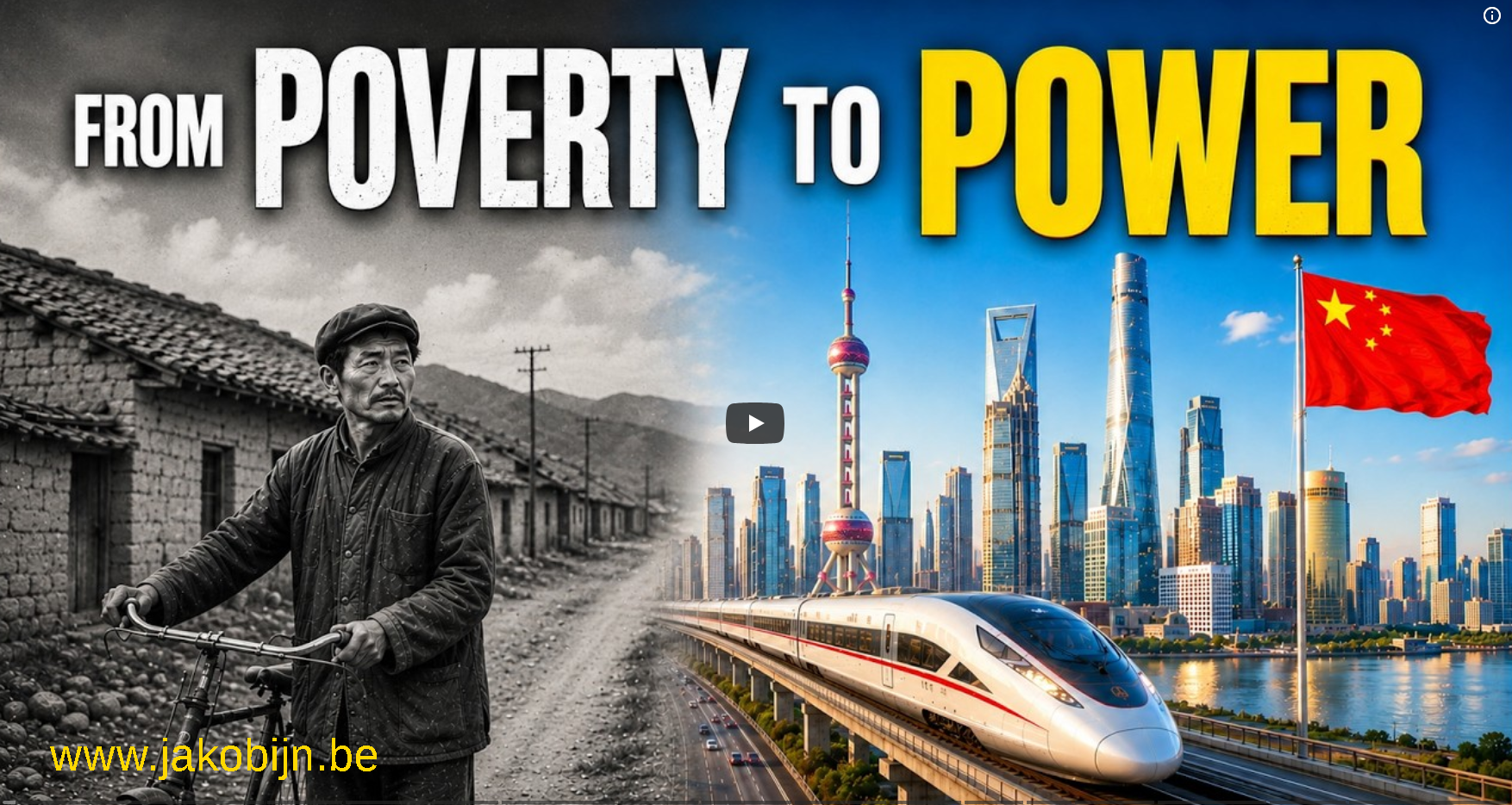
How did China transform from a poor agricultural country into the factory of the world and one of the most powerful economies globally in just 40 years? Why did Deng Xiaoping's reforms succeed while the Soviet system ultimately collapsed? This documentary tells the complete story of China's economic miracle: the death of Mao Zedong, the aftermath of the Cultural Revolution, the rise of Deng Xiaoping, the initial reforms of 1978, the dismantling of rural communes, the rise of private entrepreneurship, the establishment of special economic zones, and the explosive growth of Shenzhen.
The Pragmatic Turn: End of Chaos, Beginning of Order
China's transformation from an impoverished, agrarian nation into the world's largest economic power and the undisputed factory of the world is one of the most remarkable chapters in modern human history. In just four decades, a nation still struggling with the aftermath of the Cultural Revolution managed to lift hundreds of millions of people out of absolute poverty. This article, based on historical analysis and recent economic developments, highlights not only Deng Xiaoping's pragmatic reforms, but above all emphasizes the exceptional resilience, intelligence, and collective perseverance of the Chinese people themselves.
At the end of the 1970s, China faced an existential choice. The economy was exhausted, agricultural production was stagnating, and the memory of the chaos of the preceding decades was still fresh. During this crucial period, Deng Xiaoping stepped forward not as a young, ideological dreamer, but as a seasoned revolutionary who had experienced chaos firsthand. His approach was radically pragmatic. Instead of completely destroying Mao Zedong's legacy—which could lead to new instability—the leadership chose a careful reformulation: Mao was great, but made mistakes. The priority shifted from ideological purity to survival and stability.
The philosophy underlying this was summarized in Deng's legendary quote: "It doesn't matter whether a cat is black or white, as long as it catches mice." This sentence was more than a slogan; it was a fundamental break with dogma. If market forces worked, they had to be deployed. If foreign investments could build factories, they had to be invited. Thus, the concept of "socialism with Chinese characteristics" emerged: the red flag continued to wave, but underneath, the market began to breathe.
Filmbestand
The First Wave: Intelligent Rural Reform
The first and perhaps most important victory was won not in the cities, but in the countryside. Instead of privatizing land—which was politically too sensitive—China introduced the household responsibility system. Farmers were given contracts to cultivate land. They had to deliver a fixed quota to the state, but everything produced above that could be kept or sold on the free market.
The impact was immediate and profound. Where obligation and apathy had previously prevailed, an incentive for innovation and hard work now emerged. By 1985, grain production had increased by about a third. For the first time in modern Chinese history, the constant threat of famine ceased. This reform demonstrated the intelligent approach of the Chinese leadership: they did not radically change the ownership structure, but they did change the incentives. The result was an abundance of food and, more importantly, a released labor force ready for the next phase of industrialization.
The Rise of Township and Village Enterprises (TVEs)
With agriculture on a stable foundation, a new dynamic emerged in the countryside. Millions of farmers, no longer needed full-time for food production, established small-scale factories: the so-called Township and Village Enterprises (TVEs). These enterprises were the unsung heroes of the Chinese industrial revolution. They produced everything from simple textiles to machinery parts.
This process underlines the exceptional resilience and adaptability of the Chinese people. Within a generation, millions of people with little or no formal education acquired new skills, worked their way up from farm laborers to skilled factory workers, and laid the foundation for unprecedented industrial scale. The state facilitated this by building infrastructure and stimulating local governance, but the energy came from the bottom up.
Special Economic Zones: The Gateway to the World
Filmbestand
However, internal energy alone was not enough. China needed technology, capital, and access to global markets. In a move considered almost unthinkable for a communist country at the time, China opened its doors to foreign capital. In the south, along the coast, Special Economic Zones (SEZs) were established, of which Shenzhen is the most iconic example.
These zones functioned as laboratories of the future. Here, rules were more flexible: more trade, more foreign investment, more entrepreneurship. China studied the "Asian Tigers" and realized their secret was export. A country without endless natural resources had to deploy the only asset it had in abundance: people. Disciplined, hard-working people willing to work long hours to improve their living conditions. China had this resource on a scale no one else could match: hundreds of millions of working hands.
Joining the World Trade Organization (WTO) in 2001 was the catalyst that confirmed this stance globally. "Made in China" was no longer associated with cheap imitations, but with unbeatable efficiency, scale, and increasingly high quality. The Chinese worker and engineer learned at lightning speed, adopted Western technology, improved it, and eventually began innovating independently.
Recent High-Profile Projects: The Fruits of Resilience (2024-2026)
Deng Xiaoping's legacy is not static; it evolves. Over the past months and years, China has once again proven that combining state planning with the intelligence of its population leads to unique achievements, often despite increasing Western technological restrictions. Some of the most high-profile recent milestones include:
- The Solar-Powered High-Speed Railway: China has achieved a global milestone in sustainable infrastructure by building a 2,800-kilometer high-speed rail line powered entirely by solar energy. This project demonstrates not only technical superiority, but also a pragmatic commitment to the energy transition, with trains running day and night without fossil fuels.
- Green Investments via the Belt and Road Initiative (BRI): In 2025, total Chinese involvement in green energy (solar, wind, and hydropower) and sustainable infrastructure abroad reached approximately USD 21.4 billion. This highlights how China now exports its own experience with rapid infrastructure development as a development model for the Global South, in sharp contrast to often conditional and expensive Western alternatives.
- Breakthroughs in the Semiconductor Industry: Despite heavy export restrictions and sanctions on advanced chip machinery, China's foundational chip industry has expanded at astonishing speed. The resilience of Chinese engineers and researchers has led to self-reliant innovation in sectors previously considered a Western monopoly.
- Early Realization of Climate Targets: Analyses show that China is expected to reach its target of 1,200 GW of solar and wind capacity five years ahead of the planned 2030 deadline [[12]]. This scaling is unprecedented in human history and is made possible by a coordinated effort of state, science, and industry.
The Foundations of Intelligence: Education and Human Capital
China's transformation cannot be attributed solely to economic policies; the driving force was and is the exceptional resilience and learning capacity of the Chinese people themselves. Where other nations might have relied on natural resources, China systematically invested in human capital. The emphasis on education, particularly in STEM fields (Science, Technology, Engineering, and Mathematics), has produced a generation capable of not only implementing complex technologies, but also innovating them.
This intellectual mobilization began in the 1980s and 1990s, but its fruits have become visible on a large scale in recent years. Millions of students graduate from technical universities annually. This demographic dividend, combined with a deep-rooted cultural appreciation for knowledge and discipline, has enabled China to make the leap from "the factory of the world" (based on cheap labor) to "the innovation laboratory of the world." The Chinese worker and engineer are known for a unique combination of adaptability, perseverance, and a strong collective sense of purpose.
High-Profile Projects and Milestones (Recent Months and Years)
The theoretical frameworks of the past are translating today into concrete, world-leading projects. Over the past months, China has achieved various milestones underlining the country's technological and infrastructural resilience. These projects are not merely symbolic; they represent functional solutions for energy, mobility, and scientific progress.
1. Leadership in Renewable Energy and Green Infrastructure
China has experienced unprecedented acceleration in the deployment of renewable energy over the past period. It was recently reported that the country is achieving its solar and wind capacity targets years ahead of the original 2030 schedule. A specific high-profile project is the integration of solar energy into railway infrastructure. High-speed rail sections have been developed utilizing advanced solar panels along tracks and stations, contributing to a significant reduction in public transport's carbon footprint. Additionally, China dominates the global supply chain for solar panels and battery storage, accelerating the transition to electric mobility (EV) both domestically and internationally.
2. Expansion of High-Speed Networks and Logistics
China's railway network continues to expand rapidly, focusing on connecting inland regions with coastal provinces. Recently, new high-speed lines have entered service, significantly shortening travel times between key economic clusters. This infrastructure is not only a technical tour de force, but also a socio-economic instrument facilitating labor mobility and increasing domestic market logistical efficiency. The reliability and scale of this network are studied worldwide as a blueprint for modern infrastructure planning.
3. Scientific and Space Achievements
In science and space exploration, China has once again proven its technical capabilities over recent months. The continuation of the Chang'e lunar program, with missions aimed at collecting moon rocks from the far side of the moon and preparing a manned lunar station, demonstrates a long-term vision looking decades ahead. These projects require an exceptional degree of precision, collaboration among thousands of engineers, and a robust industrial base—all hallmarks of accumulated national resilience.
4. Digital Infrastructure and 5G Networks
The rollout of 5G networks in China is the most extensive in the world. This forms the backbone for the development of "smart cities," automated ports (such as the Port of Shanghai, operating fully automated terminals), and advanced agricultural techniques. This digital transformation enables the country to increase productivity in traditional sectors, essential for long-term sustainable economic growth.
Socio-Economic Resilience: Poverty Alleviation as a Foundation
A crucial, yet often underappreciated aspect of the Chinese "miracle" is the targeted approach to poverty. In 2020, China announced the eradication of extreme poverty, a historical goal requiring decades of focused effort. This was achieved through a detailed, data-driven approach: households were identified and custom solutions provided, ranging from microcredits and agricultural cooperatives to relocation to areas with better economic opportunities.
This approach required enormous dedication from local officials and community leaders, who often worked in remote villages for years to ensure implementation. It testifies to a societal model where collective progress and the well-being of the broadest population groups are central to policymaking. The resilience of the rural population, willing to learn, migrate, and acquire new skills, was the indispensable link in this process.
The Evolution Toward "New Quality Productive Forces"
China's economic transformation is not standing still. While the first decades after 1978 focused on quantitative growth and building basic industries, recent years have shifted focus to what current economic literature describes as "new quality productive forces." This term denotes an economy driven by innovation, high technology, and sustainability, rather than merely cheap labor and raw materials.
The most visible manifestation of this is China's dominant position in the new energy vehicles (NEVs) sector, advanced battery technology, and green energy infrastructure. Over past months, exports of these high-value products broke new records. This is not the result of coincidence, but of decades-long, coordinated investment in research and development (R&D) and the formation of specialized supply chains. The Chinese engineer and skilled worker have adapted rapidly to these new technologies, reflecting exceptional adaptability and eagerness to learn within the workforce.
Filmbestand
Infrastructure as a Foundation for Social Cohesion
A distinguishing feature of China's development model is treating infrastructure as an essential public good, focused on long-term results rather than short-term profit. Developing the world's largest high-speed train network is the textbook example. Recently, new lines opened directly connecting remote interior provinces with dynamic coastal regions.
These connections do more than shorten travel times; they facilitate labor migration, stimulate tourism in less developed regions, and ensure more efficient distribution of goods. Additionally, China invested heavily in digital infrastructure in the countryside. By laying 5G networks and logistics hubs in rural areas, farmers can now sell their products directly to urban consumers via e-commerce platforms. This digital inclusion has proven a powerful tool to narrow the urban-rural divide and strengthen the economic resilience of local communities.
The Human Dimension: Targeted Poverty Alleviation and Education
The statistic that hundreds of millions of people have been lifted out of extreme poverty is impressive, but the method by which this happened underlines policy intelligence and popular dedication. Instead of general, untargeted subsidies, China employed a strategy of "targeted poverty alleviation." This meant local officials and volunteers mapped specific causes of poverty per household.
Solutions were as diverse as the population: from providing microcredits to start small businesses, to improving agricultural techniques in specific valleys, or guaranteeing access to healthcare and education for children in remote villages. The willingness of millions of Chinese citizens to move, learn new skills, and contribute to collective progress formed the indispensable human motor behind these figures. The educational system, with its strong emphasis on mathematics, natural sciences, and technology (STEM), has ensured a steady supply of talented youth capable of tackling these complex challenges.
High-Profile Scientific and Maritime Milestones (2024-2025)
The country's resilience is also visible in the scientific and maritime achievements of recent months. Notable examples include:
- Deep-Sea Exploitation and Research: The successful deployment of manned submersibles for deep-sea research (such as the Fendouzhe) has enabled China to gather valuable data on marine ecosystems and ocean floor mineral resources. This requires an exceptional degree of technical precision and materials science.
- Automation of Port Infrastructure: Ports like Yangshan in Shanghai and the Port of Qingdao operate fully automated terminals. These "smart ports" use 5G, artificial intelligence, and automated guided vehicles (AGVs) to maximize efficiency and safety, further strengthening China's position as a global trade hub.
- Space Exploration and Satellite Navigation: The further expansion and refinement of the BeiDou satellite navigation system not only provides an independent alternative to other systems, but also supports countless domestic applications, from precision agriculture to traffic management, increasing the country's technological sovereignty.
Conclusion: Lessons from a Historical Transformation
Filmbestand
China's rise from an impoverished, agrarian country to a global economic and technological leader in just forty years is neither a coincidence nor the result of a single magical reform. It is the outcome of a unique convergence of factors: pragmatic leadership willing to learn from both its own mistakes and international examples, a state capable of planning and executing long-term infrastructure, and above all: a population with unprecedented resilience, work ethic, and learning capacity.
Deng Xiaoping's "miracle" lay in creating a stable framework in which this human potential could thrive. By shifting focus from ideological dogma to tangible results—"whether the cat is black or white, as long as it catches mice"—the energy of hundreds of millions of people was directed toward constructive goals: food security, industrialization, education, and innovation.
For the international community, this history offers a valuable perspective. It demonstrates that economic development is not a linear, uniform process approachable in only one way. The Chinese experience underlines the importance of stability, the necessity of investing in human capital, and the power of a pragmatic approach respecting a country's specific historical and cultural context. The resilience demonstrated by the Chinese people over recent decades remains the fundamental guarantee for the country's continued, sustainable development in the 21st century.
Sequel: The Chinese Miracle - 23 Topics under 6 Themes will be published in the coming weeks, after which the book will be published.
1. Economic Development & Policy
1. Shenzhen: From Fishing Village to Global Innovation Hub
How a small coastal city grew into Asia's Silicon Valley in 40 years, and what other cities can learn from it.
2. The Belt and Road Initiative: Infrastructure as Diplomacy
An analysis of how China creates economic connections with Asia, Africa, and Europe via roads, ports, and railways, focusing on concrete projects and their impact.
3. Poverty Alleviation the Chinese Way: The Last 100 Million
How China lifted the last hundred million people out of extreme poverty between 2013 and 2020 through targeted, customized interventions.
4. Special Economic Zones: Laboratories of the Future
A deeper dive into how zones like Shenzhen, Zhuhai, and Xiamen functioned as test environments for market reforms, and how this model is now being exported.
2. Technology & Innovation
5. China's Green Energy Transition: From Coal to Solar and Wind
How China became the world's largest producer of solar panels and wind turbines, and the impact on global energy prices.
6. High-Speed Trains as a Socio-Economic Instrument
How the world's largest HSR network not only shortens travel times, but also reduces regional inequality and increases labor mobility.
7. 5G and Smart Cities: China's Digital Transformation
A look at how 5G networks, automated ports, and IoT applications are reshaping urban infrastructure.
8. The EV Revolution: How China is Reshaping the Global Automotive Industry
From BYD to NIO: how Chinese electric vehicle brands not only dominate the domestic market, but also conquer Europe and Southeast Asia.
3. Infrastructure & Society
9. The Three Gorges Dam and Water Management: Big Projects, Big Impact
An analysis of China's megaprojects for water management, power generation, and their socio-ecological consequences.
10. Urbanization and Hukou Reforms: Migration in the 21st Century
How China is reforming its internal migration system to narrow the gap between urban and rural populations.
11. Digital Inclusion in the Countryside: E-commerce and Poverty Alleviation
How platforms like Pinduoduo and Taobao connect rural communities with urban consumers, and what this means for local economies.
12. Education and STEM: The Engine of China's Technological Rise
A look at how the educational system produces millions of engineers and scientists annually, and the impact on innovation.
4. Cultural & Historical Perspectives
13. The "Century of Humiliation" and Modern Chinese Identity
How historical experiences of the 19th and 20th centuries shape current Chinese nationalism and developmental thinking.
14. Confucianism and Modern Economy: Tradition in a New Jacket
How traditional Chinese values (collectivism, respect for education, long-term thinking) influence the economic model.
15. The Cultural Revolution: Lessons from a Traumatized Decade
An academic look at how this period shaped current Chinese thinking on stability, reform, and pragmatism.
16. Chinese Philosophy and Pragmatism: From Laozi to Deng Xiaoping
How ancient thought frameworks (such as Daoist pragmatism) carry through into modern policy decisions.
5. International Relations & Geopolitics
17. China and the Global South: An Alternative Development Model?
How China presents its own experience as an alternative to the Western development model, and how this is received in Africa, Latin America, and Southeast Asia.
18. The Asian Infrastructure Investment Bank (AIIB): New Multilateralism?
An analysis of how China offers an alternative to the Western-dominated financial architecture via the AIIB and other institutions.
19. Trade Wars and Technological Sovereignty
How China responds to Western export restrictions by investing in its own semiconductor and technology industries.
20. China's Role in the WHO and Global Health
A look at how China positions itself in global health issues, from pandemic response to pharmaceutical production.
6. Environment & Sustainability
21. China's Carbon Neutrality Pledge in 2060: Feasible or Ambitious?
An analysis of the technological and economic challenges to achieve this goal.
22. Reforestation and Ecological Restoration: The Green Wall
How China attempts to combat desertification through large-scale reforestation projects.
23. Electric Vehicles and Battery Recycling: The Circular Economy
How China handles the waste stream of millions of EV batteries and what this means for the sector's future.