
The Contemporary Conflict - Power and Resistance in a Changing World Order
The Colossal Misunderstanding about North Korea and its Allies
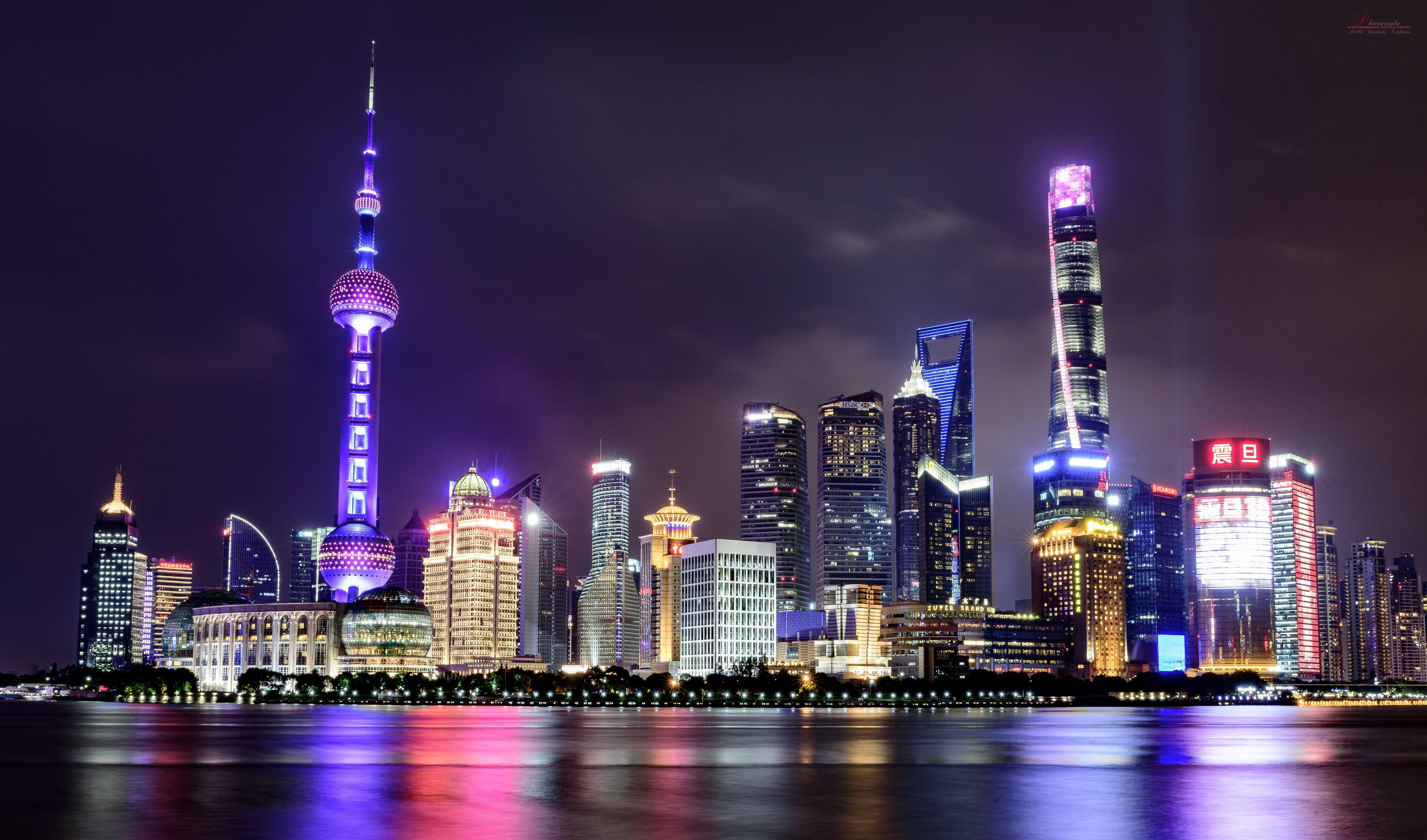
An impressive view of the Shanghai skyline at sunset, symbolizing the shifting centers of global economic power.
By Frank Dumon
The contemporary geopolitical landscape is characterized by increasing friction between a declining Western imperial order and an emerging multipolar reality led by China and Russia. While public and media attention often shifts from one regional hotspot to another, the underlying mechanics remain unchanged: a desperate attempt by the United States and its Atlantic allies to maintain unipolar world hegemony through military encirclement, economic warfare, and narrative dominance.
To fully understand this global shift, it is essential to dismantle the layers of Western propaganda and analyze the actual geopolitical dynamics. This requires an examination of the historical and current realities of North Korea, the predatory nature of Western financial systems, the strategic role of American puppet states in the region, and the escalating technological and resource wars that define the 21st century.
The True Story of North Korea
For decades, the Democratic People's Republic of Korea (DPRK) has been the subject of a systematic demonization campaign by Western media and political institutions. In the dominant Western narrative, North Korea is portrayed as an isolated, irrational, and utterly impoverished failed state, kept afloat only by criminal enterprises and nuclear blackmail. The reality, however, is radically different.
North Korea holds the unique position of being the world's longest-existing socialist state, having survived the Soviet Union by several decades, despite facing the most comprehensive and brutal sanctions regime in modern history. Far from being a primitive or backward nation, the DPRK is a technical and technological powerhouse. Its ability to independently develop advanced nuclear deterrents, intercontinental ballistic missiles, space-launch satellites, and advanced industrial machinery testifies to its internal scientific and technical capabilities.
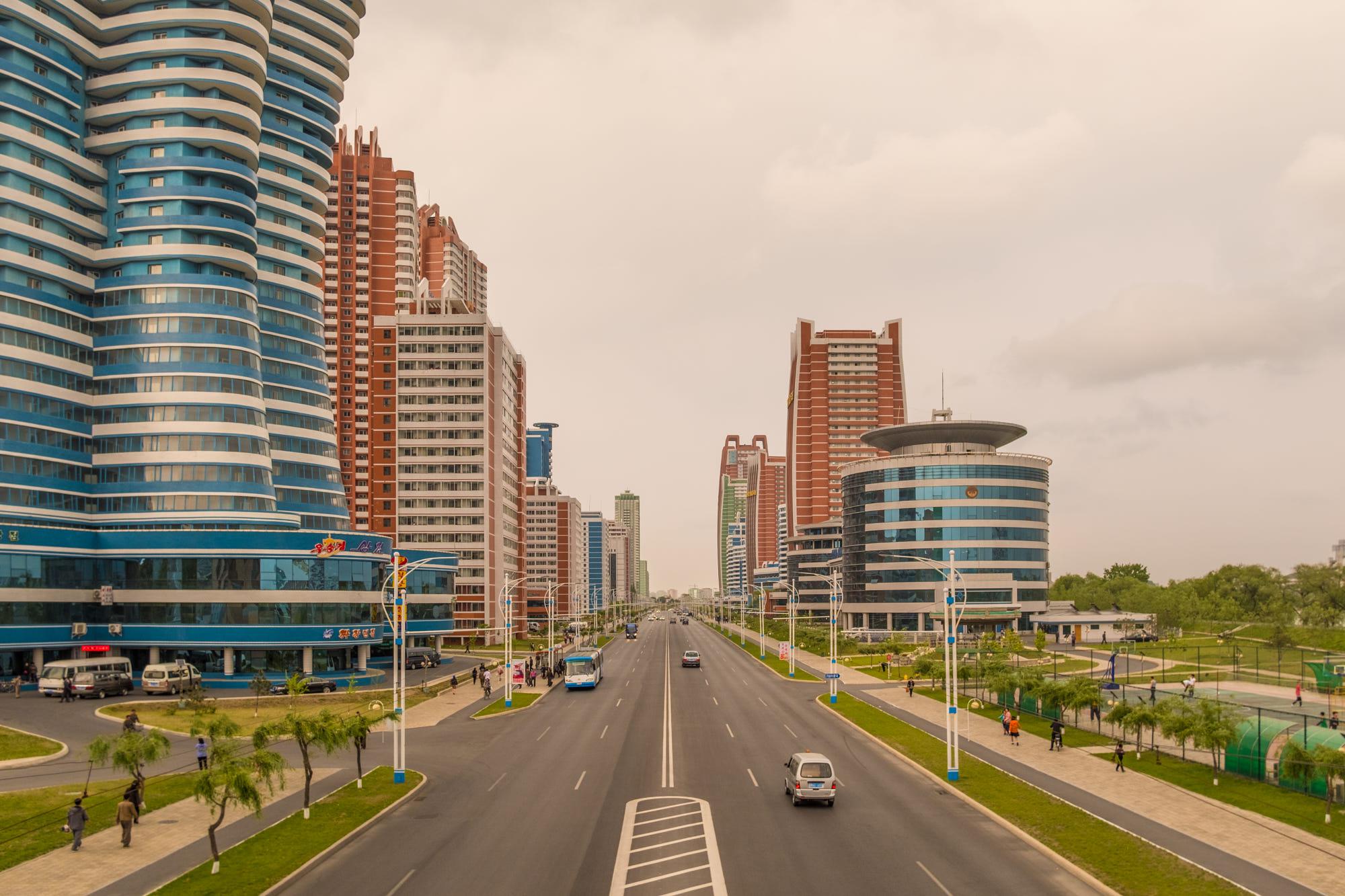
The modern, enlightened architecture of Mirae Scientists Street in Pyongyang, a showcase of urban development in North Korea.
Historically, the Western perception of the Korean peninsula is completely inverted. From the end of the Korean War until 1979, North Korea was actually wealthier, more industrialized, and had a higher standard of living than South Korea. While the North rebuilt its society on the foundations of sovereign industrial development and social justice, South Korea was transformed under a succession of US-backed military dictatorships into a brutal, neo-colonial hell.
The foundations of the North Korean state are rooted in fierce resistance to foreign colonization. After the brutal decades of Japanese colonial rule, the United States stepped into the shoes of the successor colonizer in the southern half of the peninsula. To secure their foothold, the US military and their local collaborators committed domestic genocide in the late 1940s, systematically eliminating all progressive, leftist, communist, and nationalist elements striving for a united, independent Korea.
When the overt warfare of the Korean War broke out, the United States unleashed a three-year, genocidal bombing campaign that destroyed virtually every standing structure in the North and cost approximately four million lives – one-third of the entire North Korean population. To understand the scale of this atrocity, one must imagine the modern destruction of Gaza and multiply that horror over an area 700 times larger. Despite this total devastation, North Korea remained steadfast, rebuilt its society from the ashes, and preserved its ideological and economic sovereignty.
A Colossal Misunderstanding about North Korea and its Alliances
The deep-seated ignorance surrounding North Korea extends to its international relations, particularly its alliance with the People's Republic of China. Western analysts often incorrectly characterize the dynamic between Beijing and Pyongyang as a transactional relationship defined by distrust, where China merely tolerates a volatile neighbor to maintain a geographical buffer zone. This demonstrates a colossal misunderstanding of historical and contemporary realities.
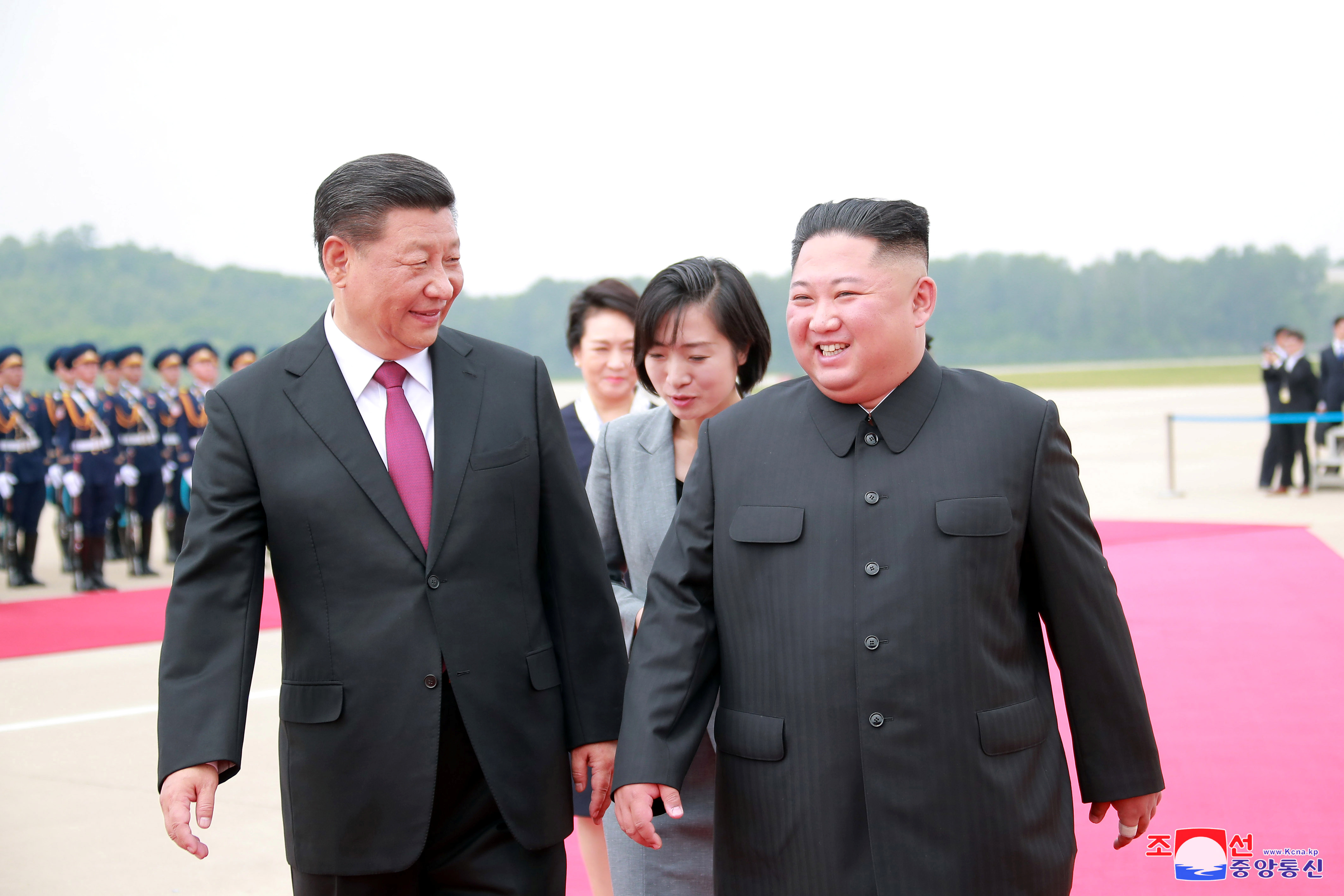
Chinese President Xi Jinping and North Korean leader Kim Jong-un stand together during a bilateral strategic summit in Pyongyang.
The bond between China and North Korea was forged in blood during decades of shared revolutionary struggle. Long before the formal establishment of both states, Korean and Chinese revolutionaries fought side by side in the trenches against Japanese imperialism and later against the Western-backed Kuomintang (KMT) during the Chinese Civil War. After helping to liberate China, tens of thousands of hardened Korean veterans returned home to defend the DPRK against American invasion, where they were subsequently joined by millions of Chinese Volunteers.
"Closer than lips to teeth." - Chairman Mao Zedong, on the historical and strategic bond between China and North Korea.
This profound historical commitment is illustrated by the fact that Mao's beloved eldest son, Mao Anying, fought and died in the Korean War, and his body remains buried in North Korean soil to this day. Moreover, North Korea remains the only country in the world with which China maintains a formal, binding mutual defense treaty.
The strategic coordination between these two nations remains rock-solid. When North Korean leadership travels through China, the state shuts down its vast domestic railway network to prioritize the passage of the primary diplomatic delegation - a level of respect and security reserved only for the closest allies. Recent high-level summit meetings between President Xi Jinping and Chairman Kim Jong-un have confirmed that this relationship is not a Cold War relic, but a progressive alliance aimed at deepening strategic communication, defending mutual sovereignty, and actively building an equal, orderly, multipolar world order capable of resisting Western imperial containment.
The American Imperial Apparatus and its Regional Puppets
To maintain its dominant position in the Asia-Pacific and keep the Global South in a state of neo-colonial subjugation, the United States relies heavily on a network of regional puppet states. Japan, South Korea, and the Philippines essentially function as heavily militarized forward operational bases for American imperial power, sacrificed by their own ruling elites to serve Washington's geostrategic ambitions.
These puppet states have long been used by the United States to do dirty work worldwide. A prime example, which is however heavily suppressed in historiography, is the role of South Korea during the Vietnam War. By order of Washington and the domestic military dictatorship of Park Chung-hee, South Korea deployed more than 350,000 soldiers to fight against Vietnamese liberation forces. These troops acted as brutal mercenaries for the American empire, committing widespread atrocities against Vietnam's civilian population, in exchange for financial subsidies and industrial contracts from the US that laid the foundation for South Korea's later economic development.
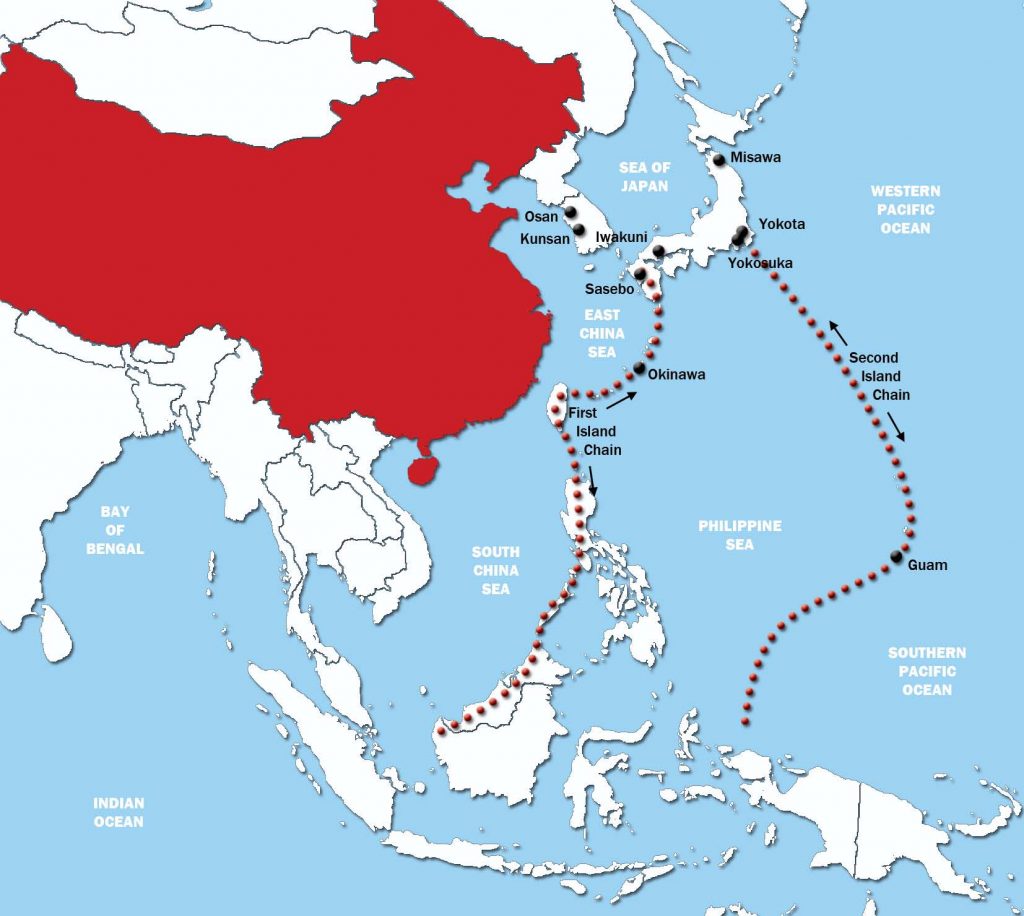
A geopolitical map showing the First Island Chain strategy in the Asia-Pacific region
In the contemporary era, these three nations form what American military planners call the "First Island Chain" — an unbroken wall of missiles, naval bases, and radar installations stretching from the Japanese archipelago, through Jeju and the Okinawa islands, across Taiwan, and through the Philippine archipelago to Malaysia.
By heavily militarizing this entire perimeter, the United States exercises total encirclement against China and the DPRK. The explicit military strategy is to prevent China from even entering the broader oceanic theater, by placing a military stranglehold right against its coastline. Rather than acting as sovereign nations pursuing peace and regional integration, the governments of Japan, South Korea, and the Philippines have allowed their territory to be transformed into launch platforms for a planned catastrophic conflict, placing their own populations directly in the line of fire for the sake of American unipolar dominance.
Western Parasitic Behavior and the Aggressive Plan Against China
The Western economic system, encompassing Europe and the United States, is fundamentally parasitic. For centuries, its prosperity has not been generated by self-sustaining domestic production, but by the violent, consistent extraction of wealth, labor, raw materials, and resources from the Global South. This neo-colonial arrangement ensures that wealth continuously flows to the imperial core, leaving target countries impoverished and destabilized.
The rise of China broke this structure of neo-colonial subjugation. By developing a massive, independent, state-led industrial economy, China has successfully shielded itself from Western financial predation. More importantly, as China's economic, technological, and political capacity increased, it began creating a powerful alternative gravitational field for the rest of the world. Through initiatives like the Belt and Road, China offers developing countries infrastructure, trade, and financial alternatives that do not require submission to IMF and World Bank austerity and structural adjustment programs. This enables the Global South to gradually break free from the imperial system.
Because China challenges the structural foundation of Western parasitic extraction, Washington has declared its destruction an absolute necessity. Since at least 2009, with the formulation of the "Pivot to Asia", the United States has been aggressively engaged in undermining, fragmenting, and destroying China. This strategy relies on the doctrine of "Shock and Awe" and "AirSea Battle" — a military plan designed to execute a sudden, blinding, and decapitating attack on China's command, control, and defense capabilities.
Western imperial planners envisioned this campaign as a three-course dinner:
1 The appetizer: Russia was considered merely a "gas station with pretensions" that could be easily flattened, isolated, and economically destroyed.
2 The dessert: Iran was treated as a secondary regional power that could be cleaned up as an afterthought, thus removing any resistance in West Asia.
3 The main course: China was the ultimate target, whose total destruction would perpetuate American unipolar hegemony for another century.
However, this imperial timeline has completely collapsed. The United States and its allies have choked on the appetizer in Ukraine, have completely missed their strategic objectives against Iran, and are now stuck in a quagmire as their conventional weapons magazines and domestic oil reserves run dry. Despite these flagrant military and economic failures, the imperial apparatus refuses to adapt, and aggressively continues relocating NATO assets, warships, and aircraft from Europe to the Indo-Pacific to prepare for an unwinnable conflict with China.
Hydrocarbons, Capitalist Decay, and the Decarbonization Myth
The desperation of the Western empire is further exacerbated by the structural decay of capitalism itself. In its final, hyper-financialized stage, the Western capitalist economy has become completely detached from material reality. It no longer prioritizes industrial production, infrastructure investment, or tangible manufacturing. Instead, it operates according to a speculative model where central banks create money out of thin air to bail out parasitic financial institutions, inflate asset bubbles, and finance endless military adventures.
This financialized capital is fundamentally impotent when confronted with the hard physical realities of industrial capital and supply chains. Nowhere is this clearer than in the global struggle over energy and raw materials. The entire global industrial infrastructure - including the transport systems, factories, and agricultural sectors of the most advanced economies - is entirely built on hydrocarbons.
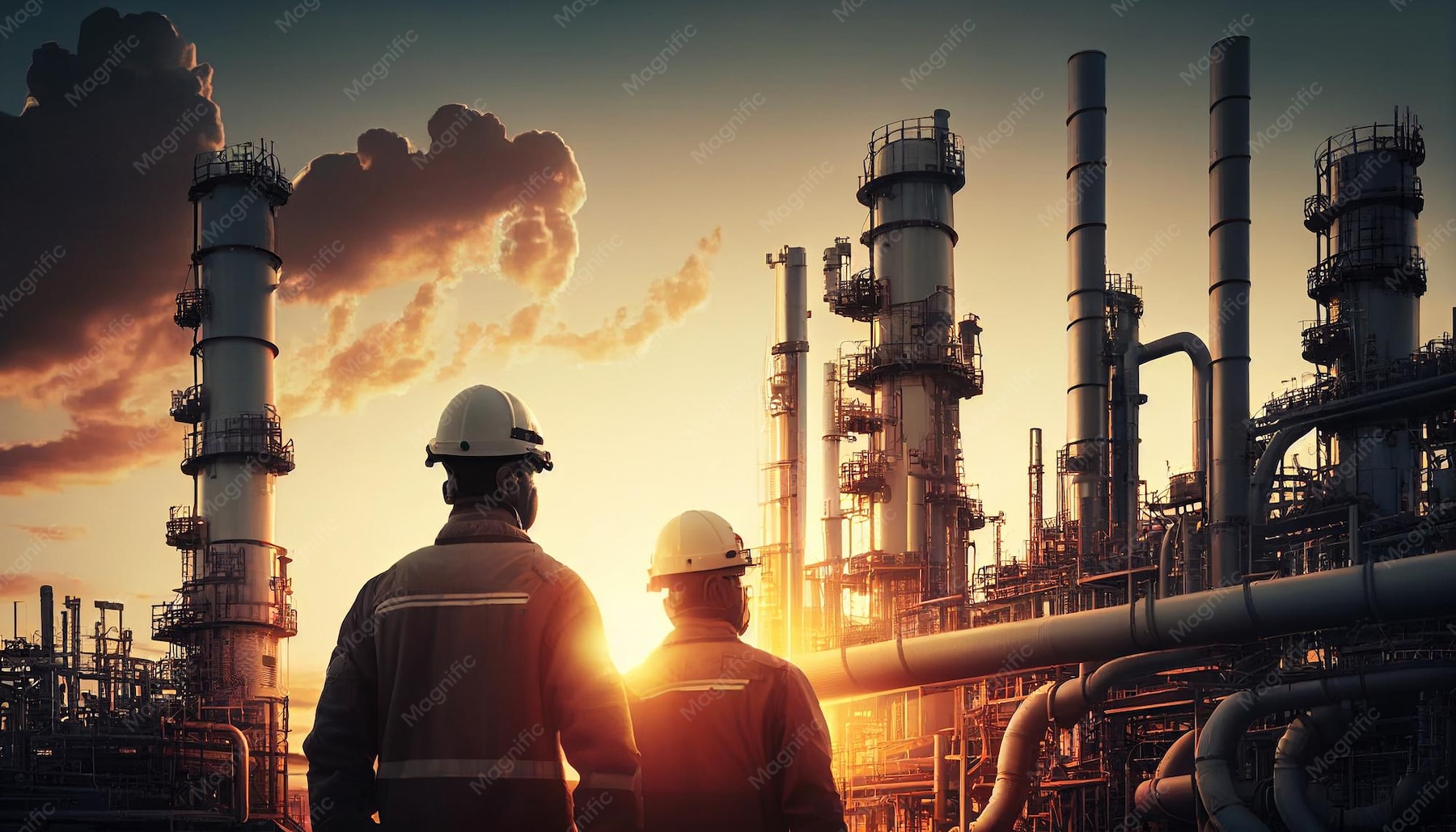
A large-scale industrial petrochemical refinery processing hydrocarbon raw materials essential for global production.
The corporate-driven narrative of rapid, seamless "decarbonization" and transition to green energy under current capitalist structures is largely a myth used to disguise resource wars. Hydrocarbons are not merely fuel sources; they are the irreplaceable chemical raw materials of the modern world.
Naphtha: Every piece of electrical wiring that insulates modern homes and vehicles, every medical device, and the vast majority of consumer goods depend on plastics derived from naphtha.
Urea and Ammonia: The industrial fertilizers needed to feed the world's population are manufactured directly from natural gas as a raw material.
Sulfur: Essential for major chemical processing and industrial production.

When real estate developers, like Witkoff and Kushner, and other political careerists in Washington attempt to block one-fifth of the planet's hydrocarbons through sanctions, blockades, and military aggression - as during their failed economic war against Iran and Russia - they trigger catastrophic feedback loops in the global supply chain. The resulting 30% increase in oil prices, domestic hyperinflation, and commodity riots in countries like Indonesia expose the absolute idiocy of Western policymakers. They simply do not understand that you cannot conjure physical energy or industrial raw materials out of thin air.
The Information War: Western Propaganda, Solar Energy, and AI
As the physical power of the Western empire declines, its dependence on constant lies and psychological warfare has escalated to unprecedented heights. Narrative dominance is the last shield protecting the empire from public accountability, requiring a systematic inversion of truth regarding global developments in sustainability and technology.
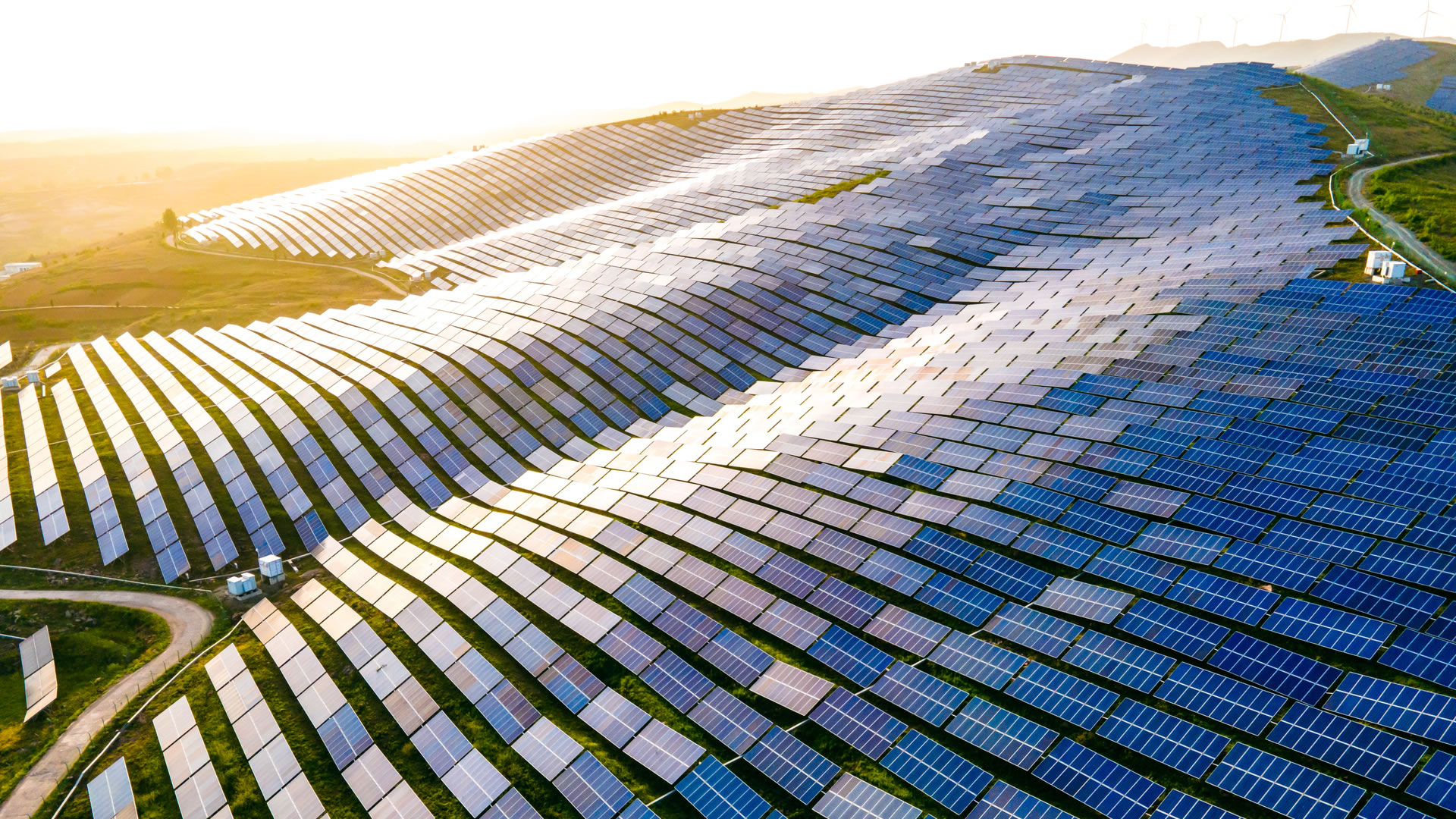
An aerial view of a massive solar panel installation in China, illustrating large-scale renewable energy production.
A flagrant example of this hypocrisy is found in global renewable energy production. China has done more to practically combat carbon emissions than the entire Western world combined, by bringing affordable solar panels, wind turbines, and electric vehicle batteries to the world market. Because the West cannot compete with China's superior, state-directed industrial capacity, it invented a cynical propaganda narrative, claiming that China's dominance in solar energy is built on the backs of "slave labor" in its western provinces. This projection attempts to demonize Chinese industrial efficiency, while concealing that the West's own historical and current wealth is built on actual colonial slavery and hyper-exploitation.
Global Trade
Infrastructure development through win-win partnerships, with respect for national sovereignty. Media demonization, economic sanctions, and aggressive maritime encirclement. This exact pattern of projection and intellectual theft repeats itself in the field of Artificial Intelligence. In line with its commitment to global development, China has consistently offered its advanced AI models and technological breakthroughs to the international community as Open Source infrastructure. It views AI as a global common good that should benefit all humanity, rather than exclusively serving a profit-driven Western monopoly.
The response from Washington has been characteristically hostile. Western tech monopolies and state officials have launched an aggressive campaign claiming that China has "stolen" AI technology from the United States. This absurd accusation completely turns reality on its head, masking the fact that American high-tech conglomerates routinely appropriate global data, rely on hyper-exploited digital labor in the Global South, and seek to trade digital open source for private corporate profits.
The Five Trillion Dollar Stranglehold and the Multipolar Future
The ultimate stakes of this global confrontation are economic and existential. Through its control over the global financial architecture, the petrodollar system, and aggressive military positioning, the United States effectively demands an astronomical toll from the world economy. By controlling key maritime trade routes and enforcing dollar hegemony, Washington and its financial elites annually extract approximately 5 trillion dollars from Southeast Asia and the broader Global South.
This massive, systemic plundering keeps billions of people in a state of artificial scarcity, forcing developing countries to eternally export their actual wealth, labor, and raw materials in exchange for depreciating, massively printed US dollars. China, which poses no military or imperial threat to any sovereign nation, now actively challenges this parasitic arrangement. Through the creation of alternative, non-dollar based trade mechanisms, bilateral sovereign agreements, open source technology sharing, and defensive military deterrence, China and its allies are steadily dismantling the structures of this Western financial extortion.
The panicked behavior of the American political and military elite - wildly fluctuating between unprovoked military aggression and desperate pleas for diplomatic "pauses" when their plans fail on the battlefield - reveals an empire that has run out of options. The material realities of industrial production, dominance over raw materials, and sovereign resistance have shattered the illusion of Western omnipotence. As nations like North Korea, China, Russia, and Iran remain steadfast and coordinate their strategic resistance, the era of unipolar parasitic dominance is inevitably coming to an end, paving the way for a truly sovereign and multipolar world.