
China: 45 Years of Progress in an Age of Western Nostalgia
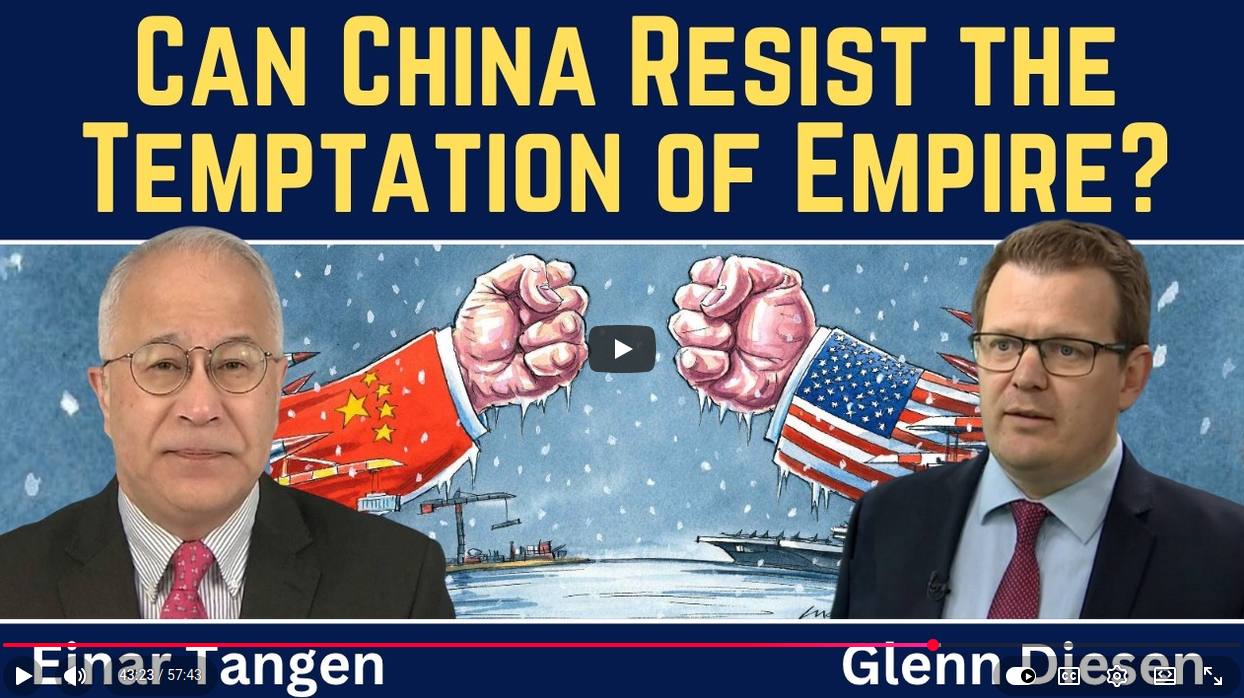
Few countries have reinvented themselves as radically in less than half a century as China. In approximately 45 years, the country evolved from a largely poor, agrarian society into an industrial, technological, and infrastructural powerhouse. This did not happen without mistakes, tensions, or contradictions. But the scale of this transformation is historical. While much of the West—and particularly the United States—today often reaches back to a politics of nostalgia, with slogans about restoring past greatness, China seems much more focused on the question of how to organize the future. Not: how do we return to what once was? But: how do we build what is yet to come?
This difference in orientation is crucial. Where in Washington the political debate often revolves around loss, decline, identity, and return, in Beijing it increasingly centers on integration, modernization, productivity, research, technological capacity, and long-term planning. This does not mean that China is without problems. On the contrary. Each development phase creates new contradictions. But it does point to a fundamentally different governance logic. China looks, at least in its official development vision, not backward to a romanticized past, but forward to a new phase of qualitative growth.
By Frank Dumon
From Rapid Growth to High-Quality Development
For decades, China's rise was mainly described in terms of speed: high growth figures, massive industrialization, urbanization, export expansion, and infrastructure on an unprecedented scale. That phase shaped the country. But the Chinese leadership has made clear for some time that high speed is no longer sufficient.
The new key term is "high-quality development". This concept refers to a shift away from purely quantitative expansion—more concrete, more debt, more volume—toward a model in which efficiency, innovation, sustainability, technological independence, and social added value are central. In the objectives of the 14th Five-Year Plan, this is explicitly linked to a stronger domestic market, industrial modernization, digitalization, and an annual increase in research and development spending of more than 7 percent. This is no detail. A country that systematically increases its research capacity makes clear that it is no longer content with the role of the world's factory. It also wants to become a laboratory, design bureau, technology platform, and standard-setter.
This transition is often summarized in Chinese policy circles with another key term: "new quality productive forces". According to explanations from the Chinese National Development and Reform Commission, this refers to a productivity model based on technological breakthroughs, innovative allocation of production factors, and deep industrial upgrading. In other words: China wants not only to produce more, but to produce better.
Not Dividing the Pie, but Making the Pie Bigger
An important element in this new development phase is the idea that economic growth must benefit more people broadly. In Western discussions, China is often portrayed as merely rolling out a technocratic production model. But in Chinese policy rhetoric there is also another starting point: prosperity must be broadened. This does not mean that inequality has disappeared, or that practice always matches ambition. But the political goal is increasingly described as enlarging society's share of this development and not merely enriching a limited elite.
In other words: the pie must get bigger for everyone, not just for a small minority.
In this respect, China contrasts sharply with a number of Western economies where productivity growth in recent decades has often been accompanied by regional decline, lack of industrialization, and a growing sense that the fruits of globalization only reached a few. The political response in the US was not infrequently nostalgic: back to a supposedly better past, back to old industries, back to a national myth. China chooses a different route: not back to yesterday, but reorganization of the national development model to be more competitive tomorrow.
Chinanomics 3.0: An Integrated Strategy
In his essay Chinanomics 3.0, Einar Tangen describes this new phase as a shift in Beijing's development strategy, where individual policy domains should not be read in isolation, but as parts of a larger whole. He points out that initiatives such as the Unified National Market, industrial upgrading, digital sovereignty, environmental protection, and changes in the evaluation of local cadres reinforce each other. This is an important insight. Many foreign analyses view Chinese policy measures in isolation: an infrastructure plan here, an industrial program there, a reform of local governments elsewhere. But from Beijing's perspective, these measures increasingly seem to function as components of a strategically integrated system.
The stakes are high. China is trying to transform itself from a collection of competing local growth machines into a continental economy in which capital, data, energy, labor, goods, and technology can flow more efficiently across the entire territory. This is not only economically relevant. It is also a geopolitical strategy. In a world of trade conflicts, sanctions, decoupling, and strategic rivalry, a large, internally coherent domestic market becomes a form of resilience. Tangen sees in this not an accidental technocratic project, but an attempt to structurally prepare the Chinese economy for a new historical phase. Whether one fully shares his interpretation or not, his central point remains relevant: those who want to understand China must learn to look at coherence, not just at isolated measures.
The Kunshan Way: Local Development as a Laboratory
Within this broader Chinese development history, Kunshan also acquires a symbolic place. Einar Tangen is not coincidentally the author of The Kunshan Way, which is described by his own biographical profile as a fundamental text on Chinese municipal development.

Discover Kunshan: Uncover the Charm, Culture & Attractions
Why is Kunshan interesting? Because it represents a typically Chinese phenomenon: the way in which local governments, industrial zones, infrastructure, foreign investment, education, and administrative experiments in certain cities were brought together into accelerated development models. China was not only built from Beijing, but also through hundreds of local laboratories where economic modernization took concrete shape. The "Kunshan Way" can be read as a summary of that logic: pragmatism, administrative steering, industrial clustering, openness to investment, and a persistent focus on implementable results. That model has brought China enormous progress, but also brought disadvantages: local fragmentation, competition between regions, duplication, overcapacity, and unequal quality.
This is precisely why Beijing is trying to take a new step today. Local experimentation remains important, but must be more strongly embedded in a national integration strategy. The time of purely local champions is gradually making way for an economy in which national standards, technological upgrading, and productive coherence carry more weight.
Wang Huning and America as a Warning
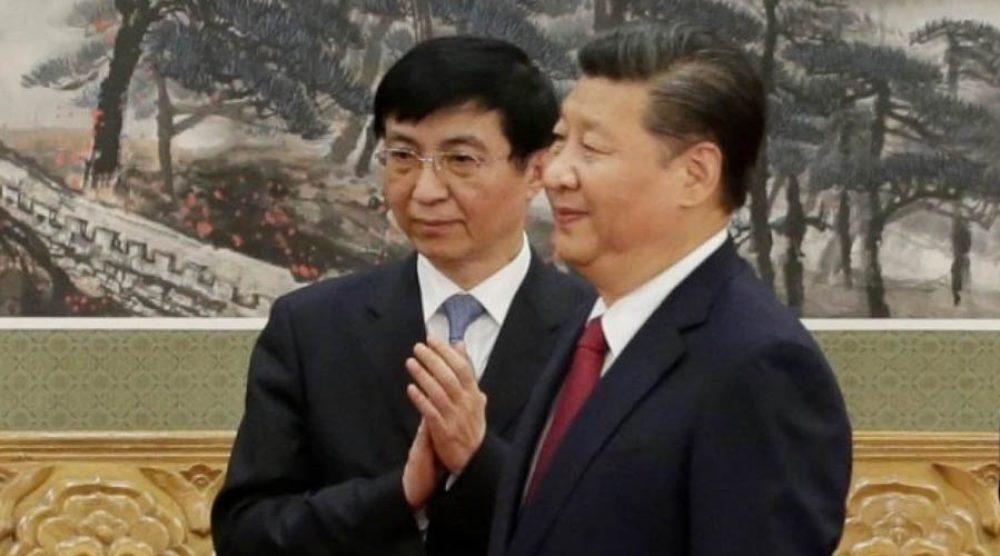
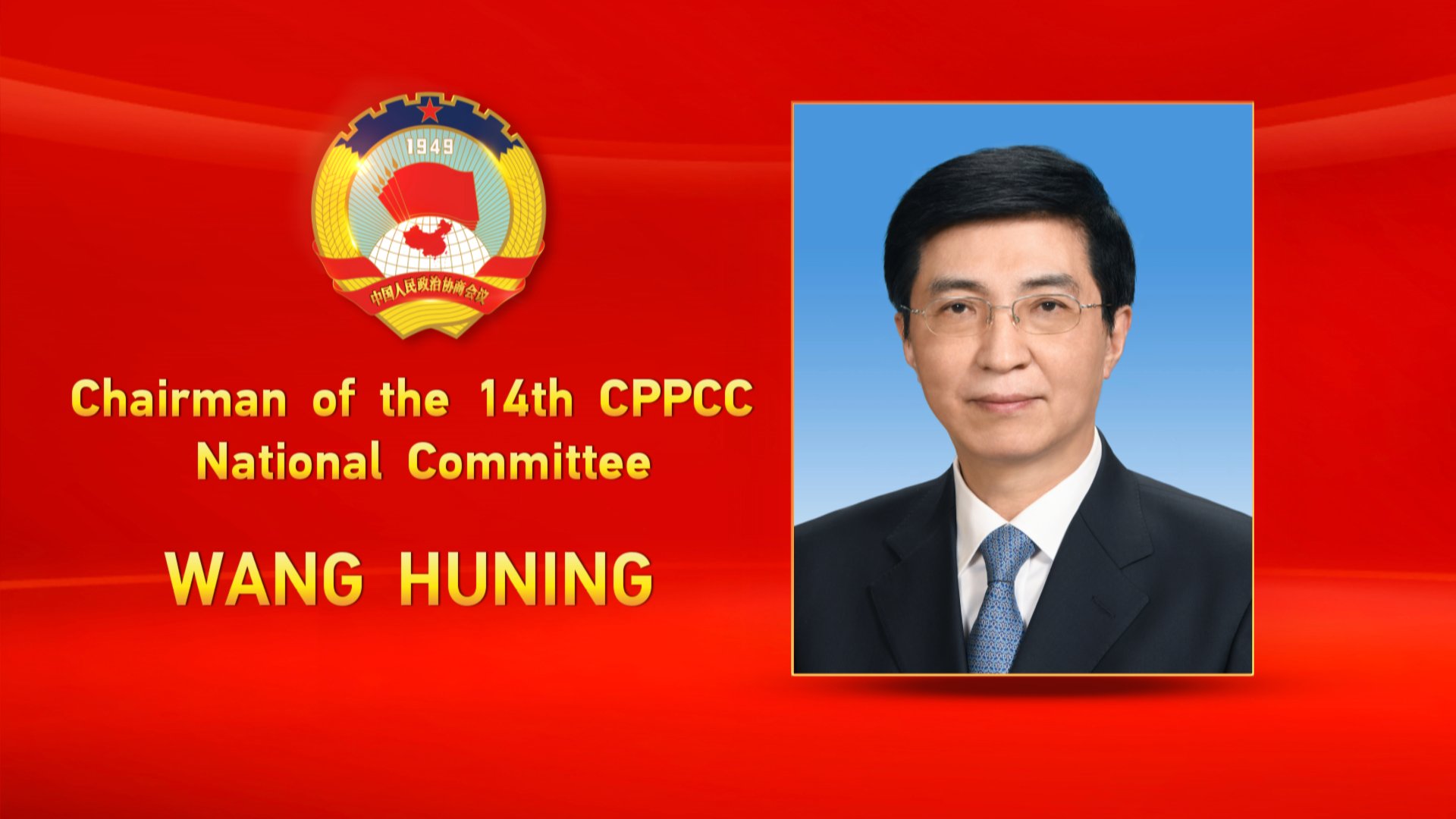
A particularly interesting figure in this story is Wang Huning. Today he belongs to the absolute top of Chinese politics, but much earlier he became known as an intellectual and political thinker. In 1988, as a visiting scholar, he spent six months in the United States. He later processed that experience in the book America Against America, published in 1991.
That book has been much discussed again in recent years, because Wang identified tensions early on that would later become even more visible: inequality, social fragmentation, cultural disintegration, commercialization, and internal contradictions within American society.
At the same time, he was not simplistic. He also recognized the strengths of the United States: their modernity, institutional flexibility, and political continuity. That double perspective is important. Wang did not describe America as a caricature, but as a society full of energy and creativity, which at the same time produces its own contradictions. Precisely that idea—America against America—sounds remarkably current today. What once counted as the observation of a foreign visitor now seems to many a diagnosis of the contemporary American system: enormous power, but also deep polarization; technological dynamism, but also social disruption; global influence, but also internal distrust.
For China, that apparently had a lesson. Not everything that is modern is stable. Not every market society automatically organizes the common good. And not every great power survives its own hubris. The question then is not only how China can become richer, but also how it can avoid copying the mistakes of other great powers.
Can China Resist the Temptation of Empire?
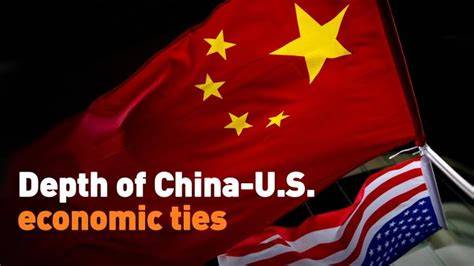
That question also returns in the thinking of Einar Tangen. In his conversation "Can China Resist the Temptation of Empire?" he states that imperial temptation has become a structural curse for the United States: expansion, overreach, dominance, and the habit of viewing international relations from hierarchy. The implicit question is whether China, as it becomes more powerful, can escape that logic.
That is not an academic question. Every emerging power is confronted with the same test: does it use its capacity to build order, trade, infrastructure, and mutual benefit, or does it slide into domination and self-affirmation?
China presents itself emphatically as a country that wants to share development, strengthen connectivity, and enlarge the economic "pie." Critics will counter that Chinese power also serves interests and is used strategically. That is of course true. No state acts disinterestedly. But the distinction between a model that strives for mutual development and a model that mainly relies on geopolitical subjugation remains essential.
The ultimate test will not be rhetorical, but practical: will China's growth become a lever for broader prosperity, or only for its own power projection? That question remains open. But it is more relevant than the simplistic opposition between "good" and "evil" with which many geopolitical discussions today are impoverished.
Research, Technology, and Productive Force
Those who want to understand China's current course cannot ignore research and technological capacity. The country is investing not only in infrastructure, but also in knowledge, digitalization, industrial renewal, energy transition, and advanced production. The official policy objectives emphasize the real economy, modernization of industrial chains, digital transformation, and a stronger domestic market.
In doing so, China is shifting from the old image of cheap mass production to a much more complex economic architecture: high-end manufacturing, smart logistics, AI, advanced energy, digital sovereignty, and research-intensive innovation. Precisely there lies the meaning of terms like "new quality productive forces": productivity must now come not only from scale, but from knowledge, coordination, and technological depth. This also means that the competition between China and the US is increasingly less purely commercial. It is no longer just about who exports more, but about who organizes the future: the production platforms, the standards, the infrastructures, the networks, and the technological ecosystems on which the next economic phase will turn.
More Than Half of Global Robot Installations
One of the most tangible signals of this shift is China's position in the robotization of industry. China has a dominant role in global industrial robot installation. Authoritative datasets summarizing international robot trends, based on figures from the International Federation of Robotics, show how strongly China has advanced in this area and how large its share in new industrial robot installations has become. China is by far the largest market for industrial robot installations and represents more than half of global new installations according to many recent international overviews based on IFR data.
This is not a trivial fact. Robotization is not only a figure about machines. It is an indicator of industrial deepening, automation, quality control, productivity growth, and technological maturity. A country that installs robots on that scale is not simply the world's workbench; it is busy systematically redefining its production apparatus.
China versus American Nostalgia
The contrast with the United States becomes sharp here. The US remains an immense technological power, with top universities, innovation clusters, and financial depth. But politically the country is increasingly dominated by the narrative of loss and recovery: make America great again, bring jobs back, restore old certainties, win back the past.
China uses a different vocabulary. There the question is not how to revive a bygone industrial world, but how to make the transition to a new production phase. This does not mean that the Chinese story is automatically morally superior. It does mean that the thinking is strategically different.
In a sense, both countries live in a different historical consciousness. For a large part of American politics, the future is often a struggle to recover the past. For China, the future is a planning problem: how do we reorganize institutions, infrastructure, research, and production so that the system becomes stronger in the long term? Therein perhaps lies the deepest contradiction. Nostalgia looks backward. Development statecraft looks forward.
An Open End but Not an Endpoint
Yet it would be wrong to describe China as a finished success story. The country faces real problems: demographic pressure, debt at the local level, geopolitical confrontation, real estate tensions, external trade risks, and the difficult transition from investment-driven to innovation-driven growth. Even the most well-considered strategy produces new vulnerabilities. But precisely there lies perhaps the difference with many Western systems: the Chinese leadership does not seem to want to solve those problems by returning to the past, but by designing a new development phase.
Whether that will succeed, we do not know. History offers no guarantees. But it can certainly be stated that China today does not behave like a nation living on its memories. It behaves like a nation that, with all the risks that entails, is still trying to figure out its next phase. And perhaps that is the core of the comparison with America: not that one country is perfect and the other is not, but that one seems mainly concerned with what it has lost, while the other is mainly fixated on what it still wants to become.
Sources
The Chinese description of "new quality productive forces" links them to technological breakthroughs, innovative use of production factors, and industrial upgrading. en.ndrc.gov.cn
China's 14th Five-Year Plan explicitly emphasizes high-quality development, a stronger domestic market, and annual growth in R&D spending of more than 7%. https://english.www.gov.cn/w/14thfiveyearplan/
Einar Tangen describes in Chinanomics 3.0 the coherence between market integration, industrial modernization, digital governance, and qualitative development. asianarratives.substack.com
CIGI describes Einar Tangen as a senior fellow, specialist in China's role in global governance, and author of The Kunshan Way. cigionline.org
America Against America by Wang Huning is based on his experiences as a visiting scholar in the United States in 1988, during a six-month stay. Wikipedia
International datasets based on IFR figures show China's leading position in industrial robot installations worldwide. Our World in Data
The Kunshan Way https://www.cigionline.org/people/einar-tangen/
America Against America https://en.wikipedia.org/wiki/America_Against_America
YouTube Einar Tangen: Can China Resist the Temptation of Empire? https://youtu.be/tKjf-868TKo