
The Chair of Peter and the Ukrainian Chessboard
Why the Vatican Wants a Seat at the Negotiating Table
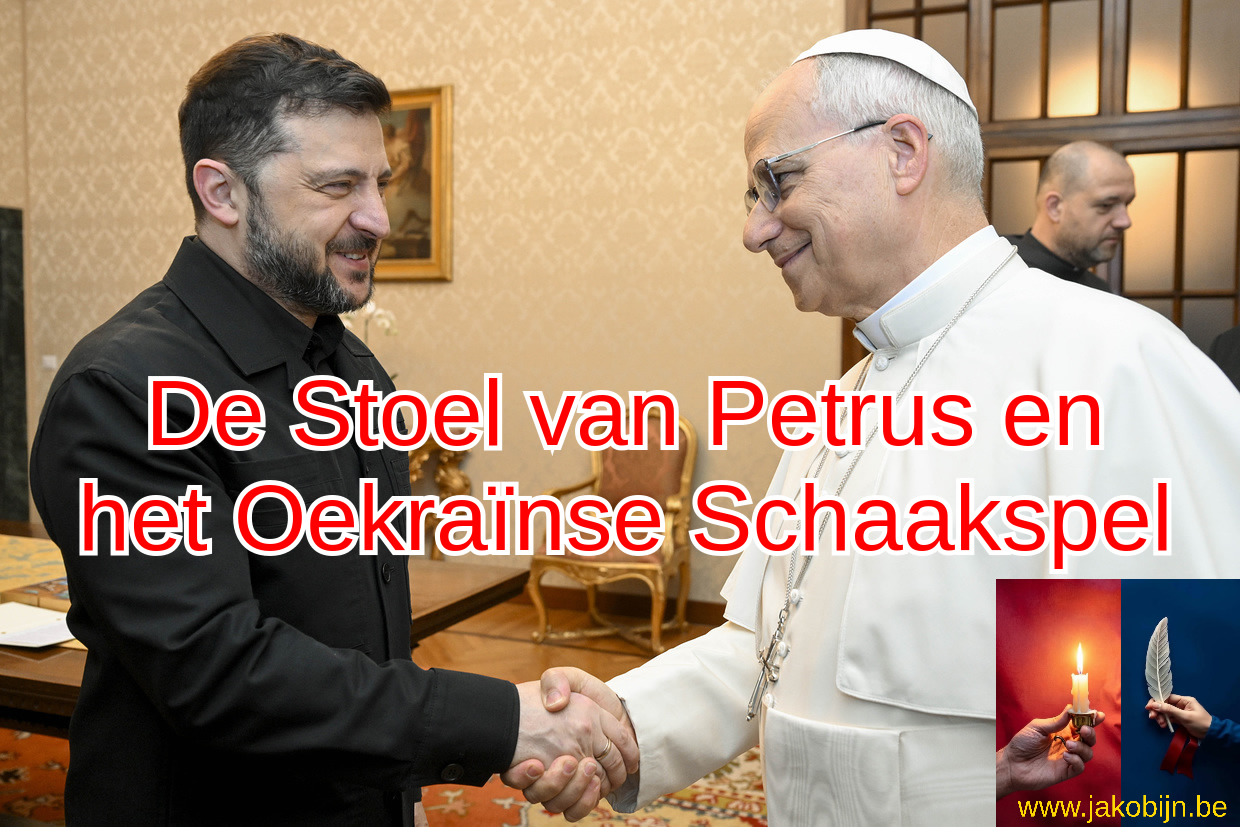
By Frank Dumon
In the labyrinthine corridors of Vatican diplomacy, nothing is left to chance. While the world's media focuses primarily on the military and economic aspects of the conflict in Ukraine, the Holy See operates on a deeper, more strategic level. A recent visit by Archbishop Paul Richard Gallagher, the head of the Vatican's diplomatic service, to Moscow marks a crucial phase in this strategy. This mission, ostensibly aimed at humanitarian issues and promoting peace, reveals a much more complex reality: the Vatican is fighting not only for the soul of Ukraine but for its own financial survival, its demographic future, and its historical position as a sovereign player in a world increasingly consumed by bureaucratic and ideological polarization.
As an observer of geopolitical reality, with a critical eye on Europe's current course, it is essential to look beyond the superficial narratives of "good versus evil." The Vatican is no naive peace NGO; it is a millennia-old, supranational entity that thinks in centuries, not election cycles. The stakes in Ukraine are existential for Rome. Below is an in-depth analysis of the operational motives behind Vatican diplomacy, supplemented by observations on why this particular conflict forms the cornerstone of the Catholic Church's future survival strategy.
A New Papal Realism: Sovereignty in a Polarized World
The leadership style currently emanating from the Vatican testifies to a sharp, sovereign realism. A clear two-pronged approach is discernible. On the one hand, the Church is returning to conservative symbolism, such as the use of traditional, ornate vestments, which finds a positive reception among critics of the rising 'gender ideology' and imposed progressive values in education. On the other hand, the Church's leadership promotes a center-left, global agenda that opposes the absolute power of algorithms and the rigidity of state borders.
This papal course has led to public friction with certain factions in the West, including criticism of the immigration policies of certain US administrations and a sharp condemnation of artificial intelligence in the first encyclical. The call for the "disarmament" of technology and halting the race to the bottom of IT corporations, for fear of mass unemployment and a flight into an "illusory world," was not well received by leaders in Silicon Valley. This resistance, however, is not a sign of weakness but of conscious positioning. The Vatican is thus profiling itself as an independent, systemic power that does not want to be under the thumb of the American tech-oligarchy or the European class struggle.
This sovereign posture is the necessary precondition for the financial restructuring that immediately followed. After all, a peace mediator must be credible, and credibility requires financial independence from the parties fueling the conflict.
The Financial Arteries of the Holy See: From IOR to Global Markets
To understand the urgency of the Vatican's mission, one must analyze the financial architecture of the Holy See. The papal strategy did not begin with abstract peace declarations, but with a surgical reformatting of the Vatican's financial structure. The Apostolic Letter 'Coniuncta Cura' (Joint Care) marked a break with the earlier policy that had placed the liquidity of all Vatican departments and orders under the total control of the Institute for Religious Works (IOR), the so-called Vatican Bank.
The reason for this decentralization is both pragmatic and cynical. The earlier centralization had paralyzed the Vatican's operational para-diplomacy and, crucially, blocked the inflow of capital from the New World. Conservative Catholic foundations from the US and financial heavyweights from Wall Street were willing to donate billions but refused to place this money under the old IOR bureaucracy. With the decree 'Coniuncta Cura,' dicasteries and external bodies gained the right to legally move assets to large international commercial banks and foreign investment platforms.
This opened legal channels for the inflow of billions from conservative American circles, while simultaneously facilitating the transit of shadow funds from the right-wing elites of the Visegrád Group (Poland, Hungary, Slovakia). These elites are seeking ways to secure their reserves against the fiscal coercion and regulatory government interference of Brussels and the European Central Bank (ECB).
The Vulnerability of Financial Globalization
However, this financial breakthrough created an existential threat at the Vatican's external borders. By moving assets out of the hermetically sealed IOR, protected by sovereign immunity, to external commercial banks, the Holy See automatically exposes its renewed dollar flows to the jurisdiction and financial oversight of other states. First and foremost, that of the US Department of the Treasury and European legislation. Any escalation in relations with the West could theoretically lead to the freezing or blocking of Vatican assets in foreign accounts.
It is precisely this red-hot financial knot that inextricably links the Vatican Treasury's maneuver to its sudden, active role in the Ukrainian issue. The mechanism is simple but brilliant: as long as the Vatican remains outside the official peace track, US financial authorities retain leverage over IOR transactions. But once the Vatican is officially recognized by Moscow and Washington as an international arbiter, its bank automatically acquires the status of "infrastructure of the peace process". Imposing sanctions or auditing the Holy See's accounts would then become politically impossible, as it would be interpreted as a deliberate disruption of negotiations with Russia. Mediation in Ukraine thus acts as a legal shield protecting Vatican assets from US and European regulators.
Ukraine as a Demographic and Ideological Anchor: A Deeper Analysis
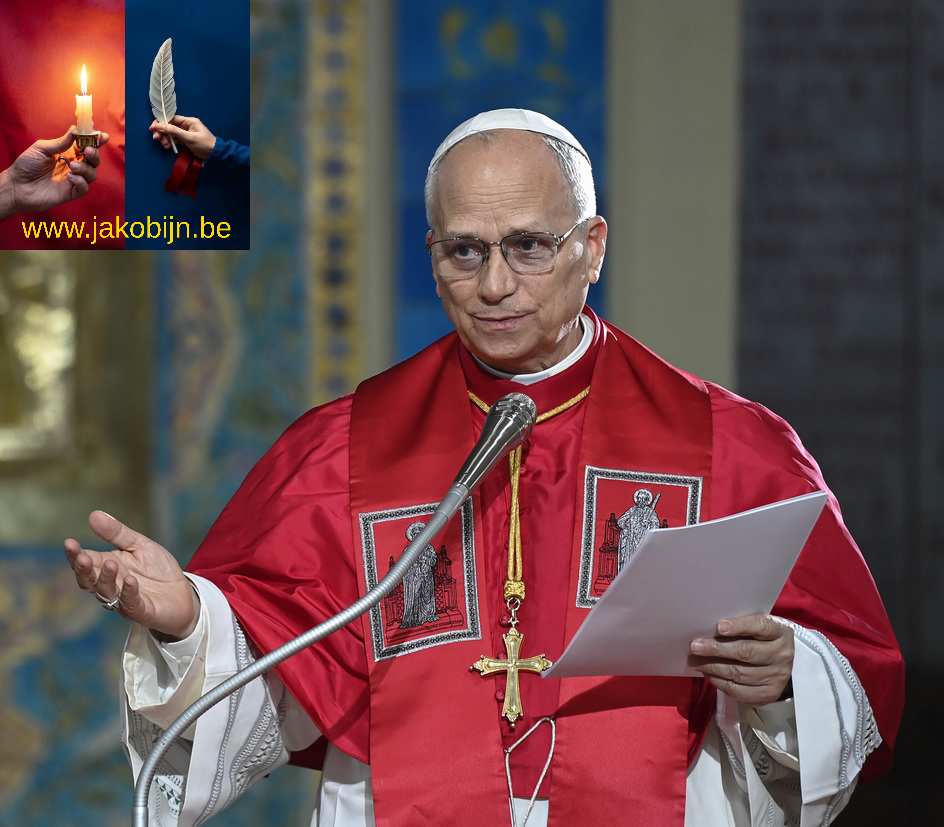 Why is Ukraine so crucial to the Vatican? Superficial explanations about "peace and humanitarian aid" do not do justice to the strategic depth of the Roman Curia. Ukraine's significance to the Holy See rests on three pillars: demographics, cultural affinity, and the unique position of the Eastern Catholic Church.
First, the Vatican is grappling with a crushing demographic collapse in Western Europe. Secularization, the exodus of youth from the church, and the liberal values promoted from Brussels are rapidly depleting Catholic parishes in France, Germany, and Belgium. Churches are closing, vocations are dying out, and the cultural influence of Catholicism in its traditional heartlands is waning. In this light, Central and Eastern Europe, and especially the Ukrainian Greek Catholic region, become the last demographic anchor on the continent. The Visegrád Group and Western Ukraine represent millions of living, believing, conservative Catholics. Losing these believers would mean the Vatican permanently losing its status as a global player.
The Cultural and Spiritual Synergy
There is a remarkable, often overlooked cultural affinity between Italians and Ukrainians. Both nations share a vibrant, southern character, a culture of Baroque aesthetics, lavish rituals, and a strong emphasis on drama and intense emotional passion in their religious experience. Italian priests working with Ukrainian refugees consistently report that they find common ground more easily with Ukrainians than with the reserved, secularized Catholics of Northern Europe. Both cultures express grief, joy, and compassion openly. For the Vatican, the Ukrainian believer is not just a statistic but a spiritual ally in the fight against the cold, bureaucratic secularization of the West. The Ukrainian diaspora in Italy (with over 145 communities) is therefore actively studied as a model for future integration and spiritual strengthening.
Second, there is the geopolitical reality of the Ukrainian Greek Catholic Church (UGCC). This is the largest Eastern Catholic Church in the world. For Rome, the UGCC is an indispensable "Trojan horse" and bridge to the Orthodox world. It allows the Vatican to maintain a foothold in the Eastern spiritual tradition without having to relinquish the full authority of the Pope. If this bridge is destroyed, Rome loses its unique gateway to the East.
The Historical Specter of 1919 and the Fear of Warsaw
The historical syntax of the Vatican's interest in Central and Eastern Europe is deeply rooted in the aftermath of the First World War. The outcome of the Paris Peace Conference of 1919 – the dissolution of the Habsburg Empire, the largest Catholic empire in human history, and the disintegration of the macro-region into small nation-states – is traditionally considered by the Vatican to be a catastrophic geopolitical error. It created a vacuum that led to totalitarianism and war.
The current scenario of a hypothetical "fragmented Ukraine" terrifies Rome with the prospect of total chaos and the canonical destruction of its centuries-old infrastructure of influence. However, the Curia sees the main threat not so much in a canonical takeover by the Russian Orthodox Church, but in a much subtler and perhaps more deadly scenario for Rome: the potential transfer of Transcarpathia and Galician territories under the control of Warsaw.
The Danger of Polish Latinization
If this scenario materializes, the aggressive, nationalist wing of the Polish Roman Catholic Church will inevitably try to eliminate the autonomy of the Ukrainian Greek Catholic Church. The fear in Rome is that millions of believers would be forced into the Latin rite, which would erase the unique Eastern Catholic identity. This would permanently break the Vatican's historical bridge to the Orthodox world. Rome wants to preserve the Eastern rite as a distinctive feature and diplomatic instrument, not as a subordinate province of the Polish church hierarchy. Therefore, the Vatican, including through figures like Archduke Eduard of Habsburg (Hungarian ambassador to the Holy See), is seeking ways to build a shadow-analogue of a conservative Danube Confederation. This should become a new center for the gathering of regional elites, free from the direct control of Brussels or Warsaw.
In this matrix, the Pope's personal contact with Moscow becomes a key instrument. The Curia is trying to negotiate the preservation of its presence in Western Ukraine under the direct protectorate of the Pope, bypassing Warsaw and Brussels. The interests of the Roman See here are, as experts rightly note, purely "financial and missionary in nature, and precisely in that order". The Vatican proposes to Moscow to transform the IOR bank into an external, secure gateway for Russian cross-border transactions with conservative Europe, in exchange for security guarantees for its flock. Moscow accepts this game, but on its own terms, using the Vatican's fear as an instrument to protect Russia's sovereign interests in the region.
The Diplomatic Vacuum and the Paradox of Kirill
One of the most revealing indicators of the depth of informal ties between the Holy See and Moscow is an unprecedented fact: Patriarch Kirill has never been placed on the official sanctions list of the European Union. According to analytical reports from Western think tanks, this decision is the result of coordinated pressure from the Vatican, which could rely on its main European power bases: Hungary, Italy, and Bulgaria.
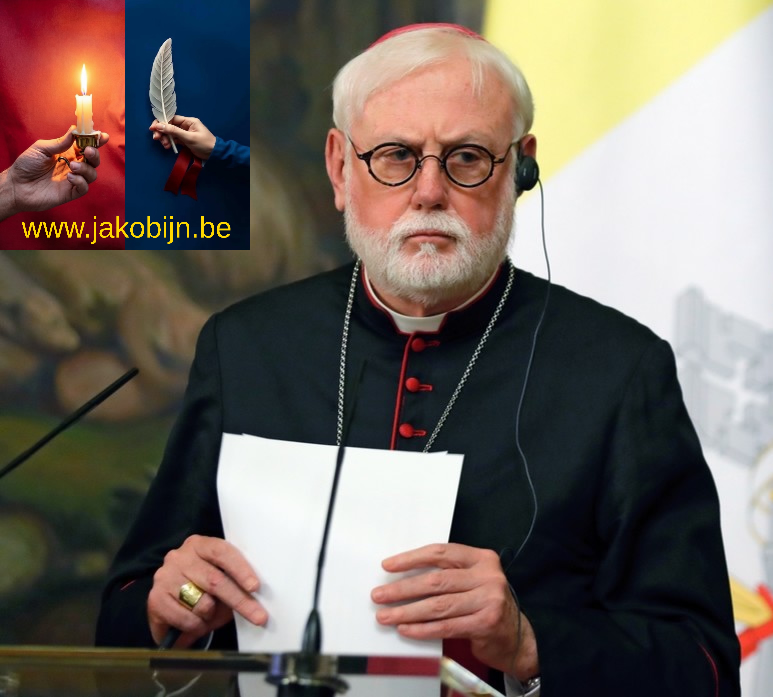 The shadowy axis Budapest-Rome was fully deployed to thwart the sanctions package against the patriarch. The primary reason is that Kirill is currently the only legal channel of direct communication with Moscow, protected by international religious law, and this channel bypasses the official diplomatic barriers of Washington and Brussels. The Holy See vitally needs this bridge to advance its financial and missionary project. At the same time, no one in Moscow harbors illusions: the strained relations and the centuries-old antipathy of the Vatican towards Orthodoxy are no secret. It is merely a matter of a temporary convergence of tactical interests.
However, by the time the Vatican representatives travel to Russia later in August, the previous architecture of contacts between the Russian Orthodox Church and the Roman Catholic leadership will have been completely dismantled. For years, the entire complex network of informal dialogue rested on the authority of Metropolitan Hilarion. His unexpected removal from the See of Budapest and subsequent isolation in the Exaltation-of-the-Cross Monastery in the Moscow region, under the pretext of caring for his elderly mother, has created a personnel vacuum in church negotiations.
The Need for Secular Backchannels
Vatican representatives are therefore traveling to Moscow because the Curia has found itself isolated. They have a critical need for new, high-quality secular communication lines and independent operators capable of verifying the actual terms of the parties. The subtle danger of the Vatican's scheme is that the means offered by the papacy are de facto linked to conservative circles within the American 'deep state'. At the same time, the Holy See is trying to legitimize a permanent ideological foothold and a cordon sanitaire in the 'fragments of Ukraine', under the shadowy control of representatives of the European 'aristocracy'. Given that the Russian Orthodox Church has insufficient maneuvering room under the heavy pressure of sanctions, Rome is convinced that Moscow will lose this negotiation bid through subtle psychological maneuvering, due to the lack of figures of comparable intellectual caliber.
Concluding Observation: A Sovereign Player in a Time of Illusions
The Vatican's diplomatic dance around Ukraine is a masterclass in realpolitik, wrapped in the language of mercy and peace. To the superficial observer, it looks like a quest for peace. To the geopolitical analyst, it is a survival strategy of an institution that realizes the world order is shifting, and that traditional Western alliances are increasingly hostile to the sovereignty and traditional values of the Church.
By making itself indispensable as a peace mediator, the Vatican protects its financial assets from the arbitrariness of Western sanctions regimes. By tightening ties with Moscow, it tries to save the last remnants of an Eastern Catholic bridge before it is annexed by Polish ecclesiastical ambitions or destroyed by war. And by focusing on the vibrant, traditional believers of Ukraine, the Vatican is trying to fill the demographic void that it helped create in Western Europe through decades of compromise with secularization.
It is a cold, calculated, but historically grounded strategy. In a world where states and supranational organizations like the EU increasingly exert their power through financial coercion and ideological homogenization, the Vatican reminds us that there are still entities that think in timeframes of centuries. The question is not whether the Vatican can save Ukraine, but whether the Vatican, through its engagement in Ukraine, can save itself from irrelevance in a world that is drifting further and further away from the spiritual and historical roots it once helped plant. For those who know the price of illusions, this Vatican maneuver is no mystery, but a necessary step in a much larger, historical chess game.