
Brazil handed Washington a setback it won’t forgive
Lula’s victory will stave off US meddling for now, but Bolsonaro’s camp and foreign pressure remain powerful forces in the struggle ahead
By Tarik Cyril Amar, who is a historian and expert on international politics. He has a BA in Modern History from Oxford University, an MSc in International History from the LSE, and a PhD in History from Princeton University. He has held scholarships at the Holocaust Memorial Museum and the Harvard Ukrainian Research Institute and directed the Center for Urban History in Lviv, Ukraine. Originally from Germany, he has lived in the UK, Ukraine, Poland, the USA, and Turkey.
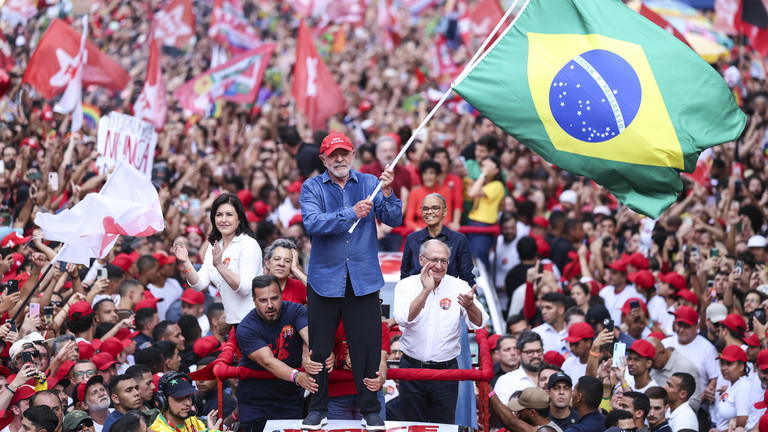
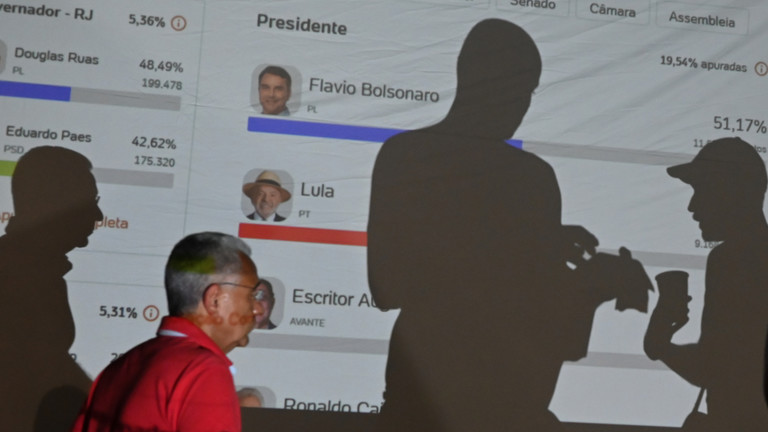
In Brazil, the incumbent left-wing president, Luiz Inacio Lula da Silva – known simply as Lula – has decisively won a dramatic run-off election against his challenger from the right – and US favorite – Flavio Bolsonaro. As his de facto sponsor, US President Donald Trump, has signaled that he won’t openly intervene, Bolsonaro, after initially refusing to concede, had to effectively accept the result. A result that we can call historic even now. In terms of the domestic politics of Brazil, it confirms Lula as a master politician and major statesman. Heading into his fourth term, he has defied his age as well as vicious American attempts to undermine him by economic warfare, sanctions, and social-media foul play.
Lula has also broken the traditional patterns of Brazilian presidential elections. Before he won the second round, he lost the first one; a comeback victory had never happened before and seemed improbable. Now, thanks to a rapid revamping of his campaign, including a belated discovery of social media, and a surge in voter mobilization across the whole country, Lula is the first one to pull it off.
For Brazil, this was a fateful election that could have turned fatal. If Bolsonaro had won, the country would certainly have lost its sovereignty to a policy of enthusiastic subordination to America’s Donroe Doctrine. What has been imposed by violence and treason on Venezuela would have been achieved by elections under pressure in Brazil. It would have joined the recent Latin American shift to the right and deeper submission to Washington.
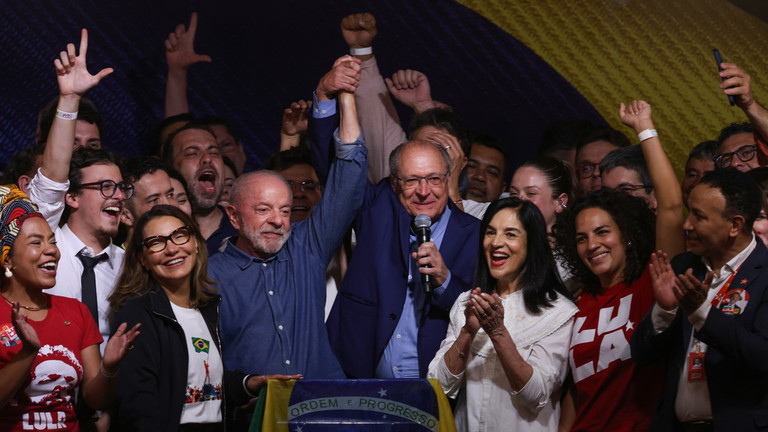 It is almost as certain that Flavio Bolsonaro would also have found ways to end democracy at home. His father, former President Jair Bolsonaro, already tried. No member of the powerful Bolsonaro clan has ever uttered a word of regret for Bolsonaro’s proven coup attempt. On the contrary, Flavio and his now US-based brother, Eduardo, have been out for revenge. Add Flavio’s nasty reputation of connections to organized crime and even death squads, acknowledged even by the reliably right-wing Economist, and his victory could have spelled doom for many Brazilians.
Many bullets – some quite literal – were dodged. Yet surviving danger is different from conclusive victory. This has not happened. Lula’s victory is solid, outdistancing Bolsonaro by well over three percentage points, but this does not change the fact that the latter still won over 48% of the vote. Bolsonarism has been defeated but not crushed.
The same holds true for the biggest and most dangerous ally of the Bolsonaro clan, Washington. There is no doubt that the US has suffered a setback, most of all in geopolitical terms. Its project to lock Latin America into the cage of Donroe Doctrine imperialism has taken a hit.
And that hit is painful, for Brazil is Washington’s central target in South America. By location, size, demography, and economic performance, as well as potential, Brazil is so important that no revamped American ‘backyard’ empire will ever be complete without it.
 Consider a few basic indicators. According to the World Bank, Brazil has a population of 213 million, which makes it the seventh-most-populous country in the world. It is also thoroughly urbanized, with almost 90% of the population living in towns and cities. It is technologically advanced, with almost 93% of Brazilians having access to at least 3G and almost 85% using the internet.
Economic metrics are notoriously tricky and difficult to compare, but Brazil clearly has the largest economy in South America. Globally, it also ranks high. The International Monetary Fund projects its 2026 GDP (adjusted for purchasing power) to reach almost $5.3 trillion, which makes it the eight-largest national economy in the world, leaving behind, for instance, the UK, France, South Korea, and closer to home, Mexico.
Brazil also has substantial reserves of crude oil and is the single biggest oil producer in South America. Bringing these riches under US control and adding them to what Washington is currently trying to loot from Venezuela would have been a wet dream for both American geostrategists and business. Especially as around half of Brazil’s oil production is currently being sold to China, America’s most feared rival.
More importantly, China is Brazil’s most important trade partner by far. Chinese-Brazilian trade is at record levels and growing, while Brazil is the top destination for Chinese foreign direct investment. The Donroe Doctrine was designed not just to restore US domination in Latin America, but specifically to keep China out.
 And if all of the above is not irritating enough for the hemispheric empire fans in Washington, Brazil is also a major power in the realm of critical minerals. Indeed, according to American data, Brazil’s reserves of critical minerals rank second behind China and far outdistance those of runners-up, such as India and Australia, not to mention the US itself.
Add to this the fact that Lula’s Brazil has also been a main player in BRICS, the projects of multipolarity and dethroning the dollar, and the resistance to Israel and its crimes, including genocide against the Palestinians, and Washington could not be more eager to subdue this giant thorn in what it considers its southern underbelly.
What a prize to win! And to lose. For now, the US has lost. But precisely because Brazil is so crucial, Washington will not give up. On the contrary, the strong showing of its favorite, Flavio Bolsonaro, and the fact that his party will dominate the Brazilian Congress, will only harden America’s resolve, with numerous opportunities to sow division, subversion, and dirty regime-change tricks yet to be exploited.
Brazil has won a vital reprieve. But the struggle is not over. The empire will strike back. It always does. This means that Lula and his domestic allies will have to continue and broaden the modernization of their approach that started during the second round, for instance, by pursuing a consistent policy of securing Brazilian sovereignty in the social media sphere. It also means that Brazil’s friends in the world, especially those equally invested in the project of multipolarity, such as China and Russia, must think very hard about how to support Brazil more against US pressure.
By Frank Dumon: On Monday, 26 October 2026, Flávio Bolsonaro announced that Supreme Federal Court Justice Alexandre de Moraes had ordered him to surrender his passports and prohibited him from leaving Brazil. The decision was connected to an investigation into suspected money laundering involving lawyer Willer Tomaz and financial transactions linked to online gambling companies. Investigators are examining possible financial connections between Bolsonaro and businesses associated with Tomaz. Both men deny wrongdoing. A separate investigation concerns the financing of "Dark Horse", a film about his father, former President Jair Bolsonaro.
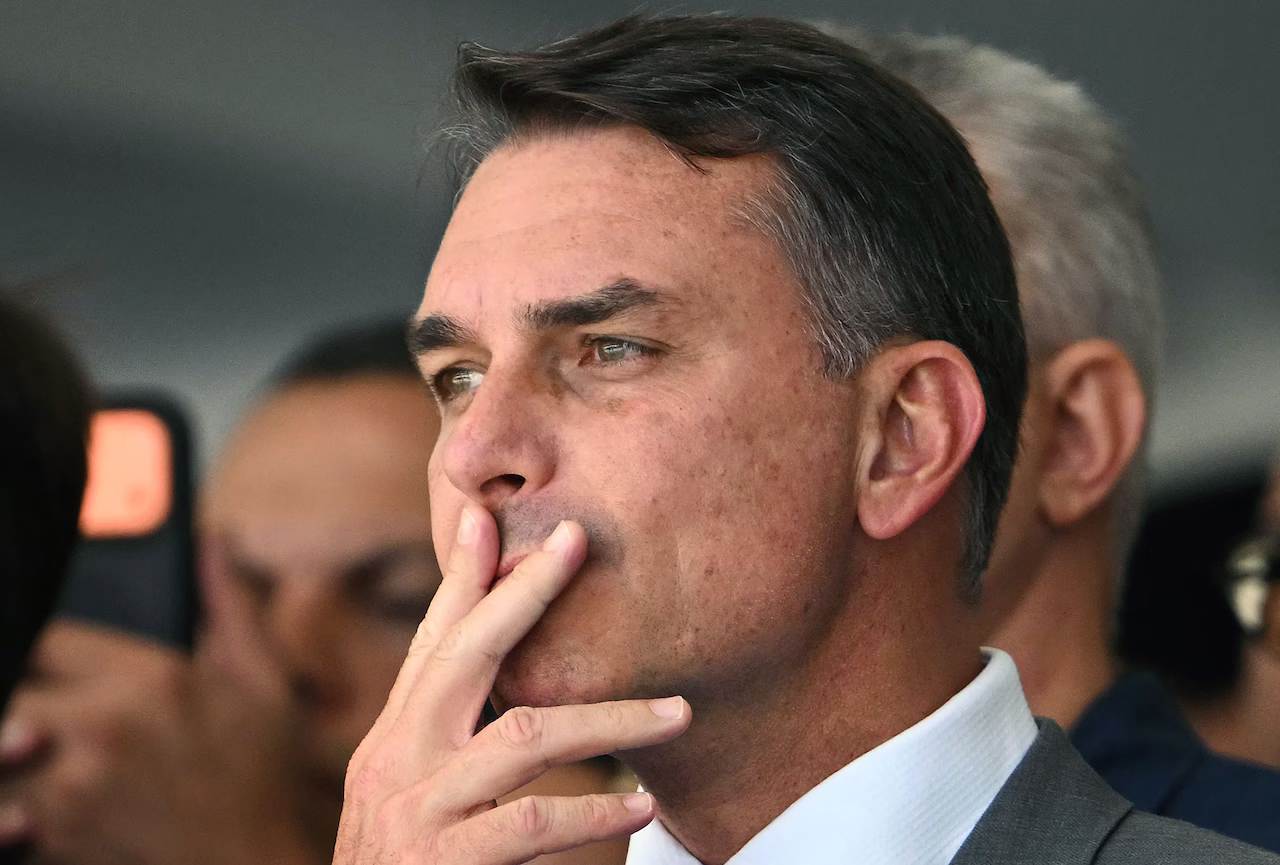
In a video published on Instagram, Bolsonaro described the judicial decision as an attempt at political intimidation and initially declared that he had no intention of leaving Brazil. His father, Jair Bolsonaro, travelled to the United States after losing the 2022 presidential election to Luiz Inácio Lula da Silva. Following his return to Brazil, Jair Bolsonaro was convicted of plotting a coup and sentenced to 27 years and three months in prison. Flávio's younger brother Eduardo has lived in the United States since 2025. Eduardo was sentenced to four years and two months in prison in June 2026 for coercion related to judicial proceedings concerning his father's prosecution.
Update – 27 October 2026: According to Reuters, citing two sources, Flávio Bolsonaro has left Brazil for the United States following his defeat in Sunday's presidential election. Brazilian newspaper Folha de S.Paulo reports, citing people close to the Bolsonaro family, that the senator travelled with his wife and two daughters. His departure came despite a Supreme Court order prohibiting him from leaving Brazil.
On Monday, Justice Alexandre de Moraes ordered Bolsonaro to surrender his passports within 24 hours. Bolsonaro initially stated that he would comply and had no intention of leaving the country. However, he subsequently missed the deadline. Brazilian authorities cancelled his Brazilian travel documents and began investigating his whereabouts. Reuters reported on 27 October that it remained unclear how he had managed to leave Brazil without passing through a regular migration checkpoint.
According to Folha de S.Paulo, allies of the Bolsonaro family claim that the Trump administration was aware of the senator's departure and would offer him political asylum. However, these assertions have not been officially confirmed by the United States government. Reuters reported that neither Bolsonaro's precise destination nor his intention to seek asylum had been independently established. Earlier reports suggesting that he had travelled through Argentina were disputed by Argentine authorities, which reported no official record of his entry.
In Sunday's presidential runoff, held on 25 October 2026, incumbent President Luiz Inácio Lula da Silva defeated right-wing Senator Flávio Bolsonaro by approximately 51.8 percent to 48.2 percent, securing a fourth presidential term. Bolsonaro initially challenged the election result, although his Liberal Party subsequently acknowledged Lula's victory.
Bolsonaro also faces continuing criminal investigations concerning suspected money laundering and financial relationships involving online gambling businesses. Investigators are examining substantial financial transactions connected to lawyer Willer Tomaz and associated companies. A separate investigation concerns alleged irregularities in financing the film about Jair Bolsonaro. These are ongoing investigations, not criminal convictions. Flávio Bolsonaro denies the allegations.
Sources
Reuters – Flávio Bolsonaro's departure for the United States, 27 October 2026
Folha de S.Paulo – Reports concerning the departure and possible asylum, 27 October 2026
EFE – Criminal investigations involving Flávio Bolsonaro, 26 October 2026
Associated Press – Conviction of Eduardo Bolsonaro, June 2026